
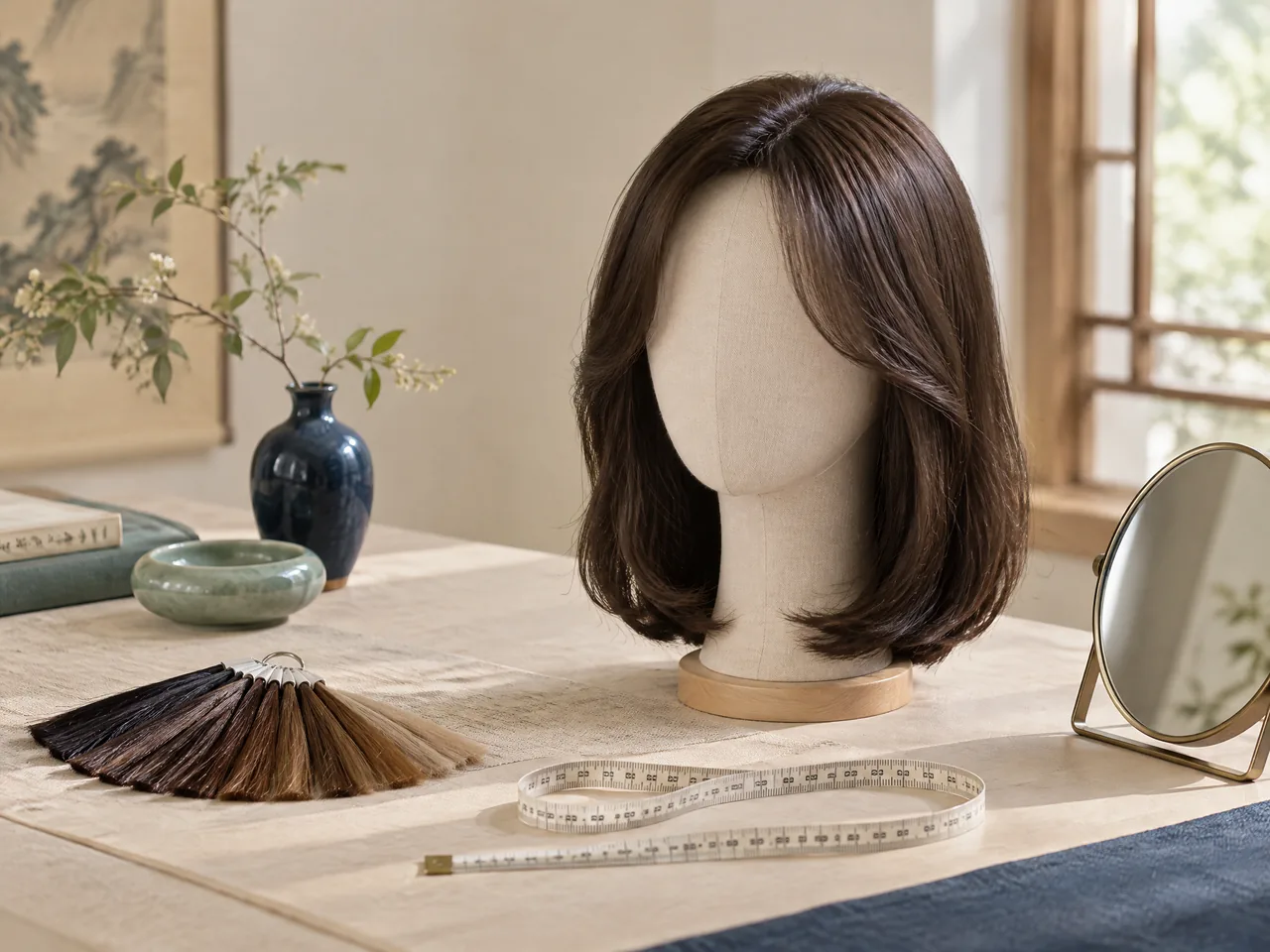
Choose your reading route by the area you want covered
Begin with the area you want covered rather than the hairstyle in a photograph. The American Cancer Society distinguishes a full wig, which covers the whole head, from a topper or top piece that adds coverage over thinning hair on top. That distinction is a useful starting point for appearance choices, not a diagnosis or a recommendation for a particular person. If you are unsure which object you are looking at, ask to see its base as well as the finished hairstyle. [1]
For a first full wig, start with Choosing and visiting, then move to Fit and comfort. For a crown or parting concern, begin with Partial hairpieces and record where the piece would meet your existing hair. The Men's appearance choices collection also separates full coverage from smaller hairpieces. A product name alone does not answer how far its base reaches, whether the front is covered or how its edges will blend with the hair you already have.
Write a short coverage brief before comparing samples: the area you want covered, the parting you normally wear and the hair you intend to leave visible. Keep coverage separate from extra fullness. A piece that adds volume in a photograph still needs its actual base assessed against your intended area. The illustration compares two generic objects; it cannot establish a suitable size or attachment position for you.
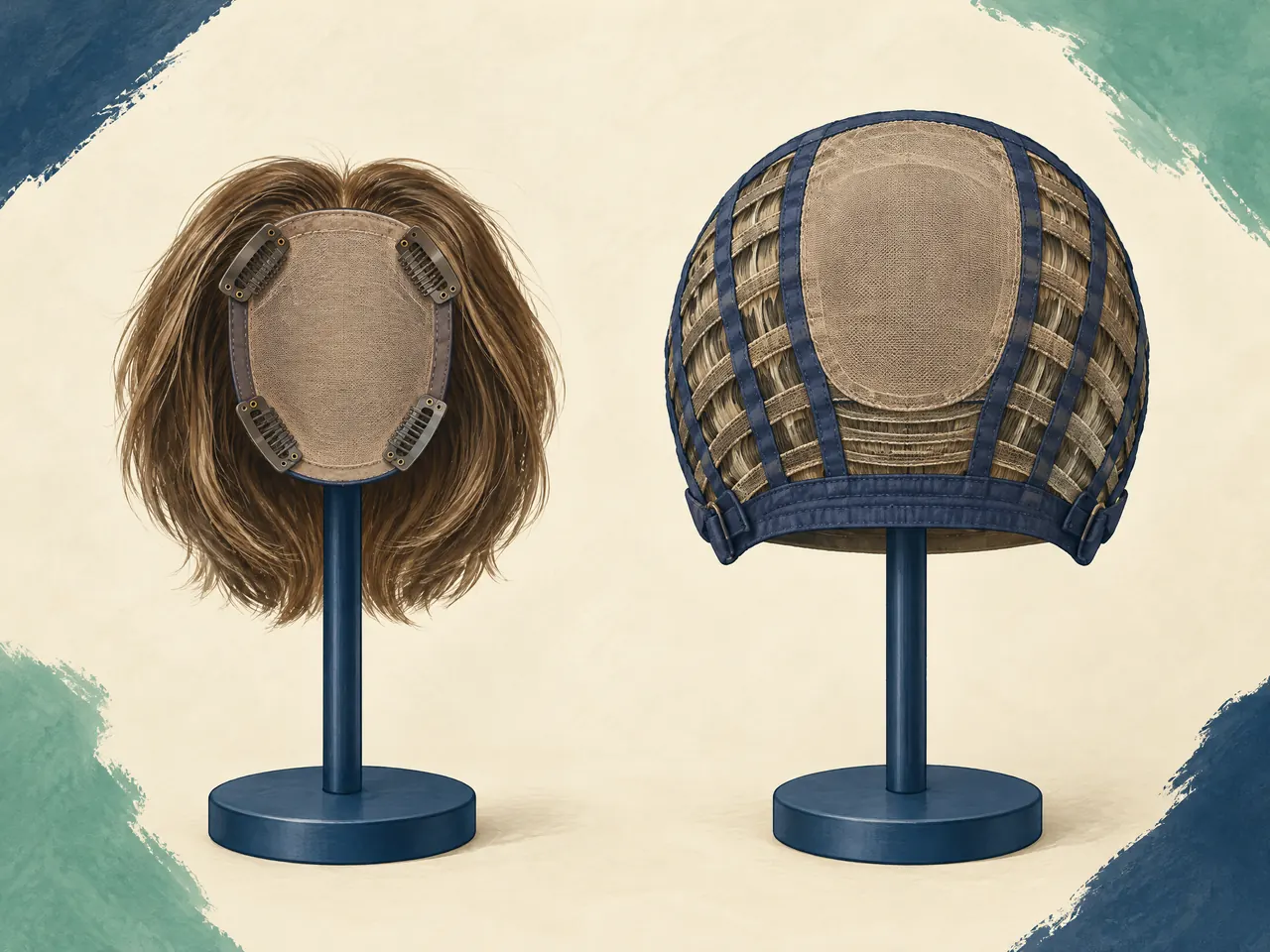
Read the fibre and cap descriptions separately
Materials and construction answers two different questions: what the hair is made from and how the piece is built. Jon Renau's beginner guide treats fibre, cap construction, lifestyle and length as separate selection factors. It distinguishes traditional synthetic fibre, heat-resistant synthetic fibre and human hair, with different maintenance demands. Use that framework to organise questions, rather than assuming that a human-hair label also tells you the cap design or that a synthetic label confirms permission to use heated tools. [2]
Next, ask which part of the base each construction term describes. A lace front concerns the front hairline; a monofilament area concerns a mesh section used for the appearance and movement of parting. Hand-tied describes the attachment of individual hairs or fibres in the stated areas. One piece may combine different constructions. Ask to see a cap map or the actual underside so you can connect each label to a location, instead of treating several labels as interchangeable descriptions of the whole product. [1] [2]
Choose the next article according to the unanswered question. Read the fibre comparison when styling effort is your concern, the lace-front discussion when you want to understand the front edge, or the parting article when you want to move your part. If the silhouette looks too full, use the density discussion rather than assuming a construction change will solve it. The generic cap illustration helps identify questions about panels and adjustment, but shows no verified specification or comfort result.
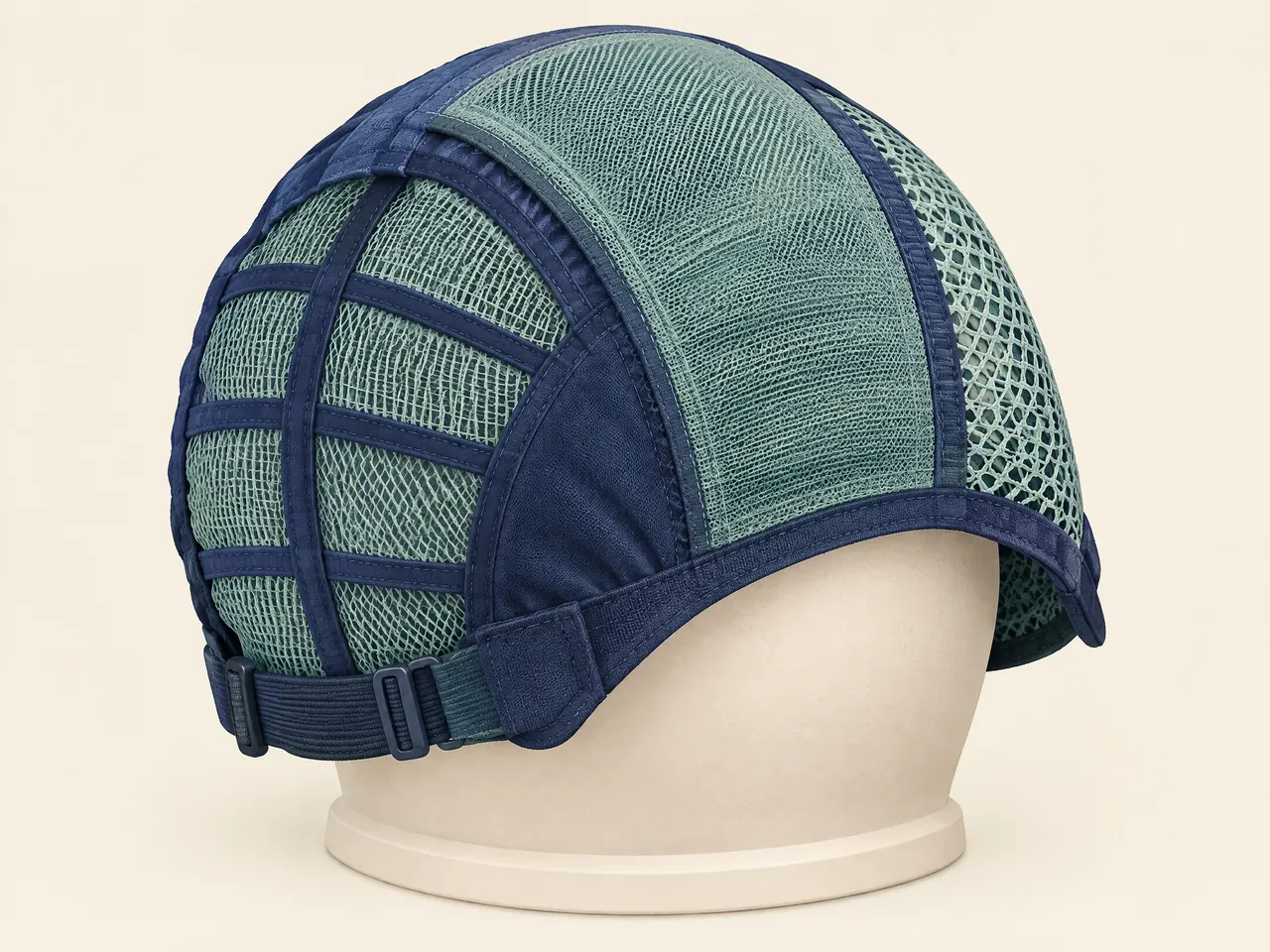
Use measurements and ordinary movement together
A size name is only the beginning of a fitting conversation. The American Cancer Society notes that sizing can vary by brand and advises checking the relevant size chart. Ask which measurements the supplier needs and how your current hair or a planned liner should be arranged when measuring. Record the chart and exact model used for the comparison. The tape in the illustration is a reminder to confirm individual measurements, not a measuring tutorial or a universal sizing rule. [1]
Bring your everyday glasses and describe how you normally wear your hair beneath the piece. Once the fitter has positioned it, check the mirror while seated and standing. Then turn your head gently, look down as if reading and notice the areas around the ears and nape. Write down where pressure, movement or contact feels uncomfortable. These observations help you describe the fit; they do not certify security for sport, strong wind or an entire humid working day.
If you want to compare custom and ready-made options, repeat the same observations for each sample rather than relying on the label. Ask what can actually be adjusted and which issues would require a different size or base. Separate a short try-on impression from the routine you expect at home: wearing glasses, commuting, removing the piece and putting it on again. Use Fit and comfort to develop those questions, and keep notes on the exact sample rather than a general promise about breathability.

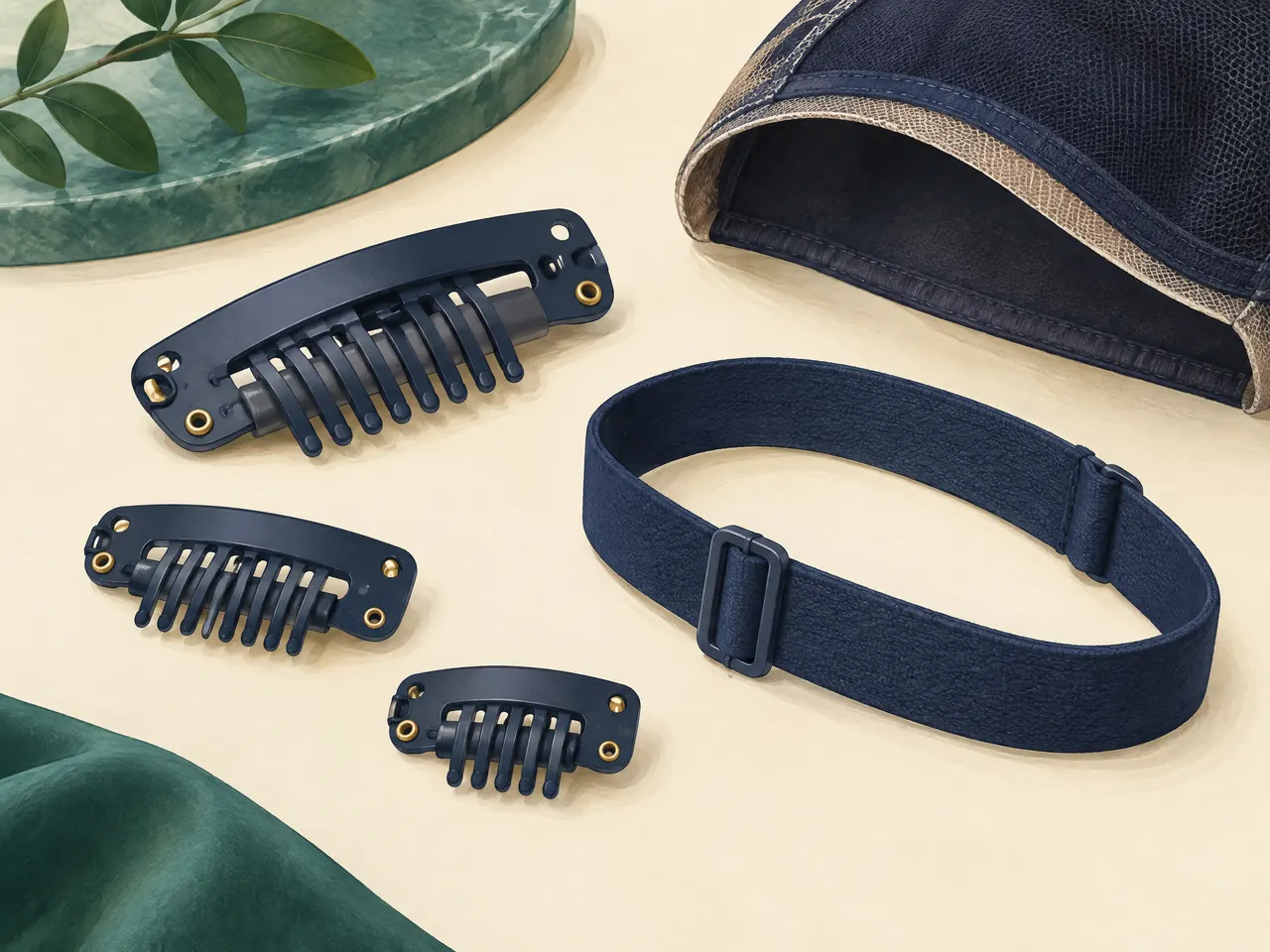
Ask how attachment and removal fit your day
Coverage and attachment should be checked together. For a topper, ask where each clip on the actual base would meet your remaining hair. For a full wig or men's hairpiece, ask which fastening method is being proposed and what preparation it needs. The illustrated clips and band represent questions to discuss; they do not establish that the parts can be combined, that they belong to a particular model or that an adhesive-free option will suit you.
Request a demonstration of both putting the piece on and taking it off. Identify the front and back, ask which points are intended for handling, and explain any difficulty reaching a fastening. If you expect to remove it every evening, describe that routine before choosing. If a bonded system is under consideration, ask who performs removal and cleaning, what follow-up is required and which supplies or services would be separate. Do not treat a photograph of an attachment as a complete set of instructions.
Use the clip-in topper article for questions about the underside and existing hair, or the removable-versus-bonded discussion for daily commitments. Record what you have actually been shown and what still needs clarification. Do not interpret pulling as proof of secure attachment or improvise a stronger fastening when something feels wrong. Pause the comparison and ask the supplier to reassess the method. These are practical appearance and handling choices, not hair-growth treatments.
Make colour and shape references specific
A reference photograph works best when you explain what you want to preserve. Point out the parting, fringe, outline around the face or length at the collar rather than asking for an identical copy. The American Cancer Society recommends hairstyle photographs and checking a colour reference in natural light. Compare the actual sample, where possible, instead of treating a screen image as confirmation of the shade you will receive. [1]
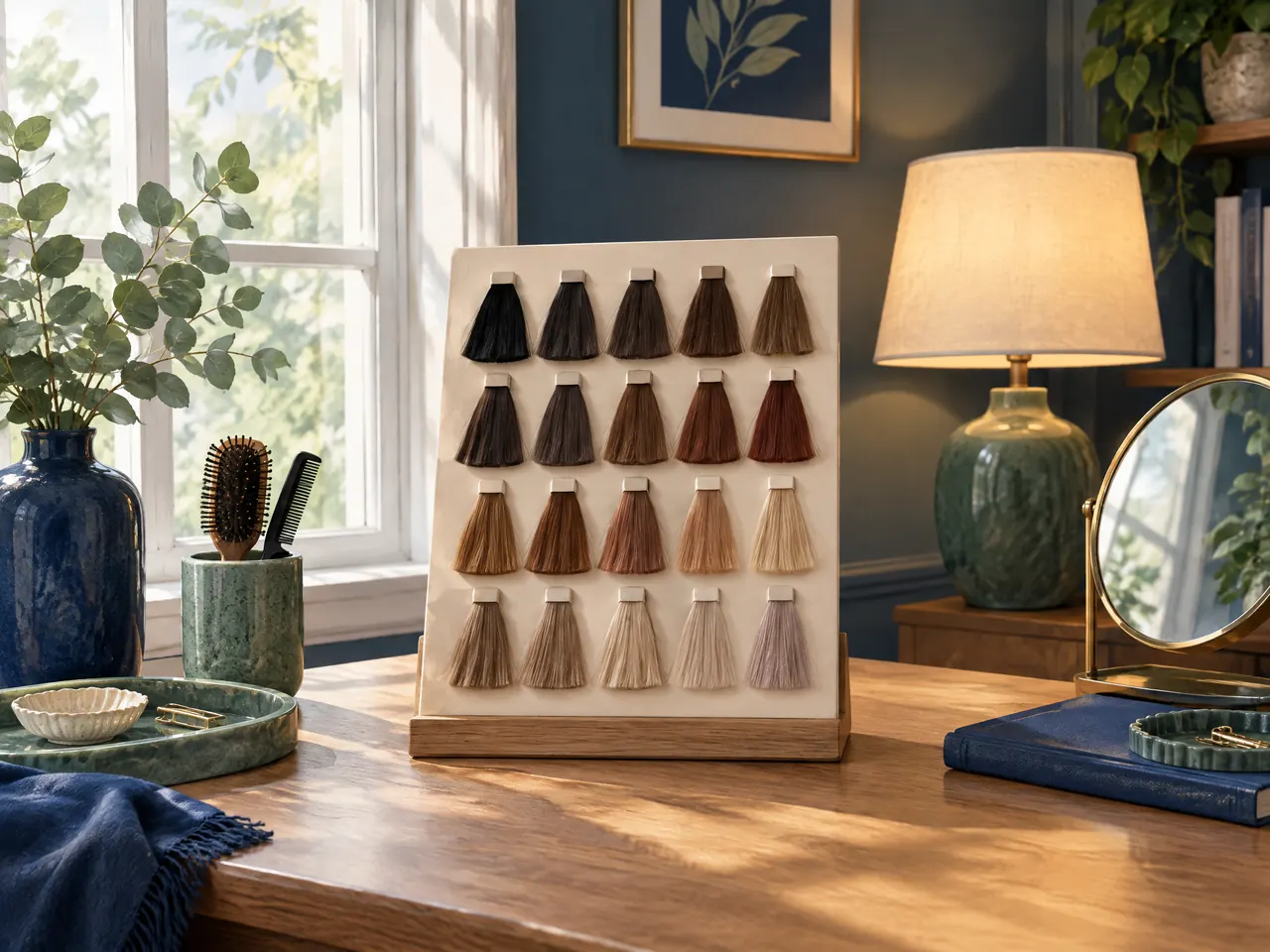
For grey blending, describe where you want the grey visible as well as the overall impression. A shade name or percentage still needs to be discussed against the sample and the supplier's terminology. The same board shown near a window and an interior lamp illustrates the viewing context, not a measured colour difference. Keep a note of the sample code and the lighting in which you compared it, so a later conversation refers to the same choice rather than a remembered photograph.
Use Shape and styling when your question concerns length, bangs or texture. During a comparison, wear your usual glasses and a collar similar to one you often use. Notice whether the fringe falls where you want it and whether the outline changes when you turn sideways. Discuss any proposed trimming before it happens, including what cannot be restored afterwards. If you are also comparing fullness, try to keep length and texture similar so a different curl pattern does not become your only basis for judging density.
Check the care routine before committing to a style
Ask for the care instructions for the exact fibre and base before deciding whether the style fits your routine. Find out which cleaning products and combs are permitted, how the piece should dry and how it should be stored between wears. The American Cancer Society advises against using a hairdryer or curling iron unless the wig is heat resistant. A heat-friendly label still needs the manufacturer's specific instructions; it is not a reason to transfer settings from your own hair. [1]
Product-specific guidance matters because care methods are not identical across sources. For example, Jon Renau's synthetic guide advises against soaking its wigs and recommends a wig stand rather than a block head when drying, while the American Cancer Society describes a general soaking method. Do not combine these into one universal washing recipe. Ask the supplier to identify the instructions that apply to the item you are considering, including any different requirements for its lace or hand-tied areas. [1] [3]
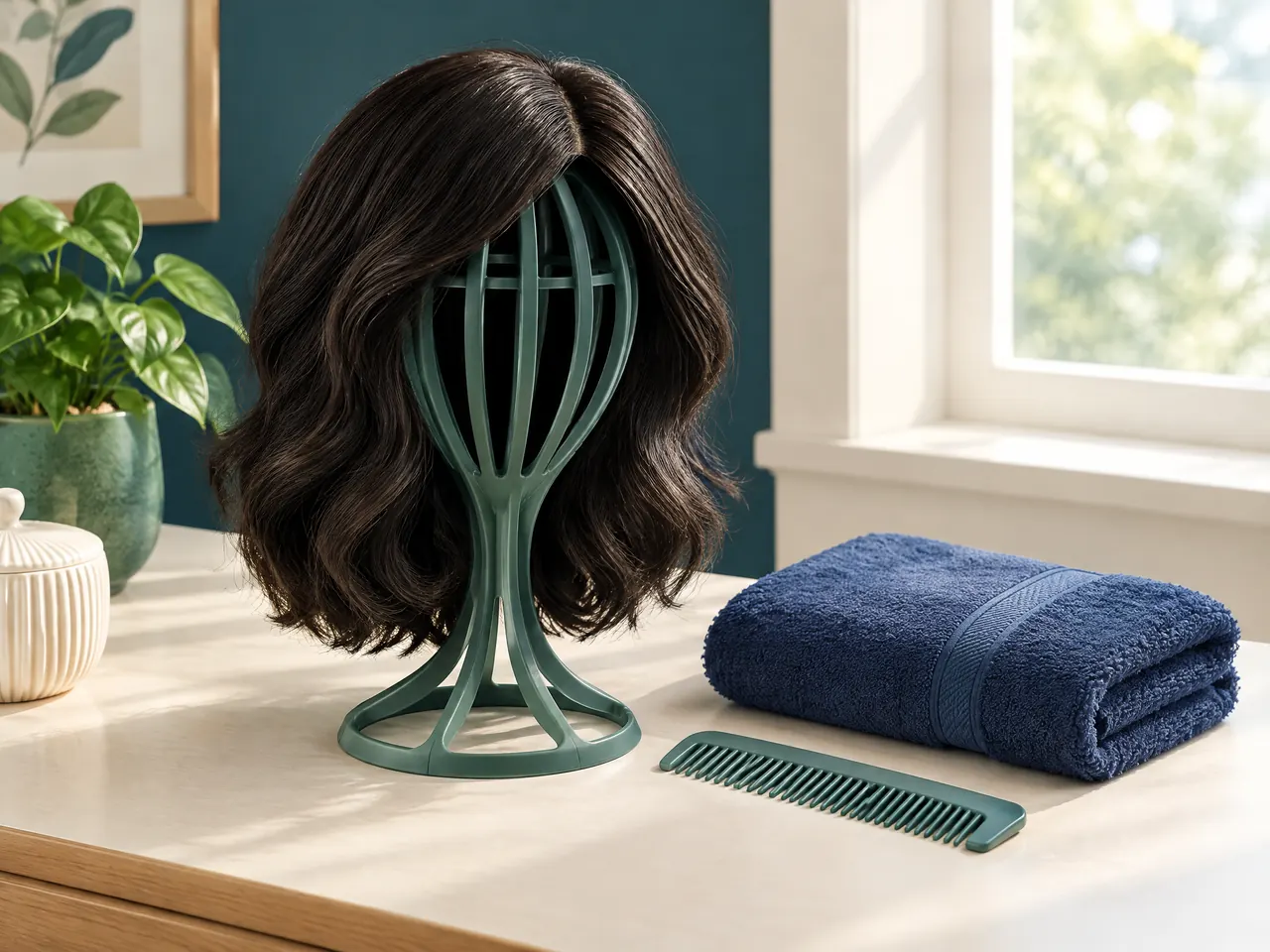
Think through where care would happen at home and when the piece would next be needed. Ask how to recognise that it is ready to wear after drying and what to do if tangles or base damage appear. A ventilated stand in an illustration cannot tell you a drying time. If daily restyling would be difficult, return to the fibre comparison with that constraint in mind. Confirm the equipment you need rather than buying tools merely because they appear beside a hairstyle online.
Leave a consultation with a usable comparison record
Before asking about a visit, choose two or three questions from this collection that remain unresolved. You might need to compare full and partial coverage, clarify a cap label or understand the care routine. OWNSTRAND's Hong Kong shop guide describes enquiries about styles, quotations and supply, and says sample viewing or fitting arrangements should be confirmed before travelling. Its custom human-hair process may involve samples, measurement and a return fitting; ask which steps apply to your enquiry rather than assuming every option follows that process.
During the conversation, keep the product specification beside the service description. Record the exact option, coverage, fibre, base, colour reference and proposed finished shape. Then ask what the written quotation includes and which adjustments, care equipment or follow-up services are separate. An attractive sample and a reference price do not by themselves confirm supply or the terms for your chosen item. If you have not seen the exact piece, note what remains to be checked before proceeding.
Leave with a record that distinguishes your preference from what the supplier has confirmed. Include the questions still open, the relevant care instructions and the next agreed step. You can then return to the specific article that addresses the uncertainty instead of rereading every topic. TCM Lab's collection concerns everyday appearance choices; OWNSTRAND information provides related-business selection context. Neither a fitting discussion nor a hairpiece replaces assessment of a medical concern, and choosing not to buy remains a valid outcome.
Supplemental references
- [1] American Cancer Society — Wigs for Hair Loss
Visited guidance supports full-wig versus topper coverage, basic cap terminology, hairstyle photographs, natural-light colour comparison, brand-specific sizing and heat/care cautions. The source addresses cancer-related hair loss; only practical selection and care observations are used. No clinical efficacy, universal comfort, OWNSTRAND endorsement, foreign insurance rules or sizing values are adopted.
- [2] Jon Renau — The Beginner’s Guide to Wig Buying
Visited manufacturer guide supports separating lifestyle, fibre, cap construction and length, distinguishing traditional synthetic, heat-resistant synthetic and human hair, and framing hairline/parting/maintenance questions. Manufacturer product recommendations and superiority or comfort claims are not adopted or generalised to OWNSTRAND.
- [3] Jon Renau — Synthetic Guide
Visited manufacturer guidance specifically advises against soaking its synthetic wigs and against using a block head for drying, recommending a wig stand. This narrower advice is contrasted with ACS's general soaking guidance to demonstrate why exact-item instructions must be confirmed. No lifespan, wash-frequency, product-efficacy, steaming or all-weather promises are repeated.