
TCM Lab · Health reading
Acupuncture for Upper Back Pain: Acupuncture Assessment for Upper Back Pain and Upper Back Pain Acupuncture
Published Updated
Upper-back discomfort is often described as a knot beside the shoulder blade after laptop work, lifting, driving or a long commute. It can also be more complicated than a tight muscle. Acupuncture for upper back pain may be discussed as part of symptom management when an assessment finds it appropriate, but it is not a way to diagnose every cause or repair a damaged disc, fracture or other structural problem. A careful conversation about the exact pain pattern, daily load, medical history and accompanying symptoms helps decide whether upper back pain acupuncture is a reasonable option or whether medical care should come first.
Appointments are confirmed through WhatsApp. If you have language requirements, please mention them in your enquiry.

The short answer
Acupuncture for upper back pain can be considered after an individual assessment by a Registered Chinese Medicine Practitioner. The discussion should first separate a likely mechanical or muscle-related pattern from symptoms that need medical assessment, such as chest pain, trouble breathing, severe or progressive weakness, or significant numbness. If acupuncture is suitable, it is discussed as one part of symptom management; it does not replace investigation or treatment for a suspected structural, nerve, heart or lung condition.
Transparent pricing
See the fees.
Choose your care.
Explore our complete official price list, including first-trial prices, regular prices, packages and branch-specific options.
Opening WhatsApp prepares an enquiry; it does not send a message, take payment or confirm an appointment. Suitability and individual arrangements are confirmed during consultation.
Pain care
All prices in HKDExtracorporeal shockwave treatment
Shockwave treatment for deep-tissue and fascial care. The Kwun Tong clinic offers the multi-area options shown below.
Priced by branch
Branch-specific pricing
Prince Edward: HK$250 per area
Kwun Tong: HK$250 for 1 area / HK$450 for 2 areas / HK$600 for 3 areas
Pain care (manual therapy)
Includes Chinese medicine musculoskeletal assessment, manual joint techniques and tui na.
HK$580 (single session)
Chinese medicine musculoskeletal assessment
Pain care (acupuncture and manual therapy)
Combines acupuncture and manual therapy.
HK$680 (single session)
Combined care
Hair and scalp
All prices in HKDScalp health and hair-loss management
Includes AI scalp analysis, deep scalp and follicle cleansing, and scalp oil-control care.
HK$380 (first trial)
Regular price: HK$680
- 6 sessions: HK$3,480 (HK$580 per session)
- 12 sessions: HK$5,760 (HK$480 per session)
- 20 sessions: HK$8,600 (HK$430 per session)
- 30 sessions: HK$11,400 (HK$380 per session)
Hair acupuncture and Chinese herbal medicine package
Includes scalp acupuncture and 3 days of Chinese herbal medicine that does not require decoction.
HK$580 (single session)
Registered Chinese Medicine Practitioner consultation
- 6 sessions: HK$3,180 (HK$530 per session)
- 12 sessions: HK$5,760 (HK$480 per session)
- 20 sessions: HK$8,600 (HK$430 per session)
- 30 sessions: HK$11,400 (HK$380 per session)
Combined hair and scalp treatment
Combines acupuncture and Chinese herbal medicine with salon-level scalp and follicle care. Packages include complimentary hair-care shampoo and serum.
HK$1,260 (single session)
Combined treatment
- 8 sessions: HK$8,640 (HK$1,080 per session)
- 16 sessions: HK$15,680 (HK$980 per session)
- 20 sessions: HK$18,600 (HK$930 per session)
- 30 sessions: HK$26,400 (HK$880 per session)
Weight management
All prices in HKDFull-body acupoint embedding for weight management
Includes full-body acupoint embedding. Packages include complimentary Chinese herbal medicine for weight management, with the number of included days scaled to the package. Embedding material and the individual treatment arrangement are confirmed during consultation; this is not a cosmetic thread lift.
HK$980 (single session)
No trial session
- 10 sessions: HK$7,800 (HK$780 per session)
- 20 sessions: HK$14,600 (HK$730 per session)
- 30 sessions: HK$20,400 (HK$680 per session)
Facial acupuncture
All prices in HKDFacial acupuncture (basic)
Includes facial acupuncture and meridian-based facial care, including care for facial puffiness.
HK$480 (first trial)
Regular price: HK$680
- 10 sessions: HK$5,200 (HK$520 per session)
- 20 sessions: HK$9,600 (HK$480 per session)
- 30 sessions: HK$13,500 (HK$450 per session)
Facial acupuncture (advanced)
Includes enhanced facial acupuncture with a specially formulated moisturising mask and serum.
HK$780 (first trial)
Regular price: HK$1,180
- 10 sessions: HK$9,000 (HK$900 per session)
- 20 sessions: HK$16,600 (HK$830 per session)
- 30 sessions: HK$23,400 (HK$780 per session)
Chinese medicine
All prices in HKDAcupuncture and Chinese herbal medicine package
Includes a Chinese medicine consultation with pulse assessment, body acupuncture and 3 days of Chinese herbal granules that do not require decoction.
HK$580 (single session)
Chinese medicine consultation with pulse assessment
Acupuncture for Upper Back Pain | Acupuncture Assessment for Upper Back Pain | Upper Back Pain Acupuncture — Causes and Assessment Context
Upper back pain is a location, not one diagnosis. It may sit along the thoracic spine, around one shoulder blade or across the upper ribs. Screen work, repeated reaching, a new gym movement, lifting or a long drive can strain the area, but pain may also relate to joints, nerves, a spine injury or be referred from elsewhere in the body. An acupuncture assessment for upper back pain therefore starts with the story rather than assuming that every ache is simply a tight muscle. [1]
Useful clues include whether pain is dull, burning, sharp or pulling; its exact position; when it appears; and whether neck movement, breathing, rest, heat or a break changes it. A desk-related pattern deserves a closer look at the task, screen height, chair position and break pattern, not just a label of poor posture. For a related overview, see what causes pain between the shoulder blades.

Traditional Chinese medicine uses its own pattern-identification approach. That approach is not the same as a scan-based diagnosis of nerves, discs or bones. The consultation should also account for medical history, previous findings and any need for referral. Hong Kong integrated Chinese-Western services similarly use systematic assessment and referral pathways, which is why symptom management should not delay indicated medical care. [4]
Acupuncture for Upper Back Pain | Acupuncture Assessment for Upper Back Pain | Upper Back Pain Acupuncture — Symptoms and Possible Causes
A local ache after a familiar task can look different from new, unexplained pain at rest. The practitioner may ask about a fall, a sudden pull, work demands, sport, recent illness and whether pain travels into the neck, chest, arm or hand. They may observe movement and assess tender or guarded areas where appropriate. Reports of previous X-ray or MRI, existing spine or shoulder diagnoses, medicines and treatment already tried all matter. If shoulder movement is restricted, the related pages on shoulder pain with limited movement and shoulder pain range of motion may help you describe the problem. Research suggests acupuncture may help some broad back or neck pain conditions, but that does not diagnose your upper-back pain or show that needles repair a particular structure. [2]

Acupuncture for Upper Back Pain | Acupuncture Assessment for Upper Back Pain | Upper Back Pain Acupuncture — Warning Signs and Referral
Do not book a routine pain visit first if upper-back pain comes with chest pain, trouble breathing or faintness; seek urgent medical attention. Upper-back pain can occasionally be referred from inside the body, and chest or breathing symptoms can signal a heart or lung emergency. [1] Prompt medical assessment is also sensible after significant trauma, or with fever, unexplained weight loss, new or worsening tingling, numbness, weakness, walking difficulty, or bladder or bowel changes. These features are not a home diagnostic checklist. They are reasons not to presume ordinary muscle tension. If there is a known disc problem, fracture, inflammatory illness or spinal condition, share that information; acupuncture cannot repair structural damage and should not replace the recommended follow-up.
Compare your options
| What to note | Examples to describe | Why it changes the conversation |
|---|---|---|
| Location and quality | One-sided shoulder-blade ache, central thoracic pain, burning, pulling or pins and needles | Helps distinguish a local pain description from symptoms that travel or need broader assessment. |
| Time course and trigger | Sudden after a fall, gradual after desk work, worse when breathing, turning or lifting | Links the symptom to possible load, injury or warning features without assuming the cause. |
| Associated symptoms | Chest discomfort, trouble breathing, fever, numbness, weakness or sleep disruption | Some accompanying symptoms change the priority from a routine consultation to medical assessment. |
| Medical background | Previous X-ray or MRI, spine or shoulder diagnosis, medicines, pregnancy, pacemaker or bleeding concern | Allows safer screening and better coordination with existing medical advice. |
On smaller screens, scroll the table sideways to compare all columns.
Acupuncture for Upper Back Pain | Acupuncture Assessment for Upper Back Pain | Upper Back Pain Acupuncture — What to Expect in Consultation
A useful consultation is a two-way exchange. Explain what you need help with in everyday terms: pain through a meeting, stiffness on waking, a pull when reversing a car, or discomfort while working overhead. The practitioner should explain whether your account points toward acupuncture, practical activity changes, another health professional or medical referral. It is reasonable to ask what the proposed approach is intended to address and which changes would mean you should seek another assessment.
The treatment area is not always the only area discussed. Acupuncture involves placing fine needles at selected points, and a practitioner may consider points away from the sore patch as part of their approach. [2] You should know the general planned areas, have an opportunity to ask questions and be able to say if a position or sensation is uncomfortable. Tell the practitioner if lying face down aggravates symptoms.
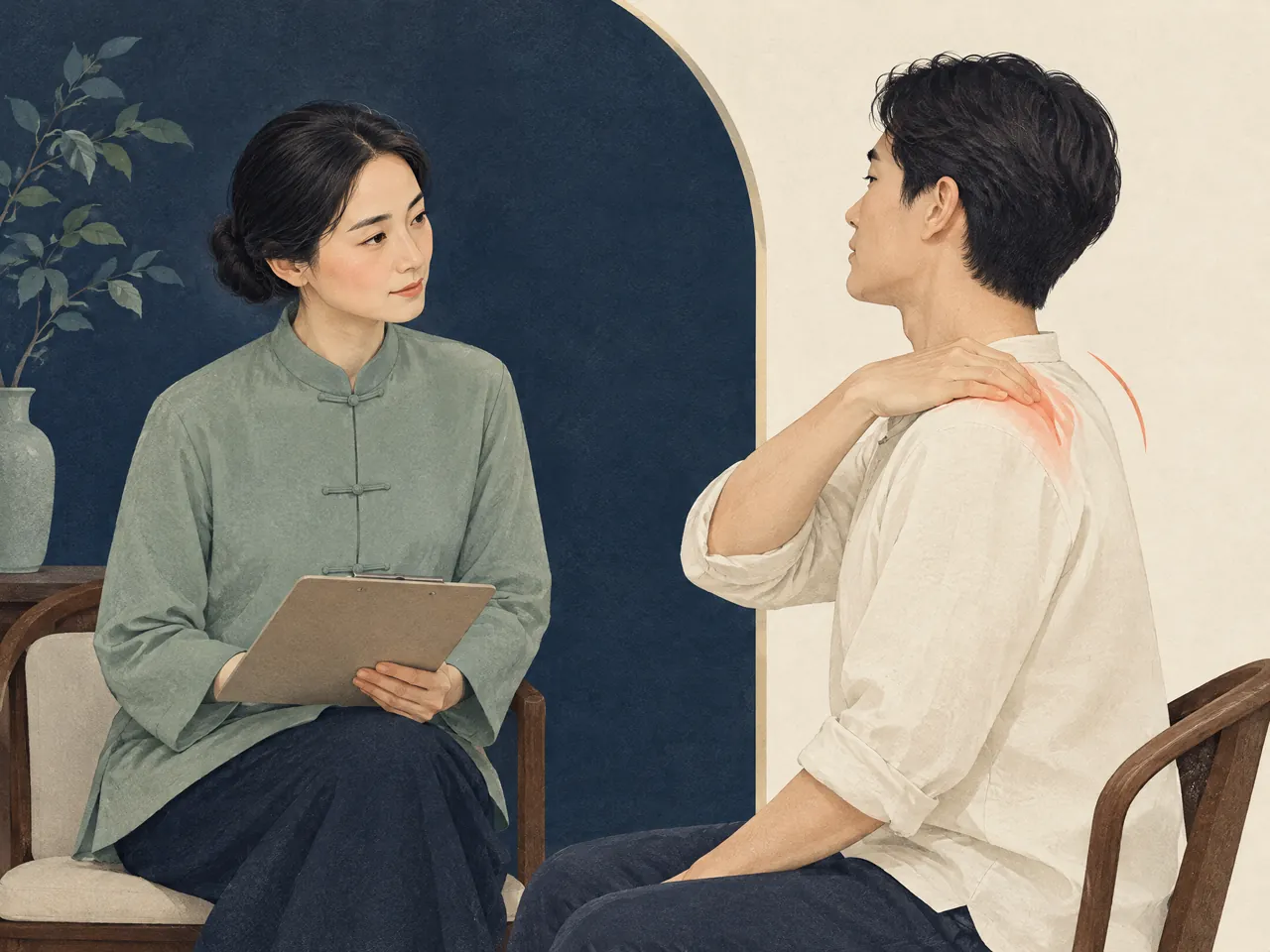
Bring the history of stretches, massage, heat, rest or medicines you have already tried, including anything that made pain worse. Avoid forcing a sharp pain with aggressive self-massage or a stretch merely to test whether it will release. For a desk-related pattern, recording task duration, screen height and break habits is often more useful than searching for one perfect posture. A realistic change that fits the working day is more likely to be sustained. It may help to separate a temporary easing after a break from a repeated flare after a specific task. That distinction gives the practitioner a clearer basis for discussing load, movement and whether the pattern remains suitable for conservative symptom management.
Acupuncture for Upper Back Pain | Acupuncture Assessment for Upper Back Pain | Upper Back Pain Acupuncture — Questions and Examination
Before the visit, make a short timeline: when pain began, whether onset was sudden or gradual, its usual place and quality, what worsens or eases it, and how it affects sleep, work, driving, exercise or daily tasks. Include symptoms that may seem separate, such as chest discomfort, breathlessness, headache, arm symptoms, fever or general health changes. Bring medicine and supplement lists, previous test reports and the names of clinicians currently involved. A traditional consultation may include observation of the tongue and pulse; this does not replace a neurological examination, imaging or emergency medical assessment when indicated. Mayo Clinic also describes symptom, lifestyle and physical-examination questions in an acupuncture visit. [3] Mention pregnancy, a pacemaker, needle anxiety, fainting or bleeding concerns so suitability and precautions can be considered individually.

Acupuncture for Upper Back Pain | Acupuncture Assessment for Upper Back Pain | Upper Back Pain Acupuncture — Needles, Comfort and Expectations
If acupuncture is suitable and you consent, the skin is prepared and fine needles are placed at selected points. Sensation varies: there may be little discomfort, a brief prick, or a dull ache, heaviness, warmth or local tingling. Report sharp, intense or unexpected discomfort straight away. There is no universal number of needles, appointment length or number of sessions that can be promised for upper-back pain. [3] Safety depends on individual screening and clean practice. NCCIH notes that acupuncture needles should be sterile and labelled for single use; nonsterile needles or improper delivery can cause serious complications. [2] Local soreness, minor bleeding or bruising can occur. [3] For the related evidence question, see Can acupuncture help upper back pain?.
Acupuncture for Upper Back Pain | Acupuncture Assessment for Upper Back Pain | Upper Back Pain Acupuncture — Safety, Limits and Next Steps
The next step should match the level of concern, not a pre-set treatment package. A stable, position-related ache without warning symptoms may lead to a carefully explained discussion of symptom management and practical changes. A history suggesting injury, systemic illness, nerve involvement or referred pain may point to another assessment first. This avoids treating the location of pain as proof of its cause.
Taking pain seriously does not always mean stopping all activity. Depending on the cause and medical advice, varying a workstation, taking movement breaks, reviewing lifting technique and pacing a return to activity may help reduce repeated strain. Cleveland Clinic lists ergonomics, cautious lifting and staying active as ways to reduce some upper-back strain risks. [1] Do not push through an activity that sharply worsens pain, and do not use these measures instead of assessment after trauma or with warning signs.

If you are already seeing a doctor or physiotherapist, bring that plan and any imaging report. The practitioner can discuss whether acupuncture is a suitable complementary symptom-management option, whether timing needs adjustment, or whether you should return to the treating team first. Coordination is particularly useful when symptoms overlap the neck, shoulder and upper-back regions.
Acupuncture for Upper Back Pain | Acupuncture Assessment for Upper Back Pain | Upper Back Pain Acupuncture — When Imaging or Referral Comes First
Imaging is not automatic for every upper-back ache, and a scan is not the only form of medical assessment. It is a question for the appropriate clinician when the history, examination or a known condition suggests fracture, significant structural change, nerve or spinal-cord involvement, or another cause that needs clarification. Do not postpone a recommended investigation in pursuit of quick pain relief. Emergency services are appropriate for chest pain or breathing difficulty, while new neurological symptoms or signs of serious illness need prompt medical assessment. [1] For persistent, recurrent or post-traumatic pain, a non-urgent referral may also be appropriate. If no urgent concern is identified, you can consider acupuncture, rehabilitation or other options as part of a conservative plan—without presenting any one option as a guaranteed cure.

Acupuncture for Upper Back Pain | Acupuncture Assessment for Upper Back Pain | Upper Back Pain Acupuncture — Preparing for a Useful Consultation
Prepare a concise note with the first day of symptoms, the most painful spot, pain type, triggers, spread to the neck, chest, arm or hand, and what you have already tried. If symptoms vary, include a typical good day and bad day, plus any work, sport or travel activity that clearly changes them. Note whether pain wakes you, limits a particular movement, or changes with a deep breath. Wear clothing that allows respectful access to the upper-back area, eat and drink normally unless another clinician advises otherwise, and do not stop prescribed medicine merely because you are considering acupuncture. Ask your prescriber before changing medication. Tell the practitioner about a pacemaker, pregnancy, a bleeding condition or needle fainting before treatment is planned. [3] To make an enquiry, contact the Kwun Tong Chinese medicine clinic or Chinese medicine clinic Prince Edward. You may also review the Chinese medicine clinic price list Hong Kong. WhatsApp +852 6940 5663 can be used to describe symptoms and ask about an appointment; timing and suitability require confirmation.
Care and health guide
Low back discomfort: care information
This directory brings together services, reading, and visit information related to low back discomfort, to help you prepare questions for a consultation.
When low back discomfort affects your day, noting when it occurs, its relation to activity, and what you have already tried can help prepare a consultation; acupuncture for low back pain is a relevant service or reading entry point.
Individual circumstances differ, and acupuncture Hong Kong offers related information to help you understand options and prepare questions.


Your questions, answered
Frequently asked questions
What happens during an acupuncture assessment for upper back pain?
The practitioner will usually ask when the pain began, where it is felt, what triggers or eases it, how it affects daily activity, and whether there are symptoms such as numbness, weakness, chest discomfort or breathing difficulty. They may observe movement and examine tender areas where appropriate. They should also review relevant health history, medicines and prior investigations before discussing whether acupuncture or referral is appropriate.
Can I consider upper back pain acupuncture if I have a disc problem or degeneration?
It depends on the diagnosis, symptoms and advice from the clinician managing that condition. Acupuncture does not repair a disc, fracture, severe spinal abnormality or degenerative change. If nerve compression, a significant structural problem or a new change in symptoms is suspected, medical assessment or imaging may need to come first. If acupuncture is discussed later, it is as symptom management alongside—not instead of—the indicated care.
Does acupuncture for upper back pain hurt?
People experience needling differently. Insertion may cause little discomfort, and some people notice a brief prick, dull ache, heaviness or local tingling. Tell the practitioner if any sensation is sharp, intense or unexpected. Local soreness, minor bleeding or bruising can occur. Sterile single-use needles and appropriate screening are important safety measures. [2] [3]
When should I seek medical care instead of booking a routine acupuncture visit?
Seek urgent medical attention for upper-back pain with chest pain, trouble breathing, faintness or symptoms that could signal a heart or lung emergency. Prompt medical assessment is also appropriate for new or worsening weakness, numbness, fever, unexplained weight loss, major trauma, bladder or bowel changes, or pain that is persistent and not improving. [1]
Sources and further information
- [1] [1] Cleveland Clinic — Upper Back Pain
Referenced for: Definition and location of upper-back pain, broad possible causes, referred-pain context, urgent chest/breathing symptoms, warning signs and general activity or ergonomic context.
- [2] [2] NCCIH — Acupuncture: Effectiveness and Safety
Referenced for: U.S. government information on acupuncture, evidence boundaries for broad back or neck pain conditions, and sterile single-use needle safety information.
- [3] [3] Mayo Clinic — Acupuncture
Referenced for: General consultation, preparation, procedural, comfort and common-risk information; not proof of effectiveness for a particular upper-back diagnosis.
- [4] [4] Chinese Medicine Hospital of Hong Kong — Low Back Pain Care Programme
Referenced for: Hong Kong terminology for systematic Chinese medicine assessment, integrated Chinese-Western care and referral pathways in a low-back-pain programme; it does not establish TCM Lab service availability or upper-back-pain outcomes.