
TCM Lab · Health reading
Foot Pain Causes: What causes pain in the bottom of the foot? and pain in the sole of the foot
Published Updated
Pain under the foot is not one diagnosis. A sharp spot under the heel, an ache along the arch, soreness beneath the ball of the foot and a burning sole can arise in different settings, so the useful starting point is to map the symptom rather than attach a name to it. Note the precise area, whether it is worse on the first steps after sleep or sitting, and what happens after a busy day, a change in training or a change of shoes. Those details make an assessment of foot pain more focused and help separate a common load-related pattern from symptoms that need earlier medical attention.
Appointments are confirmed through WhatsApp. If you have language requirements, please mention them in your enquiry.
The short answer
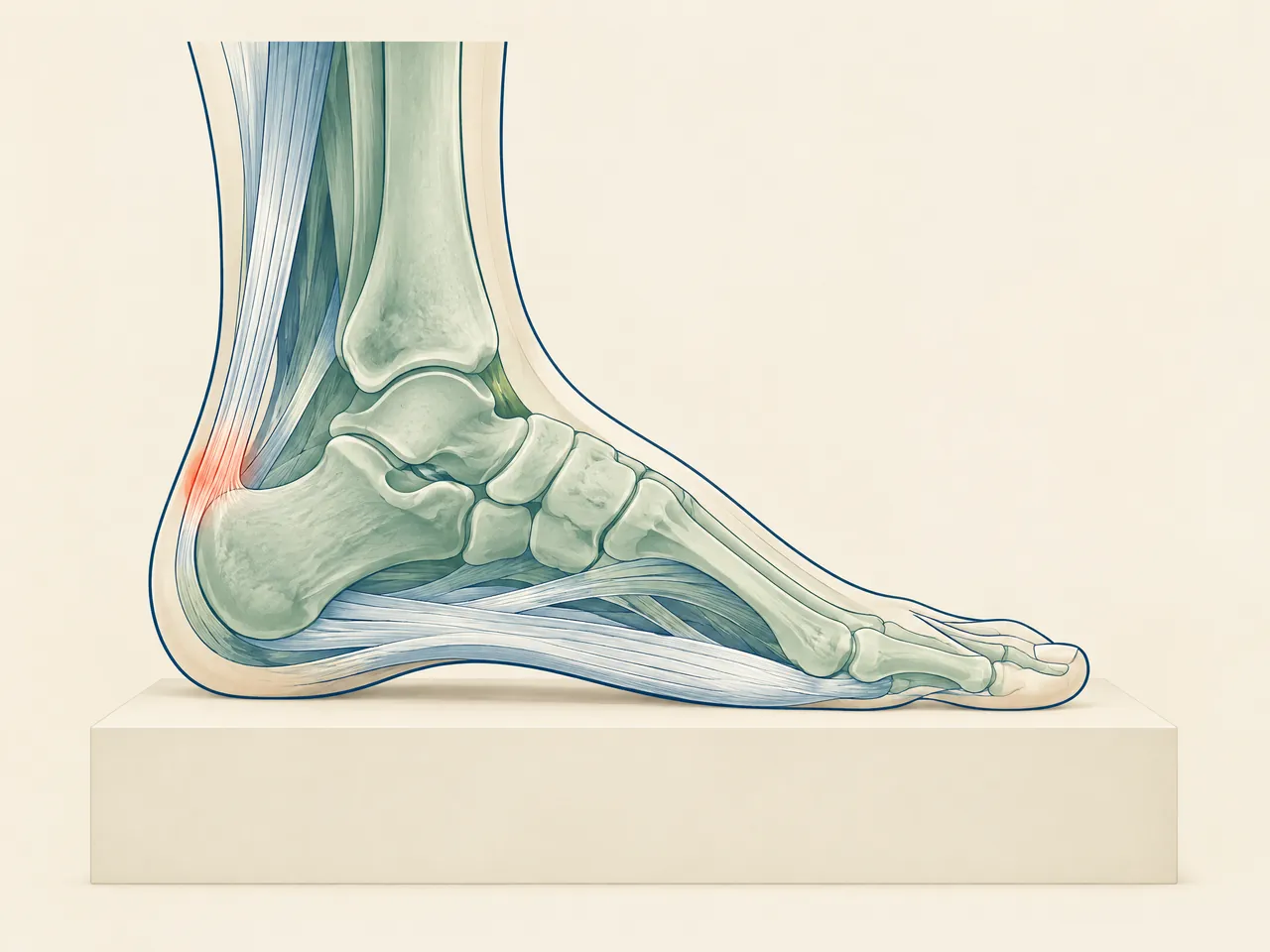
Pain in the sole of the foot can relate to plantar fascia-related heel or arch pain, repeated loading, footwear pressure, nerve irritation, a stressed bone, joints, skin lesions or other soft tissues. The exact location and timing matter: first-step heel pain differs from ball-of-foot soreness after walking, while burning or numbness needs particular attention. Record the pattern, adjust aggravating load sensibly and arrange assessment when symptoms are severe, persistent or accompanied by warning signs.
Transparent pricing
See the fees.
Choose your care.
Explore our complete official price list, including first-trial prices, regular prices, packages and branch-specific options.
Opening WhatsApp prepares an enquiry; it does not send a message, take payment or confirm an appointment. Suitability and individual arrangements are confirmed during consultation.
Pain care
All prices in HKDExtracorporeal shockwave treatment
Shockwave treatment for deep-tissue and fascial care. The Kwun Tong clinic offers the multi-area options shown below.
Priced by branch
Branch-specific pricing
Prince Edward: HK$250 per area
Kwun Tong: HK$250 for 1 area / HK$450 for 2 areas / HK$600 for 3 areas
Pain care (manual therapy)
Includes Chinese medicine musculoskeletal assessment, manual joint techniques and tui na.
HK$580 (single session)
Chinese medicine musculoskeletal assessment
Pain care (acupuncture and manual therapy)
Combines acupuncture and manual therapy.
HK$680 (single session)
Combined care
Hair and scalp
All prices in HKDScalp health and hair-loss management
Includes AI scalp analysis, deep scalp and follicle cleansing, and scalp oil-control care.
HK$380 (first trial)
Regular price: HK$680
- 6 sessions: HK$3,480 (HK$580 per session)
- 12 sessions: HK$5,760 (HK$480 per session)
- 20 sessions: HK$8,600 (HK$430 per session)
- 30 sessions: HK$11,400 (HK$380 per session)
Hair acupuncture and Chinese herbal medicine package
Includes scalp acupuncture and 3 days of Chinese herbal medicine that does not require decoction.
HK$580 (single session)
Registered Chinese Medicine Practitioner consultation
- 6 sessions: HK$3,180 (HK$530 per session)
- 12 sessions: HK$5,760 (HK$480 per session)
- 20 sessions: HK$8,600 (HK$430 per session)
- 30 sessions: HK$11,400 (HK$380 per session)
Combined hair and scalp treatment
Combines acupuncture and Chinese herbal medicine with salon-level scalp and follicle care. Packages include complimentary hair-care shampoo and serum.
HK$1,260 (single session)
Combined treatment
- 8 sessions: HK$8,640 (HK$1,080 per session)
- 16 sessions: HK$15,680 (HK$980 per session)
- 20 sessions: HK$18,600 (HK$930 per session)
- 30 sessions: HK$26,400 (HK$880 per session)
Weight management
All prices in HKDFull-body acupoint embedding for weight management
Includes full-body acupoint embedding. Packages include complimentary Chinese herbal medicine for weight management, with the number of included days scaled to the package. Embedding material and the individual treatment arrangement are confirmed during consultation; this is not a cosmetic thread lift.
HK$980 (single session)
No trial session
- 10 sessions: HK$7,800 (HK$780 per session)
- 20 sessions: HK$14,600 (HK$730 per session)
- 30 sessions: HK$20,400 (HK$680 per session)
Facial acupuncture
All prices in HKDFacial acupuncture (basic)
Includes facial acupuncture and meridian-based facial care, including care for facial puffiness.
HK$480 (first trial)
Regular price: HK$680
- 10 sessions: HK$5,200 (HK$520 per session)
- 20 sessions: HK$9,600 (HK$480 per session)
- 30 sessions: HK$13,500 (HK$450 per session)
Facial acupuncture (advanced)
Includes enhanced facial acupuncture with a specially formulated moisturising mask and serum.
HK$780 (first trial)
Regular price: HK$1,180
- 10 sessions: HK$9,000 (HK$900 per session)
- 20 sessions: HK$16,600 (HK$830 per session)
- 30 sessions: HK$23,400 (HK$780 per session)
Chinese medicine
All prices in HKDAcupuncture and Chinese herbal medicine package
Includes a Chinese medicine consultation with pulse assessment, body acupuncture and 3 days of Chinese herbal granules that do not require decoction.
HK$580 (single session)
Chinese medicine consultation with pulse assessment
Foot pain causes — What causes pain in the bottom of the foot? — pain in the sole of the foot by location
Location narrows the conversation without replacing an examination. Try to identify the smallest area you can with one finger, then notice whether pressure, toe movement, barefoot walking on hard flooring or a particular shoe changes it. The bottom of the foot includes the heel pad, the band of tissue along the sole, small joints, tendons, nerves and the forefoot. Different structures can create a similar complaint, which is why “sole pain” alone is too broad for a confident online answer. Broad clinical guidance likewise groups bottom-of-foot pain by heel, arch and ball-of-foot location, while recognising that injuries and several health conditions may contribute. [2]
A simple symptom map is more useful than repeatedly testing the painful spot. Mark whether discomfort stays under the inside of one heel, draws through the arch, sits behind the toes, or travels with tingling. Also record whether it began gradually, after an awkward step, after a return to running, or after a new work routine with much more standing. If an ankle twist came first, the timing matters; ankle sprain functional tests may help explain why stability and return-to-activity questions are different from an unexplained sole-pain pattern.
Think of these observations as information for triage, not a home test. A sore area can be tender because it is overloaded, but tenderness cannot show whether there is a bone, nerve, joint or skin contribution. Avoid forcing a painful stretch, digging into a focal spot or trying to “walk it off” when pain is sharply increasing. In particular, a new inability to take normal weight through the foot deserves prompt medical assessment rather than a self-diagnosis based on location alone.

Foot pain causes: What causes pain in the bottom of the foot? — pain in the sole of the foot at the heel and arch
Pain below the heel or into the arch is commonly described as plantar heel pain. A pattern that is much worse with the initial steps after sleep or a long sit, eases as someone moves, then returns after extended standing or walking can fit plantar fascia-related pain. The Hong Kong College of Orthopaedic Surgeons describes this pattern and lists recent changes in running, trauma, a tight heel cord and a new pair of shoes among associated factors. [3] It is still a pattern, not proof: a bruised heel pad, a stress-related injury, a nerve problem or another local condition can feel close enough to confuse the picture.
Foot pain causes: What causes pain in the bottom of the foot? — pain in the sole of the foot at the forefoot
Forefoot pain is usually felt under the ball of the foot, often when the body rolls forward to push off. Ask whether it is centred under one metatarsal area, between toes, under a callus-like patch, or spread across the front of the sole. Shoes that crowd the front of the foot, a sudden increase in walking or running, and pressure from a hard surface can be useful details to report. A feeling of burning, pins and needles or an electric sensation is a different clue from pressure soreness; clinical guidance lists nerve-related conditions among possible causes of these sensations. [2] Do not assume that an arch support or massage addresses every forefoot pattern.
Compare your options
| Where or when it is felt | Details worth noting | Why the detail matters at assessment |
|---|---|---|
| Under the heel or into the arch, especially on first steps | Exact heel point, time after rest, change after a few minutes of walking | Can distinguish a first-step pattern from pain that stays severe with every step. |
| Under the ball of the foot | One spot or between toes, shoe width, push-off pain, callus or skin change | Helps separate focal pressure, skin and nerve-like symptoms for discussion. |
| After a long standing shift or walk | Duration, surface, breaks, activity change, shoe used | Shows the cumulative load and whether a practical modification is worth trying. |
| Burning, tingling, numbness or pain after injury | Spread of symptoms, weakness, colour or temperature change, ability to bear weight | Signals that earlier medical assessment may be more appropriate than self-treatment. |
On smaller screens, scroll the table sideways to compare all columns.
Foot pain causes — What causes pain in the bottom of the foot? — pain in the sole of the foot over time
Time is often as revealing as place. Compare the first minutes after getting out of bed with the middle of a normal day and the period after work or exercise. Note whether the symptom settles once you move, stays constant with every step, or appears only after a certain amount of standing. The answer can change the questions an assessor asks about loading, footwear, injury and referral. It also prevents a common mistake: assuming that every symptom which improves briefly after warming up is safe to keep loading.
Keep the record practical. For several days, write down the activity before the flare, the type of surface, the shoe, the location and the symptom quality. Include a short note on whether there was swelling, a warm or red area, a wound, altered colour, numbness or weakness. This is not a scorecard and it does not need specialist equipment. Its value is that it shows a clinician what ordinary daily life does to the foot, rather than relying on a vague memory during an appointment.
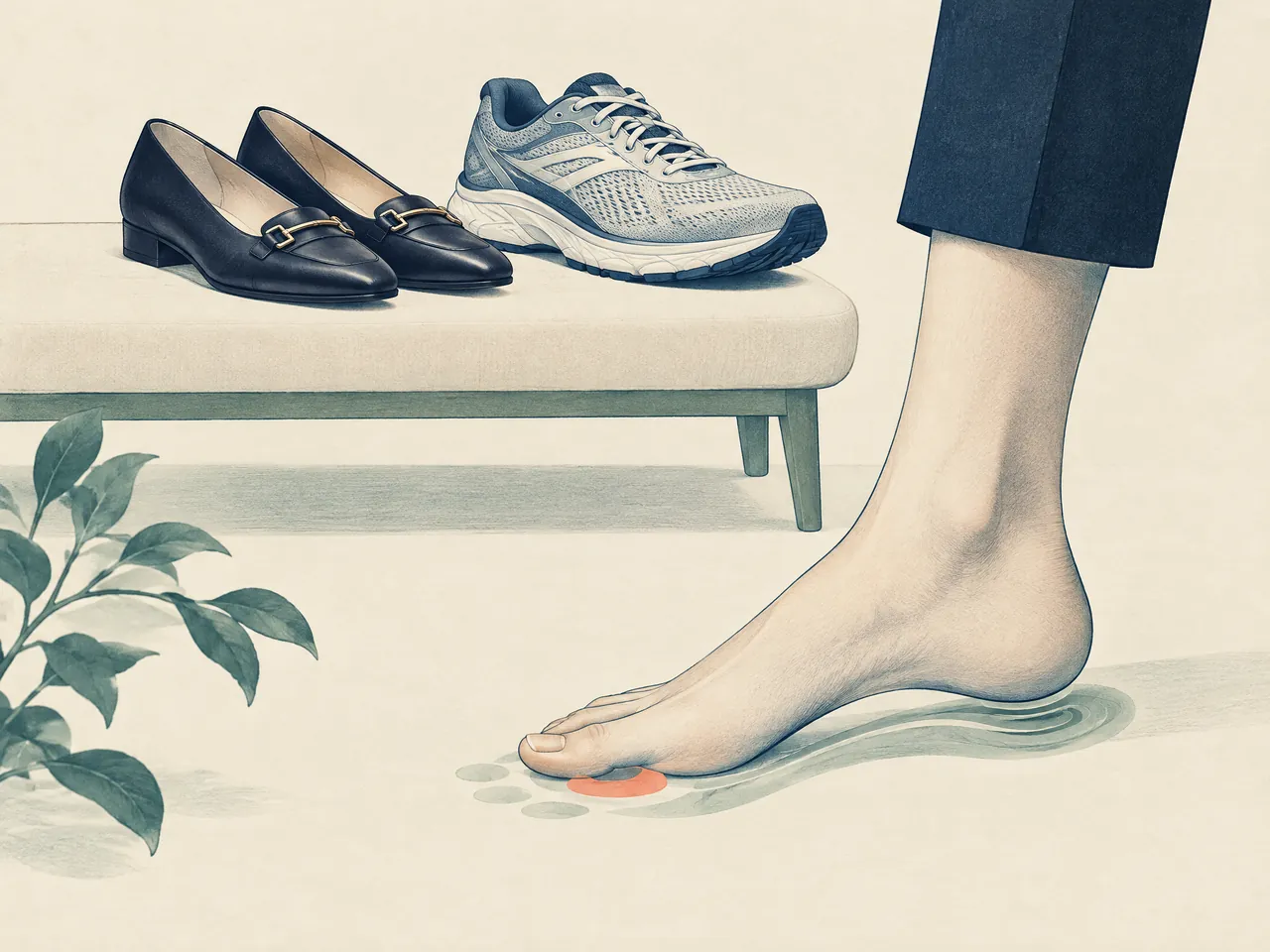
When the symptom follows a workday, break the question into exposure and recovery. How long were you standing without a change of position? Was there more stair climbing, carrying, walking on concrete, sport or a commute than usual? Did you move abruptly from sandals to firm shoes, or replace a worn shoe with a different shape? The article What should I do for foot pain after standing or walking? offers a related starting point for examining those day-to-day factors without presuming a diagnosis.
Foot pain causes: What causes pain in the bottom of the foot? — pain in the sole of the foot after rest
Pain after rest is often what makes people ask, “What causes pain in the bottom of the foot?” For plantar fasciitis, the NHS notes pain around the heel and arch that is worse when walking first begins after sleeping or resting, then may ease with movement. [1] That can be a useful reason to seek an assessment, not a reason to label every morning step. Describe how long the stiffness or pain lasts, whether it is at the heel or elsewhere, and whether there has been a recent increase in activity. Sudden severe pain, visible swelling or pain after a clear injury changes the urgency of that conversation.
Foot pain causes: What causes pain in the bottom of the foot? — pain in the sole of the foot after standing or walking
A sole that becomes increasingly sore later in a long shift or walk may be reacting to cumulative load, shoe pressure, a change in gait or an underlying problem that needs examination. It is reasonable to pause or reduce an activity that clearly provokes a flare instead of adding more miles to test it. For a heel-and-arch pattern, the NHS advises against long periods of standing or walking while it is painful and recommends supportive, cushioned footwear and regular gentle exercises as general measures. [1] The right next step depends on the person and the suspected cause, so do not copy another person’s stretching routine if it creates sharp pain, tingling or a sustained worsening.
Foot pain causes — What causes pain in the bottom of the foot? — pain in the sole of the foot and next steps
Start with measures that do not conceal useful warning signs: reduce the specific activity that reliably aggravates the sole, avoid walking barefoot on unforgiving ground if that is provocative, and choose a shoe with enough room and cushioning for the affected area. Check the shoe rather than trusting its label. Look for a worn-down sole, a tilted heel, a narrow toe box or a pressure point that coincides with the painful area. A gradual return is usually more informative than alternating between complete rest and a sudden return to the same demanding routine.
An assessment should begin with a clear history and examination, not with a promise that one technique fits all causes. Depending on the findings, a clinician may discuss load adjustment, footwear, exercises, an insole, imaging or referral. If you are considering traditional Chinese medicine or acupuncture as part of a broader plan, first make sure that an injury, infection, circulation issue or neurological symptom is not being overlooked. The review behind Can acupuncture help with foot pain? is worth reading with that distinction in mind: a systematic review found limited, short-term evidence for acupuncture in plantar fasciitis and insufficient evidence for a definitive longer-term conclusion. [4] It should not replace a needed medical assessment or practical load and footwear changes.
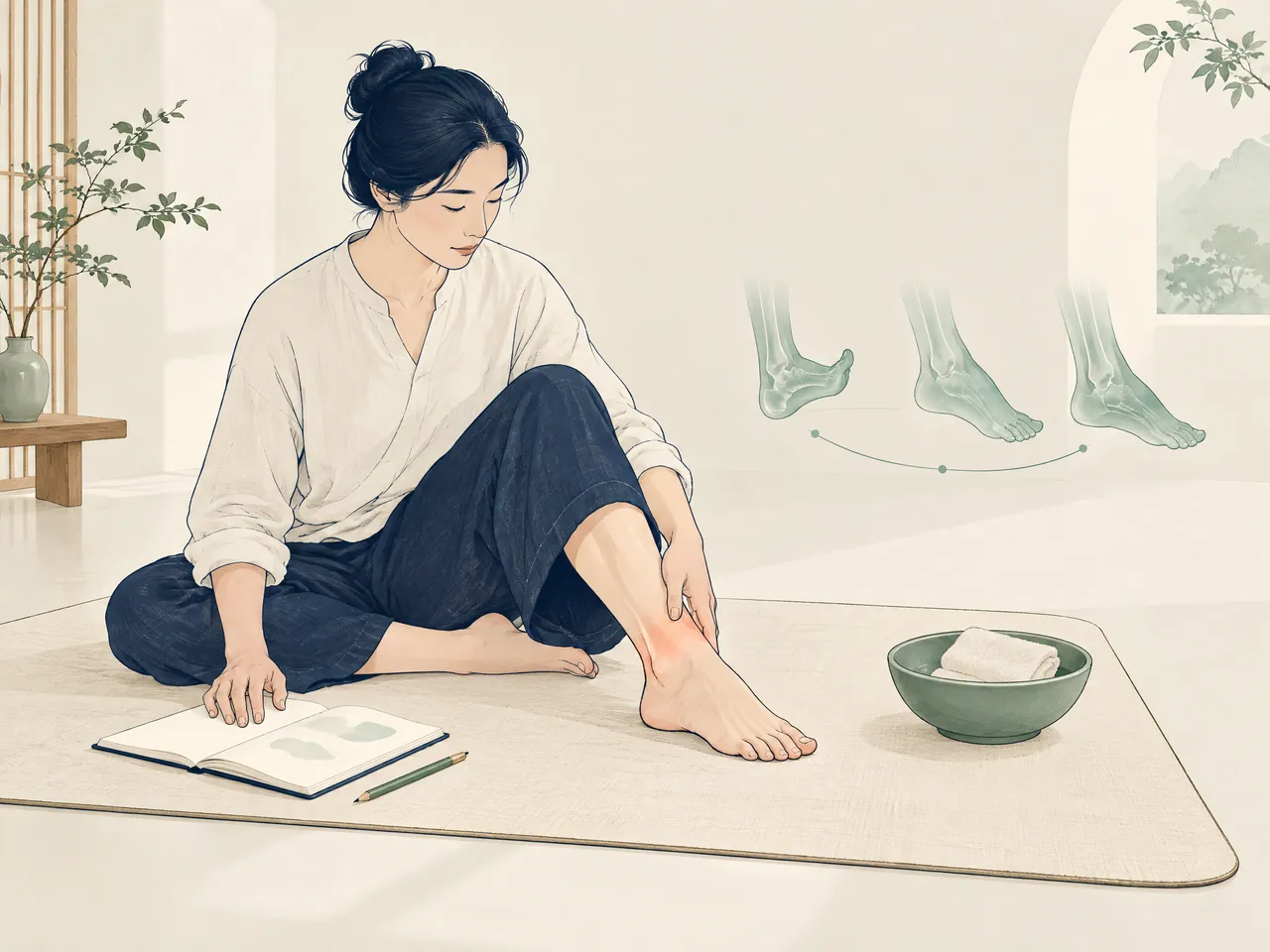
Seek prompt medical care if you cannot bear weight normally, have marked swelling or deformity after an injury, or develop a hot, red, rapidly changing area, fever, a wound or drainage. Persistent numbness, worsening burning, weakness or colour change also need assessment. People with diabetes should not wait to self-treat a new foot problem because foot symptoms can be more serious in that setting. [1] If pain is stopping normal activities, keeps returning, becomes worse, or has not improved with sensible self-care, arrange an appropriate professional assessment. [1]
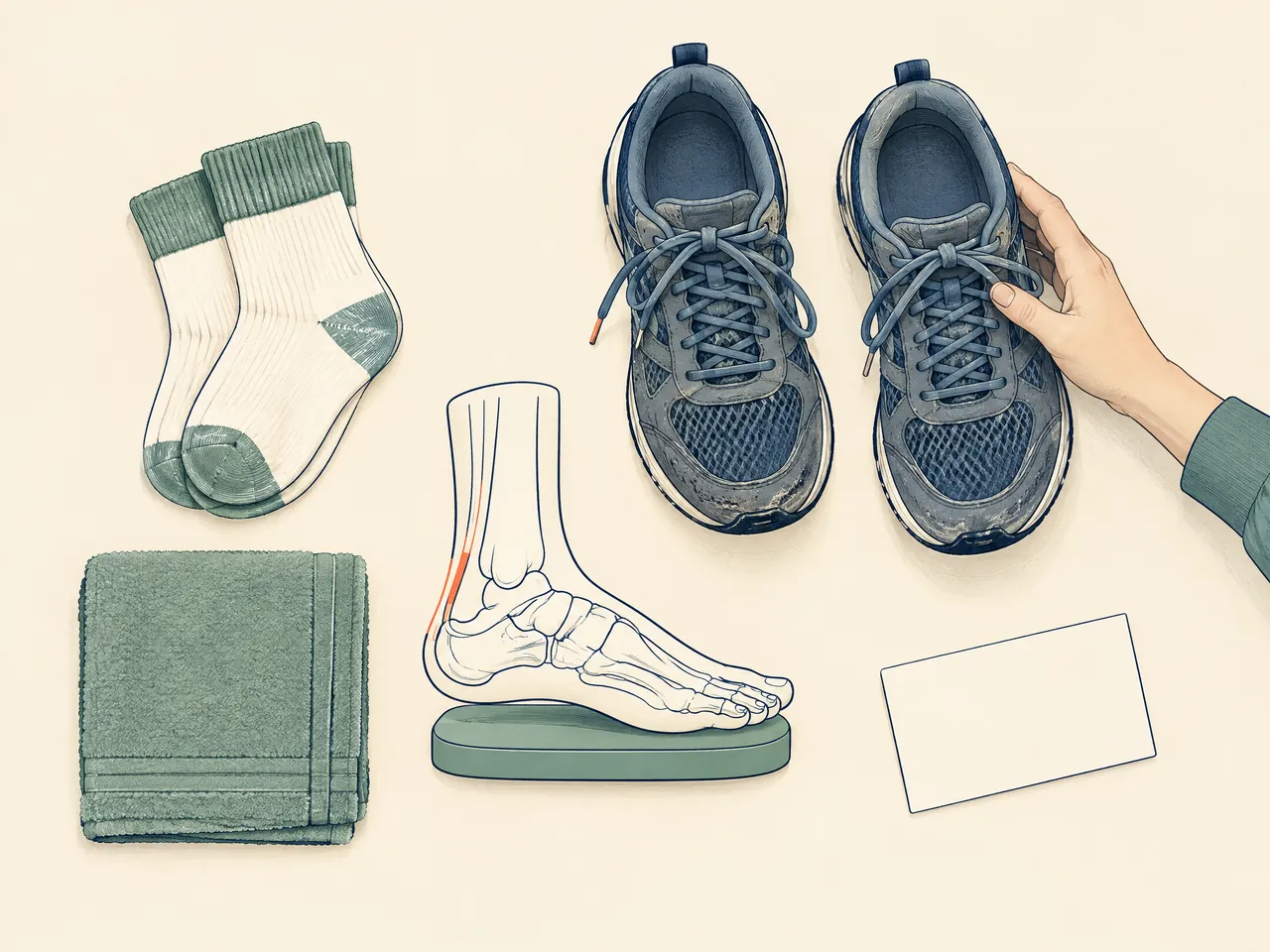
Foot pain causes: What causes pain in the bottom of the foot? — pain in the sole of the foot, footwear and activity
Use footwear as one part of the story, not as a universal cure. For heel-and-arch pain, a cushioned heel and appropriate arch support may be useful discussion points; for forefoot pain, enough room across the toes and avoiding a focal pressure point may matter more. The NHS specifically advises avoiding tight, pointy shoes, backless slippers and high heels when managing plantar fasciitis, while recommending footwear with cushioned heels and good arch support. [1] Bring the shoes that provoke symptoms to an appointment. Their wear pattern and the point where the shoe meets the painful area can be more helpful than a brand recommendation.
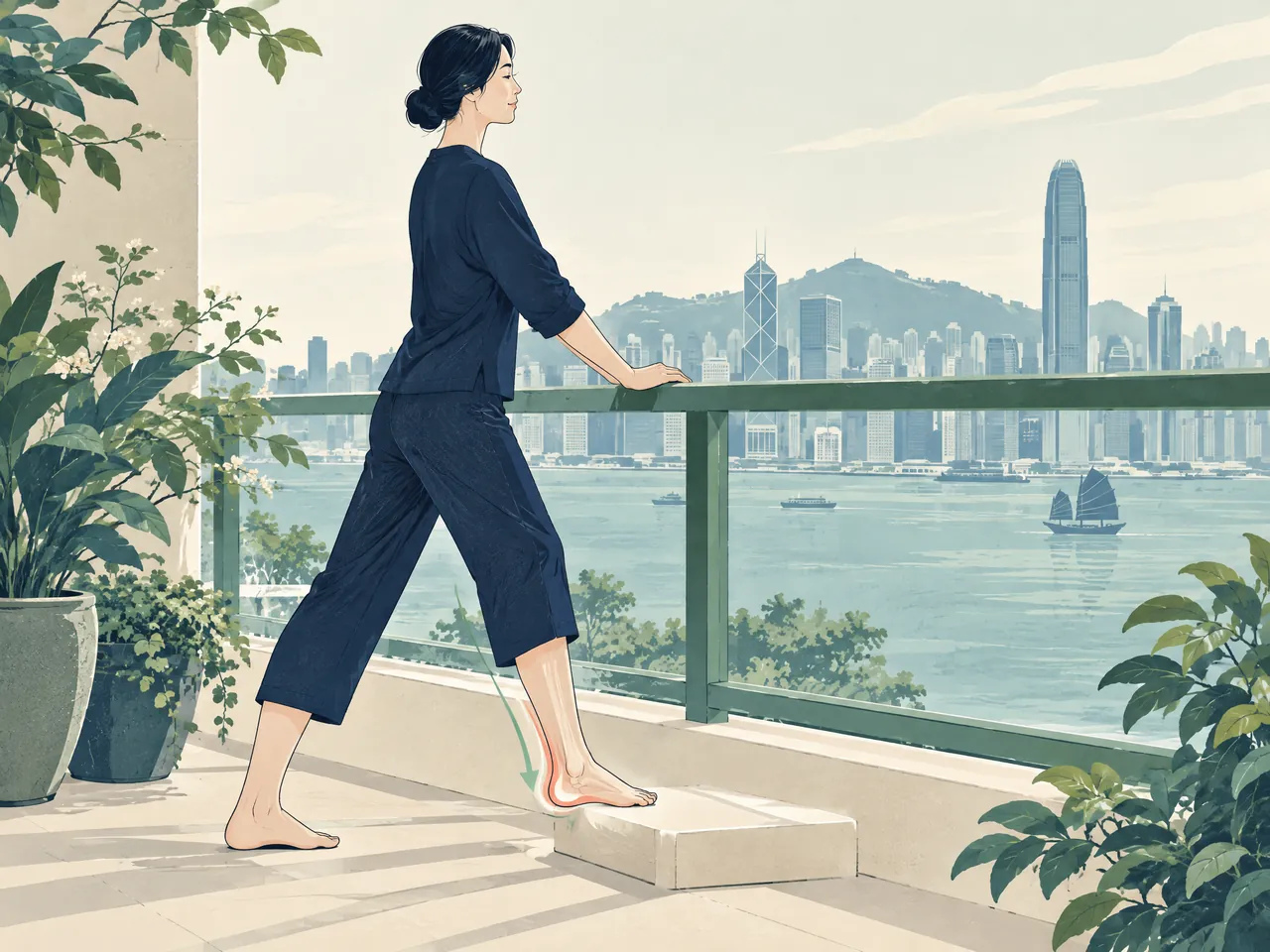
Foot pain causes: What causes pain in the bottom of the foot? — pain in the sole of the foot and when to seek assessment
Arrange an assessment sooner rather than later when the story does not fit a simple, settling overload problem: pain is focal and severe, night pain is prominent, symptoms follow trauma, sensation is altered, or skin integrity is changing. Be ready to say what you can and cannot do: walk normally, climb stairs, stand at work, press the toes off the floor, or wear your usual shoe. For a Hong Kong consultation with TCM Lab, you may ask about an appointment at the Kwun Tong Chinese medicine clinic or the Chinese medicine clinic Prince Edward. Describe any language needs and whether the concern may need medical triage first.
Care and health guide
Foot discomfort: care information
This directory brings together services, reading, and visit information related to foot discomfort, to help you prepare questions for a consultation.
When foot discomfort affects your day, noting when it occurs, its relation to activity, and what you have already tried can help prepare a consultation; acupuncture for foot pain is a relevant service or reading entry point.
Individual circumstances differ, and acupuncture Hong Kong offers related information to help you understand options and prepare questions.


Your questions, answered
Frequently asked questions
Is pain in the sole of the foot always plantar fasciitis?
No. Plantar fascia-related pain is one possible explanation, especially for heel or arch pain that is worse with initial steps after rest. Pain beneath the sole can also involve the forefoot, heel pad, skin, joints, nerves, a stress-related injury or other soft tissues. The pattern and examination matter.
What causes pain in the bottom of the foot when I first get up?
Heel-and-arch pain that is most noticeable on the first steps after sleep or sitting can occur with plantar fasciitis, but it is not diagnostic by itself. Record the exact location, how it changes after moving and any recent changes in walking, standing, running or shoes. Seek earlier assessment after trauma or if you cannot bear weight normally.
Should I stretch through pain in the sole of my foot?
No. Gentle exercise may be appropriate for some heel-and-arch patterns, but sharp pain, numbness, tingling or lasting worsening are reasons to stop and seek advice. Stretching cannot establish the cause, and it is not a substitute for assessment when there are warning signs.
When is foot pain urgent?
Prompt medical assessment is appropriate if you cannot bear weight, have marked swelling or deformity after injury, develop a wound, spreading redness, warmth, fever, persistent numbness, weakness, colour change or worsening burning. New foot pain in someone with diabetes also needs timely medical attention.
Sources and further information
- [1] [1] NHS — Plantar fasciitis
Referenced for: Symptoms around the heel and arch, first-step and prolonged-activity patterns, footwear and gentle-exercise guidance, and reasons to seek clinical help.
- [2] [2] Cleveland Clinic — Foot Pain
Referenced for: Broad location-based discussion of bottom-of-foot pain and nerve-like symptom descriptors; assessment considerations.
- [3] [3] The Hong Kong College of Orthopaedic Surgeons — Plantar Fasciitis
Referenced for: Hong Kong orthopaedic description of plantar heel pain timing, associated factors and conservative-management terminology.
- [4] [4] Singapore Medical Journal — Acupuncture for plantar fasciitis
Referenced for: Systematic-review conclusion that evidence was insufficient for a definitive conclusion about longer-term acupuncture effectiveness.