
TCM Lab · Health reading
What causes tennis elbow? What are the symptoms of tennis elbow? Can you get tennis elbow without playing tennis?
Published Updated
Tennis elbow can happen without a tennis racket in sight. It is a name commonly used for pain around the outside of the elbow that may be associated with repeated loading of the forearm and wrist. Gripping a bag, twisting a cloth, using a screwdriver, lifting a pan, working with a mouse or returning quickly to a racket sport can all be useful clues. The pattern matters more than the activity label. Notice exactly where the pain sits, what movement brings it on, whether grip feels altered, and whether there has been an injury, numbness or pain travelling from the neck. Those details help distinguish a possible repeated-load problem from symptoms that should be medically assessed first.
Appointments are confirmed through WhatsApp. If you have language requirements, please mention them in your enquiry.
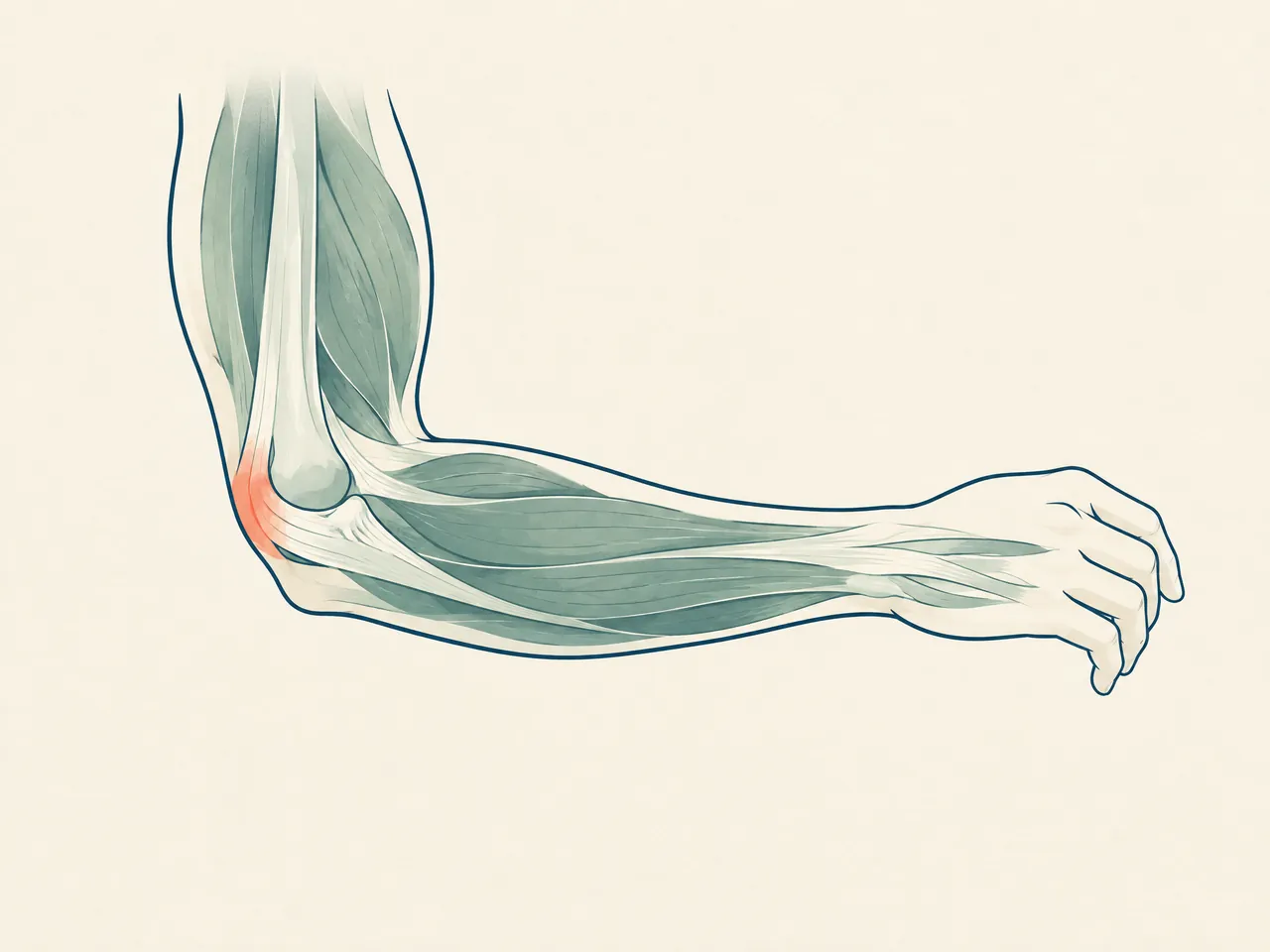
The short answer
Tennis elbow is often linked with repeated gripping, wrist movement or forearm twisting, so you can have it without playing tennis. Typical features are pain or tenderness on the outer elbow, discomfort when gripping or moving the wrist, and sometimes forearm pain or a weaker-feeling grip. These signs do not confirm a diagnosis. Sudden injury, marked weakness, persistent numbness, a hot swollen joint or fever should be medically assessed rather than managed with forceful stretching.
Transparent pricing
See the fees.
Choose your care.
Explore our complete official price list, including first-trial prices, regular prices, packages and branch-specific options.
Opening WhatsApp prepares an enquiry; it does not send a message, take payment or confirm an appointment. Suitability and individual arrangements are confirmed during consultation.
Pain care
All prices in HKDExtracorporeal shockwave treatment
Shockwave treatment for deep-tissue and fascial care. The Kwun Tong clinic offers the multi-area options shown below.
Priced by branch
Branch-specific pricing
Prince Edward: HK$250 per area
Kwun Tong: HK$250 for 1 area / HK$450 for 2 areas / HK$600 for 3 areas
Pain care (manual therapy)
Includes Chinese medicine musculoskeletal assessment, manual joint techniques and tui na.
HK$580 (single session)
Chinese medicine musculoskeletal assessment
Pain care (acupuncture and manual therapy)
Combines acupuncture and manual therapy.
HK$680 (single session)
Combined care
Hair and scalp
All prices in HKDScalp health and hair-loss management
Includes AI scalp analysis, deep scalp and follicle cleansing, and scalp oil-control care.
HK$380 (first trial)
Regular price: HK$680
- 6 sessions: HK$3,480 (HK$580 per session)
- 12 sessions: HK$5,760 (HK$480 per session)
- 20 sessions: HK$8,600 (HK$430 per session)
- 30 sessions: HK$11,400 (HK$380 per session)
Hair acupuncture and Chinese herbal medicine package
Includes scalp acupuncture and 3 days of Chinese herbal medicine that does not require decoction.
HK$580 (single session)
Registered Chinese Medicine Practitioner consultation
- 6 sessions: HK$3,180 (HK$530 per session)
- 12 sessions: HK$5,760 (HK$480 per session)
- 20 sessions: HK$8,600 (HK$430 per session)
- 30 sessions: HK$11,400 (HK$380 per session)
Combined hair and scalp treatment
Combines acupuncture and Chinese herbal medicine with salon-level scalp and follicle care. Packages include complimentary hair-care shampoo and serum.
HK$1,260 (single session)
Combined treatment
- 8 sessions: HK$8,640 (HK$1,080 per session)
- 16 sessions: HK$15,680 (HK$980 per session)
- 20 sessions: HK$18,600 (HK$930 per session)
- 30 sessions: HK$26,400 (HK$880 per session)
Weight management
All prices in HKDFull-body acupoint embedding for weight management
Includes full-body acupoint embedding. Packages include complimentary Chinese herbal medicine for weight management, with the number of included days scaled to the package. Embedding material and the individual treatment arrangement are confirmed during consultation; this is not a cosmetic thread lift.
HK$980 (single session)
No trial session
- 10 sessions: HK$7,800 (HK$780 per session)
- 20 sessions: HK$14,600 (HK$730 per session)
- 30 sessions: HK$20,400 (HK$680 per session)
Facial acupuncture
All prices in HKDFacial acupuncture (basic)
Includes facial acupuncture and meridian-based facial care, including care for facial puffiness.
HK$480 (first trial)
Regular price: HK$680
- 10 sessions: HK$5,200 (HK$520 per session)
- 20 sessions: HK$9,600 (HK$480 per session)
- 30 sessions: HK$13,500 (HK$450 per session)
Facial acupuncture (advanced)
Includes enhanced facial acupuncture with a specially formulated moisturising mask and serum.
HK$780 (first trial)
Regular price: HK$1,180
- 10 sessions: HK$9,000 (HK$900 per session)
- 20 sessions: HK$16,600 (HK$830 per session)
- 30 sessions: HK$23,400 (HK$780 per session)
Chinese medicine
All prices in HKDAcupuncture and Chinese herbal medicine package
Includes a Chinese medicine consultation with pulse assessment, body acupuncture and 3 days of Chinese herbal granules that do not require decoction.
HK$580 (single session)
Chinese medicine consultation with pulse assessment
What causes tennis elbow? What are the symptoms of tennis elbow? Can you get tennis elbow without playing tennis? — Understanding repeated load
Tennis elbow, also called lateral epicondylitis, describes a pattern involving the outer side of the elbow and the forearm tendons that attach there. It is commonly associated with overuse of the wrist and forearm muscles, particularly with repeated motions rather than one moment of effort. That does not mean that every ache after a busy day is tennis elbow, or that a person can identify it from an online description. It does explain why the name can be misleading: people who play tennis are only one group who may develop this type of pain. Mayo Clinic notes that many people affected do not play tennis and that repeated wrist and arm movements at work can be relevant [2].
Think of repeated load as a pattern that accumulates. A task may be easy once but irritating when it is frequent, held for a long time, done with a tight grip, or resumed suddenly after a break. The NHS lists gripping and repeatedly twisting the wrist and forearm among possible contributors, with examples including computer work, sewing, a screwdriver and playing an instrument [1].
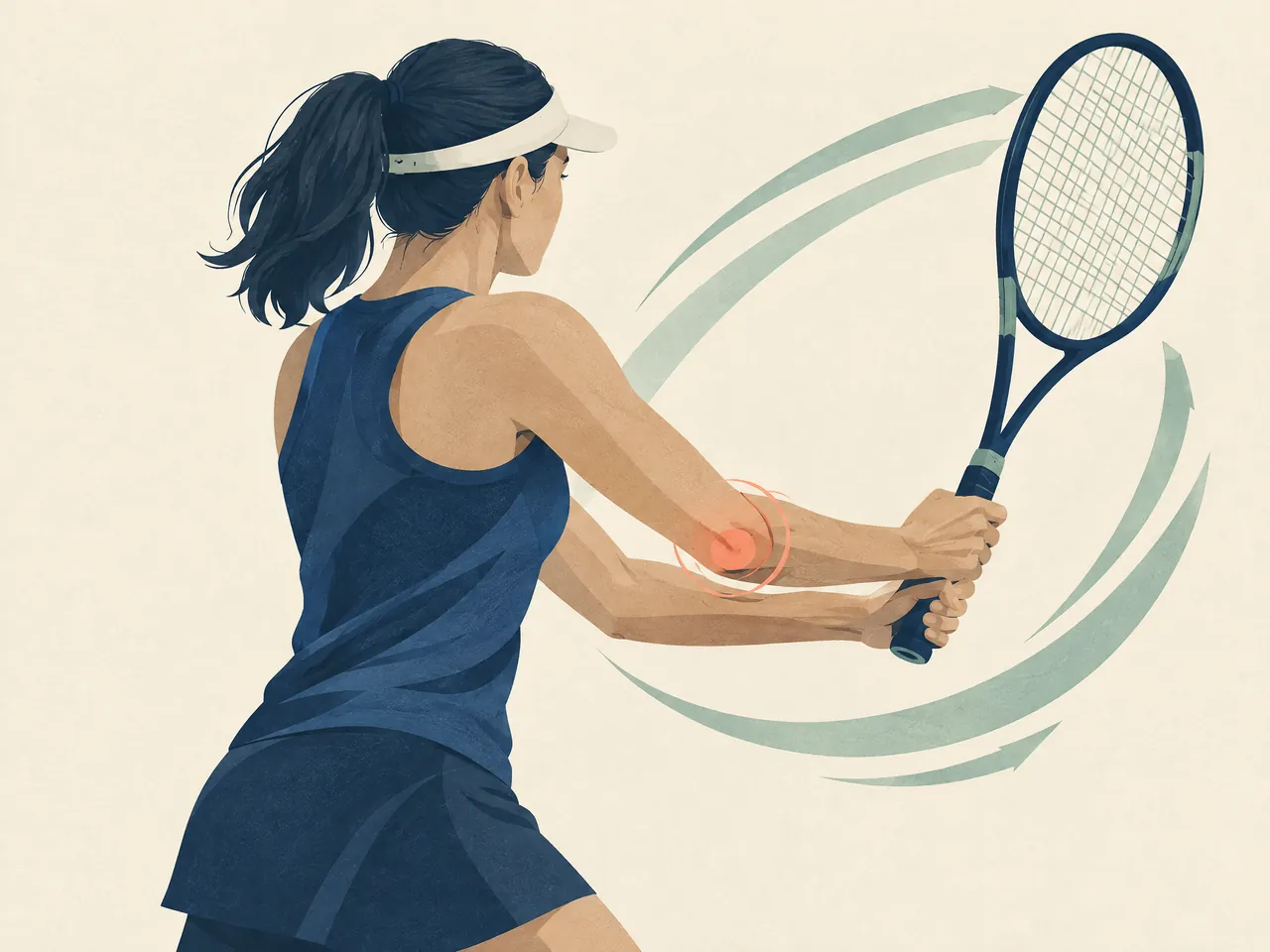
What causes tennis elbow? What are the symptoms of tennis elbow? Can you get tennis elbow without playing tennis? — Everyday movements to notice
Start with ordinary movements instead of trying to diagnose yourself from the name of the condition. Does the outer elbow complain when you lift a kettle, hold a phone, pick up a cup, shake hands, open a jar, turn a key or wring a towel? Does it appear when the wrist is bent back, when the forearm turns palm-up or palm-down, or after carrying shopping? A useful note records the movement, the exact elbow or forearm location, whether discomfort begins during or after the task, and whether it settles when the task stops. This turns a vague report of elbow pain into information that a clinician can assess.
It is also useful to notice what has not changed. If the pain is present at rest without a clear activity link, comes with tingling in the hand, begins in the neck or shoulder, or follows a fall, do not force it into a repeated-load explanation. The aim is not to avoid every hand movement. It is to identify a manageable level of activity and to see whether an adjustment changes the pattern. For a broader introduction to the topic and a Chinese-medicine discussion, see tennis elbow TCM.
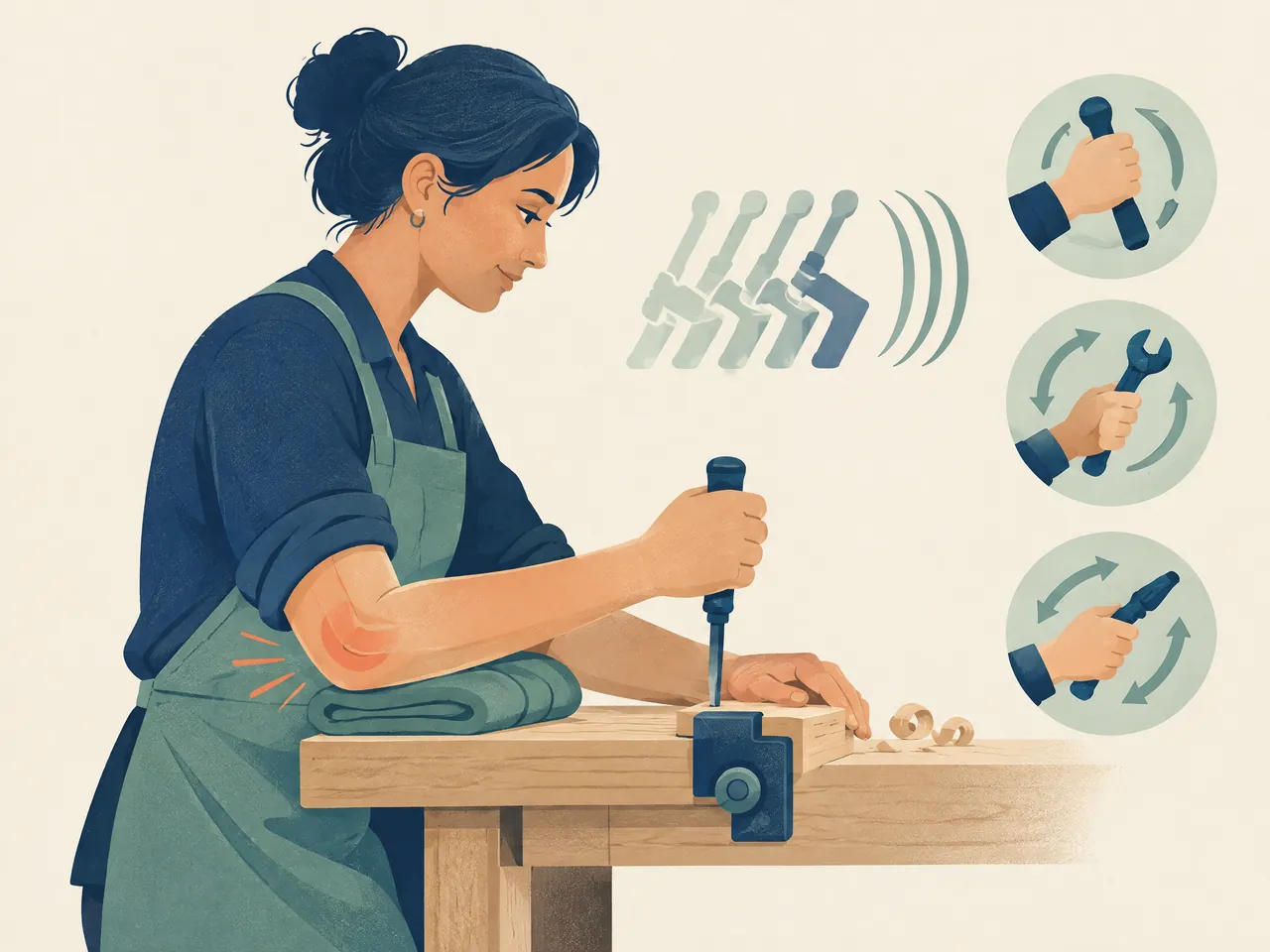
What causes tennis elbow? What are the symptoms of tennis elbow? Can you get tennis elbow without playing tennis? — Work, tools and sport
Work and hobbies can involve the same forearm actions as racket sport. Painting, food preparation, plumbing tools, screw-driving, sewing, musical instruments and regular mouse use can each combine gripping with wrist or forearm movement. Sport may add faster repetition, a firmer handle or a change in technique. The question is not whether an activity appears on a list; it is whether your own symptoms reliably respond to its duration, position, force or frequency. Recording a typical workday and a typical rest day can make differences easier to spot without guessing about a single cause.
A sudden jump in exposure often deserves attention. For example, a person may cope with short periods of tool use yet develop pain after a deadline requires several long sessions, or after returning to tennis at a previous intensity. Before adding forceful stretches or buying equipment, reduce or modify the task that repeatedly provokes sharp pain and make one practical change at a time: a lighter load, a larger handle, a different hand position, shorter batches or more breaks. This gives a clearer picture of the load than simply pushing through discomfort.
Compare your options
| What you notice | A useful detail to record | Why it matters for the next conversation |
|---|---|---|
| Pain while gripping or lifting | Object held, grip position, load and whether pain starts during or after the task | Helps identify a repeatable forearm-load pattern without assuming a diagnosis |
| Pain when twisting or using a tool | Specific motion, tool size, duration, work pace and recent changes in workload | Supports a discussion about task modification, technique and whether assessment is needed |
| Outer-elbow tenderness with forearm discomfort | Exact location, spread toward wrist or hand, stiffness and effect on daily activities | Shows whether the pattern resembles common lateral-elbow symptoms or needs wider evaluation |
| Numbness, pronounced weakness or neck-to-arm pain | Which fingers or area are affected, onset, constancy and any dropped objects | Signals that nerve or neck-related causes should not be overlooked |
| Heat, redness, fever or injury-related deformity | Timing, change in swelling, ability to move the elbow and details of the injury | Supports prompt medical assessment rather than forceful self-care |
On smaller screens, scroll the table sideways to compare all columns.
What causes tennis elbow? What are the symptoms of tennis elbow? Can you get tennis elbow without playing tennis? — Recognising the pattern
The most familiar symptom is pain on the outside of the elbow. It may be a local tender spot, an ache with arm movement, or pain that is more obvious when gripping or moving the wrist. Forearm discomfort, trouble fully straightening the arm, tenderness and swelling are also listed by the NHS [1]. Mayo Clinic describes how pain and weakness can make ordinary actions such as holding a coffee cup, turning a doorknob or gripping an object more difficult [2]. Symptoms can range from occasional discomfort to a pattern that interrupts work, sleep or routine tasks, so describe the impact as well as the pain score.
A weaker-feeling grip is worth explaining carefully. Sometimes the hand is capable of strength but pain makes you release sooner, avoid a handle or change the way you lift. At other times there may be a noticeable loss of control, altered sensation or weakness that is not simply pain-limited. These are not interchangeable. State whether the change is in one hand or both, whether objects are being dropped, whether there is numbness or burning, and whether the symptom occurs only with a particular motion. That detail helps prevent the label ‘tennis elbow’ from obscuring another problem.
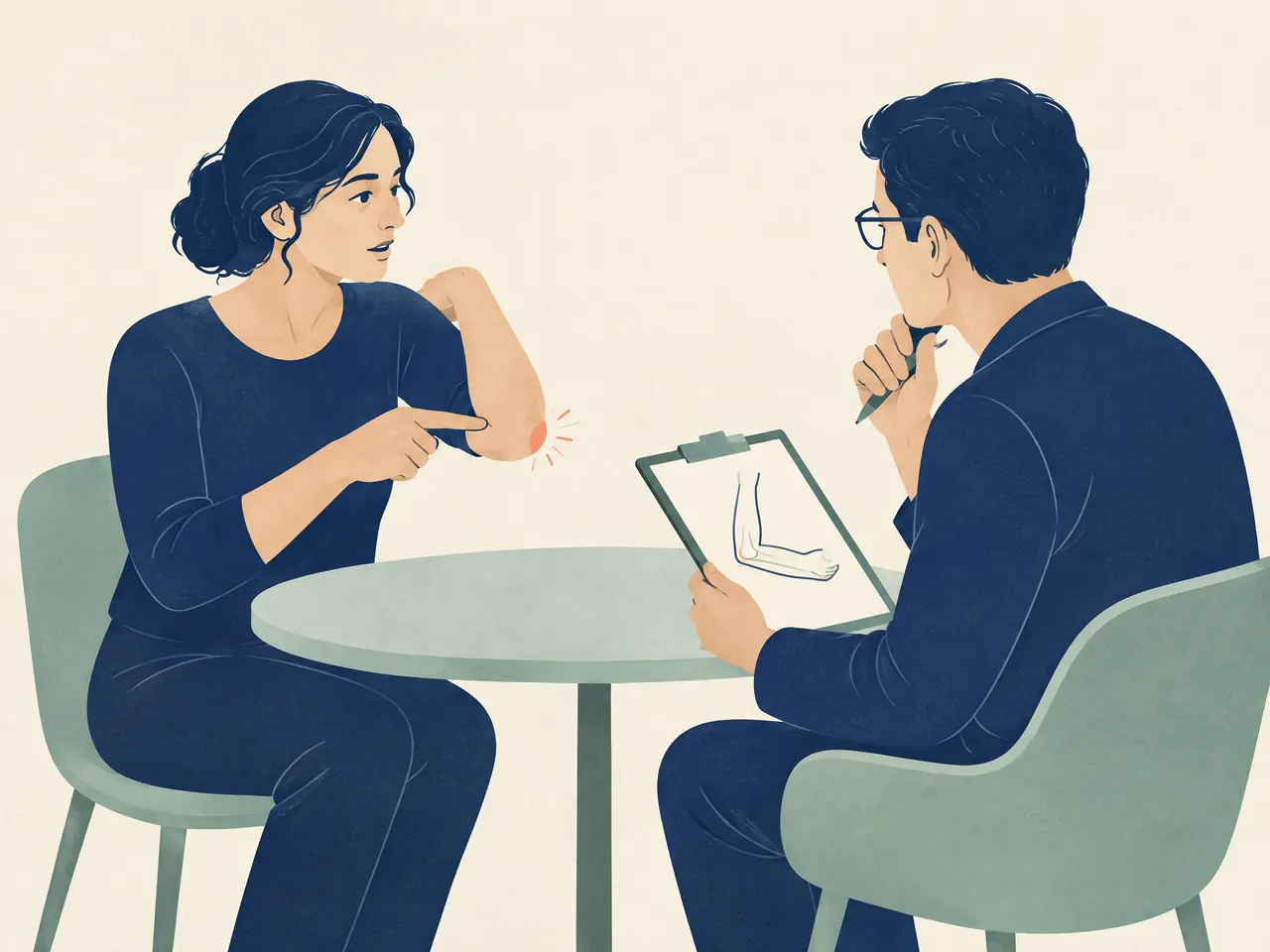
What causes tennis elbow? What are the symptoms of tennis elbow? Can you get tennis elbow without playing tennis? — Outer elbow pain and grip changes
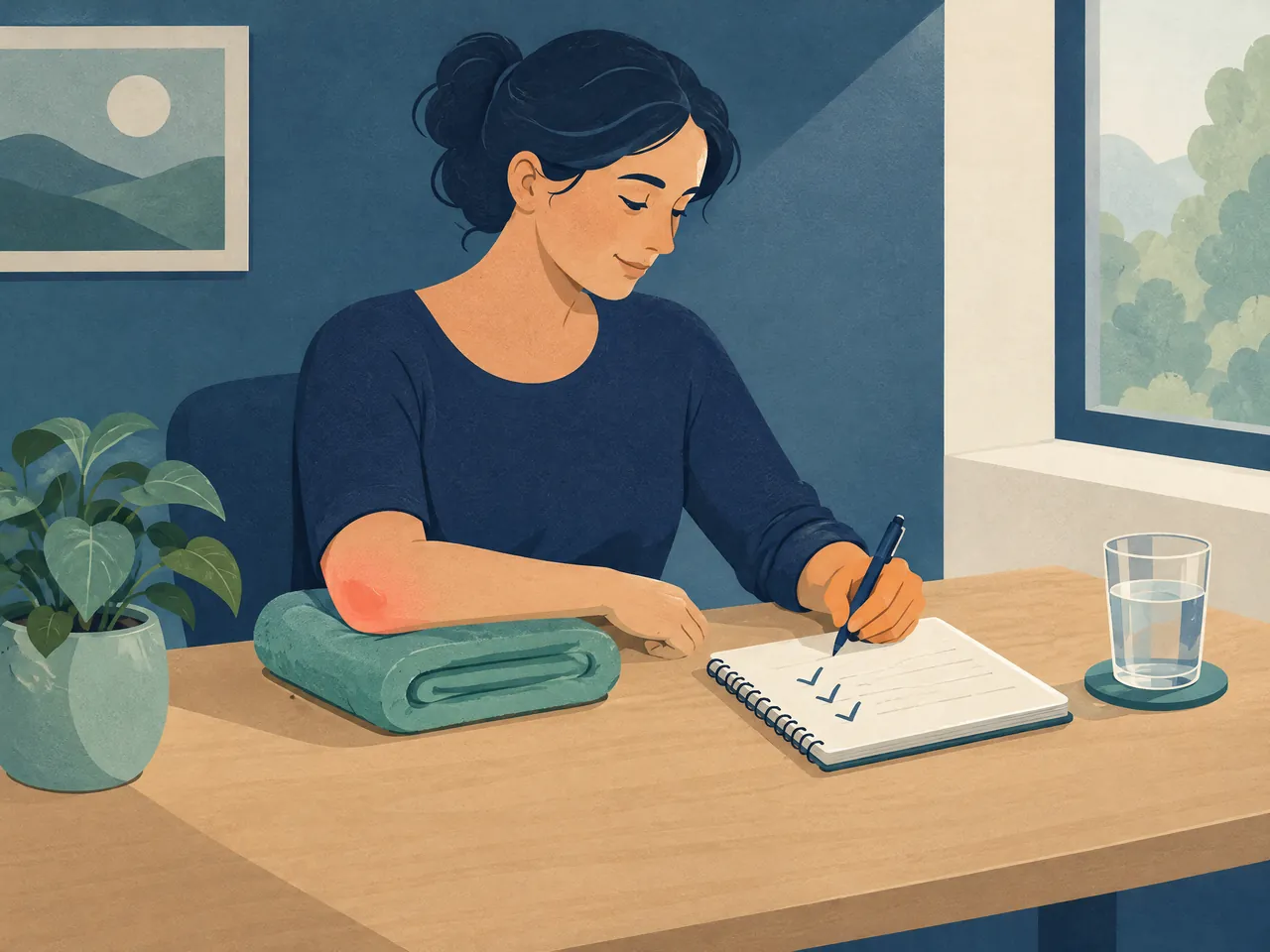
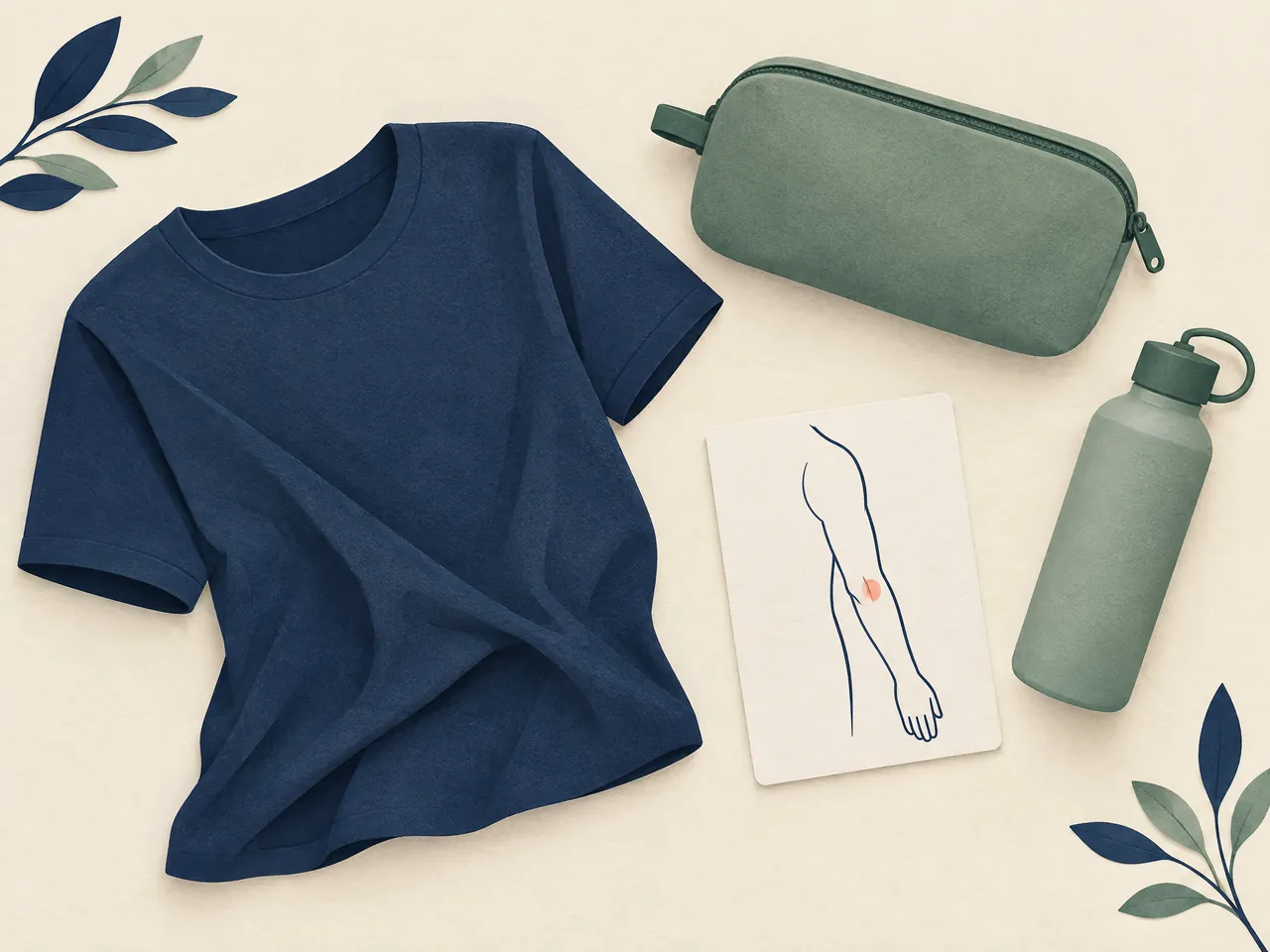
Location is a helpful starting point, not a self-diagnosis. Possible tennis-elbow pain is generally concentrated at the bony outer portion of the elbow and can extend toward the forearm or wrist. Cleveland Clinic similarly describes outer-elbow pain, stiffness, swelling and a weakened grip as common features, while emphasising that a clinician uses an examination and the symptom history to make a diagnosis [3]. Note whether pressing the area is tender, whether the pain travels, and whether the wrist, shoulder or neck seems involved. A photo or sketch can be useful if the painful point is hard to explain.
Compare movements rather than repeatedly testing the same painful one. You might notice a difference between lifting with the palm up and palm down, carrying a bag close to the body versus at arm’s length, or holding a cup with a relaxed versus a tight grip. Stop a test that creates sharp pain, numbness or a lingering flare. The comparison is only a record for an assessment; it is not a home challenge. If you want to discuss gradual movement later, the tennis elbow exercises page sets out why gentle, symptom-aware progression matters more than forcing a painful stretch.
What causes tennis elbow? What are the symptoms of tennis elbow? Can you get tennis elbow without playing tennis? — Why similar pain needs care
Outer-elbow pain has look-alikes. A joint problem, a nerve-related symptom, pain referred from the neck, another tendon issue or an injury can all change how the elbow and hand feel. For that reason, a familiar trigger does not settle the question. A clinician will normally ask how the pain started, examine movement and strength, and decide whether any further tests are useful; Cleveland Clinic describes this history-and-examination approach [3]. Bring previous reports, a medication list and a concise timeline if you already have them. They are more useful than arriving with a fixed diagnosis.
Some presentations should move ahead of self-care. Seek prompt medical assessment after a fall or other injury if the elbow looks deformed, you cannot use or move the arm normally, or pain is severe. A joint that becomes red, hot and swollen with fever needs timely medical care; do not massage or stretch it while waiting. Persistent numbness, burning, clear loss of grip strength, a rapidly enlarging lump, or pain travelling from the neck into the arm also deserve assessment. Read more about a swollen hot elbow with fever if that combination is your concern.
What causes tennis elbow? What are the symptoms of tennis elbow? Can you get tennis elbow without playing tennis? — Sensible next steps
A sensible next step is usually specific to the provoking task. Rather than resting every part of the arm indefinitely, identify the movement that repeatedly aggravates symptoms and temporarily reduce its intensity, duration or frequency. The NHS recommends avoiding or reducing activities that worsen symptoms and notes that simple movement and strengthening exercises may form part of care [1]. This is not a rule to ignore all discomfort or to follow an exercise plan without context. It is a reminder that load management and recovery are practical parts of the conversation, especially when work or caregiving makes complete avoidance unrealistic.
Make changes that are easy to observe. A shopper might split a heavy load into smaller bags; a desk worker might alternate tasks and avoid an unnecessarily tight mouse grip; someone using tools might pause before fatigue changes their hold. Keep the change long enough to see whether it affects the next day, then reassess. Heat or cold may feel more comfortable for different people, but they are not a substitute for identifying a continuing trigger or seeking care when warning signs are present. For safe practical context, see Should I use heat or ice for tennis elbow?.
What causes tennis elbow? What are the symptoms of tennis elbow? Can you get tennis elbow without playing tennis? — Adjusting activity safely
Adjusting activity is not the same as trying to ‘work through’ worsening pain. Use symptoms as feedback. If an activity produces sharp pain, spreading pain, tingling or a prolonged flare, stop and reconsider the task, technique, load or timing. When movement is comfortable enough to continue, build back gradually rather than making up for lost time with a long session. Stretching should be gentle and should not be driven into sharp pain or numbness. Strength and technique questions are best tailored to the individual pattern, especially after a recent injury or when daily work demands cannot easily change.
Prepare a short list for a medical, physiotherapy or TCM discussion: the first day of symptoms, tasks that reliably trigger them, what eases them, any impact on sleep, recent injuries, current medicines and previous treatment. This helps avoid a treatment-first conversation. TCM Lab can discuss an assessment enquiry, but a TCM discussion does not replace medical evaluation of a suspected injury, infection, nerve symptom or unexplained weakness. If you are comparing visit options, review the Chinese medicine clinic Prince Edward and Kwun Tong Chinese medicine clinic location information before messaging.

What causes tennis elbow? What are the symptoms of tennis elbow? Can you get tennis elbow without playing tennis? — When to seek medical assessment
Arrange medical assessment when elbow pain does not improve after a period of sensible activity adjustment and self-care, when it is affecting sleep or ordinary function, or when you are unsure why it started. The NHS advises seeing a GP if pain remains after resting the elbow and trying self-care for at least two weeks [1]. Earlier assessment is appropriate for severe pain, an obvious injury, significant swelling or discoloration, difficulty moving the arm, or symptoms that interfere substantially with daily life. A clear diagnosis can guide which activities are safe to resume and what care is appropriate.
For an enquiry about non-urgent outer-elbow discomfort, WhatsApp TCM Lab at +852 6940 5663 with the activity pattern, location of pain, relevant medical assessment already received and your preferred clinic. The team can clarify practical arrangements for an appointment; a message is not an automatic booking or a promise of a particular treatment. You can also check the Chinese medicine clinic price list Hong Kong before you enquire. If you have any of the warning signs above, seek medical care first rather than waiting for a routine consultation.
Care and health guide
Health service information
This directory brings together services, reading, and visit information related to health services, to help you prepare questions for a consultation.
If you are organising health questions, Chinese medicine clinic Hong Kong is a starting point for learning about related services and preparing for a consultation.
People have different needs; acupuncture Hong Kong provides further reading to help you understand options in your own context.


Your questions, answered
Frequently asked questions
What causes tennis elbow if I do not play tennis?
Repeated gripping, wrist movement and forearm twisting can be associated with tennis elbow, whether they occur in tool use, computer work, household tasks, music or sport. Sometimes there is no single clear cause. The activity pattern is a clue, not a diagnosis.
What are the early symptoms of tennis elbow?
Pain or tenderness on the outside of the elbow is common. You may notice it while gripping, lifting, bending the arm or moving the wrist, and it may extend into the forearm. Some people describe stiffness, swelling or a weaker-feeling grip.
Can I keep working if I think I have tennis elbow?
It depends on the work and the symptoms. Rather than simply pushing through pain, identify the provoking task and consider reducing load, duration or repetition while arranging appropriate assessment if symptoms persist or affect function. Sharp pain, numbness or clear weakness are reasons to stop and seek advice.
When is outer-elbow pain not something to self-manage?
Seek medical care promptly after an injury with deformity or inability to move the arm, or for severe pain, a hot red swollen elbow with fever, persistent numbness, marked weakness, a rapidly growing lump, or pain radiating from the neck into the arm.
Sources and further information
- [1] [1] NHS — Tennis elbow
Referenced for: Supports the general description of outer-elbow symptoms, activity examples, practical self-care framing and the NHS advice to seek assessment when pain continues after rest and self-care.
- [2] [2] Mayo Clinic — Tennis elbow: Symptoms and causes
Referenced for: Supports the overuse and repeated-motion explanation, the fact that many affected people do not play tennis, common everyday triggers and symptom examples.
- [3] [3] Cleveland Clinic — Tennis Elbow Lateral Epicondylitis
Referenced for: Supports the lateral-elbow symptom terminology, description of weakened grip and the role of clinical history and examination in diagnosis.