
TCM Lab · Health reading
wrist pain causes, causes of wrist pain, and What causes wrist pain? overview and guide
Published Updated
A sore wrist is not one condition. It can follow a fall, a sudden twist, a long session of typing, lifting, sport, or repetitive gripping; it can also develop gradually without one memorable trigger. The useful question is not simply “what caused it?”, but where it hurts, how it started, what the hand can still do, and whether numbness, swelling or weakness is present. Those details can point a clinician toward different possibilities, but they cannot confirm a diagnosis on a webpage. A clear symptom record gives a safer starting point for deciding whether to rest, arrange assessment, or seek urgent help.
Appointments are confirmed through WhatsApp. If you have language requirements, please mention them in your enquiry.
The short answer
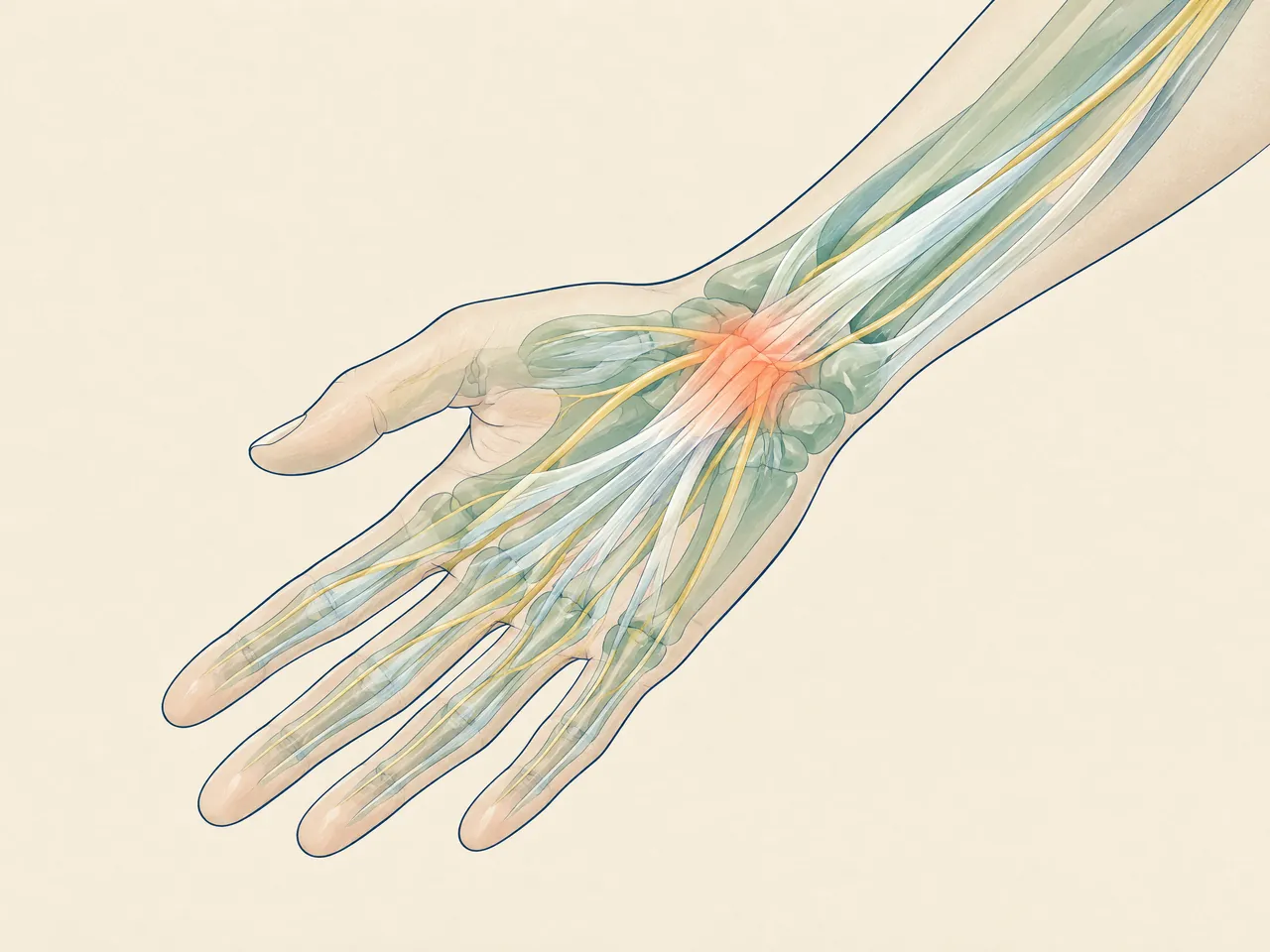
What causes wrist pain? Common possibilities include a sprain or fracture after an injury, tendon irritation from repeated loading, joint problems, a ganglion cyst, or nerve compression such as carpal tunnel syndrome. The pattern matters: thumb-side pain, a visible lump, night-time tingling, weak grip and sudden post-fall pain do not mean the same thing. Seek urgent assessment for deformity, colour change, severe pain, loss of feeling, inability to hold things, or hot red swelling with feeling unwell [1].
Transparent pricing
See the fees.
Choose your care.
Explore our complete official price list, including first-trial prices, regular prices, packages and branch-specific options.
Opening WhatsApp prepares an enquiry; it does not send a message, take payment or confirm an appointment. Suitability and individual arrangements are confirmed during consultation.
Pain care
All prices in HKDExtracorporeal shockwave treatment
Shockwave treatment for deep-tissue and fascial care. The Kwun Tong clinic offers the multi-area options shown below.
Priced by branch
Branch-specific pricing
Prince Edward: HK$250 per area
Kwun Tong: HK$250 for 1 area / HK$450 for 2 areas / HK$600 for 3 areas
Pain care (manual therapy)
Includes Chinese medicine musculoskeletal assessment, manual joint techniques and tui na.
HK$580 (single session)
Chinese medicine musculoskeletal assessment
Pain care (acupuncture and manual therapy)
Combines acupuncture and manual therapy.
HK$680 (single session)
Combined care
Hair and scalp
All prices in HKDScalp health and hair-loss management
Includes AI scalp analysis, deep scalp and follicle cleansing, and scalp oil-control care.
HK$380 (first trial)
Regular price: HK$680
- 6 sessions: HK$3,480 (HK$580 per session)
- 12 sessions: HK$5,760 (HK$480 per session)
- 20 sessions: HK$8,600 (HK$430 per session)
- 30 sessions: HK$11,400 (HK$380 per session)
Hair acupuncture and Chinese herbal medicine package
Includes scalp acupuncture and 3 days of Chinese herbal medicine that does not require decoction.
HK$580 (single session)
Registered Chinese Medicine Practitioner consultation
- 6 sessions: HK$3,180 (HK$530 per session)
- 12 sessions: HK$5,760 (HK$480 per session)
- 20 sessions: HK$8,600 (HK$430 per session)
- 30 sessions: HK$11,400 (HK$380 per session)
Combined hair and scalp treatment
Combines acupuncture and Chinese herbal medicine with salon-level scalp and follicle care. Packages include complimentary hair-care shampoo and serum.
HK$1,260 (single session)
Combined treatment
- 8 sessions: HK$8,640 (HK$1,080 per session)
- 16 sessions: HK$15,680 (HK$980 per session)
- 20 sessions: HK$18,600 (HK$930 per session)
- 30 sessions: HK$26,400 (HK$880 per session)
Weight management
All prices in HKDFull-body acupoint embedding for weight management
Includes full-body acupoint embedding. Packages include complimentary Chinese herbal medicine for weight management, with the number of included days scaled to the package. Embedding material and the individual treatment arrangement are confirmed during consultation; this is not a cosmetic thread lift.
HK$980 (single session)
No trial session
- 10 sessions: HK$7,800 (HK$780 per session)
- 20 sessions: HK$14,600 (HK$730 per session)
- 30 sessions: HK$20,400 (HK$680 per session)
Facial acupuncture
All prices in HKDFacial acupuncture (basic)
Includes facial acupuncture and meridian-based facial care, including care for facial puffiness.
HK$480 (first trial)
Regular price: HK$680
- 10 sessions: HK$5,200 (HK$520 per session)
- 20 sessions: HK$9,600 (HK$480 per session)
- 30 sessions: HK$13,500 (HK$450 per session)
Facial acupuncture (advanced)
Includes enhanced facial acupuncture with a specially formulated moisturising mask and serum.
HK$780 (first trial)
Regular price: HK$1,180
- 10 sessions: HK$9,000 (HK$900 per session)
- 20 sessions: HK$16,600 (HK$830 per session)
- 30 sessions: HK$23,400 (HK$780 per session)
Chinese medicine
All prices in HKDAcupuncture and Chinese herbal medicine package
Includes a Chinese medicine consultation with pulse assessment, body acupuncture and 3 days of Chinese herbal granules that do not require decoction.
HK$580 (single session)
Chinese medicine consultation with pulse assessment
wrist pain causes, causes of wrist pain, and What causes wrist pain? by location and activity patterns
Location is a practical way to describe wrist pain causes without jumping to a label. Say whether the discomfort is mainly on the thumb side, the little-finger side, the back or palm side, or feels deeper in the joint. Note whether it stays at the wrist, travels into the fingers, or runs up the forearm. Also describe the movement that brings it on: turning a key, opening a jar, supporting body weight, using a mouse, lifting a pan, holding a phone, or gripping a rail. A clinician can combine this map with an examination and, where appropriate, imaging or nerve tests; location alone cannot tell whether the source is a tendon, ligament, bone, joint or nerve [3].
Time course adds another useful layer. Pain that begins immediately after a fall is handled differently from an ache that appears late in a workday, and both differ from stiffness noticed on waking. Record a rough start date, whether there was a single incident, and whether symptoms are improving, recurring or spreading. Include swelling, bruising, a lump, clicking, heat, and changes in daily function. A brief note on sleep and work limitations is often more useful than trying to name the condition online. If the story begins with trauma, the separate wrist injury guide can help you prepare the right details for assessment.

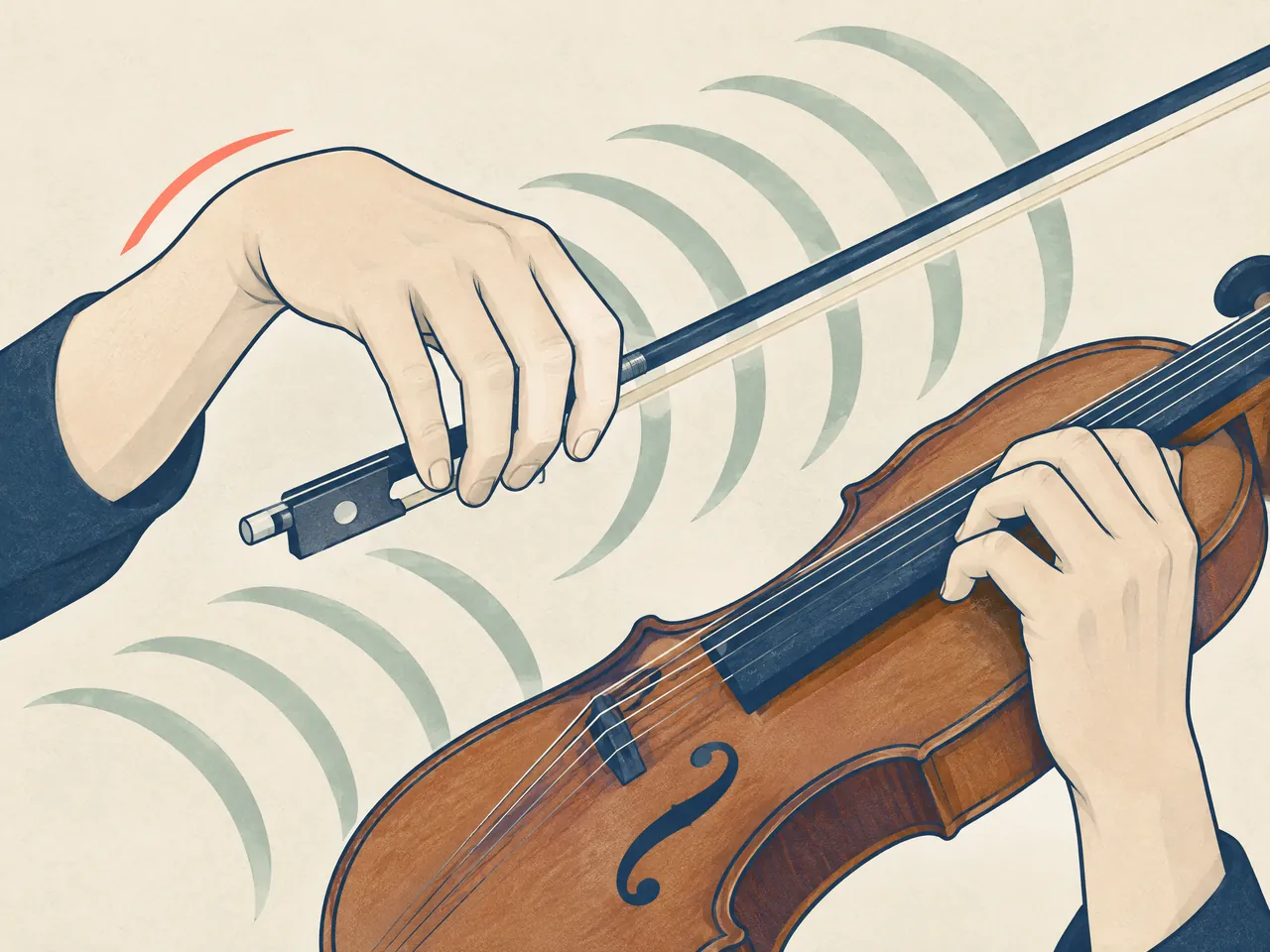
Activity does not have to be dramatic to matter. Repeated wrist bending, hard gripping, vibrating tools, instrument practice, gym loading, gaming, food preparation and prolonged computer work can all change the load placed on the hand and wrist. That does not prove that the activity is the sole cause. It does, however, make it worth noting which task, grip, position and duration make symptoms worse or better. An accurate activity record can distinguish a pattern linked to one movement from pain that persists even when the task stops, and can support a more focused clinical conversation.
wrist pain causes, causes of wrist pain, and What causes wrist pain? by wrist, hand, or forearm location
Thumb-side pain near the wrist may be noticed when lifting a child, pinching, twisting a lid or moving the thumb. The NHS lists pain, swelling and stiffness at the base of the thumb that persists, sometimes with difficulty moving the thumb or fingers, among patterns that can be associated with tendonitis, including de Quervain’s disease, or arthritis [1]. That is a useful prompt to describe the pattern, not a diagnosis to apply to yourself. A lump, persistent stiffness, pain after trauma, or a task-specific catch all deserve a fuller examination of the hand, wrist and forearm.
wrist pain causes, causes of wrist pain, and What causes wrist pain? after injury, strain, or overuse
After a fall onto an outstretched hand, a direct blow, a twist, or a sudden heavy lift, do not assume that the absence of dramatic bruising means nothing important happened. Sudden sharp pain, swelling, a popping or snapping sound, difficulty moving the wrist or gripping, and altered shape can be seen with injuries that need timely assessment [1]. If pain is severe or the hand looks deformed or discoloured, urgent care is more appropriate than home experimentation. Remove rings or bracelets promptly if the hand is swelling, but do not try to straighten an injured wrist yourself.
Compare your options
| What to note | Example of a useful description | Why it helps the next step |
|---|---|---|
| Start and trigger | Pain started after a fall, or gradually after repeated gripping or typing | Separates a possible acute injury pattern from gradual load-related symptoms |
| Exact location | Thumb side, little-finger side, palm, back of wrist, fingers, or forearm | Helps focus examination; location does not diagnose a condition on its own |
| Nerve-type symptoms | Which fingers tingle, whether symptoms wake you, and whether objects slip | Supports assessment of numbness, weakness and possible nerve involvement |
| Visible or systemic changes | Swelling, bruising, a lump, warmth, redness, colour change or feeling unwell | Helps identify signs that require timely or urgent medical evaluation |
| Effect on function | Unable to turn a key, grip a mug, type, lift, sleep or bear weight | Shows real-life impact and helps decide whether self-care is no longer enough |
On smaller screens, scroll the table sideways to compare all columns.
wrist pain causes, causes of wrist pain, and What causes wrist pain? with numbness, tingling, or weakness
Pain is only part of the story. Numbness, pins and needles, burning, clumsiness, a dropping grip, or a weak thumb can suggest that a nerve is involved, although the source and significance still need assessment. Make a note of exactly which fingers feel different, whether symptoms occur in the hand or forearm, and whether they happen at rest, while cycling, during typing, or after sleeping. Mention diabetes, pregnancy, arthritis, a previous wrist injury, and tasks that involve repeated bending or hard gripping when relevant, because these details can matter when a clinician considers carpal tunnel syndrome or another cause [2].
The phrase Why does my wrist hurt and feel numb? reflects a common concern, but the same pair of symptoms has more than one possible explanation. Do not use a wrist splint, exercise, massage, or changes at a workstation as a substitute for urgent review when sensation is completely lost, the wrist changes shape or colour, or you cannot hold objects. Those are escalation signs in NHS wrist-pain guidance [1]. For symptoms that are less acute but return repeatedly, a symptom diary can make it easier to explain frequency and functional impact at an appointment.
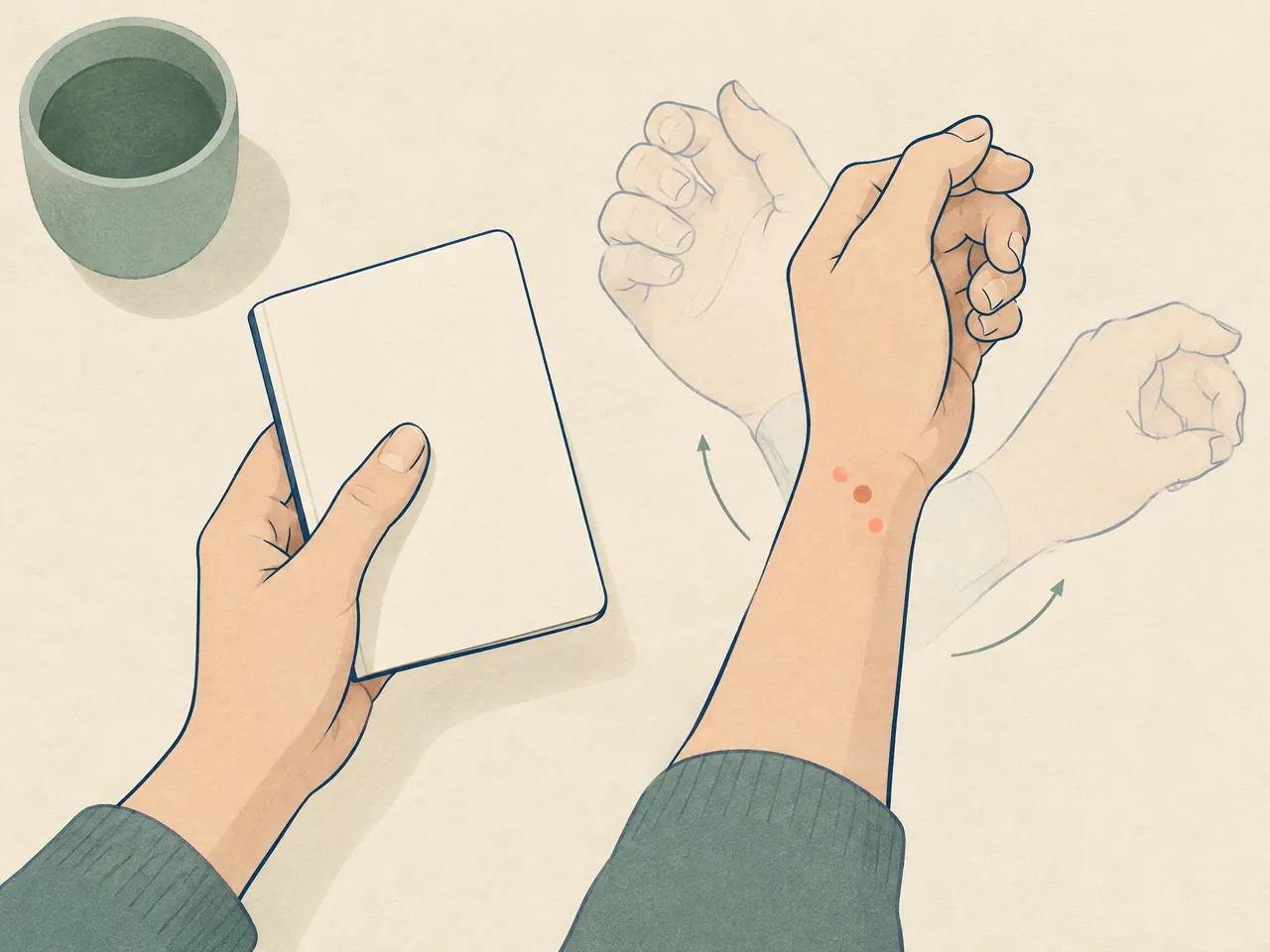
Weakness should be described in practical terms. “My hand feels weak” may mean that a mug slips, a key cannot be turned, thumb-and-finger pinching is awkward, or pain stops you from gripping fully. These experiences are not interchangeable, so write down the task and whether it is new. The difference between pain-limited use and true loss of strength is assessed clinically. New weakness together with numbness, worsening coordination, injury, or progressive loss of function should not be watched indefinitely. Early, accurate assessment helps identify whether further testing, protection, rehabilitation or another form of care is appropriate.
wrist pain causes, causes of wrist pain, and What causes wrist pain? when symptoms are worse at night
Symptoms that wake someone at night are worth recording, particularly when they include hand or finger tingling, numbness, aching, or the urge to shake the hand. The NHS notes that these symptoms of carpal tunnel syndrome often start gradually, come and go, and are usually worse at night [2]. This pattern can be a meaningful clue because carpal tunnel syndrome involves pressure on the median nerve at the wrist, but it is not enough to confirm the condition without an assessment. Note which fingers are involved, whether both hands are affected, how often sleep is interrupted, and how long the sensation lasts after waking.
wrist pain causes, causes of wrist pain, and What causes wrist pain? when grip strength becomes weak
Difficulty gripping can occur because movement hurts, because the thumb or hand is weak, because sensation is altered, or because the wrist is swollen or unstable after injury. The NHS includes a weak thumb or difficulty gripping among symptoms associated with carpal tunnel syndrome [1] [2], while a sprain or fracture may also make gripping difficult after trauma [1]. The task is to give the assessor a precise description rather than to decide which explanation applies. Mention whether a light object slips, a bottle cap cannot be turned, a keyboard feels awkward, or an object is dropped without warning.
For a closer look at this symptom pattern, read the carpal tunnel syndrome guide. It explains why night tingling and altered grip should be discussed with a qualified healthcare professional rather than treated as proof of a diagnosis. If weakness is new, increasing, or affecting safe use of the hand, arrange timely assessment.
wrist pain causes, causes of wrist pain, and What causes wrist pain? next steps, evaluation, and care
Choose the next step by combining severity, timing and function. A manageable ache that settles when a provoking task is reduced can be observed briefly while you keep a record and stay gently mobile. Pain that is worsening, keeps returning, prevents normal work or self-care, remains after home measures, or comes with tingling or reduced sensation deserves a healthcare assessment. NHS guidance specifically recommends a non-urgent review when wrist pain is stopping normal activities, worsening or recurring, not improved after two weeks of home care, or accompanied by tingling or loss of sensation [1]. The purpose of assessment is to identify the cause and rule out important problems, not to match symptoms to a webpage.
Prepare a short, practical account before the visit: the date symptoms began; any fall, twist or loading event; the exact location; which motions trigger it; morning or night pattern; swelling, colour, temperature or lumps; numbness; and effects on grip, work and sleep. Bring a list of current medicines and relevant health history. A clinician may examine motion, tenderness, strength and sensation, then decide whether imaging, nerve-conduction testing, rehabilitation, referral or another step is appropriate. For price-related questions about a Chinese medicine consultation, see the Chinese medicine clinic price list Hong Kong before making an enquiry.
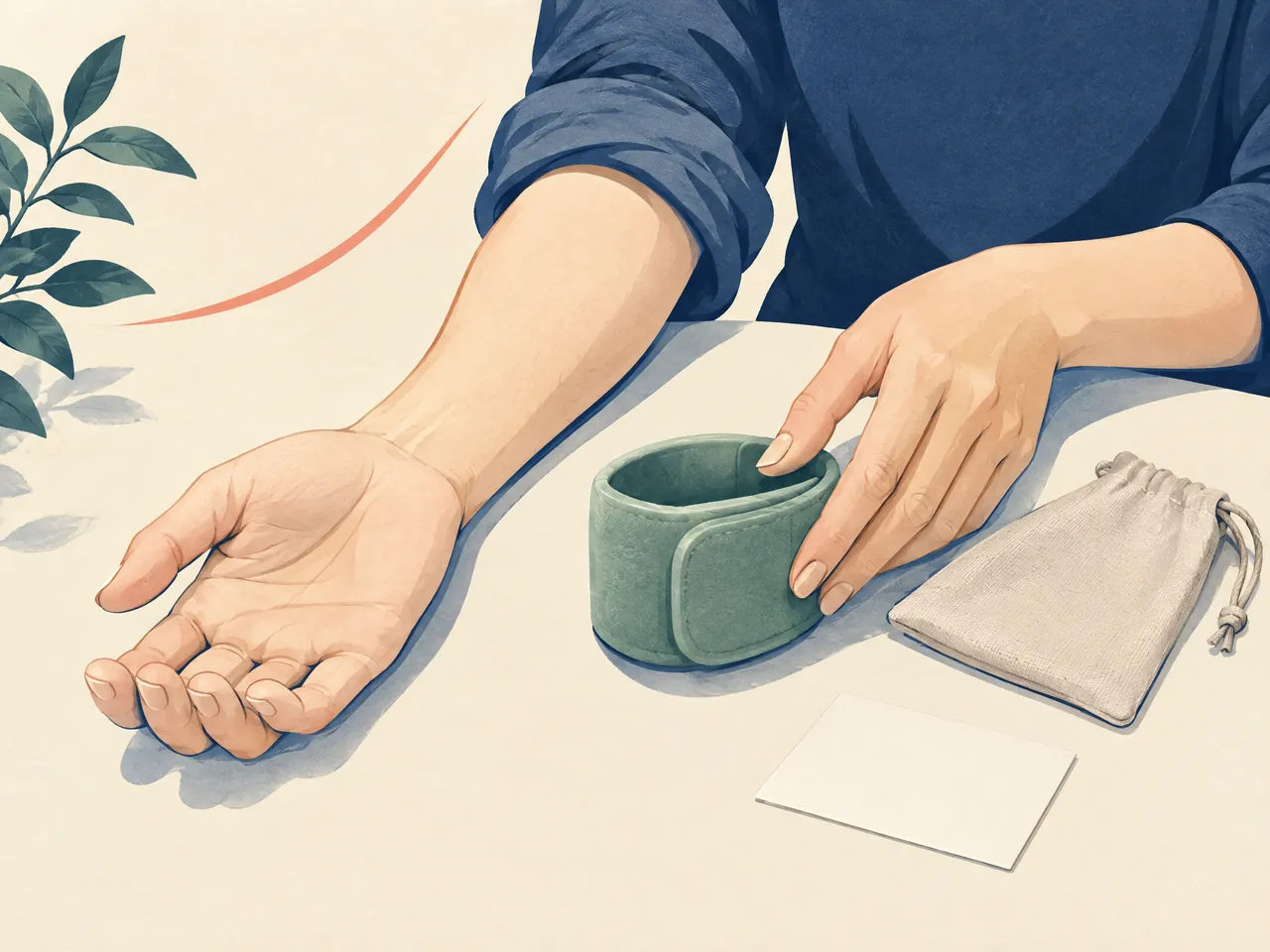
If you are considering Chinese medicine alongside conventional care, give the practitioner the same full account and disclose diagnoses, investigations, medication and supports already in use. A registered Chinese medicine practitioner may use a traditional pattern-identification approach, asking about pain quality, aggravating factors, sleep and general health. This approach is not the same as a modern medical diagnosis and does not replace assessment for a fracture, infection, severe nerve symptoms or other urgent conditions. It can be a conversation about supportive options after appropriate triage, with decisions tailored to the person rather than to a search term.
wrist pain causes, causes of wrist pain, and What causes wrist pain? needing urgent care or red flags
Seek urgent medical help for severe wrist pain; a snap, grinding or popping sound during injury; inability to move the wrist or hold things; a wrist that has changed shape or colour; loss of feeling in part or all of the hand; or a very painful, hot or red lump. Feeling faint, dizzy, sick, feverish, hot, cold or shivery because of the problem is also an urgent signal in NHS guidance [1]. These signs may be associated with a broken wrist, infection or another condition that needs prompt evaluation. They are not situations to manage with repeated stretching, heat, or an online remedy.
The wrist pain red flags guide is a concise reminder of symptoms to report. It is not a substitute for urgent evaluation when severe pain, deformity, colour change, loss of feeling or inability to hold objects is present.

wrist pain causes, causes of wrist pain, and What causes wrist pain? in a TCM assessment
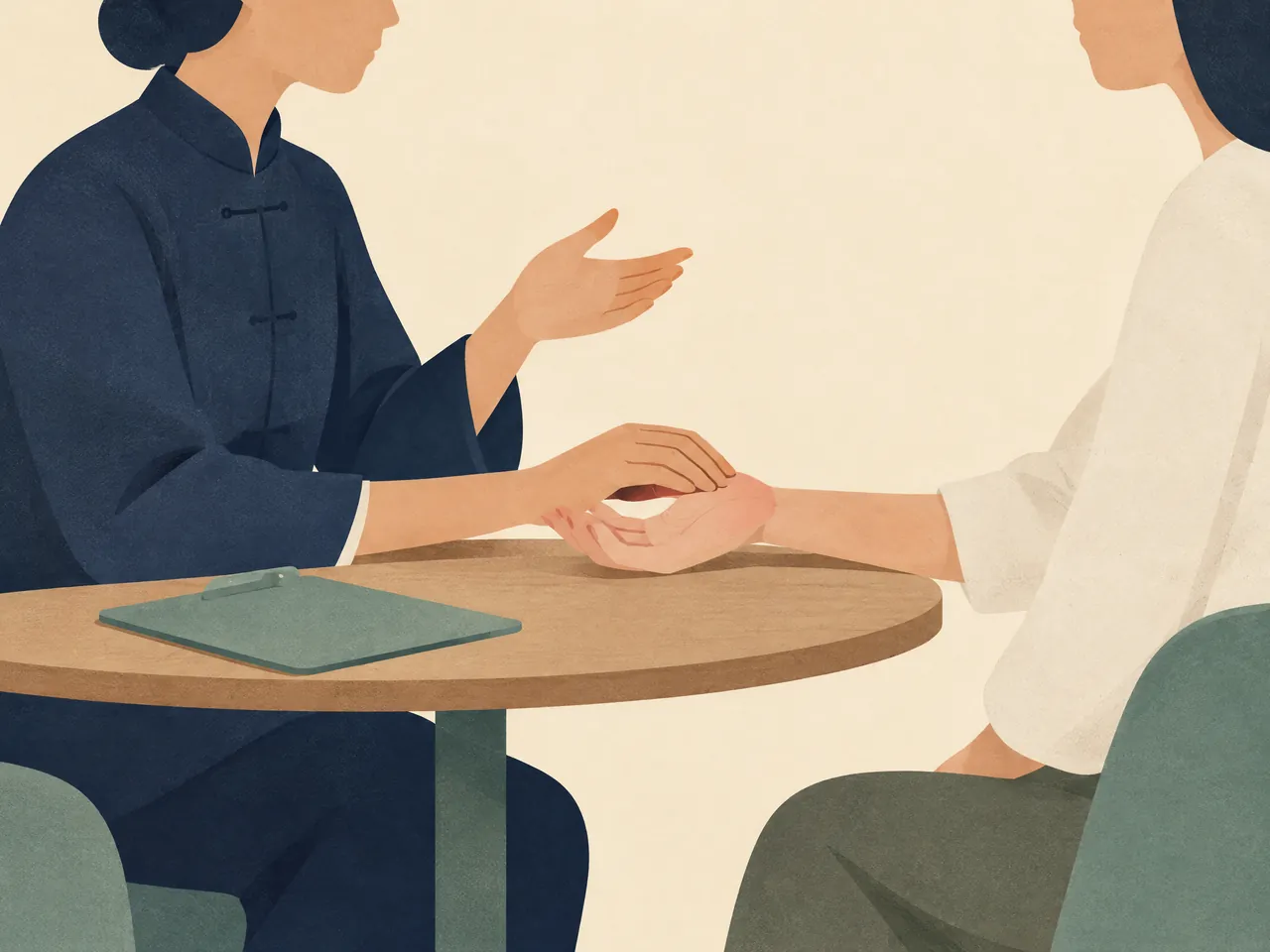
A TCM assessment begins with questions, observation and examination rather than a promise to “fix” every wrist problem. A practitioner may ask whether pain is aching, sharp, heavy or stiff; whether cold, heat, rest or use changes it; and how it affects sleep and ordinary tasks. They may also ask about general wellbeing, digestion and medication as part of their traditional clinical approach. Those observations can inform a personalised discussion, but they do not turn a website description into a diagnosis and should not delay conventional evaluation where injury, infection or nerve compromise is possible.
For a non-urgent enquiry, you may ask about an appointment at the Kwun Tong Chinese medicine clinic or the Chinese medicine clinic Prince Edward. Share the main symptom, duration, injury history and current treatment so the team can clarify the arrangement; an enquiry does not replace urgent medical care.
Care and health guide
Pain-care information
This directory brings together services, reading, and visit information related to pain care, to help you prepare questions for a consultation.
When pain care affects your day, noting when it occurs, its relation to activity, and what you have already tried can help prepare a consultation; Chinese medicine pain management Hong Kong is a relevant service or reading entry point.
Individual circumstances differ, and acupuncture Hong Kong offers related information to help you understand options and prepare questions.


Your questions, answered
Frequently asked questions
What causes wrist pain without an obvious injury?
Gradual wrist pain can be associated with repeated strain, tendon problems, arthritis, a ganglion cyst, nerve compression such as carpal tunnel syndrome, and other conditions. The timing, location, movements that provoke it and any numbness or weakness matter. If it persists, returns, worsens or affects normal activity, arrange an assessment rather than assuming one cause [1] [3].
When is wrist pain an emergency?
Seek urgent medical help for severe pain, a snap or pop at injury, inability to move the wrist or hold objects, change in wrist shape or colour, lost feeling, or a very painful hot red lump. Feeling generally unwell with the wrist problem is another urgent sign [1].
Can carpal tunnel syndrome cause wrist pain at night?
It can. Carpal tunnel syndrome may cause pain or aching, tingling, numbness, a weak thumb and difficulty gripping, and symptoms are often worse at night. These features do not prove the diagnosis, so persistent or worsening symptoms should be assessed [2].
Should I keep my wrist completely still when it hurts?
For a mild, non-urgent problem, reducing aggravating activity while keeping the hand and wrist gently moving can be more practical than prolonged total rest. After a fresh injury, avoid heavy lifting and tight gripping. Do not self-manage a possible fracture, deformity, severe pain, major swelling or loss of sensation [1].
Can acupuncture be discussed for wrist pain?
It may be discussed as an adjunct after an appropriate assessment, not as a replacement for urgent or conventional medical care. For carpal tunnel syndrome, a Cochrane review found the evidence for acupuncture-related treatments low or very low certainty, so it cannot be presented as a guaranteed cure [4].
Sources and further information
- [1] [1] NHS — Wrist pain
Referenced for: Possible wrist-pain patterns, self-care boundaries, non-urgent assessment triggers and urgent red flags.
- [2] [2] NHS — Carpal tunnel syndrome
Referenced for: Carpal tunnel symptoms, night pattern, grip difficulty, risk context, assessment and splint information.
- [3] [3] Cleveland Clinic — Wrist Pain
Referenced for: Wrist pain location terms and broad injury, overuse, tendon, joint and nerve cause context.
- [4] [4] Cochrane — Acupuncture and related treatments for symptoms of carpal tunnel syndrome
Referenced for: Evidence certainty and uncertainty for acupuncture-related treatments in carpal tunnel syndrome.