
TCM Lab · Health reading
Sprained Ankle Recovery: How Long Healing May Take
Published Updated
A rolled ankle can feel like a small mishap until the stairs, MTR platform or walk home make every step difficult. Sprained ankle recovery is not measured only by how quickly swelling fades: the injured ligaments need time, Many mild sprains feel better after about two weeks, while a more substantial injury can take weeks or months. This guide explains early care, gradual movement and when assessment should not wait.
Appointments are confirmed through WhatsApp. If you have language requirements, please mention them in your enquiry.
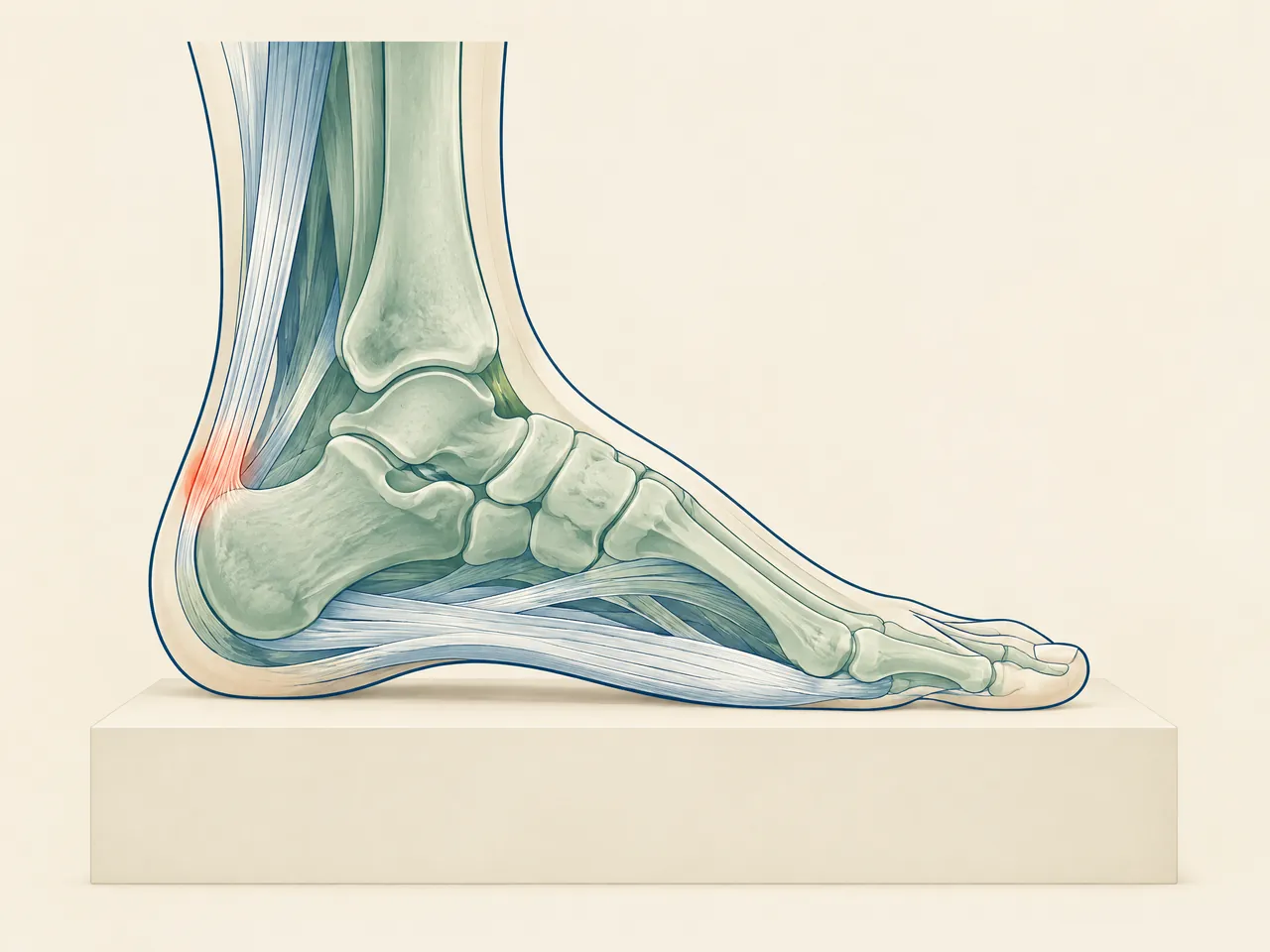
The short answer
Sprained ankle recovery depends on the ligament injury, ability to bear weight, swelling, past sprains and rehabilitation progress. Many mild sprains feel better after about two weeks, but severe sprains may take months. During the first two to three days, protect the ankle, rest relatively, use a cloth-wrapped cold pack, compression and elevation. Seek urgent assessment for deformity, a crack, a cold or discoloured foot, persistent numbness, or inability to bear weight.
Transparent pricing
See the fees.
Choose your care.
Explore our complete official price list, including first-trial prices, regular prices, packages and branch-specific options.
Opening WhatsApp prepares an enquiry; it does not send a message, take payment or confirm an appointment. Suitability and individual arrangements are confirmed during consultation.
Pain care
All prices in HKDExtracorporeal shockwave treatment
Shockwave treatment for deep-tissue and fascial care. The Kwun Tong clinic offers the multi-area options shown below.
Priced by branch
Branch-specific pricing
Prince Edward: HK$250 per area
Kwun Tong: HK$250 for 1 area / HK$450 for 2 areas / HK$600 for 3 areas
Pain care (manual therapy)
Includes Chinese medicine musculoskeletal assessment, manual joint techniques and tui na.
HK$580 (single session)
Chinese medicine musculoskeletal assessment
Pain care (acupuncture and manual therapy)
Combines acupuncture and manual therapy.
HK$680 (single session)
Combined care
Hair and scalp
All prices in HKDScalp health and hair-loss management
Includes AI scalp analysis, deep scalp and follicle cleansing, and scalp oil-control care.
HK$380 (first trial)
Regular price: HK$680
- 6 sessions: HK$3,480 (HK$580 per session)
- 12 sessions: HK$5,760 (HK$480 per session)
- 20 sessions: HK$8,600 (HK$430 per session)
- 30 sessions: HK$11,400 (HK$380 per session)
Hair acupuncture and Chinese herbal medicine package
Includes scalp acupuncture and 3 days of Chinese herbal medicine that does not require decoction.
HK$580 (single session)
Registered Chinese Medicine Practitioner consultation
- 6 sessions: HK$3,180 (HK$530 per session)
- 12 sessions: HK$5,760 (HK$480 per session)
- 20 sessions: HK$8,600 (HK$430 per session)
- 30 sessions: HK$11,400 (HK$380 per session)
Combined hair and scalp treatment
Combines acupuncture and Chinese herbal medicine with salon-level scalp and follicle care. Packages include complimentary hair-care shampoo and serum.
HK$1,260 (single session)
Combined treatment
- 8 sessions: HK$8,640 (HK$1,080 per session)
- 16 sessions: HK$15,680 (HK$980 per session)
- 20 sessions: HK$18,600 (HK$930 per session)
- 30 sessions: HK$26,400 (HK$880 per session)
Weight management
All prices in HKDFull-body acupoint embedding for weight management
Includes full-body acupoint embedding. Packages include complimentary Chinese herbal medicine for weight management, with the number of included days scaled to the package. Embedding material and the individual treatment arrangement are confirmed during consultation; this is not a cosmetic thread lift.
HK$980 (single session)
No trial session
- 10 sessions: HK$7,800 (HK$780 per session)
- 20 sessions: HK$14,600 (HK$730 per session)
- 30 sessions: HK$20,400 (HK$680 per session)
Facial acupuncture
All prices in HKDFacial acupuncture (basic)
Includes facial acupuncture and meridian-based facial care, including care for facial puffiness.
HK$480 (first trial)
Regular price: HK$680
- 10 sessions: HK$5,200 (HK$520 per session)
- 20 sessions: HK$9,600 (HK$480 per session)
- 30 sessions: HK$13,500 (HK$450 per session)
Facial acupuncture (advanced)
Includes enhanced facial acupuncture with a specially formulated moisturising mask and serum.
HK$780 (first trial)
Regular price: HK$1,180
- 10 sessions: HK$9,000 (HK$900 per session)
- 20 sessions: HK$16,600 (HK$830 per session)
- 30 sessions: HK$23,400 (HK$780 per session)
Chinese medicine
All prices in HKDAcupuncture and Chinese herbal medicine package
Includes a Chinese medicine consultation with pulse assessment, body acupuncture and 3 days of Chinese herbal granules that do not require decoction.
HK$580 (single session)
Chinese medicine consultation with pulse assessment
Sprained Ankle Recovery and Injury Severity
An ankle sprain is an injury to one or more ligaments that support the joint. It often follows an inward or outward roll of the foot during sport, a missed step on a kerb, or a slip on uneven ground. Pain, swelling, bruising, stiffness and difficulty walking are common, but their intensity alone cannot tell you exactly what has been injured. The Hong Kong College of Orthopaedic Surgeons notes that an examination and, where needed, imaging may be used to clarify severity and exclude associated problems [1]. That is why recovery estimates are useful as broad guideposts rather than a diagnosis made from an online symptom list.
The practical question is not simply “How many days?” but “What can the ankle do today compared with yesterday?” An office worker may manage a short, level walk before being ready for a long commute with stairs. A runner may have little swelling yet still lack control when turning. Previous sprains can matter too: some people later notice giving-way rather than obvious pain. For a wider overview of stages and expectations, see ankle sprain recovery time. If the ankle is becoming more painful, more swollen or less usable, the trend deserves attention rather than an attempt to push through it.
A visible bruise does not automatically mean a severe tear, and a mild-looking ankle does not rule out a fracture or another injury. Location is also informative. A twist commonly hurts around the outer ankle, while pain on the inner side or above the ankle may call for a different clinical assessment. Canossa Hospital explains that inversion and eversion mechanisms can affect different structures and that recovery length rises with injury severity [2]. Recording how the injury happened, where it hurts, whether you heard a sound and whether you could take steps afterwards gives a clinician more useful information than trying to assign yourself a grade.

Sprained Ankle Recovery After a Mild, Moderate or Severe Injury
Grade descriptions are shorthand for the extent of ligament injury, not a stopwatch. A mild injury may involve stretching without instability; a moderate injury can involve a partial tear and may make weight-bearing difficult; a severe injury may involve a complete rupture and marked instability. Broad public guidance says most sprains and strains feel better after two weeks, while severe injuries can take months to return to normal [3]. Those ranges overlap, so it is wiser to use function—less swelling, easier walking, improving movement and steadier balance—alongside time. A persistent limp, repeated giving-way or a plateau is a reason to seek professional advice rather than simply extend the same home routine.
Sprained Ankle Recovery: Symptoms That Help Show Severity
Symptoms that can help frame the conversation include how quickly swelling appeared, whether bruising spreads, the precise tender area, how many steps are possible, and whether the joint feels unstable. Compare ordinary tasks: can you stand to prepare a meal, use stairs while holding a rail, or put on a shoe without a sharp increase in pain? Do not repeatedly test the ankle with jumps, deep twisting or a return to court sport just to see if it is ready. If you want a fuller discussion of assessment and management, ankle sprain symptoms and treatment sets out related questions. A clinician can also decide whether a support, crutches, imaging or a rehabilitation plan is appropriate.
Compare your options
| Situation | Useful focus | Reason to arrange assessment promptly |
|---|---|---|
| First two to three days | Protect the ankle, relative rest, cloth-wrapped cold pack, comfortable compression and elevation. | You cannot bear weight, pain or swelling is worsening, or the foot feels numb, cold or looks discoloured. |
| Walking is beginning to ease | Build gentle, tolerable movement and short, controlled daily activity rather than testing a sudden long walk. | Walking remains very difficult, the ankle repeatedly gives way, or function is declining rather than improving. |
| Return to regular duties | Consider the actual demands: stairs, standing time, carrying loads, turning and uneven surfaces. | Your job tasks repeatedly provoke a limp, swelling or loss of confidence in the ankle. |
| Return to sport or high-demand activity | Restore movement, strength, balance and control through a graduated plan rather than relying on pain alone. | You cannot control turns or landing, have recurrent sprains, or are unsure how to progress safely. |
On smaller screens, scroll the table sideways to compare all columns.
Sprained Ankle Recovery: Early Care and Gradual Movement
The first two to three days are usually about protecting an acutely painful ankle and managing swelling, not trying to make it “loose” quickly. NHS guidance describes PRICE: protection, rest, ice, compression and elevation. A cold pack should be wrapped rather than placed directly on the skin; the NHS advises up to 20 minutes every two to three hours. Compression should support rather than create numbness, colour change or increasing discomfort, and elevation can be most practical when resting with the leg supported [3]. These measures are for early symptom management; they do not prove that a particular injury is minor.
Relative rest is different from doing nothing indefinitely. In the acute phase, skip running, jumping, sudden pivots and long walks that clearly aggravate the ankle. Plan the day around necessary movement: choose stable footwear, keep the route short, use a handrail on stairs and avoid carrying a heavy load if it makes you limp. NHS guidance also advises avoiding heat, alcohol and massage in the first couple of days because they may worsen swelling [3]. If a cold or compression measure makes symptoms worse, stop it. New circulation or sensation changes are not a cue to adjust the wrap at home; they need prompt medical attention.
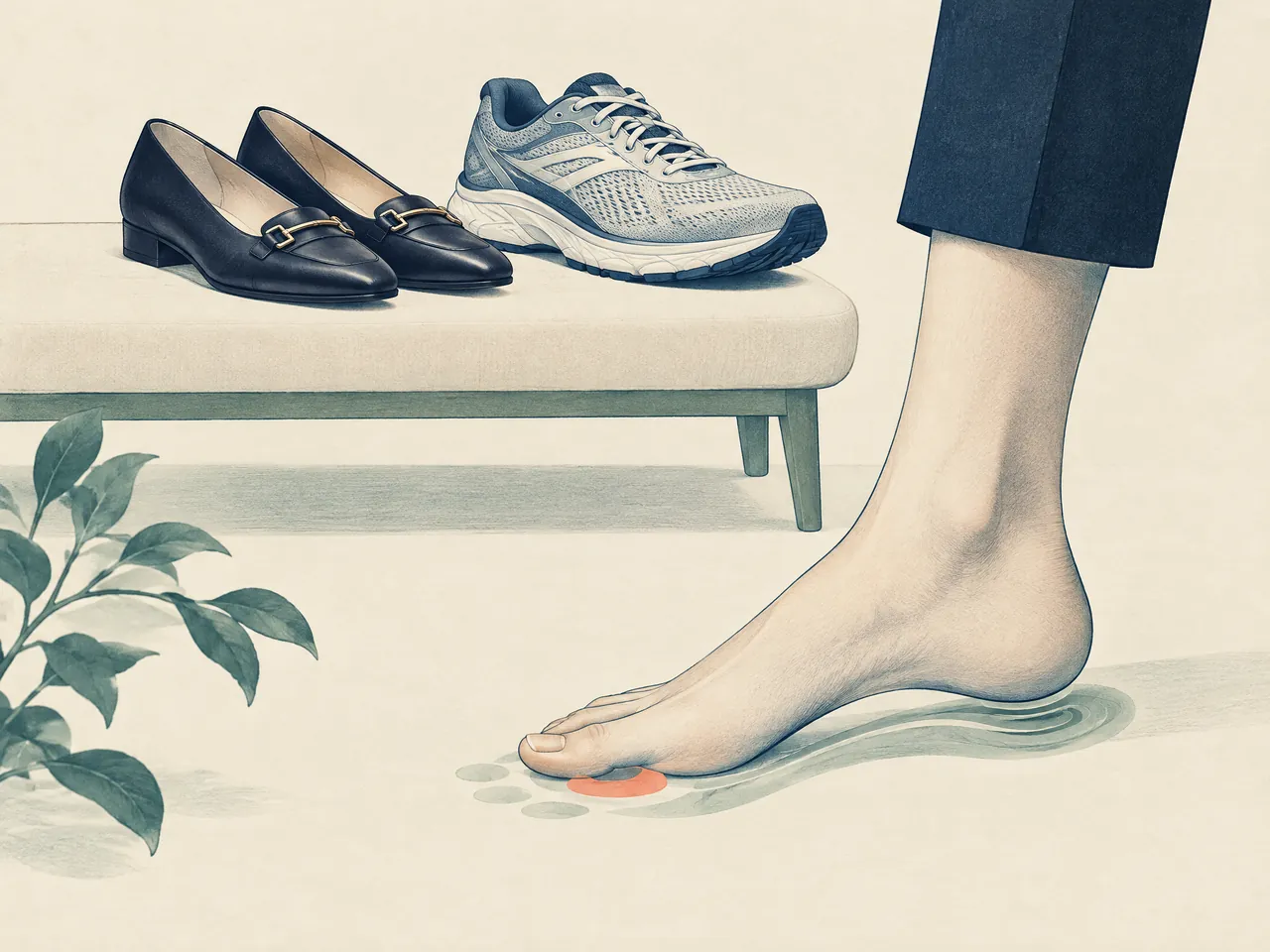
Once severe pain is no longer blocking motion, gradual use is usually more helpful than protecting the ankle from every movement. The aim is a calm increase in daily function, not a dramatic single exercise session. Start with ordinary, controlled movements within a tolerable range and let the next day’s pain and swelling guide the pace. It can be sensible to divide errands, take breaks and postpone uneven paths until walking is steadier. The Hong Kong College of Orthopaedic Surgeons describes rehabilitation as a staged process, progressing from swelling control to restoring movement, strength, flexibility, stamina and proprioception—the body’s sense of joint position [1].
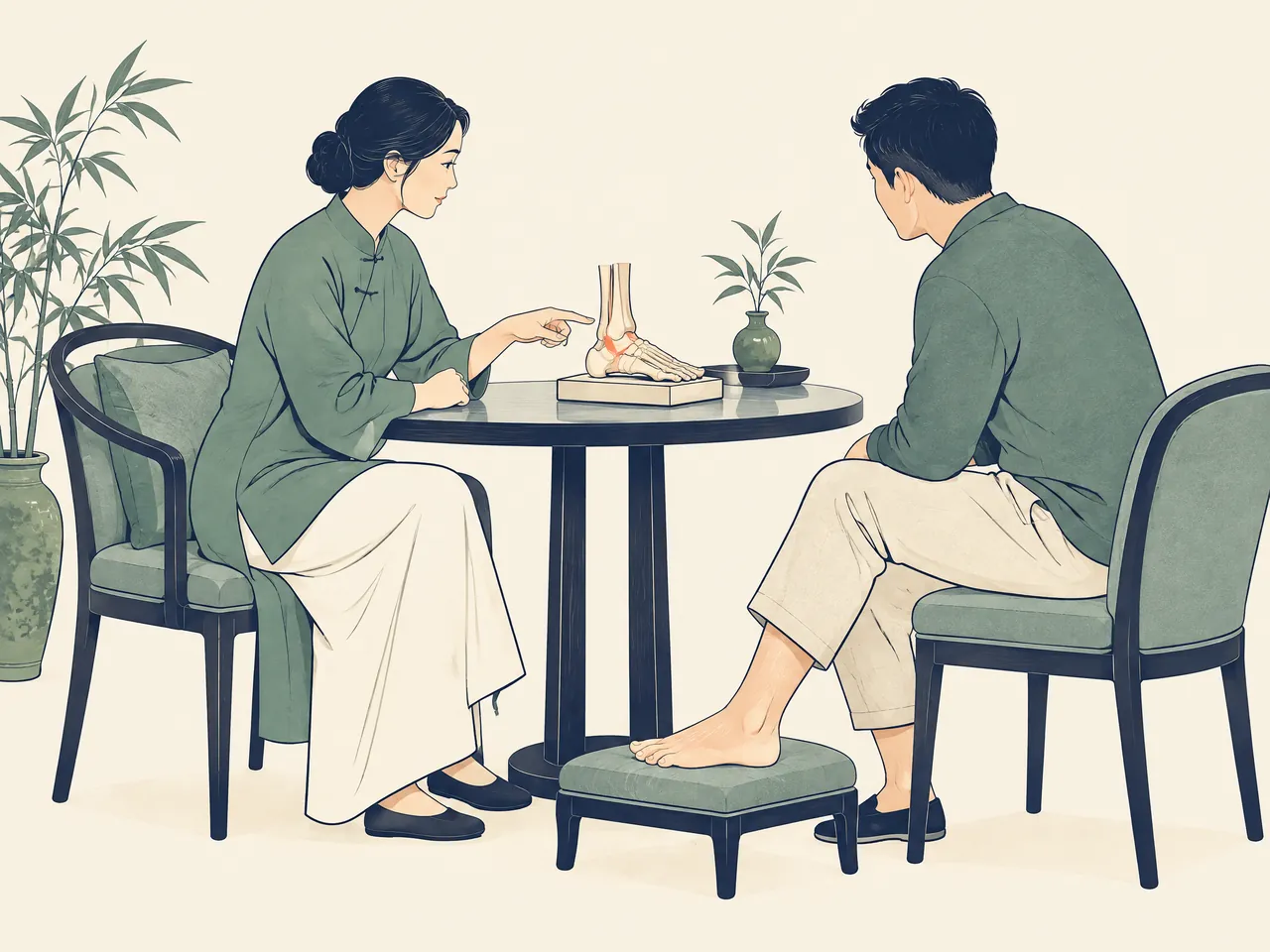
Sprained Ankle Recovery During the First Two to Three Days
A simple early-care check can prevent common mistakes. Protect the ankle from another roll; reduce activities that provoke clear pain; use a cloth barrier with a cold pack; apply comfortable compression if suitable; and raise the ankle while resting. This is not an instruction to ignore an ankle that cannot take weight. Nor is it a reason to keep rechecking bruising every hour. Note whether pain, swelling, walking and toe sensation are improving, stable or worsening. The detailed page on RICE for ankle sprain may help readers understand those early-care terms, but urgent signs always take priority over self-care.
The table below distinguishes recovery choices by the situation rather than assigning a fixed healing date. It can help a reader prepare for an appointment or decide what to monitor. It does not replace an examination, particularly after a hard fall, a collision, or an injury that changes how the foot looks or feels.
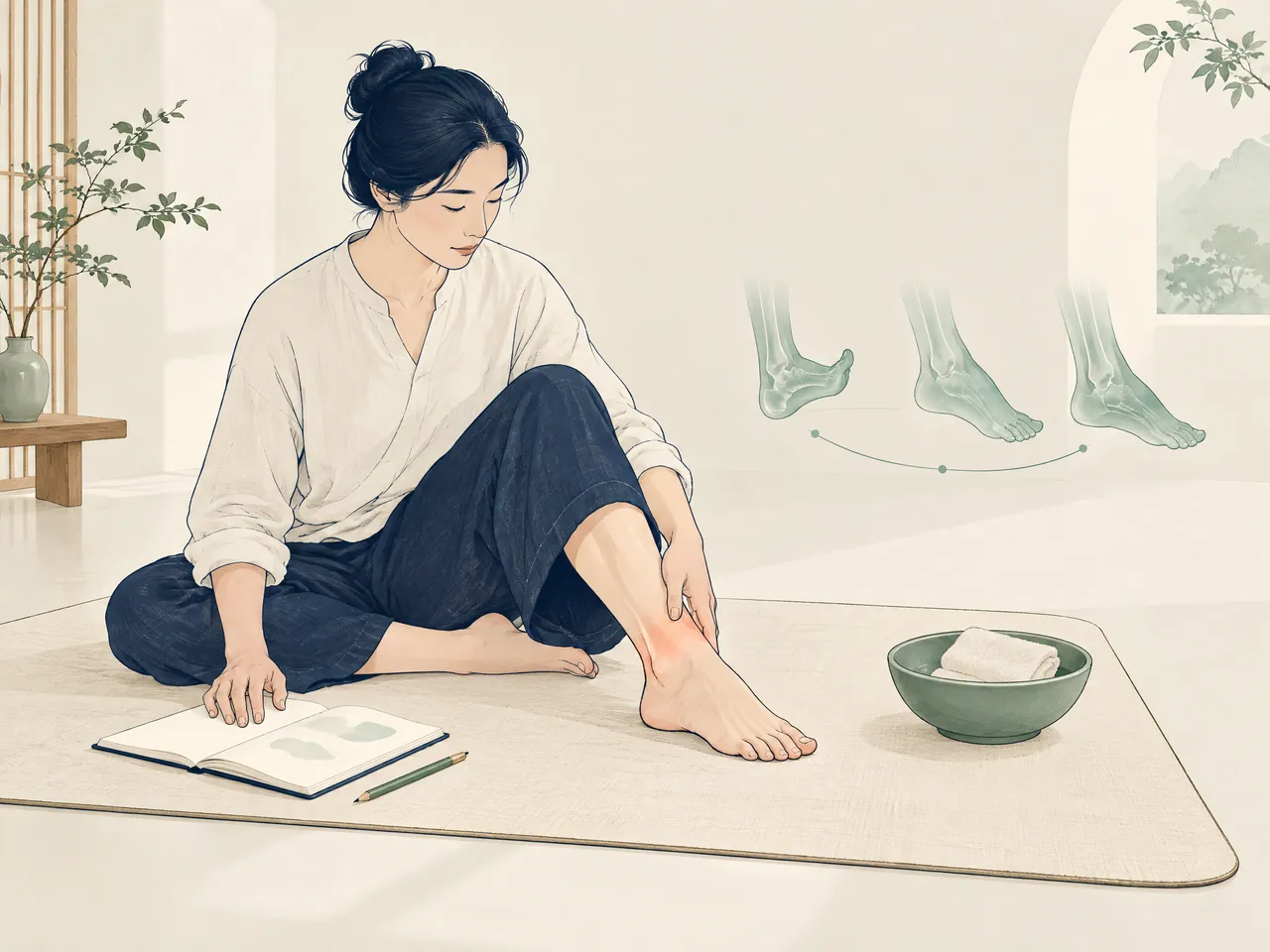
Sprained Ankle Recovery with Safe Activity and Rehabilitation
As walking becomes more comfortable, rehabilitation commonly works on range of movement, strength, balance and coordination. These are different tasks. Someone may walk across a smooth floor yet struggle to control the ankle on a bus step or when turning to cross a road. A physiotherapist or other qualified clinician can select and progress exercises according to pain, stability and the demands of work or sport. Canossa Hospital likewise identifies movement, surrounding-muscle strength and balance as rehabilitation goals, and advises that the exercise plan should vary with the injury [2]. A gradual plan is especially valuable after recurrent sprains or when an active return needs more than a pain-free stroll.
Avoid treating one good day as proof that all sport is safe. Increase one demand at a time: perhaps a little more walking before speed, or controlled level activity before twisting and uneven ground. A flare after a large jump in activity is useful feedback to scale back, not a failure. If your job requires climbing, standing for long shifts or carrying equipment, describe those tasks during assessment so the plan reflects real loading. For a question focused on timing, How long does an ankle sprain take to recover? explores why a calendar date alone is not enough.
Sprained Ankle Recovery and When to Seek Professional Advice
Some ankle injuries need assessment promptly because a sprain can resemble a fracture or occur alongside one. Seek urgent medical assessment if the ankle or foot looks deformed, you heard a crack at injury, you cannot bear weight or walk more than a few steps, or pain and swelling are severe or worsening. Persistent numbness, tingling, a blue or grey colour, or unusual coldness around the injury are also emergency warning signs in NHS guidance [3]. These symptoms can point to problems that should not be managed by massage, exercise videos or a wait-and-see approach.
Professional advice is also useful when the pattern is less dramatic but not improving. Examples include a limp that does not ease, stiffness that prevents ordinary footwear, repeated episodes of the ankle giving way, or symptoms that return each time activity increases. Assessment can consider the injury mechanism, prior ankle history, tender areas, walking and joint stability, and may determine whether imaging, external support or structured rehabilitation is needed [1]. A simple diary of injury date, walking tolerance, swelling changes and aggravating tasks can make that discussion more precise.
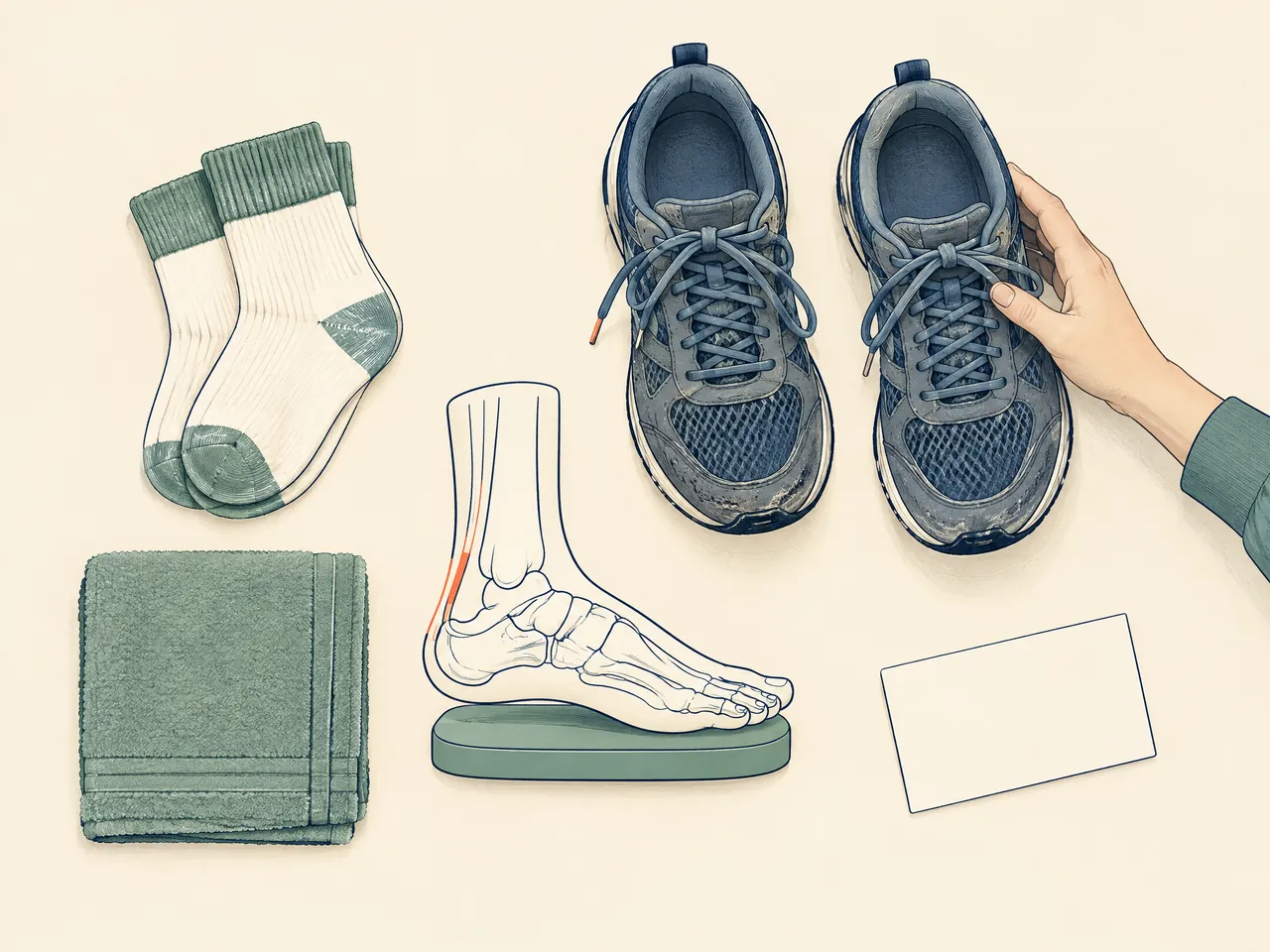
For Hong Kong readers considering a consultation, start by describing the timing of the injury, ability to bear weight, visible change, current treatments and any medical conditions or medicines. TCM Lab can be contacted to ask about an appointment at its Kwun Tong Chinese medicine clinic or its Chinese medicine clinic Prince Edward. If a red flag is present, seek urgent conventional medical assessment first. Complementary care, if discussed later, should fit alongside—not delay—appropriate diagnosis, protection and rehabilitation.
Sprained Ankle Recovery: Red Flags That Need Urgent Assessment
It is reasonable to feel unsure after an ankle roll; it is not necessary to wait for a perfect label before seeking help when warning signs are present. A crack, obvious angle change, inability to walk, worsening pain or bruising, ongoing pins and needles, colour change or cold skin can require urgent assessment and sometimes an X-ray [3]. Fever or feeling unwell alongside a worsening injury also warrants medical advice. In Hong Kong, choose an appropriate urgent-care or emergency route for the severity of symptoms. Do not drive yourself if the foot is numb, unstable or you cannot safely control the pedals.

Sprained Ankle Recovery and Discussing Complementary Care
After serious injury has been assessed or excluded, some people ask whether acupuncture can be part of their comfort and recovery plan. A Registered Chinese Medicine Practitioner can take a history and discuss options in person, including whether another clinician’s findings should guide the conversation. It is important to set expectations carefully: a Cochrane review found the trials of acupuncture for acute ankle sprain highly heterogeneous and too unreliable to support conclusions about effectiveness or safety [4]. Acupuncture should therefore be a complementary option to discuss after assessment, not a guaranteed cure, a substitute for imaging when indicated, or a reason to skip progressive rehabilitation.
A useful appointment conversation is practical: explain the injury mechanism, the current level of swelling and walking, the target activity you hope to resume, past sprains, and every medicine or treatment already being used. Ask how care will coordinate with physiotherapy or medical advice and what changes should trigger reassessment. Readers who want a focused introduction can visit acupuncture for ankle sprain. No online guide can decide the right needling plan, number of visits or prognosis for an individual ankle; those decisions need an in-person assessment and realistic review of progress.
Care and health guide
Health service information
This directory brings together services, reading, and visit information related to health services, to help you prepare questions for a consultation.
If you are organising health questions, Chinese medicine clinic Hong Kong is a starting point for learning about related services and preparing for a consultation.
People have different needs; acupuncture Hong Kong provides further reading to help you understand options in your own context.


Your questions, answered
Frequently asked questions
How long does sprained ankle recovery usually take?
Recovery depends on the degree of ligament injury, stability, ability to bear weight and rehabilitation progress. Many mild sprains feel better after about two weeks, while severe sprains may take months. Use improving walking, movement, swelling and balance as well as time; a stalled or worsening recovery should be assessed. [3]
Should I use ice or heat after I sprain my ankle?
For the first two to three days, NHS guidance recommends a cloth-wrapped cold pack as part of PRICE care and advises avoiding heat, alcohol and massage because they may increase swelling. Do not put cold directly on the skin. Stop if it worsens symptoms, and seek advice for circulation or sensation changes. [3]
When is an ankle sprain an emergency?
Seek urgent assessment if you heard a crack, the joint or foot looks deformed, you cannot bear weight or walk more than a few steps, or pain and swelling are worsening. Persistent numbness, tingling, colour change or cold skin are also emergency warning signs. [3]
Can acupuncture guarantee a faster ankle sprain recovery?
No. Acupuncture may be discussed as a complementary option after assessment, but it cannot guarantee recovery time or replace investigation, protection or rehabilitation. A Cochrane review found the available acute ankle-sprain trials too heterogeneous and unreliable to establish effectiveness or safety. [4]
Sources and further information
- [1] [1] Hong Kong College of Orthopaedic Surgeons — Ankle Sprain
Referenced for: Supports descriptions of ligament injury, symptoms, clinical assessment, possible imaging and staged rehabilitation.
- [2] [2] Canossa Hospital — Sprained Ankle
Referenced for: Supports injury mechanisms, severity descriptions and rehabilitation goals for movement, strength and balance.
- [3] [3] NHS — Sprains and strains
Referenced for: Supports early PRICE care, typical general recovery wording, heat/massage avoidance and urgent warning signs.
- [4] [4] Cochrane Review — Acupuncture for treating acute ankle sprains in adults
Referenced for: Supports the stated limitation that available acute ankle-sprain acupuncture evidence was heterogeneous and unreliable for conclusions on effectiveness or safety.