
TCM Lab · Health reading
Can I Take Chinese Herbal Medicine with Western Medicine? What to Check First
Published Updated
It may be possible to use Chinese herbal medicine alongside Western medicine, but it is not something to decide from a product label, a friend’s experience or a general online list. The relevant question is whether a particular herbal formula is appropriate with your particular medicines, doses, health history and current symptoms. Do not start, stop, reduce or space out prescribed medicine on your own. Instead, arrange an individual review and bring every prescription, over-the-counter product, vitamin, herbal tea, powder and supplement you use. A registered Chinese medicine practitioner can consider the Chinese medicine approach in context, while your prescribing doctor or pharmacist remains important when a prescribed medicine may be affected.
Appointments are confirmed through WhatsApp. If you have language requirements, please mention them in your enquiry.
The short answer
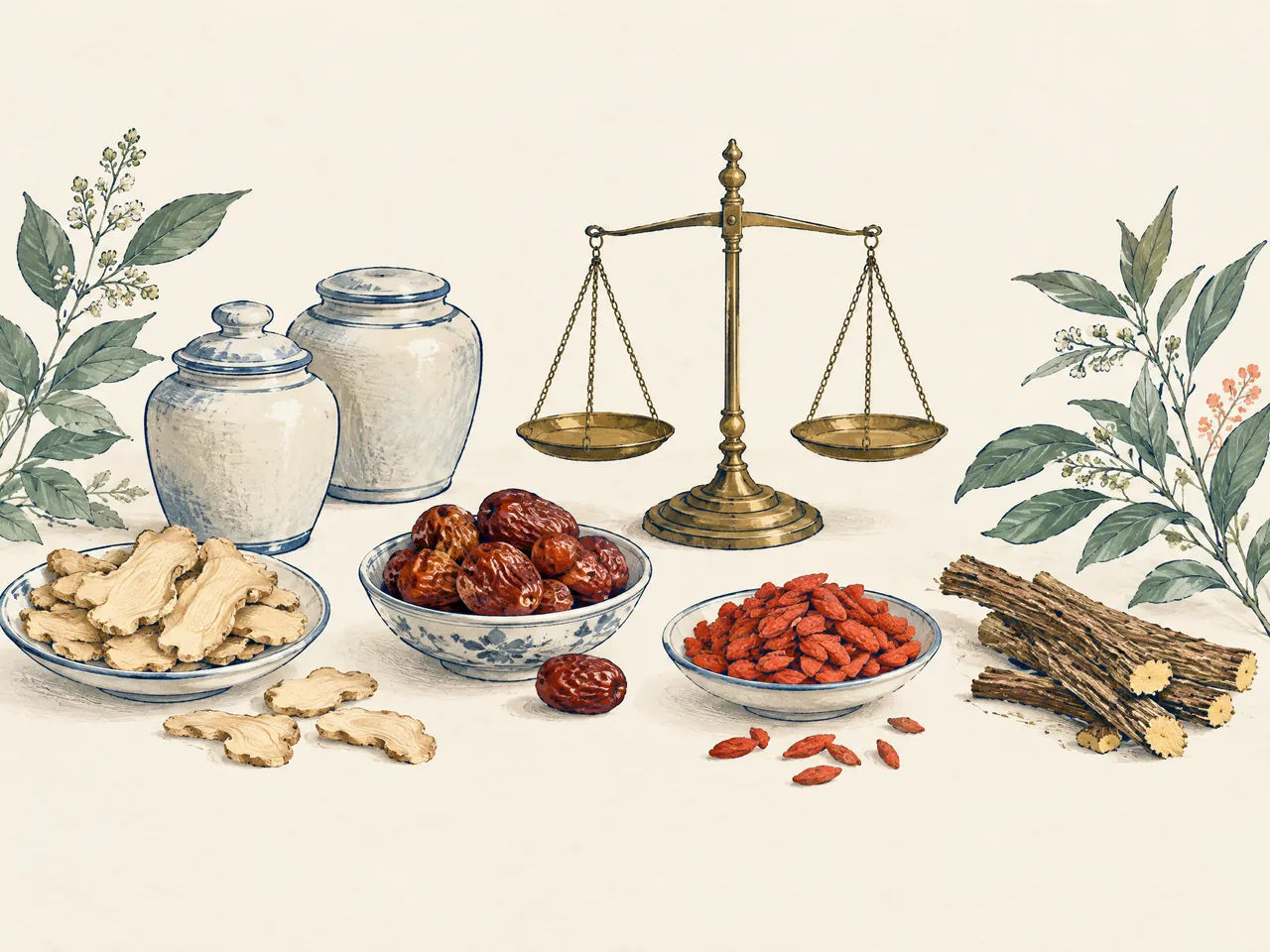
Possibly, but do not assume that Chinese herbal medicine and Western medicine are safe to combine for everyone. Give both practitioners a current, complete medicine list before a formula is considered, and do not change a prescribed medicine yourself. The specific ingredients, dose, reason for treatment, timing, medical history and other supplements all matter. An individual consultation is the practical place to discuss whether a prescribed herbal approach and your existing care can be coordinated.
Transparent pricing
See the fees.
Choose your care.
Explore our complete official price list, including first-trial prices, regular prices, packages and branch-specific options.
Opening WhatsApp prepares an enquiry; it does not send a message, take payment or confirm an appointment. Suitability and individual arrangements are confirmed during consultation.
Chinese medicine
All prices in HKDAcupuncture and Chinese herbal medicine package
Includes a Chinese medicine consultation with pulse assessment, body acupuncture and 3 days of Chinese herbal granules that do not require decoction.
HK$580 (single session)
Chinese medicine consultation with pulse assessment
Hair and scalp
All prices in HKDScalp health and hair-loss management
Includes AI scalp analysis, deep scalp and follicle cleansing, and scalp oil-control care.
HK$380 (first trial)
Regular price: HK$680
- 6 sessions: HK$3,480 (HK$580 per session)
- 12 sessions: HK$5,760 (HK$480 per session)
- 20 sessions: HK$8,600 (HK$430 per session)
- 30 sessions: HK$11,400 (HK$380 per session)
Hair acupuncture and Chinese herbal medicine package
Includes scalp acupuncture and 3 days of Chinese herbal medicine that does not require decoction.
HK$580 (single session)
Registered Chinese Medicine Practitioner consultation
- 6 sessions: HK$3,180 (HK$530 per session)
- 12 sessions: HK$5,760 (HK$480 per session)
- 20 sessions: HK$8,600 (HK$430 per session)
- 30 sessions: HK$11,400 (HK$380 per session)
Combined hair and scalp treatment
Combines acupuncture and Chinese herbal medicine with salon-level scalp and follicle care. Packages include complimentary hair-care shampoo and serum.
HK$1,260 (single session)
Combined treatment
- 8 sessions: HK$8,640 (HK$1,080 per session)
- 16 sessions: HK$15,680 (HK$980 per session)
- 20 sessions: HK$18,600 (HK$930 per session)
- 30 sessions: HK$26,400 (HK$880 per session)
Weight management
All prices in HKDFull-body acupoint embedding for weight management
Includes full-body acupoint embedding. Packages include complimentary Chinese herbal medicine for weight management, with the number of included days scaled to the package. Embedding material and the individual treatment arrangement are confirmed during consultation; this is not a cosmetic thread lift.
HK$980 (single session)
No trial session
- 10 sessions: HK$7,800 (HK$780 per session)
- 20 sessions: HK$14,600 (HK$730 per session)
- 30 sessions: HK$20,400 (HK$680 per session)
Facial acupuncture
All prices in HKDFacial acupuncture (basic)
Includes facial acupuncture and meridian-based facial care, including care for facial puffiness.
HK$480 (first trial)
Regular price: HK$680
- 10 sessions: HK$5,200 (HK$520 per session)
- 20 sessions: HK$9,600 (HK$480 per session)
- 30 sessions: HK$13,500 (HK$450 per session)
Facial acupuncture (advanced)
Includes enhanced facial acupuncture with a specially formulated moisturising mask and serum.
HK$780 (first trial)
Regular price: HK$1,180
- 10 sessions: HK$9,000 (HK$900 per session)
- 20 sessions: HK$16,600 (HK$830 per session)
- 30 sessions: HK$23,400 (HK$780 per session)
Pain care
All prices in HKDExtracorporeal shockwave treatment
Shockwave treatment for deep-tissue and fascial care. The Kwun Tong clinic offers the multi-area options shown below.
Priced by branch
Branch-specific pricing
Prince Edward: HK$250 per area
Kwun Tong: HK$250 for 1 area / HK$450 for 2 areas / HK$600 for 3 areas
Pain care (manual therapy)
Includes Chinese medicine musculoskeletal assessment, manual joint techniques and tui na.
HK$580 (single session)
Chinese medicine musculoskeletal assessment
Pain care (acupuncture and manual therapy)
Combines acupuncture and manual therapy.
HK$680 (single session)
Combined care
Can I Take Chinese Herbal Medicine with Western Medicine? Start with a Full Medicine Review
The safest useful answer begins with a full list, not a quick yes or no. Write down the name of each prescribed medicine, why you take it, its strength, how often you take it and the time of day. Add medicines bought without a prescription, inhalers, creams, eye drops, injections, patches, vitamins, protein or wellness powders, herbal teas and products ordered online. Include items you use only occasionally, such as pain relief, sleep aids or travel remedies. A formula cannot be assessed in a vacuum when other products may be part of the same daily routine.
This detail matters because botanical products can influence how a medicine is absorbed, metabolised or cleared, and medicines, supplements and food compounds may all be relevant. The U.S. Food and Drug Administration advises people to bring a list of all medicines and supplements, including doses and frequency, when they see a health professional [1]. The National Center for Complementary and Integrative Health also notes that interaction evidence is sometimes limited or inconclusive; that uncertainty is a reason for a careful review, not a reason to assume that every combination is harmless [2].
Can I Take Chinese Herbal Medicine with Western Medicine? Tell the Practitioner About Every Product
Give the list to the Chinese medicine practitioner and to the clinician or pharmacist who manages relevant Western medicines. Mention a recent medicine change, a new diagnosis, pregnancy or breastfeeding, a planned procedure, an allergy, or a prior unwanted reaction to a medicine or herb. These are not side notes. They can change what needs to be checked before a herbal formula is discussed. If the medicine name is unfamiliar, bring the box, blister pack or a readable phone photo rather than guessing at the spelling.
Be especially open about products people may not think of as medicines. A daily multivitamin, concentrated extract, traditional remedy from a relative, bottled tonic, slimming product or bedtime drink can still be relevant. If you are considering Chinese herbal medicine, say whether you have already started it, how it was obtained and exactly how you prepared it. That allows the discussion to focus on the real product rather than an assumed generic herb. It also prevents a practitioner from overlooking duplicate ingredients across several products.
Can I Take Chinese Herbal Medicine with Western Medicine? Why Personal Assessment Matters
A name for a symptom does not settle whether a formula is appropriate. Two people seeking support for poor sleep, digestive discomfort or tiredness may have different medical histories, daily demands, eating patterns and medicine lists. One may take a medicine only during an acute episode; another may have a stable long-term prescription. The chosen approach therefore cannot be copied safely from social media, a previous family recipe or another patient’s plan. Assessment is individual because the situation is individual.
A practitioner may decide that more information is needed before suggesting a herbal approach, may ask you to speak with the prescriber or pharmacist, or may discuss non-herbal care and lifestyle measures instead. That is a constructive outcome, not a failed visit. In Hong Kong, the Department of Health explains that the Chinese Medicine Ordinance regulates the practice of Chinese medicine practitioners and the use, manufacture and trading of Chinese medicines [3]. Regulation does not make every product combination suitable; it reinforces why product identity and professional communication matter.
Compare your options
| Bring or record | Details to include | Why it helps the discussion |
|---|---|---|
| Prescription medicines | Name, strength, purpose, dose, timing and prescribing clinic | Identifies the established treatment that should not be altered without qualified advice |
| Over-the-counter products | Pain relief, cold remedies, antacids, sleep aids, creams, drops or patches | Shows products that may be omitted from a prescription record |
| Supplements and herbal products | Photos of labels, ingredients, brand, preparation and how often you use them | Clarifies the exact product rather than relying on a broad category name |
| Health and care changes | Recent symptoms, allergies, pregnancy or breastfeeding, procedure plans, diagnoses and follow-up | Highlights circumstances that may need extra caution or another clinician’s input |
| Daily routine | Actual meal times, work shifts and the times you take each product | Supports a practical conversation about following an agreed routine |
On smaller screens, scroll the table sideways to compare all columns.
Can I Take Chinese Herbal Medicine with Western Medicine? Understanding the Consultation
A consultation is a conversation with a purpose: to understand what is troubling you and what else is already influencing your health. Explain when the concern began, what makes it better or worse, whether it changes through the day and what you have already tried. Say what you hope Chinese medicine may help you address, but also describe any diagnosis, test, procedure or follow-up that is underway. Keep expectations practical. A Chinese medicine consultation is not an automatic substitute for emergency assessment, a hospital appointment or a treatment plan you have been asked to follow.
Chinese medicine is used in formal Hong Kong clinical-service settings that include outpatient and integrated Chinese-Western medicine services, showing that the two systems can be discussed within coordinated care when indicated [4]. For an individual appointment, coordination still depends on the clinicians involved and the information they have. If a prescription was issued by a specialist or a hospital clinic, tell the practitioner. If there is a pharmacist you regularly consult, that person can also help clarify product names, active ingredients and the dispensing directions you were given.

Can I Take Chinese Herbal Medicine with Western Medicine? What a First Visit May Cover
At a first visit, expect questions rather than a one-size-fits-all recommendation. You may be asked about the main concern, sleep, appetite, digestion, energy, stress, work pattern, food and drink, bowel habits, menstrual history where relevant, past illnesses, allergies and current medicines. The aim is to form a broader picture and to identify questions that need another clinician’s input. Take notes during the visit if several instructions are discussed, especially where medicine timing or monitoring has to be coordinated.
Bring a short timeline. For example, note whether a symptom started before or after a new prescription, supplement, illness, travel period or major change in sleep. Record the days and times you actually take your existing medicines, not merely the intended schedule. This can reveal practical issues such as missed doses or overlapping products without assuming that one product caused a symptom. If a herbal prescription is considered, ask for clear directions on preparation, timing, what to avoid changing independently and whom to contact with questions.
Can I Take Chinese Herbal Medicine with Western Medicine? How Four-Diagnosis Assessment Helps
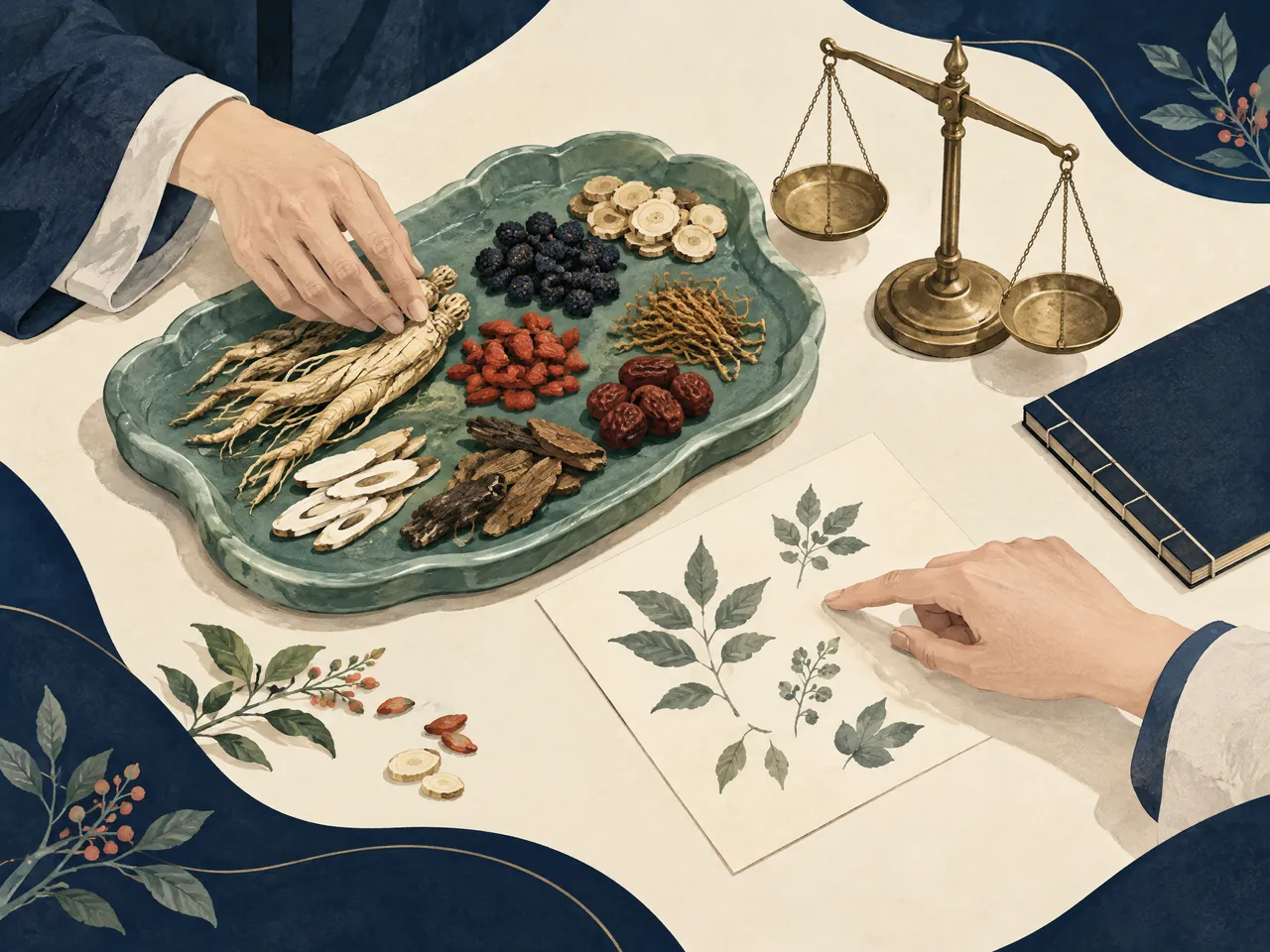
Traditional Chinese medicine commonly brings together observation, listening and smelling, questioning and palpation; this is often described as four-diagnosis assessment. A practitioner may observe general appearance and the tongue, listen to the account of your symptoms and voice, ask detailed questions, and check the pulse. The University of Minnesota describes a typical TCM visit as gathering the person’s story together with nonverbal observations, tongue examination and pulse assessment [5]. These methods are part of the Chinese medicine consultation; they do not replace the need to share your conventional medical information.
The assessment can help a Chinese medicine practitioner decide what questions to ask next and whether a formula should be considered at all. It should be paired with plain communication: what product is being considered, why it is being considered, how it would fit around your established care and what review is needed. Ask the practitioner to explain anything you do not understand. Where a medication has been prescribed for a serious, unstable or closely monitored condition, keep the prescriber informed before any complementary product is added.
Can I Take Chinese Herbal Medicine with Western Medicine? Safer Next Steps in Hong Kong
Prepare for the appointment before you leave home. Put medicines and supplements into one note on your phone, or bring the packets in a bag. A useful list records the product name, dose, timing, reason for use, prescribing clinic or pharmacy, and the date you started it. This is more reliable than saying that you take “a blood-pressure tablet” or “some vitamins.” If your routine is busy, include what happens in practice: whether breakfast is skipped, whether doses are taken at work, or whether a supplement is used only on nights when sleep is difficult.
There is no universal rule that every herbal formula must be separated from every medicine by the same number of hours. Nor is there a universal “natural” label that makes a product low risk. The FDA notes that some supplements may alter the absorption, metabolism or excretion of a medicine and advises discussion with a health professional before combining them [1]. Use that principle to guide the next step: obtain individual advice about the exact formula and medicines involved, then follow the agreed plan rather than testing a combination on your own.

Can I Take Chinese Herbal Medicine with Western Medicine? Questions to Bring to Your Appointment
Ask focused questions. Which of my current medicines or supplements need particular attention? Do you need a photo of the label or a list from my pharmacy? Should I contact the prescribing doctor or pharmacist before starting? What exact preparation and timing would you recommend if a formula is prescribed? What changes should I not make myself? When should the plan be reviewed? These questions move the discussion from a vague reassurance request to a documented routine that can be followed during a busy week.
You can also ask about the form of a prescribed product. For example, Chinese herbal medicine granules may have preparation instructions that are different from raw herbs, but form alone does not answer an interaction question. If you want an in-person discussion, a Chinese herbal medicine consultation Kwun Tong can begin with your complete medicine list. Mention language needs when making an enquiry so the clinic can confirm the available arrangement; do not assume the format of a consultation without checking.

Can I Take Chinese Herbal Medicine with Western Medicine? When to Pause and Ask for Advice
Pause the plan and seek prompt advice from an appropriate healthcare professional if you develop a new or worrying reaction after starting a product, if an existing symptom becomes suddenly worse, or if you are unsure whether you have taken the correct medicine. Seek urgent medical care for severe or rapidly worsening symptoms rather than waiting for a routine Chinese medicine appointment. The right place for care depends on the symptom and its urgency; a routine formula review is not designed to manage an emergency.
For non-urgent questions, keep the product packet and note what was taken and when. Contact the prescribing clinician, pharmacist or Chinese medicine practitioner rather than trying to correct the problem by doubling, skipping or swapping doses yourself. People looking for wider support can read about Chinese medicine internal medicine Hong Kong and enquire at the Kwun Tong Chinese medicine clinic or Chinese medicine clinic Prince Edward. The most useful first message includes your main concern and a clear list of the medicines and supplements you currently use.
Care and health guide
Health service information
This directory brings together services, reading, and visit information related to health services, to help you prepare questions for a consultation.
If you are organising health questions, Chinese medicine clinic Hong Kong is a starting point for learning about related services and preparing for a consultation.
People have different needs; acupuncture Hong Kong provides further reading to help you understand options in your own context.


Your questions, answered
Frequently asked questions
What information should I bring before discussing Chinese herbal medicine?
Bring the names, doses, timing and reasons for all prescription and over-the-counter medicines, supplements, herbal products and remedies. Photos of packets or labels are useful. Also share your main concern, relevant medical history, allergies, recent changes in health and the names of clinicians who manage important prescriptions.
Will a Chinese medicine consultation replace my Western medical care?
No. A Chinese medicine consultation does not automatically replace prescribed treatment, hospital follow-up or urgent medical assessment. Keep established care in place and discuss proposed changes with the clinician or pharmacist responsible for the relevant medicine. Chinese and Western medicine may need coordination rather than substitution.
What happens during a first Chinese medicine consultation?
The practitioner may ask about your symptoms, health history, lifestyle, sleep, diet and medicine list. Traditional assessment can include observation, questions, tongue examination and pulse checking. The consultation should also identify information that needs to be checked with another healthcare professional before an herbal formula is considered.
Can I take Chinese herbal medicine at the same time as my prescription medicine?
Do not apply a general timing rule without individual advice. Taking products hours apart may be suggested in some situations, but it does not establish that a combination is appropriate. Ask about the precise formula, medicine, dose and schedule, and continue prescribed medicine as directed unless its prescriber tells you to change it.
Sources and further information
- [1] U.S. Food and Drug Administration — Mixing Medications and Dietary Supplements Can Endanger Your Health
Referenced for: Supports advice to disclose medicines and supplements, including dose and frequency, and the possibility that supplements can affect medicines.
- [2] National Center for Complementary and Integrative Health — Herb-Drug Interactions
Referenced for: Supports the need for caution around possible herb-drug interactions and the limits of evidence for many specific combinations.
- [3] Hong Kong Department of Health — Chinese Medicine
Referenced for: Supports the statement that Hong Kong regulates Chinese medicine practice and Chinese medicines under the Chinese Medicine Ordinance.
- [4] Hong Kong Health Bureau — Chinese Medicine Clinical Services
Referenced for: Supports description of outpatient and integrated Chinese-Western medicine service types in the Chinese Medicine Hospital of Hong Kong context.
- [5] University of Minnesota — What Happens When You Visit a TCM Practitioner?
Referenced for: Supports the general description of a TCM visit that includes history, observation, tongue examination and pulse assessment.