
TCM Lab · Health reading
Tennis Elbow Pain Relief Exercises, Tennis Elbow Rehabilitation Exercises: Can stretching help tennis elbow pain?
Published Updated
Pain on the outside of the elbow can make a coffee mug, a computer mouse, a heavy shopping bag or a tightly closed jar unexpectedly difficult. So, can stretching help tennis elbow pain? A gentle wrist and forearm stretch may be useful when it is comfortable and part of a broader plan that reduces provoking load and rebuilds strength gradually. It is not a test of how far you can push through pain. This guide sets out tennis elbow pain relief exercises, practical ways to pace them, and signs that need an assessment instead of more self-treatment.
Appointments are confirmed through WhatsApp. If you have language requirements, please mention them in your enquiry.
The short answer
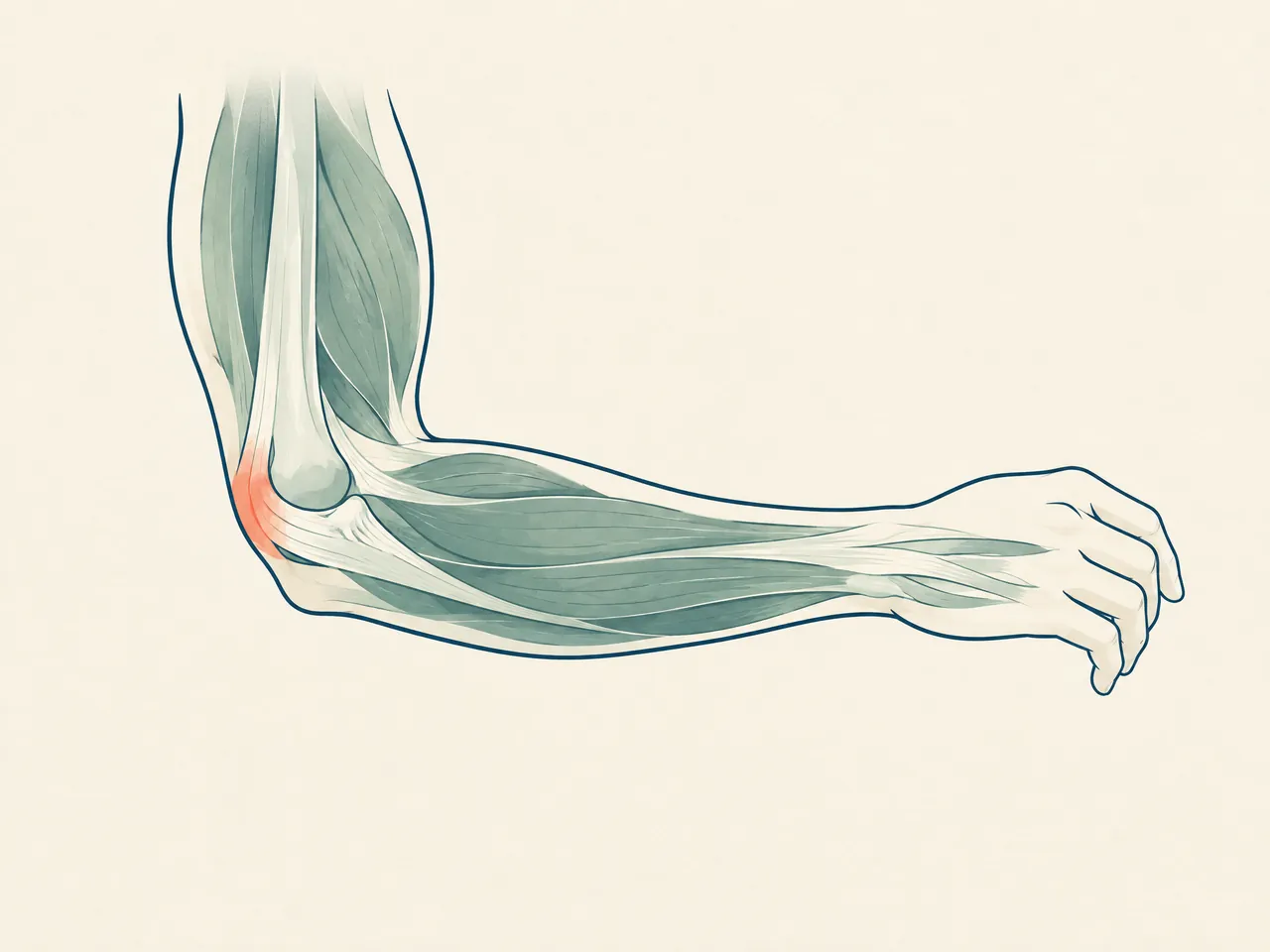
Stretching can help some people with tennis elbow pain when it is gentle, does not cause a meaningful flare, and is paired with gradual forearm strengthening and changes to repetitive tasks. Begin slowly, notice how the elbow feels later that day and the next morning, and reduce or stop an exercise that aggravates symptoms. Outer-elbow pain after an injury, or pain with marked swelling, heat, numbness, tingling or loss of strength, needs assessment rather than an exercise-only plan.
Transparent pricing
See the fees.
Choose your care.
Explore our complete official price list, including first-trial prices, regular prices, packages and branch-specific options.
Opening WhatsApp prepares an enquiry; it does not send a message, take payment or confirm an appointment. Suitability and individual arrangements are confirmed during consultation.
Pain care
All prices in HKDExtracorporeal shockwave treatment
Shockwave treatment for deep-tissue and fascial care. The Kwun Tong clinic offers the multi-area options shown below.
Priced by branch
Branch-specific pricing
Prince Edward: HK$250 per area
Kwun Tong: HK$250 for 1 area / HK$450 for 2 areas / HK$600 for 3 areas
Pain care (manual therapy)
Includes Chinese medicine musculoskeletal assessment, manual joint techniques and tui na.
HK$580 (single session)
Chinese medicine musculoskeletal assessment
Pain care (acupuncture and manual therapy)
Combines acupuncture and manual therapy.
HK$680 (single session)
Combined care
Hair and scalp
All prices in HKDScalp health and hair-loss management
Includes AI scalp analysis, deep scalp and follicle cleansing, and scalp oil-control care.
HK$380 (first trial)
Regular price: HK$680
- 6 sessions: HK$3,480 (HK$580 per session)
- 12 sessions: HK$5,760 (HK$480 per session)
- 20 sessions: HK$8,600 (HK$430 per session)
- 30 sessions: HK$11,400 (HK$380 per session)
Hair acupuncture and Chinese herbal medicine package
Includes scalp acupuncture and 3 days of Chinese herbal medicine that does not require decoction.
HK$580 (single session)
Registered Chinese Medicine Practitioner consultation
- 6 sessions: HK$3,180 (HK$530 per session)
- 12 sessions: HK$5,760 (HK$480 per session)
- 20 sessions: HK$8,600 (HK$430 per session)
- 30 sessions: HK$11,400 (HK$380 per session)
Combined hair and scalp treatment
Combines acupuncture and Chinese herbal medicine with salon-level scalp and follicle care. Packages include complimentary hair-care shampoo and serum.
HK$1,260 (single session)
Combined treatment
- 8 sessions: HK$8,640 (HK$1,080 per session)
- 16 sessions: HK$15,680 (HK$980 per session)
- 20 sessions: HK$18,600 (HK$930 per session)
- 30 sessions: HK$26,400 (HK$880 per session)
Weight management
All prices in HKDFull-body acupoint embedding for weight management
Includes full-body acupoint embedding. Packages include complimentary Chinese herbal medicine for weight management, with the number of included days scaled to the package. Embedding material and the individual treatment arrangement are confirmed during consultation; this is not a cosmetic thread lift.
HK$980 (single session)
No trial session
- 10 sessions: HK$7,800 (HK$780 per session)
- 20 sessions: HK$14,600 (HK$730 per session)
- 30 sessions: HK$20,400 (HK$680 per session)
Facial acupuncture
All prices in HKDFacial acupuncture (basic)
Includes facial acupuncture and meridian-based facial care, including care for facial puffiness.
HK$480 (first trial)
Regular price: HK$680
- 10 sessions: HK$5,200 (HK$520 per session)
- 20 sessions: HK$9,600 (HK$480 per session)
- 30 sessions: HK$13,500 (HK$450 per session)
Facial acupuncture (advanced)
Includes enhanced facial acupuncture with a specially formulated moisturising mask and serum.
HK$780 (first trial)
Regular price: HK$1,180
- 10 sessions: HK$9,000 (HK$900 per session)
- 20 sessions: HK$16,600 (HK$830 per session)
- 30 sessions: HK$23,400 (HK$780 per session)
Chinese medicine
All prices in HKDAcupuncture and Chinese herbal medicine package
Includes a Chinese medicine consultation with pulse assessment, body acupuncture and 3 days of Chinese herbal granules that do not require decoction.
HK$580 (single session)
Chinese medicine consultation with pulse assessment
Tennis elbow pain relief exercises and tennis elbow rehabilitation exercises: Can stretching help tennis elbow pain? Understand the symptoms
Tennis elbow is often used for pain around the bony outer part of the elbow. It can begin gradually rather than after one memorable incident, and it is not limited to racquet sports. The Hong Kong College of Orthopaedic Surgeons describes pain with gripping, lifting and wringing a towel, while the American Academy of Orthopaedic Surgeons notes that repeated forearm and wrist activity can be involved [1] [3]. Recognising the pattern helps you choose a sensible starting point: comfort-first stretching and load adjustment may suit a familiar, mild pattern, but they do not confirm the cause of every elbow pain.
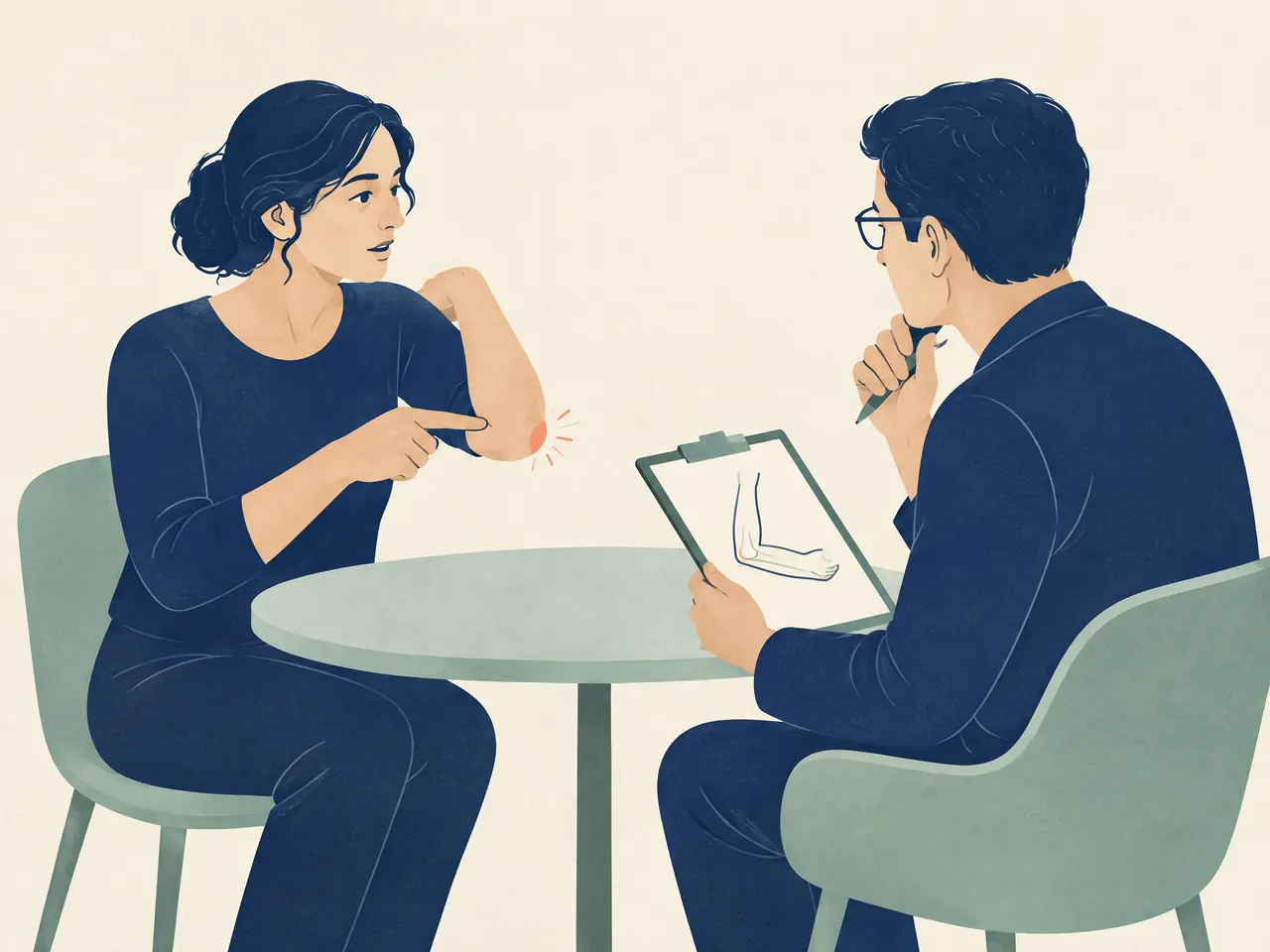
Before adding a programme, make a short note of where the pain is, which hand is affected, the task that starts it, and how long it lingers. Include changes in work, DIY, gym training, racquet sport or childcare. This is useful both for your own pacing and for a later assessment. A small task such as lifting a pan may be more informative than a general statement that the elbow is sore, because it reveals the grip, wrist position and load that may need changing.
Tennis elbow pain relief exercises and tennis elbow rehabilitation exercises: Can stretching help tennis elbow pain? Recognise outer-elbow pain
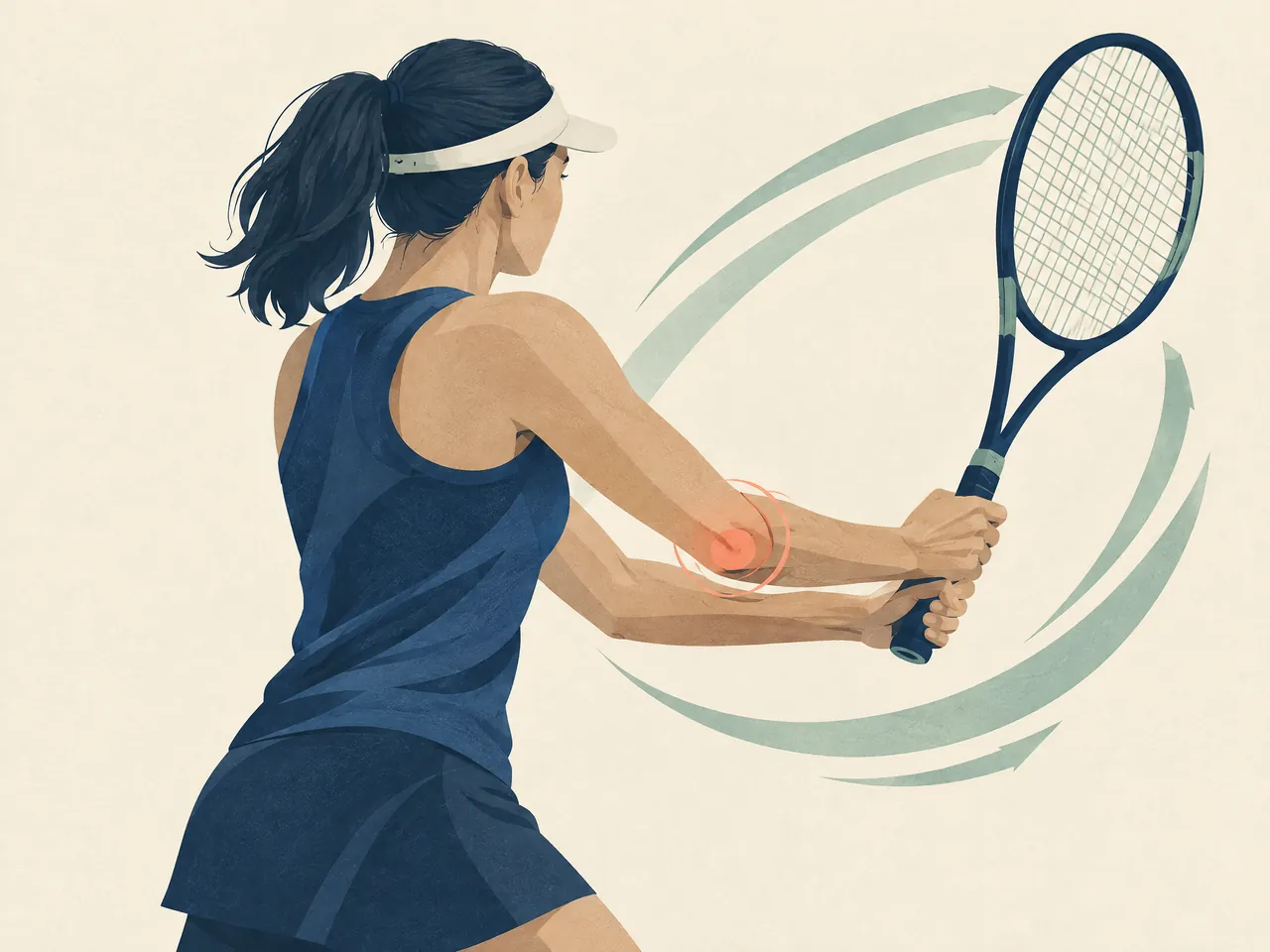
Typical tennis elbow discomfort sits on or just below the outside of the elbow and may travel into the upper forearm. It may be a local ache at first, then become more noticeable when the wrist works against resistance. Turning a key, pouring from a kettle, shaking hands, using a screwdriver or lifting with the palm down can all make an irritated area speak up. Some people also notice that their grip feels less reliable because pain makes firm squeezing difficult. These clues are useful context, not a diagnosis made at home.
Location matters. Pain mainly on the inner elbow can have a different pattern, and pain accompanied by pins and needles, numbness or altered sensation may point to a nerve-related issue or another cause needing examination. Neck or shoulder problems can also refer pain into the arm. If the elbow became deformed after a fall, is very hot, red or rapidly swollen, or you cannot use the arm normally, seek prompt medical care rather than testing stretches. A new, enlarging lump or a sudden major loss of strength should also be assessed promptly.
Tennis elbow pain relief exercises and tennis elbow rehabilitation exercises: Can stretching help tennis elbow pain? Notice gripping and lifting triggers
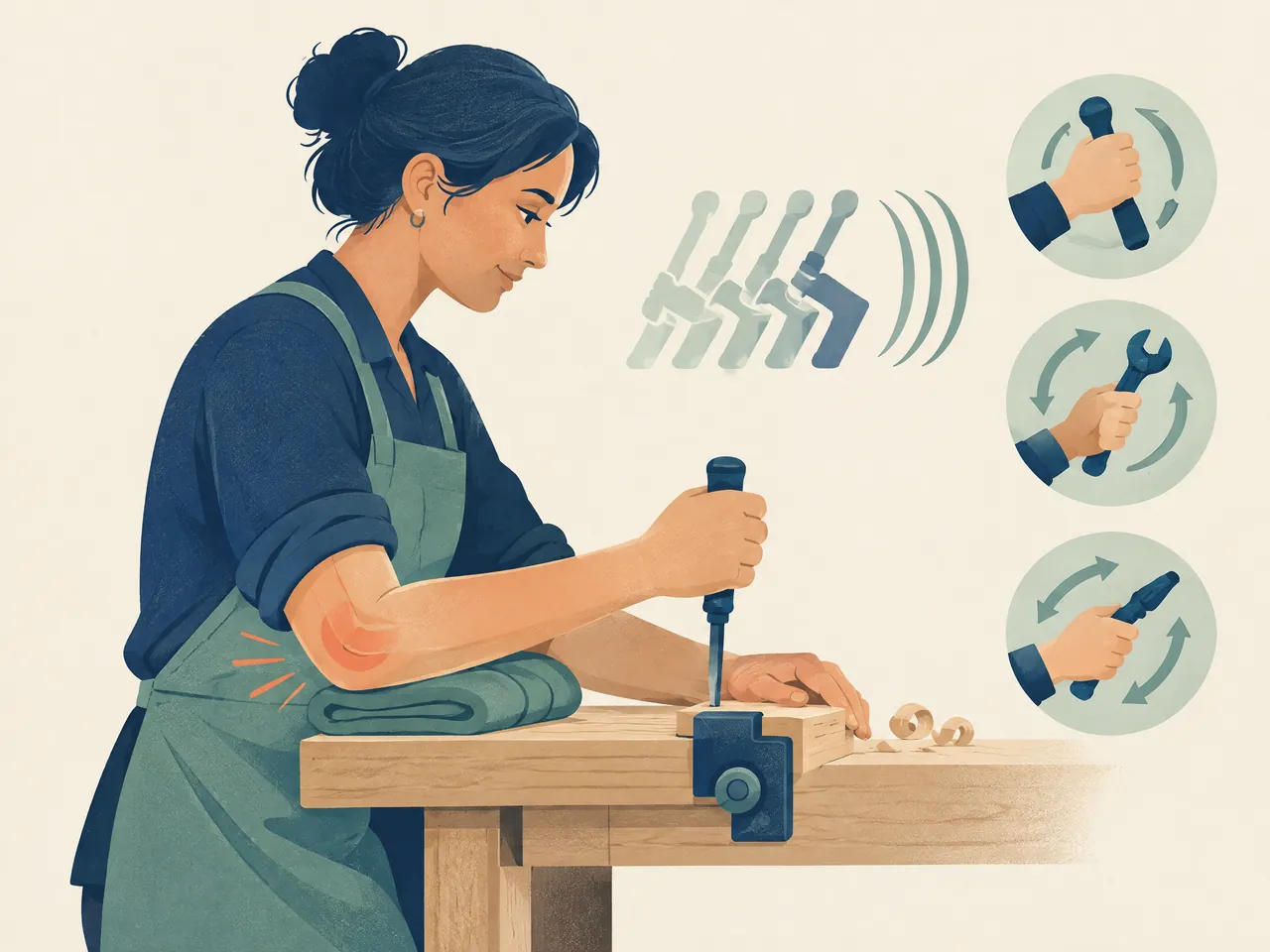
Gripping is not one single demand. Holding a phone lightly, squeezing pruning shears, carrying luggage and stabilising a frying pan each ask for different amounts of force and wrist control. Repeated wrist extension, twisting and firm gripping commonly reproduce symptoms in tennis elbow. Computer work can matter too: a long mouse session may combine sustained grip, a bent wrist and too little variation. Notice whether pain comes at the beginning of a task, after repetition, or only when the elbow is straight. That detail makes changes more precise.
A practical experiment is to alter one feature at a time. Use two hands for a heavier object, keep the wrist nearer a neutral position, carry a bag closer to the body, or break a long task into shorter blocks. For tennis or gym work, reducing force, duration or frequency may be kinder than adding more stretches after an unchanged session. The detailed guide to tennis elbow activity modification can help you identify which part of a routine needs adjusting. The goal is not permanent avoidance; it is finding a level that does not keep provoking the elbow.
Compare your options
| Situation | A cautious exercise or load approach | What to watch for next |
|---|---|---|
| Outer-elbow ache after a familiar repetitive task | Try a gentle wrist stretch and reduce the provoking task before adding more activity. | The pull should stay mild; pain should not build later in the day or the next morning. |
| Discomfort when using a mouse, tools or a racket | Change grip, wrist position, force or duration, and take regular movement breaks. | Notice which adjustment lowers the flare rather than changing everything at once. |
| Comfortable movement but poor tolerance for lifting or gripping | Use slow, supported wrist or forearm strengthening with light resistance, then progress one variable at a time. | Reduce the load if pain escalates, new pain appears, or function is worse afterwards. |
| Pain persists despite careful pacing | Arrange assessment and bring a record of triggers, daily limitations and exercises already tried. | An examination can check whether another cause or a more tailored rehabilitation plan needs consideration. |
| Pain after trauma, or pain with deformity, marked swelling, heat, numbness or weakness | Do not push through a stretch or strengthening session. | Seek prompt medical assessment, especially if normal arm use is affected. |
On smaller screens, scroll the table sideways to compare all columns.
Tennis elbow pain relief exercises and tennis elbow rehabilitation exercises: Can stretching help tennis elbow pain? Practise safely
The safest tennis elbow rehabilitation exercises are usually the ones you can repeat with controlled form and a settled response afterwards. Official exercise guidance from MyHealth Alberta advises starting slowly and easing off if an exercise begins to cause pain [2]. That does not mean a completely passive arm. Comfortable movement can maintain confidence and range, while carefully dosed strength work can prepare the forearm for ordinary demands. The important decision is how much to do now, not whether to force a rapid fix.
Set up in a supported position rather than trying to stretch while carrying something or rushing between tasks. Rest the forearm on a table if that makes the elbow feel steadier. Move slowly enough to distinguish a mild muscle pull from a sharp or catching pain at the elbow. Breathe normally and avoid clenching the shoulder. If you are unsure whether a movement is appropriate after an injury, surgery, a long-standing condition or neurological symptoms, ask a qualified healthcare professional before progressing it.
Tennis elbow pain relief exercises and tennis elbow rehabilitation exercises: Can stretching help tennis elbow pain? Begin with a gentle wrist stretch
For a gentle wrist extensor stretch, straighten the affected arm in front of you with the palm facing down. Let the fingers point towards the floor, then use the other hand to add only enough pressure to feel a mild pull through the outer forearm. Do not force the elbow straight if that itself is painful. The Alberta handout describes a gentle version held for 15 to 30 seconds and repeated two to four times, but a personal programme may need less or a different starting position [2].
A wrist flexor stretch uses a different direction: with the arm in front of you, guide the wrist back until the fingers point upward, aiming for a mild stretch on the other side of the forearm. It can be useful to compare the sides without trying to make them identical. For a closer description of hand placement, see wrist flexor stretch for tennis elbow. The related tennis elbow stretches show other gentle options, but the same rule applies: stop if the stretch produces sharp outer-elbow pain, increasing tingling, or a clear worsening that does not settle after you stop.
Tennis elbow pain relief exercises and tennis elbow rehabilitation exercises: Can stretching help tennis elbow pain? Add gradual strengthening
When the elbow tolerates comfortable movement, gradual strengthening can address the gap between a gentle stretch and real life. A supported wrist extension with a very light object, a light elastic band, or controlled wrist movement without added weight may be options, depending on symptoms and professional advice. Keep the forearm supported where possible and move the wrist slowly rather than using the shoulder or a sudden swing. The purpose is controlled loading of the forearm, not fatigue for its own sake.
Progress only one element at a time. You might add a few repetitions, slow the lowering phase, increase resistance a little, or move from a supported to a less supported position—but not all at once. NHS Inform advises adding exercise gradually and stopping if it worsens symptoms or causes new pain [4]. This stepwise approach gives you a clearer signal about what your elbow can currently manage.
Tennis elbow pain relief exercises and tennis elbow rehabilitation exercises: Can stretching help tennis elbow pain? Manage load and next steps
Exercise and daily load have to work together. Repeatedly testing a painful grip at work, then trying to undo the flare with a longer stretch at night, usually gives the elbow mixed messages. Instead, match rehabilitation to the demands of the week. If a deadline requires more mouse time, build in brief movement breaks and use a comfortable setup. If household jobs are unavoidable, spread them over days, use a larger-handled tool where available, or ask for help with the most forceful tasks. These are practical adjustments, not a sign of failure.

Heat or cold can be a comfort choice for some people, but neither replaces load management and progressive rehabilitation. A towel-wrapped hot or cold pack should be stopped if it irritates the skin or worsens pain. The NHS notes that a wrapped pack may be used for up to 20 minutes every two to three hours, alongside reducing aggravating activities [5]. If you have reduced sensation, circulation concerns or another condition affecting skin safety, ask a clinician before using temperature-based self-care.

Tennis elbow pain relief exercises and tennis elbow rehabilitation exercises: Can stretching help tennis elbow pain? Adjust repetitive activities
Start by listing the two or three actions that most reliably aggravate the elbow. They may be different from the activity you blame first. For example, tennis may not be the main issue if a full day of lifting boxes or a weekend of gardening produces the larger flare. Reduce the number of provoking repetitions, the force of the grip, the time spent continuously, or the awkward wrist position. A small reduction in several places can be more realistic than stopping every activity at once.
At a desk, try positioning the keyboard and mouse so the forearm can rest rather than hovering, and change position before symptoms build. For lifting, use both hands when possible and keep the object close. For sport, consider a temporary reduction in intensity while practising comfortable technique and seeking coaching or physiotherapy advice if needed. Do not compensate by overusing the other arm; that simply transfers the workload. The best adjustment is the one you can continue long enough to observe whether it changes the pattern.
Plan a return rather than a sudden catch-up. Begin with the task level that was tolerable, then make a small increase only after the elbow has remained settled. If a return to a particular sport or job is important, write down the specific action you want to regain: serving, prolonged mouse work, a tool grip or carrying groceries. This creates a useful conversation with a clinician because the rehabilitation goal is concrete. It also helps distinguish ordinary temporary discomfort from a pattern that keeps worsening.

Tennis elbow pain relief exercises and tennis elbow rehabilitation exercises: Can stretching help tennis elbow pain? Know when assessment matters
Arrange an assessment if the pain is not improving after a period of sensible rest, activity change and gentle exercise, or if it meaningfully limits work, sleep or everyday tasks. NHS guidance advises seeing a GP when elbow pain remains after at least two weeks of rest and self-care, and notes that physiotherapy may help when symptoms have not improved after home measures [5]. The exact route in Hong Kong may differ, but the principle is the same: persistent symptoms deserve a more tailored look rather than endlessly changing exercises alone.
Seek urgent medical attention after a significant injury or if there is deformity, rapidly increasing swelling, redness and heat with severe pain, fever, profound weakness, or new numbness or tingling. These features are not explained away by calling every outer-elbow problem tennis elbow. A clinician may need to consider other joint, tendon, nerve or referred-pain causes. Bring a timeline of symptoms, work and sport changes, previous injuries, medicines, and the exercises you have tried; that information supports a more efficient assessment.
If you would like to discuss persistent elbow discomfort in a Chinese medicine consultation, contact TCM Lab by WhatsApp at +852 6940 5663 and describe the pattern, duration and warning symptoms if any. You can ask about arrangements at the Kwun Tong Chinese medicine clinic or the Chinese medicine clinic Prince Edward. A consultation enquiry is not a substitute for urgent care and does not promise that any particular treatment will be recommended. Bring any relevant medical assessment or therapy information so that next steps can be discussed responsibly.
Care and health guide
Pain-care information
This directory brings together services, reading, and visit information related to pain care, to help you prepare questions for a consultation.
When pain care affects your day, noting when it occurs, its relation to activity, and what you have already tried can help prepare a consultation; Chinese medicine pain management Hong Kong is a relevant service or reading entry point.
Individual circumstances differ, and acupuncture Hong Kong offers related information to help you understand options and prepare questions.


Your questions, answered
Frequently asked questions
Can stretching help tennis elbow pain on its own?
Gentle stretching may be one helpful part of self-management, particularly when it feels like a mild forearm pull rather than sharp pain. It is usually more useful alongside reduced aggravating load and gradual strengthening. If stretching repeatedly makes the elbow worse, stop and seek individual advice rather than increasing the intensity.
How often should I do tennis elbow rehabilitation exercises?
There is no single schedule that suits every elbow. Start with a small, comfortable amount and judge the response later that day and the following morning. Official exercise guidance recommends gradual progression and reducing or stopping an exercise that worsens symptoms. A physiotherapist can set a more specific plan for your work, sport and current tolerance.
Should I use heat or ice for tennis elbow?
Some people find a towel-wrapped hot or cold pack comfortable, but it is a symptom-relief option rather than a cure. Stop if it irritates the skin or makes symptoms worse. Do not apply extreme temperatures directly to skin, and seek advice first if you have reduced sensation or circulation concerns.
When should I stop exercising with tennis elbow?
Stop the movement if it causes sharp or increasing pain, new numbness or tingling, or a flare that leaves the elbow clearly worse afterwards. The related guide, When should I stop exercising with tennis elbow?, explains the decision in more detail. Persistent or function-limiting pain should be assessed rather than managed by repeatedly testing painful exercise.
Sources and further information
- [1] Hong Kong College of Orthopaedic Surgeons — Tennis Elbow
Referenced for: Hong Kong professional orthopaedic information on tennis-elbow symptoms, repetitive activities, stretching and activity adjustment.
- [2] MyHealth.Alberta.ca — Tennis Elbow: Exercises
Referenced for: Government health information describing gradual wrist stretches and strengthening exercises, with advice to ease off if pain begins.
- [3] American Academy of Orthopaedic Surgeons — Tennis Elbow Lateral Epicondylitis
Referenced for: Professional orthopaedic information on outer-elbow symptoms, overuse, assessment and nonsurgical rehabilitation context.
- [4] NHS inform — Exercises for tennis elbow
Referenced for: Public-health guidance on gradual exercise progression, monitoring symptoms and stopping if symptoms worsen or new pain appears.
- [5] NHS — Tennis elbow
Referenced for: Public-health information on symptoms, activity reduction, wrapped hot or cold packs, and when persistent pain should be assessed.