
TCM Lab · Health reading
Is acne on the chin always hormonal? When should I see a dermatologist for acne?
Published Updated
A cluster of spots around the chin can be frustrating, especially when it appears just before a period, but location is not a diagnosis. Chin acne may occur with cycle-related hormonal changes, yet cosmetics, friction, medicines, skin irritation and other acne patterns can also be relevant. The useful question is not simply whether the chin is involved, but what the lesions are, when they recur, whether they hurt, and whether they are leaving marks or scars. This guide helps you record that pattern and recognise when a medical or dermatology assessment should come before any complementary discussion.
Appointments are confirmed through WhatsApp. If you have language requirements, please mention them in your enquiry.
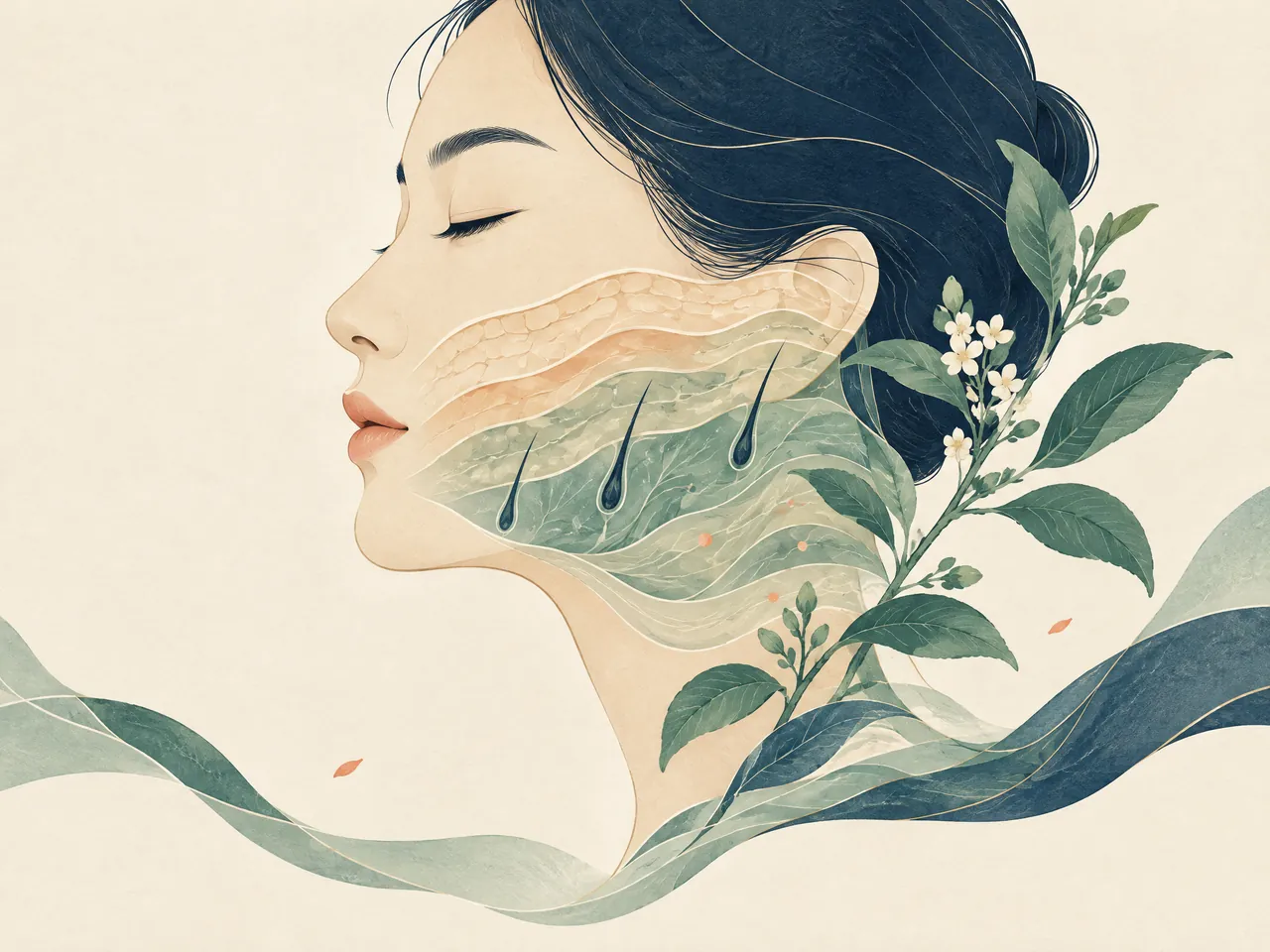
The short answer
No. Acne on the chin is not always hormonal: a repeated premenstrual flare can be a useful clue, but chin location alone cannot establish the cause. Seek medical or dermatology advice if acne is deep, painful, rapidly worsening, accompanied by spreading redness or pus, leaving scars, or having a major effect on confidence, mood or daily life. Bring your current skincare and medicines rather than stopping prescribed treatment on your own.
Transparent pricing
See the fees.
Choose your care.
Explore our complete official price list, including first-trial prices, regular prices, packages and branch-specific options.
Opening WhatsApp prepares an enquiry; it does not send a message, take payment or confirm an appointment. Suitability and individual arrangements are confirmed during consultation.
Chinese medicine
All prices in HKDAcupuncture and Chinese herbal medicine package
Includes a Chinese medicine consultation with pulse assessment, body acupuncture and 3 days of Chinese herbal granules that do not require decoction.
HK$580 (single session)
Chinese medicine consultation with pulse assessment
Hair and scalp
All prices in HKDScalp health and hair-loss management
Includes AI scalp analysis, deep scalp and follicle cleansing, and scalp oil-control care.
HK$380 (first trial)
Regular price: HK$680
- 6 sessions: HK$3,480 (HK$580 per session)
- 12 sessions: HK$5,760 (HK$480 per session)
- 20 sessions: HK$8,600 (HK$430 per session)
- 30 sessions: HK$11,400 (HK$380 per session)
Hair acupuncture and Chinese herbal medicine package
Includes scalp acupuncture and 3 days of Chinese herbal medicine that does not require decoction.
HK$580 (single session)
Registered Chinese Medicine Practitioner consultation
- 6 sessions: HK$3,180 (HK$530 per session)
- 12 sessions: HK$5,760 (HK$480 per session)
- 20 sessions: HK$8,600 (HK$430 per session)
- 30 sessions: HK$11,400 (HK$380 per session)
Combined hair and scalp treatment
Combines acupuncture and Chinese herbal medicine with salon-level scalp and follicle care. Packages include complimentary hair-care shampoo and serum.
HK$1,260 (single session)
Combined treatment
- 8 sessions: HK$8,640 (HK$1,080 per session)
- 16 sessions: HK$15,680 (HK$980 per session)
- 20 sessions: HK$18,600 (HK$930 per session)
- 30 sessions: HK$26,400 (HK$880 per session)
Weight management
All prices in HKDFull-body acupoint embedding for weight management
Includes full-body acupoint embedding. Packages include complimentary Chinese herbal medicine for weight management, with the number of included days scaled to the package. Embedding material and the individual treatment arrangement are confirmed during consultation; this is not a cosmetic thread lift.
HK$980 (single session)
No trial session
- 10 sessions: HK$7,800 (HK$780 per session)
- 20 sessions: HK$14,600 (HK$730 per session)
- 30 sessions: HK$20,400 (HK$680 per session)
Facial acupuncture
All prices in HKDFacial acupuncture (basic)
Includes facial acupuncture and meridian-based facial care, including care for facial puffiness.
HK$480 (first trial)
Regular price: HK$680
- 10 sessions: HK$5,200 (HK$520 per session)
- 20 sessions: HK$9,600 (HK$480 per session)
- 30 sessions: HK$13,500 (HK$450 per session)
Facial acupuncture (advanced)
Includes enhanced facial acupuncture with a specially formulated moisturising mask and serum.
HK$780 (first trial)
Regular price: HK$1,180
- 10 sessions: HK$9,000 (HK$900 per session)
- 20 sessions: HK$16,600 (HK$830 per session)
- 30 sessions: HK$23,400 (HK$780 per session)
Pain care
All prices in HKDExtracorporeal shockwave treatment
Shockwave treatment for deep-tissue and fascial care. The Kwun Tong clinic offers the multi-area options shown below.
Priced by branch
Branch-specific pricing
Prince Edward: HK$250 per area
Kwun Tong: HK$250 for 1 area / HK$450 for 2 areas / HK$600 for 3 areas
Pain care (manual therapy)
Includes Chinese medicine musculoskeletal assessment, manual joint techniques and tui na.
HK$580 (single session)
Chinese medicine musculoskeletal assessment
Pain care (acupuncture and manual therapy)
Combines acupuncture and manual therapy.
HK$680 (single session)
Combined care
Is acne on the chin always hormonal? When should I see a dermatologist for acne? — Start with the pattern
Chin acne is often described as “hormonal”, but that label can hide useful details. Acne is a condition that can include blackheads, whiteheads, inflamed pimples and deeper cysts or nodules; a person can have more than one type at once. [1] A few blocked pores at the chin call for a different conversation from repeated tender lumps beneath the skin. Looking closely at the active lesions, rather than assigning a cause from their address on the face, gives a safer starting point.
A simple record for six to eight weeks can make a consultation more productive. Note the first day of a flare, whether it settles or keeps producing new lesions, the exact areas involved, period timing if relevant, and any new product, medicine, mask, helmet strap or hair-removal routine. Photographs taken in similar light can help show change without trying to judge it from memory. The record does not diagnose a hormonal condition; it gives a clinician a clearer history to interpret.

Is acne on the chin always hormonal? When should I see a dermatologist for acne? — Look beyond location
A recurring flare around a period can be meaningful, and NHS inform notes that hormonal therapies may be considered for some women when acne flares around a period or is associated with conditions such as PCOS. [2] That does not mean every spot before a period has one explanation, nor that every chin breakout needs hormone treatment. Hormones are one part of a clinical picture that may also include age, menstrual history, other symptoms, family history and the appearance and severity of the acne itself.
Location can also be influenced by what contacts the skin. Think about a phone held against the jaw, a chin strap, a face covering, a musical instrument, hair products that reach the lower face, heavy make-up, or a new shaving or hair-removal habit. This is not an invitation to blame yourself. It is a prompt to look for a repeatable exposure and to discuss it if the pattern persists. Avoid aggressive scrubbing in an effort to “clean out” the chin: irritation can make acne look and feel more inflamed. [1]

Is acne on the chin always hormonal? When should I see a dermatologist for acne? — Track timing and triggers
Write down the name and start date of each cleanser, moisturiser, sunscreen, make-up product and spot treatment, including products used only occasionally. Also list prescription creams, tablets, supplements and hormonal contraception, but do not stop a prescribed medicine simply to test a theory. A clinician needs to know what is already on the skin or in use so that overlapping irritation, dryness or ingredient conflicts are less likely to be missed. If you have already tried several changes, the record can prevent the next appointment becoming guesswork.
Keep the language in the diary descriptive: “three tender bumps on the left chin”, “whitehead near the jaw”, “skin stung after applying product”, or “no new lesions this week”. Avoid deciding in advance that a food, stressful day or product is definitely the cause from a single flare. Acne can vary over time, and treatment plans are usually judged over weeks rather than overnight. The American Academy of Dermatology advises a gentle routine and notes that irritating skin can lead to more breakouts. [1] For wider context on supportive care discussions, see acne Chinese medicine.
Compare your options
| What you notice | How to describe it | A sensible next step |
|---|---|---|
| Blackheads or whiteheads without much soreness | Small clogged-looking bumps; note products, frequency and whether they spread | Use a gentle, consistent routine and discuss persistent acne with a pharmacist or clinician. |
| Red tender papules or pustules | Count approximate new lesions each week and note pain, product irritation and cycle timing | Seek advice if inflammation persists, worsens or is difficult to manage with a simple routine. |
| Deep painful lumps | Describe whether they are hard, below the skin, recurrent or leaving a mark | Arrange medical or dermatology assessment; do not squeeze or puncture them. |
| Flat red or brown traces after spots | Say whether the surface is flat and whether new active spots are still appearing | First clarify active acne versus post-inflammatory marks; avoid promising scar treatment. |
| Pits, depressed texture or raised areas | Mention when they appeared and whether acne remains active | Ask for assessment of possible scarring while prioritising control of new inflammation. |
On smaller screens, scroll the table sideways to compare all columns.
Is acne on the chin always hormonal? When should I see a dermatologist for acne? — Separate spots from scars
It is easy to call every remaining trace an “acne scar”, but active lesions, flat marks and structural scars are different. A blackhead, whitehead, papule, pustule, nodule or cyst is active acne. A red or brown flat mark can remain after inflammation has settled. An indentation or raised area is a scar. The distinction matters because a person who is still getting new inflamed lesions normally needs to focus first on controlling activity and reducing the risk of further injury, not on chasing a quick solution for every mark.
Deep, painful acne deserves particular attention. The AAD describes cysts or nodules as deep, painful breakouts and says a dermatologist’s help is needed for treatment that addresses the multiple factors involved in deep painful acne. [1] NHS inform similarly advises referral for severe acne such as a large number of inflamed lesions or painful nodules. [2] These are practical reasons to arrange proper assessment, not a reason to wait until scarring has become established.
Is acne on the chin always hormonal? When should I see a dermatologist for acne? — Identify active inflammation
Active inflammation may look red, swollen, tender or pus-filled, while a nodule can feel like a firm painful lump below the surface. A breakout that is increasingly hot, rapidly spreading, unusually painful, draining, or associated with feeling unwell should be assessed promptly by a medical professional, particularly if infection is a concern. Do not try to puncture, squeeze or repeatedly pick a deep lesion. Squeezing can worsen inflammation and NHS inform notes that picking or squeezing spots can contribute to permanent scarring. [2]
For milder acne, consistency often matters more than cycling through many strong products. Use a mild cleanser and lukewarm water, treat the skin gently, and use products described as oil-free or non-comedogenic where suitable for you. [1] That is not a promise that one routine will solve every case. It is a way to avoid adding unnecessary irritation while you observe the pattern. If the chin becomes sore every time a new active is introduced, pause the experimentation and bring the product list to a pharmacist, doctor or dermatologist.
Is acne on the chin always hormonal? When should I see a dermatologist for acne? — Understand marks and scarring
A flat red, pink or brown area after a spot has healed may be a post-inflammatory mark rather than an active pimple. It may change gradually while no new acne is present. A pit, depressed contour or raised thickened area is different: it suggests a structural scar and should not be described as just “pigmentation”. Looking in side light can make this distinction clearer, but a diagnosis should not rest on a photograph alone. A dermatology assessment can clarify whether active acne, marks, scars or more than one issue is present.
The order of priorities is important. When new inflamed lesions continue to form, reducing future inflammation and scar risk is generally more useful than seeking an immediate mark-removal procedure. All forms of acne can scar, according to the AAD, and treating acne before it worsens may help prevent scars. [1] This is why a consultation should address current breakouts as well as the older marks. Read our related explanation of acne breakouts if you need help naming what is still active before an appointment.
Is acne on the chin always hormonal? When should I see a dermatologist for acne? — Choose a careful next step
The next step should match the severity and uncertainty of the situation. A stable pattern of mild clogged pores may be discussed with a pharmacist or primary-care clinician; persistent inflammatory acne or questions about scarring often justify dermatology input. If you are interested in Chinese medicine as a complementary discussion, first make sure that deep inflammation, skin breakdown or suspected infection is not being overlooked. Complementary care should not replace a dermatology diagnosis or ask you to abandon prescribed treatment without speaking to the prescriber.
It can help to state your goal plainly: fewer new inflamed lesions, an explanation for a cycle-linked pattern, advice about possible marks, or support while following a medical plan. For an overview of where an adjunctive Chinese medicine conversation may fit, visit Can Chinese medicine help with acne?. Be cautious with claims that promise to erase scars or “balance hormones” from a face-map alone. An honest assessment begins with what can be seen, what you have already used, and when medical review is the safer priority.

Is acne on the chin always hormonal? When should I see a dermatologist for acne? — Bring your skincare and medicines
Prepare a short, practical list before you go: product names or photos of labels; how often each item is used; prescription topical or oral medicines; supplements; allergies or past reactions; and any pregnancy, breastfeeding or health information that may affect treatment choices. Include what you stopped and why. This is more useful than a bag of half-used products without dates. If a medication was prescribed by another clinician, keep using it as directed unless that clinician advises otherwise; a new provider can then coordinate rather than accidentally duplicate or conflict with the plan.
Ask questions that lead to a decision: What type of acne do you see? Are the flat areas marks or scars? Is there a reason to consider medical or dermatology referral now? Which signs mean I should seek help sooner? If acupuncture or other complementary care is being considered, ask whether the skin is intact and whether the active inflammation makes that discussion inappropriate for now. You can also review practical visit information at the Kwun Tong Chinese medicine clinic or Chinese medicine clinic Prince Edward.

Is acne on the chin always hormonal? When should I see a dermatologist for acne? — Know when assessment comes first
Arrange medical or dermatology advice without relying only on self-care if you have multiple painful nodules, a large number of inflamed papules or pustules, fast worsening, signs suggestive of infection, or repeated scarring. Seek support too when acne is affecting sleep, work, school, relationships or your willingness to be seen. Acne can affect mental wellbeing, and NHS inform specifically notes anxiety, stress, low mood and depression among possible impacts. [2] Emotional impact is valid clinical context, not a cosmetic afterthought.
For a non-urgent but persistent concern, bring the diary and ask for a clear review point rather than endlessly changing products. If acne is improving, keep the plan simple long enough to judge it. If it is not improving, or new deep lesions and scars are appearing, reassessment is sensible. TCM Lab can discuss a pattern and complementary-care boundaries by WhatsApp at +852 6940 5663; appointment timing is arranged with the practitioner. To understand consultation costs before you enquire, see the Chinese medicine clinic price list Hong Kong.
Care and health guide
Health service information
This directory brings together services, reading, and visit information related to health services, to help you prepare questions for a consultation.
If you are organising health questions, Chinese medicine clinic Hong Kong is a starting point for learning about related services and preparing for a consultation.
People have different needs; acupuncture Hong Kong provides further reading to help you understand options in your own context.


Your questions, answered
Frequently asked questions
Does chin acne automatically mean I have a hormonal imbalance?
No. A cycle-linked pattern can be useful information, particularly if flares repeatedly occur around a period, but chin location by itself cannot identify the cause. Record timing, lesion type, products, medicines and other changes, then discuss the whole pattern with an appropriate clinician.
When should I see a dermatologist for acne?
Arrange medical or dermatology advice for deep painful nodules, many inflamed lesions, rapid worsening, possible infection, continuing scarring, or a major effect on mood or daily life. A dermatologist can also help when it is unclear whether you have active acne, marks, scars or a combination.
Are acne marks and acne scars the same thing?
No. Flat red, pink or brown areas after inflammation may be post-inflammatory marks. Indented or raised changes are scars. A person can have both at once, which is why it is useful to control active inflammation before expecting a mark or scar discussion to solve ongoing breakouts.
What should I take to an acne appointment?
Bring product labels or a list of cleansers, moisturisers, sunscreen, make-up and spot treatments; all prescription topical or oral medicines and supplements; and a short flare diary. Include menstrual timing if relevant. Do not discontinue a prescribed treatment without discussing it with the prescribing professional.
Sources and further information
- [1] [1] American Academy of Dermatology — Acne: Overview
Referenced for: Definitions of acne lesions, deep painful breakouts, gentle skincare, treatment and scarring context.
- [2] [2] NHS inform — Acne
Referenced for: Patient guidance on acne types, period-related flares, severe acne referral, scarring and wellbeing.