
TCM Lab · Health reading
Should I rest in bed with low back pain? Is acupuncture helpful for low back pain?
Published Updated
When a low back flare makes rolling over, getting dressed or standing from a chair hurt, bed can seem like the only sensible place to be. For most uncomplicated episodes, however, a long spell in bed is not the usual answer. The more practical aim is to reduce the activity that sharply provokes pain while keeping up small, comfortable amounts of ordinary movement. Acupuncture is something some people wish to explore, but it deserves the same careful approach as any other option: first identify warning signs, then consider what the evidence can and cannot say, and keep an assessment and an activity plan at the centre of care.
Appointments are confirmed through WhatsApp. If you have language requirements, please mention them in your enquiry.
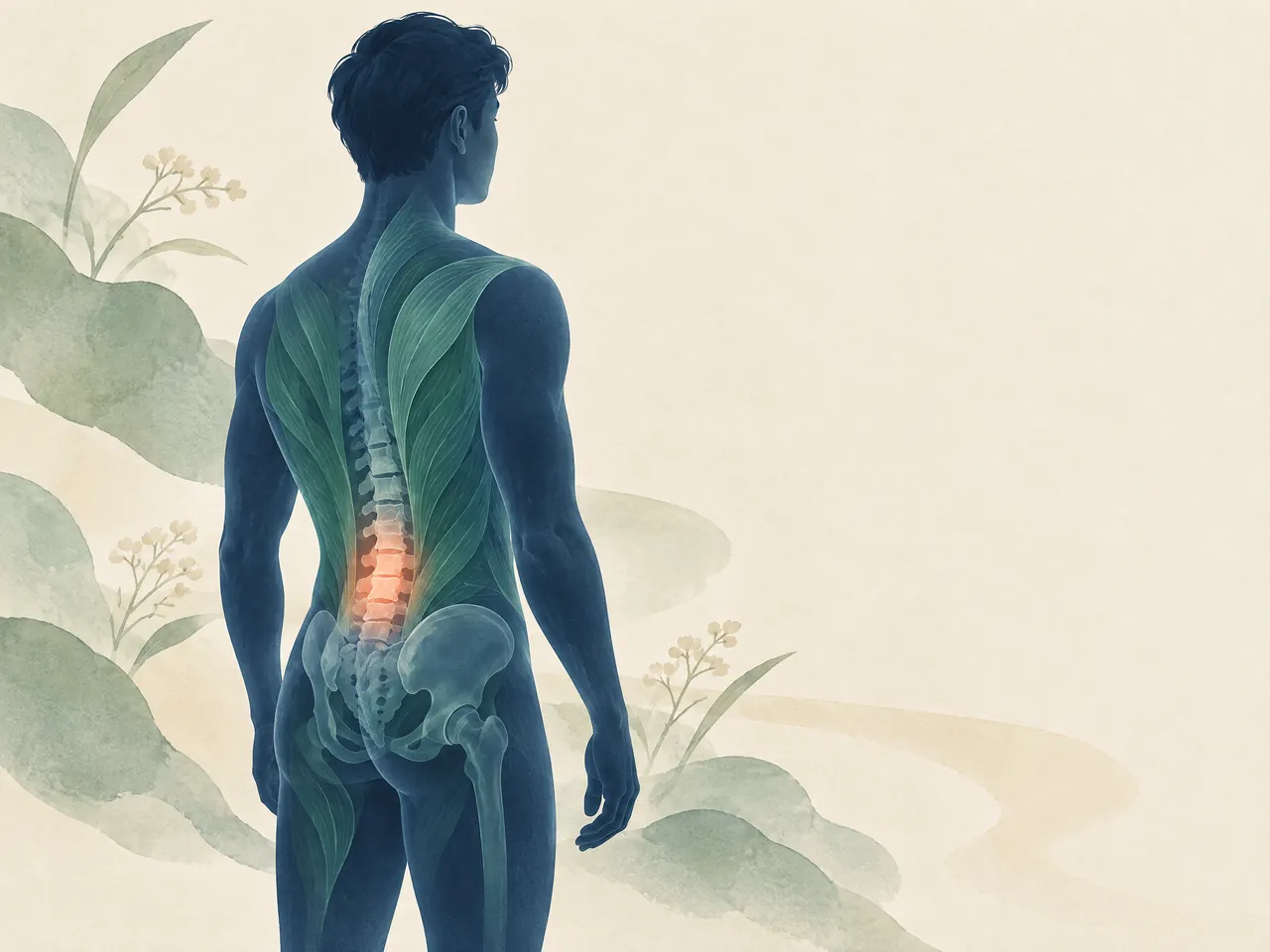
The short answer
Usually, do not stay in bed for long periods for low back pain when there are no warning signs. Short rests can be sensible, but gentle, tolerable movement and a gradual return to ordinary activity are generally preferred. Acupuncture may be discussed as a supportive option after assessment; it is not a guaranteed cure, and major guidance does not recommend it routinely. Seek urgent medical care for new weakness or numbness in both legs, saddle numbness, bladder or bowel changes, chest pain, fever with feeling unwell, or pain after serious trauma.
Transparent pricing
See the fees.
Choose your care.
Explore our complete official price list, including first-trial prices, regular prices, packages and branch-specific options.
Opening WhatsApp prepares an enquiry; it does not send a message, take payment or confirm an appointment. Suitability and individual arrangements are confirmed during consultation.
Pain care
All prices in HKDExtracorporeal shockwave treatment
Shockwave treatment for deep-tissue and fascial care. The Kwun Tong clinic offers the multi-area options shown below.
Priced by branch
Branch-specific pricing
Prince Edward: HK$250 per area
Kwun Tong: HK$250 for 1 area / HK$450 for 2 areas / HK$600 for 3 areas
Pain care (manual therapy)
Includes Chinese medicine musculoskeletal assessment, manual joint techniques and tui na.
HK$580 (single session)
Chinese medicine musculoskeletal assessment
Pain care (acupuncture and manual therapy)
Combines acupuncture and manual therapy.
HK$680 (single session)
Combined care
Hair and scalp
All prices in HKDScalp health and hair-loss management
Includes AI scalp analysis, deep scalp and follicle cleansing, and scalp oil-control care.
HK$380 (first trial)
Regular price: HK$680
- 6 sessions: HK$3,480 (HK$580 per session)
- 12 sessions: HK$5,760 (HK$480 per session)
- 20 sessions: HK$8,600 (HK$430 per session)
- 30 sessions: HK$11,400 (HK$380 per session)
Hair acupuncture and Chinese herbal medicine package
Includes scalp acupuncture and 3 days of Chinese herbal medicine that does not require decoction.
HK$580 (single session)
Registered Chinese Medicine Practitioner consultation
- 6 sessions: HK$3,180 (HK$530 per session)
- 12 sessions: HK$5,760 (HK$480 per session)
- 20 sessions: HK$8,600 (HK$430 per session)
- 30 sessions: HK$11,400 (HK$380 per session)
Combined hair and scalp treatment
Combines acupuncture and Chinese herbal medicine with salon-level scalp and follicle care. Packages include complimentary hair-care shampoo and serum.
HK$1,260 (single session)
Combined treatment
- 8 sessions: HK$8,640 (HK$1,080 per session)
- 16 sessions: HK$15,680 (HK$980 per session)
- 20 sessions: HK$18,600 (HK$930 per session)
- 30 sessions: HK$26,400 (HK$880 per session)
Weight management
All prices in HKDFull-body acupoint embedding for weight management
Includes full-body acupoint embedding. Packages include complimentary Chinese herbal medicine for weight management, with the number of included days scaled to the package. Embedding material and the individual treatment arrangement are confirmed during consultation; this is not a cosmetic thread lift.
HK$980 (single session)
No trial session
- 10 sessions: HK$7,800 (HK$780 per session)
- 20 sessions: HK$14,600 (HK$730 per session)
- 30 sessions: HK$20,400 (HK$680 per session)
Facial acupuncture
All prices in HKDFacial acupuncture (basic)
Includes facial acupuncture and meridian-based facial care, including care for facial puffiness.
HK$480 (first trial)
Regular price: HK$680
- 10 sessions: HK$5,200 (HK$520 per session)
- 20 sessions: HK$9,600 (HK$480 per session)
- 30 sessions: HK$13,500 (HK$450 per session)
Facial acupuncture (advanced)
Includes enhanced facial acupuncture with a specially formulated moisturising mask and serum.
HK$780 (first trial)
Regular price: HK$1,180
- 10 sessions: HK$9,000 (HK$900 per session)
- 20 sessions: HK$16,600 (HK$830 per session)
- 30 sessions: HK$23,400 (HK$780 per session)
Chinese medicine
All prices in HKDAcupuncture and Chinese herbal medicine package
Includes a Chinese medicine consultation with pulse assessment, body acupuncture and 3 days of Chinese herbal granules that do not require decoction.
HK$580 (single session)
Chinese medicine consultation with pulse assessment
Should I rest in bed with low back pain? — Is acupuncture helpful for low back pain? A safe starting point
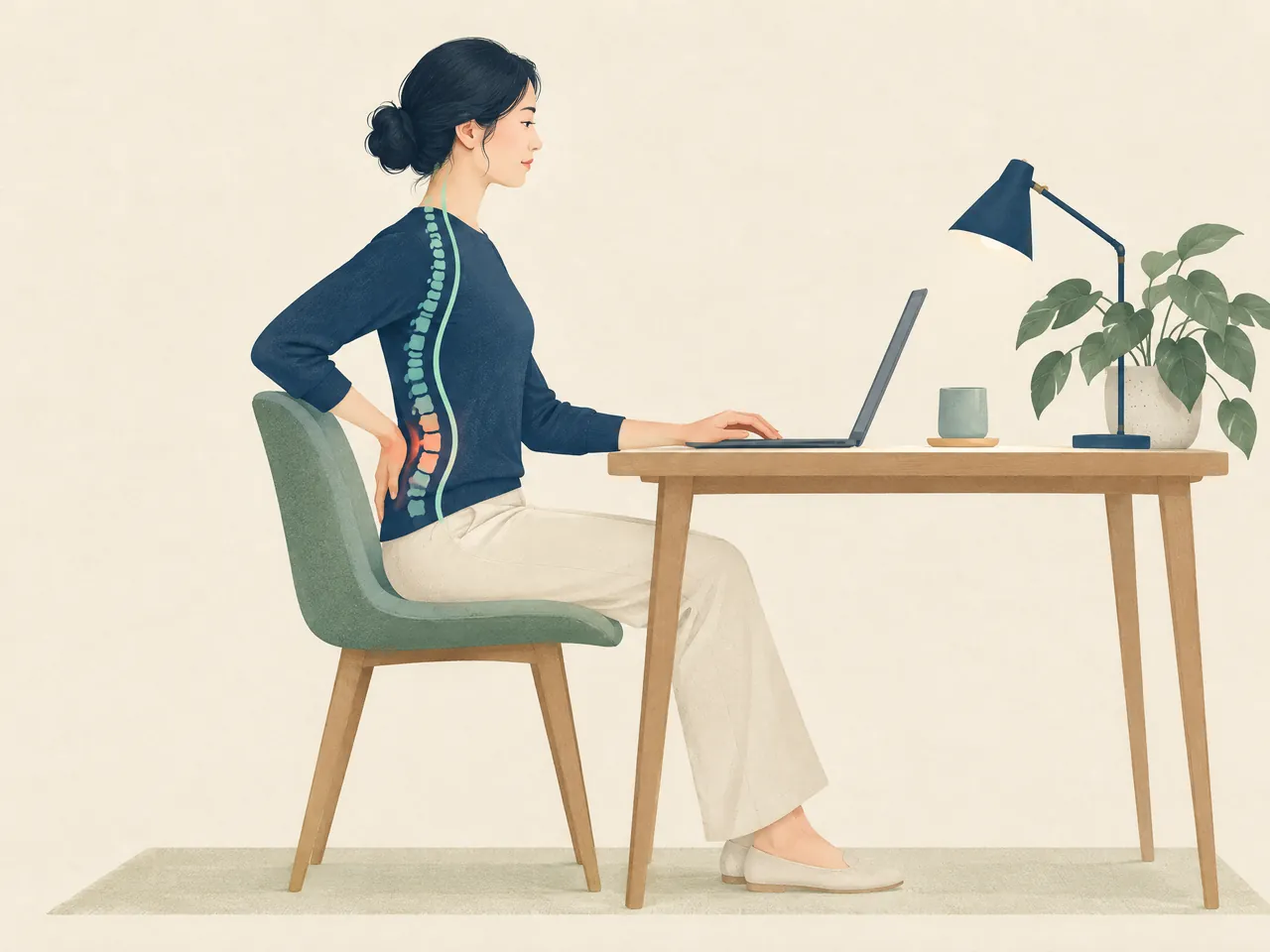
Start by deciding whether the flare is safe to manage briefly at home, not by choosing a treatment. Low back pain may stay local, spread into the buttock, or arrive with a muscle spasm after an awkward lift, a long desk day or unfamiliar activity. A useful appointment record states when it began, what happened beforehand, where it travels, whether it is aching, sharp, burning or numb, and which movements change it. Note the effect on sleep, walking, work and basic tasks. This gives a clinician a pattern to assess without assuming that every painful back has one cause.
When there are no warning signs, pacing is a practical alternative to both pushing through and staying motionless. Try a short walk at home, change position before stiffness builds, and divide essential tasks into smaller parts. If lifting a child or bending to load a washing machine creates a strong flare, pause that task and get help rather than repeatedly testing it. NHS guidance advises staying active and avoiding long periods in bed [1]. A quiet day can still include gentle position changes. For a focused checklist, see acute lower back pain home care.
Should I rest in bed with low back pain? — Is acupuncture helpful for low back pain? Understanding symptom patterns
Low back pain is not automatically sciatica. Local pain may remain around the waistline, while nerve-related symptoms may include pain, tingling, numbness or weakness into a leg. The Hong Kong Hospital Authority describes low back pain as pain around the lumbosacral region that may radiate to the buttocks or backs of the thighs, and distinguishes it from sciatica that can extend towards the foot [2]. That is helpful language, not a diagnosis to make alone. A clinician considers the symptom route, strength, sensation and changes over time. The guide to low back pain and sciatica can help you describe symptoms before assessment.
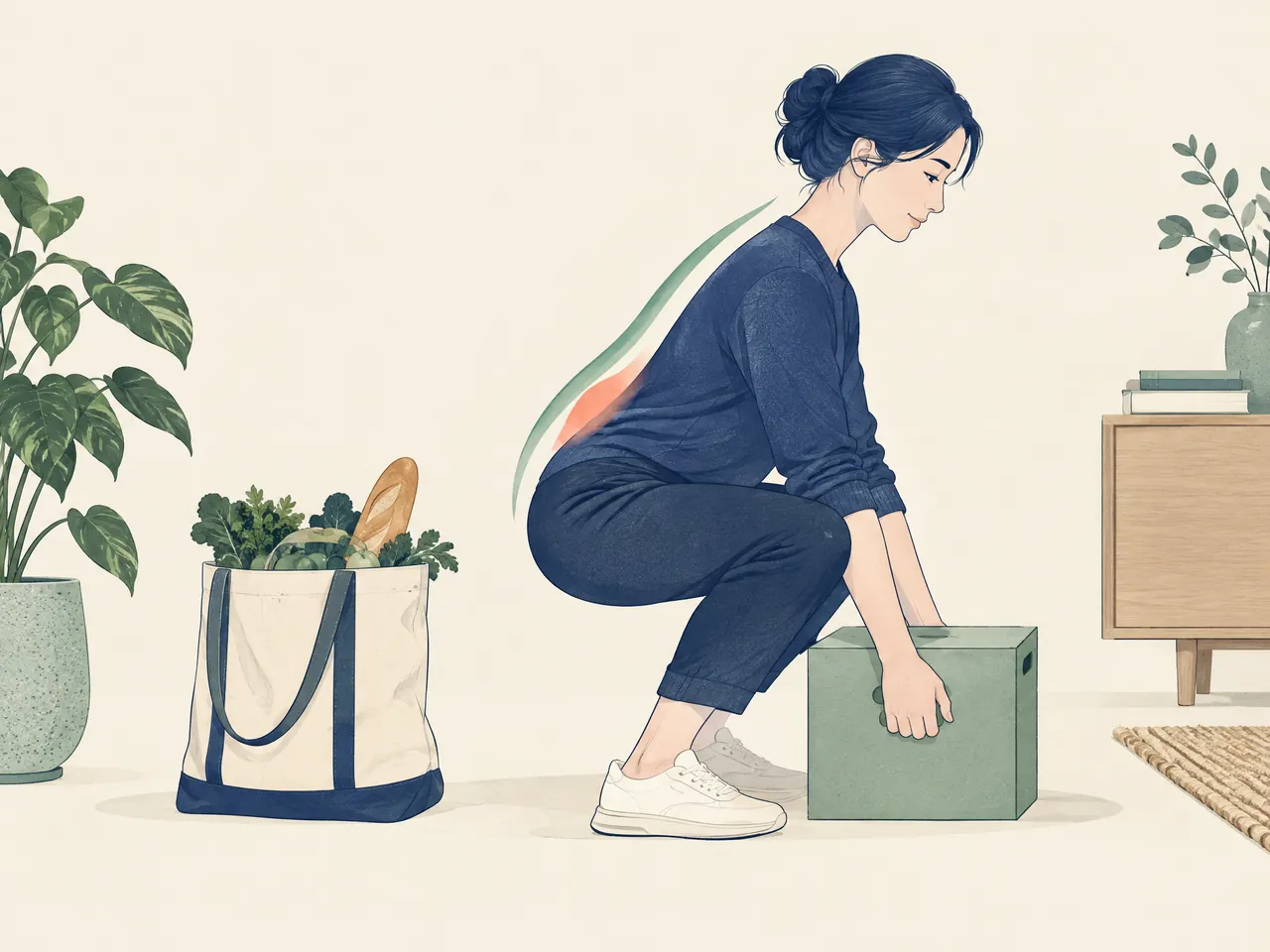
Load and position often matter to the story. A commuter may notice an ache after a long MTR ride, a warehouse worker with repeated bending, or a parent after lifting from a low cot. These details do not prove poor posture is the sole cause or mean a scan is automatically required. NICE advises against routine imaging in a non-specialist setting and says specialist imaging should be considered only when it is likely to change management [3]. Describe what you can and cannot do rather than trying to name a damaged structure. It gives the assessment a clearer starting point.
Should I rest in bed with low back pain? — Is acupuncture helpful for low back pain? Recognising warning signs
Move out of self-care and seek emergency help for back pain with new pain, tingling, weakness or numbness in both legs; loss of feeling around the genitals or anus; bladder or bowel changes or difficulty passing urine; chest pain; or pain after a serious accident [1]. These features need urgent assessment and should not be tested with heat, stretching or acupuncture. If you are unsure whether your symptoms fit, When should I go to A&E for back pain? explains the urgent-care question in more detail.
Urgent advice is also sensible when severe pain begins suddenly or worsens quickly, or when back pain comes with fever, feeling hot or shivery, or feeling generally unwell [1]. Pain that is not improving after a few weeks, consistently disturbs sleep, or stops ordinary activity should be reviewed promptly. State the onset, recent infection or accident if relevant, medicine use, prior health history and whether symptoms are progressing. Those factual details help the next clinician decide on the right pathway.
Compare your options
| What you notice | A sensible next step | Why it matters |
|---|---|---|
| Local ache or stiffness without warning signs | Use brief, comfortable rest; change position and keep gently active within tolerance. | Long periods in bed can add stiffness and reduce confidence in movement. |
| Symptoms after sitting, lifting or an awkward movement | Record the trigger, reduce the provoking load temporarily, and pace ordinary tasks. | A clear activity record gives an assessor useful detail without assuming a diagnosis. |
| Persistent pain affecting work, sleep or daily tasks | Arrange a medical or musculoskeletal assessment; discuss rehabilitation and supportive options. | A tailored plan can focus on function and rule out issues that need different care. |
| New symptoms in both legs, saddle numbness, bladder or bowel change, chest pain, serious trauma | Seek emergency medical help rather than self-care or acupuncture. | These are urgent warning signs that need prompt medical assessment. |
| Considering acupuncture after assessment | Ask about goals, review points, possible adverse effects, costs and how it fits with other care. | Evidence and guideline recommendations are mixed, so informed choice is important. |
On smaller screens, scroll the table sideways to compare all columns.
Should I rest in bed with low back pain? — Is acupuncture helpful for low back pain? Choosing the next assessment
After urgent features have been excluded, choose an assessment that fits the issue. New or worsening neurological symptoms, severe pain, a significant injury or uncertainty about a medical cause should put a doctor first. For an ongoing functional problem—difficulty returning to walking, work or exercise—medical assessment and physiotherapy may be useful. A Chinese medicine consultation can be an additional in-person conversation about symptoms and supportive options. The important point is that complementary care must not delay evaluation of symptoms that need medical attention.
Bring context rather than expecting one test or treatment to answer everything. Mention previous back episodes, injuries, surgery, current medicines, supplements and care already tried. Be specific about your usual demands: prolonged sitting, deliveries, driving, family care or a standing job create different challenges. Say what success would mean, such as sleeping, putting on socks, walking to the bus stop or completing a shift. That makes a plan more realistic. To compare routes of care and questions for an appointment, read low back pain Chinese medicine or doctor.
Should I rest in bed with low back pain? — Is acupuncture helpful for low back pain? What a Chinese medicine consultation considers
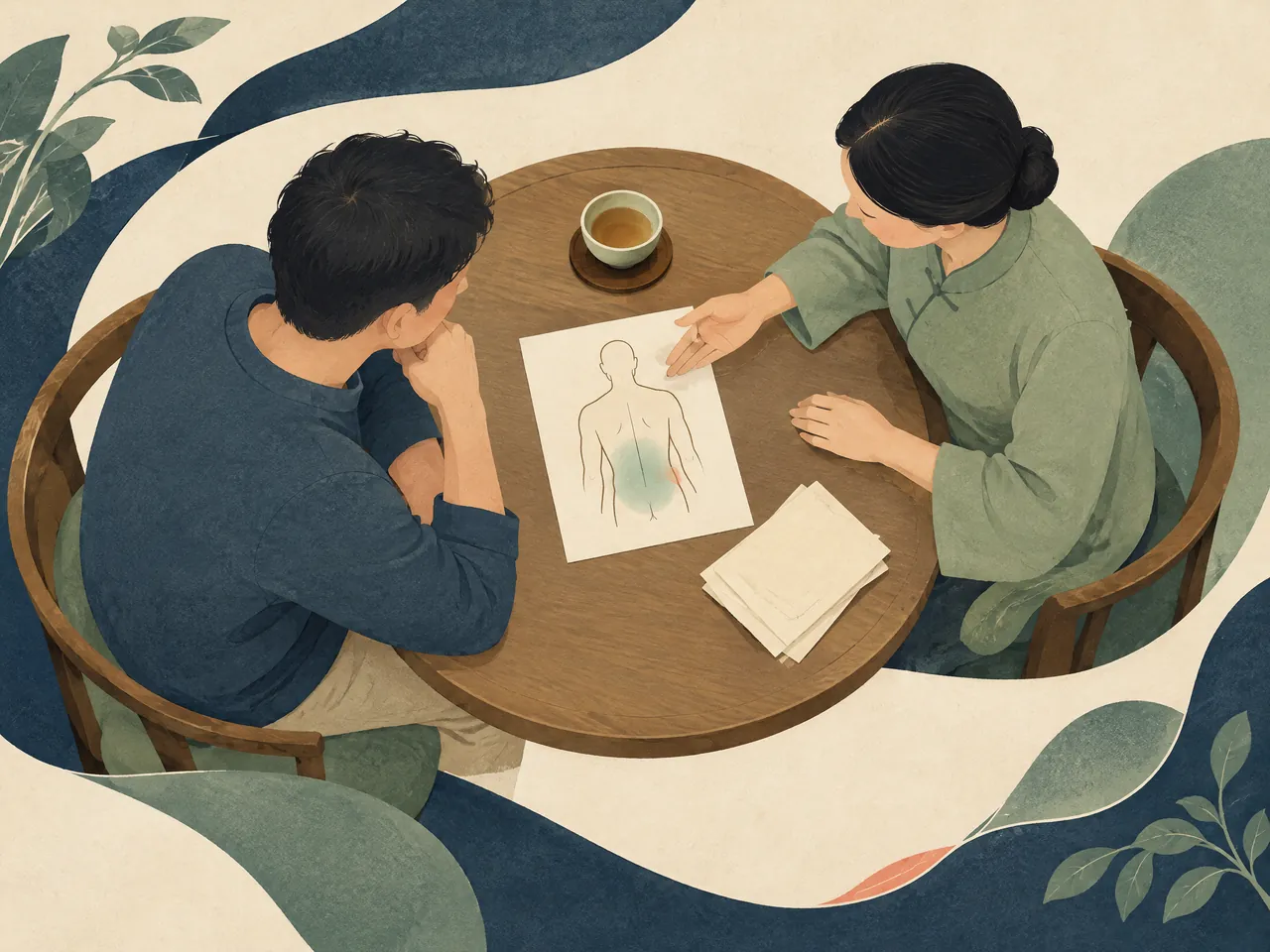
A Registered Chinese Medicine Practitioner normally starts with a face-to-face history and observation, not an online symptom label. The discussion may cover location and quality of pain, movement triggers, sleep, appetite, energy, health conditions and current medicines. Traditional Chinese medicine uses pattern identification through observation, listening and smelling, questioning and palpation. Terms such as cold-damp obstruction, qi stagnation and blood stasis belong to that traditional approach; they are not the same as a biomedical diagnosis such as disc prolapse or nerve-root compression. Report leg numbness, weakness, fever, trauma and bladder or bowel changes so urgent referral is not missed.
If acupuncture is discussed, ask what it is intended to support in your plan, what activity or rehabilitation advice goes with it, what sensations are expected, and what should make you seek medical review. Ask how pain and function will be reviewed rather than measuring success by one session. Do not self-needle or copy point combinations from social media. A temporary easing of discomfort does not establish the cause of pain. A consultation should support informed choice, including choosing not to proceed if your pattern or preferences point elsewhere.
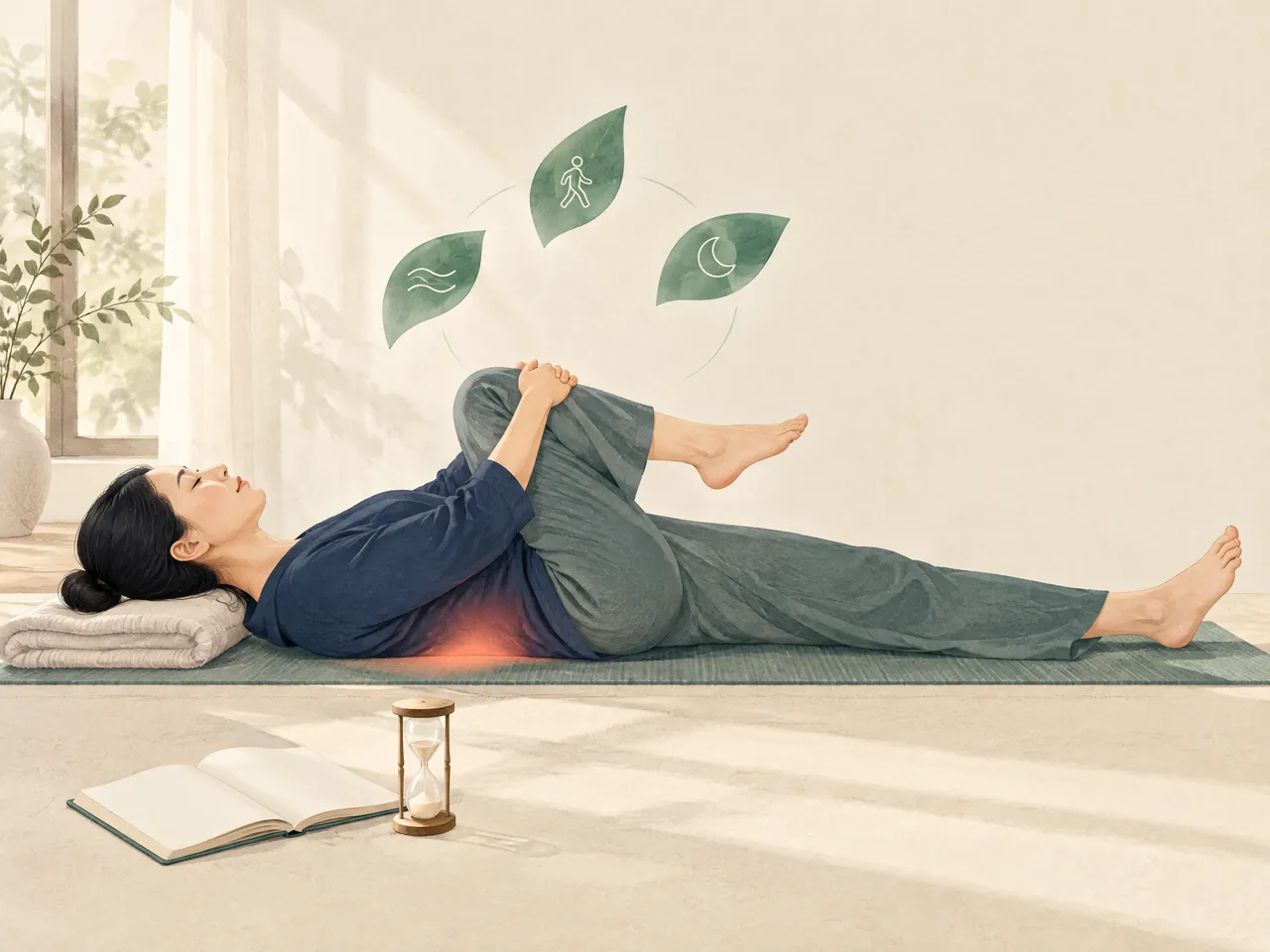
Should I rest in bed with low back pain? — Is acupuncture helpful for low back pain? Where evidence and guidance differ
The answer to “Is acupuncture helpful for low back pain?” is qualified. A 2020 Cochrane review of chronic non-specific low back pain found acupuncture may not be more clinically meaningful than sham acupuncture for immediate pain relief, with evidence certainty ranging from very low to moderate [4]. Results against no treatment and usual care differed, so a simple promise of benefit would mislead. This review does not show that acupuncture fixes every cause of acute pain, sciatica, fracture, infection or neurological compression. Your symptom pattern and access to appropriate assessment come first.
Guidelines may weigh evidence differently from an individual’s wish to try a complementary therapy. NICE says not to offer acupuncture for low back pain with or without sciatica, while encouraging tailored self-management information and continuation of normal activity [3]. This should inform the conversation, especially when cost or time away from work matters. It does not require dismissing personal preferences, but acupuncture should not displace urgent assessment, movement-based recovery or other recommended care. Discuss it after screening and goal-setting, not as a replacement for diagnosis or a fixed-course cure.
Should I rest in bed with low back pain? — Is acupuncture helpful for low back pain? Practical day-to-day care
Day-to-day care works best when it is modest and repeatable. Avoid being fixed in one position for too long: stand between emails, walk briefly around the office, or switch from sitting to standing while preparing food. Returning to activity does not mean forcing sharp pain or beginning an ambitious workout. Find a tolerable level today and build only when it has settled. Someone who can manage a short walk without a major flare may repeat that comfortable amount before adding more. If movement clearly worsens symptoms, stop and seek advice rather than assuming more pain is necessary.
Work and home adjustments can reduce repeated aggravation. Place often-used objects between knee and chest height where possible. Keep a load close, avoid twisting while carrying it, and ask for help with something heavy or awkward. At a desk, aim for regular variation rather than a rigidly perfect posture. Set the screen, chair and keyboard to reduce constant reaching, then move at intervals. Note what happens after a task. Pain that settles after a position change differs from steadily worsening pain, spreading numbness or loss of strength; the distinction makes follow-up more useful.

Should I rest in bed with low back pain? — Is acupuncture helpful for low back pain? Using heat, cold and comfortable movement
Heat and cold are comfort measures, not tests of the cause. The NHS suggests an ice pack wrapped in a towel for pain and swelling, and a heat pack or hot-water bottle wrapped in a towel for joint stiffness or muscle spasm [1]. Choose what feels comfortable, protect your skin and stop if symptoms increase or skin becomes irritated. Do not fall asleep on a heating device. A short lie-down may ease a spasm, but plan a gentle position change afterwards. Slow walking at home or moving from chair to standing with support may be more useful than remaining immobile all afternoon.
Keep movement individual rather than copying a fixed exercise online. If turning in bed hurts, try rolling as one unit and using your arms to sit up. For an unavoidable long car journey, build in breaks and change position before discomfort rises. If sitting triggers symptoms, alternate it with short standing or walking periods rather than replacing it with hours in bed. Avoid a stretch that causes sharp back or leg pain merely because it helped somebody else. When symptoms settle, rebuild normal activity gradually. New weakness, spreading leg symptoms or bladder or bowel changes mean stop self-management and seek urgent care.

Should I rest in bed with low back pain? — Is acupuncture helpful for low back pain? Knowing when to ask for help
Arrange an assessment if home measures are not helping after a few weeks, pain prevents ordinary life, or you are worried or struggling to cope [1]. Seek help sooner when symptoms are severe, rapidly worsening, or paired with fever or feeling unwell. A clinician can decide whether medication, physiotherapy, investigation or another plan is appropriate; do not alter prescribed medicine from a general article. After appropriate triage, you can enquire with a Kwun Tong Chinese medicine clinic or Chinese medicine clinic Prince Edward. Explain symptoms and language needs when you message.
Before booking, decide what you need: assessment of a non-urgent ongoing ache, a conversation about acupuncture, or advice that works alongside existing medical or physiotherapy care. Share imaging reports if you already have them, but never delay urgent review to collect paperwork. If cost affects the decision, the Chinese medicine clinic price list Hong Kong sets out current charges. Price should never decide care when red flags are present. The safest plan responds to the severity and pattern of symptoms, keeps movement within tolerance, and treats urgent symptoms as urgent.
Care and health guide
Low back discomfort: care information
This directory brings together services, reading, and visit information related to low back discomfort, to help you prepare questions for a consultation.
When low back discomfort affects your day, noting when it occurs, its relation to activity, and what you have already tried can help prepare a consultation; acupuncture for low back pain is a relevant service or reading entry point.
Individual circumstances differ, and acupuncture Hong Kong offers related information to help you understand options and prepare questions.


Your questions, answered
Frequently asked questions
Should I rest in bed with low back pain?
Usually not for long periods when there are no warning signs. A short rest can help you settle a painful flare, but aim to change position and resume gentle, tolerable daily movement. Stop a movement that sharply worsens pain. If symptoms are severe, worsening, or prevent ordinary activities, arrange an assessment instead of extending bed rest.
Is acupuncture helpful for low back pain?
It can be discussed as a supportive option after assessment, but it is not a guaranteed cure or a substitute for medical evaluation. Evidence is mixed: the Cochrane review found acupuncture may not be clinically more meaningful than sham acupuncture for immediate pain relief in chronic non-specific low back pain, and NICE does not recommend routine acupuncture for low back pain or sciatica.
When is low back pain an emergency?
Seek emergency help for pain, tingling, numbness or weakness in both legs; numbness around the genitals or anus; new bladder or bowel changes or difficulty passing urine; chest pain; or back pain after a serious accident. Do not wait for home care, exercise, heat or acupuncture to work when these symptoms are present.
How can I use heat or ice for a back-pain flare?
Use a wrapped ice pack for pain and swelling, or a wrapped heat pack or hot-water bottle for stiffness or muscle spasm, according to comfort. Protect your skin and stop if symptoms worsen or the skin becomes irritated. Heat and cold are comfort options, not treatments that diagnose or correct the cause of pain.
Sources and further information
- [1] [1] NHS — Back pain
Referenced for: Official patient guidance for staying active, avoiding prolonged bed rest, heat or ice comfort measures, and urgent warning symptoms.
- [2] [2] Hospital Authority Smart Patient — Low Back Pain
Referenced for: Hong Kong public patient information on low back pain symptoms, sciatica distinction, assessment and care context.
- [3] [3] NICE NG59 — Low back pain and sciatica in over 16s: assessment and management
Referenced for: Guidance on assessment, imaging, self-management, activity, and the recommendation not to offer acupuncture routinely.
- [4] [4] Cochrane — Acupuncture for chronic non-specific low-back pain
Referenced for: Systematic-review evidence on acupuncture compared with sham, no treatment and usual care for chronic non-specific low back pain.