
TCM Lab · Health reading
Acupuncture for Hip Arthritis: Acupuncture for Hip Osteoarthritis and Hip Osteoarthritis Acupuncture Evidence
Published Updated
A sore hip after a busy day, pain when getting out of a low chair, or stiffness on the first few steps can prompt a search for acupuncture for hip arthritis. The first useful question is not where to needle, but what is causing the pain. For confirmed hip osteoarthritis, sham-controlled research suggests acupuncture makes little or no difference to pain or function in the short term. Hip pain can also arise from tendons, a bursa, an injury, a fracture, infection, or pain referred from elsewhere, so an osteoarthritis result cannot diagnose or explain every painful hip.
Appointments are confirmed through WhatsApp. If you have language requirements, please mention them in your enquiry.
The short answer
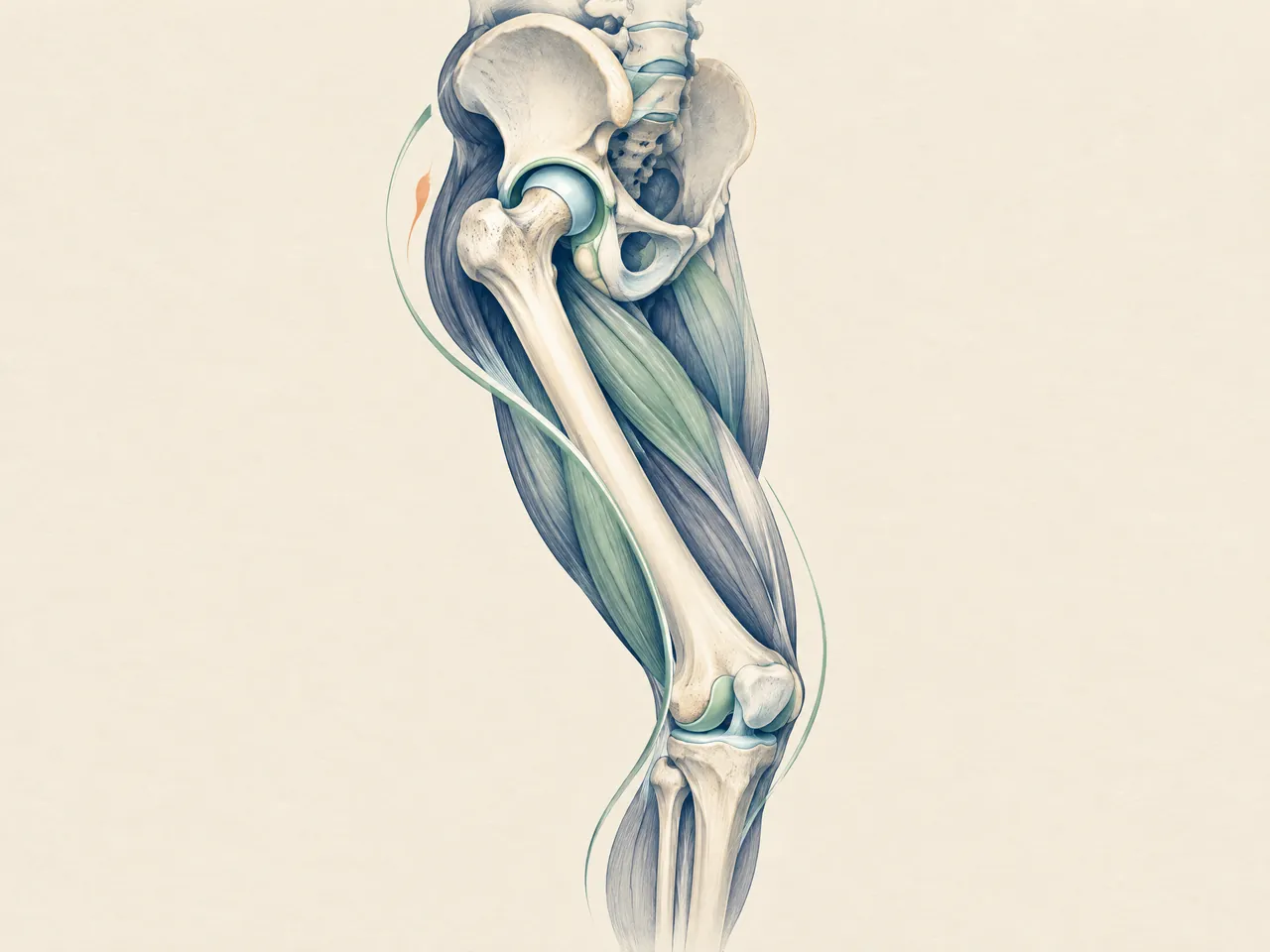
For confirmed hip osteoarthritis, a Cochrane review found that acupuncture probably makes little or no difference in pain or function compared with sham acupuncture at about eight weeks [1]. An unblinded study of acupuncture added to routine care asked a different question and is more open to expectation effects. NICE advises against acupuncture or dry needling for osteoarthritis [2]. Do not use treatment response to identify the cause of hip pain or delay assessment after injury, with fever, or when weight bearing is difficult.
Transparent pricing
See the fees.
Choose your care.
Explore our complete official price list, including first-trial prices, regular prices, packages and branch-specific options.
Opening WhatsApp prepares an enquiry; it does not send a message, take payment or confirm an appointment. Suitability and individual arrangements are confirmed during consultation.
Pain care
All prices in HKDExtracorporeal shockwave treatment
Shockwave treatment for deep-tissue and fascial care. The Kwun Tong clinic offers the multi-area options shown below.
Priced by branch
Branch-specific pricing
Prince Edward: HK$250 per area
Kwun Tong: HK$250 for 1 area / HK$450 for 2 areas / HK$600 for 3 areas
Pain care (manual therapy)
Includes Chinese medicine musculoskeletal assessment, manual joint techniques and tui na.
HK$580 (single session)
Chinese medicine musculoskeletal assessment
Pain care (acupuncture and manual therapy)
Combines acupuncture and manual therapy.
HK$680 (single session)
Combined care
Hair and scalp
All prices in HKDScalp health and hair-loss management
Includes AI scalp analysis, deep scalp and follicle cleansing, and scalp oil-control care.
HK$380 (first trial)
Regular price: HK$680
- 6 sessions: HK$3,480 (HK$580 per session)
- 12 sessions: HK$5,760 (HK$480 per session)
- 20 sessions: HK$8,600 (HK$430 per session)
- 30 sessions: HK$11,400 (HK$380 per session)
Hair acupuncture and Chinese herbal medicine package
Includes scalp acupuncture and 3 days of Chinese herbal medicine that does not require decoction.
HK$580 (single session)
Registered Chinese Medicine Practitioner consultation
- 6 sessions: HK$3,180 (HK$530 per session)
- 12 sessions: HK$5,760 (HK$480 per session)
- 20 sessions: HK$8,600 (HK$430 per session)
- 30 sessions: HK$11,400 (HK$380 per session)
Combined hair and scalp treatment
Combines acupuncture and Chinese herbal medicine with salon-level scalp and follicle care. Packages include complimentary hair-care shampoo and serum.
HK$1,260 (single session)
Combined treatment
- 8 sessions: HK$8,640 (HK$1,080 per session)
- 16 sessions: HK$15,680 (HK$980 per session)
- 20 sessions: HK$18,600 (HK$930 per session)
- 30 sessions: HK$26,400 (HK$880 per session)
Weight management
All prices in HKDFull-body acupoint embedding for weight management
Includes full-body acupoint embedding. Packages include complimentary Chinese herbal medicine for weight management, with the number of included days scaled to the package. Embedding material and the individual treatment arrangement are confirmed during consultation; this is not a cosmetic thread lift.
HK$980 (single session)
No trial session
- 10 sessions: HK$7,800 (HK$780 per session)
- 20 sessions: HK$14,600 (HK$730 per session)
- 30 sessions: HK$20,400 (HK$680 per session)
Facial acupuncture
All prices in HKDFacial acupuncture (basic)
Includes facial acupuncture and meridian-based facial care, including care for facial puffiness.
HK$480 (first trial)
Regular price: HK$680
- 10 sessions: HK$5,200 (HK$520 per session)
- 20 sessions: HK$9,600 (HK$480 per session)
- 30 sessions: HK$13,500 (HK$450 per session)
Facial acupuncture (advanced)
Includes enhanced facial acupuncture with a specially formulated moisturising mask and serum.
HK$780 (first trial)
Regular price: HK$1,180
- 10 sessions: HK$9,000 (HK$900 per session)
- 20 sessions: HK$16,600 (HK$830 per session)
- 30 sessions: HK$23,400 (HK$780 per session)
Chinese medicine
All prices in HKDAcupuncture and Chinese herbal medicine package
Includes a Chinese medicine consultation with pulse assessment, body acupuncture and 3 days of Chinese herbal granules that do not require decoction.
HK$580 (single session)
Chinese medicine consultation with pulse assessment
Acupuncture for Hip Arthritis, Acupuncture for Hip Osteoarthritis, and Hip Osteoarthritis Acupuncture: Start with the Diagnosis
The phrase hip arthritis is often used for hip osteoarthritis, but it is not a diagnosis by itself. Pain felt at the side of the hip, deep in the groin, buttock, thigh, or even near the knee can have different sources. The pattern, onset, function, medical history, and examination matter before anyone decides whether a research finding applies. A web page can help you organise questions; it cannot determine the pain source from a symptom description.
Osteoarthritis is commonly assessed clinically. NICE says a clinical diagnosis can be made without routine imaging in people aged 45 or over who have activity-related joint pain and either no morning stiffness or stiffness lasting no longer than 30 minutes, unless atypical features suggest another or additional diagnosis [2]. That is not a home test. It explains why a clinician may ask about walking, stairs, sleep, work, previous injury, and the timing of stiffness rather than relying on a scan alone.
If you are searching more broadly for acupuncture for hip pain, keep the diagnosis beside the treatment question. A confirmed osteoarthritis study is relevant to confirmed hip osteoarthritis. It is not evidence that acupuncture has the same effect for a recent strain, pain after a fall, a painful bursa, or symptoms travelling from the back. That distinction protects against both false reassurance and an unnecessarily narrow treatment conversation.

Acupuncture for Hip Arthritis, Acupuncture for Hip Osteoarthritis, and Hip Osteoarthritis Acupuncture: Hip Pain Is a Symptom
Location alone can mislead. A person may describe a dull ache after long walks, sharp pain when turning in bed, or a sore outer hip when lying on that side. Those experiences can overlap, yet they do not automatically represent the same condition. The NHS lists sudden injury, arthritis, sprain or strain, tendon problems, bursitis, and infection among possible contexts for adult hip pain [3]. Hip pain may also spread down the upper leg, so the place where pain is felt does not settle the cause. Before considering hip osteoarthritis acupuncture, record whether the problem began gradually or after a specific event, which movements trigger it, and whether the pain is groin-, side-, buttock-, or thigh-focused. Bring that account to an appropriate clinical assessment rather than using a temporary change after any treatment as a diagnosis.
Acupuncture for Hip Arthritis, Acupuncture for Hip Osteoarthritis, and Hip Osteoarthritis Acupuncture: When Assessment Matters
Assessment should come first when the story does not fit a stable, already assessed osteoarthritis pattern. Immediate medical care is needed for severe hip pain after a fall or injury, inability to walk or put weight through the leg, or tingling or loss of feeling after an injury [3]. Urgent assessment is also sensible for a hot or swollen hip, skin colour change around the hip, or hip pain with fever or feeling generally unwell, because these features may need prompt evaluation [3]. A rapid worsening, prolonged morning stiffness, recent trauma, a hot swollen joint, or a new deformity are atypical features noted by NICE [2]. In these situations, acupuncture for hip arthritis is not a substitute for diagnosis. Even without urgent signs, pain that is worsening, repeatedly disrupts sleep, or stops normal activity deserves a clinical review rather than repeated self-treatment.
Compare your options
| Situation or comparison | What the evidence or assessment can answer | Practical implication |
|---|---|---|
| True acupuncture versus sham acupuncture in hip osteoarthritis | Whether outcomes differ beyond a believable sham procedure; Cochrane found little or no short-term difference in pain or function [1]. | Do not treat it as a guaranteed pain or function benefit. |
| Acupuncture added to routine care versus routine care alone | The effect of the added treatment experience; unblinded results can be influenced by expectation and preference [1]. | It cannot replace the sham-controlled result or prove a specific needling effect. |
| Pain after a fall, with fever, or inability to bear weight | Whether there may be fracture, infection, nerve injury, or another urgent problem [3]. | Seek prompt medical assessment instead of testing acupuncture. |
| Established hip osteoarthritis with everyday limitation | How symptoms and function respond to a broader care plan; exercise and support are core management [2]. | Discuss a tailored plan and review if it is not working. |
On smaller screens, scroll the table sideways to compare all columns.
Acupuncture for Hip Arthritis, Acupuncture for Hip Osteoarthritis, and Hip Osteoarthritis Acupuncture: What Studies Compared
The comparison group determines what a study can answer. If people receive acupuncture plus their usual care and are compared with usual care alone, the result reflects the whole added experience: sessions, attention, expectations, and needling. If true acupuncture is compared with a believable sham procedure, the question is narrower: whether the specific needling approach performs differently from that control. Neither comparison is useless, but they should not be presented as interchangeable.
The Cochrane review located six randomised trials involving 413 people, primarily older adults with hip osteoarthritis lasting for years [1]. Two small sham-controlled trials were pooled. At close to eight weeks, the review concluded that acupuncture probably results in little or no difference in pain or function compared with sham acupuncture [1]. This is the most direct evidence for the common search phrase acupuncture for hip osteoarthritis, rather than a promise of a clinically meaningful response for an individual.
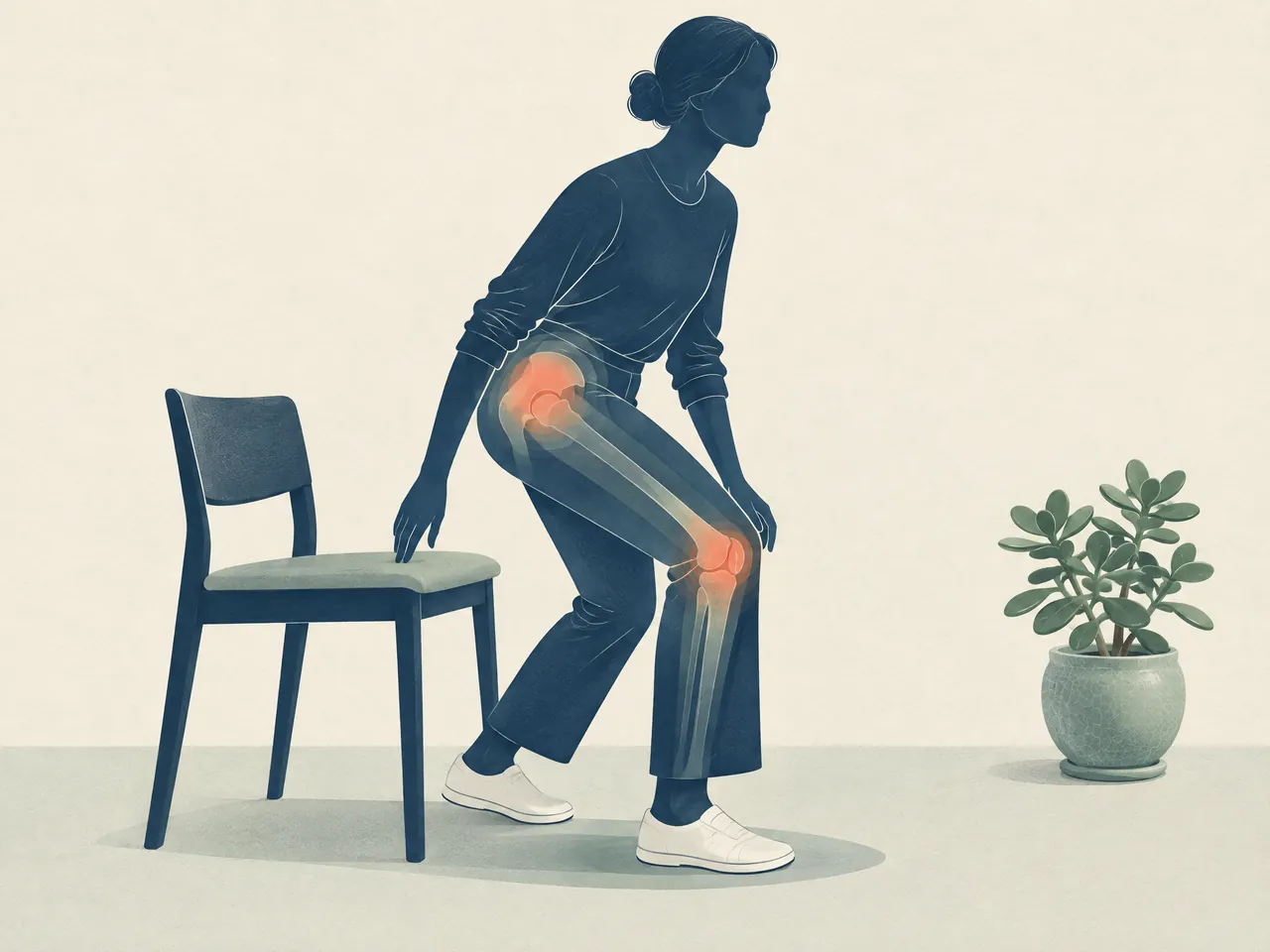
NICE's current osteoarthritis guideline advises not to offer acupuncture or dry needling to manage osteoarthritis [2]. It instead recommends therapeutic exercise tailored to the person, such as local strengthening or aerobic fitness, and notes that core treatment also includes information, support, and weight management when appropriate [2]. Discussing evidence does not mean ignoring a person's preferences. It means keeping those core measures and any medicine or referral decisions in a conversation with the clinician who knows the diagnosis, health conditions, and current medicines.
Acupuncture for Hip Arthritis, Acupuncture for Hip Osteoarthritis, and Hip Osteoarthritis Acupuncture: Sham Acupuncture Findings
A sham procedure is designed so that participants may believe they are receiving acupuncture while the needling is non-penetrating, placed away from expected points, or otherwise altered. It helps reduce the risk that expectations alone explain a difference in self-reported pain or function. In the two sham-controlled hip osteoarthritis trials, Cochrane judged the controls believable, while also noting that the sham approaches might themselves have weak acupuncture-specific effects [1]. The pooled evidence was of moderate certainty and still had wide enough uncertainty to allow both a moderate benefit and no effect because the samples were small [1]. That is a careful conclusion, not evidence that all acupuncture is ineffective for every pain condition and not evidence that a short-term symptom shift proves hip osteoarthritis has changed.
Acupuncture for Hip Arthritis, Acupuncture for Hip Osteoarthritis, and Hip Osteoarthritis Acupuncture: Why Results Are Uncertain
An unblinded trial found that adding acupuncture to routine primary physician care was associated with better pain and function scores than routine care alone, but Cochrane rated that evidence low quality and considered expectations or preference likely to explain at least part of the reported benefit [1]. The review remained uncertain about comparisons with advice plus exercise or with NSAIDs [1]. A later systematic review of broad hip-pain trials included different diagnoses, styles of acupuncture, and pre- or post-operative settings; it could pool only limited data and cautioned about diverse conditions, treatments, low methodological quality, and incomplete blinding [4]. Findings during hip-replacement care, for example, cannot be carried over to a person seeking conservative care for a sore hip after walking. A balanced decision separates those settings instead of combining them into one claim.
Acupuncture for Hip Arthritis, Acupuncture for Hip Osteoarthritis, and Hip Osteoarthritis Acupuncture: Practical Safety Questions
If a clinician has assessed the hip and you still want to discuss acupuncture, take a clear question rather than an expectation of cure. Ask what the working diagnosis is, what outcome you want to track, and which evidence applies to that diagnosis. It is reasonable to ask how acupuncture would sit alongside exercise, pain medicines, rehabilitation, or other care already recommended. Do not stop prescribed medicine or postpone a planned review because of a change after a session.
Needling also calls for a safety conversation. The hip osteoarthritis review reported minor bruising, bleeding, or insertion-site pain in some trials; four trials reported adverse events and none attributed a serious adverse event to acupuncture [1]. Trial reporting cannot guarantee that a treatment is risk-free for every person. Tell the practitioner and your doctor about medicines, bleeding concerns, pregnancy, implanted devices, medical conditions, and any change in symptoms, so that advice can be individualised.

It can help to distinguish pain relief from a structural promise. No trial in the Cochrane review reported radiographic joint changes [1]. So an easier walk, if it occurs, is not proof that cartilage has been repaired or that a hip replacement will never be needed. For a focused discussion of that common concern, see Can acupuncture repair hip cartilage?. Decisions about referral are based on symptoms, function, quality of life, and the suitability or effectiveness of non-surgical care, not a single treatment response [2].

Acupuncture for Hip Arthritis, Acupuncture for Hip Osteoarthritis, and Hip Osteoarthritis Acupuncture: Symptoms to Record
A short diary can make a consultation more useful without turning you into your own diagnostician. Note the date symptoms began, whether there was a fall or training change, the most painful location, and what happened just before pain started. Record activities that reveal the limitation: getting dressed, rising from a chair, climbing stairs, walking to public transport, standing at work, or sleeping on the affected side. Include how long morning stiffness lasts, whether pain interrupts sleep, what makes it easier or worse, and whether the hip ever feels hot or swollen. A simple before-and-after activity description is more useful than a vague score alone. If you are uncertain how to adapt day-to-day measures, this guide to hip pain ice or heat explains why the response to heat or ice does not establish a diagnosis.

Acupuncture for Hip Arthritis, Acupuncture for Hip Osteoarthritis, and Hip Osteoarthritis Acupuncture: Red Flags and Next Steps
Choose the next step by urgency, not by convenience. After an injury with severe pain, inability to bear weight, or altered sensation, seek emergency assessment rather than a treatment appointment [3]. With a hot swollen hip, fever, shivering, skin colour change, or sudden severe pain without a fall, obtain urgent medical advice [3]. For ongoing but non-urgent pain, arrange an assessment when it affects sleep or normal activities, gets worse or keeps returning, or has not improved with sensible self-care [3]. If hip osteoarthritis has already been diagnosed, revisit the agreed plan when function changes; exercise may need tailoring and medicine choices require personal safety considerations. People looking locally for an appointment can ask a Kwun Tong Chinese medicine clinic or a Chinese medicine clinic Prince Edward about availability, while keeping medical assessment for red-flag symptoms separate.
Care and health guide
Health service information
This directory brings together services, reading, and visit information related to health services, to help you prepare questions for a consultation.
If you are organising health questions, Chinese medicine clinic Hong Kong is a starting point for learning about related services and preparing for a consultation.
People have different needs; acupuncture Hong Kong provides further reading to help you understand options in your own context.


Your questions, answered
Frequently asked questions
Does acupuncture help hip osteoarthritis?
Why might acupuncture added to usual care appear helpful?
An unblinded comparison of usual care plus acupuncture with usual care alone measures more than needling. Extra attention, expectations, and preference can affect self-reported symptoms. Cochrane judged the add-on evidence low quality and noted these influences may partly explain the reported benefits [1].
Can I apply hip osteoarthritis acupuncture evidence to bursitis or tendon pain?
No. Hip osteoarthritis, bursitis, tendon problems, fracture, infection, and referred pain are different clinical situations. Similar symptoms do not establish the same diagnosis or treatment effect. Seek assessment before applying an osteoarthritis study to another cause of hip pain.
Can acupuncture repair hip cartilage or prevent hip replacement?
These hip osteoarthritis trials did not report radiographic joint changes, so they do not support a claim of cartilage repair [1]. Symptom relief, if experienced, does not prove that replacement will be unnecessary. Referral discussions should be based on pain, function, quality of life, and the suitability of other care [2].
Sources and further information
- [1] [1] Cochrane: Acupuncture for hip osteoarthritis
Referenced for: Direct systematic-review evidence on hip osteoarthritis acupuncture, sham comparisons, routine-care comparisons, reported adverse events, and absence of radiographic outcomes.
- [2] [2] NICE NG226: Osteoarthritis in over 16s—diagnosis and management
Referenced for: Guideline support for clinical diagnosis, core osteoarthritis management, recommendation not to offer acupuncture or dry needling, atypical features, and referral considerations.
- [3] [3] NHS: Hip pain in adults
Referenced for: Authoritative symptom context and urgent or emergency hip-pain signs.
- [4] [4] PubMed Central: Acupuncture Treatment for Hip Pain—A Systematic Review and Meta-Analysis
Referenced for: Scope and limitations of a broader hip-pain review that combined diverse diagnoses, interventions, and peri-operative settings.