
TCM Lab · Health reading
Hip Pain Acupuncture Treatment and Acupuncture and Hip Pain Relief: What the Evidence Says
Published Updated
Searching for hip pain acupuncture treatment often comes after walking, stairs, sleep, or sitting have become difficult. The useful first question is not simply whether a needle treatment can help, but what may be producing the pain. Hip pain can follow an injury, arise from osteoarthritis, involve tissues around the hip, or be referred from elsewhere. For hip osteoarthritis, the best-known sham-controlled evidence found little or no difference in pain or function at about eight weeks; that result should not be stretched to every kind of hip pain. [1] This page separates the evidence from the assumptions, explains when medical assessment comes first, and helps you prepare a focused conversation about acupuncture and hip pain relief.
Appointments are confirmed through WhatsApp. If you have language requirements, please mention them in your enquiry.
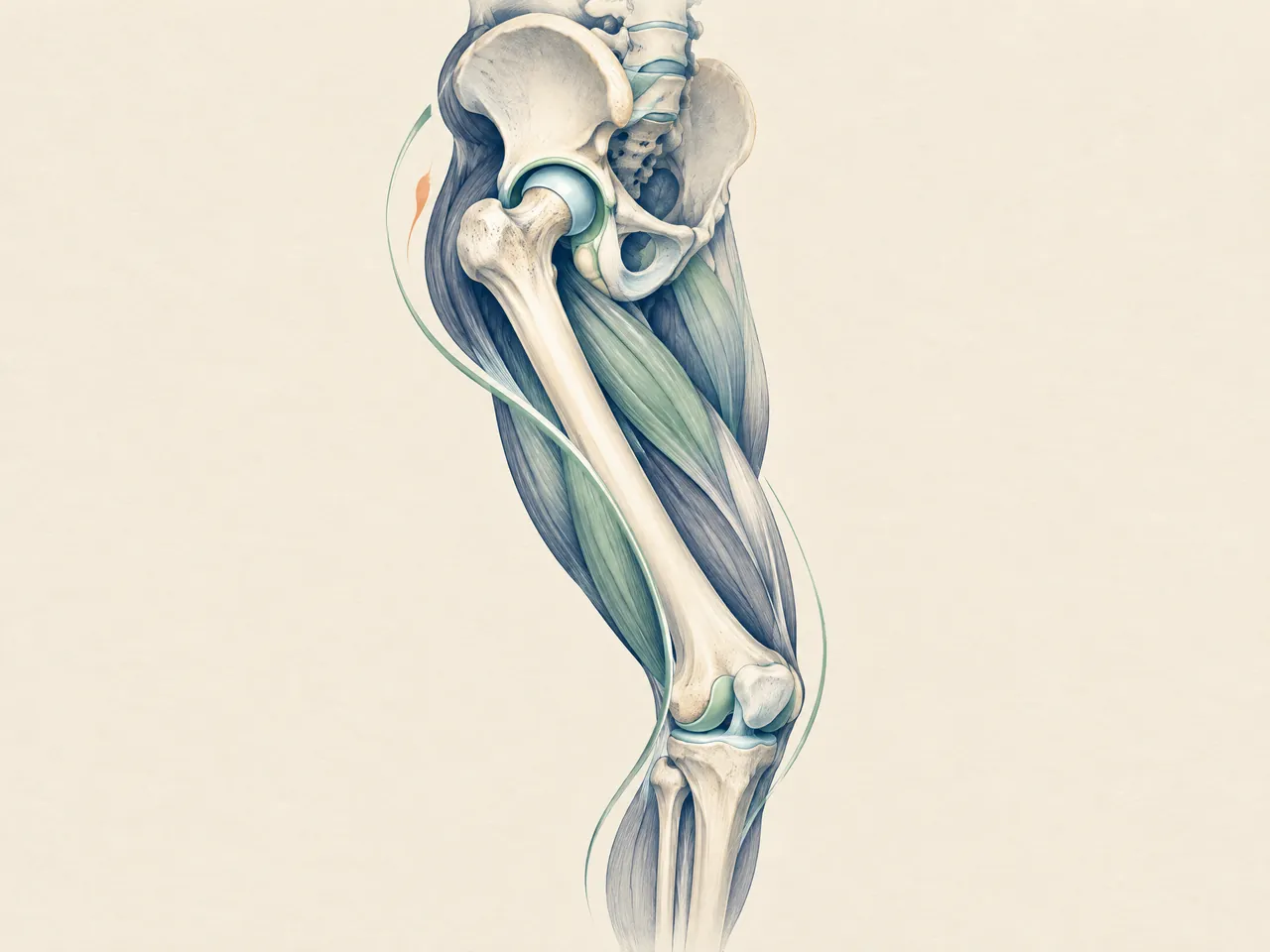
The short answer
For confirmed hip osteoarthritis, a Cochrane review found that acupuncture probably made little or no difference to pain or function compared with sham acupuncture at close to eight weeks, although the trials were small. [1] Studies combining acupuncture with usual care answer a different question and cannot establish a benefit for all hip pain. First identify the likely pain source and seek urgent assessment after serious injury, inability to bear weight, fever, or a hot swollen hip. [3]
Transparent pricing
See the fees.
Choose your care.
Explore our complete official price list, including first-trial prices, regular prices, packages and branch-specific options.
Opening WhatsApp prepares an enquiry; it does not send a message, take payment or confirm an appointment. Suitability and individual arrangements are confirmed during consultation.
Pain care
All prices in HKDExtracorporeal shockwave treatment
Shockwave treatment for deep-tissue and fascial care. The Kwun Tong clinic offers the multi-area options shown below.
Priced by branch
Branch-specific pricing
Prince Edward: HK$250 per area
Kwun Tong: HK$250 for 1 area / HK$450 for 2 areas / HK$600 for 3 areas
Pain care (manual therapy)
Includes Chinese medicine musculoskeletal assessment, manual joint techniques and tui na.
HK$580 (single session)
Chinese medicine musculoskeletal assessment
Pain care (acupuncture and manual therapy)
Combines acupuncture and manual therapy.
HK$680 (single session)
Combined care
Hair and scalp
All prices in HKDScalp health and hair-loss management
Includes AI scalp analysis, deep scalp and follicle cleansing, and scalp oil-control care.
HK$380 (first trial)
Regular price: HK$680
- 6 sessions: HK$3,480 (HK$580 per session)
- 12 sessions: HK$5,760 (HK$480 per session)
- 20 sessions: HK$8,600 (HK$430 per session)
- 30 sessions: HK$11,400 (HK$380 per session)
Hair acupuncture and Chinese herbal medicine package
Includes scalp acupuncture and 3 days of Chinese herbal medicine that does not require decoction.
HK$580 (single session)
Registered Chinese Medicine Practitioner consultation
- 6 sessions: HK$3,180 (HK$530 per session)
- 12 sessions: HK$5,760 (HK$480 per session)
- 20 sessions: HK$8,600 (HK$430 per session)
- 30 sessions: HK$11,400 (HK$380 per session)
Combined hair and scalp treatment
Combines acupuncture and Chinese herbal medicine with salon-level scalp and follicle care. Packages include complimentary hair-care shampoo and serum.
HK$1,260 (single session)
Combined treatment
- 8 sessions: HK$8,640 (HK$1,080 per session)
- 16 sessions: HK$15,680 (HK$980 per session)
- 20 sessions: HK$18,600 (HK$930 per session)
- 30 sessions: HK$26,400 (HK$880 per session)
Weight management
All prices in HKDFull-body acupoint embedding for weight management
Includes full-body acupoint embedding. Packages include complimentary Chinese herbal medicine for weight management, with the number of included days scaled to the package. Embedding material and the individual treatment arrangement are confirmed during consultation; this is not a cosmetic thread lift.
HK$980 (single session)
No trial session
- 10 sessions: HK$7,800 (HK$780 per session)
- 20 sessions: HK$14,600 (HK$730 per session)
- 30 sessions: HK$20,400 (HK$680 per session)
Facial acupuncture
All prices in HKDFacial acupuncture (basic)
Includes facial acupuncture and meridian-based facial care, including care for facial puffiness.
HK$480 (first trial)
Regular price: HK$680
- 10 sessions: HK$5,200 (HK$520 per session)
- 20 sessions: HK$9,600 (HK$480 per session)
- 30 sessions: HK$13,500 (HK$450 per session)
Facial acupuncture (advanced)
Includes enhanced facial acupuncture with a specially formulated moisturising mask and serum.
HK$780 (first trial)
Regular price: HK$1,180
- 10 sessions: HK$9,000 (HK$900 per session)
- 20 sessions: HK$16,600 (HK$830 per session)
- 30 sessions: HK$23,400 (HK$780 per session)
Chinese medicine
All prices in HKDAcupuncture and Chinese herbal medicine package
Includes a Chinese medicine consultation with pulse assessment, body acupuncture and 3 days of Chinese herbal granules that do not require decoction.
HK$580 (single session)
Chinese medicine consultation with pulse assessment
Hip Pain Acupuncture Treatment and Acupuncture and Hip Pain Relief: Start with the Diagnosis
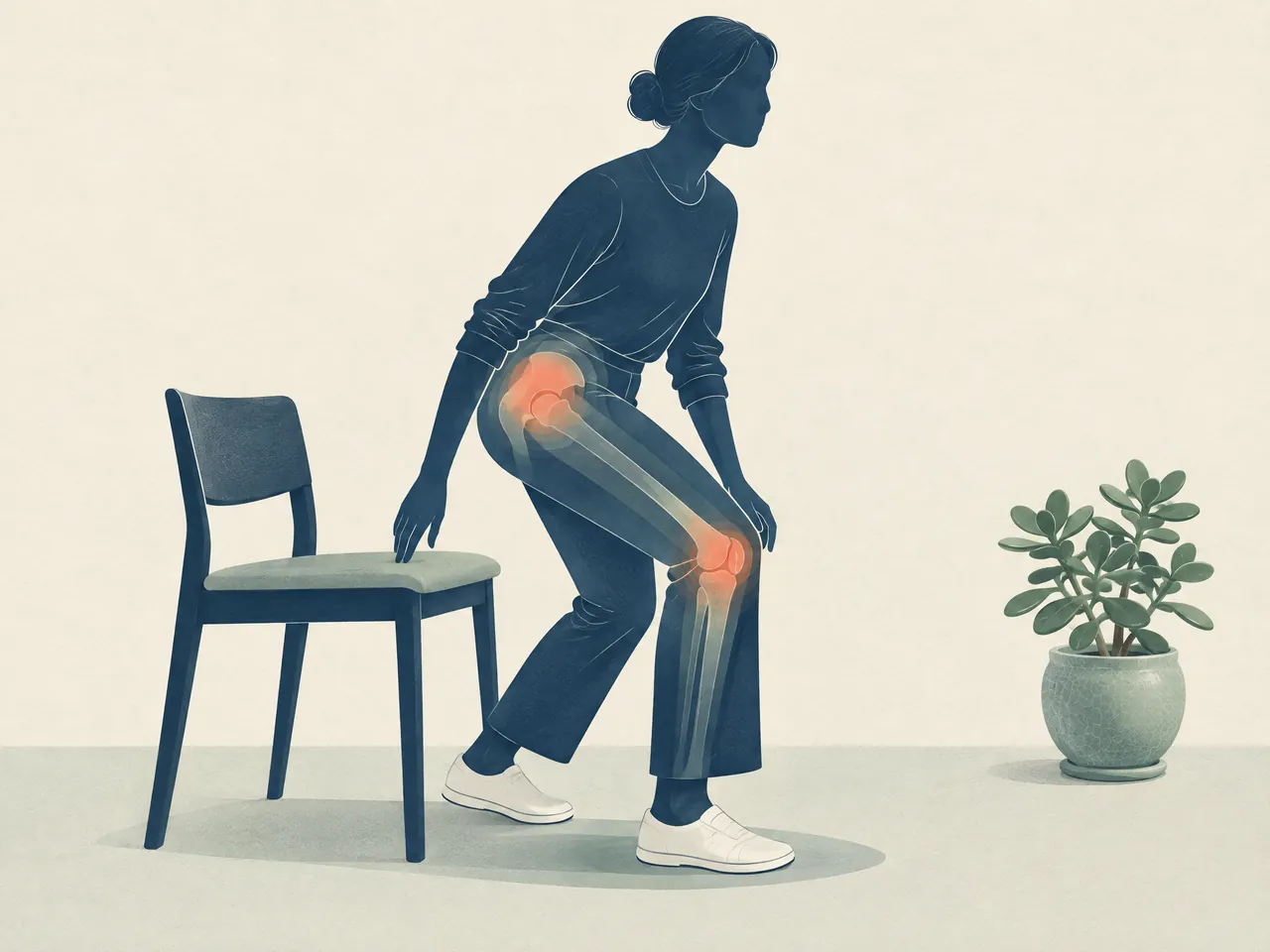
Hip pain describes a place, not one disease. Pain in the groin, outer hip, buttock, upper thigh, or knee can have different origins. A fall, repetitive loading, osteoarthritis, irritation around the hip, or pain referred from the lower back may each need a different assessment and plan. A temporary response to treatment is not a diagnostic test: it does not identify the structure involved, rule out a serious cause, or confirm that a therapy addresses it.
Start with the story of the pain. Did it begin suddenly during a fall or gradually during a period of increased walking? Is it mainly in the groin when taking weight, on the outside when lying on that side, or accompanied by back symptoms, tingling, or leg weakness? Does it interfere with putting on shoes, rising from a chair, getting in and out of a taxi, climbing stairs, work, or sleep? These details do not diagnose the problem by themselves, but they give a clinician useful clues and prevent a search term from becoming a conclusion.
If osteoarthritis has already been assessed, symptoms and function remain central. NICE says osteoarthritis can usually be diagnosed clinically in people aged 45 or over with activity-related joint pain and no morning stiffness, or stiffness lasting no more than 30 minutes; routine imaging is not needed unless features are atypical or another diagnosis is suspected. [2] Recent injury, rapid deterioration, hot swelling, prolonged morning stiffness, or deformity change the conversation. An acupuncture decision belongs after, not instead of, that clinical sorting.

Hip Pain Acupuncture Treatment and Acupuncture and Hip Pain Relief for Different Causes of Hip Pain
The same word, hip pain, can conceal different situations. After a fall, severe pain and inability to walk raise concern for fracture. A hot, swollen hip with a high temperature or feeling unwell raises concern for infection. [3] Pain after repetitive exercise may fit a strain or tendon problem, while activity-related pain and stiffness in later life can fit osteoarthritis. These are possibilities, not a home diagnosis. Hip-osteoarthritis evidence cannot tell us whether acupuncture treats an acute fracture or infection.
For someone assessed as having hip osteoarthritis, the conversation is broader than one procedure. NICE recommends therapeutic exercise tailored to need and identifies exercise, weight management where appropriate, information, and support as core care. [2] The relevant question is how to maintain safe movement and daily function while symptoms are managed. For a focused evidence overview, see acupuncture for hip pain; readers with confirmed arthritis can also compare acupuncture for hip arthritis.
Hip Pain Acupuncture Treatment and Acupuncture and Hip Pain Relief Cannot Diagnose the Pain Source
A treatment trial cannot replace an examination. A person may feel better on a day when they also reduced walking, slept better, used a medicine, changed footwear, or simply had a less irritable flare. Conversely, pain may remain because the diagnosis, load, exercise plan, recovery time, or another health factor needs attention. Neither outcome proves what is damaged. It is safer to bring the chronology and functional pattern to a qualified healthcare professional, especially if pain is worsening, persistent, or limiting ordinary activity or sleep. NHS guidance advises medical review in those circumstances rather than self-diagnosis. [3]
This distinction also protects against over-reading scans. A scan finding and a pain experience do not always move in lockstep, and routine imaging is not universally needed for a typical osteoarthritis diagnosis. [2] Clinicians use the history, examination, function, and any indicated tests together. Ask what diagnosis is being considered, which warning signs would alter the plan, and what outcome would make follow-up sensible. A clear answer is more useful than choosing an intervention because it appears in a search result.
Compare your options
| Situation or finding | Why it changes the decision | Useful next step |
|---|---|---|
| Confirmed hip osteoarthritis with activity-related pain | The specific sham-controlled acupuncture evidence is from this population, not all hip pain. | Discuss therapeutic exercise and a symptom-and-function plan; weigh acupuncture claims against the limited evidence. [1] [2] |
| Severe pain after a fall, or inability to walk or bear weight | This can be consistent with serious injury, including hip fracture. | Seek emergency medical assessment rather than booking routine treatment. [3] |
| Hot, swollen hip with fever or feeling unwell | A joint infection or another urgent cause needs to be considered. | Get urgent medical advice; do not wait to see whether a needle treatment changes the pain. [3] |
| Lateral hip pain, back symptoms, or pain spreading down the leg | The pain source may differ from hip osteoarthritis, so osteoarthritis trials may not apply. | Arrange assessment that considers the history, examination, and any indicated tests. |
| Pain disrupting sleep or usual activity, or worsening over time | The pattern needs review even when there was no major injury. | Seek appropriate clinical advice and bring a symptom-and-function record. [3] |
On smaller screens, scroll the table sideways to compare all columns.
Hip Pain Acupuncture Treatment and Acupuncture and Hip Pain Relief in Hip Osteoarthritis Research
The most directly relevant synthesis is the Cochrane review of six randomised trials involving 413 people with hip osteoarthritis. Participants were mainly older adults with established pain, and outcomes were short term. [1] This is more specific than everyone searching for hip pain. It does not establish results for a sudden twist, lateral hip pain, nerve symptoms, or a perioperative setting. Matching the study population to the person is essential.
The review asked different comparison questions. Two trials compared acupuncture with sham acupuncture. Other trials compared acupuncture added to usual primary care with usual care alone, or made other unblinded comparisons. Those designs measure different things. A believable sham procedure tries to isolate effects specific to acupuncture. An added-care comparison may also capture expectations and attention. The comparison is not a technical detail; it changes what a result can mean.
A broader 2023 systematic review collected 12 randomised trials and 806 participants, but mixed hip osteoarthritis, other hip-pain situations, and perioperative total-hip-arthroplasty studies. [4] Its outcomes included pain ratings, function, and anaesthetic or analgesic requirements. It can flag areas for research, but cannot make an operating-room finding a promise for routine outpatient hip pain. It also cannot show that acupuncture repairs cartilage, removes the need for hip replacement, or works for every painful hip.
Hip Pain Acupuncture Treatment and Acupuncture and Hip Pain Relief Compared with Sham Acupuncture
In the two small sham-controlled hip osteoarthritis trials, the Cochrane authors found moderate-certainty evidence that acupuncture probably produced little or no difference in pain or function at close to eight weeks. [1] Their pooled estimate was based on 120 participants. The confidence interval still allowed both the possibility of a moderate benefit and the possibility of no effect, so the conclusion is careful rather than absolute. It means a confident claim that acupuncture reliably provides substantial hip osteoarthritis relief is not supported by this comparison.
Sham acupuncture is designed so participants believe they may be receiving acupuncture while the procedure differs in needle penetration, placement, or both. It is not a perfect inactive control: the review noted that the sham methods might have weak acupuncture-specific effects. [1] Even so, sham-controlled results matter because pain and function can be influenced by expectations, natural fluctuation, and care context. Improvement after treatment is real to the person, but it cannot alone show how much change came from the specific procedure.
Hip Pain Acupuncture Treatment and Acupuncture and Hip Pain Relief: Evidence Quality and Its Limits
The more favourable-looking Cochrane result came from one unblinded trial where acupuncture was added to routine physician care. The review rated that evidence low quality and explained that expectations or treatment preference could partly account for patient-reported benefits. [1] This does not mean relief is imaginary. It means the design cannot separate an added procedure from the extra-care context as well as a sham comparison. The review was also uncertain about comparisons with advice plus exercise or NSAIDs.
Guidelines translate evidence into recommendations, which can differ by health system and are updated over time. NICE NG226 says not to offer acupuncture or dry needling to manage osteoarthritis. [2] That recommendation sits beside its advice to offer therapeutic exercise tailored to the person. If you are considering acupuncture despite the limited evidence, discuss the diagnosis, realistic aim, planned review point, other care already in place, and what would prompt reassessment. Do not stop prescribed medicines or postpone an advised medical review on the assumption that a course of acupuncture will resolve the underlying joint problem.
Hip Pain Acupuncture Treatment and Acupuncture and Hip Pain Relief: Practical Safety and Next Steps
Good next steps are practical rather than dramatic. Once urgent causes are excluded, agree on a functional goal: rising from a chair, walking a usual route, sleeping more comfortably, or completing an agreed exercise plan. A goal is not a guarantee of pain elimination. Track the same activity in similar conditions, because one better or worse day is a poor measure of change.
Load management can be part of the discussion. NHS advice for common hip pain includes staying mobile without overdoing strain, avoiding heavy carrying and very low chairs, and using wrapped ice for short periods as one symptom-relief option. [3] These are general measures, not a substitute for individual advice after injury or with complex health needs. The comparison in hip pain ice or heat can help frame questions about your pattern and safety considerations; it should not explain away worsening symptoms.
Needle procedures are not risk-free, even when serious events were not attributed to acupuncture in the hip-osteoarthritis trials that reported adverse events. The Cochrane review recorded minor bruising, bleeding, or pain at insertion sites in some studies. [1] Share relevant medical information before any treatment, including medicines that affect bleeding, a history of fainting with needles, pregnancy, skin infection or broken skin near a proposed area, and plans for surgery. The practitioner needs enough information to decide whether referral, modification, or no procedure is the safer course.

Hip Pain Acupuncture Treatment and Acupuncture and Hip Pain Relief Should Not Delay Urgent Care
Urgent care comes before a routine acupuncture enquiry when the pattern suggests a potentially serious problem. NHS advises immediate emergency assessment for severe hip pain after a fall or injury, inability to walk or put weight through the leg, or tingling or loss of feeling after injury. [3] Prompt medical help is also advised for a swollen, hot hip, skin colour change, or hip pain with fever or feeling generally unwell. These features require assessment because they can occur with fracture, infection, or other conditions for which delaying care can be harmful.
Not every important problem is an emergency, but persistent pain deserves more than repeated self-treatment. Arrange appropriate clinical advice when hip pain is affecting normal activities or sleep, is getting worse or returning, has not improved after a short period of home care, or stiffness lasts more than 30 minutes after waking. [3] If symptoms change while you are waiting for an appointment, update the service rather than assuming the original plan still fits. A complementary therapy appointment should never be used as a holding pattern for a new inability to bear weight or systemic illness.

Hip Pain Acupuncture Treatment and Acupuncture and Hip Pain Relief: What to Record Before Advice
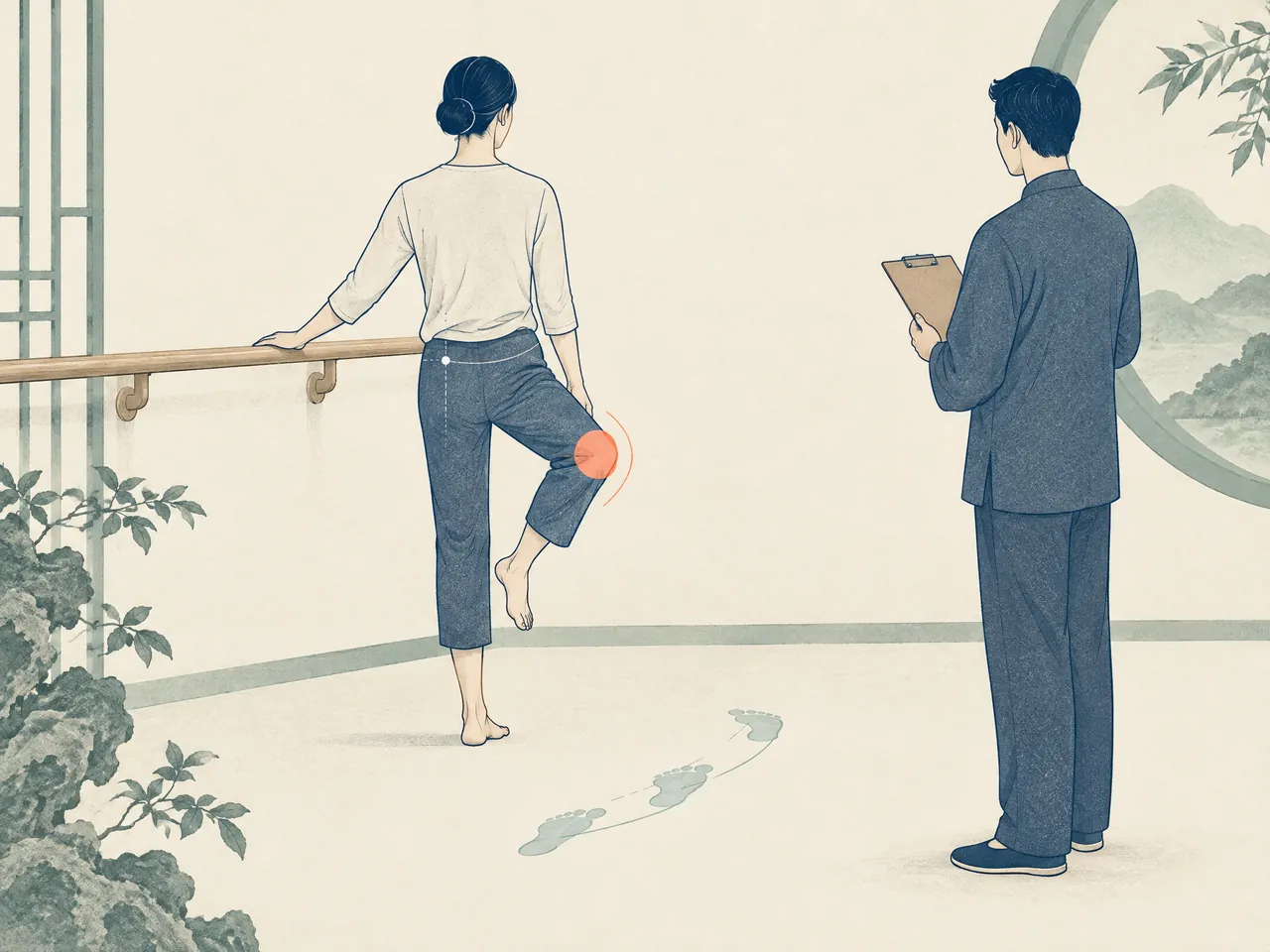
Bring a short record, not a perfect diary. Note when the pain began; whether there was a fall, new exercise, long walk, or other trigger; the most painful location; whether it is sharp, dull, burning, or aching; and whether it travels to the thigh, knee, or back. Write down what happens during weight-bearing, stairs, sitting, lying on the painful side, and the first steps after rest. Include sleep disruption, any fever or swelling, numbness or weakness, and what you have already tried. This makes it easier to decide whether an acupuncture conversation is appropriate or whether assessment should take priority.
Also list diagnosed conditions, previous hip or back injuries, current medicines, allergies, and relevant scans or letters if you have them. State your preferred outcome in functional terms and ask how it will be reviewed. TCM Lab enquiries can begin through WhatsApp at +852 6940 5663; for location information, use Kwun Tong Chinese medicine clinic or Chinese medicine clinic Prince Edward. Share any urgent features when you contact a service, and seek medical help first if red flags are present. An enquiry can clarify whether an appointment is suitable; it is not a diagnosis or a promise of relief.
Care and health guide
Pain-care information
This directory brings together services, reading, and visit information related to pain care, to help you prepare questions for a consultation.
When pain care affects your day, noting when it occurs, its relation to activity, and what you have already tried can help prepare a consultation; Chinese medicine pain management Hong Kong is a relevant service or reading entry point.
Individual circumstances differ, and acupuncture Hong Kong offers related information to help you understand options and prepare questions.


Your questions, answered
Frequently asked questions
Does hip pain acupuncture treatment provide acupuncture and hip pain relief for hip osteoarthritis?
The best sham-controlled evidence in a Cochrane review found that acupuncture probably made little or no difference to pain or function at close to eight weeks for hip osteoarthritis. The trials were small, so uncertainty remains, but this is not evidence of a dependable large effect. [1] NICE does not recommend acupuncture or dry needling for osteoarthritis management. [2]
Why is acupuncture added to usual care not the same as acupuncture compared with sham acupuncture?
They answer different questions. Adding acupuncture can also add attention, expectation, and treatment preference, particularly when the trial is unblinded. A sham comparison is intended to test whether outcomes differ from a believable control procedure. In the hip osteoarthritis review, the added-to-usual-care finding was low-certainty evidence and may partly reflect expectations. [1]
Can hip osteoarthritis acupuncture research be applied to bursitis, tendon pain, or pain after a fall?
No. These conditions may share a pain location but are not the same clinical problem. Hip osteoarthritis research cannot diagnose or establish treatment benefit for pain around the bursa or tendons, fracture, infection, nerve-related pain, or a new injury. Assessment should identify the likely source first.
Can acupuncture repair hip cartilage or guarantee that I will avoid hip replacement?
No such promise follows from the available hip osteoarthritis evidence. The Cochrane review did not report radiographic joint changes, and a change in pain is not proof of cartilage repair or avoidance of surgery. [1] Decisions about referral for possible joint replacement depend on symptoms, function, and whether non-surgical management is ineffective or unsuitable. [2]
Sources and further information
- [1] [1] Cochrane: Acupuncture for hip osteoarthritis
Referenced for: Six-trial hip osteoarthritis review; sham comparison, usual-care comparison, short-term pain and function findings, limitations, and reported adverse events.
- [2] [2] NICE NG226: Osteoarthritis in over 16s: diagnosis and management
Referenced for: Diagnosis, exercise, acupuncture recommendation, and referral recommendations for osteoarthritis.
- [3] [3] NHS: Hip pain in adults
Referenced for: Hip-pain warning signs, urgent and emergency care thresholds, and general self-care context.
- [4] [4] Park et al.: Acupuncture Treatment for Hip Pain: A Systematic Review and Meta-Analysis
Referenced for: The mixed 12-trial hip-pain evidence base, including perioperative total-hip-arthroplasty studies and heterogeneous outcomes.