
TCM Lab · Health reading
Chinese Medicine for Allergic Rhinitis, TCM for Allergic Rhinitis, and Integrative Medicine for Allergic Rhinitis: What to Know
Published Updated
A runny or blocked nose is not always a cold. When sneezing, nasal itch, clear discharge, or itchy watery eyes return in the bedroom, at work, or after a change in weather, allergic rhinitis becomes a useful possibility to investigate. Chinese medicine for allergic rhinitis can be considered as part of a wider plan, but the first useful step is still to identify the pattern, likely triggers, and any need for conventional assessment. This guide explains how TCM for allergic rhinitis is usually discussed alongside practical trigger reduction and prescribed care. It also sets out what an integrative medicine for allergic rhinitis conversation can look like: coordinated information, realistic expectations, and clear escalation when symptoms point beyond routine nasal allergy.
Appointments are confirmed through WhatsApp. If you have language requirements, please mention them in your enquiry.
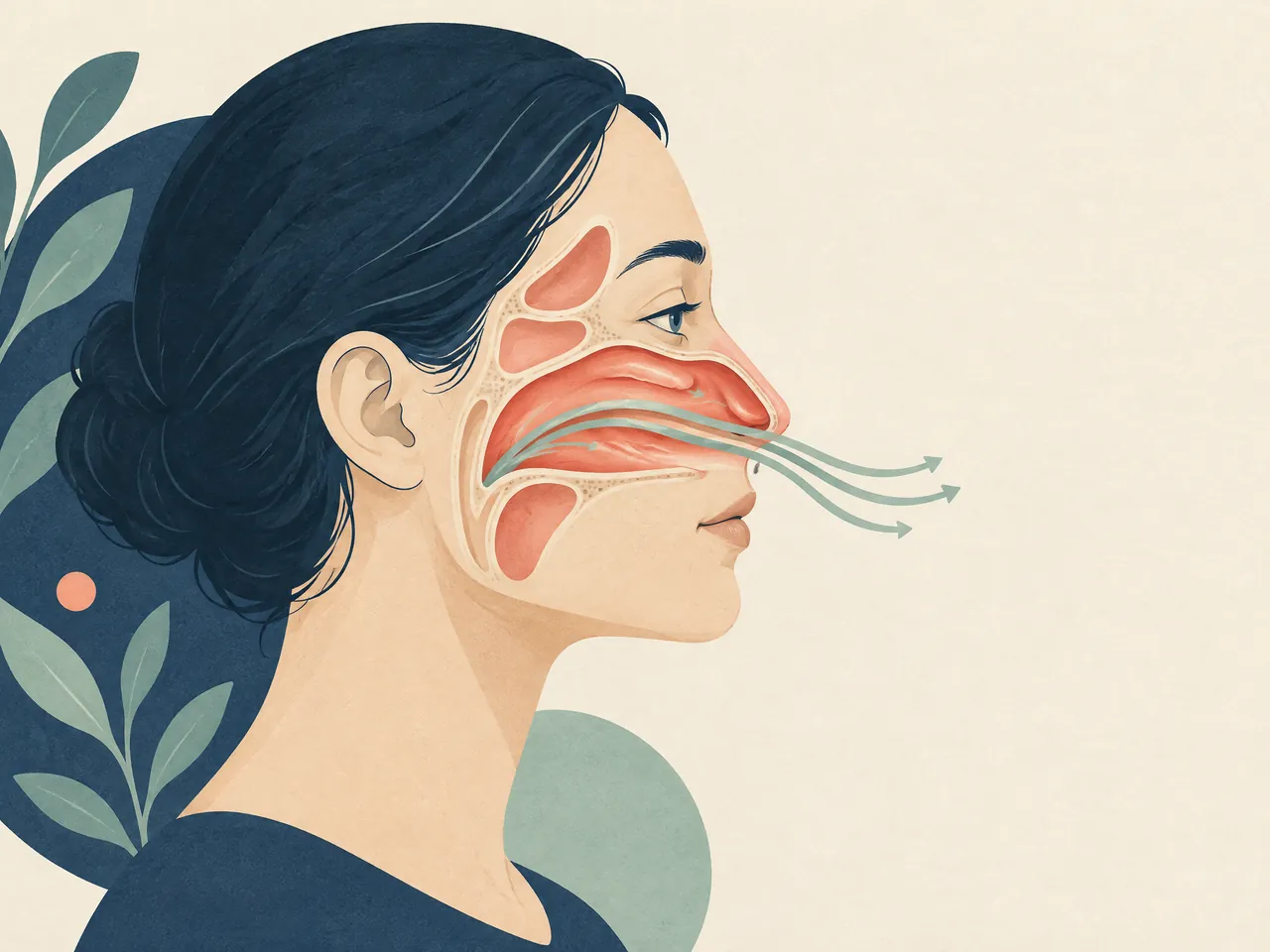
The short answer
Chinese medicine for allergic rhinitis may be discussed as a complementary option after the likely cause of nasal symptoms has been assessed. It does not replace trigger control, allergy assessment, or prescribed treatment. TCM for allergic rhinitis may include a traditional consultation and, where appropriate, discussion of acupuncture or herbal medicine. An integrative medicine for allergic rhinitis approach keeps every practitioner informed and leaves changes to prescribed medicines with the prescribing clinician.
Transparent pricing
See the fees.
Choose your care.
Explore our complete official price list, including first-trial prices, regular prices, packages and branch-specific options.
Opening WhatsApp prepares an enquiry; it does not send a message, take payment or confirm an appointment. Suitability and individual arrangements are confirmed during consultation.
Chinese medicine
All prices in HKDAcupuncture and Chinese herbal medicine package
Includes a Chinese medicine consultation with pulse assessment, body acupuncture and 3 days of Chinese herbal granules that do not require decoction.
HK$580 (single session)
Chinese medicine consultation with pulse assessment
Hair and scalp
All prices in HKDScalp health and hair-loss management
Includes AI scalp analysis, deep scalp and follicle cleansing, and scalp oil-control care.
HK$380 (first trial)
Regular price: HK$680
- 6 sessions: HK$3,480 (HK$580 per session)
- 12 sessions: HK$5,760 (HK$480 per session)
- 20 sessions: HK$8,600 (HK$430 per session)
- 30 sessions: HK$11,400 (HK$380 per session)
Hair acupuncture and Chinese herbal medicine package
Includes scalp acupuncture and 3 days of Chinese herbal medicine that does not require decoction.
HK$580 (single session)
Registered Chinese Medicine Practitioner consultation
- 6 sessions: HK$3,180 (HK$530 per session)
- 12 sessions: HK$5,760 (HK$480 per session)
- 20 sessions: HK$8,600 (HK$430 per session)
- 30 sessions: HK$11,400 (HK$380 per session)
Combined hair and scalp treatment
Combines acupuncture and Chinese herbal medicine with salon-level scalp and follicle care. Packages include complimentary hair-care shampoo and serum.
HK$1,260 (single session)
Combined treatment
- 8 sessions: HK$8,640 (HK$1,080 per session)
- 16 sessions: HK$15,680 (HK$980 per session)
- 20 sessions: HK$18,600 (HK$930 per session)
- 30 sessions: HK$26,400 (HK$880 per session)
Weight management
All prices in HKDFull-body acupoint embedding for weight management
Includes full-body acupoint embedding. Packages include complimentary Chinese herbal medicine for weight management, with the number of included days scaled to the package. Embedding material and the individual treatment arrangement are confirmed during consultation; this is not a cosmetic thread lift.
HK$980 (single session)
No trial session
- 10 sessions: HK$7,800 (HK$780 per session)
- 20 sessions: HK$14,600 (HK$730 per session)
- 30 sessions: HK$20,400 (HK$680 per session)
Facial acupuncture
All prices in HKDFacial acupuncture (basic)
Includes facial acupuncture and meridian-based facial care, including care for facial puffiness.
HK$480 (first trial)
Regular price: HK$680
- 10 sessions: HK$5,200 (HK$520 per session)
- 20 sessions: HK$9,600 (HK$480 per session)
- 30 sessions: HK$13,500 (HK$450 per session)
Facial acupuncture (advanced)
Includes enhanced facial acupuncture with a specially formulated moisturising mask and serum.
HK$780 (first trial)
Regular price: HK$1,180
- 10 sessions: HK$9,000 (HK$900 per session)
- 20 sessions: HK$16,600 (HK$830 per session)
- 30 sessions: HK$23,400 (HK$780 per session)
Pain care
All prices in HKDExtracorporeal shockwave treatment
Shockwave treatment for deep-tissue and fascial care. The Kwun Tong clinic offers the multi-area options shown below.
Priced by branch
Branch-specific pricing
Prince Edward: HK$250 per area
Kwun Tong: HK$250 for 1 area / HK$450 for 2 areas / HK$600 for 3 areas
Pain care (manual therapy)
Includes Chinese medicine musculoskeletal assessment, manual joint techniques and tui na.
HK$580 (single session)
Chinese medicine musculoskeletal assessment
Pain care (acupuncture and manual therapy)
Combines acupuncture and manual therapy.
HK$680 (single session)
Combined care
How to Tell Allergic Rhinitis from a Cold — Chinese medicine for allergic rhinitis | TCM for allergic rhinitis | integrative medicine for allergic rhinitis
The practical question is not simply whether a nose is blocked; it is what pattern surrounds it. Allergic rhinitis is an allergic irritation of the nose. It commonly brings sneezing, an itchy nose, clear runny or blocked nose, and sometimes itchy, red, or watery eyes. Symptoms can appear within minutes of contact with an allergen. A viral cold can overlap, but it more often develops with sore throat, fever, tiredness, or body aches and then settles over time. Looking at the whole pattern helps prevent a person from treating every episode as the same problem. For a fuller symptom checklist, see allergic rhinitis symptoms. [1]

Symptoms, Triggers, and Patterns to Notice — Chinese medicine for allergic rhinitis | TCM for allergic rhinitis | integrative medicine for allergic rhinitis
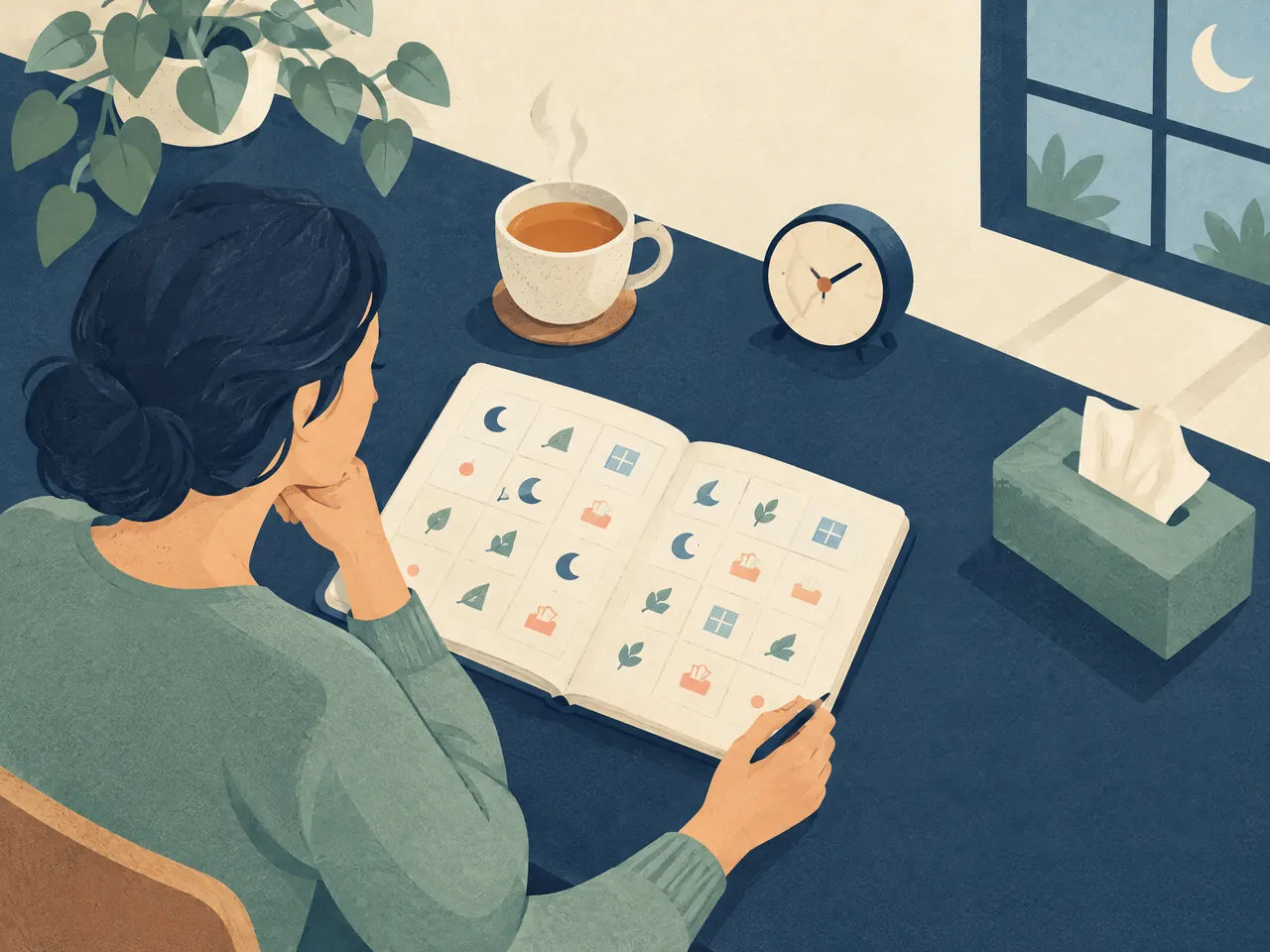
Timing is often revealing. Someone who wakes with repeated sneezing and nasal itch after time in a dusty bedroom may notice a different pattern from someone whose symptoms begin after a colleague has a respiratory infection. Pollen, house dust mites, mould, and animal dander are recognised allergic triggers. In Hong Kong, polluted air, fragrance, sudden shifts in temperature or humidity, and other irritants may also aggravate nasal symptoms without necessarily proving an allergy. A symptom diary should note time, place, weather, cleaning, pets, fragrance exposure, meals if relevant, medicines taken, and whether the eyes or chest are involved. [1] [2]
A diary is not a diagnosis, but it turns a vague complaint—"my nose is always sensitive"—into useful information for a clinician. Record whether discharge is clear or coloured, whether itching is present, whether symptoms improve away from home, and how sleep or concentration is affected. It is also worth noting that non-allergic rhinitis can cause congestion and runny nose, and can be linked with cold or hot temperatures and humidity. This is why a person should not assume that a trigger identified by memory is the only cause. Our comparison of allergic rhinitis vs common cold can help organise the history before an appointment. [1]

When Nasal Symptoms Need Medical Assessment — Chinese medicine for allergic rhinitis | TCM for allergic rhinitis | integrative medicine for allergic rhinitis
Arrange medical assessment when the cause is uncertain, symptoms keep getting worse, pharmacy treatment is not helping, or sleep and everyday life are being disrupted. Assessment is also important when asthma is present and worsening, because nose and breathing symptoms should be considered together rather than managed in isolation. A clinician may review the history, examine the nose, consider allergy testing or referral when appropriate, and check whether another nasal condition needs attention. This step gives a safer starting point before adding any complementary approach. [1]
Seek prompt medical attention for breathing difficulty, wheeze or worsening asthma, marked facial pain or swelling, a persistent one-sided blockage, repeated nosebleeds or blood-stained discharge, high fever, or a person who seems significantly unwell. These features do not fit a simple self-management conversation. Children, pregnancy, chronic illness, and use of several medicines are further reasons to bring a complete health history to a qualified clinician. Chinese medicine for allergic rhinitis should never delay assessment of symptoms that could have another explanation.
Compare your options
| Pattern to notice | Clues that may fit | Helpful next step |
|---|---|---|
| Allergic rhinitis pattern | Sneezing, itch, clear runny or blocked nose, and sometimes itchy watery eyes after a likely allergen | Record exposures, reduce known triggers where practical, and ask a pharmacist or clinician about suitable care |
| Cold-like illness | Nasal symptoms with sore throat, fever, aches, or feeling generally unwell | Use appropriate infection self-care and seek medical advice if symptoms are severe, prolonged, or concerning |
| Irritant or non-allergic pattern | Congestion or runny nose around temperature shifts, humidity, smoke, fragrance, or chemicals, often without obvious itch | Reduce the suspected irritant and arrange assessment if the cause is unclear or symptoms persist |
| Persistent or red-flag symptoms | Worsening asthma, breathing difficulty, one-sided blockage, blood-stained discharge, facial pain, or major sleep disruption | Seek timely medical assessment; do not rely on self-treatment or complementary care alone |
On smaller screens, scroll the table sideways to compare all columns.
Everyday Care and Conventional Options — Chinese medicine for allergic rhinitis | TCM for allergic rhinitis | integrative medicine for allergic rhinitis
Daily measures matter because medication cannot remove every exposure. The most useful changes are the ones matched to a believable trigger and a person’s living situation. For example, a renter with morning congestion may focus first on bedding, dust, ventilation, and damp; a person whose symptoms flare around scent may test a fragrance-free routine; and someone with seasonal eye symptoms may plan outdoor exposure differently. Avoiding a trigger completely is not always realistic. The aim is to reduce avoidable contact, review the effect, and avoid blaming symptoms on a single cause without evidence. This practical foundation remains relevant whether or not Chinese medicine is later added. [1] [2]
Dust, Mould, Weather, and Irritant Management — Chinese medicine for allergic rhinitis | TCM for allergic rhinitis | integrative medicine for allergic rhinitis
For dust-mite or mould concerns, begin with the spaces where symptoms and time overlap. Regularly washing bedding, reducing dust with a damp cloth, keeping the home dry and ventilated, and dealing with damp or condensation are examples of measures recommended on NHS guidance. Cleaning air conditioners and keeping kitchens and bathrooms dry may also be relevant in a humid home. If symptoms worsen after a particular cleaning product, perfume, incense, paint, or smoke exposure, reducing that irritant is a sensible test. Read more about allergic rhinitis dust mites and mould for a focused household discussion. [1] [2]
Weather changes can be frustrating because they cannot be removed from daily life. Instead, observe whether a sudden change in temperature or humidity precedes congestion, and distinguish that observation from a confirmed allergy. During an episode, simple measures such as stepping away from smoke or strong scent, changing clothes after a dusty task, or keeping windows and ventilation choices consistent may make the pattern easier to assess. A diary can show whether these adjustments coincide with fewer symptoms. It is more useful than repeatedly changing many products at once and then being unable to tell what helped.
Antihistamines, Nasal Sprays, and Medication Safety — Chinese medicine for allergic rhinitis | TCM for allergic rhinitis | integrative medicine for allergic rhinitis
Conventional care may include antihistamines, steroid nasal sprays, saline sprays or rinses, and, in some circumstances, other medicines selected by a doctor or pharmacist. Antihistamines can help with itch, sneezing, and runny nose; steroid nasal sprays are used to reduce nasal inflammation. The right choice depends on symptoms, medical history, age, and other treatments. A pharmacist can explain product directions and help identify when a doctor’s review is more appropriate. If you use a decongestant nasal spray, follow the product and professional advice carefully: NHS guidance cautions that prolonged use can make blockage worse. [1]
Medication safety is especially important when someone is considering herbal products or acupuncture as well. Do not stop a prescribed nasal spray, antihistamine, asthma medicine, or other treatment because symptoms temporarily improve or because another therapy has begun. Give the TCM practitioner an up-to-date list of prescriptions, over-the-counter medicines, supplements, allergies, pregnancy status, and previous reactions; tell the prescribing clinician about complementary care too. That shared information is the practical core of integrative medicine for allergic rhinitis, rather than an instruction to choose one system over another.

How Traditional Assessment May Complement Care — Chinese medicine for allergic rhinitis | TCM for allergic rhinitis | integrative medicine for allergic rhinitis
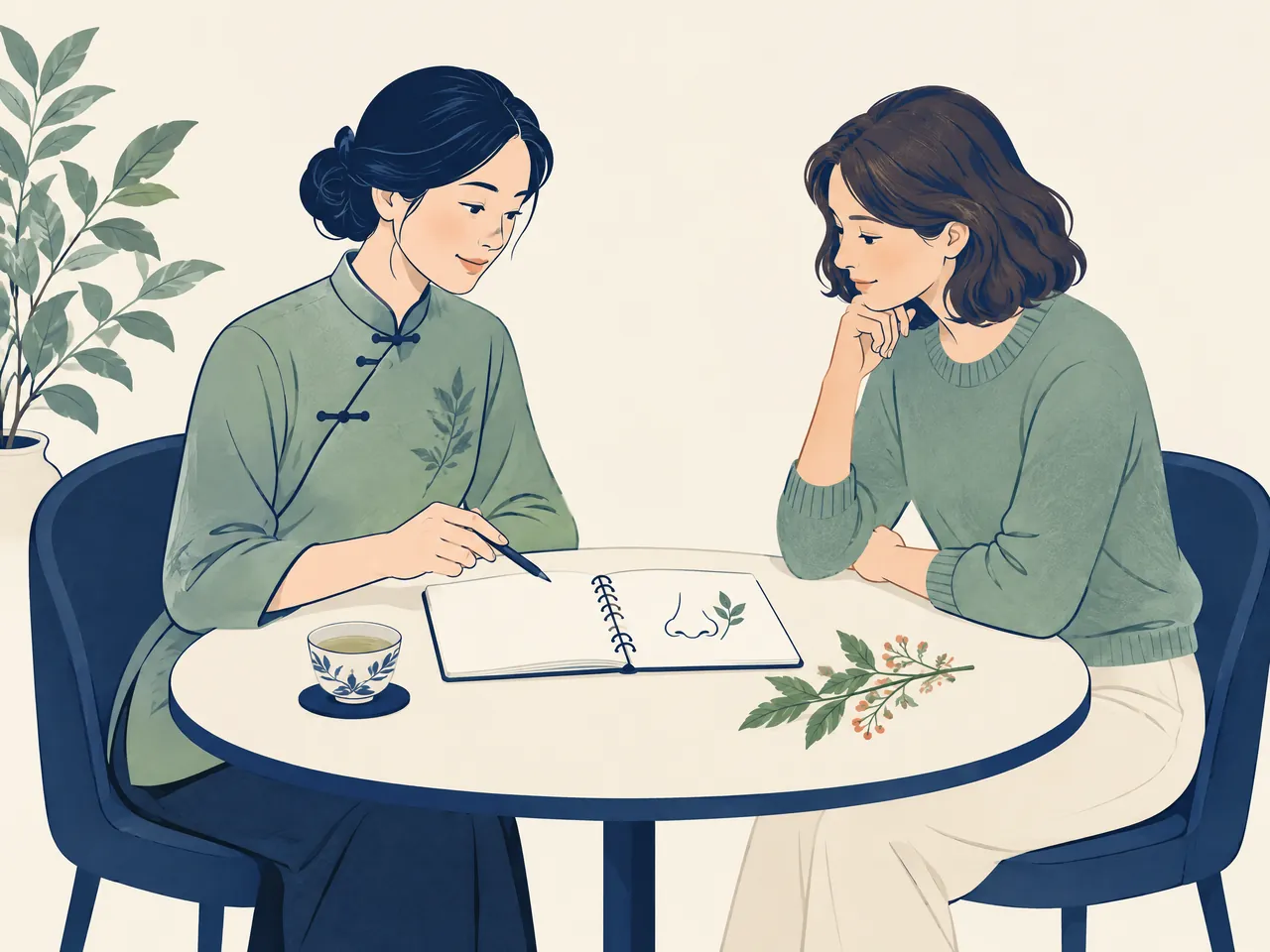
People often search for TCM for allergic rhinitis after repeated congestion has disrupted sleep, exercise, study, or work despite reasonable daily care. A Chinese medicine consultation can offer a traditional, individualised discussion, but it should begin with the same clear history: what happens, when it happens, known allergies, medical diagnoses, current treatment, and goals for care. Traditional pattern identification is not the same as a modern diagnosis of allergic rhinitis. Keeping that distinction clear helps the consultation complement rather than duplicate or contradict necessary medical assessment. [4]
What a Chinese Medicine Consultation Considers — Chinese medicine for allergic rhinitis | TCM for allergic rhinitis | integrative medicine for allergic rhinitis
A registered Chinese medicine practitioner may ask about the nature and timing of congestion, sneezing, discharge, itch, sleep, appetite, bowel habits, temperature sensitivity, stress, and energy, then use traditional observation and pulse or tongue assessment. In the traditional approach, this information is used to discuss a pattern and possible supportive options. It does not replace examination or allergy investigation by a medical clinician when those are indicated. Bringing a symptom diary, medicine list, recent test results if available, and a note of any asthma history makes the conversation more specific and safer.
Set useful goals before the first visit. Instead of asking for a promised cure or a fixed number of sessions, describe the outcome that matters: fewer disrupted nights, less need to leave a meeting to sneeze, clearer understanding of triggers, or support while following a prescribed plan. Review change over time with the same simple measures—days with symptoms, sleep disruption, and medicine use as advised—rather than relying only on a good or bad day. If symptoms change, become one-sided, or involve the chest, return to conventional assessment rather than simply intensifying complementary care.

Acupuncture and Herbal Medicine as Discussed Options — Chinese medicine for allergic rhinitis | TCM for allergic rhinitis | integrative medicine for allergic rhinitis
After assessment, acupuncture or Chinese herbal medicine may be discussed as possible complementary options. The US National Center for Complementary and Integrative Health notes that some randomised trials suggest acupuncture may improve some allergic-rhinitis symptoms and quality of life, and cites a guideline in which clinicians may offer or refer interested patients for acupuncture as a non-pharmacologic option. This supports a balanced discussion, not a promise that it will work for every person or replace established care. Acupuncture should be provided with appropriate hygiene and technique; tell the practitioner about bleeding risk, pregnancy, implanted devices, and relevant health conditions. [3]
Herbal medicine should be individualised only after a consultation, not selected from a general webpage or copied from a friend’s prescription. The practitioner needs to know every medicine and supplement because safety and suitability depend on the whole picture. A university-based integrative programme in Hong Kong describes communication between Chinese medicine and Western-medicine practitioners, with allergy assessment considered where a specialist judges it necessary; that coordination is a useful model for a person using both forms of care. [4] If you would like to discuss a consultation with TCM Lab, start with the Chinese medicine clinic Prince Edward or Kwun Tong Chinese medicine clinic location information, and review the Chinese medicine clinic price list Hong Kong before enquiring.
Care and health guide
Health service information
This directory brings together services, reading, and visit information related to health services, to help you prepare questions for a consultation.
If you are organising health questions, Chinese medicine clinic Hong Kong is a starting point for learning about related services and preparing for a consultation.
People have different needs; acupuncture Hong Kong provides further reading to help you understand options in your own context.


Your questions, answered
Frequently asked questions
How long does Chinese medicine for allergic rhinitis take to work?
There is no reliable fixed timeline or guaranteed number of visits. Response may depend on the symptom pattern, ongoing exposure to triggers, other conditions, and the plan agreed after assessment. Set a practical review point with the practitioner, keep tracking symptoms, and continue appropriate conventional care rather than judging progress by one unusually good or bad day.
Can TCM cure allergic rhinitis?
TCM for allergic rhinitis should not be presented as a guaranteed cure. It may be discussed as a complementary, individualised approach while trigger management and medical treatment remain important where appropriate. Allergic rhinitis can be ongoing or seasonal, so a realistic plan focuses on understanding patterns, reducing exposure, and reviewing symptoms safely.
Can I see a Chinese medicine practitioner while using a steroid nasal spray?
Yes, but tell the Chinese medicine practitioner about the nasal spray and every other medicine or supplement you take. Do not stop, reduce, or change a prescribed spray on your own. The prescribing clinician should guide medication changes, and shared information helps both practitioners consider the broader plan safely.
Is acupuncture suitable for children with allergic rhinitis?
Suitability needs an individual discussion with qualified clinicians and depends on the child’s symptoms, diagnoses, comfort, and current treatment. Evidence and practical considerations for children may differ from adults. Persistent symptoms, sleep disruption, or asthma symptoms should first be discussed with the child’s usual medical clinician.
Sources and further information
- [1] [1] NHS — Allergic rhinitis
Referenced for: Symptoms, common allergens, distinction from non-allergic rhinitis, self-care, medicine categories, and indications for medical review.
- [2] [2] Hong Kong Adventist Hospital — Allergic Rhinitis
Referenced for: Hong Kong-relevant triggers, household measures, and conventional treatment descriptions.
- [3] [3] NIH National Center for Complementary and Integrative Health — Seasonal Allergies and Complementary Health Approaches: What the Science Says
Referenced for: Evidence summary and safety context for acupuncture in allergic rhinitis.
- [4] [4] CUHK Integrative Medical Centre — Integrative Medicine Treatment in Asthma and Allergic Rhinitis
Referenced for: Example of coordinated Chinese and Western medicine communication and allergy assessment in a Hong Kong university setting.