
TCM Lab · Health reading
Ankle Sprain Symptoms and Treatment, Ankle Sprain Rehabilitation Exercises, and When to See a Doctor for an Ankle Sprain
Published Updated
Rolling an ankle on a kerb, a wet MTR platform or an uneven trail can leave you wondering whether it is safe to walk home, work the next day or return to sport. An ankle sprain is an injury to one or more ligaments that stabilise the joint; pain, swelling, bruising and difficulty walking are common, but their intensity does not by itself tell you exactly what has been injured. This guide explains ankle sprain symptoms and treatment, how to progress rehabilitation without rushing, and when prompt medical assessment matters. Protect the ankle early, then let pain, swelling, stability and function—not a calendar alone—guide the next step. A foot that is cold, discoloured, numb, misshapen, or impossible to bear weight on needs urgent medical care rather than a home rehabilitation plan.
Appointments are confirmed through WhatsApp. If you have language requirements, please mention them in your enquiry.
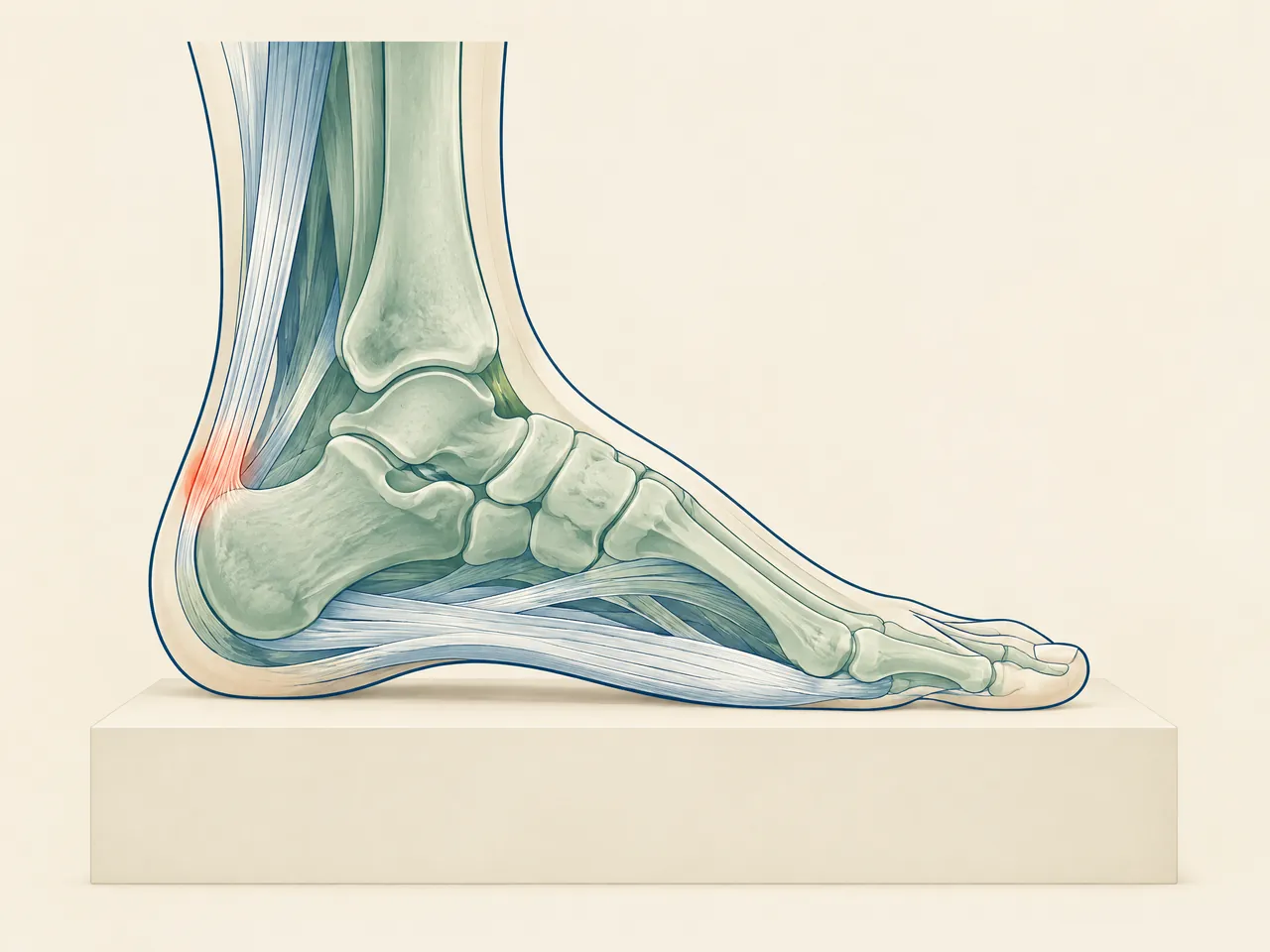
The short answer
For the first two to three days, protect the ankle, rest from painful activity, use a wrapped cold pack, comfortable compression and elevation if appropriate. Begin gentle movement only when pain does not stop it, then progress through strength and balance work as tolerated. Seek urgent assessment for a crack, deformity, numbness or tingling, a cold or discoloured foot, or inability to walk. Persistent pain, swelling or instability also deserves clinical assessment.
Transparent pricing
See the fees.
Choose your care.
Explore our complete official price list, including first-trial prices, regular prices, packages and branch-specific options.
Opening WhatsApp prepares an enquiry; it does not send a message, take payment or confirm an appointment. Suitability and individual arrangements are confirmed during consultation.
Pain care
All prices in HKDExtracorporeal shockwave treatment
Shockwave treatment for deep-tissue and fascial care. The Kwun Tong clinic offers the multi-area options shown below.
Priced by branch
Branch-specific pricing
Prince Edward: HK$250 per area
Kwun Tong: HK$250 for 1 area / HK$450 for 2 areas / HK$600 for 3 areas
Pain care (manual therapy)
Includes Chinese medicine musculoskeletal assessment, manual joint techniques and tui na.
HK$580 (single session)
Chinese medicine musculoskeletal assessment
Pain care (acupuncture and manual therapy)
Combines acupuncture and manual therapy.
HK$680 (single session)
Combined care
Hair and scalp
All prices in HKDScalp health and hair-loss management
Includes AI scalp analysis, deep scalp and follicle cleansing, and scalp oil-control care.
HK$380 (first trial)
Regular price: HK$680
- 6 sessions: HK$3,480 (HK$580 per session)
- 12 sessions: HK$5,760 (HK$480 per session)
- 20 sessions: HK$8,600 (HK$430 per session)
- 30 sessions: HK$11,400 (HK$380 per session)
Hair acupuncture and Chinese herbal medicine package
Includes scalp acupuncture and 3 days of Chinese herbal medicine that does not require decoction.
HK$580 (single session)
Registered Chinese Medicine Practitioner consultation
- 6 sessions: HK$3,180 (HK$530 per session)
- 12 sessions: HK$5,760 (HK$480 per session)
- 20 sessions: HK$8,600 (HK$430 per session)
- 30 sessions: HK$11,400 (HK$380 per session)
Combined hair and scalp treatment
Combines acupuncture and Chinese herbal medicine with salon-level scalp and follicle care. Packages include complimentary hair-care shampoo and serum.
HK$1,260 (single session)
Combined treatment
- 8 sessions: HK$8,640 (HK$1,080 per session)
- 16 sessions: HK$15,680 (HK$980 per session)
- 20 sessions: HK$18,600 (HK$930 per session)
- 30 sessions: HK$26,400 (HK$880 per session)
Weight management
All prices in HKDFull-body acupoint embedding for weight management
Includes full-body acupoint embedding. Packages include complimentary Chinese herbal medicine for weight management, with the number of included days scaled to the package. Embedding material and the individual treatment arrangement are confirmed during consultation; this is not a cosmetic thread lift.
HK$980 (single session)
No trial session
- 10 sessions: HK$7,800 (HK$780 per session)
- 20 sessions: HK$14,600 (HK$730 per session)
- 30 sessions: HK$20,400 (HK$680 per session)
Facial acupuncture
All prices in HKDFacial acupuncture (basic)
Includes facial acupuncture and meridian-based facial care, including care for facial puffiness.
HK$480 (first trial)
Regular price: HK$680
- 10 sessions: HK$5,200 (HK$520 per session)
- 20 sessions: HK$9,600 (HK$480 per session)
- 30 sessions: HK$13,500 (HK$450 per session)
Facial acupuncture (advanced)
Includes enhanced facial acupuncture with a specially formulated moisturising mask and serum.
HK$780 (first trial)
Regular price: HK$1,180
- 10 sessions: HK$9,000 (HK$900 per session)
- 20 sessions: HK$16,600 (HK$830 per session)
- 30 sessions: HK$23,400 (HK$780 per session)
Chinese medicine
All prices in HKDAcupuncture and Chinese herbal medicine package
Includes a Chinese medicine consultation with pulse assessment, body acupuncture and 3 days of Chinese herbal granules that do not require decoction.
HK$580 (single session)
Chinese medicine consultation with pulse assessment
Ankle Sprain Symptoms and Treatment, Ankle Sprain Rehabilitation Exercises, and When to See a Doctor for an Ankle Sprain: Recognising Severity Before Recovery
An ankle sprain usually follows a twist, roll, trip or awkward landing that takes the joint beyond the usual range of its supporting ligaments. It may happen during basketball or trail running, but it can also happen while stepping off a bus, carrying shopping or walking over uneven paving. Pain may be felt at rest, when touching the area, or when weight-bearing. Swelling, bruising, stiffness and a sense that the ankle may give way are also recognised symptoms. The Hong Kong College of Orthopaedic Surgeons lists soreness or pain, swelling, bruising, difficulty walking and stiffness among common features [1]. Those features are useful clues, not a way to confirm a diagnosis at home.
Notice the story of the injury as well as the current appearance. Did the foot turn inward or outward? Did you fall, hear a crack, or immediately have trouble taking four ordinary steps? Is tenderness mainly around the ankle, over a bony point, or elsewhere in the foot? Is this a first injury, or an ankle that has repeatedly felt unreliable? These details help a clinician decide whether a sprain is likely and whether fracture, tendon injury, a higher-ankle injury or another problem should be considered. An ankle can look dramatically swollen after a sprain, while a fracture can sometimes look deceptively similar; guessing from a photograph, an online quiz or the colour of bruising is not a safe substitute for assessment.
Ankle Sprain Symptoms and Treatment, Ankle Sprain Rehabilitation Exercises, and When to See a Doctor for an Ankle Sprain: Pain, Swelling, Bruising and Weight Bearing
Weight-bearing is a practical signal, but it is not a challenge to push through. If you can take a few supported steps with discomfort that is improving, protect the ankle and avoid forcing a long commute, slopes or stairs. If each step produces sharp pain, the ankle buckles, or you cannot walk more than a few steps, obtain prompt medical advice. NHS guidance treats inability to put weight on an injury, worsening pain, worsening swelling or bruising, and marked stiffness as reasons to seek urgent advice [2]. Crutches, a brace, a boot or other support may be considered by a clinician according to the injury; choosing one is not a reason to skip assessment when red flags are present. For a focused walking decision, see Can I walk on a sprained ankle?.
Ankle Sprain Symptoms and Treatment, Ankle Sprain Rehabilitation Exercises, and When to See a Doctor for an Ankle Sprain: How Injury Severity Affects Recovery
Recovery is not a race to a fixed number of days. NHS advice says most sprains and strains feel better after about two weeks, while severe injuries can take months to return to normal [2]. The Hong Kong orthopaedic guidance similarly describes recovery ranging from weeks to months according to severity [1]. That range explains why a person who can walk comfortably after several days and a person whose ankle remains unstable should not follow the same plan. Your previous injuries, the demands of your job, footwear, the surface you need to walk on, and whether you need to pivot or jump can all affect what “ready” looks like. Compare individual factors in ankle sprain recovery time and How long does an ankle sprain take to recover?.
Compare your options
| What you notice | What it can mean for planning | Safer next step |
|---|---|---|
| Mild soreness with manageable swelling; walking is becoming easier | A lower-demand phase may be appropriate, but this does not confirm the exact injury | Protect the ankle, avoid painful activity and begin gentle, pain-limited movement when comfortable |
| Bruising, stiffness or a limp that is not steadily improving | Symptoms may need a closer examination; appearance alone cannot distinguish a sprain from fracture | Arrange clinical advice, especially if function is not progressing |
| Ankle gives way, balance feels unreliable or a previous sprain has recurred | Strength, balance and return-to-activity planning may need structured rehabilitation | Seek assessment and progress movement, strengthening and balance work gradually |
| Cannot bear weight, heard a crack, deformity, numbness, coldness or blue/grey colour | Possible fracture or nerve/vascular concern requires urgent triage | Attend urgent or emergency medical care rather than self-treating |
On smaller screens, scroll the table sideways to compare all columns.
Ankle Sprain Symptoms and Treatment, Ankle Sprain Rehabilitation Exercises, and When to See a Doctor for an Ankle Sprain: Safe Early Self-Care and Gradual Activity
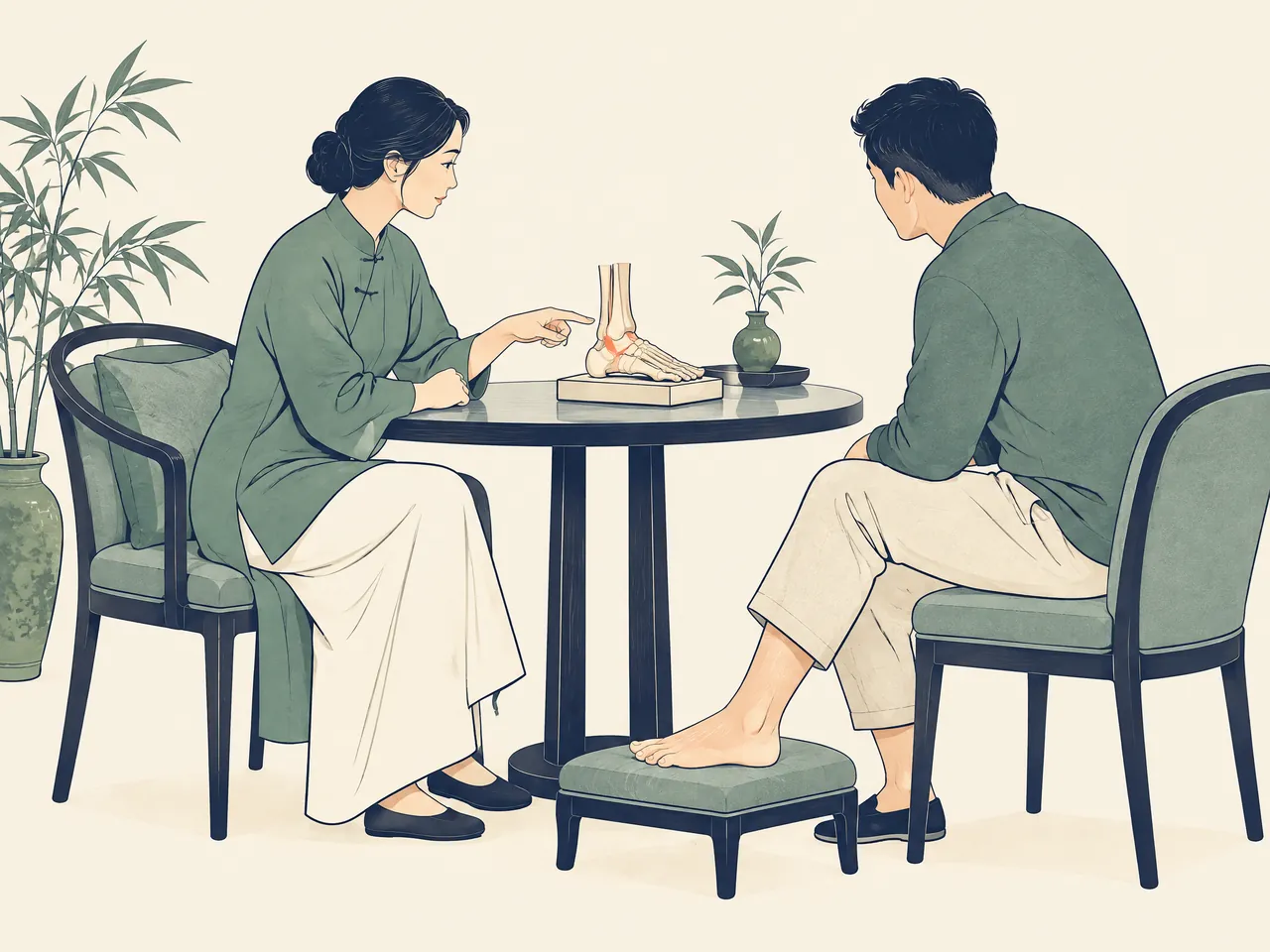
The first goal after a suspected sprain is to avoid making a fresh injury worse while easing discomfort and swelling. In the first two to three days, a practical approach is protection, relative rest, wrapped ice or a cold pack, compression that is not too tight, and elevation. NHS calls this PRICE: protect, rest, ice, compression and elevate [2]. This does not mean abandoning all movement for weeks. It means pausing activities that provoke pain, swelling or a feeling of giving way, choosing stable footwear or support where appropriate, and creating room for symptoms to settle before testing the ankle again.

Cold is a comfort measure, not a test of toughness. Keep a cloth between the cold source and skin; do not fall asleep with an ice pack on the ankle. Mayo Clinic advises a thin towel between an ice pack and skin and suggests asking a healthcare professional before using ice if you have vascular disease, diabetes or reduced skin sensation [4]. Compression should feel supportive, not cause pins and needles, increasing pain, colour change or a cold foot. Elevation is easiest when resting with the ankle supported. In the early days, avoid heat, alcohol and massage if they seem to aggravate swelling; NHS specifically advises avoiding these for the first couple of days [2].
Ankle Sprain Symptoms and Treatment, Ankle Sprain Rehabilitation Exercises, and When to See a Doctor for an Ankle Sprain: Protection, Ice, Compression and Elevation
Make early care fit the task in front of you. At home, clear trip hazards, keep the phone and water nearby, and avoid repeatedly rushing up and down stairs. At work, consider whether you can temporarily reduce carrying, climbing, long walking or prolonged standing; if not, seek clinical advice rather than masking severe pain. A supportive shoe may be more practical than a loose slipper, but an off-the-shelf support does not rule out fracture or serious ligament injury. If swelling is pronounced, rings or tight footwear are not the main concern—circulation, sensation, colour and temperature are. Check the toes occasionally instead of assuming the bandage is harmless because it felt fine when first applied.

Ankle Sprain Symptoms and Treatment, Ankle Sprain Rehabilitation Exercises, and When to See a Doctor for an Ankle Sprain: Movement, Strength and Balance Progression
Ankle sprain rehabilitation exercises are best treated as a progression, not a checklist completed in one session. Early work may involve gentle, pain-limited ankle movements in a comfortable range. As swelling and pain improve, a clinician or physiotherapist may add exercises aimed at movement, then the muscles around the ankle and lower leg, and later balance. Mayo Clinic notes that therapy may restore movement, strength, flexibility and stability, while one-leg balance work can help retrain coordinated muscle control [4]. Exact repetitions and resistance should be individualised, particularly after a severe injury, a fracture concern, surgery, altered sensation or recurrent instability.
A sensible progression asks, “How did the ankle respond?” rather than “What day am I on?” If easy motion is comfortable during the exercise and does not produce a notable increase in pain or swelling later, the next small step may be reasonable. If it becomes more painful, increasingly swollen, unstable or difficult to walk on, step back and seek advice if the pattern persists. Balance drills on one leg, resistance work, calf raises, hopping and rapid changes of direction belong at different points in recovery; they are not all early exercises. This distinction is especially important for people returning to court sports, dance, hiking or jobs on uneven surfaces. See sprained ankle recovery for a related gradual-return overview.
Ankle Sprain Symptoms and Treatment, Ankle Sprain Rehabilitation Exercises, and When to See a Doctor for an Ankle Sprain: Red Flags, Assessment and Coordinated Care
The crucial question is not whether an ankle sprain is inconvenient; it is whether the symptoms could signal a fracture, a serious soft-tissue injury or a problem with nerves or blood flow. Call emergency services or attend emergency care rather than waiting for a clinic appointment if the body part has changed shape or points at an unusual angle, you heard a crack, the foot is numb or persistently tingling, or the skin becomes blue or grey or cold to touch. Those are NHS emergency features because a broken bone may need X-ray assessment [2]. Severe pain, rapidly worsening swelling or inability to walk also require prompt medical advice.

A medical assessment normally begins with how the injury happened, previous ankle injuries, where it hurts, whether you can bear weight, and an examination of swelling, tenderness, movement and stability. Imaging is not automatic for every sprain. However, an X-ray may be used to rule out a fracture when history and examination indicate it; other scans may be considered in selected cases. The Hong Kong College of Orthopaedic Surgeons notes that an orthopaedic surgeon may use X-ray, MRI or CT when necessary to determine severity [1]. This is why a webpage cannot confidently tell an individual that a painful ankle is “only” a sprain.

Ankle Sprain Symptoms and Treatment, Ankle Sprain Rehabilitation Exercises, and When to See a Doctor for an Ankle Sprain: Inability to Walk, Deformity or Numbness
Use urgency cues plainly. Seek emergency help for a visible deformity, an ankle or foot pointing at an odd angle, a crack at the time of injury, persistent numbness or pins and needles, or skin that is cold or changes to blue or grey [2]. These signs are not things to watch overnight with a cold pack. For severe pain, very large or worsening swelling or bruising, inability to put weight on the foot, or difficulty walking more than a few steps, obtain urgent assessment. If you are in Hong Kong, choose the appropriate urgent or emergency service based on the severity rather than travelling across the city to pursue a complementary appointment first.

Ankle Sprain Symptoms and Treatment, Ankle Sprain Rehabilitation Exercises, and When to See a Doctor for an Ankle Sprain: Medical Assessment and Complementary Care
Conventional assessment and rehabilitation remain central when a fracture or serious injury has to be excluded and when a structured return to activity is needed. Physiotherapy may be useful for a graded programme tailored to work, sport and stability. If you are considering Chinese medicine or acupuncture, discuss it only after suitable assessment and share your diagnosis, imaging results, medicines and the plan from other clinicians. At TCM Lab, a Registered Chinese Medicine Practitioner can discuss the traditional Chinese medicine assessment approach and whether a complementary approach is appropriate to consider; it is not a replacement for urgent assessment, imaging when indicated, or rehabilitation advice. No treatment option should be presented as a guaranteed cure or a fixed recovery timetable.
Some people seek acupuncture because pain has interrupted sleep, standing or rehabilitation, but it should not be used to ignore a foot that is numb, cold, discoloured, deformed or unable to bear weight. Evidence and recommendations around acupuncture for acute ankle sprain are limited and should be interpreted alongside the need for standard assessment and progressive rehabilitation. Read acupuncture for ankle sprain for a focused discussion, and keep the wider care team informed. Where ongoing care is appropriate, enquiries can be made with a Kwun Tong Chinese medicine clinic or a Chinese medicine clinic Prince Edward; urgent symptoms should go to urgent or emergency medical services instead.
Care and health guide
Health service information
This directory brings together services, reading, and visit information related to health services, to help you prepare questions for a consultation.
If you are organising health questions, acupuncture Hong Kong is a starting point for learning about related services and preparing for a consultation.
People have different needs; Chinese medicine pain management Hong Kong provides further reading to help you understand options in your own context.


Your questions, answered
Frequently asked questions
What are the most common ankle sprain symptoms?
Common symptoms include pain or tenderness around the ankle, swelling, bruising, stiffness and difficulty walking. Some people notice instability or a feeling that the ankle may give way. Symptom severity varies, and similar symptoms can occur with a fracture, so an online description cannot confirm the diagnosis.
What should I do in the first two to three days after an ankle sprain?
Protect the ankle, rest from painful activity, use a wrapped cold pack, apply comfortable compression and elevate when possible. Avoid direct ice on skin and avoid wrapping so tightly that the foot becomes cold, numb, discoloured or more painful. Avoid heat, alcohol and massage if they aggravate early swelling.
Which ankle sprain rehabilitation exercises should come first?
Start with gentle, pain-limited ankle movement only when pain no longer stops it. As symptoms settle, rehabilitation may progress to strength work and then balance or proprioception training, with higher-impact or turning activities much later. A clinician or physiotherapist can tailor the progression to the injury and your activity goals.
When should I see a doctor for an ankle sprain?
Seek urgent help if you cannot bear weight, pain or swelling is worsening, or you cannot walk more than a few steps. Seek emergency care for a crack, deformity, numbness or persistent tingling, or a cold, blue or grey foot. Also arrange assessment if pain, swelling or instability is not improving with self-care.
Can acupuncture replace medical assessment for an ankle sprain?
No. Acupuncture or Chinese medicine can be discussed as complementary care after appropriate assessment, but it cannot rule out a fracture, serious ligament injury or nerve or blood-flow problem. Urgent red flags and decisions about imaging or rehabilitation need conventional medical assessment.
Sources and further information
- [1] [1] The Hong Kong College of Orthopaedic Surgeons — Ankle Sprain
Referenced for: Symptoms, possible assessment and imaging, RICE, rehabilitation stages and broad recovery range.
- [2] [2] NHS — Sprains and strains
Referenced for: Early PRICE self-care, expected improvement range and urgent or emergency warning signs.
- [3] [3] American Academy of Orthopaedic Surgeons — Sprained Ankle
Referenced for: Symptoms, evaluation, staged rehabilitation, balance training and reasons to seek medical assessment.
- [4] [4] Mayo Clinic — Sprained ankle: Diagnosis and treatment
Referenced for: Clinical assessment, self-care precautions and rehabilitation aims of movement, strength, flexibility and stability.