
TCM Lab · Health reading
Sciatica MRI Scan, Sciatica Medical Attention and Sciatica Pain Not Improving: When to Seek Help
Published Updated
Pain that travels from the buttock into one leg can make an ordinary MTR journey, desk day or night’s sleep feel uncertain. The practical question is not whether every flare needs a scan. It is whether the pattern is settling, whether you can still function, and whether there are signs of nerve trouble that should not be watched at home. Mild sciatica without warning signs often improves over weeks, but worsening pain, reduced day-to-day ability or symptoms that do not improve deserve an assessment. New bladder or bowel changes, saddle-area numbness, or worsening weakness need urgent medical attention.[1]
Appointments are confirmed through WhatsApp. If you have language requirements, please mention them in your enquiry.
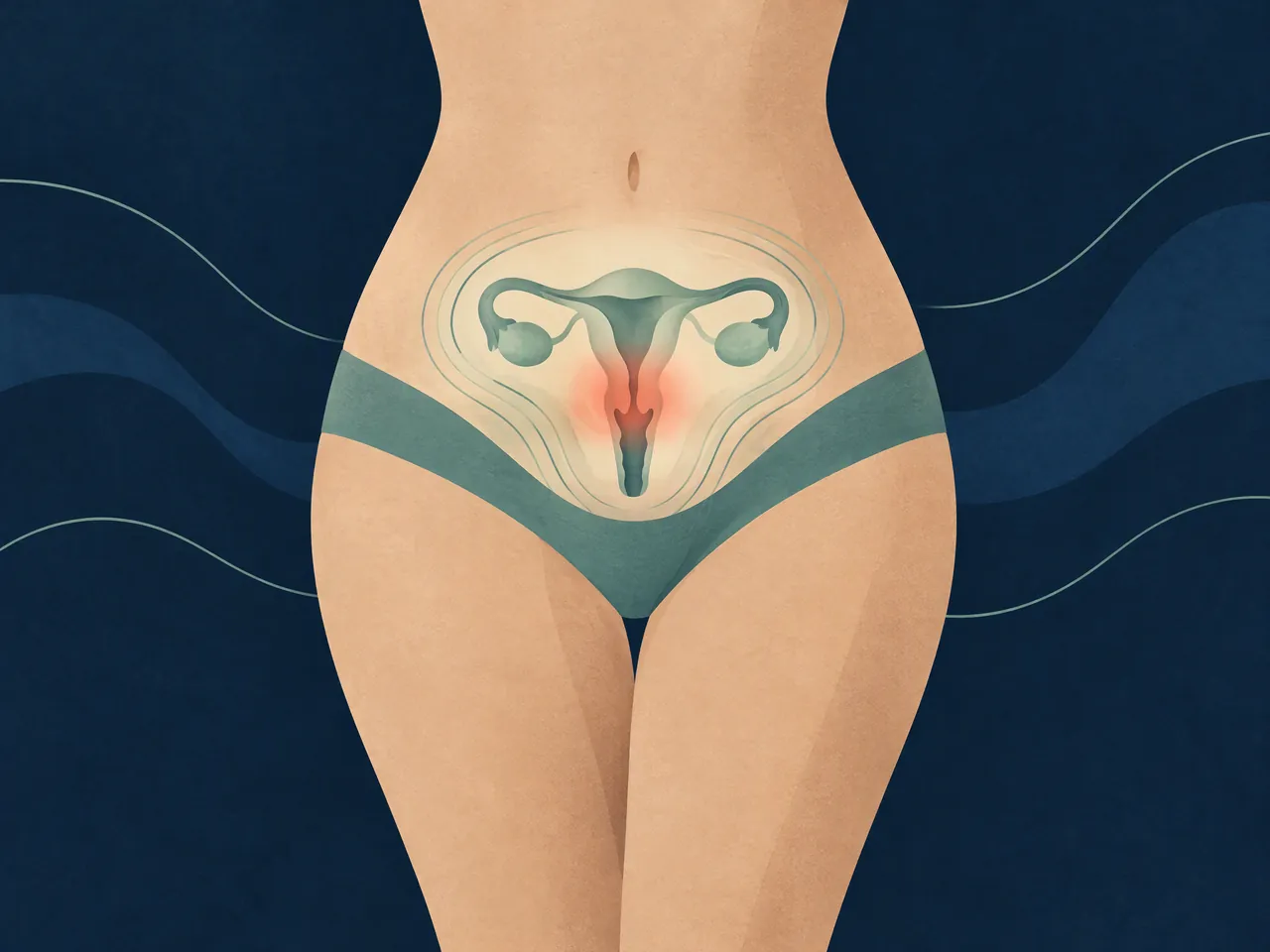
The short answer
Arrange sciatica medical attention when pain is worsening, persists for several weeks without improving, returns repeatedly, or prevents normal walking, sleep, work or self-care. A sciatica MRI scan is not automatic: a clinician first considers your symptom pattern and nerve examination, then whether imaging would change management. Seek emergency care now for new bladder or bowel control changes, numbness around the genitals or anus, or severe or worsening weakness or numbness in both legs.[1] [2]
Transparent pricing
See the fees.
Choose your care.
Explore our complete official price list, including first-trial prices, regular prices, packages and branch-specific options.
Opening WhatsApp prepares an enquiry; it does not send a message, take payment or confirm an appointment. Suitability and individual arrangements are confirmed during consultation.
Pain care
All prices in HKDExtracorporeal shockwave treatment
Shockwave treatment for deep-tissue and fascial care. The Kwun Tong clinic offers the multi-area options shown below.
Priced by branch
Branch-specific pricing
Prince Edward: HK$250 per area
Kwun Tong: HK$250 for 1 area / HK$450 for 2 areas / HK$600 for 3 areas
Pain care (manual therapy)
Includes Chinese medicine musculoskeletal assessment, manual joint techniques and tui na.
HK$580 (single session)
Chinese medicine musculoskeletal assessment
Pain care (acupuncture and manual therapy)
Combines acupuncture and manual therapy.
HK$680 (single session)
Combined care
Hair and scalp
All prices in HKDScalp health and hair-loss management
Includes AI scalp analysis, deep scalp and follicle cleansing, and scalp oil-control care.
HK$380 (first trial)
Regular price: HK$680
- 6 sessions: HK$3,480 (HK$580 per session)
- 12 sessions: HK$5,760 (HK$480 per session)
- 20 sessions: HK$8,600 (HK$430 per session)
- 30 sessions: HK$11,400 (HK$380 per session)
Hair acupuncture and Chinese herbal medicine package
Includes scalp acupuncture and 3 days of Chinese herbal medicine that does not require decoction.
HK$580 (single session)
Registered Chinese Medicine Practitioner consultation
- 6 sessions: HK$3,180 (HK$530 per session)
- 12 sessions: HK$5,760 (HK$480 per session)
- 20 sessions: HK$8,600 (HK$430 per session)
- 30 sessions: HK$11,400 (HK$380 per session)
Combined hair and scalp treatment
Combines acupuncture and Chinese herbal medicine with salon-level scalp and follicle care. Packages include complimentary hair-care shampoo and serum.
HK$1,260 (single session)
Combined treatment
- 8 sessions: HK$8,640 (HK$1,080 per session)
- 16 sessions: HK$15,680 (HK$980 per session)
- 20 sessions: HK$18,600 (HK$930 per session)
- 30 sessions: HK$26,400 (HK$880 per session)
Weight management
All prices in HKDFull-body acupoint embedding for weight management
Includes full-body acupoint embedding. Packages include complimentary Chinese herbal medicine for weight management, with the number of included days scaled to the package. Embedding material and the individual treatment arrangement are confirmed during consultation; this is not a cosmetic thread lift.
HK$980 (single session)
No trial session
- 10 sessions: HK$7,800 (HK$780 per session)
- 20 sessions: HK$14,600 (HK$730 per session)
- 30 sessions: HK$20,400 (HK$680 per session)
Facial acupuncture
All prices in HKDFacial acupuncture (basic)
Includes facial acupuncture and meridian-based facial care, including care for facial puffiness.
HK$480 (first trial)
Regular price: HK$680
- 10 sessions: HK$5,200 (HK$520 per session)
- 20 sessions: HK$9,600 (HK$480 per session)
- 30 sessions: HK$13,500 (HK$450 per session)
Facial acupuncture (advanced)
Includes enhanced facial acupuncture with a specially formulated moisturising mask and serum.
HK$780 (first trial)
Regular price: HK$1,180
- 10 sessions: HK$9,000 (HK$900 per session)
- 20 sessions: HK$16,600 (HK$830 per session)
- 30 sessions: HK$23,400 (HK$780 per session)
Chinese medicine
All prices in HKDAcupuncture and Chinese herbal medicine package
Includes a Chinese medicine consultation with pulse assessment, body acupuncture and 3 days of Chinese herbal granules that do not require decoction.
HK$580 (single session)
Chinese medicine consultation with pulse assessment
Sciatica MRI Scan, Sciatica Medical Attention and Sciatica Pain Not Improving: Observe or Arrange an Assessment
Sciatica is a description of a nerve-related pain pattern, not a scan result. It often runs from the lower back or buttock down the back of one leg and may reach the calf, foot or toes. People may describe burning, electric-shock pain, pins and needles, numbness or weakness. Back pain can occur too, yet back pain on its own is not the usual sciatica pattern.[1] This distinction matters when choosing what to do next: a local ache after an awkward lift, a radiating leg symptom, and a sudden loss of leg function should not all be handled in the same way.
For a mild, recent episode with no red flags, a short period of sensible observation can be reasonable. Notice the direction of travel rather than judging the day by a single painful movement. Is the pain easing overall? Can you stand, walk between rooms, sit for a short task and sleep in some position? Are tingling and numbness stable rather than spreading? Write down what changed after a commute, lifting, coughing, sitting or gentle movement. A clear record gives a clinician more useful information than trying to name the cause yourself.
Arrange a non-urgent assessment when sciatica pain is not improving after a few weeks of home care, when it is intensifying, or when it interferes with ordinary activities. “Not improving” can look like cancelling work because the walk from the station is difficult, waking repeatedly because no position is comfortable, avoiding a shower through fear of bending, or relying on a new way of moving because the leg feels unreliable. Recurrent episodes also merit a review, especially when the pattern is changing. The NHS similarly advises assessment for pain that has not improved after a few weeks, is worsening, or stops normal activities.[1]

Sciatica MRI Scan, Sciatica Medical Attention and Sciatica Pain Not Improving: Signs That Merit a Clinic Visit
A clinic visit is a chance to sort urgency from persistence. Bring a brief timeline: when the pain began; where it starts and ends; whether it is one-sided or both-sided; what numbness or weakness you notice; and whether coughing, sneezing, sitting, walking or changing position alters it. Mention a fall, traffic collision, fever, unexplained illness, cancer history, recent infection or a major new symptom. These details help a clinician consider whether the presentation is typical sciatica or whether another cause needs attention.[2]
Do not wait for pain to become unbearable before arranging help. Function is useful clinical information even when the pain score is hard to describe. Being unable to manage stairs in the usual way, a foot catching unexpectedly, or symptoms that now reach farther down the leg are practical reasons to report a change. If you are unsure how your symptoms fit into a broader decision, read when to see a doctor for sciatica. That guidance complements, but does not replace, a personal assessment when symptoms are progressing.
Sciatica MRI Scan, Sciatica Medical Attention and Sciatica Pain Not Improving: Why Symptoms and Function Matter
Pain intensity alone does not decide whether a scan is useful. Two people can use the same number for pain but have very different nerve symptoms and abilities. A clinician is interested in the distribution of pain, altered sensation, muscle control, walking, balance and reflexes, as well as the pace of change. Hong Kong Adventist Hospital describes medical history and examination as part of diagnosis, with MRI able to show structural issues in and around the lower back.[3] The examination helps connect a scan finding, if one is obtained, with the problem you actually have.
It can help to separate discomfort from danger. A sharp leg pain that is stable but annoying may call for a planned review if it lingers. New weakness, altered sensation in a sensitive area, or a change in toileting calls for faster action even if the back itself is not especially painful. This is why a gradual “wait and see” plan needs boundaries. Decide in advance what change would end observation: pain that keeps escalating, loss of usual walking confidence, symptoms spreading to both legs, or any problem emptying or controlling the bladder or bowel.
Compare your options
| What you notice | Appropriate next step | What to record or mention |
|---|---|---|
| Mild one-sided radiating pain that is stable and no red flags | Observe for a short period while keeping tolerable daily movement; arrange review if it does not begin to settle. | Pain route, triggers, sleep and whether walking or sitting is becoming easier. |
| Pain has not improved after a few weeks, is worsening, recurrent, or disrupts work, sleep or normal tasks | Arrange non-urgent sciatica medical attention. | Timeline, any numbness or weakness, activity limits, injury and treatments already tried. |
| Question about a sciatica MRI scan without emergency symptoms | Discuss examination findings and whether an image would change management; it is not automatically routine.[2] | Why the scan is being considered, how results could affect the plan, and the review plan if imaging is deferred. |
| Both legs affected, severe or worsening bilateral weakness or numbness, saddle-area sensation change, or new bladder/bowel change | Seek emergency medical care now; do not wait for a routine appointment.[1] | Exact onset and progression, urinary or bowel changes, and current medicines—without delaying departure. |
On smaller screens, scroll the table sideways to compare all columns.
Sciatica MRI Scan, Sciatica Medical Attention and Sciatica Pain Not Improving: Recognise Urgent Red Flags
Some symptoms need emergency assessment rather than a routine appointment, a massage, an exercise video or an internet search. The most important cluster involves possible compression of the nerves at the bottom of the spine. The NHS advises immediate emergency help for sciatica on both sides; severe or worsening weakness or numbness in both legs; numbness around or under the genitals or around the anus; and new difficulty starting urination, inability to urinate, or loss of bladder or bowel control.[1] These features are uncommon, but the consequence of delaying care can be serious.
Act on the symptom, not on a self-diagnosis. You do not need to prove that you have cauda equina syndrome before seeking urgent help. If a new bladder or bowel change, saddle-area altered sensation, or rapidly progressing bilateral weakness occurs, go to an emergency department or use local emergency services. Do not drive yourself if your leg function is unreliable. Tell the receiving team when the symptom began and whether it is getting worse. For a fuller explanation of the warning pattern, see cauda equina syndrome symptoms.
Urgent care is also sensible after a significant injury with severe back or leg symptoms, or when a person feels suddenly much weaker or numb in a leg. Mayo Clinic similarly identifies sudden numbness or muscle weakness in a leg and trouble controlling the bowels or bladder as reasons for immediate medical care.[4] In a true emergency, the priority is assessment by emergency clinicians; it is not the time to decide whether a complementary treatment, self-selected stretch or future sciatica MRI scan might help.

Sciatica MRI Scan, Sciatica Medical Attention and Sciatica Pain Not Improving: Emergency Nerve Symptoms
“Saddle area” means the skin around the genitals, buttocks and anus—the area that would contact a saddle. New numbness, tingling or reduced feeling there is different from the familiar ache in a buttock or thigh. Bladder changes may include difficulty starting to pass urine, being unable to pass urine, losing control, or not sensing the normal need to go. Bowel changes can include new loss of control or not noticing the need to open the bowels.[1] Treat a new change as time-sensitive, particularly when it occurs with leg symptoms.
Progressive weakness means a clear deterioration, not simply deciding to move cautiously because pain makes you apprehensive. Examples may include the leg repeatedly giving way, new difficulty lifting the foot or toes, or a noticeable worsening in the ability to rise or walk. Whether one or both legs are involved, a rapid change needs prompt medical assessment. Do not repeatedly test the leg to exhaustion, and do not use heat, cold or stretching as a way to “push through” a neurological change. Protect yourself from falls while arranging help.
Sciatica MRI Scan, Sciatica Medical Attention and Sciatica Pain Not Improving: When Not to Wait at Home
Home management has a place only when symptoms are mild or stable and there are no emergency signs. It is not a test of determination. If pain is becoming severe, a leg feels abruptly different, or you are no longer safe to walk to the bathroom, seek medical attention. Call for help from someone nearby if necessary. Take any current medicines with you or photograph the labels. This small preparation can help the assessment team understand what you have already tried without delaying the decision to leave home.
Sciatica MRI Scan, Sciatica Medical Attention and Sciatica Pain Not Improving: Assessment and Conservative Care
At a non-emergency assessment, expect questions before conclusions. A clinician may ask about the first episode, previous back trouble, symptoms below the knee, sleep, work demands, injury and other health history. They may observe how you walk and check leg strength, sensation and reflexes. This is not merely a formality: the pattern can suggest which nerve root may be involved and whether the pace of change needs more investigation. You can explore what this process commonly covers in sciatica diagnosis and examination.

A sciatica MRI scan produces detailed images, but it is a tool rather than a universal starting point. NICE advises against routine imaging in a non-specialist setting and says imaging in specialist care should be considered only when the result is likely to change management.[2] In other words, the question is not “Can an MRI show something?” but “Would knowing this now alter the next clinical decision?” A clinician may consider imaging for persistent, severe, atypical or concerning symptoms, or when planning specialist care. The appropriate timing is individual.

Conservative care should be active and adjustable, not an instruction to ignore pain. NICE recommends advice tailored to a person’s needs and capabilities and encouragement to continue normal activities.[2] The NHS similarly advises carrying on with normal activities as much as possible and avoiding long periods of sitting or lying down.[1] That can mean breaking a long desk session with a short, comfortable walk, changing position before pain builds, or splitting an errand into manageable parts. Stop a movement that clearly worsens symptoms and ask for individual advice rather than forcing a generic exercise routine.

Sciatica MRI Scan, Sciatica Medical Attention and Sciatica Pain Not Improving: What an Assessment May Include
Prepare three kinds of information: the symptom map, the timeline and the functional impact. On a simple note, mark whether pain runs from the back or buttock to the thigh, calf, foot or toes; list numbness or tingling separately; and record which activities have changed. Also note symptoms that occur on coughing or sneezing, medication or home measures tried, and whether anything helps briefly. Avoid assuming that every image finding explains every symptom. The clinician weighs the history, examination and, when appropriate, imaging together.

Sciatica MRI Scan, Sciatica Medical Attention and Sciatica Pain Not Improving: Staying Active Safely
Staying active does not mean training through severe pain. Choose movements you can do with control, such as brief walks on a level route or normal household tasks broken into short intervals. Avoid remaining in one position for a prolonged time if that reliably aggravates you. A long flight, a Hong Kong taxi ride or a desk shift may call for planned position changes rather than one perfect posture. For lifting, slow down, keep the item close and get help with awkward loads. If an activity brings new radiating pain, spreading numbness or weakness, stop and seek advice.
Heat or cold may feel soothing for some people, but neither is a test of the underlying cause. Use a barrier to protect the skin, use the option that feels comfortable, and stop if symptoms or skin irritation worsen. Stretching deserves the same caution: a movement that feels gentle for one person may aggravate another person’s leg symptoms. There is no need to prescribe yourself an intensive routine from a video. As part of a broader care plan, a Registered Chinese Medicine Practitioner may discuss supportive options after face-to-face assessment; this does not replace emergency or medical evaluation for red flags, progressive weakness, or an imaging decision.
Care and health guide
Sciatica: care information
This directory brings together services, reading, and visit information related to sciatica, to help you prepare questions for a consultation.
When sciatica affects your day, noting when it occurs, its relation to activity, and what you have already tried can help prepare a consultation; acupuncture for sciatica is a relevant service or reading entry point.
Individual circumstances differ, and acupuncture Hong Kong offers related information to help you understand options and prepare questions.


Your questions, answered
Frequently asked questions
When should I seek sciatica medical attention?
Arrange an assessment if pain is not improving after a few weeks, is getting worse, keeps returning, or is limiting normal activities such as walking, work or sleep. Go for emergency assessment immediately for bilateral symptoms with severe or worsening weakness or numbness, saddle-area numbness, or new bladder or bowel control changes.[1]
Does sciatica always require an MRI scan?
No. Assessment usually begins with your history and a physical examination, including function and nerve signs. NICE advises against routine imaging in non-specialist settings; in specialist care, imaging is considered when the result is likely to change management.[2]
What can I do if sciatica pain is not improving?
Arrange a clinical review rather than extending self-care indefinitely. Before the visit, note the pain route, duration, numbness, weakness, changes in walking or sleep, and what worsens or eases symptoms. Keep to tolerable normal activity and avoid prolonged bed rest, but stop any activity that clearly brings new or worsening neurological symptoms.[1]
Is lower back pain without leg pain the same as sciatica?
Not usually. Sciatica typically affects the buttock and the back of one leg and may include tingling, numbness or weakness. Back pain alone has many possible causes and needs its own assessment if it is persistent, severe or accompanied by concerning symptoms.[1]
Sources and further information
- [1] [1] NHS — Sciatica
Referenced for: Symptoms, self-care activity advice, non-urgent review triggers and emergency red flags.
- [2] [2] NICE NG59 — Low back pain and sciatica in over 16s: assessment and management
Referenced for: Imaging should not be routinely offered in non-specialist settings; specialist imaging when it is likely to change management; activity and self-management context.
- [3] [3] Hong Kong Adventist Hospital — Sciatica
Referenced for: Hong Kong clinical terminology, medical history and examination, and MRI structural context.
- [4] [4] Mayo Clinic — Sciatica: Symptoms and causes
Referenced for: Urgent medical-attention context for sudden weakness, numbness, and bowel or bladder changes.