
TCM Lab · Health reading
Elbow Pain Treatment Hong Kong: Understanding Elbow Pain From Repetitive Strain
Published Updated
Elbow pain after days of lifting parcels, long mouse use, racquet sport or repeated kitchen work is easy to call ‘repetitive strain’. Map where the pain sits, which movement changes it, how the arm functions, and whether numbness, swelling, injury or pain travelling from the neck is involved. This guide helps you prepare for an elbow pain treatment Hong Kong discussion without assuming that every sore outer elbow is tennis elbow.
Appointments are confirmed through WhatsApp. If you have language requirements, please mention them in your enquiry.
The short answer
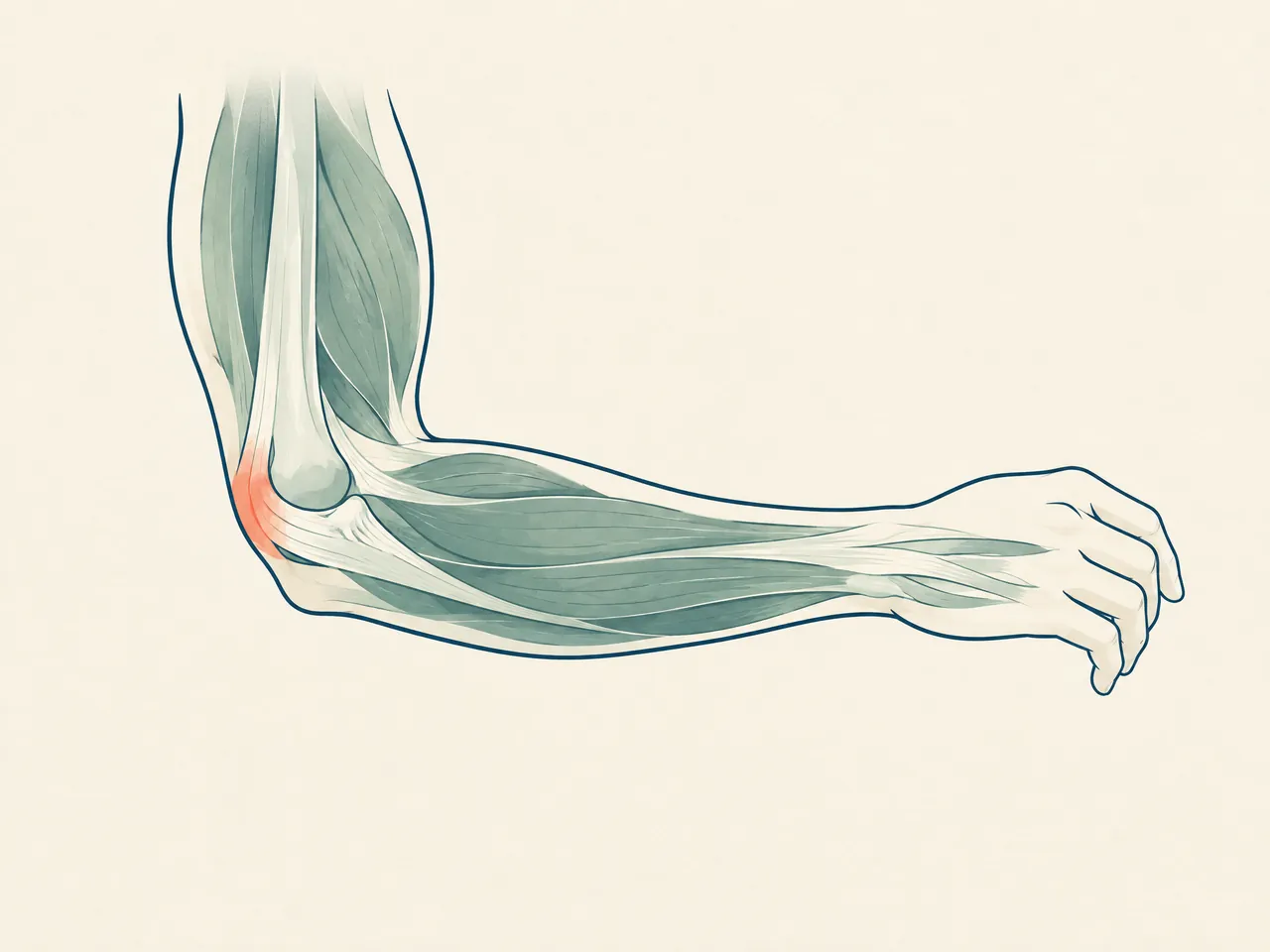
Elbow pain from repetitive strain can be linked with repeated gripping, twisting, lifting or wrist movement, but pain location alone cannot confirm its cause. For elbow pain treatment Hong Kong, start by recording the provoking task, range of movement, grip change and any tingling, swelling or injury. Reduce clearly aggravating load rather than forcing painful stretches. Severe trauma, deformity, persistent numbness, a hot swollen elbow with fever, or chest pressure with arm pain need medical assessment first.
Transparent pricing
See the fees.
Choose your care.
Explore our complete official price list, including first-trial prices, regular prices, packages and branch-specific options.
Opening WhatsApp prepares an enquiry; it does not send a message, take payment or confirm an appointment. Suitability and individual arrangements are confirmed during consultation.
Pain care
All prices in HKDExtracorporeal shockwave treatment
Shockwave treatment for deep-tissue and fascial care. The Kwun Tong clinic offers the multi-area options shown below.
Priced by branch
Branch-specific pricing
Prince Edward: HK$250 per area
Kwun Tong: HK$250 for 1 area / HK$450 for 2 areas / HK$600 for 3 areas
Pain care (manual therapy)
Includes Chinese medicine musculoskeletal assessment, manual joint techniques and tui na.
HK$580 (single session)
Chinese medicine musculoskeletal assessment
Pain care (acupuncture and manual therapy)
Combines acupuncture and manual therapy.
HK$680 (single session)
Combined care
Hair and scalp
All prices in HKDScalp health and hair-loss management
Includes AI scalp analysis, deep scalp and follicle cleansing, and scalp oil-control care.
HK$380 (first trial)
Regular price: HK$680
- 6 sessions: HK$3,480 (HK$580 per session)
- 12 sessions: HK$5,760 (HK$480 per session)
- 20 sessions: HK$8,600 (HK$430 per session)
- 30 sessions: HK$11,400 (HK$380 per session)
Hair acupuncture and Chinese herbal medicine package
Includes scalp acupuncture and 3 days of Chinese herbal medicine that does not require decoction.
HK$580 (single session)
Registered Chinese Medicine Practitioner consultation
- 6 sessions: HK$3,180 (HK$530 per session)
- 12 sessions: HK$5,760 (HK$480 per session)
- 20 sessions: HK$8,600 (HK$430 per session)
- 30 sessions: HK$11,400 (HK$380 per session)
Combined hair and scalp treatment
Combines acupuncture and Chinese herbal medicine with salon-level scalp and follicle care. Packages include complimentary hair-care shampoo and serum.
HK$1,260 (single session)
Combined treatment
- 8 sessions: HK$8,640 (HK$1,080 per session)
- 16 sessions: HK$15,680 (HK$980 per session)
- 20 sessions: HK$18,600 (HK$930 per session)
- 30 sessions: HK$26,400 (HK$880 per session)
Weight management
All prices in HKDFull-body acupoint embedding for weight management
Includes full-body acupoint embedding. Packages include complimentary Chinese herbal medicine for weight management, with the number of included days scaled to the package. Embedding material and the individual treatment arrangement are confirmed during consultation; this is not a cosmetic thread lift.
HK$980 (single session)
No trial session
- 10 sessions: HK$7,800 (HK$780 per session)
- 20 sessions: HK$14,600 (HK$730 per session)
- 30 sessions: HK$20,400 (HK$680 per session)
Facial acupuncture
All prices in HKDFacial acupuncture (basic)
Includes facial acupuncture and meridian-based facial care, including care for facial puffiness.
HK$480 (first trial)
Regular price: HK$680
- 10 sessions: HK$5,200 (HK$520 per session)
- 20 sessions: HK$9,600 (HK$480 per session)
- 30 sessions: HK$13,500 (HK$450 per session)
Facial acupuncture (advanced)
Includes enhanced facial acupuncture with a specially formulated moisturising mask and serum.
HK$780 (first trial)
Regular price: HK$1,180
- 10 sessions: HK$9,000 (HK$900 per session)
- 20 sessions: HK$16,600 (HK$830 per session)
- 30 sessions: HK$23,400 (HK$780 per session)
Chinese medicine
All prices in HKDAcupuncture and Chinese herbal medicine package
Includes a Chinese medicine consultation with pulse assessment, body acupuncture and 3 days of Chinese herbal granules that do not require decoction.
HK$580 (single session)
Chinese medicine consultation with pulse assessment
Elbow Pain Treatment Hong Kong: Map the Pain Before Choosing Care — elbow pain from repetitive strain — elbow pain treatment Hong Kong — elbow pain from repetitive strain
Before deciding what may help, make a simple map rather than searching for one label. Is the most sensitive point outside the elbow, inside it, in the crease at the front, or over the point at the back? Does it feel local, or does discomfort spread into the forearm, hand, upper arm, neck or shoulder? A useful elbow pain record also separates an ache after a busy task from pain at rest, night pain, a new loss of movement, or a symptom that began with a fall. [2]
Then list the work, home and sport actions that load the arm. A barista may notice a turn-and-lift movement; an office worker may notice a mouse grip held for hours; a parent may notice carrying a child with the forearm turned up. Repetition matters, but force, wrist position, recovery time and a sudden increase in activity can matter too. Note what you changed shortly before the pain began, what makes it settle, and whether a lighter version of the task is comfortable. The goal is to identify a manageable dose of activity, not to prove that one job or hobby caused the problem.
Elbow Pain Treatment Hong Kong: What the Pain Location May Suggest — elbow pain from repetitive strain — elbow pain treatment Hong Kong — elbow pain from repetitive strain
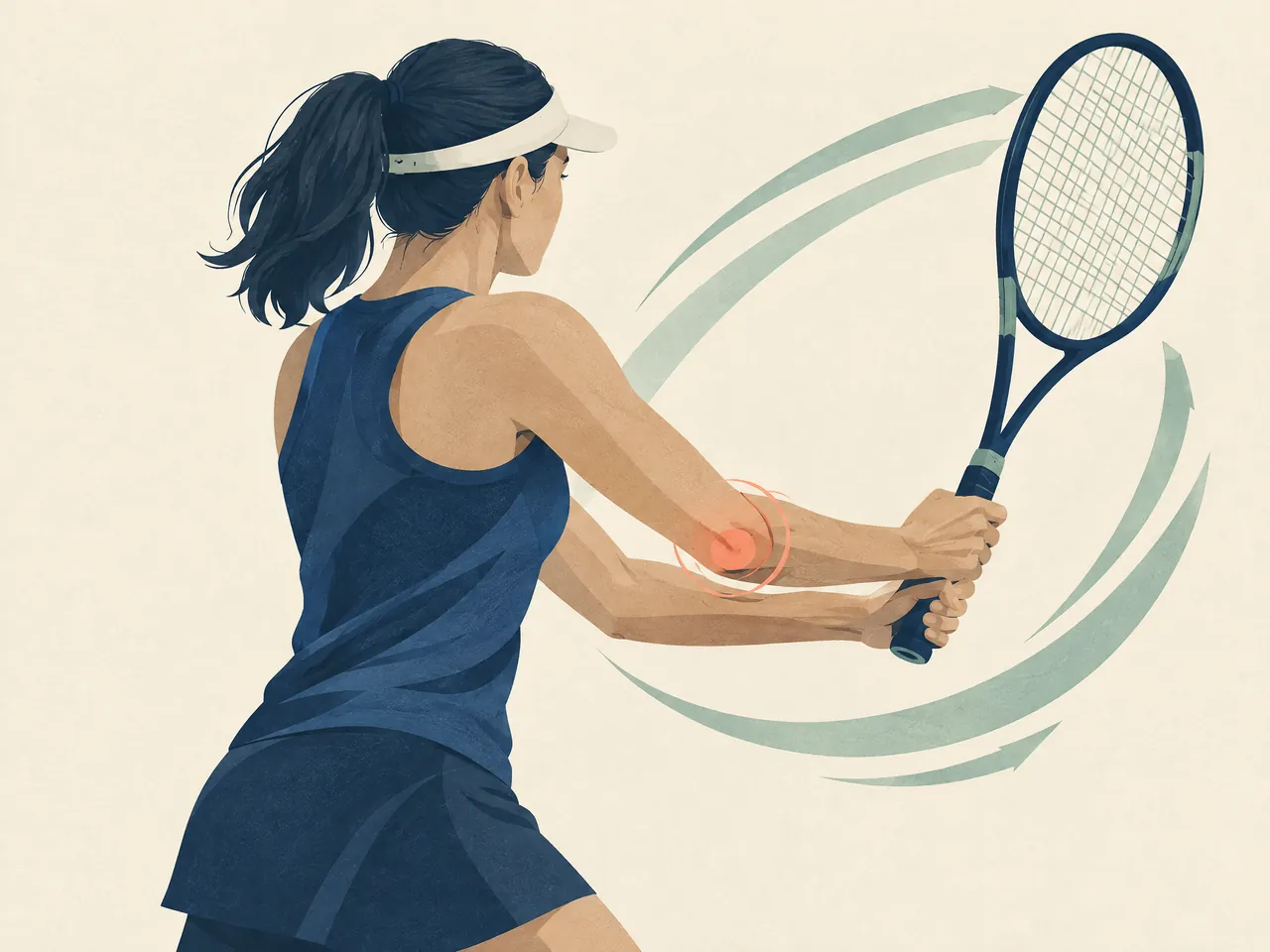
Outer-elbow pain that is provoked by gripping or using the wrist can fit the pattern often called lateral epicondylitis or tennis elbow. Yet the name is not a verdict, and playing tennis is not required. Inner-elbow discomfort during gripping can fit a medial tendon pattern, sometimes called golfer’s elbow. Front-of-elbow tenderness can involve structures around the biceps tendon, while pain or swelling at the point of the elbow raises different questions about the bursa, triceps area, a knock or prolonged pressure. Tendons, bursae, bones and nerves can all contribute to elbow symptoms. [2]
Location is a clue, not a home test. A sore spot outside the joint does not rule out a joint problem, a ligament injury or a nerve-related symptom. Clicking, catching or locking, for example, deserves a different conversation from a mild ache that appears only at the end of a long day. Compare both arms: observe swelling, bruising, redness, change in shape and whether full bend, straightening, palm-up and palm-down rotation remain possible. If the onset followed a clear injury, do not treat the location map as permission to self-manage indefinitely.
Elbow Pain Treatment Hong Kong: How Movement and Grip Can Change Symptoms — elbow pain from repetitive strain — elbow pain treatment Hong Kong — elbow pain from repetitive strain
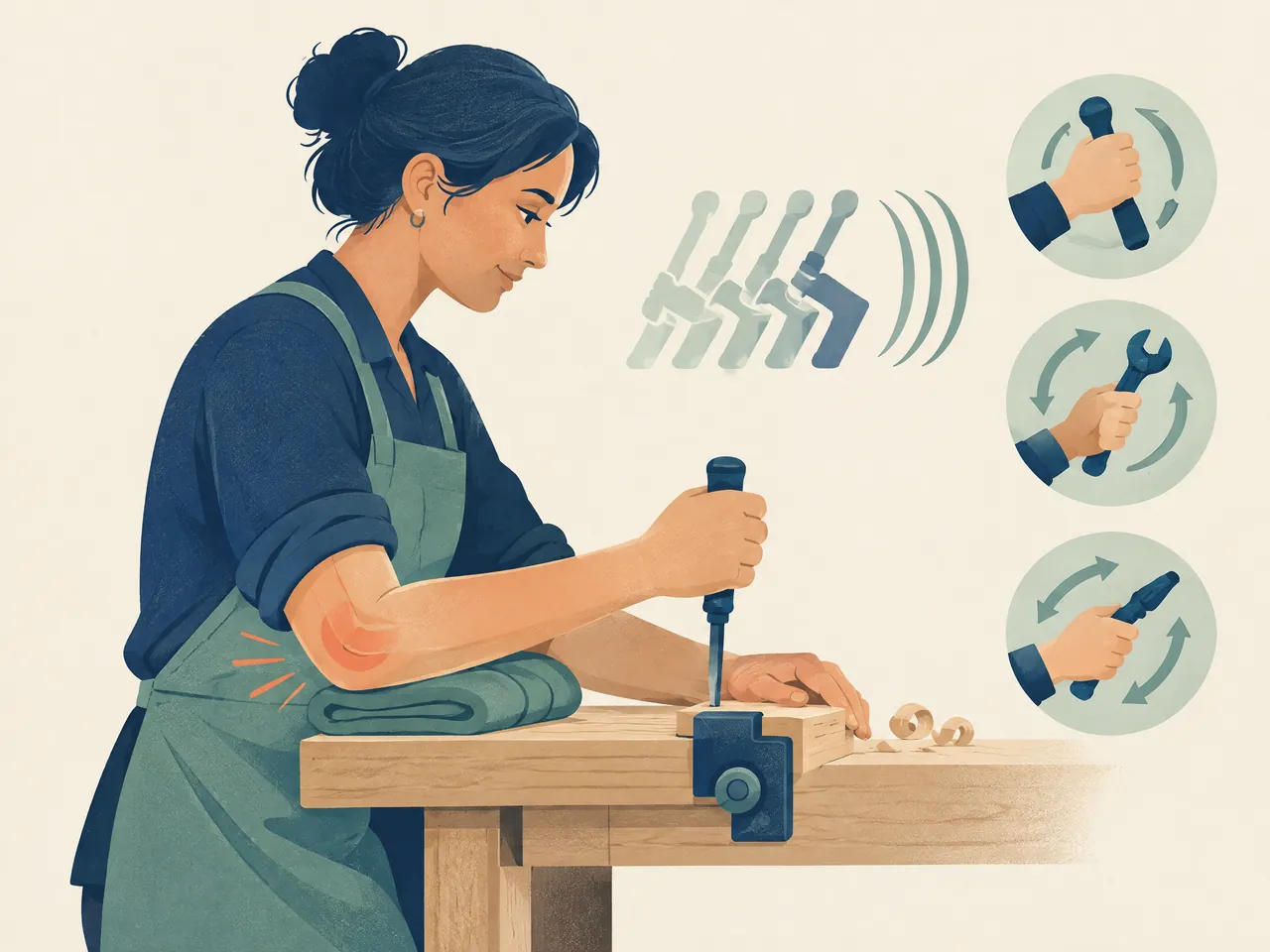
Use ordinary movements as information, not as a challenge to push through. Try to recall whether pain arrives when you squeeze a bottle, lift a pan, turn a jar, type, use a screwdriver, push open a heavy door or hold a phone. Mention whether the wrist is bent, the elbow is straight or the palm faces up or down. A single task can combine grip, wrist motion and shoulder position, so ‘it hurts when I lift’ is useful but incomplete. The more precise version—such as ‘lifting a kettle with the palm down hurts at the outer elbow’—can guide a focused examination.
Grip strength also needs context. A hand may feel weak because pain makes you avoid squeezing, because the forearm is tired, or because a nerve-related problem is affecting sensation or control. Numbness, pins and needles, clumsiness or symptoms running toward the ring and little fingers are not details to ignore. The primary-care review advises assessing neurological symptoms and examining the neck and shoulder when referred pain or nerve-root involvement is possible. [2] If symptoms appear during desk work, note your elbow angle, neck posture and time held.
Compare your options
| What you notice | What to record | Why it changes the next step |
|---|---|---|
| Pain mainly on the outer elbow when gripping or using the wrist | Which grip, wrist direction, load and duration bring it on | May help distinguish a load-related lateral pattern from other causes; location alone is not diagnostic |
| Inner elbow discomfort during pulling, gripping or twisting | Whether tingling travels into the hand and which fingers are involved | Helps decide whether tendon load, nerve symptoms or another pathway should be assessed |
| Stiffness, clicking, catching or locking | Which direction is limited and whether it followed injury or is getting worse | A movement restriction or mechanical symptom needs more than a generic stretching plan |
| Redness, warmth, marked swelling, fever, deformity or severe injury pain | When it started, any injury, temperature symptoms and ability to move the arm | These features need prompt medical triage rather than routine self-management |
On smaller screens, scroll the table sideways to compare all columns.
Elbow Pain From Repetitive Strain: Common Patterns and Other Possibilities — elbow pain from repetitive strain — elbow pain treatment Hong Kong — elbow pain from repetitive strain
The phrase elbow pain from repetitive strain describes a history, not a single tissue diagnosis. Repeated gripping, lifting, twisting, keyboard work or sport can irritate a load-sensitive area, particularly after volume, pace or equipment changes. But similar symptoms can arise after a direct knock, from joint stiffness, a bursa, arthritis, a ligament issue, a nerve, or pain referred from elsewhere. For a broader overview of the questions that distinguish these patterns, see elbow pain causes. The point is not to worry about every possibility; it is to avoid a one-size-fits-all plan before the pattern is clear.
Timing gives another useful clue. Symptoms that build during a task and calm when load is reduced can be discussed differently from sudden pain with a snap, or an elbow that remains stiff and swollen. A pain diary can be brief: activity, symptom location, intensity in everyday words, and what happened later that day or the next morning. Also record practical effects—whether you can pour a kettle, carry shopping, open a door, sleep comfortably or work safely. Functional change helps determine how urgent and how comprehensive an assessment needs to be. It is more useful than repeatedly pressing the tender point to see whether it still hurts.
Elbow Pain From Repetitive Strain: Why Tennis Elbow Is Not the Only Explanation — elbow pain from repetitive strain — elbow pain treatment Hong Kong — elbow pain from repetitive strain
‘Tennis elbow’ is common shorthand for lateral elbow pain, but it can narrow the conversation too quickly. Not everyone with outer pain has the same driver, and not everyone with a tendon-related pattern has the same tolerance for gripping, wrist work or racquet use. Inner pain, front pain and back-of-elbow swelling call for different observations. Stiffness that blocks full movement, painful locking or catching, a rapidly enlarging lump, or a very tender swollen joint are not routine stretching problems. The clinical review lists trauma-related swelling or dislocation, a tender swollen joint and a rapidly increasing mass among features that require urgent referral. [2]
Labels also influence behaviour. If you assume every outer-elbow ache is tennis elbow, you may keep testing painful wrist exercises, buy a device that does not suit the problem, or overlook symptoms above and below the joint. Instead, use a working description: outer elbow pain after repeated gripping, inner elbow pain with pulling, or posterior elbow pain after leaning on the point. That description leaves room for a clinician to examine movement, tenderness, nerve symptoms, neck and shoulder contribution, and the effect of load. It also makes a follow-up conversation more precise if the initial plan is not helping.
Elbow Pain From Repetitive Strain: When Neck, Shoulder or Nerve Symptoms Matter — elbow pain from repetitive strain — elbow pain treatment Hong Kong — elbow pain from repetitive strain
An elbow can be the place you feel pain without being the only place that needs attention. Referred pain from the neck or shoulder may present at the elbow, and a clinician may compare the two arms while looking at neck movement, shoulder weakness and sensation. [2] This is especially relevant when elbow discomfort accompanies neck pain, shoulder stiffness, pain travelling down the arm, altered hand sensation or symptoms that change with head position. Such signs do not automatically identify a cause, but they make an elbow-only explanation less certain.
Nerve symptoms deserve plain, specific reporting. Say where tingling travels, whether it is intermittent or constant, whether it wakes you, and whether buttons, chopsticks, a keyboard or a cup feel less secure. Avoid repeatedly leaning on a sensitive elbow or holding a deeply bent elbow for long periods if those positions reliably reproduce symptoms, while arranging assessment if symptoms persist. Persistent numbness is one of the NHS reasons for urgent assessment; severe pain with difficulty moving, or an injury with a snapping sound or change in arm shape, also need urgent care rather than a routine treatment choice. [1]
Elbow Pain Treatment Hong Kong for Elbow Pain From Repetitive Strain: Safer Next Steps — elbow pain from repetitive strain — elbow pain treatment Hong Kong — elbow pain from repetitive strain
For a mild, non-traumatic pattern without warning signs, begin by changing the activity that most consistently provokes it. This may mean breaking up a repetitive task, using two hands for a heavy pan, reducing force on a mouse or tool, changing the angle of a carry, or temporarily avoiding the particular grip that flares the elbow. This is relative rest, not total arm avoidance. Keep comfortable movement in daily life and watch the response over the following day. If a reduced version is tolerated, that gives a more useful starting point for gradual rebuilding than complete inactivity followed by a sudden return to the same workload. [2]

Choose care according to the unanswered question. A medical assessment is important when injury, infection, significant movement loss, persistent sensory change or another diagnosis is possible. For a straightforward load-related pattern, rehabilitation and activity modification may be part of the conversation. If you are considering traditional Chinese medicine, a TCM consultation can discuss your symptom history and whether acupuncture is an appropriate supportive option after assessment. Research on acupuncture has focused mainly on lateral epicondylitis; a systematic review reported methodological limitations, small studies, differing protocols and limited long-term follow-up. It cannot promise a fixed course, lasting result, or a solution for every elbow condition. [3]

Elbow Pain Treatment Hong Kong: Managing Load Before Stretching or Acupuncture — elbow pain from repetitive strain — elbow pain treatment Hong Kong — elbow pain from repetitive strain
Stretching is not a test of determination. Start only with a range that does not create sharp pain, tingling or a clear worsening that lingers. Stretching may be considered later alongside a progressive strengthening plan when the movement pattern and irritability are understood, but it does not replace an assessment after injury or with neurological symptoms. Read elbow pain stretching and How should I stretch with elbow pain? for a safer way to think about range, symptoms and progression. A movement that leaves the arm more painful or less functional afterward is feedback to reduce or change it, not a sign that the stretch is working.
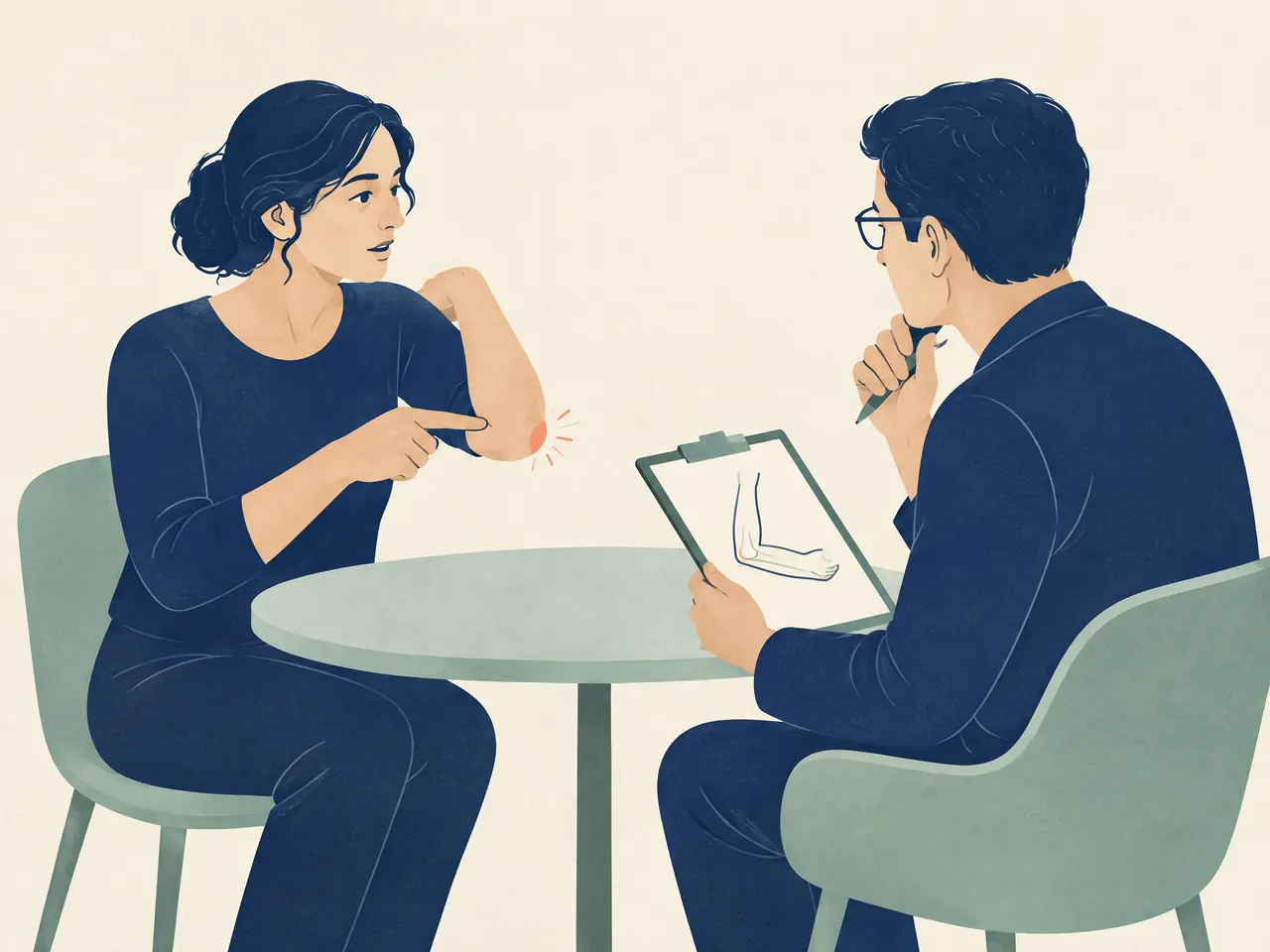
Prepare for an appointment with a short list: when the problem started; the exact location; task and grip triggers; prior injury; what you have changed; and swelling, warmth, locking, numbness or weakness. Bring information about work equipment, sport changes and treatments already tried if relevant. This allows a discussion of what can be examined and what needs referral, rather than assuming that hands-on treatment or acupuncture is automatically the first answer. If you want to enquire in person, Kwun Tong Chinese medicine clinic and Chinese medicine clinic Prince Edward information can help you choose the more convenient location; availability is arranged by appointment.

Elbow Pain From Repetitive Strain: Red Flags That Need Medical Attention — elbow pain from repetitive strain — elbow pain treatment Hong Kong — elbow pain from repetitive strain
Do not delay medical assessment for severe pain that makes the arm difficult to move, an injury followed by a snap or visible change in shape, or ongoing tingling or numbness. A red, hot, swollen elbow with fever, chills or feeling generally unwell may need urgent assessment because infection is among the conditions that must be considered. [1] These scenarios are not suitable for treating as ordinary repetitive strain. The same is true when a joint is dramatically swollen after trauma, when the elbow is dislocated or looks deformed, or when pain is escalating quickly rather than tracking with a familiar activity.
Call emergency services for sudden arm pain with pressure, heaviness or squeezing across the chest; breathlessness or sweating alongside chest symptoms also needs urgent emergency help rather than an elbow appointment. [1] For pain without emergency features that has not improved after a few weeks, or that is interfering with work, sleep or ordinary tasks, arrange an appropriate clinical assessment instead of cycling through self-tests. Clear triage protects time and function: it keeps routine overload care focused on load and recovery, while directing trauma, neurological symptoms and systemic illness to the right setting first.
Care and health guide
Pain-care information
This directory brings together services, reading, and visit information related to pain care, to help you prepare questions for a consultation.
When pain care affects your day, noting when it occurs, its relation to activity, and what you have already tried can help prepare a consultation; Chinese medicine pain management Hong Kong is a relevant service or reading entry point.
Individual circumstances differ, and acupuncture Hong Kong offers related information to help you understand options and prepare questions.


Your questions, answered
Frequently asked questions
What should I note before seeking elbow pain treatment Hong Kong?
Note the exact pain location, whether it is local or travels, the actions that trigger it, the range you can bend and straighten, and any swelling, warmth, clicking, tingling or grip change. Include recent changes in work, gym training, sport or lifting. This creates useful assessment information but does not replace an examination.
Is elbow pain from repetitive strain always tennis elbow?
No. Tennis elbow is a name commonly used for a lateral elbow pattern, but pain around the elbow can involve tendons, bursae, joint structures, bone, ligaments, nerves, injury, or referred neck and shoulder symptoms. The same location can have more than one explanation, so an online test cannot confirm the diagnosis.
When should I stop stretching or strengthening my elbow?
Stop the movement if it produces sharp pain, tingling, numbness, a clear loss of grip, or a sustained increase in symptoms afterward. Do not stretch through an elbow that is acutely injured, visibly changed in shape, hot and swollen, or difficult to move. Seek appropriate assessment if those symptoms are present.
Can acupuncture be part of a plan for elbow pain from repetitive strain?
It may be discussed as a supportive option after assessment for an appropriate presentation, particularly because research has mainly studied lateral epicondylitis. The evidence base has limitations and does not justify promises about outcome, number of sessions or long-term effect. It is not the first response to suspected fracture, infection, severe trauma or persistent neurological symptoms.
Sources and further information
- [1] [1] NHS — Elbow and arm pain
Referenced for: Supports public triage language on persistent pain, urgent trauma or numbness, fever with swelling, and emergency chest-pressure symptoms with arm pain.
- [2] [2] British Journal of General Practice — Elbow pain: a guide to assessment and management in primary care
Referenced for: Supports discussion of elbow structures, pain history, gripping and movement patterns, neurological symptoms, neck or shoulder referral, and assessment-led load management.
- [3] [3] Systematic review — Effectiveness of Acupuncture for Lateral Epicondylitis
Referenced for: Supports a cautious description of acupuncture research for lateral epicondylitis and its limitations; it does not support guaranteed, fixed-course or universal treatment claims.