
TCM Lab · Health reading
Child Tui Na Massage, Pediatric Tui Na Massage and Paediatric Tui Na Massage for Parents
Published Updated
When parents search for child tui na massage, they are usually trying to make sense of a child-focused traditional Chinese medicine consultation before they contact a clinic. The terms pediatric tui na massage and paediatric tui na massage point to the same broad topic; the difference between pediatric and paediatric is chiefly American versus British spelling. What matters more than the label is a calm conversation about the child’s current concern, health history, comfort with touch, and whether a Tui Na discussion is appropriate at this time. This page helps families prepare useful questions and enquire about arrangements in Hong Kong without treating a web page as a diagnosis or a promise of a particular result.
Appointments are confirmed through WhatsApp. If you have language requirements, please mention them in your enquiry.

The short answer
Child tui na massage, pediatric tui na massage and paediatric tui na massage are common English names for child-focused Tui Na. “Pediatric” is the usual US spelling, while “paediatric” is common in Hong Kong and other British-English settings. They do not identify three separate treatments. Before arranging a visit, parents should share the child’s current concern and relevant health background, then ask how suitability, session structure and appointment availability will be discussed.
Transparent pricing
See the fees.
Choose your care.
Explore our complete official price list, including first-trial prices, regular prices, packages and branch-specific options.
Opening WhatsApp prepares an enquiry; it does not send a message, take payment or confirm an appointment. Suitability and individual arrangements are confirmed during consultation.
Chinese medicine
All prices in HKDAcupuncture and Chinese herbal medicine package
Includes a Chinese medicine consultation with pulse assessment, body acupuncture and 3 days of Chinese herbal granules that do not require decoction.
HK$580 (single session)
Chinese medicine consultation with pulse assessment
Hair and scalp
All prices in HKDScalp health and hair-loss management
Includes AI scalp analysis, deep scalp and follicle cleansing, and scalp oil-control care.
HK$380 (first trial)
Regular price: HK$680
- 6 sessions: HK$3,480 (HK$580 per session)
- 12 sessions: HK$5,760 (HK$480 per session)
- 20 sessions: HK$8,600 (HK$430 per session)
- 30 sessions: HK$11,400 (HK$380 per session)
Hair acupuncture and Chinese herbal medicine package
Includes scalp acupuncture and 3 days of Chinese herbal medicine that does not require decoction.
HK$580 (single session)
Registered Chinese Medicine Practitioner consultation
- 6 sessions: HK$3,180 (HK$530 per session)
- 12 sessions: HK$5,760 (HK$480 per session)
- 20 sessions: HK$8,600 (HK$430 per session)
- 30 sessions: HK$11,400 (HK$380 per session)
Combined hair and scalp treatment
Combines acupuncture and Chinese herbal medicine with salon-level scalp and follicle care. Packages include complimentary hair-care shampoo and serum.
HK$1,260 (single session)
Combined treatment
- 8 sessions: HK$8,640 (HK$1,080 per session)
- 16 sessions: HK$15,680 (HK$980 per session)
- 20 sessions: HK$18,600 (HK$930 per session)
- 30 sessions: HK$26,400 (HK$880 per session)
Weight management
All prices in HKDFull-body acupoint embedding for weight management
Includes full-body acupoint embedding. Packages include complimentary Chinese herbal medicine for weight management, with the number of included days scaled to the package. Embedding material and the individual treatment arrangement are confirmed during consultation; this is not a cosmetic thread lift.
HK$980 (single session)
No trial session
- 10 sessions: HK$7,800 (HK$780 per session)
- 20 sessions: HK$14,600 (HK$730 per session)
- 30 sessions: HK$20,400 (HK$680 per session)
Facial acupuncture
All prices in HKDFacial acupuncture (basic)
Includes facial acupuncture and meridian-based facial care, including care for facial puffiness.
HK$480 (first trial)
Regular price: HK$680
- 10 sessions: HK$5,200 (HK$520 per session)
- 20 sessions: HK$9,600 (HK$480 per session)
- 30 sessions: HK$13,500 (HK$450 per session)
Facial acupuncture (advanced)
Includes enhanced facial acupuncture with a specially formulated moisturising mask and serum.
HK$780 (first trial)
Regular price: HK$1,180
- 10 sessions: HK$9,000 (HK$900 per session)
- 20 sessions: HK$16,600 (HK$830 per session)
- 30 sessions: HK$23,400 (HK$780 per session)
Pain care
All prices in HKDExtracorporeal shockwave treatment
Shockwave treatment for deep-tissue and fascial care. The Kwun Tong clinic offers the multi-area options shown below.
Priced by branch
Branch-specific pricing
Prince Edward: HK$250 per area
Kwun Tong: HK$250 for 1 area / HK$450 for 2 areas / HK$600 for 3 areas
Pain care (manual therapy)
Includes Chinese medicine musculoskeletal assessment, manual joint techniques and tui na.
HK$580 (single session)
Chinese medicine musculoskeletal assessment
Pain care (acupuncture and manual therapy)
Combines acupuncture and manual therapy.
HK$680 (single session)
Combined care
Child Tui Na Massage, Pediatric Tui Na Massage and Paediatric Tui Na Massage Explained
The three phrases answer a language question before they answer a care question. “Child tui na massage” is the broad, parent-friendly phrase. “Pediatric tui na massage” uses American spelling, while “paediatric tui na massage” uses British spelling, which is widely familiar in Hong Kong. “Tui Na” is often written as two words, although “tuina” also appears as one. None of these word choices tells a parent that a particular approach is right for a particular child, what a visit will include, or how many visits might be proposed. It is better to read the terms as signposts for a child-focused conversation, then ask the clinic to explain its own consultation process in plain language. For a separate overview of the terminology, see what is paediatric tui na.
The word “massage” can also create a misleadingly simple picture. Parents may imagine a relaxing routine, while a clinic may first need to listen to the family’s concern, collect relevant background and decide what can sensibly be discussed. A Hong Kong paediatric Tui Na service page, for example, describes taking a child’s history before its session and asks families to check availability rather than assume a service is always offered [3]. That is a useful expectation to bring to any enquiry: session details and availability are practical matters to clarify, not assumptions to make from a search result. TCM Lab can discuss its own arrangements when you contact the clinic.
If your search began with the phrase children's tui na massage, notice the difference between information and an individual recommendation. Descriptions of Tui Na can help you form questions, but they cannot replace an assessment of symptoms, development, medications or recent care. The National Center for Complementary and Integrative Health advises people considering TCM for a child to consult the child’s health-care provider and not use TCM to replace or delay conventional care [1]. This is especially important when a parent is worried about a new, severe or rapidly changing problem.

Child Tui Na Massage, Pediatric Tui Na Massage and Paediatric Tui Na Massage: What the Terms Mean
A useful way to explain the vocabulary to a family is to separate the subject from the spelling. The subject is Tui Na in a child-focused setting. “Child” says who the information is for; “pediatric” and “paediatric” are regional spellings for the same field. A parent might use one phrase in a WhatsApp message and encounter another on a clinic page, yet still be asking the same basic questions: Who will speak with us? What should we bring? Is an in-person consultation appropriate? The answer should not be inferred from a keyword alone. Ask the clinic to confirm the terms it uses, the nature of the enquiry it can handle, and whether the child’s circumstances call for another form of care first.
Child Tui Na Massage, Pediatric Tui Na Massage and Paediatric Tui Na Massage: What a Session May Involve
A parent can reasonably expect the first conversation to focus on the child rather than on a fixed script. Topics may include the reason for the enquiry, onset and pattern of symptoms, previous assessments, current medicines or supplements, allergies, recent injuries or procedures, and what types of touch the child tolerates. A caregiver’s observations are useful because they add everyday context that is hard to capture in a short label such as “poor appetite” or “restless sleep.” It is also reasonable to ask who may stay with the child, which areas of the body might be discussed, how privacy is handled, and what to do if the child becomes uncomfortable. Clear answers let a family decide whether to proceed with a consultation, pause, or seek medical assessment instead.
Compare your options
| Topic to clarify | Why it helps | What a parent can share or ask |
|---|---|---|
| Reason for the enquiry | Keeps the first conversation focused on the child’s actual situation rather than a search term. | Describe what you noticed, when it began, what has changed, and what you hope to understand. |
| Current health status | Helps identify whether medical assessment should come first or whether a discussion can proceed. | Mention current symptoms, any recent medical review, injuries, skin concerns, operations, allergies and medicines. |
| Child comfort and caregiver role | Lets the family ask about a child-centred, respectful visit before travelling to the clinic. | Ask whether a caregiver may stay, how breaks are handled, and what happens if the child does not wish to continue. |
| Appointment logistics | Avoids assuming a particular practitioner, time or location is available. | State your preferred Prince Edward or Kwun Tong location and ask about current arrangements and travel considerations. |
On smaller screens, scroll the table sideways to compare all columns.
Child Tui Na Massage, Pediatric Tui Na Massage and Paediatric Tui Na Massage for Family Questions
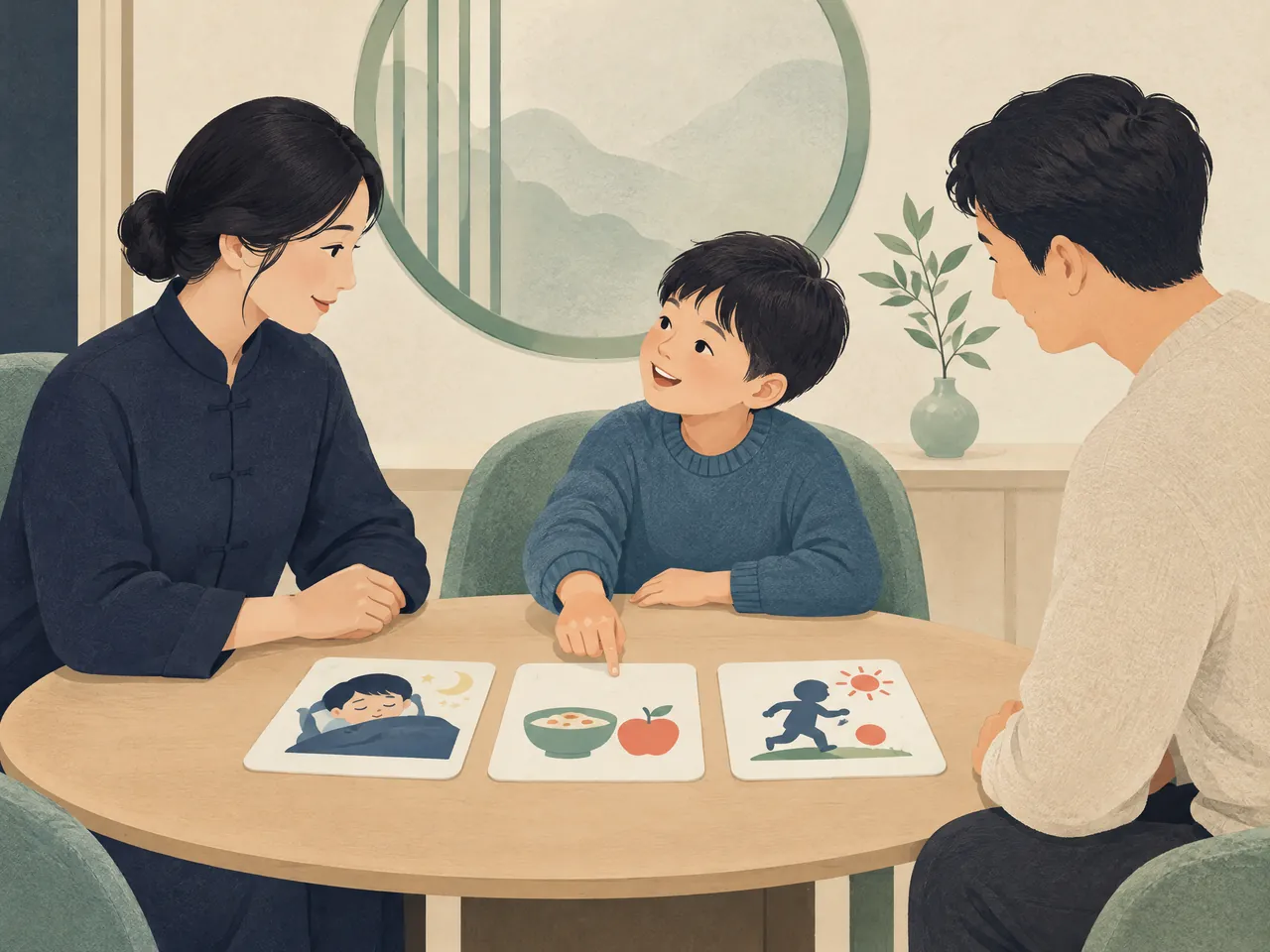
Families often search after a difficult few days: a child seems unlike themselves, a recurring concern has disrupted routines, or a parent wants to explore a traditional Chinese medicine conversation alongside other care. Start by writing down what you actually observed. Include when it began, whether it changes with food, activity, sleep or school, what makes it better or worse, and any treatment or advice already received. This does not turn a parent into a diagnostician. It simply makes the enquiry more accurate and gives the practitioner a clearer starting point. The same notes are valuable to the child’s usual health-care provider, which supports coordinated care rather than fragmented advice [1].
There is a difference between a non-urgent enquiry and a situation that needs prompt medical attention. Do not wait for a complementary-care appointment to deal with symptoms that concern you. Hospital Authority guidance on fever highlights warning signs such as a child who is unusually drowsy or inactive, prolonged crying, poor appetite, persistent vomiting, diarrhoea with abdominal pain, or signs of serious dehydration; it advises prompt medical attention in these situations [2]. A seizure, breathing difficulty, a marked change in alertness, or a child who seems seriously unwell also warrants urgent medical help. Once immediate needs are addressed, you can decide whether a Tui Na consultation is a question worth exploring.

When a child has an established condition or is taking medication, make this the first part of your message, not an afterthought. Do the same for skin changes, an injury, a recent operation, known allergies or a history that makes touch difficult. The aim is not to collect every detail perfectly. It is to give the practitioner enough context to say whether a consultation should be deferred, adapted, or discussed with the family’s other health-care providers. If herbs or supplements are part of the conversation, share all products and doses with the child’s health-care team. NCCIH notes safety concerns with some Chinese herbal products and encourages families to tell all providers about complementary approaches [1].
Child Tui Na Massage, Pediatric Tui Na Massage and Paediatric Tui Na Massage: Questions About Suitability
Useful suitability questions are specific and open-ended. You could ask: “Based on the background I have shared, is a consultation appropriate now?” “What would mean we should seek medical review before discussing Tui Na?” “What is the practitioner able to assess during the visit, and what is outside that scope?” and “How will my child’s comfort be checked?” These questions do not demand a guarantee. They invite a transparent explanation of the process and allow you to compare it with your child’s needs. For a parent who is still choosing between related readings, paediatric tuina provides another route into the same child-focused terminology.

Child Tui Na Massage, Pediatric Tui Na Massage and Paediatric Tui Na Massage: Preparing for a Visit
Preparation is mainly about reducing uncertainty for the child and the clinic. Bring or have ready the child’s medication and supplement list, relevant medical information, and a short timeline of the concern. Choose comfortable clothing unless the clinic gives different instructions, and let the child know in simple words where they are going and that a caregiver can explain if they want a break. Avoid promising that the visit will feel a certain way or solve a concern. Instead, tell the child that adults will talk together about what has been happening and that they can say if something feels uncomfortable. Before you leave home, confirm the location, appointment time, caregiver attendance and any instructions that the clinic has specifically provided.
Child Tui Na Massage, Pediatric Tui Na Massage and Paediatric Tui Na Massage Consultation Details
The best initial enquiry is short but complete. State the child’s age, the main reason you are asking, whether there are current red-flag symptoms or an ongoing medical assessment, and what you would like to understand about a consultation. You do not need to diagnose the issue or use TCM terminology correctly. A message such as “I am enquiring about child tui na massage for my school-age child; we would like to know whether a consultation can be discussed after our recent medical review” gives a clinic more useful information than a one-word booking request. Add your preferred location and any language or access needs so the clinic can respond about current arrangements rather than make assumptions.
At TCM Lab, appointments are arranged through discussion rather than online checkout. You can WhatsApp +852 6940 5663 to ask about current appointment availability, share a concise background, and confirm whether the request can be considered. The clinic has locations in Prince Edward and Kwun Tong; availability depends on appointment arrangements, so do not assume a particular practitioner, time or service format. If convenience is central to your choice, review the Kwun Tong Chinese medicine clinic location information or the Chinese medicine clinic Prince Edward details before you enquire.

Child Tui Na Massage, Pediatric Tui Na Massage and Paediatric Tui Na Massage: Discussing Your Child's Needs
A consultation conversation works best when both sides are clear about its purpose. Parents can explain the daily impact of the concern: for example, whether it affects settling at bedtime, school participation, meals, play, or family routines. They can also say what they hope to gain from the discussion, such as understanding whether Tui Na is relevant, what a visit would involve, or whether to continue with medical follow-up first. The practitioner should have room to ask follow-up questions and to set boundaries around what can be responsibly discussed. This is more useful than expecting a treatment plan from an online description. If another family member will bring the child, agree beforehand on the key history and questions so important information is not lost.
It is appropriate to ask how the clinic handles a child who becomes distressed or simply does not want to continue. A child’s willingness and comfort should shape the conversation. Parents can ask whether the caregiver stays present, how breaks are handled, and what happens if the child cannot participate on the day. You can also ask how the clinic wants families to update it if there is a material change in symptoms before the appointment. These practical questions support respectful consent and avoid putting pressure on a child to complete a visit because it was booked.

Child Tui Na Massage, Pediatric Tui Na Massage and Paediatric Tui Na Massage: Finding a Convenient Clinic
Convenience is part of a sensible decision, especially when a child has school, naps, meals or anxiety about unfamiliar places. Consider travel time, who can accompany the child, and whether you can arrive without rushing. TCM Lab’s Prince Edward and Kwun Tong locations can be discussed when you make an enquiry; families elsewhere may ask about home-visit arrangements rather than assume there is a local branch. If you want a step-by-step prompt for the first message, read how to book paediatric tui na for a child. A clinic can then confirm the current options, rather than a parent relying on an old listing or a generic booking expectation.
Care and health guide
Pain-care information
This directory brings together services, reading, and visit information related to pain care, to help you prepare questions for a consultation.
When pain care affects your day, noting when it occurs, its relation to activity, and what you have already tried can help prepare a consultation; Chinese medicine pain management Hong Kong is a relevant service or reading entry point.
Individual circumstances differ, and acupuncture Hong Kong offers related information to help you understand options and prepare questions.


Your questions, answered
Frequently asked questions
Are child tui na massage, pediatric tui na massage and paediatric tui na massage different treatments?
Usually, they are different ways to search for the same broad child-focused Tui Na topic. “Pediatric” is the American spelling and “paediatric” is the British spelling. The exact consultation approach, if any, should be discussed for the individual child rather than inferred from the wording.
What should I tell a clinic before asking about a child Tui Na consultation?
Share the child’s age, the reason for your enquiry, how long you have noticed the concern, relevant diagnoses or recent assessments, and all current medicines or supplements. Mention urgent or worsening symptoms immediately, as those may need medical care rather than an appointment enquiry.
Can child Tui Na replace my child’s doctor or urgent medical care?
No. Complementary approaches should not replace or delay conventional care. For concerning symptoms, seek appropriate medical assessment. Hospital Authority guidance specifically advises prompt attention for fever with unusual symptoms such as marked inactivity, persistent vomiting or diarrhoea with abdominal pain, or serious dehydration [2].
How can I enquire about child tui na massage in Hong Kong?
WhatsApp TCM Lab on +852 6940 5663 with a brief description of your child’s circumstances and your preferred Prince Edward or Kwun Tong location. The clinic can discuss whether a consultation enquiry is appropriate and confirm current appointment arrangements; an enquiry is not an automatic booking.
Sources and further information
- [1] [1] National Center for Complementary and Integrative Health — Traditional Chinese Medicine: What You Need To Know
Referenced for: Supports the advice to consult a child’s health-care provider, not delay conventional care, disclose complementary approaches, and take care with herbal products.
- [2] [2] Hong Kong Hospital Authority — Fever
Referenced for: Supports the parent-facing escalation note about fever and concerning symptoms, including prolonged crying or sleep, inactivity, persistent vomiting, diarrhoea with abdominal pain, and serious dehydration.
- [3] [3] Eu Yan Sang Hong Kong — Paediatric Tui Na
Referenced for: Supports the existence of the paediatric spelling in Hong Kong and the general point that a child-focused service may collect history and require availability confirmation; it does not substantiate TCM Lab services or outcomes.