
TCM Lab · Health reading
Acne Types and Severity: Inflammatory and Non-Inflammatory Acne and Acne Comedones Papules Pustules Nodules
Published Updated
Acne rarely appears as just one kind of spot. A face with scattered blackheads needs a different level of attention from one with tender red bumps or deep, painful lumps. Acne is commonly described by lesion type and by how widespread, inflamed and persistent it is: comedones are non-inflammatory, while papules, pustules and nodules signal inflammation. Knowing the pattern can help you choose gentler daily care, describe changes clearly at an appointment, and recognise when a medical or dermatology assessment should take priority. [1] [2]
Appointments are confirmed through WhatsApp. If you have language requirements, please mention them in your enquiry.
The short answer
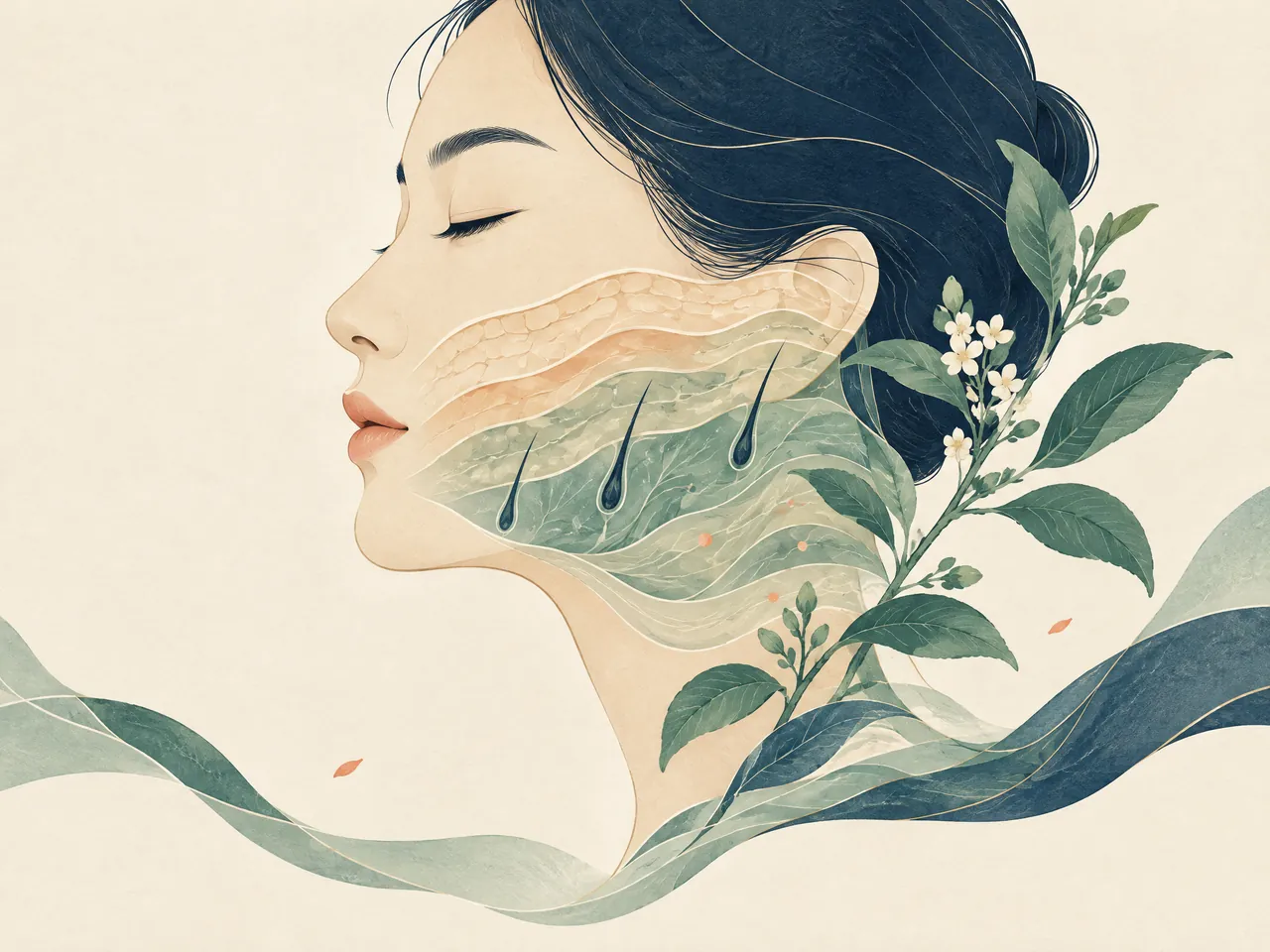
Acne types and severity are usually described by the lesions present: whiteheads and blackheads are comedones, while papules, pustules and nodules are inflammatory. Mild, limited comedones may be managed with gentle, non-comedogenic care, but deep painful lesions, spreading inflammation, scars, infection signs or distress deserve prompt medical assessment. A TCM consultation can discuss whole-person factors as supportive care, but it does not replace dermatology diagnosis or prescribed treatment.
Transparent pricing
See the fees.
Choose your care.
Explore our complete official price list, including first-trial prices, regular prices, packages and branch-specific options.
Opening WhatsApp prepares an enquiry; it does not send a message, take payment or confirm an appointment. Suitability and individual arrangements are confirmed during consultation.
Chinese medicine
All prices in HKDAcupuncture and Chinese herbal medicine package
Includes a Chinese medicine consultation with pulse assessment, body acupuncture and 3 days of Chinese herbal granules that do not require decoction.
HK$580 (single session)
Chinese medicine consultation with pulse assessment
Hair and scalp
All prices in HKDScalp health and hair-loss management
Includes AI scalp analysis, deep scalp and follicle cleansing, and scalp oil-control care.
HK$380 (first trial)
Regular price: HK$680
- 6 sessions: HK$3,480 (HK$580 per session)
- 12 sessions: HK$5,760 (HK$480 per session)
- 20 sessions: HK$8,600 (HK$430 per session)
- 30 sessions: HK$11,400 (HK$380 per session)
Hair acupuncture and Chinese herbal medicine package
Includes scalp acupuncture and 3 days of Chinese herbal medicine that does not require decoction.
HK$580 (single session)
Registered Chinese Medicine Practitioner consultation
- 6 sessions: HK$3,180 (HK$530 per session)
- 12 sessions: HK$5,760 (HK$480 per session)
- 20 sessions: HK$8,600 (HK$430 per session)
- 30 sessions: HK$11,400 (HK$380 per session)
Combined hair and scalp treatment
Combines acupuncture and Chinese herbal medicine with salon-level scalp and follicle care. Packages include complimentary hair-care shampoo and serum.
HK$1,260 (single session)
Combined treatment
- 8 sessions: HK$8,640 (HK$1,080 per session)
- 16 sessions: HK$15,680 (HK$980 per session)
- 20 sessions: HK$18,600 (HK$930 per session)
- 30 sessions: HK$26,400 (HK$880 per session)
Weight management
All prices in HKDFull-body acupoint embedding for weight management
Includes full-body acupoint embedding. Packages include complimentary Chinese herbal medicine for weight management, with the number of included days scaled to the package. Embedding material and the individual treatment arrangement are confirmed during consultation; this is not a cosmetic thread lift.
HK$980 (single session)
No trial session
- 10 sessions: HK$7,800 (HK$780 per session)
- 20 sessions: HK$14,600 (HK$730 per session)
- 30 sessions: HK$20,400 (HK$680 per session)
Facial acupuncture
All prices in HKDFacial acupuncture (basic)
Includes facial acupuncture and meridian-based facial care, including care for facial puffiness.
HK$480 (first trial)
Regular price: HK$680
- 10 sessions: HK$5,200 (HK$520 per session)
- 20 sessions: HK$9,600 (HK$480 per session)
- 30 sessions: HK$13,500 (HK$450 per session)
Facial acupuncture (advanced)
Includes enhanced facial acupuncture with a specially formulated moisturising mask and serum.
HK$780 (first trial)
Regular price: HK$1,180
- 10 sessions: HK$9,000 (HK$900 per session)
- 20 sessions: HK$16,600 (HK$830 per session)
- 30 sessions: HK$23,400 (HK$780 per session)
Pain care
All prices in HKDExtracorporeal shockwave treatment
Shockwave treatment for deep-tissue and fascial care. The Kwun Tong clinic offers the multi-area options shown below.
Priced by branch
Branch-specific pricing
Prince Edward: HK$250 per area
Kwun Tong: HK$250 for 1 area / HK$450 for 2 areas / HK$600 for 3 areas
Pain care (manual therapy)
Includes Chinese medicine musculoskeletal assessment, manual joint techniques and tui na.
HK$580 (single session)
Chinese medicine musculoskeletal assessment
Pain care (acupuncture and manual therapy)
Combines acupuncture and manual therapy.
HK$680 (single session)
Combined care
Acne Types and Severity: Inflammatory and Non-Inflammatory Acne and Acne Comedones Papules Pustules Nodules Explained
Acne vulgaris involves the hair follicle and its oil gland. When oil and dead skin cells collect in a follicle, the opening can become plugged. A closed plug looks like a whitehead; an open plug is a blackhead. These are comedones and are classed as non-inflammatory lesions. Inflammation can then appear as red or tender papules, pustules with visible pus, or deeper nodules. More than one lesion type is common at the same time, so calling all spots simply “acne” can hide important differences in comfort, risk and next steps. [1] [2]
Severity is not just a matter of counting what is visible in a mirror. A small number of deep, painful nodules may need more urgent attention than many superficial comedones. Distribution matters too: acne may affect the face, chest or back, and a sudden change in a previously manageable pattern is useful information for a clinician. Rather than trying to grade yourself against a photograph, note the lesion types, whether they hurt, how long they last, where they recur and whether they leave dark marks, colour change or indentations after healing. This creates a clearer starting point for a consultation.

A short pattern diary can make this description more useful without turning skin care into a stressful project. Once or twice a week, note whether new lesions are mostly blocked pores, red bumps, pustules or deep lumps; whether they are appearing in one area or more widely; and which products, medicines or life changes occurred around the same time. The aim is to identify a pattern, not to prove a cause. For example, a breakout after a new oily hair product may be worth mentioning, while a recurring premenstrual flare is relevant history rather than a self-diagnosis. If a spot is unusually painful, rapidly enlarging or leaving a scar, do not wait for the diary to be complete before seeking advice.
Acne Types and Severity: How Inflammatory and Non-Inflammatory Acne Begins, Including Acne Comedones Papules Pustules Nodules
Non-inflammatory acne begins with follicular blockage, but it does not always remain quiet. Bacteria can grow in blocked follicles and contribute to inflammation and pus, which is one reason a mixture of comedones and inflamed spots is so familiar. A papule is a raised, inflamed bump without a visible pus head. A pustule is a raised bump containing pus. A nodule is deeper, larger and often painful; cyst-like lesions may also occur. Picking may add surface damage and make the original pattern harder to read. The practical distinction is not to diagnose each spot at home, but to notice when the condition is becoming deeper, more painful or more persistent. [1] [2]

Acne Types and Severity: Reading Inflammatory and Non-Inflammatory Acne Signs Across Acne Comedones Papules Pustules Nodules
Look in good, even light and use simple descriptive words rather than judging your skin harshly. Blackheads may look dark because the open plug is exposed to air; they are not dirt. Whiteheads tend to be small closed bumps. On lighter skin, papules may look pink or red, while on brown or black skin inflammation can appear darker, purple-toned or less obviously red. A lesion may leave a flat mark after it settles, which is different from an active spot, and a mark is different again from a scar with a lasting change in texture. Tracking these distinctions over several weeks can make an appointment more productive and can prevent an aggressive attempt to “treat” a mark as if it were fresh acne. [1]
Compare your options
| Pattern | Typical appearance | What to note | Practical next step |
|---|---|---|---|
| Open or closed comedones | Blackheads or small whiteheads; usually not painful | Texture, hairline products and whether inflamed lesions are also present | Use gentle, non-comedogenic care; avoid abrasive scrubbing and squeezing. [1] |
| Papules | Raised inflamed bumps; may be tender | Number, spread, pain and whether colour remains after healing | Simplify irritating products and seek advice if recurrent, widespread or not settling. [1] |
| Pustules | Raised bumps containing visible pus | Surrounding inflammation, picking and response to current care | Do not squeeze; ask a pharmacist or clinician about appropriate treatment options. [1] |
| Nodules or cyst-like lesions | Deeper, larger, often painful lumps under the skin | Pain, duration, scarring and rapid change | Arrange timely medical or dermatology assessment rather than relying on self-care alone. [1] |
| Marks or scars after acne | Flat colour change or lasting texture change after spots heal | Whether acne is still active and the effect on wellbeing | Discuss active acne control and scar concerns with a clinician; avoid picking. [1] [2] |
On smaller screens, scroll the table sideways to compare all columns.
Acne Types and Severity: Comparing Inflammatory and Non-Inflammatory Acne in Acne Comedones Papules Pustules Nodules
A useful comparison starts with what the skin is asking for. Predominantly comedonal acne often makes people want to scrub away texture, yet friction and over-cleansing can irritate the skin. Predominantly inflammatory acne may feel tender and can be made more noticeable by repeated touching, squeezing or switching products every few days. The NHS advises washing with a gentle cleanser twice daily, removing make-up at the end of the day, choosing non-comedogenic products and avoiding scrubbing or squeezing spots. These measures support the skin barrier and reduce avoidable irritation; they are not a promise that active acne will clear without medical treatment. [1]
It is also worth separating a routine from a treatment plan. A gentle cleanser, simple moisturiser and products labelled non-comedogenic are a reasonable base while you observe tolerance. Introduce one product at a time so that stinging, dryness or worsening can be recognised. Over-the-counter topical options exist, and a pharmacist or clinician can help with suitability, particularly if skin is sensitive or other medicines are in use. For a practical routine that avoids common irritants, see acne skin care advice. If inflammation is frequent or severe, a professional plan may be needed rather than adding more active products. [1]
Acne Types and Severity: What Inflammatory and Non-Inflammatory Acne May Mean for Acne Comedones Papules Pustules Nodules
Comedones, papules, pustules and nodules do not form a tidy ladder in which every whitehead becomes a nodule. They are categories that can overlap, and their meaning depends on the whole picture. A few stable comedones with no pain can call for a measured routine and observation. Clusters of papules or pustules may indicate active inflammation that merits earlier advice if they are not settling. Deep nodules, cyst-like lumps, scars or post-inflammatory colour change should not be ignored simply because there are fewer of them. Dermatology references describe acne as mild, moderate or severe, but they also consider lesion type, duration, response to previous care and complications. [2]
Acne Types and Severity: Skin-Care Priorities for Inflammatory and Non-Inflammatory Acne and Acne Comedones Papules Pustules Nodules
Keep the routine boring enough to be consistent. Cleanse gently after waking and before bed, remove make-up before sleeping, and avoid abrasive scrubs, rough cloths and deliberate squeezing. If body acne is present, loose breathable clothing can be more comfortable around sweat and friction. Hair oils or greasy styling products can also be worth reviewing when bumps collect along the hairline. Sleep, stress, menstrual timing and changes in skin or hair products are useful observations to bring to a consultation, but they should not be treated as proof of one single cause. For a fuller discussion of complementary care boundaries, read does Chinese medicine help acne. [1] [3]
Acne Types and Severity: When Inflammatory and Non-Inflammatory Acne and Acne Comedones Papules Pustules Nodules Need Review
Arrange medical review rather than waiting it out when spots are deep, painful, widespread, leaving scars, or not improving despite sensible self-care. Hot, swollen, red skin can suggest infection and needs timely attention. Acne is also worth discussing if it is affecting confidence, work, school, relationships or mental health; the impact is a valid clinical concern, not a cosmetic afterthought. A GP or dermatologist can assess the pattern and may offer prescription treatments or specialist referral. The question When should I see a dermatologist for acne is especially relevant if nodules, cyst-like lesions or scarring are present. [1]
Bring a short timeline rather than trying to remember every detail in the room. Include when the breakout began, whether the main lesions are blackheads, whiteheads, papules, pustules or nodules, areas affected, pain, products tried and any change linked with a menstrual cycle or medicines. Photos taken in similar light can be helpful when the skin fluctuates, provided they are for your own clinical discussion. Avoid stopping prescribed treatment or replacing dermatology care with advice from social media. Clear history and early review can reduce the chance that escalating inflammation is managed by trial and error alone.

It can help to state your main concern plainly at the start: persistent active spots, pain, marks, scarring, a reaction to a product, or the emotional burden of acne. These concerns can overlap, yet they do not always require the same next step. Someone with stable comedones may mainly need routine guidance, while someone with painful nodules may need a treatment plan aimed at controlling inflammation quickly. If a clinician recommends a prescribed medicine, ask how it should fit with your current cleanser, moisturiser, make-up and any complementary therapies. This reduces the temptation to layer multiple uncoordinated approaches onto already irritated skin.
Acne Types and Severity: TCM Assessment Alongside Inflammatory and Non-Inflammatory Acne and Acne Comedones Papules Pustules Nodules
Traditional Chinese medicine uses its own pattern-based approach, commonly considering the appearance and distribution of acne alongside sleep, diet, stress, digestion, menstrual history and other symptoms. These traditional pattern terms are not equivalent to a dermatological diagnosis, a hormone test or a bacterial culture. A TCM consultation can be a space to discuss daily habits and supportive care, but it should be coordinated sensibly with conventional assessment when inflammation is active. CUHK’s integrative medicine information describes Chinese medicine consultation together with lifestyle discussion, dietary advice and access to dermatology input in an acne programme. Learn what to prepare for a TCM acne assessment, while keeping any medical diagnosis and medication decisions with the appropriate clinician. [3]

Acne Types and Severity: Referral Considerations for Inflammatory and Non-Inflammatory Acne and Acne Comedones Papules Pustules Nodules
Referral is a practical safety step, not a failure of self-care or complementary support. Prioritise medical or dermatology assessment for deep nodules, cyst-like lumps, rapid worsening, hot swollen skin, scarring, persistent acne that has not responded to treatment, or substantial emotional strain. Be particularly cautious about squeezing a painful lesion or using several strong products at once before an important event; irritation can complicate the picture. If you are considering a complementary option, ask how it fits alongside current medicines and whether dermatology review should come first. The related page on acupuncture for acne explains the same need for individual assessment without presenting it as a substitute for clinical acne care. [1]
Care and health guide
Health service information
This directory brings together services, reading, and visit information related to health services, to help you prepare questions for a consultation.
If you are organising health questions, Chinese medicine clinic Hong Kong is a starting point for learning about related services and preparing for a consultation.
People have different needs; acupuncture Hong Kong provides further reading to help you understand options in your own context.


Your questions, answered
Frequently asked questions
How are acne types and severity usually described?
Acne is described by the lesion types present, their depth, number, spread and effect on the skin. Blackheads and whiteheads are non-inflammatory comedones. Papules, pustules and nodules are inflammatory lesions. A few deep painful nodules can be more clinically significant than many superficial comedones. [1] [2]
What skin-care habits are sensible for inflammatory and non-inflammatory acne?
Wash gently twice daily, remove make-up before bed, and choose non-comedogenic skincare and make-up. Avoid harsh scrubs, picking and squeezing because they can irritate skin and contribute to scarring. A simple routine supports the skin but does not replace treatment for persistent or severe acne. [1]
Can a TCM consultation replace a dermatology assessment for acne comedones papules pustules nodules?
No. TCM may consider lifestyle and whole-person symptoms as supportive care, but its traditional pattern terms are not a substitute for dermatological diagnosis or prescribed treatment. Deep nodules, infection signs, scars, treatment failure or major distress should receive timely conventional medical attention. [1] [3]
Does acne on the chin always mean a hormone problem?
No. Acne can fluctuate with menstrual cycles and other changes, but location alone cannot confirm a hormone disorder. Note the timing and any other symptoms, then seek clinical assessment if the pattern is persistent, severe or concerning. [1]
Sources and further information
- [1] [1] NHS: Acne
Referenced for: Official UK health guidance supporting spot types, gentle care, avoidance of picking or scrubbing, causes, treatment routes and indications for medical review.
- [2] [2] DermNet: Acne vulgaris
Referenced for: Dermatology reference supporting the distinction between inflammatory and non-inflammatory lesions, lesion descriptions, grading context, marks and scarring.
- [3] [3] CUHK Integrative Medical Centre: Integrative Medicine Treatment in Acne
Referenced for: Hong Kong university source supporting the description of Chinese medicine consultation as part of an integrative programme with lifestyle, dietary and dermatology input; it is not evidence of a treatment outcome.