
TCM Lab · Health reading
Is Chinese medicine suitable for menstrual cramps? What should I do if period pain gets worse despite painkillers?
Published Updated
Menstrual cramps are common, but a pattern that is newly intense, steadily worsening, or no longer helped by your usual pain relief is worth taking seriously. Is Chinese medicine suitable for menstrual cramps? It can be discussed as supportive care after an individual assessment, while appropriate medical investigation remains essential. What should I do if period pain gets worse despite painkillers? Do not simply add doses or swap medicines yourself: record the change, check for warning symptoms, and arrange medical advice. A useful consultation starts with the real pattern of your cycle, symptoms, medicines and pregnancy possibility.
Appointments are confirmed through WhatsApp. If you have language requirements, please mention them in your enquiry.
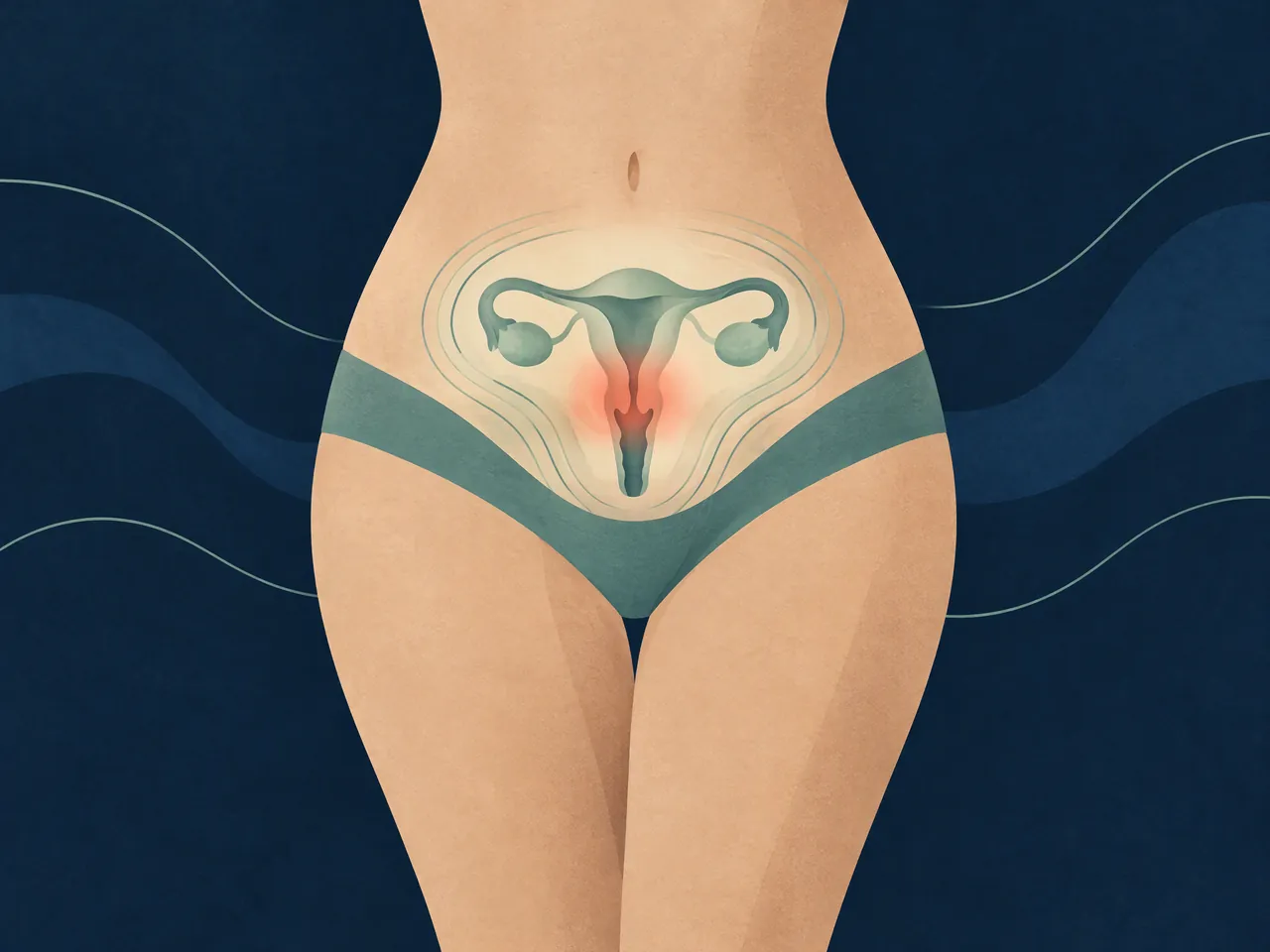
The short answer
Chinese medicine may be considered as a supportive option for menstrual cramps after an in-person assessment of your cycle, health history and medicines. It should not replace gynaecological assessment when pain is new, worsening or unresponsive to painkillers. If period pain becomes severe, disrupts normal life, or comes with unusual bleeding, pain during sex or urination, fever, or possible pregnancy, seek medical advice promptly and share a complete medication list with every practitioner.
Transparent pricing
See the fees.
Choose your care.
Explore our complete official price list, including first-trial prices, regular prices, packages and branch-specific options.
Opening WhatsApp prepares an enquiry; it does not send a message, take payment or confirm an appointment. Suitability and individual arrangements are confirmed during consultation.
Chinese medicine
All prices in HKDAcupuncture and Chinese herbal medicine package
Includes a Chinese medicine consultation with pulse assessment, body acupuncture and 3 days of Chinese herbal granules that do not require decoction.
HK$580 (single session)
Chinese medicine consultation with pulse assessment
Hair and scalp
All prices in HKDScalp health and hair-loss management
Includes AI scalp analysis, deep scalp and follicle cleansing, and scalp oil-control care.
HK$380 (first trial)
Regular price: HK$680
- 6 sessions: HK$3,480 (HK$580 per session)
- 12 sessions: HK$5,760 (HK$480 per session)
- 20 sessions: HK$8,600 (HK$430 per session)
- 30 sessions: HK$11,400 (HK$380 per session)
Hair acupuncture and Chinese herbal medicine package
Includes scalp acupuncture and 3 days of Chinese herbal medicine that does not require decoction.
HK$580 (single session)
Registered Chinese Medicine Practitioner consultation
- 6 sessions: HK$3,180 (HK$530 per session)
- 12 sessions: HK$5,760 (HK$480 per session)
- 20 sessions: HK$8,600 (HK$430 per session)
- 30 sessions: HK$11,400 (HK$380 per session)
Combined hair and scalp treatment
Combines acupuncture and Chinese herbal medicine with salon-level scalp and follicle care. Packages include complimentary hair-care shampoo and serum.
HK$1,260 (single session)
Combined treatment
- 8 sessions: HK$8,640 (HK$1,080 per session)
- 16 sessions: HK$15,680 (HK$980 per session)
- 20 sessions: HK$18,600 (HK$930 per session)
- 30 sessions: HK$26,400 (HK$880 per session)
Weight management
All prices in HKDFull-body acupoint embedding for weight management
Includes full-body acupoint embedding. Packages include complimentary Chinese herbal medicine for weight management, with the number of included days scaled to the package. Embedding material and the individual treatment arrangement are confirmed during consultation; this is not a cosmetic thread lift.
HK$980 (single session)
No trial session
- 10 sessions: HK$7,800 (HK$780 per session)
- 20 sessions: HK$14,600 (HK$730 per session)
- 30 sessions: HK$20,400 (HK$680 per session)
Facial acupuncture
All prices in HKDFacial acupuncture (basic)
Includes facial acupuncture and meridian-based facial care, including care for facial puffiness.
HK$480 (first trial)
Regular price: HK$680
- 10 sessions: HK$5,200 (HK$520 per session)
- 20 sessions: HK$9,600 (HK$480 per session)
- 30 sessions: HK$13,500 (HK$450 per session)
Facial acupuncture (advanced)
Includes enhanced facial acupuncture with a specially formulated moisturising mask and serum.
HK$780 (first trial)
Regular price: HK$1,180
- 10 sessions: HK$9,000 (HK$900 per session)
- 20 sessions: HK$16,600 (HK$830 per session)
- 30 sessions: HK$23,400 (HK$780 per session)
Pain care
All prices in HKDExtracorporeal shockwave treatment
Shockwave treatment for deep-tissue and fascial care. The Kwun Tong clinic offers the multi-area options shown below.
Priced by branch
Branch-specific pricing
Prince Edward: HK$250 per area
Kwun Tong: HK$250 for 1 area / HK$450 for 2 areas / HK$600 for 3 areas
Pain care (manual therapy)
Includes Chinese medicine musculoskeletal assessment, manual joint techniques and tui na.
HK$580 (single session)
Chinese medicine musculoskeletal assessment
Pain care (acupuncture and manual therapy)
Combines acupuncture and manual therapy.
HK$680 (single session)
Combined care
Is Chinese medicine suitable for menstrual cramps? — What should I do if period pain gets worse despite painkillers? — Cycle patterns and symptom records
A cycle record changes a vague account of “bad cramps” into information a clinician can use. Start with the first and last day of bleeding, then note when the pain begins: the day before bleeding, the first day, halfway through the period, or after bleeding has ended. Record where it is felt, whether it is gripping, dull, sharp or one-sided, and whether it travels to the lower back or thighs. A simple 0–10 pain score can show change over several cycles without pretending that one number tells the whole story.
Also write down the practical impact. Did you miss work, classes, exercise, sleep, meals or social plans? Note nausea, vomiting, diarrhoea, headaches, dizziness, fatigue, bowel or bladder discomfort, and changes in bleeding. Include what you took, when you took it, and whether it helped at all. This record is more useful than trying to remember a difficult day months later. It gives a family doctor, gynaecology service, or Chinese medicine practitioner a shared starting point instead of separate versions of the same problem.
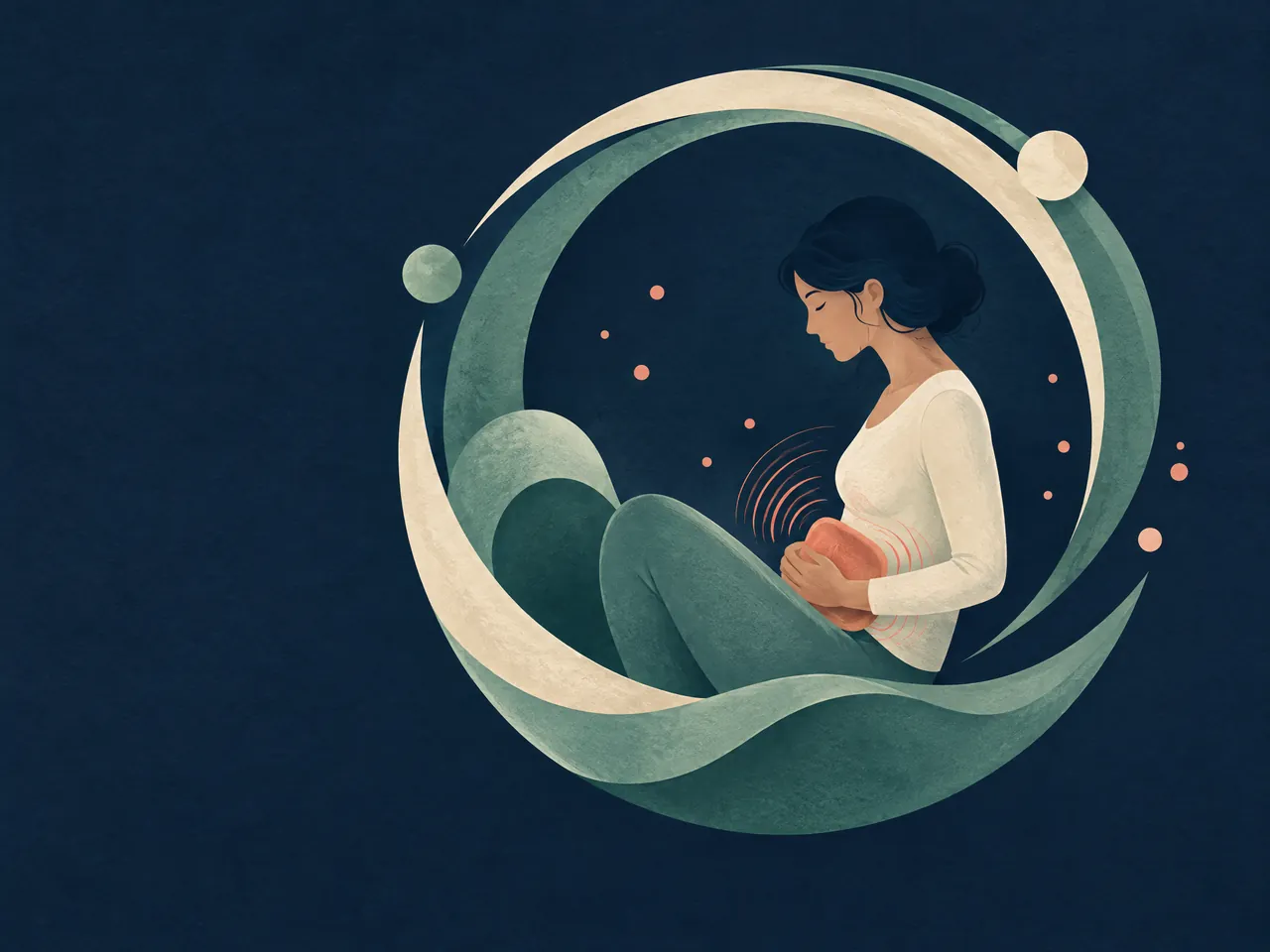
Is Chinese medicine suitable for menstrual cramps? — What should I do if period pain gets worse despite painkillers? — Track timing, bleeding and associated symptoms
The timing can guide the next question, not diagnose you on its own. Cramping that comes just before or at the start of bleeding is often described with primary dysmenorrhoea. Pain that begins several days earlier, lasts longer, becomes progressively worse, or continues after the period may deserve a closer look for secondary causes. ACOG explains that secondary dysmenorrhoea is linked to disorders of the reproductive organs and may worsen over time; conditions considered can include endometriosis, fibroids and adenomyosis. [2] A pattern is a clue for assessment, not a reason to self-diagnose from an online checklist.
Describe bleeding plainly: lighter than usual, typical for you, heavier than usual, clots, spotting, or bleeding between periods. Add the date an intrauterine device was fitted if relevant, any recent contraception change, and whether the cycle itself has become irregular. If pregnancy is possible, take that possibility seriously before taking any new medicine or herbal product. It is also sensible to note pain during sex, urination or bowel movements because these details can influence where you are referred. For further context on different supportive discussions, see Chinese herbal medicine for period pain.
Is Chinese medicine suitable for menstrual cramps? — What should I do if period pain gets worse despite painkillers? — Recognise changes that need review
A familiar period does not need to be endured in silence when the pattern changes. The NHS advises urgent assessment when pelvic or period pain is severe or worse than usual and painkillers have not helped. It also advises medical review for periods that become more painful, heavy or irregular; pain that stops usual activities; pain during sex, urination or bowel movements; and bleeding between periods. [1] These signs do not name a cause, but they do move the priority from trying another home remedy to arranging clinical assessment.
Seek prompt care as well if you have fever with pelvic pain, feel faint or very unwell, have sudden severe pain, or might be pregnant. If your medication seems ineffective, do not exceed the packet directions or double up products with similar ingredients. Bring the exact product names and doses to a pharmacist or prescriber. A careful review can look at whether the medicine is suitable for you and whether a pelvic examination, blood tests, ultrasound or gynaecology referral should be considered. Choosing medical review is compatible with later supportive Chinese medicine care; it is not an either-or decision.
Compare your options
| What you notice | What to record or do | Why it matters at the next step |
|---|---|---|
| A familiar cramp pattern that responds to your usual plan | Track onset, location, bleeding and what helps; use agreed self-care. | Shows whether the pattern stays stable and gives context for a supportive-care discussion. |
| Pain is worse, lasts longer, or relief from painkillers is no longer enough | Record product names, doses and timing; arrange medical advice instead of increasing medicines yourself. | May prompt review for a different pain plan or investigation of an underlying cause. [1] [2] |
| Heavier, irregular or between-period bleeding; pain with sex, urination or bowel movements | Write down when it started and how it affects daily life; seek medical review. | Associated symptoms help clinicians decide whether further assessment is needed. [1] |
| Considering Chinese herbal care, or possible pregnancy | Bring every medicine, supplement and herbal product to both practitioners; disclose pregnancy possibility. | Supports safer coordination and avoids treating TCM as a replacement for medical care. [3] |
On smaller screens, scroll the table sideways to compare all columns.
Is Chinese medicine suitable for menstrual cramps? — What should I do if period pain gets worse despite painkillers? — Assessment and supportive care
Chinese medicine may be a reasonable topic to raise when you want a broader discussion of your recurring symptoms, routines and comfort measures. In traditional Chinese medicine, a registered practitioner may ask about the relationship of pain to the cycle, the nature of bleeding, digestion, sleep, temperature preference, stress and energy. Observation, questions and other traditional assessment methods may be used to form an individual traditional pattern. Terms such as qi stagnation, blood stasis, cold or deficiency belong to that traditional approach; they are not modern medical diagnoses and do not rule out a gynaecological condition.
That distinction matters most when pain is worsening. A supportive plan is only as safe as the information behind it. Tell the practitioner about endometriosis, fibroids, adenomyosis, pelvic infection, previous surgery, bleeding disorders, stomach ulcers, asthma, kidney or liver problems, and any medication allergy where relevant. The National Center for Complementary and Integrative Health notes mixed evidence for Chinese herbal products and advises people to discuss TCM with all their health-care providers rather than use it to replace or delay conventional care. [3]

Is Chinese medicine suitable for menstrual cramps? — What should I do if period pain gets worse despite painkillers? — What a Chinese medicine consultation considers
A worthwhile consultation is not a promise of a fixed result or a fixed number of visits. It should clarify what you want help with, whether you have already had medical assessment, and whether your symptoms are stable enough for supportive care to be discussed. You may be asked about work pressure, sleep, meals, activity and mood because they affect how cramps are experienced and managed. The practitioner can also identify gaps that need conventional follow-up, such as a new heavy bleeding pattern or pain that has become difficult to control. Read more about what to prepare for a TCM assessment for period pain before deciding what information to bring.
For someone whose pain is predictable and already medically assessed, the discussion may include individually considered traditional herbal care or other supportive approaches. It should also cover limits: a web page cannot select a formula, confirm a traditional pattern, or judge whether a product is appropriate for you. Evidence for Chinese herbal products varies, and quality and safety can vary between products. [3] If acupuncture, acupressure, heat, movement or relaxation are topics you want to explore, ask what is appropriate alongside—not instead of—your medical plan. ACOG lists acupuncture and acupressure among alternative approaches that may be useful for painful periods, while medical assessment remains important when medication does not relieve pain. [2]

Is Chinese medicine suitable for menstrual cramps? — What should I do if period pain gets worse despite painkillers? — Coordinate medicines safely
Medication coordination is not a formality. Make a complete list of prescription medicines, over-the-counter pain relief, hormonal contraception, vitamins, supplements, teas, powders and herbal products. Include photographs of labels if spelling is difficult. Tell both your prescriber and Chinese medicine practitioner about the list before starting or changing anything. Do not stop a prescribed medicine because symptoms improve one month, and do not add an unfamiliar product to a regimen simply because a friend found it helpful. The relevant question is whether the combination and timing are appropriate for your own health situation.
Pregnancy possibility deserves a direct answer, even if it feels unlikely. Missed periods, a late period, unprotected sex, fertility treatment, breastfeeding or an uncertain test result are all details to share. Seek medical advice first if you may be pregnant and have pain or bleeding. The same caution applies if you are trying to conceive or nursing. NCCIH advises extra consultation with health-care providers when pregnant or nursing and warns that herbal products can have safety issues, including contamination or incorrect ingredients. [3] This is why individual review and clear product information are safer than anonymous or unlabelled remedies.
Is Chinese medicine suitable for menstrual cramps? — What should I do if period pain gets worse despite painkillers? — Medical review and follow-up
Self-care has a role, especially for a familiar pattern that has already been assessed, but it should be proportionate to the symptoms. Heat on the lower abdomen or back, a warm bath, gentle movement such as walking, yoga, cycling or swimming, rest and regular meals may make a difficult day more manageable. Both NHS and ACOG include heat and gentle activity among measures that can help with period pain. [1] [2] These steps are practical supports, not tests of willpower and not proof that persistent pain is harmless.
Follow-up gives you a chance to see whether the situation is actually changing. Set a review point with the clinician managing your care, rather than judging success from one unusually easy or difficult month. Compare the same details: pain timing, bleeding, days affected, associated symptoms, medication use and any side effects. If there is no improvement, if relief is shorter-lived, or if new symptoms appear, take the record back for review. The goal is a plan that is safe, understandable and responsive to evidence from your own cycle.
Is Chinese medicine suitable for menstrual cramps? — What should I do if period pain gets worse despite painkillers? — Combine self-care with appropriate follow-up
Think in layers rather than competing camps. A medical clinician can investigate causes and discuss evidence-based pain relief, hormonal options or referral where appropriate. A Chinese medicine practitioner can discuss an individual traditional assessment and supportive options once the clinical picture and medication list are understood. You remain the link between them: report what you take, what changes and what worries you. The companion article on dysmenorrhoea Chinese medicine can help you frame questions about this combined approach without assuming that every cramp has the same cause.
Make the next appointment easier by preparing three short questions. For example: “What causes should we consider from my pattern?”, “Which symptoms mean I should contact you sooner?”, and “What can I use safely with my current medicines?” Ask who should receive results from scans or blood tests, and whether you need a referral. If you decide to seek a Chinese medicine appointment, disclose those results rather than restarting the story from zero. Clear handover is particularly valuable when pain relief, contraception or a diagnosed gynaecological condition is already part of care.

Is Chinese medicine suitable for menstrual cramps? — What should I do if period pain gets worse despite painkillers? — Know when to seek prompt care
Do not wait for a Chinese medicine consultation if pain is severe or distinctly worse than usual and painkillers have not helped, or if you have possible pregnancy with pain or bleeding. Seek timely medical help for fever, fainting, vomiting that prevents fluids, rapidly escalating pain, new heavy or irregular bleeding, bleeding between periods, or pain during sex, urination or bowel movements. These are triage reasons, not a diagnosis. They help ensure that a potentially urgent problem is assessed in the right setting. [1]
For non-urgent but recurring cramps, you can message TCM Lab to ask about an assessment and explain your current medicines and preferred location. The two clinic information pages are Kwun Tong Chinese medicine clinic and Chinese medicine clinic Prince Edward. If fees are part of your decision, consult the Chinese medicine clinic price list Hong Kong before you contact the clinic. Share your symptom record, rather than only the word “cramps”, so the enquiry can be directed more safely.
Care and health guide
Pain-care information
This directory brings together services, reading, and visit information related to pain care, to help you prepare questions for a consultation.
When pain care affects your day, noting when it occurs, its relation to activity, and what you have already tried can help prepare a consultation; Chinese medicine pain management Hong Kong is a relevant service or reading entry point.
Individual circumstances differ, and acupuncture Hong Kong offers related information to help you understand options and prepare questions.


Your questions, answered
Frequently asked questions
Is Chinese medicine suitable for menstrual cramps?
It may be discussed as supportive care after an individual assessment of your cycle, symptoms, health history and medication list. It is not a substitute for assessment of severe, worsening, unusual or pregnancy-related pain. A practitioner should know what medical review or tests have already occurred and can identify symptoms that need conventional follow-up.
What should I do if period pain gets worse despite painkillers?
Seek medical advice rather than taking extra doses or changing medicines on your own. Prompt assessment is important if pain is severe or worse than usual and painkillers have not helped. Bring a record of the pain, bleeding, associated symptoms and the exact medicines used. [1]
Can I take Chinese herbal products while using painkillers or contraception?
Do not assume a combination is suitable. Tell your prescriber and Chinese medicine practitioner about every prescription medicine, over-the-counter product, contraceptive, supplement and herbal product. Do not stop prescribed treatment independently. This is especially important if you have a long-term condition, allergies or a possibility of pregnancy.
How many Chinese medicine appointments will I need for period pain?
There is no responsible fixed number. The next step depends on your symptoms, possible underlying cause, medical assessment, treatment choices and response over time. Be cautious of claims that guarantee a cure, a set treatment count or a universal timetable. Review the pattern with the practitioner and seek medical reassessment if pain worsens or new symptoms appear.
Sources and further information
- [1] [1] NHS — Period pain
Referenced for: Symptoms, self-care measures, warning signs, medical review and possible investigation for period pain.
- [2] [2] American College of Obstetricians and Gynecologists — Dysmenorrhea: Painful Periods
Referenced for: Primary and secondary dysmenorrhoea, possible causes, clinical assessment, home measures and complementary approaches.
- [3] [3] National Center for Complementary and Integrative Health — Traditional Chinese Medicine: What You Need To Know
Referenced for: Evidence limitations and safety considerations for traditional Chinese medicine and Chinese herbal products, including coordination with health-care providers.