
TCM Lab · Explore a health topic
Wrist Pain, Ulnar Wrist Pain and Radial Wrist Pain: What to Notice
Published Updated
The side of your wrist that hurts is a useful starting point, but it is not a diagnosis. Radial wrist pain is on the thumb side; ulnar wrist pain is on the little-finger side. Either may appear after a fall, a twist, repeated gripping, keyboard work, lifting, sport, or no memorable event at all. Notice exactly where it hurts, what changed before it began, and whether swelling, stiffness, clicking, tingling, night symptoms, altered finger feeling, or weaker grip are part of the picture. That record helps a clinician decide whether the wrist needs prompt medical assessment before any complementary-care discussion.
Appointments are confirmed through WhatsApp. If you have language requirements, please mention them in your enquiry.
The short answer
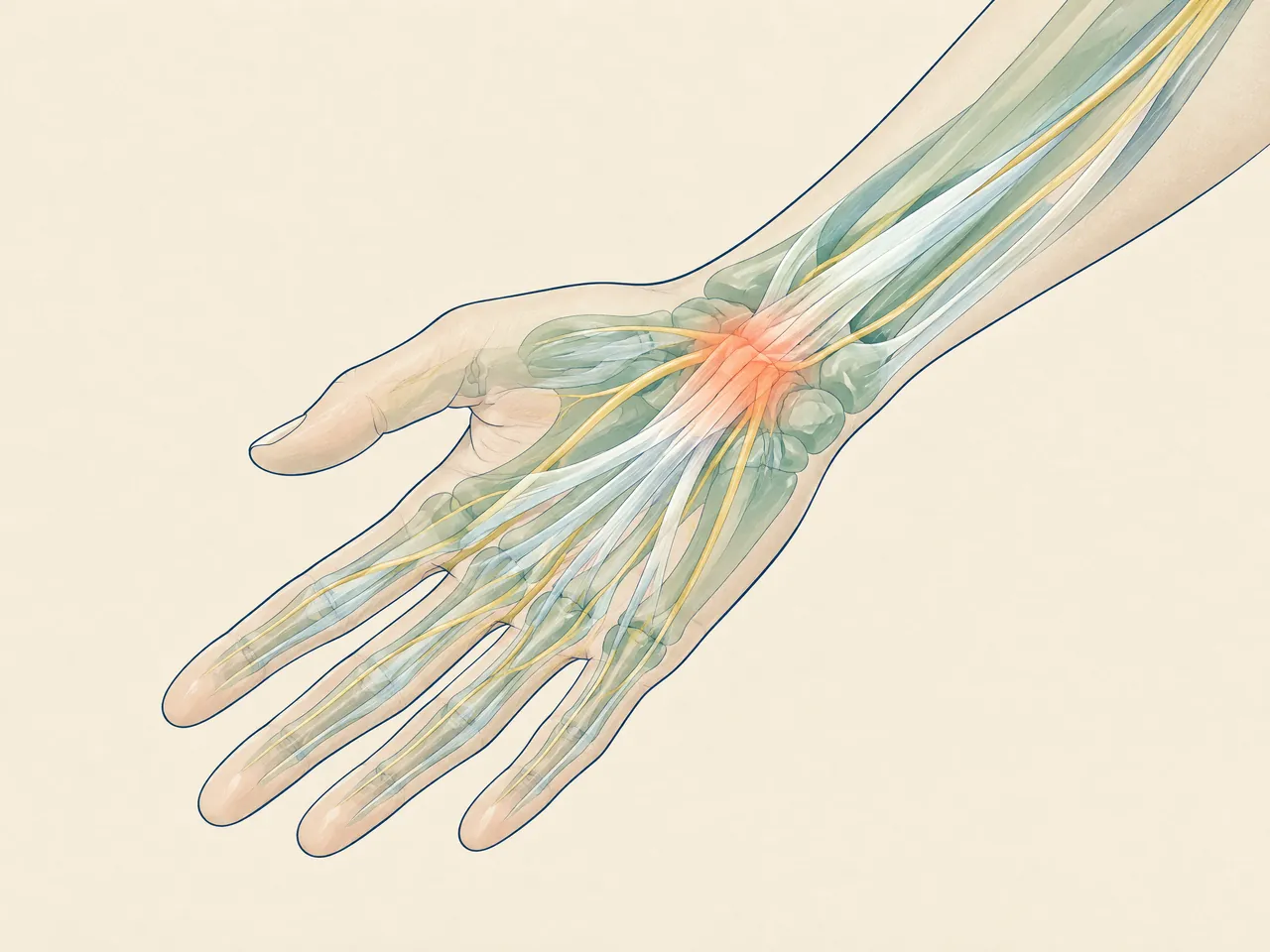
Wrist pain can come from an injury, repetitive load, tendon or joint irritation, a lump, or nerve-related symptoms. Ulnar wrist pain means pain on the little-finger side, while radial wrist pain is on the thumb side. Location alone cannot confirm the cause. Record the onset, activity, swelling, movement and sensation changes. A wrist that is deformed, discoloured, very painful, impossible to move or grip with, or numb needs prompt medical assessment.
Transparent pricing
See the fees.
Choose your care.
Explore our complete official price list, including first-trial prices, regular prices, packages and branch-specific options.
Opening WhatsApp prepares an enquiry; it does not send a message, take payment or confirm an appointment. Suitability and individual arrangements are confirmed during consultation.
Pain care
All prices in HKDExtracorporeal shockwave treatment
Shockwave treatment for deep-tissue and fascial care. The Kwun Tong clinic offers the multi-area options shown below.
Priced by branch
Branch-specific pricing
Prince Edward: HK$250 per area
Kwun Tong: HK$250 for 1 area / HK$450 for 2 areas / HK$600 for 3 areas
Pain care (manual therapy)
Includes Chinese medicine musculoskeletal assessment, manual joint techniques and tui na.
HK$580 (single session)
Chinese medicine musculoskeletal assessment
Pain care (acupuncture and manual therapy)
Combines acupuncture and manual therapy.
HK$680 (single session)
Combined care
Hair and scalp
All prices in HKDScalp health and hair-loss management
Includes AI scalp analysis, deep scalp and follicle cleansing, and scalp oil-control care.
HK$380 (first trial)
Regular price: HK$680
- 6 sessions: HK$3,480 (HK$580 per session)
- 12 sessions: HK$5,760 (HK$480 per session)
- 20 sessions: HK$8,600 (HK$430 per session)
- 30 sessions: HK$11,400 (HK$380 per session)
Hair acupuncture and Chinese herbal medicine package
Includes scalp acupuncture and 3 days of Chinese herbal medicine that does not require decoction.
HK$580 (single session)
Registered Chinese Medicine Practitioner consultation
- 6 sessions: HK$3,180 (HK$530 per session)
- 12 sessions: HK$5,760 (HK$480 per session)
- 20 sessions: HK$8,600 (HK$430 per session)
- 30 sessions: HK$11,400 (HK$380 per session)
Combined hair and scalp treatment
Combines acupuncture and Chinese herbal medicine with salon-level scalp and follicle care. Packages include complimentary hair-care shampoo and serum.
HK$1,260 (single session)
Combined treatment
- 8 sessions: HK$8,640 (HK$1,080 per session)
- 16 sessions: HK$15,680 (HK$980 per session)
- 20 sessions: HK$18,600 (HK$930 per session)
- 30 sessions: HK$26,400 (HK$880 per session)
Weight management
All prices in HKDFull-body acupoint embedding for weight management
Includes full-body acupoint embedding. Packages include complimentary Chinese herbal medicine for weight management, with the number of included days scaled to the package. Embedding material and the individual treatment arrangement are confirmed during consultation; this is not a cosmetic thread lift.
HK$980 (single session)
No trial session
- 10 sessions: HK$7,800 (HK$780 per session)
- 20 sessions: HK$14,600 (HK$730 per session)
- 30 sessions: HK$20,400 (HK$680 per session)
Facial acupuncture
All prices in HKDFacial acupuncture (basic)
Includes facial acupuncture and meridian-based facial care, including care for facial puffiness.
HK$480 (first trial)
Regular price: HK$680
- 10 sessions: HK$5,200 (HK$520 per session)
- 20 sessions: HK$9,600 (HK$480 per session)
- 30 sessions: HK$13,500 (HK$450 per session)
Facial acupuncture (advanced)
Includes enhanced facial acupuncture with a specially formulated moisturising mask and serum.
HK$780 (first trial)
Regular price: HK$1,180
- 10 sessions: HK$9,000 (HK$900 per session)
- 20 sessions: HK$16,600 (HK$830 per session)
- 30 sessions: HK$23,400 (HK$780 per session)
Chinese medicine
All prices in HKDAcupuncture and Chinese herbal medicine package
Includes a Chinese medicine consultation with pulse assessment, body acupuncture and 3 days of Chinese herbal granules that do not require decoction.
HK$580 (single session)
Chinese medicine consultation with pulse assessment
Explore this topic
Wrist Pain, Ulnar Wrist Pain and Radial Wrist Pain by Location
Start by pointing with one finger rather than saying that the whole wrist hurts. The radial side follows the thumb side of the forearm; the ulnar side follows the little-finger side. Pain can also sit on the back of the wrist, across the palm-side crease, or feel deeper during rotation or loading. These labels help describe a symptom to a clinician. They do not name a structure that is definitely injured, and they cannot show whether the problem is minor or urgent.[5]
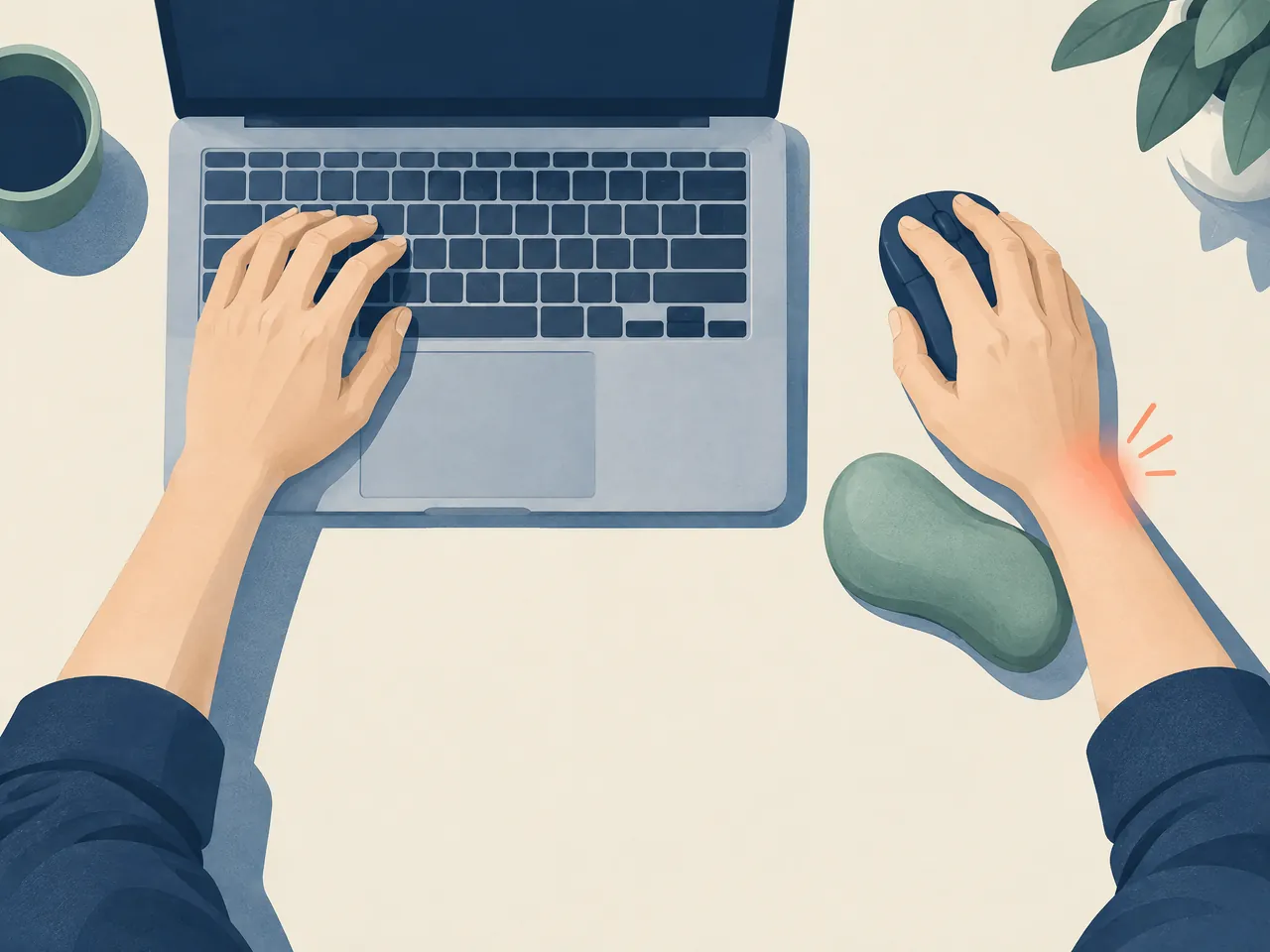
Make a short comparison that is specific to your day. Is the sore spot painful when turning a key, opening a jar, lifting a pan, supporting body weight on the hand, using chopsticks, scrolling on a phone, or pushing up from a chair? Note which wrist is affected and whether the hand is dominant. A symptom that only appears with a particular direction of movement can be more informative than a general pain score. If you are unsure how the symptoms began, the related guide on what causes wrist pain can help organise possibilities without asking you to diagnose yourself.
Wrist Pain, Ulnar Wrist Pain and Radial Wrist Pain: Compare the Thumb and Little-Finger Sides
Radial wrist pain is a description of discomfort nearer the thumb. Someone may notice it while pinching, lifting a child under the arms, using a mouse, fastening buttons or moving the thumb. Ulnar wrist pain describes the little-finger side, which may be noticed with forearm rotation, a firm grip, carrying a bag, racket sports or leaning on the hand. Neither pattern automatically means one named condition. For example, pain after a fall needs a different level of caution from a gradually developing ache during a repetitive task, even when the painful point is similar.
Describe the surface as well as the side. A smooth new lump on top of the wrist, tenderness at the base of the thumb, or a painful spot over the palm-side crease are observations worth mentioning, not conclusions to draw alone. NHS guidance lists several different patterns alongside wrist pain, including injury-related pain, thumb-base pain and a lump.[1] Avoid repeatedly pressing a painful point to test it. Instead, write down what a normal activity reveals: pain at the start, during the activity, afterwards, or the next morning.
Wrist Pain, Ulnar Wrist Pain and Radial Wrist Pain: Track Swelling, Stiffness and Movement
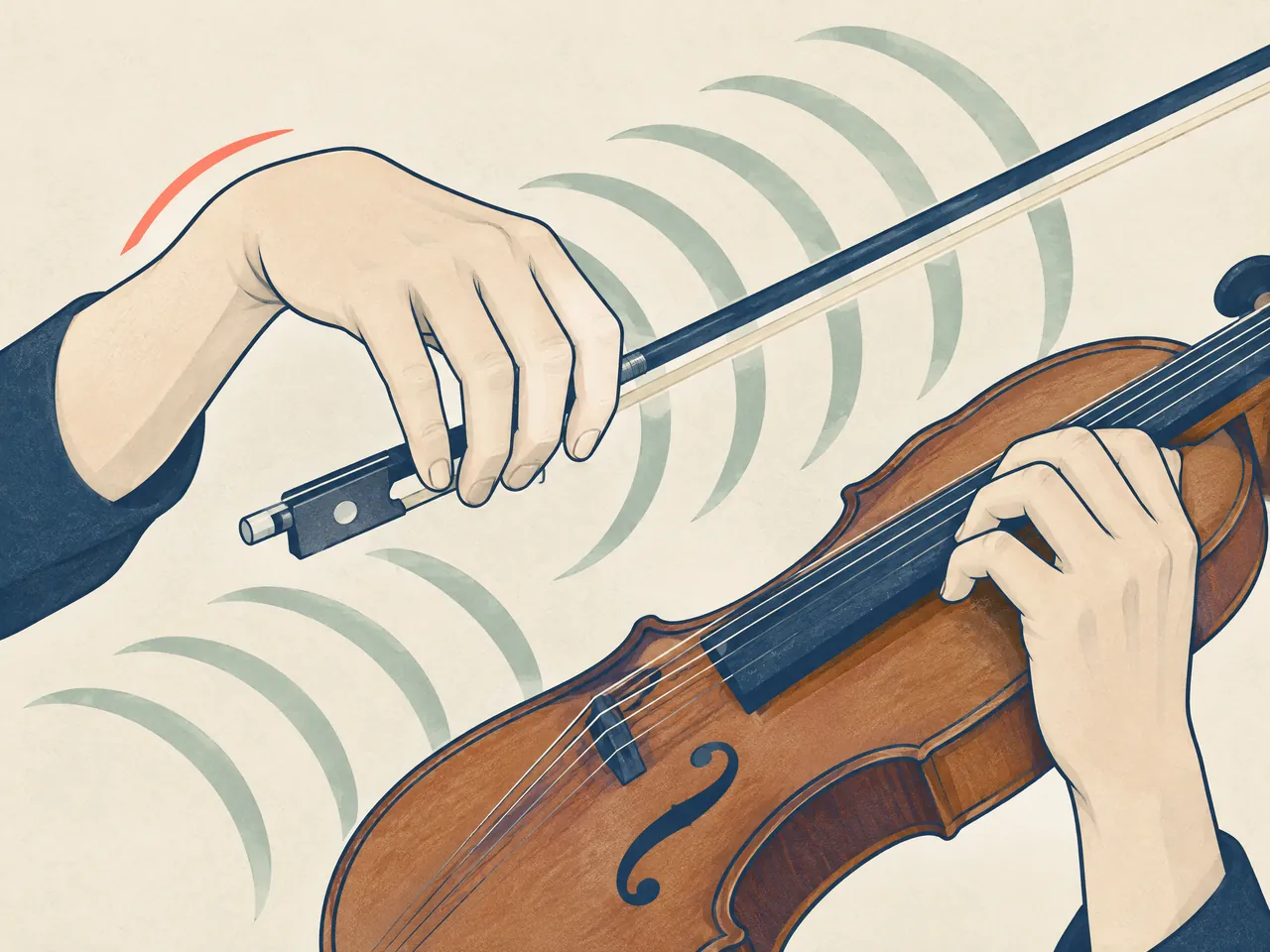
Swelling, bruising, warmth, redness, stiffness and a change in shape are observable details that can alter the next step. Compare both wrists in the same light, without forcing the painful side. Can you gently bend the wrist up and down, turn the palm up and down, open the fingers, and make a light grip? Do not test through sharp pain or try to put a visibly changed wrist back into place. A movement that is limited by pain, catching, fear of giving way or a block should be described in those words.
A useful record separates appearance from function. For appearance, note whether swelling began straight away or later, whether jewellery suddenly feels tight, and whether there is colour change. For function, note whether you can hold a cup, type for a short period, turn a door handle or sleep without being woken. This is more useful than calling the wrist simply weak. Persistent or recurrent symptoms that interfere with ordinary tasks deserve assessment; the same applies when pain worsens rather than settles.[1] If symptoms followed a recent incident, read acute wrist injury swelling treatment as a prompt to prepare a clear history, not as a substitute for examination.
Compare your options
| What to compare | Useful detail to record | Why it helps the next conversation |
|---|---|---|
| Exact location | Thumb side, little-finger side, palm side, back, or a deep central feeling | Separates radial and ulnar descriptions and gives an examiner a starting point |
| Start and trigger | Sudden fall, twist, impact, repeated grip, keyboard use, tool use, sport, or no clear trigger | Distinguishes a recent event from a gradual load-related pattern |
| Visible change | Swelling, bruising, colour change, redness, warmth, lump, or changed shape | Highlights observations that may affect urgency and examination |
| Movement and grip | Turning a handle, lifting a cup, typing, pinching, opening fingers, or holding objects | Shows how symptoms affect ordinary function rather than only pain intensity |
| Sensation and sleep | Which fingers tingle or feel numb, night waking, dropping objects, or thumb weakness | Provides detail for considering nerve-related symptoms without self-diagnosing |
On smaller screens, scroll the table sideways to compare all columns.
Wrist Pain, Ulnar Wrist Pain and Radial Wrist Pain After Injury or Repetition
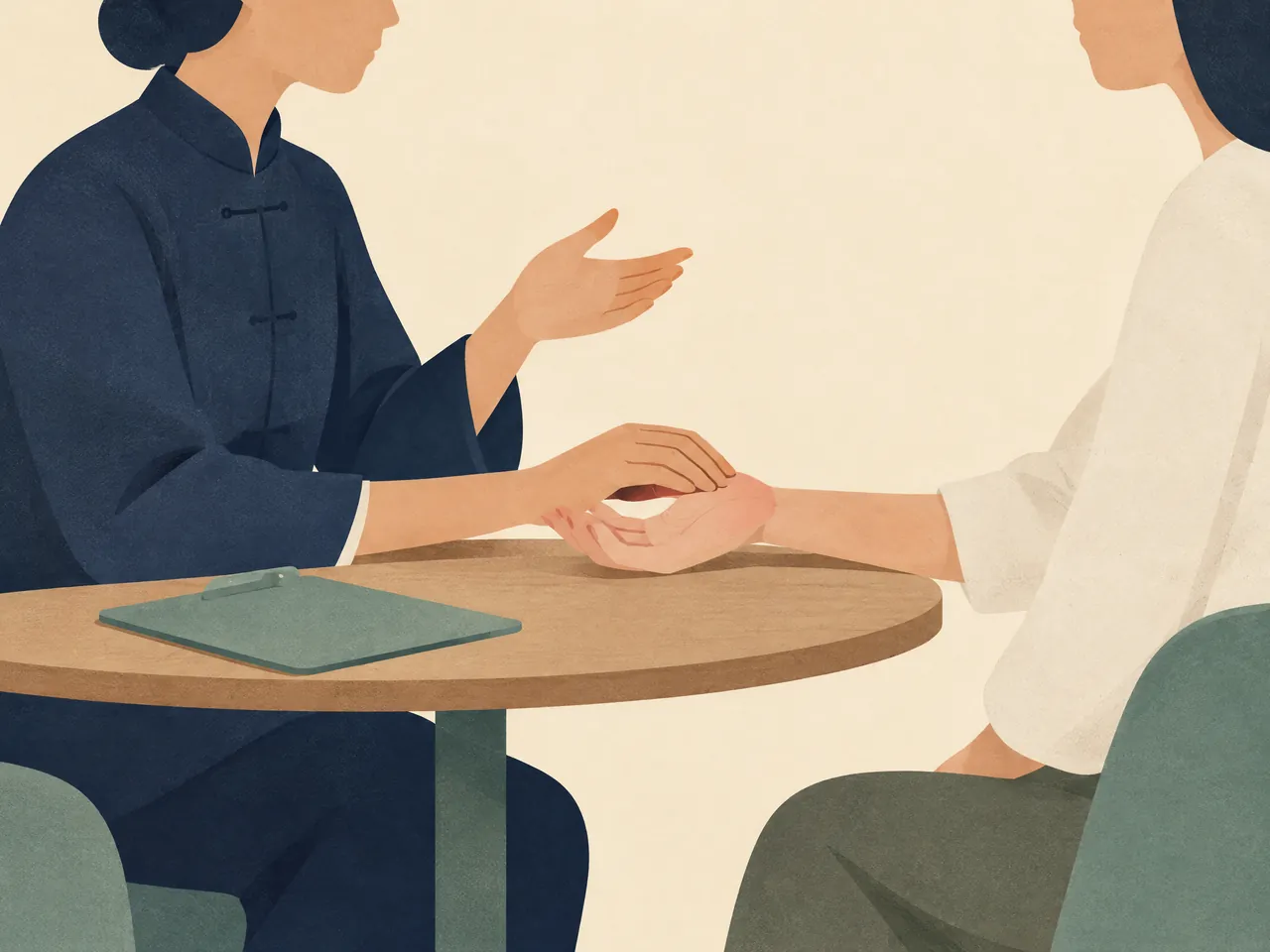
Timing helps separate an event that needs immediate attention from a pattern that has developed under load. A fall onto an outstretched hand, a collision, a forceful twist, or a sudden pull can injure tissues even if the wrist can still move afterwards. Write down the date, the hand position, whether you heard or felt a snap, and what you could do immediately after it happened. Do not assume that a wrist is only sprained because the skin is unbroken. Fracture, soft-tissue injury and nerve symptoms can overlap, and healthcare assessment is designed to sort that out.
Repetition can matter too, but it should be described precisely. Instead of writing ‘computer work’, record whether the wrist is bent while using a mouse, whether long phone use places pressure on the palm, whether tools vibrate, or whether repeated lifting, food preparation, instrument practice or sport makes symptoms return. Add how breaks affect the pattern. Cleveland Clinic identifies overuse, sprains, falls, fractures and nerve injury among possible causes of wrist pain; the same page emphasises that the cause, not the location alone, guides care.[5]
Wrist Pain, Ulnar Wrist Pain and Radial Wrist Pain: Note Falls, Sprains and Repeated Work
After a fresh injury, protect the wrist from the motion or load that sharply increases pain while you arrange appropriate advice. Do not keep lifting, gripping hard or returning to sport to ‘check’ whether it is better. NHS advice for wrist pain includes reducing activities that cause pain and avoiding heavy lifting or a tight grip; it also flags severe pain, a snap or pop, inability to hold things, changed shape or colour, and loss of feeling as reasons for urgent help.[1]
For minor discomfort where there are no urgent signs, cold or heat is not a universal rule. In particular, fresh injuries can need a different approach from later stiffness, and skin sensation, circulation, medication and other health factors may matter. If you are considering a cold pack, use it only as safely directed and never directly on bare skin; the NHS wrist-pain page advises a towel barrier and says not to use heat packs or hot baths during the first two to three days after an injury.[1] The page How long should I ice a sore wrist? offers a focused question list to take into that decision.
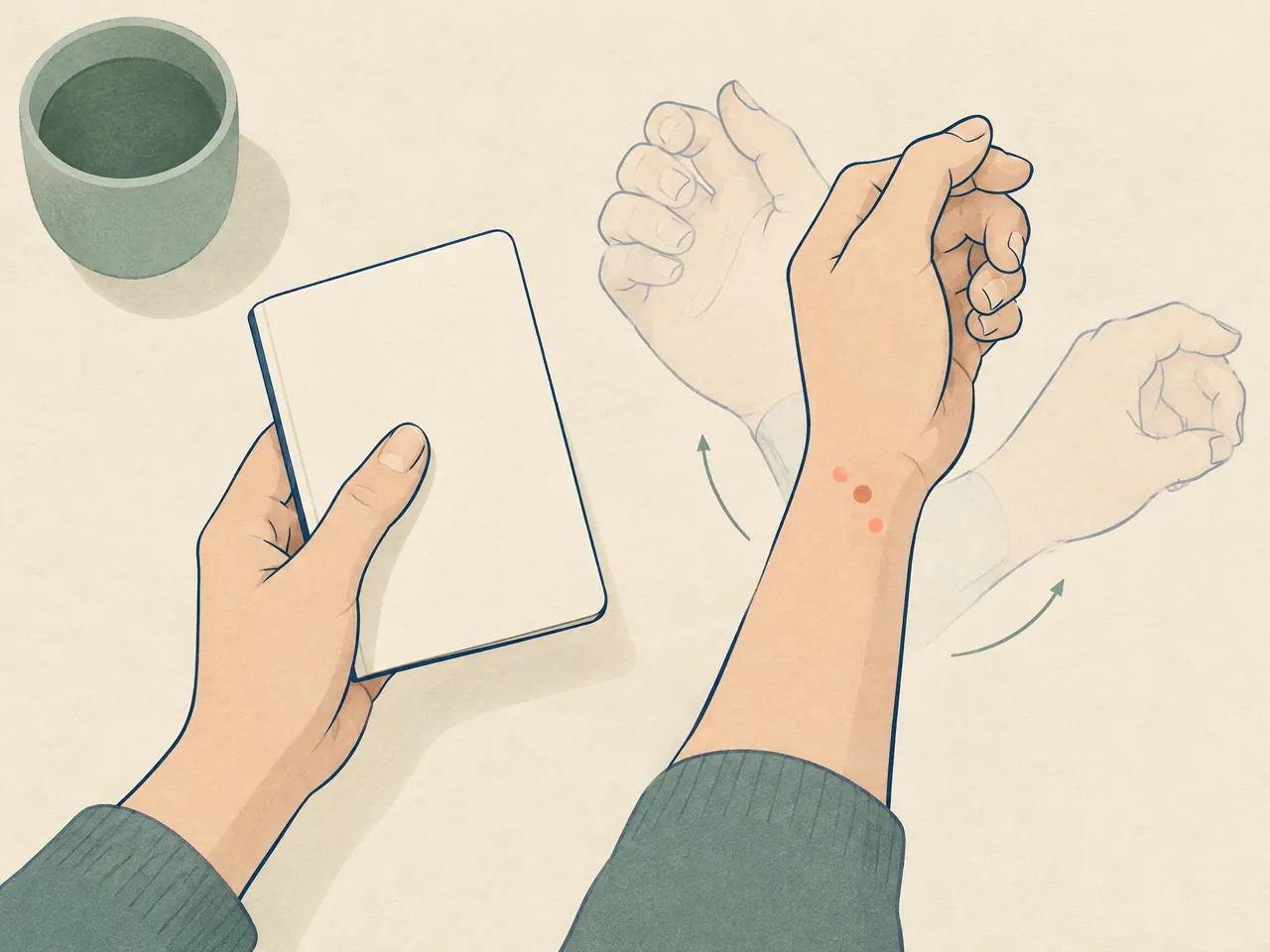
Wrist Pain, Ulnar Wrist Pain and Radial Wrist Pain: Understand Numbness and Grip Changes
Tingling, pins and needles, numbness or a changed grip deserve their own notes. Include which fingers feel different, whether the feeling is in the palm or back of the hand, whether it comes and goes, and whether it wakes you at night. Carpal tunnel syndrome is one possible explanation: it involves pressure on the median nerve at the wrist and often affects the thumb, index and middle fingers and part of the ring finger, rather than the little finger.[2] That pattern is useful context, but it is not a self-test or a diagnosis.
Notice function rather than trying to measure grip strength at home. Dropping a mug, difficulty holding a phone, fastening a button, turning a key or using a keyboard can show how symptoms affect daily life. Night-time symptoms and thumb weakness can occur in carpal tunnel syndrome, but injury, swelling, another area of nerve irritation and other hand or wrist conditions may also need consideration. The National Institute of Arthritis and Musculoskeletal and Skin Diseases notes that symptoms can become more persistent and small-object grasping can become difficult in long-standing untreated cases.[2] For a clearer symptom diary, use why is my wrist numb at night before seeking advice.
Wrist Pain, Ulnar Wrist Pain and Radial Wrist Pain: Assessment and Next Steps
The appropriate next step depends on the pattern, not on whether the pain sits on the radial or ulnar side. Medical assessment comes first for a wrist that is deformed or discoloured, for severe pain, a snap or grinding sound at injury, inability to move the wrist or hold objects, complete or partial loss of feeling, or a hot, red, very painful lump or wrist with feeling unwell.[1] In Hong Kong, hand and wrist services address a broad range of skeletal trauma, soft-tissue injury, tendon and ligament problems, infection and peripheral nerve conditions; this illustrates why a thorough history matters.[3]
For non-urgent symptoms, bring a concise timeline rather than a guess at the diagnosis. Include onset, injury details if any, where pain is located, what brings it on, what reduces it, visible changes, sleep disruption, finger sensation, hand function, activities and any prior assessment or imaging. Tell the clinician about relevant health conditions and medicines. A brace, exercise, medication, manual treatment, acupuncture or referral may be discussed differently depending on the cause. It is reasonable to ask what signs would mean you should seek earlier review rather than waiting to see whether the wrist settles.
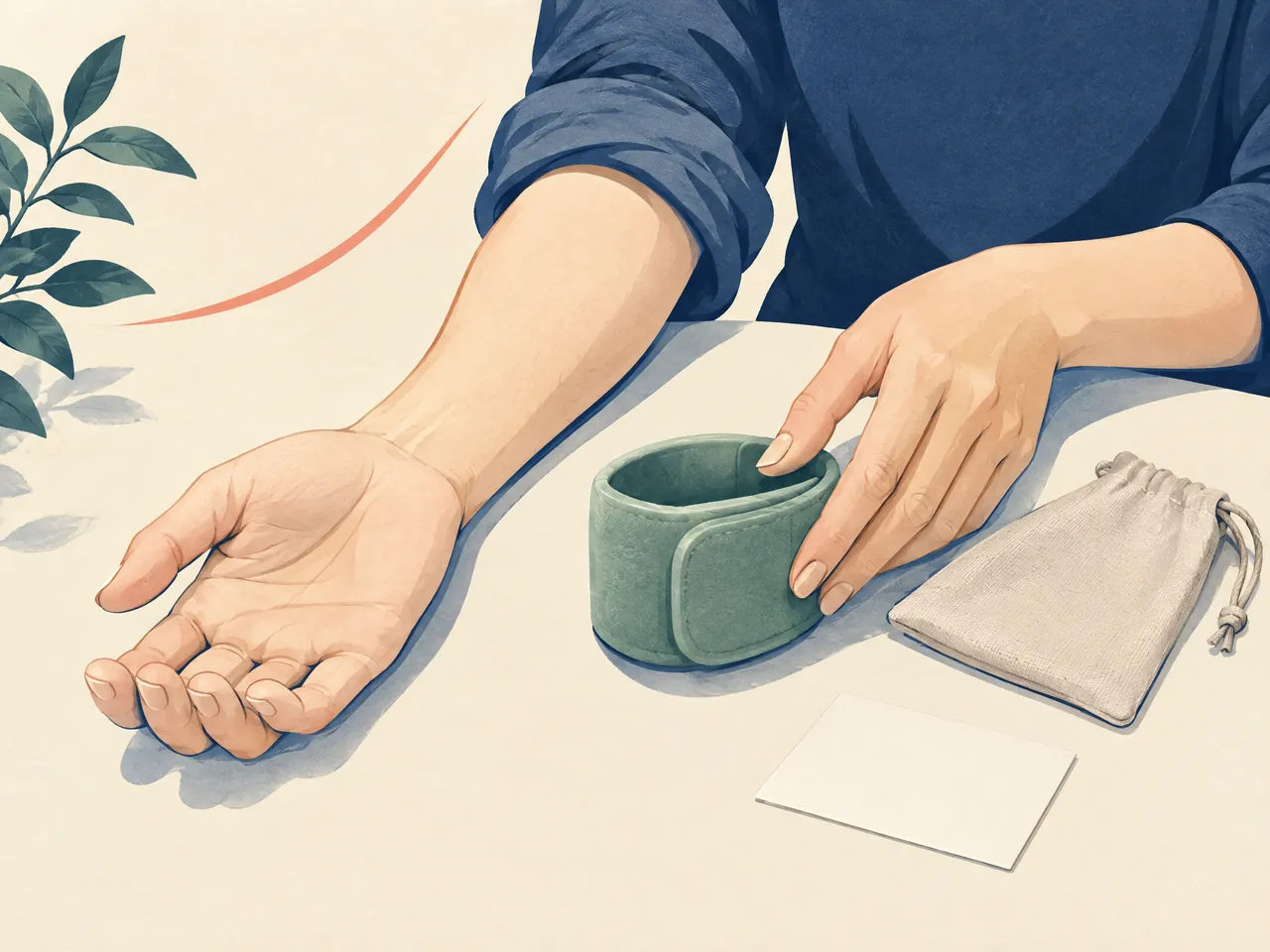
Wrist Pain, Ulnar Wrist Pain and Radial Wrist Pain: When Medical Assessment Comes First
Do not rely on a wrist wrap, heat, massage, online advice or an acupuncture appointment as the first response to an alarming new change. Urgent assessment is particularly important after significant trauma or when function or sensation is lost. Redness, heat and swelling with feeling unwell can also require prompt medical attention.[1] If pain is increasingly limiting work, self-care or sleep, or keeps returning despite reducing the provoking activity, arrange a medical review. The aim is not to label every ache as dangerous; it is to avoid missing a problem that needs examination, imaging, immobilisation, infection treatment or specialist care.
Assessment may include questions, a physical examination and, where needed, tests chosen by a clinician. For suspected carpal tunnel syndrome, NHS information explains that a clinician may use symptoms and a hand check, and may arrange nerve-conduction testing or imaging if the picture is uncertain.[6] Do not try to reproduce clinical manoeuvres aggressively at home. Instead, bring your notes and ask what the findings do and do not show. Clear information about a fall, a repetitive task, finger distribution or loss of function can make that conversation more focused.

Wrist Pain, Ulnar Wrist Pain and Radial Wrist Pain: Discussing TCM and Acupuncture Safely
After appropriate assessment, some people choose to ask a Registered Chinese Medicine Practitioner about TCM or acupuncture as part of a broader care conversation. Bring the medical diagnosis or working diagnosis if you have one, any imaging or referral information, your symptom record and a list of medicines and treatments already tried. State whether there is pregnancy, a bleeding concern, reduced sensation, a skin problem near the intended area, a recent procedure or active infection. This helps the practitioner decide whether discussion is appropriate and whether medical follow-up should take priority.
Acupuncture should not be presented as a proven answer for every painful wrist or for nerve symptoms. A Cochrane review of acupuncture and related treatments for carpal tunnel syndrome found that certainty about comparative effects was low or very low and that current studies did not provide enough good information to be sure of the effects.[4] That evidence is about carpal tunnel syndrome, not all radial wrist pain, ulnar wrist pain, sprains or fractures. It supports an honest discussion of uncertainty, possible downsides and coordination with medical care, rather than a promise to restore sensation or grip. If you wish to enquire after assessment, TCM Lab can discuss a consultation at the Kwun Tong Chinese medicine clinic or Chinese medicine clinic Prince Edward.
Care and health guide
Pain-care information
This directory brings together services, reading, and visit information related to pain care, to help you prepare questions for a consultation.
When pain care affects your day, noting when it occurs, its relation to activity, and what you have already tried can help prepare a consultation; Chinese medicine pain management Hong Kong is a relevant service or reading entry point.
Individual circumstances differ, and acupuncture Hong Kong offers related information to help you understand options and prepare questions.


Your questions, answered
Frequently asked questions
How can I tell radial wrist pain from ulnar wrist pain?
Radial wrist pain is on the thumb side and ulnar wrist pain is on the little-finger side. Point to the painful spot and also say whether it is on the back, palm side or deep in the joint. The terms describe location only; they do not identify the cause. Note what movement or task brings pain on and whether swelling, clicking, numbness or grip changes occur.
Does wrist pain with numbness at night mean carpal tunnel syndrome?
Not necessarily. Carpal tunnel syndrome can cause night-time tingling, numbness, pain and thumb or grip difficulty, often affecting the thumb, index and middle fingers. Other injuries or nerve-related problems can also cause altered sensation. Record which fingers are affected and seek assessment rather than assuming the cause, especially if feeling or function is changing.
When should I seek prompt medical help for wrist pain?
Seek prompt medical assessment if the wrist is deformed or discoloured, pain is severe, you heard a snap, grinding or popping sound during an injury, you cannot move the wrist or hold objects, or you have lost feeling in part or all of the hand. A painful hot or red lump, or a warm swollen wrist with feeling unwell, also needs medical attention.
Should I keep wearing a wrist brace all day?
The right type and duration of support depend on the cause, stage and activity. A brace can be discussed with a clinician, but it is not a way to rule out fracture, infection, tendon injury or nerve compression. If it increases pain, numbness, swelling or colour change, remove it and seek appropriate advice. Ask what movement and activity limits apply to your situation rather than using a one-size-fits-all schedule.
Can I book acupuncture instead of having a wrist injury checked?
No. A new injury with concerning signs, loss of sensation, marked weakness, deformity, inability to grip, or redness and systemic illness should be medically assessed first. For carpal tunnel syndrome, a Cochrane review found low or very-low certainty evidence about acupuncture and related treatments, so acupuncture cannot be promised to correct the cause or restore nerve function.
Sources and further information
- [1] [1] NHS: Wrist pain
Referenced for: Possible wrist-pain patterns, practical self-care cautions and urgent signs including changed shape or colour, inability to hold things and loss of feeling.
- [2] [2] National Institute of Arthritis and Musculoskeletal and Skin Diseases: Carpal Tunnel Syndrome
Referenced for: Median-nerve distribution and carpal-tunnel symptom patterns, including night symptoms and difficulty grasping small objects in untreated long-standing cases.
- [3] [3] University of Hong Kong, Division of Hand Surgery and Paralytic Reconstruction
Referenced for: Hong Kong clinical-service context for hand, wrist and upper-limb trauma, soft-tissue injury, tendon, ligament, infection and peripheral-nerve pathology.
- [4] [4] Cochrane: Acupuncture and related treatments for symptoms of carpal tunnel syndrome
Referenced for: Review conclusion that certainty about effects of acupuncture and related interventions for carpal-tunnel symptoms is low or very low.
- [5] [5] Cleveland Clinic: Wrist Pain
Referenced for: Wrist anatomy, radial and ulnar location descriptions, broad potential causes and reasons to seek assessment.
- [6] [6] NHS: Carpal tunnel syndrome
Referenced for: Carpal-tunnel symptoms, clinical assessment context and possible further testing when the diagnosis is uncertain.