
TCM Lab · Health reading
Elbow Pain Physical Examination: Elbow Pain Acupuncture Treatment and Elbow Pain Treatment with Acupuncture
Published Updated
Elbow pain is a reason to pause before choosing any treatment, because the same ache can come from a recently overloaded tendon, a muscle strain, a joint problem, swelling around the joint or a nerve-related symptom. An elbow pain physical examination starts with the story behind the pain and the movements that change it. It can help frame whether elbow pain acupuncture treatment is a reasonable supportive option, whether rehabilitation or medical assessment should come first, and what would make self-management unsafe. Acupuncture is not a way to identify or repair a fracture, a torn ligament or an infection. The useful first question is not simply whether a needle can help, but what is most likely driving the pain and what you need to do safely next.
Appointments are confirmed through WhatsApp. If you have language requirements, please mention them in your enquiry.
The short answer
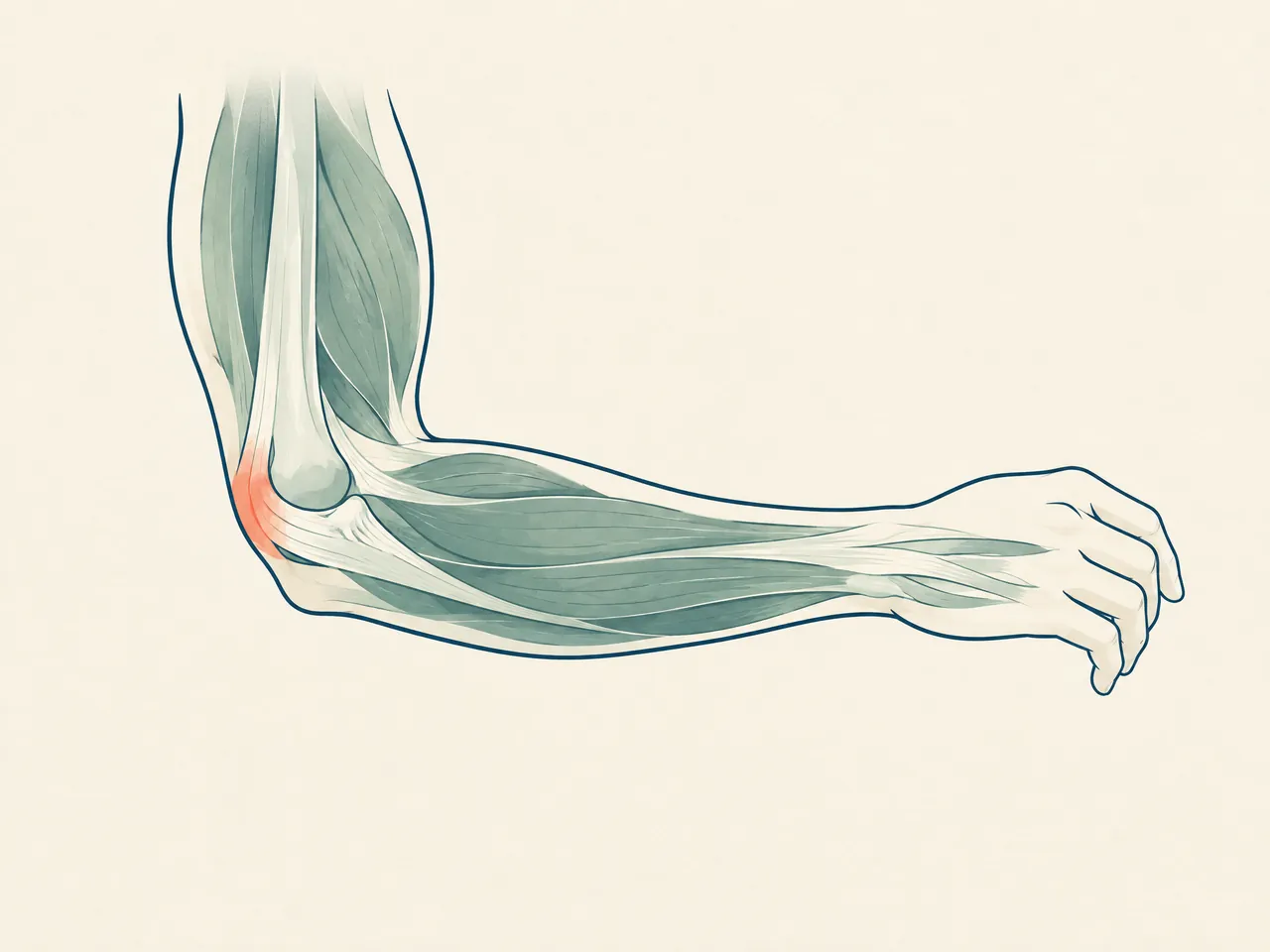
An elbow pain physical examination considers where the pain is felt, what started it, visible changes, elbow movement and the activities that reproduce symptoms. After suitable assessment, elbow pain acupuncture treatment may be discussed as supportive symptom care, particularly when lateral elbow pain or overuse is being considered. It should not replace assessment for trauma, major loss of movement, deformity, numbness, marked swelling or feeling unwell.
Transparent pricing
See the fees.
Choose your care.
Explore our complete official price list, including first-trial prices, regular prices, packages and branch-specific options.
Opening WhatsApp prepares an enquiry; it does not send a message, take payment or confirm an appointment. Suitability and individual arrangements are confirmed during consultation.
Pain care
All prices in HKDExtracorporeal shockwave treatment
Shockwave treatment for deep-tissue and fascial care. The Kwun Tong clinic offers the multi-area options shown below.
Priced by branch
Branch-specific pricing
Prince Edward: HK$250 per area
Kwun Tong: HK$250 for 1 area / HK$450 for 2 areas / HK$600 for 3 areas
Pain care (manual therapy)
Includes Chinese medicine musculoskeletal assessment, manual joint techniques and tui na.
HK$580 (single session)
Chinese medicine musculoskeletal assessment
Pain care (acupuncture and manual therapy)
Combines acupuncture and manual therapy.
HK$680 (single session)
Combined care
Hair and scalp
All prices in HKDScalp health and hair-loss management
Includes AI scalp analysis, deep scalp and follicle cleansing, and scalp oil-control care.
HK$380 (first trial)
Regular price: HK$680
- 6 sessions: HK$3,480 (HK$580 per session)
- 12 sessions: HK$5,760 (HK$480 per session)
- 20 sessions: HK$8,600 (HK$430 per session)
- 30 sessions: HK$11,400 (HK$380 per session)
Hair acupuncture and Chinese herbal medicine package
Includes scalp acupuncture and 3 days of Chinese herbal medicine that does not require decoction.
HK$580 (single session)
Registered Chinese Medicine Practitioner consultation
- 6 sessions: HK$3,180 (HK$530 per session)
- 12 sessions: HK$5,760 (HK$480 per session)
- 20 sessions: HK$8,600 (HK$430 per session)
- 30 sessions: HK$11,400 (HK$380 per session)
Combined hair and scalp treatment
Combines acupuncture and Chinese herbal medicine with salon-level scalp and follicle care. Packages include complimentary hair-care shampoo and serum.
HK$1,260 (single session)
Combined treatment
- 8 sessions: HK$8,640 (HK$1,080 per session)
- 16 sessions: HK$15,680 (HK$980 per session)
- 20 sessions: HK$18,600 (HK$930 per session)
- 30 sessions: HK$26,400 (HK$880 per session)
Weight management
All prices in HKDFull-body acupoint embedding for weight management
Includes full-body acupoint embedding. Packages include complimentary Chinese herbal medicine for weight management, with the number of included days scaled to the package. Embedding material and the individual treatment arrangement are confirmed during consultation; this is not a cosmetic thread lift.
HK$980 (single session)
No trial session
- 10 sessions: HK$7,800 (HK$780 per session)
- 20 sessions: HK$14,600 (HK$730 per session)
- 30 sessions: HK$20,400 (HK$680 per session)
Facial acupuncture
All prices in HKDFacial acupuncture (basic)
Includes facial acupuncture and meridian-based facial care, including care for facial puffiness.
HK$480 (first trial)
Regular price: HK$680
- 10 sessions: HK$5,200 (HK$520 per session)
- 20 sessions: HK$9,600 (HK$480 per session)
- 30 sessions: HK$13,500 (HK$450 per session)
Facial acupuncture (advanced)
Includes enhanced facial acupuncture with a specially formulated moisturising mask and serum.
HK$780 (first trial)
Regular price: HK$1,180
- 10 sessions: HK$9,000 (HK$900 per session)
- 20 sessions: HK$16,600 (HK$830 per session)
- 30 sessions: HK$23,400 (HK$780 per session)
Chinese medicine
All prices in HKDAcupuncture and Chinese herbal medicine package
Includes a Chinese medicine consultation with pulse assessment, body acupuncture and 3 days of Chinese herbal granules that do not require decoction.
HK$580 (single session)
Chinese medicine consultation with pulse assessment
Elbow Pain Physical Examination, Elbow Pain Acupuncture Treatment and Elbow Pain Treatment with Acupuncture: What the Assessment Covers
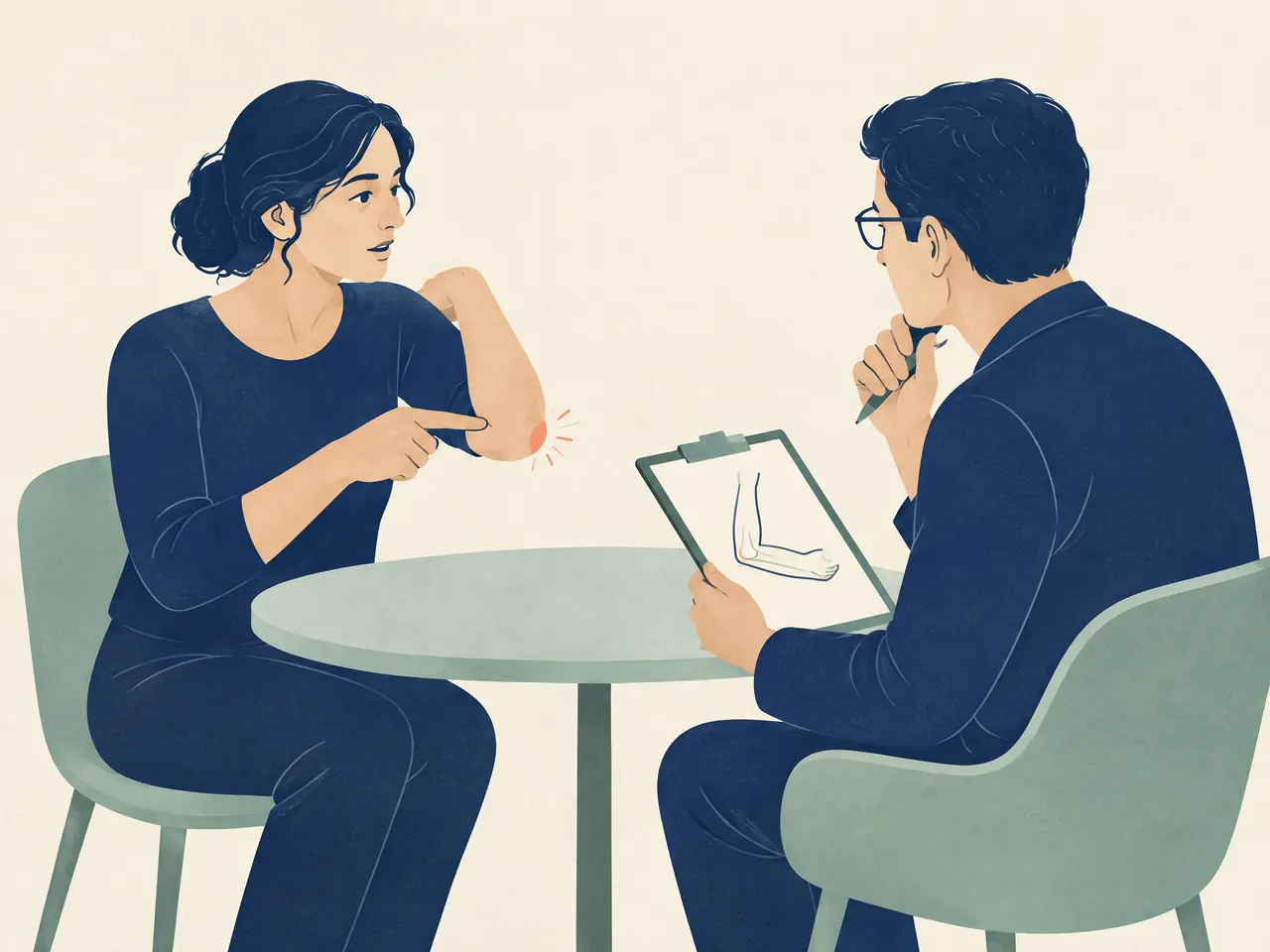
A useful assessment begins with the exact pattern, not a preset diagnosis. You may be asked when the discomfort started; whether it followed a fall, a single lift, a new gym routine or a gradual build-up; and whether it sits on the outside, inside, tip or front of the elbow. It also matters whether pain travels into the forearm or hand, wakes you at night, or appears only when gripping a bag, turning a jar, typing with a bent wrist, using tools or lifting a child. These details make the examination more useful than testing a tender spot alone. The NHS lists several possible causes of elbow and arm pain, including tennis elbow, tendonitis or bursitis, sprains and strains, arthritis, and joint infection, so a web-page label should not substitute for an individual assessment. [1]
The physical part may include looking for bruising, swelling, redness or an altered shape, then comparing bending, straightening and forearm rotation with the other side. A practitioner can ask you to make a fist, extend the wrist, lift a light object or reproduce the ordinary action that is troubling you. Pressure around the painful area and the response to selected movements can add context. These observations do not, by themselves, establish a diagnosis or rule out deeper injury. They guide the next conversation: modify a provoking task, seek further assessment, consider a rehabilitation approach, or discuss whether a non-drug option such as acupuncture has a sensible supporting role.
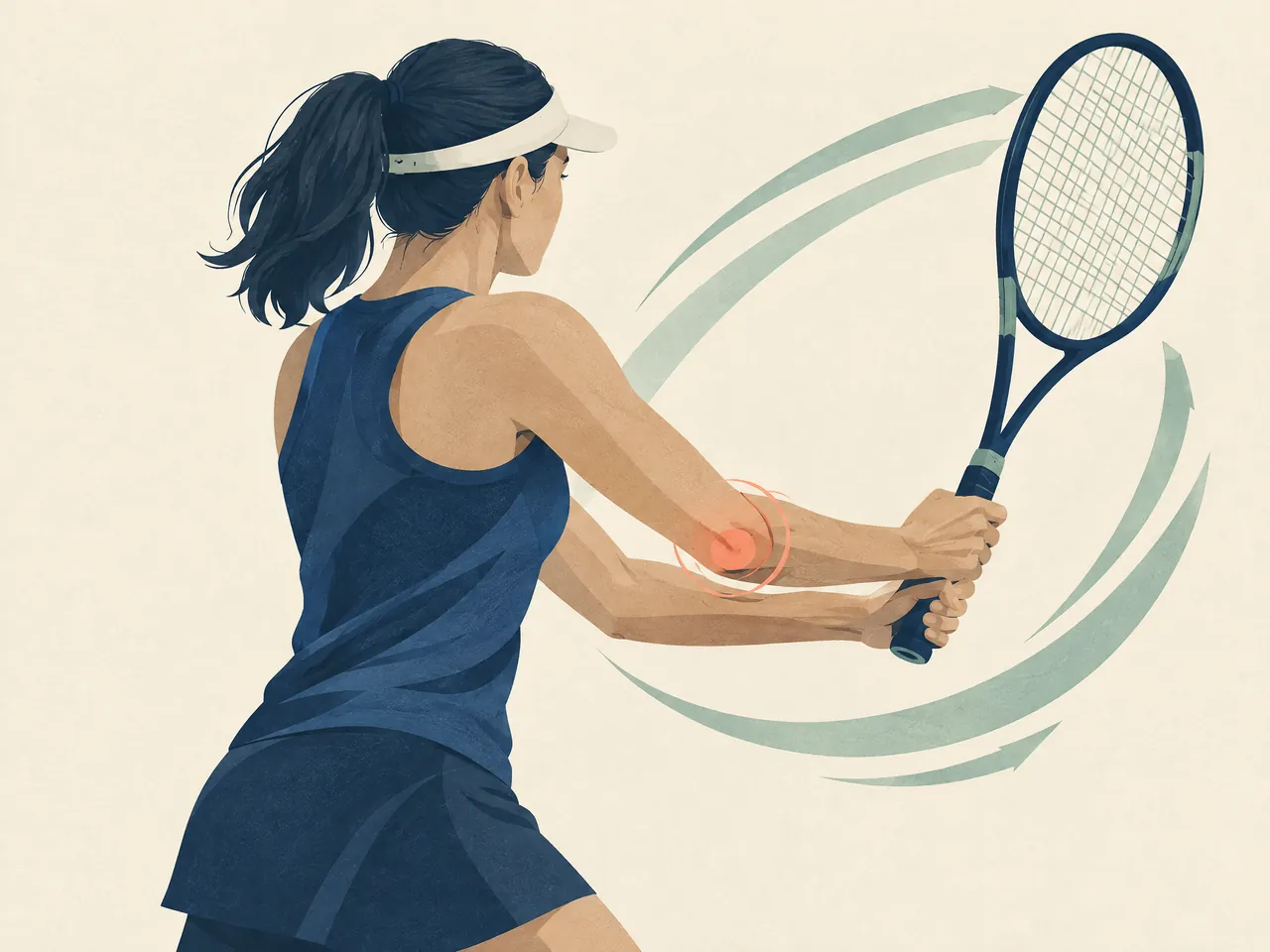
Keep the result practical. Instead of measuring success only by a pain score after a session, choose one or two meaningful activities: carrying a shopping bag without changing hands, opening a bottle, holding a phone, returning to a keyboard task, or practising a sport movement with less guarding. This gives you and the practitioner a shared way to notice change while avoiding the assumption that short-term comfort equals recovery. For a broader overview of the question people often ask first, see does acupuncture help elbow pain.
Elbow Pain Physical Examination, Elbow Pain Acupuncture Treatment and Elbow Pain Treatment with Acupuncture for Movement and Pain Patterns
Movement patterns can be more informative than the word “elbow pain.” Pain on the outer side that is aggravated by gripping or wrist use may prompt consideration of lateral elbow pain; discomfort on the inner side can have a different loading pattern. Pain directly over the elbow tip with visible swelling needs a different discussion again. Notice whether the elbow is stiff first thing in the morning, whether straightening is blocked, and whether symptoms settle when the demanding activity stops. Bring this record rather than repeatedly testing the painful movement at home. If the pattern has changed after a fall or impact, say so clearly before any elbow pain treatment with acupuncture is considered.
Elbow Pain Physical Examination, Elbow Pain Acupuncture Treatment and Elbow Pain Treatment with Acupuncture: Muscle, Tendon or Joint?
Muscle, tendon and joint structures can all contribute to a similar feeling around the elbow, and pain may also be referred from elsewhere in the arm or neck. A careful examination may suggest possibilities, but it is not a promise to name every structure without further medical evaluation. This distinction is important when choosing care. A sudden injury with obvious change in shape is not treated like a gradual ache after repetitive gripping. Likewise, tingling into the hand is not simply a “tight tendon” until an appropriate clinician has considered it. If the working pattern is lateral epicondylitis, the focused discussion in lateral epicondylitis acupuncture can help you prepare more specific questions.
Compare your options
| What you notice | What to record or discuss | Why the next step may differ |
|---|---|---|
| Gradual outer-elbow pain when gripping, lifting or using the wrist | Which movements reproduce it, the work or sport load, and what you can no longer do comfortably | A clinician may consider a lateral elbow pain pattern and discuss load management, rehabilitation and whether acupuncture is a supportive option. |
| Pain after a fall, direct blow, snap or visible change in shape | When it happened, whether movement is possible, and any immediate swelling or bruising | Injury assessment comes before acupuncture because a fracture or significant structural injury needs an appropriate medical pathway. |
| Hot, red or markedly swollen elbow, especially with feeling feverish or unwell | Temperature symptoms, rapid onset and changes in general health | Urgent medical assessment is needed because infection or another acute condition must be considered. |
| Tingling, numbness, new weakness, locking or a worsening range of motion | Which fingers or areas are affected, whether symptoms travel, and whether they occur at rest | These features may need medical assessment rather than being assumed to be a simple tendon problem. |
On smaller screens, scroll the table sideways to compare all columns.
Elbow Pain Physical Examination, Elbow Pain Acupuncture Treatment and Elbow Pain Treatment with Acupuncture: Setting Realistic Goals
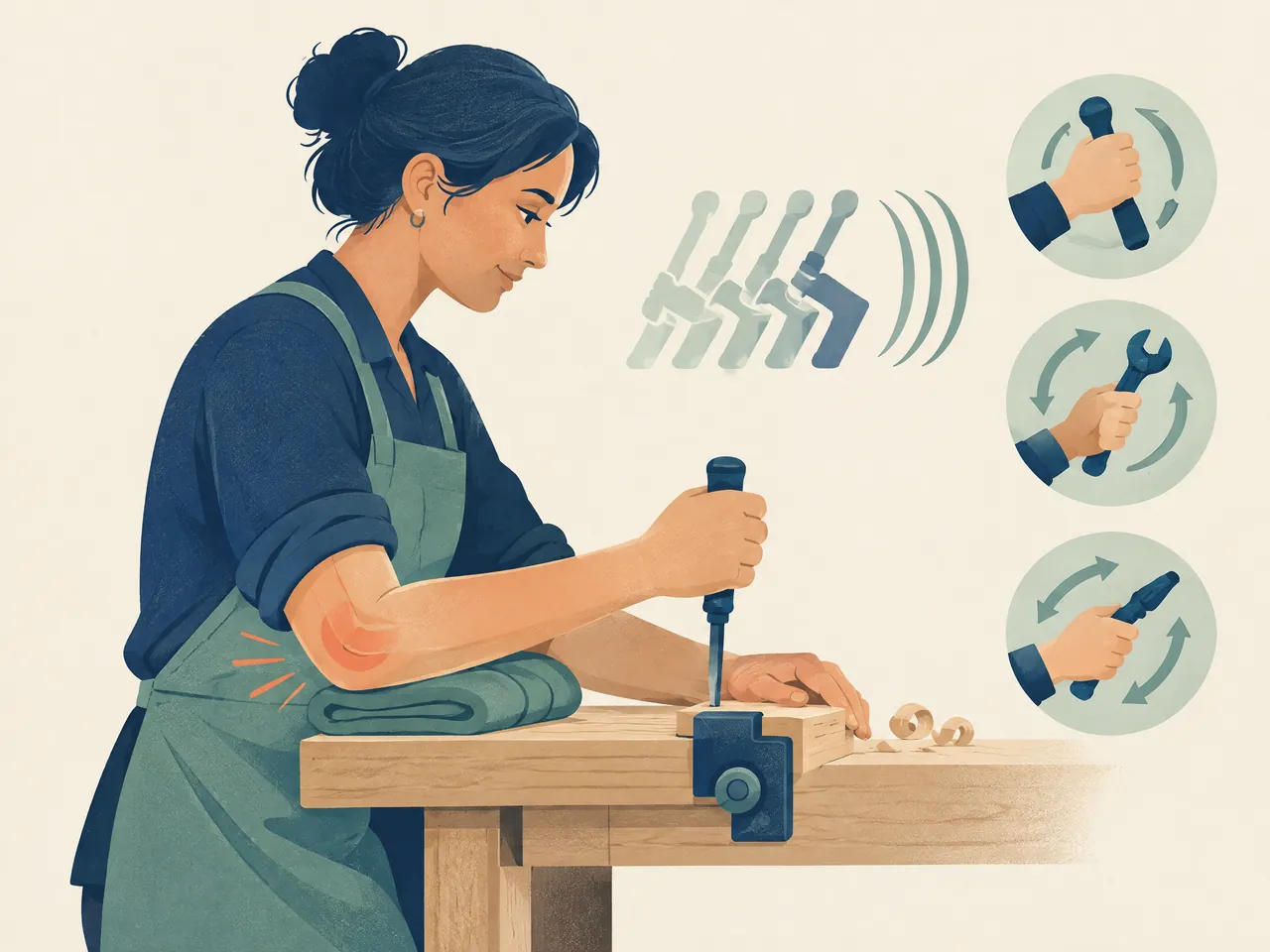
When overuse is suspected, the aim is usually to make daily function more manageable while the source of irritation and the load on it are addressed. That can mean changing how a pan, suitcase, mouse, drill or racquet is held; dividing one heavy task into shorter periods; or taking a planned pause from the movement that consistently triggers symptoms. It does not mean complete rest forever, nor does it mean pushing through sharp pain because a treatment has begun. A plan should be revisited if ordinary activities become harder, the painful area spreads, or progress depends on repeatedly avoiding all use of the arm.
Research on acupuncture is mainly about diagnosed lateral epicondylitis, often called tennis elbow, rather than every form of elbow pain. A systematic review of ten randomised trials reported that protocols and outcome measures varied, most trials had methodological limitations, long-term follow-up was often missing, and adverse effects were reported too sparsely for meaningful analysis. The authors concluded that larger, better-designed trials with long-term follow-up were still needed. [2] That is why it is more accurate to discuss acupuncture as a possible adjunct for symptoms after assessment, rather than as a guaranteed fix or a substitute for treating a serious injury.
For someone whose symptoms fit a lateral elbow pain discussion, the next choice is often not “acupuncture or everything else.” It may be a combination of load modification, exercises or physiotherapy advice where indicated, and a conversation about an acupuncture trial with a clear functional goal. UCLA Health similarly describes acupuncture as one of several modalities for tennis-elbow pain and notes the challenge of separating its contribution from physical therapy and time. [3] Read acupuncture for tennis elbow for a closer look at that narrower symptom pattern.
Elbow Pain Physical Examination, Elbow Pain Acupuncture Treatment and Elbow Pain Treatment with Acupuncture for Overuse Symptoms
Overuse does not always mean sport. A cashier scanning items, a designer using a trackpad, a parent carrying a toddler, or a cook chopping for long periods can all notice symptoms after repeated wrist and grip work. During an acupuncture consultation, explain which hand leads, how long the task lasts, what has recently changed and whether you have already adjusted equipment or technique. A useful plan can focus on the task that matters most. For example, reducing a forceful twisting action may be more relevant than avoiding every household activity. Any advice on stretching, strengthening, bracing or work changes should be tailored by the clinician who has assessed you rather than copied from a generic exercise list.

Elbow Pain Physical Examination, Elbow Pain Acupuncture Treatment and Elbow Pain Treatment with Acupuncture: Limits and Other Care
Acupuncture needles do not join a fractured bone, reattach a torn ligament or remove an infection. If an examination raises concern for structural injury or another condition, imaging, medical review, physiotherapy or other care may be more important than starting acupuncture. It is also reasonable to decide that needles are not for you. Ask about alternatives, what the practitioner thinks the treatment can and cannot address, and when the plan should change. The page Is acupuncture suitable for elbow pain? offers a useful starting point for that decision, but it cannot replace an in-person assessment when symptoms are severe or unusual.
Elbow Pain Physical Examination, Elbow Pain Acupuncture Treatment and Elbow Pain Treatment with Acupuncture: Questions Before Care
Before a visit, make a short timeline. Include the first day you noticed pain, a fall or direct blow if there was one, your job or sport demands, and treatments you have already tried. List regular medicines, allergies, previous operations and relevant health conditions. It is especially important to mention medicines or conditions that affect bleeding, past fainting with needles, pregnancy, a skin problem near the proposed area, fever or recent illness. These details help the practitioner discuss whether acupuncture is appropriate and how to proceed safely. They also avoid the common problem of treating a familiar-sounding “tennis elbow” label while missing a new symptom that needs another route.
Ask for plain answers: What is the leading explanation for my pattern, and what else needs to be considered? Which activities should I adjust this week? What is the functional goal of this trial? What sensation is expected during treatment, and what should I report immediately? How will we know that I need a medical review instead? In a typical acupuncture setting, the skin is cleaned and single-use sterile needles are used. People may feel a brief prick or an ache, heaviness, tingling or warmth. Tell the practitioner rather than enduring a strong or worrying sensation in silence.

Do not wait for a routine complementary-care appointment if the arm has severe pain and is difficult to move, if there was an injury with a snapping sound or a changed shape, or if the arm tingles or feels numb; NHS urgent guidance identifies these as reasons for urgent assessment. Swelling with a very high temperature or feeling hot, cold or shivery also needs urgent help. Sudden arm pain with chest pressure, heaviness or squeezing is an emergency pattern. [1] If pain simply persists for weeks despite sensible activity changes, arrange clinical assessment rather than continuing to guess at the cause.
Elbow Pain Physical Examination, Elbow Pain Acupuncture Treatment and Elbow Pain Treatment with Acupuncture: What to Tell Your Practitioner
The most useful description is specific: “the outer elbow hurts when I lift a kettle with my palm down” is more actionable than “my arm is bad.” Mention pain at rest, sleep disruption, weakness, clicking or locking, and any hand numbness. Bring relevant scan or medical information if you already have it, but do not assume that an old scan explains a new episode. Tell the practitioner what you hope to return to and what you are prepared to change temporarily. If you want to understand a Chinese medicine approach alongside that conversation, TCM for elbow pain explains the wider care context without treating it as a replacement for needed medical assessment.

Elbow Pain Physical Examination, Elbow Pain Acupuncture Treatment and Elbow Pain Treatment with Acupuncture: When to Seek Medical Assessment
Seek medical assessment first after major trauma, obvious deformity, sudden marked weakness, a hot and swollen elbow with feverish symptoms, or new numbness and tingling. These are not situations to test with home massage, forceful stretching or an online exercise video. Non-urgent assessment is also sensible when pain has not settled after a few weeks, movement is becoming more restricted, or the symptoms are affecting work, sleep or daily tasks. A clear diagnosis is not always available at the first visit, but a clinician can determine whether further examination, imaging or referral is needed. Once urgent concerns are excluded, you can make a more informed decision about supportive options such as acupuncture.
Care and health guide
Pain-care information
This directory brings together services, reading, and visit information related to pain care, to help you prepare questions for a consultation.
When pain care affects your day, noting when it occurs, its relation to activity, and what you have already tried can help prepare a consultation; Chinese medicine pain management Hong Kong is a relevant service or reading entry point.
Individual circumstances differ, and acupuncture Hong Kong offers related information to help you understand options and prepare questions.


Your questions, answered
Frequently asked questions
What happens during an elbow pain physical examination?
The consultation typically covers the onset and location of pain, visible changes, bending, straightening and rotation, and the ordinary movements that trigger symptoms. You may also be asked about work, sport, medicines, previous injury and numbness or weakness. The purpose is to decide what needs attention next, not to self-diagnose every elbow ache from one test.
Can elbow pain acupuncture treatment repair a torn ligament or fracture?
No. Acupuncture may be discussed as supportive symptom care after assessment, but it cannot repair a fracture, reattach a torn ligament or treat an infection. Injury with deformity, severe difficulty moving the arm, a snapping sound, numbness or a hot swollen joint needs medical assessment first.
Is evidence for elbow pain treatment with acupuncture the same for every diagnosis?
No. The research discussed here is mainly about diagnosed lateral epicondylitis or tennis elbow. Studies have varied in acupuncture protocols, comparisons and follow-up, so findings should not be applied automatically to inner-elbow pain, a fracture, bursitis, arthritis, nerve symptoms or infection.
What should I bring or tell a practitioner before acupuncture?
Describe the onset, any injury, exact triggers, limits on work or home tasks, pain at rest, sleep changes, weakness, locking and numbness. Also disclose regular medicines, health conditions, pregnancy, bleeding-related concerns, prior needle reactions and any recent fever or skin problem near the area.
Sources and further information
- [1] NHS: Elbow and arm pain
Referenced for: Supports the non-diagnostic overview of possible elbow and arm pain causes and the urgent-care warning signs described in the article.
- [2] Systematic review and meta-analysis of acupuncture for lateral epicondylitis
Referenced for: Supports the scope and limitations of the acupuncture evidence discussed for diagnosed lateral epicondylitis, including variable protocols, study quality and limited long-term or safety reporting.
- [3] UCLA Health: Can acupuncture ease the pain of tennis elbow?
Referenced for: Supports the cautious framing of acupuncture as one modality among multiple approaches for tennis-elbow pain.