Keep a separate specification card for each shortlisted wig
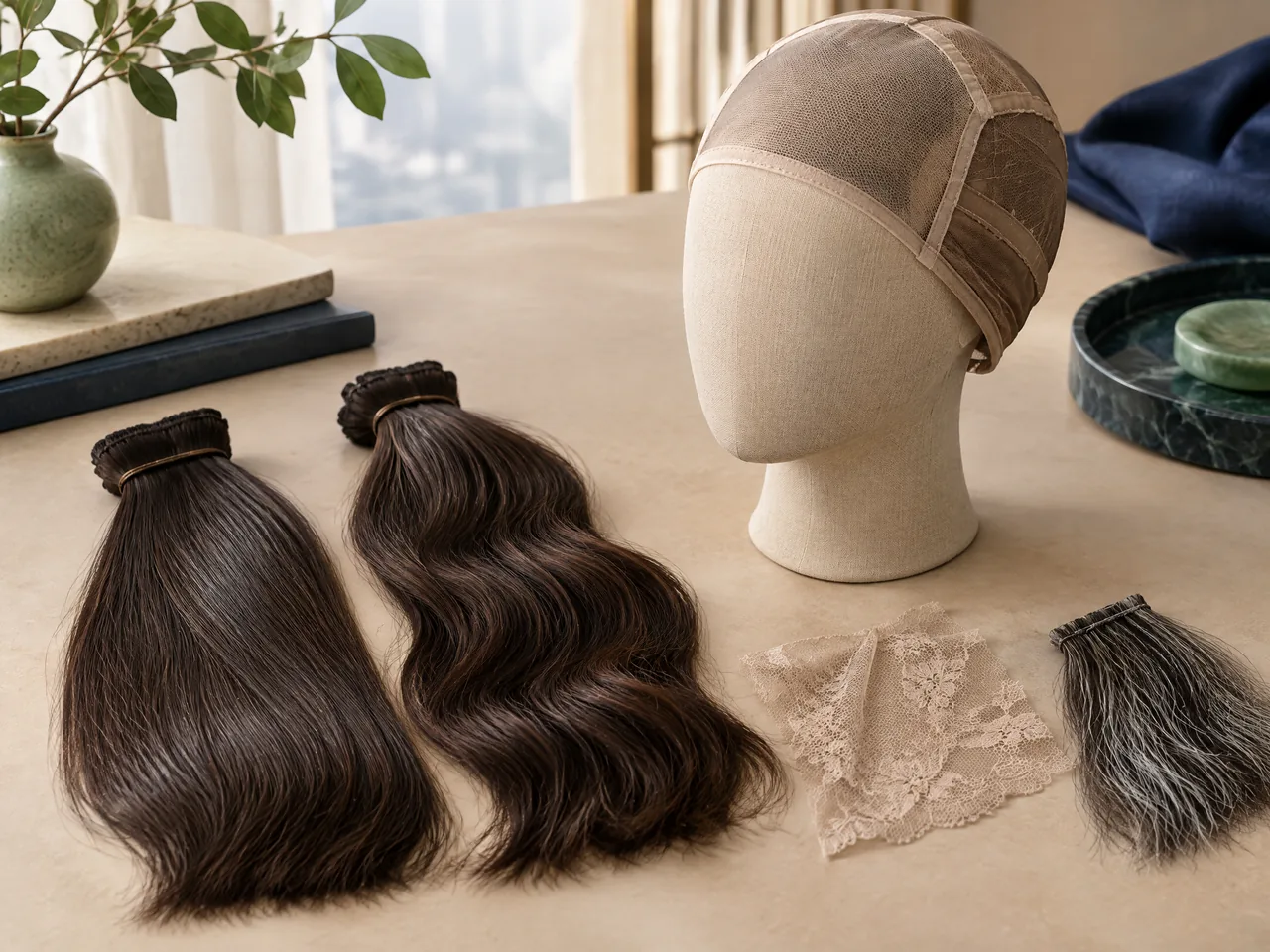
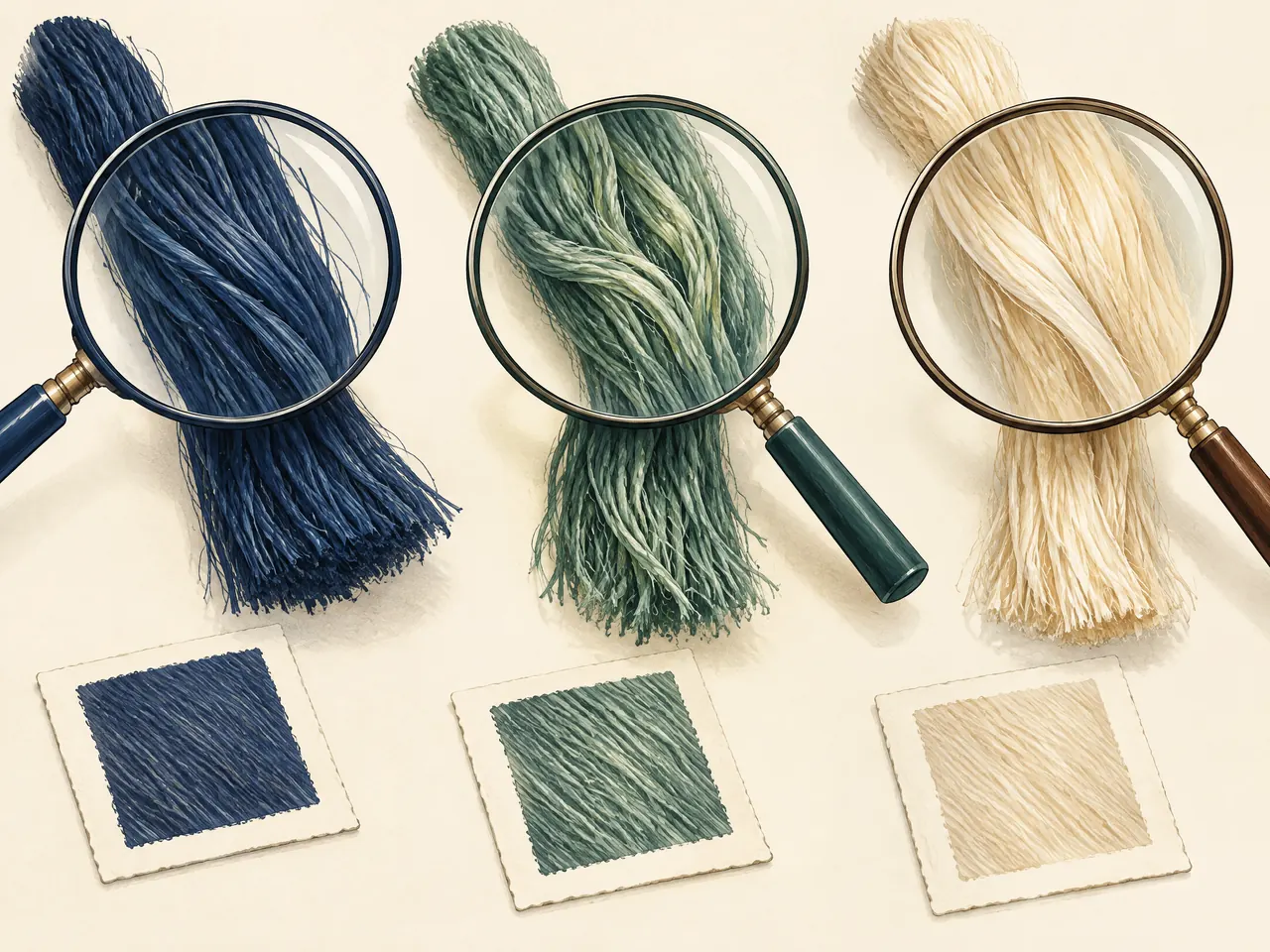
Create one note for each model rather than a single list headed 'human hair' or 'synthetic'. Put the stated fibre beside the model name, then record the cap description separately. Leave an unanswered field blank instead of inferring it from the sample's softness or shine. Anonymous fibre bundles can illustrate a comparison, but they cannot verify the material of the wig you will receive.
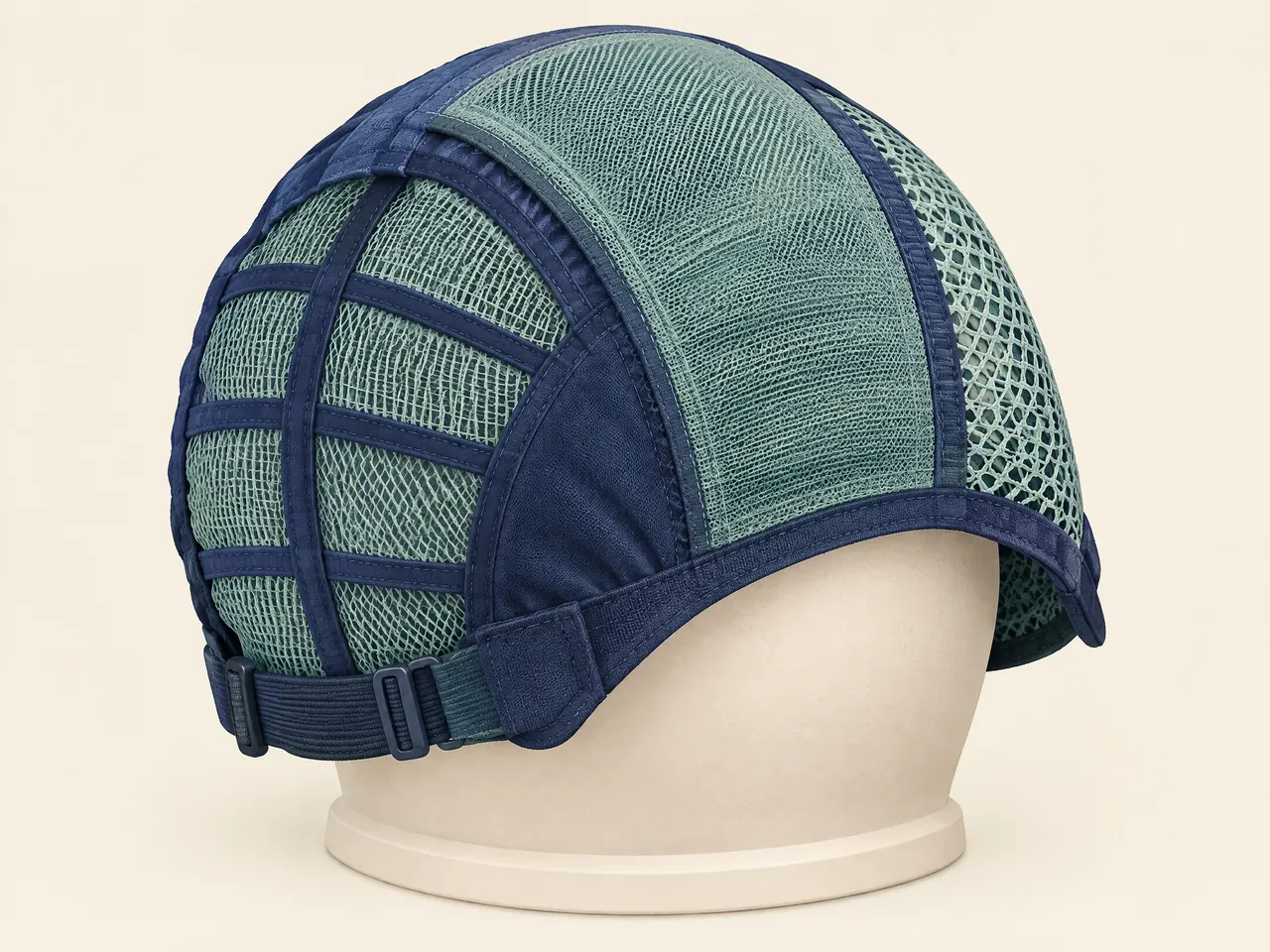
On the cap note, sketch where the demonstrated parting can move and which front edge will be exposed in your chosen style. Ask the fitter to identify those areas on the actual sample. Lace-front, monofilament and hand-tied descriptions concern construction, not proof of a particular fibre. A generic cap illustration is a prompt for those questions, not a specification for an OWNSTRAND model. [1]
Ask which handling tools belong to the supplied texture
Bring a list of the combs, brushes and dryer attachments you already own. Ask which, if any, belong in this wig's routine and whether handling changes between damp and dry hair. Jon Renau's guide distinguishes its human-hair and standard synthetic routines from its heat-friendly fibre, for which it specifies a wide-tooth comb only. That example shows why a familiar brush is not automatically suitable for another piece. [3]
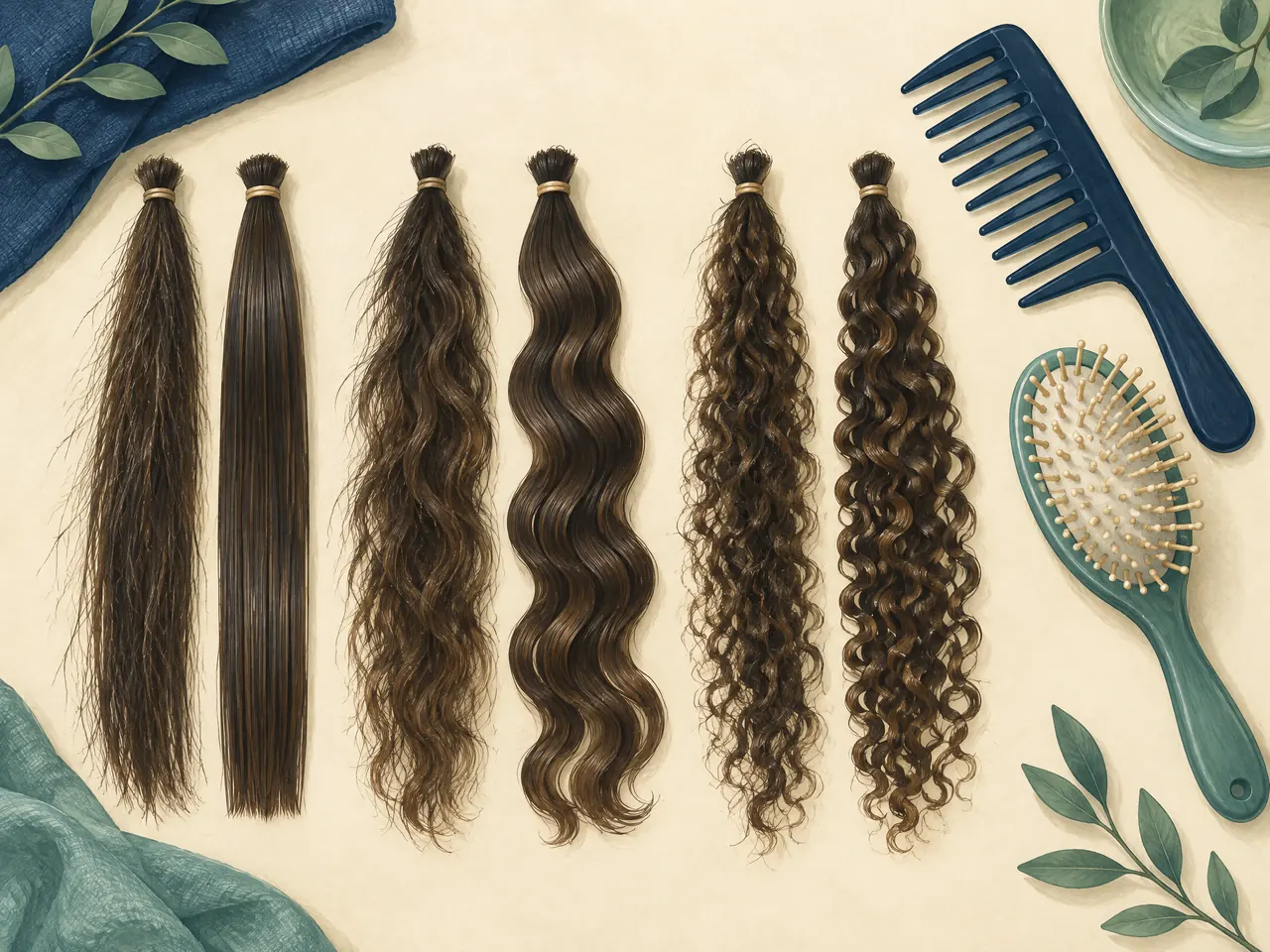
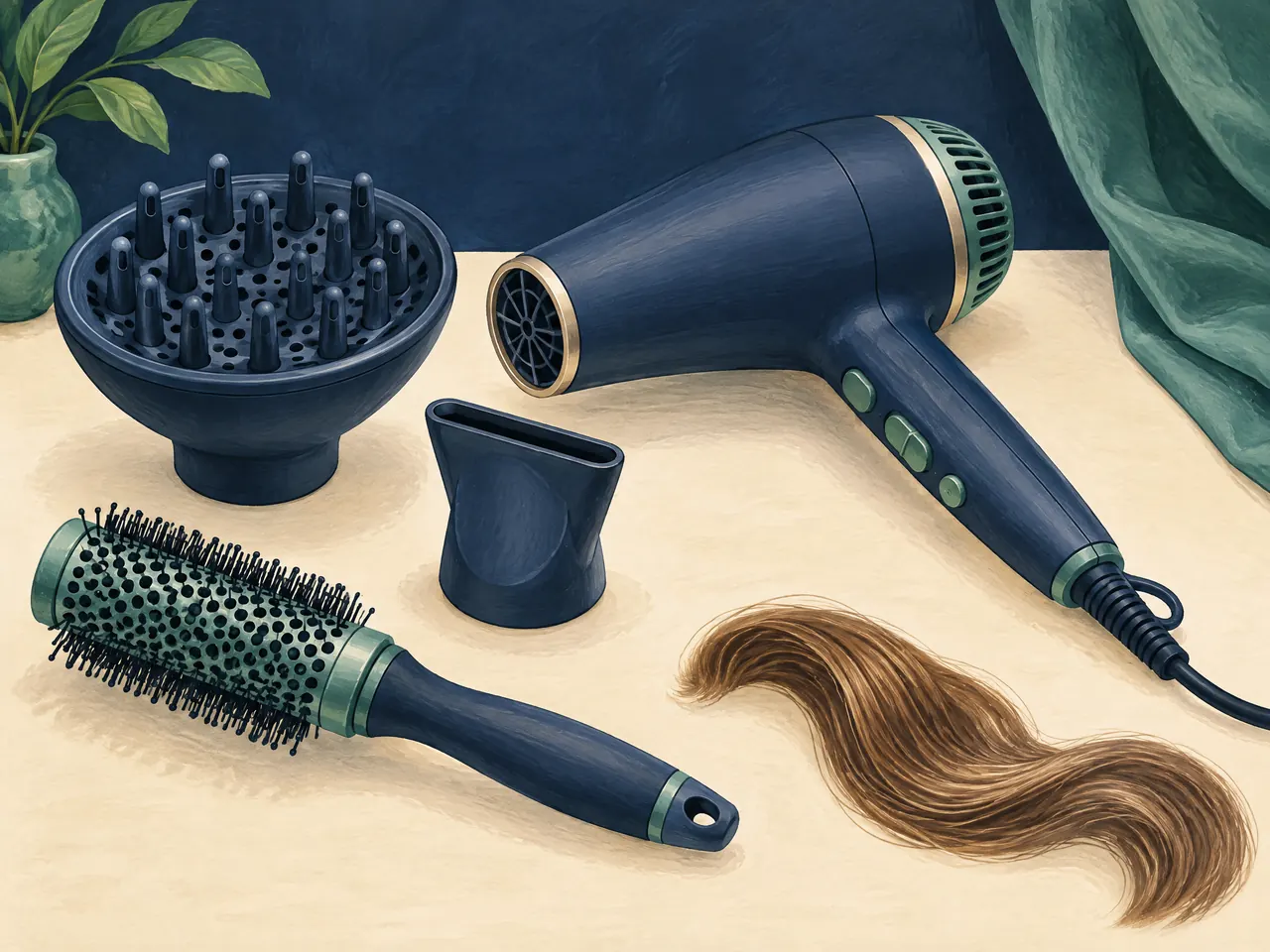
A photograph of straight, wavy and curly practice tresses is useful for describing the texture you want, but does not prescribe a detangling method. Likewise, a diffuser or nozzle on a dryer does not establish permission to use it. Have the supplier explain the relevant care-sheet step before adding a tool to your shopping list; leave unclear tools out of the planned routine.
Separate cap drying from the final hairstyle
Ask what 'dry' means at each stage of the routine. Jon Renau directs its standard and heat-friendly synthetic pieces to air-dry on a stand and says not to blow-dry them. Its human-hair instructions distinguish drying the cap completely from the later drying and styling of the hair. These are examples from one manufacturer, not interchangeable instructions for all wigs. [3]
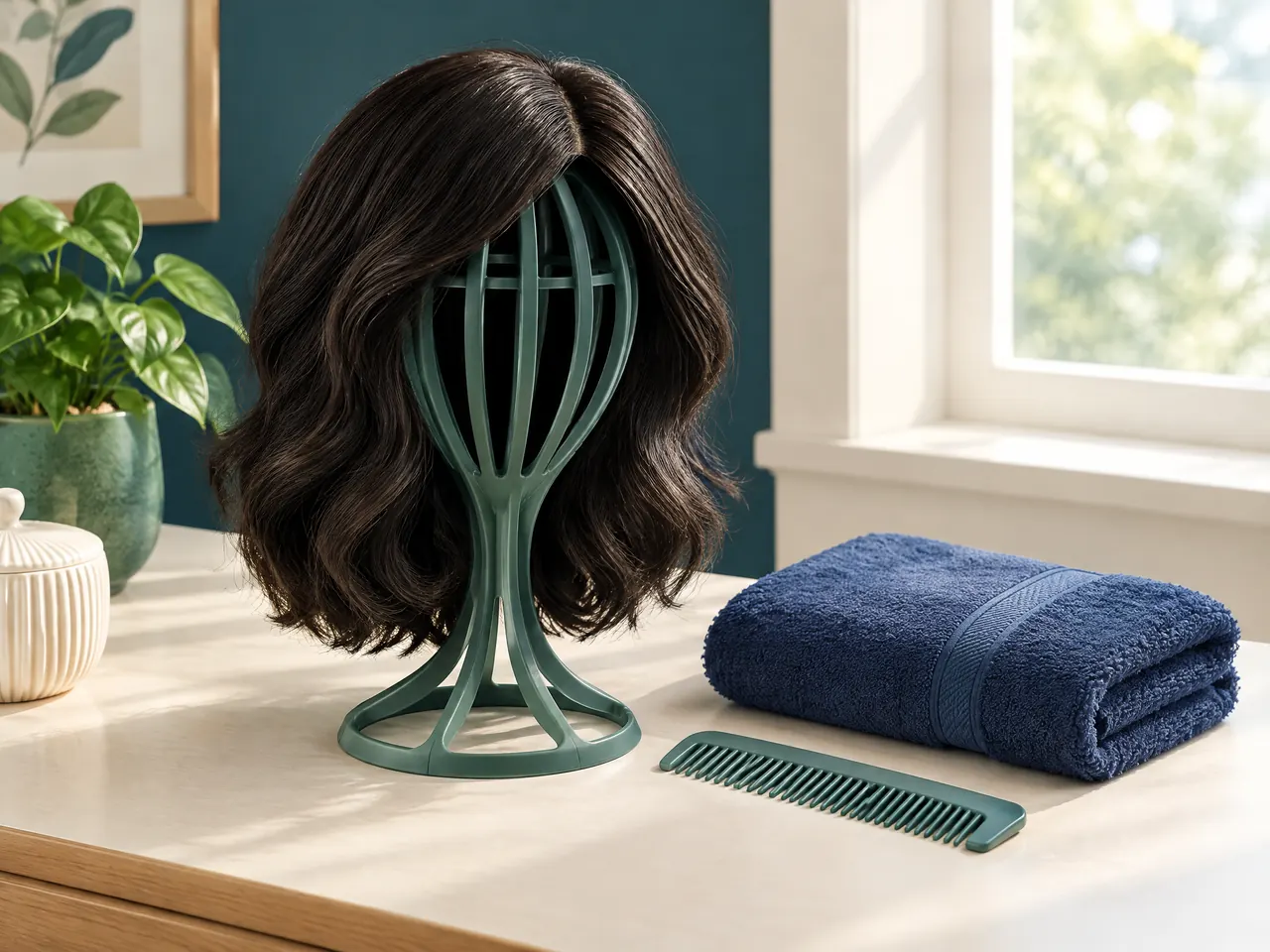
For each shortlist, write down the approved support, where the drying stage fits into your day and what still needs doing before the piece is wearable in your preferred shape. Ask how to recognise that the cap is ready for the next stage rather than promising yourself a fixed drying time. An illustrated stand helps you picture the space required; it does not confirm that the same stand or sequence suits every model.
Resolve the colour choice before planning corrective styling
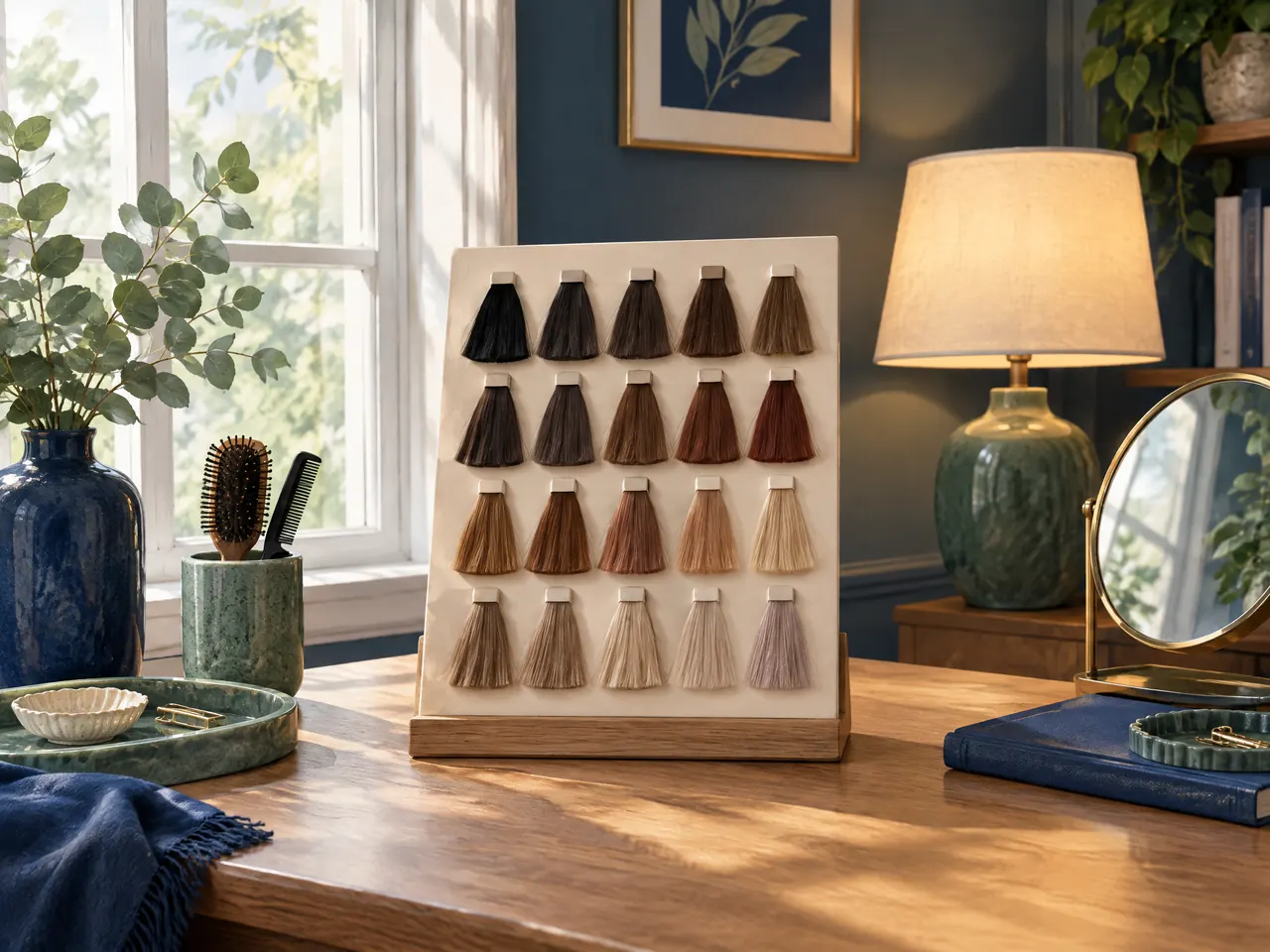
Keep the colour code with the model's care note, and ask whether the sample represents the exact shade being quoted. The American Cancer Society recommends natural light when comparing a hair swatch. Use that comparison before accepting a routine that depends on changing the colour later. [1] If you take reference photographs, note the lighting and treat them as reminders, not proof of an exact match. A material you enjoy styling is still a poor shortlist choice if its supplied colour does not meet your needs and the proposed correction has not been approved.