
TCM Lab · Health reading
Chinese Medicine for Neck Pain: A Practical Guide to Assessment and Care
Published Updated
A sore or stiff neck is not always just a posture problem. Chinese medicine for neck pain can be a useful topic to discuss when the pattern has first been clarified: where the discomfort sits, which movements are limited, whether it spreads to a shoulder or arm, and what has changed at work, during sleep or after activity. This guide helps you prepare for that conversation, use cautious comfort measures, and recognise when medical assessment should come before any complementary care.
Appointments are confirmed through WhatsApp. If you have language requirements, please mention them in your enquiry.

The short answer
Chinese medicine for neck pain should be considered only after the symptom pattern and any warning signs have been reviewed. Record onset, movement limits, pain travelling into the shoulder or arm, tingling, numbness, weakness, injury and changes to walking or hand use. For uncomplicated symptoms, changing sustained positions, gentle movement and carefully protected heat or cold may be discussed. Worsening neurological symptoms, significant injury, fever or bladder and bowel changes need medical assessment first.
Transparent pricing
See the fees.
Choose your care.
Explore our complete official price list, including first-trial prices, regular prices, packages and branch-specific options.
Opening WhatsApp prepares an enquiry; it does not send a message, take payment or confirm an appointment. Suitability and individual arrangements are confirmed during consultation.
Pain care
All prices in HKDExtracorporeal shockwave treatment
Shockwave treatment for deep-tissue and fascial care. The Kwun Tong clinic offers the multi-area options shown below.
Priced by branch
Branch-specific pricing
Prince Edward: HK$250 per area
Kwun Tong: HK$250 for 1 area / HK$450 for 2 areas / HK$600 for 3 areas
Pain care (manual therapy)
Includes Chinese medicine musculoskeletal assessment, manual joint techniques and tui na.
HK$580 (single session)
Chinese medicine musculoskeletal assessment
Pain care (acupuncture and manual therapy)
Combines acupuncture and manual therapy.
HK$680 (single session)
Combined care
Hair and scalp
All prices in HKDScalp health and hair-loss management
Includes AI scalp analysis, deep scalp and follicle cleansing, and scalp oil-control care.
HK$380 (first trial)
Regular price: HK$680
- 6 sessions: HK$3,480 (HK$580 per session)
- 12 sessions: HK$5,760 (HK$480 per session)
- 20 sessions: HK$8,600 (HK$430 per session)
- 30 sessions: HK$11,400 (HK$380 per session)
Hair acupuncture and Chinese herbal medicine package
Includes scalp acupuncture and 3 days of Chinese herbal medicine that does not require decoction.
HK$580 (single session)
Registered Chinese Medicine Practitioner consultation
- 6 sessions: HK$3,180 (HK$530 per session)
- 12 sessions: HK$5,760 (HK$480 per session)
- 20 sessions: HK$8,600 (HK$430 per session)
- 30 sessions: HK$11,400 (HK$380 per session)
Combined hair and scalp treatment
Combines acupuncture and Chinese herbal medicine with salon-level scalp and follicle care. Packages include complimentary hair-care shampoo and serum.
HK$1,260 (single session)
Combined treatment
- 8 sessions: HK$8,640 (HK$1,080 per session)
- 16 sessions: HK$15,680 (HK$980 per session)
- 20 sessions: HK$18,600 (HK$930 per session)
- 30 sessions: HK$26,400 (HK$880 per session)
Weight management
All prices in HKDFull-body acupoint embedding for weight management
Includes full-body acupoint embedding. Packages include complimentary Chinese herbal medicine for weight management, with the number of included days scaled to the package. Embedding material and the individual treatment arrangement are confirmed during consultation; this is not a cosmetic thread lift.
HK$980 (single session)
No trial session
- 10 sessions: HK$7,800 (HK$780 per session)
- 20 sessions: HK$14,600 (HK$730 per session)
- 30 sessions: HK$20,400 (HK$680 per session)
Facial acupuncture
All prices in HKDFacial acupuncture (basic)
Includes facial acupuncture and meridian-based facial care, including care for facial puffiness.
HK$480 (first trial)
Regular price: HK$680
- 10 sessions: HK$5,200 (HK$520 per session)
- 20 sessions: HK$9,600 (HK$480 per session)
- 30 sessions: HK$13,500 (HK$450 per session)
Facial acupuncture (advanced)
Includes enhanced facial acupuncture with a specially formulated moisturising mask and serum.
HK$780 (first trial)
Regular price: HK$1,180
- 10 sessions: HK$9,000 (HK$900 per session)
- 20 sessions: HK$16,600 (HK$830 per session)
- 30 sessions: HK$23,400 (HK$780 per session)
Chinese medicine
All prices in HKDAcupuncture and Chinese herbal medicine package
Includes a Chinese medicine consultation with pulse assessment, body acupuncture and 3 days of Chinese herbal granules that do not require decoction.
HK$580 (single session)
Chinese medicine consultation with pulse assessment
Chinese medicine for neck pain: What to record first
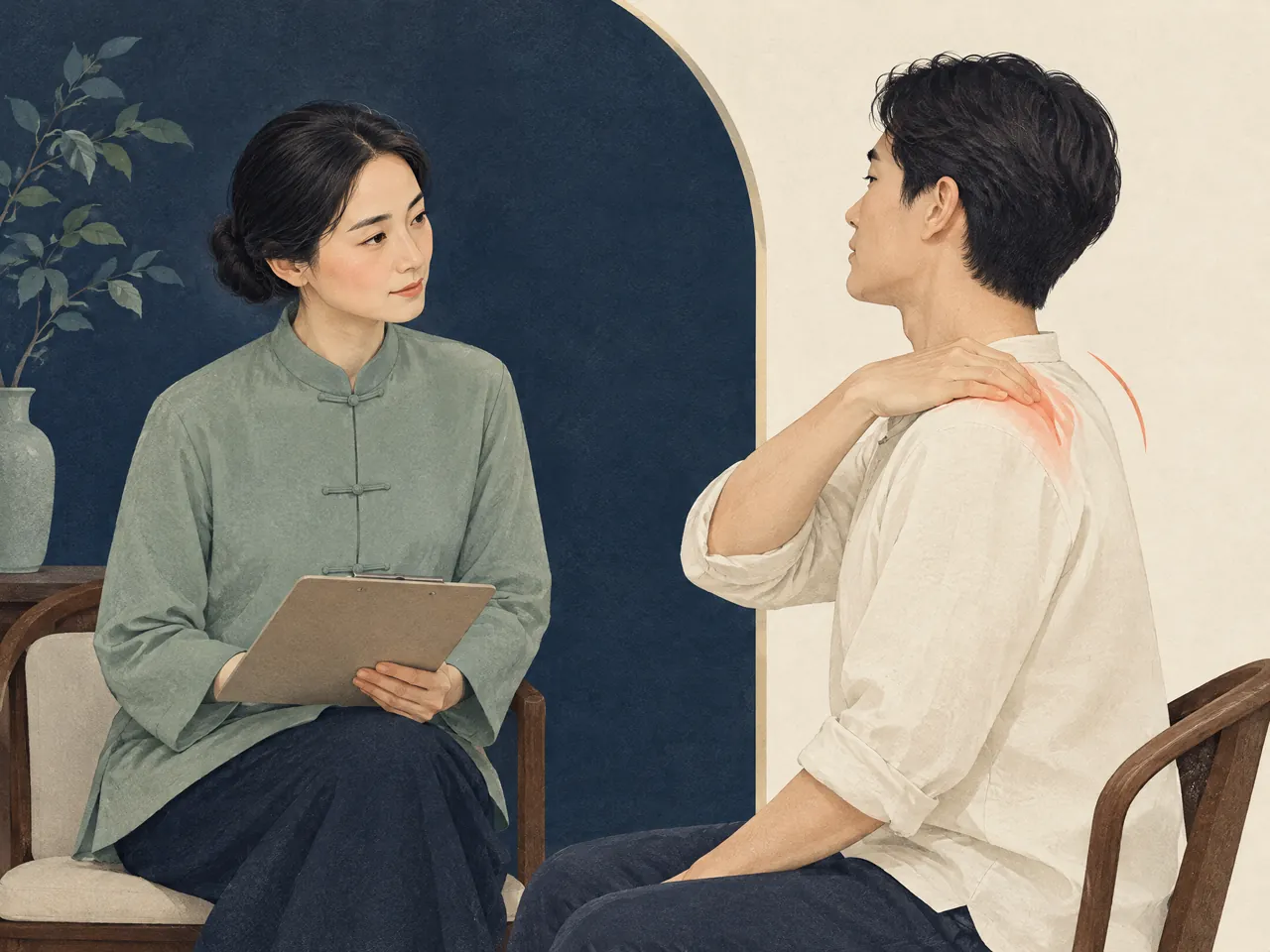
Start with a pattern, not a label. Neck discomfort may be a one-sided pull when turning, an ache after desk work, or a sudden catch after sleep. Note the day it began and whether it followed a fall, collision, lift, exercise session, long journey or awkward night. This does not diagnose the cause, but it gives an assessment a firmer starting point than saying that the neck feels tense. The page on neck pain symptoms can help you organise observations before a visit.
For two or three typical days, write what you were doing before symptoms changed, where you felt them, how long they lasted and what happened afterwards. Include whether turning the head, looking down, lifting an arm, driving, lying down or getting out of bed makes a difference. Also note what you stopped doing, such as checking blind spots, working at a screen or sleeping comfortably.

The same approach applies if you call it a stiff neck. Stiffness describes a sensation and a movement limit, not its cause. A recent workload change, new pillow, extra gym class, travel, sleep disruption or long time without changing position may all be worth mentioning. If symptoms persist for weeks, do not improve, or include pins and needles or a cold arm, seek clinical advice; the NHS recommends this escalation [1].
Chinese medicine for neck pain: Tracking movement limits and referred symptoms
Record the movement, direction and result. Instead of “turning hurts,” write “turning right stops earlier than left and pulls from the left neck to the shoulder,” or “looking down brings an ache between the shoulder blades after ten minutes.” Include arm movement: does reaching overhead change the neck, shoulder or arm symptoms? Such details help an assessor decide what to examine. They cannot by themselves distinguish a local complaint from a nerve-related or other condition.
Describe travelling symptoms precisely. Pain may stay in the neck, spread to the shoulder, or travel into an arm or hand. Note the route, side, and whether it is pain, tingling, numbness, heaviness, burning or a cold feeling. State whether it is constant or position-related. Do not assume all shoulder pain comes from the neck, or every arm tingle means a trapped nerve. Clear wording supports examination.
A simple functional check is often more useful than measuring angles. Can you safely look over your shoulder before crossing a road? Can you work at a computer, wash your hair, carry a light item or sleep in your usual position? If you cannot move your neck safely enough to drive or cycle, avoid those activities; the NHS gives this practical caution [1]. Do not force a blocked or painful range merely to test it.

Chinese medicine for neck pain: Why numbness and weakness matter
Numbness, tingling and weakness need more attention than ordinary muscular soreness. Note when they started, whether one or both sides are involved, where they are felt, and whether they are changing. Mention loss of grip, dropping objects, difficulty with buttons or zips, altered handwriting, a heavy arm, or symptoms in the legs. These are facts for assessment, not symptoms to explain away with a stretch or heat pack.
New or significantly worsening balance, walking, hand-coordination, limb-strength or sensation changes need prompt medical attention. NHS Inform lists difficulty walking, reduced balance, clumsy hands, and bladder or bowel changes among symptoms requiring urgent discussion when new or worsening [2]. These signs can have several causes; the point is not to diagnose yourself, but not to make a complementary consultation the first response.
Report wider context as well: fever, feeling generally unwell, unexplained weight change, severe headache with neck pain, or pain that rapidly worsens at rest. After a significant accident, fall or other injury, medical assessment comes first. A later Chinese medicine discussion, if appropriate, should fit alongside rather than delay examination, imaging, neurological review or rehabilitation that the symptoms may require.
Compare your options
| What to observe | Specific example to record | Why it is useful in a discussion |
|---|---|---|
| Onset and change | Started gradually after a week of long laptop sessions; worse since yesterday | Shows the timeline and whether symptoms are progressing rather than assuming one cause |
| Movement and function | Turning right is limited; checking traffic or washing hair is difficult | Connects a movement limit to safety and ordinary activity |
| Spread or altered sensation | Tingling runs from the neck into the right forearm after looking down | Helps identify symptoms that may need neurological assessment |
| Load, sleep and injury | New overhead tasks at work; woke with pain; no fall or collision | Provides relevant context without treating posture or sleep as a diagnosis |
| Change in warning signs | New hand clumsiness, unsteady walking, or bladder or bowel change | Signals a need for urgent medical assessment rather than self-care alone |
On smaller screens, scroll the table sideways to compare all columns.
Chinese medicine for neck pain: Common factors and supportive steps
Without the warning signs above, review everyday load with curiosity rather than guilt. Long periods in one position may matter more than a single imperfect posture. Ask what changed, rather than assuming that posture alone is the answer.
Sleep is also worth considering, particularly when symptoms are worst on waking or when turning in bed. The NHS lists awkward sleep position, long desk time, a pinched nerve and injuries such as whiplash among possible neck-pain causes [1]. That list shows why a desk or pillow photograph cannot identify a cause. Review comfort and recent changes, but reverse any adjustment that clearly worsens symptoms.
Choose one manageable step, such as standing between calls, bringing the screen closer to eye height, changing the side of a bag, or breaking a long task into shorter periods. Observe its effect before changing several things at once. The neck pain causes guide can help frame questions for an assessment, but it cannot identify the cause for an individual.
Chinese medicine for neck pain: Posture, sleep and changing daily loads
Make the workstation fit the task you do. If you move between a monitor, laptop and papers, place the most-used item where it needs less repeated turning or bending. Bring reading material up rather than fixing the head downward for long periods, and keep frequent items within reach.
For sleep, favour comfort and repeatability. A pillow that leaves the head markedly tipped up or down may feel different from one that supports a more neutral resting position, but there is no universal correct pillow. The NHS suggests a low, firm pillow as one self-care option [1]. Change one element at a time and stop if symptoms increase. Waking with pronounced stiffness is useful information to record, especially with arm symptoms.
Daily load includes recovery after work and exercise. Someone who sits for hours may benefit from brief movement breaks; someone doing manual work may need to plan carrying, pushing, pulling and reaching. Gentle movement in a comfortable range is often more sustainable than complete rest or forcing the neck to unlock. The NHS advises keeping the neck moving instead of using a collar unless a doctor advises otherwise [1].

Chinese medicine for neck pain: Gentle movement, heat and cold considerations
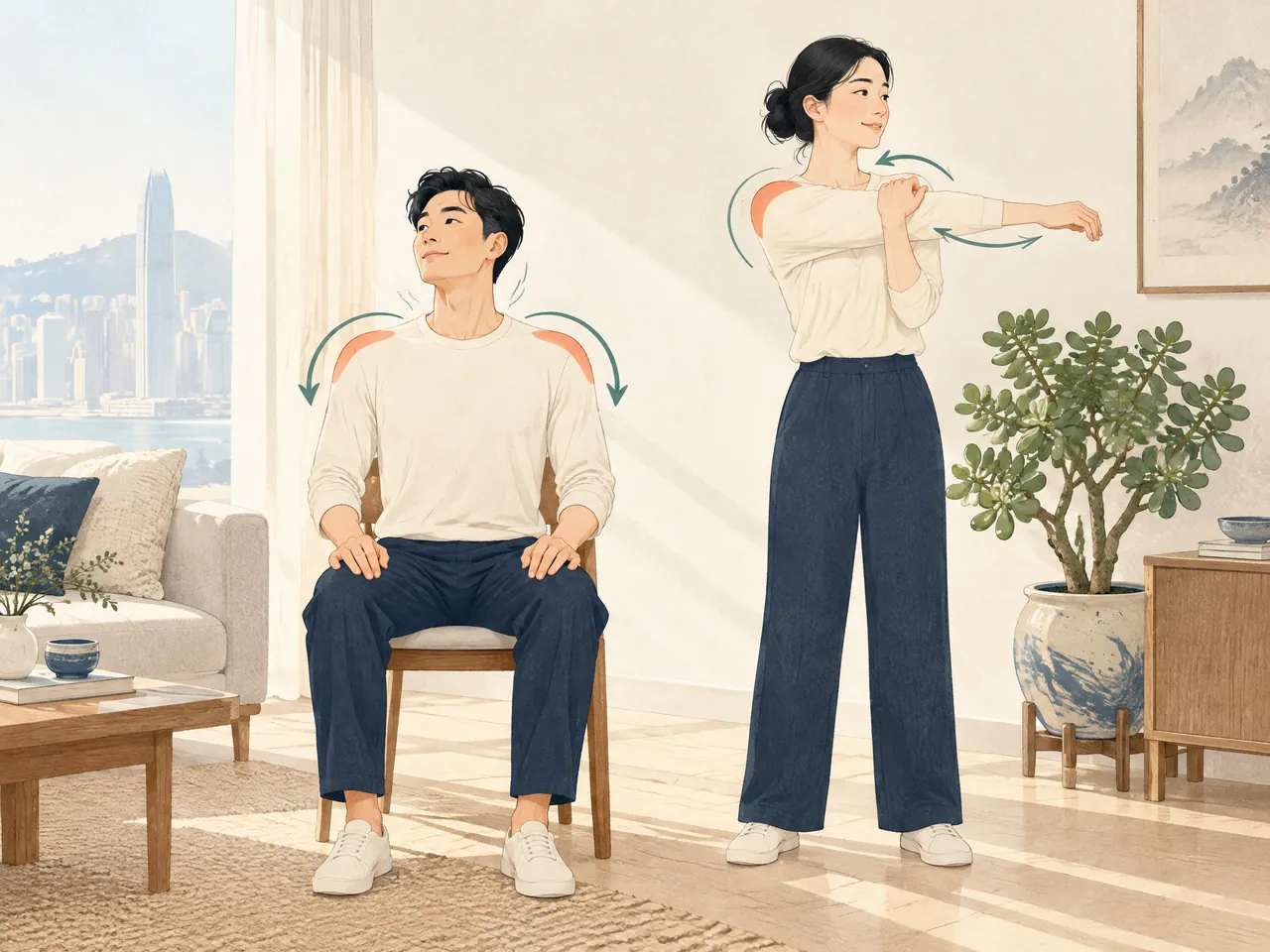
Choose movement that feels controlled, not heroic. Slowly turning the head within a comfortable range, easing the shoulders, taking a short walk or changing position after focused work can be reasonable for some people. Stop an activity that sharply increases pain, creates new tingling or weakness, or leaves symptoms clearly worse. Do not force a crack, stretch through a severe block, or copy an exercise designed for another person’s diagnosis.
Heat and cold are comfort measures, not tests for a serious problem. Some people prefer protected warmth for tightness; others find a wrapped cold pack more comfortable after a recent strain. The NHS advises heat or cold packs on the neck, using a towel barrier [1]. Keep the temperature comfortable, use it briefly, and stop if the skin is irritated or symptoms worsen. Be especially careful if sensation is reduced.
During a Chinese medicine consultation, ask how your symptom record will be used and what would prompt a recommendation for medical review. Acupuncture may be one option people ask about, but it is not a substitute for assessment of injury, nerve symptoms or progressive functional loss. NCCIH reports research findings for back or neck pain while stressing that acupuncture should not postpone health-care assessment; it also notes serious complications can follow improper delivery [3].
Chinese medicine for neck pain: When to seek assessment
Seek assessment when neck symptoms change what you can safely do or do not follow a straightforward improving course. Arrange medical advice for persistent pain or stiffness, recurrent episodes that disrupt work or sleep, or symptoms that concern you. Bring onset, movement limits, limb symptoms, injury details and measures already tried. Depending on the pattern, a clinician may examine movement, strength and sensation, and decide whether rehabilitation, tests or referral are appropriate.
Chinese medicine and conventional care need not compete. The safer order is to establish whether medical or urgent assessment is needed, continue any advised care, then discuss whether an adjunctive approach may suit the individual situation. Tightness after sustained desk work and increasing hand clumsiness call for very different priorities.

For broader navigation, visit the neck pain topic page. For a focused escalation decision, read when should I see a doctor for neck pain. These resources prepare a conversation but do not replace urgent or emergency services for serious symptoms.
Chinese medicine for neck pain: Red flags after injury or with neurological signs
Seek prompt medical assessment after a serious injury, such as a road traffic collision, fall or impact, particularly if pain is severe, movement is markedly restricted or symptoms worsen. Do not attempt vigorous stretching, manipulation or a treatment intended to put the neck back before assessment. Tell a clinician about a blow to the head, loss of consciousness, dizziness, severe headache, or pain travelling into the limbs.
Urgent assessment is also appropriate for progressive weakness, increasing numbness, symptoms in both arms or legs, new balance problems, difficulty walking, loss of hand dexterity, or bladder or bowel changes. NHS Inform specifically advises urgent discussion for new or significantly worsening changes in balance, walking, limb sensation or strength, clumsy hands and bladder or bowel function [2]. Fever, general illness, unexplained weight loss and severe or rapidly worsening pain at rest also need medical attention.
With less urgent but persistent symptoms, prepare a focused question: “What should be assessed before I consider acupuncture?” or “Could the arm sensation change the management plan?” Bring a medicine list, current treatments and relevant medical conditions. If you have imaging or rehabilitation advice, share it rather than assuming a new provider can infer it. Coordinated information is safer than separate, incomplete accounts.
Chinese medicine for neck pain: Discussing acupuncture after individual evaluation
After individual evaluation has not found a reason for urgent care, acupuncture may be one subject to discuss within a broader plan. Ask what assessment will be done, how changing symptoms will be handled, whether exercises or follow-up should continue, and what adverse effects to watch for. Mention blood-thinning medicines, a bleeding disorder, pregnancy, fainting with needles, skin infection near a treatment area, or any other health concern. Only an individual assessment can judge suitability.
Evidence should be described without promises. NCCIH summarises reviews in which acupuncture outperformed no treatment and sham acupuncture for back or neck pain, but study results do not predict an individual outcome or make needles the right response to every neck presentation [3]. The same source warns against delaying health-care assessment and notes risks from nonsterile needles or improper delivery [3]. Screening, clean practice and coordination with necessary medical care remain central.
A useful consultation produces a plan you understand: the symptom and function to track, reasonable self-care changes, when to review, and which symptoms mean stopping and seeking medical care. If you wish to enquire locally, see the Chinese medicine clinic Prince Edward or Kwun Tong Chinese medicine clinic. Explain your neck symptoms and any language needs so arrangements can be confirmed.
Care and health guide
Neck discomfort: care information
This directory brings together services, reading, and visit information related to neck discomfort, to help you prepare questions for a consultation.
When neck discomfort affects your day, noting when it occurs, its relation to activity, and what you have already tried can help prepare a consultation; acupuncture for neck pain is a relevant service or reading entry point.
Individual circumstances differ, and acupuncture Hong Kong offers related information to help you understand options and prepare questions.


Your questions, answered
Frequently asked questions
What should I record before asking about Chinese medicine for neck pain?
Note when the problem began, whether it followed an injury or change in activity, the movements that are limited, where pain travels, and whether you have tingling, numbness, weakness, hand clumsiness or balance changes. Include sleep and work effects. A short record over a few typical days is enough to make the conversation more specific.
Is posture always the cause of neck pain?
No. Sitting or sleeping in one position for a long time can contribute, but an abrupt load change, injury, nerve-related symptoms and other health factors may also be relevant. Adjusting the workspace and changing position regularly may be sensible supportive steps, but persistent or neurological symptoms should be assessed rather than blamed on posture.
When should I seek medical assessment before considering acupuncture?
Seek prompt assessment after significant injury or with new or worsening weakness, numbness, balance or walking problems, clumsy hands, bladder or bowel changes, fever, feeling generally unwell, unexplained weight loss, severe headache or rapidly worsening pain. Persistent neck pain or stiffness that is not improving also deserves clinical advice.
Should I use heat or cold for a sore neck?
Either may be a short-term comfort measure if it feels helpful. Use a wrapped heat or cold pack rather than placing it directly on the skin, and stop if it increases discomfort or irritates the skin. Heat or cold is not appropriate as the only response to injury, progressive neurological symptoms or severe worsening pain.
Sources and further information
- [1] [1] NHS — Neck pain
Referenced for: Supports general self-care wording, careful heat/cold use, gentle movement, sleep and sustained-position considerations, driving safety, and seeking care for persistent pain or neurological symptoms.
- [2] [2] NHS Inform — Degenerative cervical myelopathy
Referenced for: Supports urgent escalation language for new or worsening balance, walking, hand dexterity, limb weakness or altered sensation, and bladder or bowel changes.
- [3] [3] National Center for Complementary and Integrative Health — Acupuncture: Effectiveness and Safety
Referenced for: Supports the qualified discussion of acupuncture research for back or neck pain, the instruction not to postpone health-care assessment, and safety concerns with improper delivery.