
TCM Lab · Health reading
TCM acne assessment, acne vulgaris assessment and Chinese medicine for acne
Published Updated
A breakout is not one thing: a face with mostly tiny blocked pores needs a different conversation from one with sore, deep lumps or marks that persist after spots settle. A useful acne assessment starts by naming what is visible, where it appears, how it feels and how it has changed. It can then place skincare, routines and any interest in Chinese medicine for acne in the right order. The priority is to protect the skin barrier, avoid preventable scarring and bring in medical care promptly when inflammation is deep, extensive or distressing.
Appointments are confirmed through WhatsApp. If you have language requirements, please mention them in your enquiry.
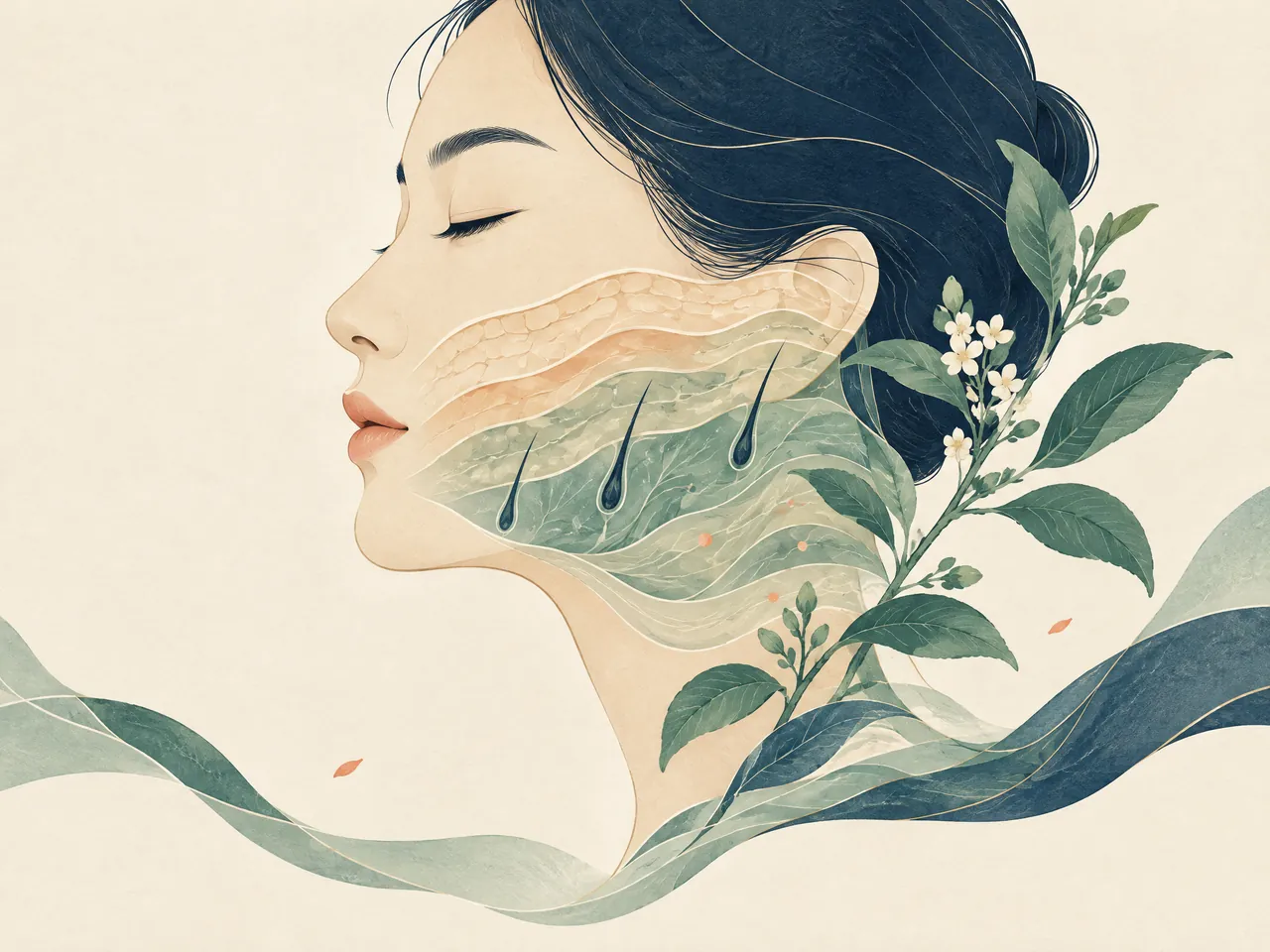
The short answer
Chinese medicine for acne may be discussed as supportive, whole-person care alongside gentle skincare and appropriate medical treatment; it is not a substitute for diagnosing acne or treating severe disease. An acne vulgaris assessment distinguishes blocked pores from inflammatory lesions, asks about timing and daily habits, and flags scarring risk. Seek medical or dermatology advice for deep painful nodules or cysts, widespread or infected-looking skin, scars, acne that is not improving, or acne that is affecting your wellbeing.
Transparent pricing
See the fees.
Choose your care.
Explore our complete official price list, including first-trial prices, regular prices, packages and branch-specific options.
Opening WhatsApp prepares an enquiry; it does not send a message, take payment or confirm an appointment. Suitability and individual arrangements are confirmed during consultation.
Chinese medicine
All prices in HKDAcupuncture and Chinese herbal medicine package
Includes a Chinese medicine consultation with pulse assessment, body acupuncture and 3 days of Chinese herbal granules that do not require decoction.
HK$580 (single session)
Chinese medicine consultation with pulse assessment
Hair and scalp
All prices in HKDScalp health and hair-loss management
Includes AI scalp analysis, deep scalp and follicle cleansing, and scalp oil-control care.
HK$380 (first trial)
Regular price: HK$680
- 6 sessions: HK$3,480 (HK$580 per session)
- 12 sessions: HK$5,760 (HK$480 per session)
- 20 sessions: HK$8,600 (HK$430 per session)
- 30 sessions: HK$11,400 (HK$380 per session)
Hair acupuncture and Chinese herbal medicine package
Includes scalp acupuncture and 3 days of Chinese herbal medicine that does not require decoction.
HK$580 (single session)
Registered Chinese Medicine Practitioner consultation
- 6 sessions: HK$3,180 (HK$530 per session)
- 12 sessions: HK$5,760 (HK$480 per session)
- 20 sessions: HK$8,600 (HK$430 per session)
- 30 sessions: HK$11,400 (HK$380 per session)
Combined hair and scalp treatment
Combines acupuncture and Chinese herbal medicine with salon-level scalp and follicle care. Packages include complimentary hair-care shampoo and serum.
HK$1,260 (single session)
Combined treatment
- 8 sessions: HK$8,640 (HK$1,080 per session)
- 16 sessions: HK$15,680 (HK$980 per session)
- 20 sessions: HK$18,600 (HK$930 per session)
- 30 sessions: HK$26,400 (HK$880 per session)
Weight management
All prices in HKDFull-body acupoint embedding for weight management
Includes full-body acupoint embedding. Packages include complimentary Chinese herbal medicine for weight management, with the number of included days scaled to the package. Embedding material and the individual treatment arrangement are confirmed during consultation; this is not a cosmetic thread lift.
HK$980 (single session)
No trial session
- 10 sessions: HK$7,800 (HK$780 per session)
- 20 sessions: HK$14,600 (HK$730 per session)
- 30 sessions: HK$20,400 (HK$680 per session)
Facial acupuncture
All prices in HKDFacial acupuncture (basic)
Includes facial acupuncture and meridian-based facial care, including care for facial puffiness.
HK$480 (first trial)
Regular price: HK$680
- 10 sessions: HK$5,200 (HK$520 per session)
- 20 sessions: HK$9,600 (HK$480 per session)
- 30 sessions: HK$13,500 (HK$450 per session)
Facial acupuncture (advanced)
Includes enhanced facial acupuncture with a specially formulated moisturising mask and serum.
HK$780 (first trial)
Regular price: HK$1,180
- 10 sessions: HK$9,000 (HK$900 per session)
- 20 sessions: HK$16,600 (HK$830 per session)
- 30 sessions: HK$23,400 (HK$780 per session)
Pain care
All prices in HKDExtracorporeal shockwave treatment
Shockwave treatment for deep-tissue and fascial care. The Kwun Tong clinic offers the multi-area options shown below.
Priced by branch
Branch-specific pricing
Prince Edward: HK$250 per area
Kwun Tong: HK$250 for 1 area / HK$450 for 2 areas / HK$600 for 3 areas
Pain care (manual therapy)
Includes Chinese medicine musculoskeletal assessment, manual joint techniques and tui na.
HK$580 (single session)
Chinese medicine musculoskeletal assessment
Pain care (acupuncture and manual therapy)
Combines acupuncture and manual therapy.
HK$680 (single session)
Combined care
TCM acne assessment, acne vulgaris assessment and Chinese medicine for acne: start with the skin picture
The most useful first step is descriptive, not speculative. Look at the actual lesions: are they blackheads and whiteheads, red raised bumps, pus-filled spots, or larger tender lumps beneath the skin? Acne vulgaris commonly includes both non-inflammatory and inflammatory lesions, sometimes in the same area. It may affect the face, chest or back, so an assessment also records distribution rather than treating every spot as identical. This basic picture makes it easier to understand acne types and severity, notice change over time and choose an appropriate next step. [1] [2]
An assessment is also a chance to look for the details that are easy to miss in a hurried mirror check. Are spots all at the hairline after a new styling product, concentrated beneath a mask, or spread across the chest and back? Is there itch, burning, heat, swelling or tenderness? Did the problem start gradually, after a new medicine, or after changing a cosmetic routine? Note which products touch the area, including sunscreen, foundation, concealer and hair products. A clinician may use those details to decide whether the pattern is consistent with acne or whether another skin condition needs consideration. Do not attempt to diagnose from online photographs: lighting, skin tone and camera filters can conceal redness, texture and depth. The aim is a clear, shareable story of what is happening to your skin now and what has changed since the last settled period. [1] [2]
TCM acne assessment, acne vulgaris assessment and Chinese medicine for acne: recognise comedones and inflammation
Comedones are blocked follicles. A closed comedone is often called a whitehead; an open comedone is a blackhead. They may feel like small, fairly even bumps and are not necessarily red or painful. Inflammatory lesions look and feel different: papules are raised and inflamed, pustules contain visible pus, and deeper nodules or cyst-like lesions can be larger and painful. More than one type can be present at once, so a person who says they have “just acne” may need a more precise description. Redness may be less obvious on darker skin, while brown or dark marks after inflammation can be especially noticeable. A photograph diary in consistent lighting can help someone describe a changing pattern, but it does not replace an in-person examination. [1] [2]

TCM acne assessment, acne vulgaris assessment and Chinese medicine for acne: understand severity and scarring risk
Severity is more than the number of spots on one morning. Ask whether lesions are widespread, recurrent in the same area, painful to touch, leaving dark marks or changing texture. Nodules and cysts deserve particular attention because they are deep and can be painful; delaying assessment while trying repeated home remedies can increase the chance of lasting scars. Marks are not always scars: colour can remain after a lesion heals, whereas a scar involves a textural change such as a depression or raised area. That distinction matters when setting expectations and deciding whether to seek dermatology care. A clinician also asks what has already been tried, how consistently it was used and whether irritation made the acne harder to manage. [1] [2]
Compare your options
| What you notice | Why it matters in assessment | Useful next step |
|---|---|---|
| Mostly whiteheads and blackheads, with little soreness | This suggests predominantly non-inflammatory comedones, although other lesion types may still be present. | Review products and routine; discuss persistent acne with a pharmacist or clinician. |
| Red, tender papules or pustules | Inflammatory lesions may need a different approach from simple clogged pores. | Avoid picking, record progression and seek advice if they persist or spread. |
| Deep painful lumps, nodules or cyst-like lesions | Depth and pain raise concern for scarring and need prompt clinical review. | Arrange medical or dermatology assessment rather than trying to squeeze them. |
| Dark or red marks after spots settle, or a change in skin texture | Residual colour and true scarring are different and can guide the next conversation. | Use gentle care and ask a clinician to assess persistent marks or scars. |
| A recurring pattern around a period or after a routine change | Timing may provide useful context but does not diagnose a hormone disorder by itself. | Keep a short cycle and product diary to share at a consultation. |
On smaller screens, scroll the table sideways to compare all columns.
TCM acne assessment, acne vulgaris assessment and Chinese medicine for acne: connect patterns with daily factors
Once the skin picture is clear, the next question is what tends to surround a flare. Acne can be influenced by changes in hormones, some medicines and greasy skin or hair products, among other factors. A short record of new products, make-up removal, exercise, mask friction, sleep disruption, stress and cycle timing can turn a vague impression into useful information for a consultation. It should not become a search for one person to blame or a rule that every chin spot proves “hormonal imbalance”. Instead, it helps separate observations from assumptions and highlights practical changes that are safe to discuss with a healthcare professional. [1]
A practical record need not be elaborate. For several weeks, write down the date, whether the new lesions are blocked pores or tender inflamed spots, where they occur and what else changed that day. Add the first day of menstrual bleeding if that is relevant, major sleep disruption, a new medicine or supplement, and a switch in hair or skin products. Record actions as well as symptoms: for example, beginning a cleanser, stopping a product because it burned, or using a prescribed topical treatment. This avoids the common problem of changing diet, skincare and treatment together, then being unable to tell what helped or irritated. The record is information for a clinician, not a scorecard. It should not lead to restrictive eating, self-blame or the assumption that stress alone explains a medical skin condition. [1]
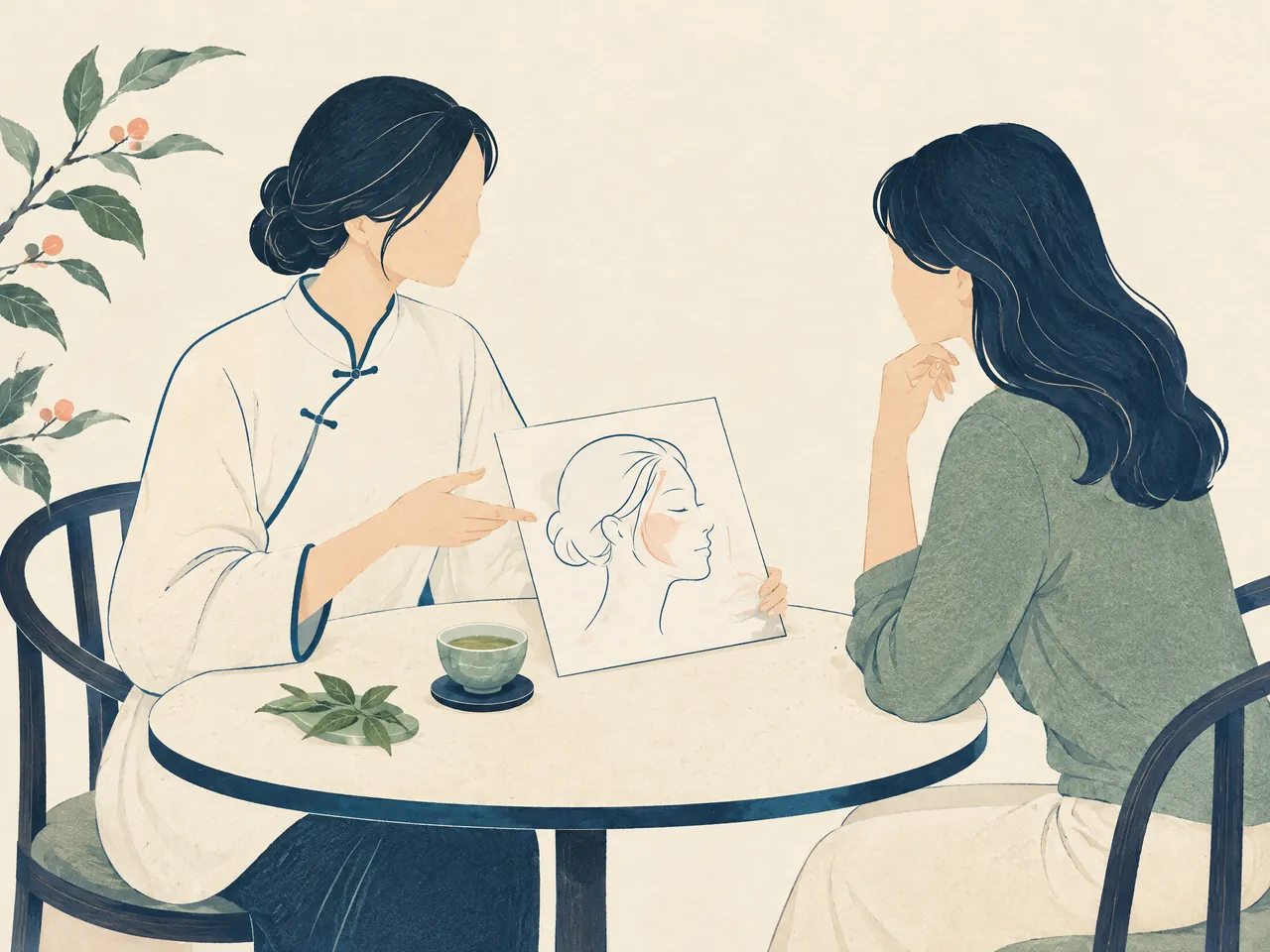
TCM acne assessment, acne vulgaris assessment and Chinese medicine for acne: what a traditional consultation considers
A TCM acne assessment uses a traditional pattern-based way of organising symptoms. A registered Chinese medicine practitioner may ask about the colour, tenderness and distribution of lesions alongside digestion, sleep, energy, menstrual history, stress and current skincare. Traditional terms such as heat, dampness, stagnation or blood stasis describe a pattern within that system; they are not laboratory findings and do not establish a bacterial infection, a hormone disorder or a dermatological diagnosis. The CUHK integrative medicine pilot programme describes the four consultations—inspection, listening and smelling, inquiry, and palpation—as part of a history and lifestyle review, while also making dietetic and dermatology consultation available. That is a useful model for coordination, not proof that an individual remedy will work for every person. [3]
TCM acne assessment, acne vulgaris assessment and Chinese medicine for acne: cycles, sleep, stress and diet
Timing often matters more than a single trigger theory. If breakouts cluster before a period, note the days they begin, the lesion type, any pain and whether the pattern repeats over several cycles. The guide to period acne can help structure those observations, and Why do I get acne before my period? addresses a related question. Sleep loss, a demanding period at work, a new gym routine or a heavy hair product may coincide with a flare, but coincidence is not a diagnosis. A sensible diary records the change without imposing a harsh elimination diet or stopping prescribed treatment. Bring the record, current medicines, supplements and product labels to a clinician; that gives them a clearer basis for advice and helps avoid contradictory changes made all at once. [1]
TCM acne assessment, acne vulgaris assessment and Chinese medicine for acne: care choices and referral points
Care works best when the plan matches the lesion type and the level of risk. For mild blocked pores or occasional spots, a consistent, gentle routine may be a sensible foundation. For persistent inflammatory acne, a pharmacist, doctor or dermatologist can discuss suitable treatments; do not assume that a product which stings is working. Interest in Chinese medicine for acne can be raised openly during that conversation, including anything already being taken or considered. The broader question does Chinese medicine help acne is best approached as a discussion about supportive care and limits, rather than a promise to clear every breakout. Conventional assessment should remain central when disease is moderate, severe, painful or scarring. [1]
When weighing options, keep the treatment goal concrete: reduce new lesions, settle inflammation, minimise irritation and prevent scars, rather than chasing overnight clearing. A pharmacist can advise on suitable over-the-counter topical options, while a doctor or dermatologist can assess whether prescription treatment is appropriate. Give any agreed plan time as advised, and seek help if it causes substantial irritation or the condition is worsening. If you consult a Chinese medicine practitioner, explain whether you are pregnant, trying to conceive, breastfeeding, taking regular medicines or using supplements, and bring photos or a product list if useful. That information matters before adding any approach. In an urgent situation—rapidly spreading redness, marked swelling, severe pain, fever or feeling unwell—seek prompt medical care rather than booking a routine consultation. [1]
TCM acne assessment, acne vulgaris assessment and Chinese medicine for acne: gentle skincare alongside care
Keep daily care uncomplicated while the skin is reactive. The NHS advises washing twice a day with a gentle cleanser, removing make-up at the end of the day, and choosing skincare and make-up labelled non-comedogenic, meaning designed not to clog pores. Avoid scrubbing, harsh exfoliation and picking or squeezing spots, all of which can aggravate irritation or contribute to scars. Introduce only one new product at a time so a reaction is easier to identify. If you are using prescribed acne medicine, ask the prescriber or pharmacist before layering on active products or supplements. Someone exploring acupuncture for acne should also share their current medical treatment and any skin sensitivity with the practitioners involved, so care can be discussed in context rather than in parallel. [1]

TCM acne assessment, acne vulgaris assessment and Chinese medicine for acne: when to seek dermatology advice
Arrange medical assessment without waiting for a perfect routine if spots are numerous, deep, painful, hot or swollen; if they are leaving scars; if you suspect a skin infection; if acne has not improved with self-care; or if it is affecting confidence, mood, work or social life. NHS guidance notes that a GP can offer prescription treatment or refer to a dermatologist. This is especially important for nodules or cysts and for a sudden change that does not look like a familiar breakout. Seeking dermatology advice is not a rejection of supportive care—it is a way to protect the skin and make informed choices. If you want to discuss a non-emergency TCM consultation in Hong Kong, you can ask about practical arrangements at the Kwun Tong Chinese medicine clinic or the Chinese medicine clinic Prince Edward, while keeping medical follow-up in place where indicated. [1]
Care and health guide
Health service information
This directory brings together services, reading, and visit information related to health services, to help you prepare questions for a consultation.
If you are organising health questions, Chinese medicine clinic Hong Kong is a starting point for learning about related services and preparing for a consultation.
People have different needs; acupuncture Hong Kong provides further reading to help you understand options in your own context.


Your questions, answered
Frequently asked questions
Can Chinese medicine for acne cure acne permanently?
No approach should promise a permanent cure from a webpage. Acne can be affected by several factors, including hormones, products and medicines. Chinese medicine may be considered as supportive care for some people, but it should not replace medical assessment or prescribed treatment, especially for inflamed, painful or scarring acne.
Should I stop my prescribed acne treatment before a TCM acne assessment?
Do not stop prescribed treatment on the basis of online information. Bring a list of prescribed medicines, over-the-counter products, supplements and any herbs you use or are considering to the relevant clinician or pharmacist. Coordinated advice is safer than changing several treatments at once.
Does chin acne mean I have a hormone imbalance?
Not necessarily. A chin or jawline pattern may appear around a menstrual cycle, but spot location alone cannot establish a hormone condition. If acne is new, severe, changing quickly or accompanied by other symptoms that concern you, seek medical advice for a proper assessment.
When should I see a dermatologist rather than rely on skincare?
Seek medical or dermatology advice for deep painful nodules or cysts, widespread inflammation, hot swollen skin or possible infection, scars, acne that is not improving, or significant emotional and social impact. Early assessment can help prevent avoidable skin damage and broaden treatment options.
Sources and further information
- [1] NHS: Acne
Referenced for: Official guidance on acne spot types, gentle non-comedogenic skincare, avoiding squeezing, medical referral and treatment routes.
- [2] DermNet: Acne vulgaris
Referenced for: Dermatology reference for inflammatory and non-inflammatory lesion types, distribution, residual marks, scarring and severity context.
- [3] CUHK Integrative Medical Centre: Integrative Medicine Treatment in Acne pilot service programme
Referenced for: University medical-centre context for the traditional four consultations, lifestyle history and access to dietetic or dermatology consultation in a 2021 pilot programme; not evidence of individual treatment efficacy.