
TCM Lab · Health reading
stomach ache Chinese medicine, functional dyspepsia Chinese medicine and acupuncture for functional dyspepsia: a practical guide
Published Updated
A stomach ache is a symptom, not a diagnosis. It can feel like burning beneath the breastbone, a tight upper-abdominal fullness after lunch, cramping around the navel, or nausea that arrives before a busy presentation. Chinese medicine may be worth discussing as a complementary option when symptoms are recurring and have been appropriately assessed, especially if a clinician has identified functional dyspepsia. The useful starting point is not to label every discomfort as ‘gastric’ trouble, but to notice its place, timing, food relationship, bowel changes and accompanying symptoms. That record can make both medical and Chinese medicine consultations more focused.
Appointments are confirmed through WhatsApp. If you have language requirements, please mention them in your enquiry.

The short answer
Chinese medicine may be discussed as complementary support for recurring stomach discomfort or functional dyspepsia after appropriate medical assessment. A consultation can review the pattern of pain, meals, bowel habits, stress, sleep, medicines and previous tests; acupuncture or prescribed Chinese herbal medicine may then be considered case by case. It does not replace investigation of ulcers, infection, gallbladder disease, heart-related symptoms or other medical causes. Severe pain, bleeding, chest symptoms or breathing difficulty need urgent care.
Transparent pricing
See the fees.
Choose your care.
Explore our complete official price list, including first-trial prices, regular prices, packages and branch-specific options.
Opening WhatsApp prepares an enquiry; it does not send a message, take payment or confirm an appointment. Suitability and individual arrangements are confirmed during consultation.
Chinese medicine
All prices in HKDAcupuncture and Chinese herbal medicine package
Includes a Chinese medicine consultation with pulse assessment, body acupuncture and 3 days of Chinese herbal granules that do not require decoction.
HK$580 (single session)
Chinese medicine consultation with pulse assessment
Hair and scalp
All prices in HKDScalp health and hair-loss management
Includes AI scalp analysis, deep scalp and follicle cleansing, and scalp oil-control care.
HK$380 (first trial)
Regular price: HK$680
- 6 sessions: HK$3,480 (HK$580 per session)
- 12 sessions: HK$5,760 (HK$480 per session)
- 20 sessions: HK$8,600 (HK$430 per session)
- 30 sessions: HK$11,400 (HK$380 per session)
Hair acupuncture and Chinese herbal medicine package
Includes scalp acupuncture and 3 days of Chinese herbal medicine that does not require decoction.
HK$580 (single session)
Registered Chinese Medicine Practitioner consultation
- 6 sessions: HK$3,180 (HK$530 per session)
- 12 sessions: HK$5,760 (HK$480 per session)
- 20 sessions: HK$8,600 (HK$430 per session)
- 30 sessions: HK$11,400 (HK$380 per session)
Combined hair and scalp treatment
Combines acupuncture and Chinese herbal medicine with salon-level scalp and follicle care. Packages include complimentary hair-care shampoo and serum.
HK$1,260 (single session)
Combined treatment
- 8 sessions: HK$8,640 (HK$1,080 per session)
- 16 sessions: HK$15,680 (HK$980 per session)
- 20 sessions: HK$18,600 (HK$930 per session)
- 30 sessions: HK$26,400 (HK$880 per session)
Weight management
All prices in HKDFull-body acupoint embedding for weight management
Includes full-body acupoint embedding. Packages include complimentary Chinese herbal medicine for weight management, with the number of included days scaled to the package. Embedding material and the individual treatment arrangement are confirmed during consultation; this is not a cosmetic thread lift.
HK$980 (single session)
No trial session
- 10 sessions: HK$7,800 (HK$780 per session)
- 20 sessions: HK$14,600 (HK$730 per session)
- 30 sessions: HK$20,400 (HK$680 per session)
Facial acupuncture
All prices in HKDFacial acupuncture (basic)
Includes facial acupuncture and meridian-based facial care, including care for facial puffiness.
HK$480 (first trial)
Regular price: HK$680
- 10 sessions: HK$5,200 (HK$520 per session)
- 20 sessions: HK$9,600 (HK$480 per session)
- 30 sessions: HK$13,500 (HK$450 per session)
Facial acupuncture (advanced)
Includes enhanced facial acupuncture with a specially formulated moisturising mask and serum.
HK$780 (first trial)
Regular price: HK$1,180
- 10 sessions: HK$9,000 (HK$900 per session)
- 20 sessions: HK$16,600 (HK$830 per session)
- 30 sessions: HK$23,400 (HK$780 per session)
Pain care
All prices in HKDExtracorporeal shockwave treatment
Shockwave treatment for deep-tissue and fascial care. The Kwun Tong clinic offers the multi-area options shown below.
Priced by branch
Branch-specific pricing
Prince Edward: HK$250 per area
Kwun Tong: HK$250 for 1 area / HK$450 for 2 areas / HK$600 for 3 areas
Pain care (manual therapy)
Includes Chinese medicine musculoskeletal assessment, manual joint techniques and tui na.
HK$580 (single session)
Chinese medicine musculoskeletal assessment
Pain care (acupuncture and manual therapy)
Combines acupuncture and manual therapy.
HK$680 (single session)
Combined care
stomach ache Chinese medicine, functional dyspepsia Chinese medicine and acupuncture for functional dyspepsia: read the pain pattern
People use ‘stomach ache’ for a surprisingly wide range of sensations. A burning or uncomfortable feeling high in the abdomen after meals can sit alongside early fullness, bloating, nausea or belching. These are among the symptom clusters described as indigestion or dyspepsia, while lower abdominal cramps, diarrhoea, constipation, urinary symptoms or menstrual timing can point the conversation in other directions. The distinction matters because a suitable next step for recurring meal-related upper discomfort is not necessarily the suitable next step for a sudden one-sided pain. For a broader symptom map, read our guide to indigestion and stomach pain.
A pattern diary is practical rather than fussy. For each episode, write down where it was felt, what it felt like, when it began, what happened in the previous few hours, how long it lasted, and what changed it. Include meal size, drinks, sleep, workload, bowel movement, menstrual timing where relevant, and any non-prescription pain relief or antacid taken. A single spicy dinner is not proof of a cause; repeated observations are more useful. The aim is to give a practitioner a clear sequence, rather than relying on a vague memory of having ‘a bad stomach’.
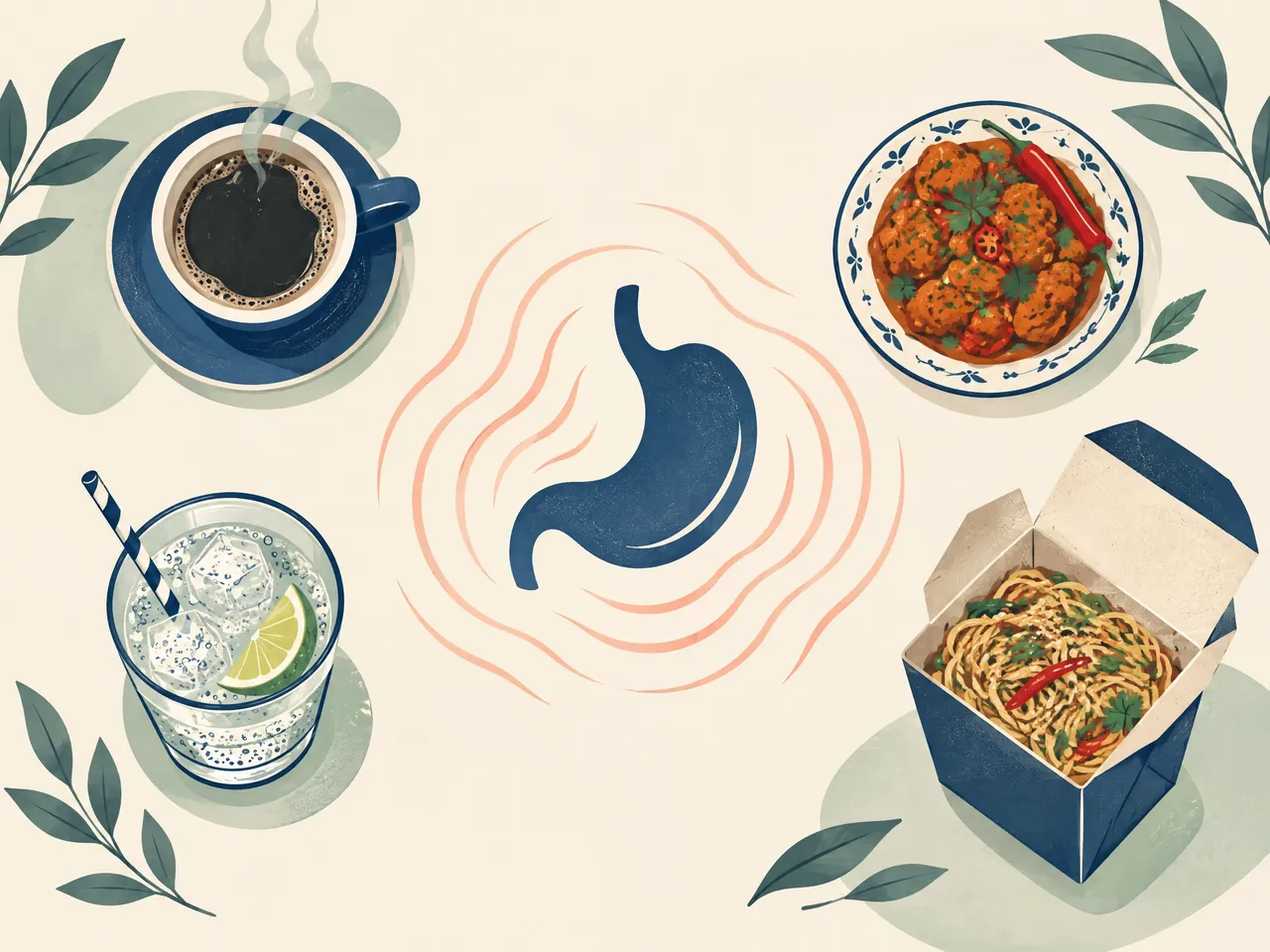
stomach ache Chinese medicine, functional dyspepsia Chinese medicine and acupuncture for functional dyspepsia: location, timing and sensations
Start with the location. Discomfort just below the ribs in the centre is often described as upper-abdominal or epigastric discomfort. A burning feeling, pain, early satiety and an unpleasantly full feeling after eating are all relevant to a dyspepsia assessment. NIDDK notes that indigestion is a group of symptoms, not one single disease, and that clinicians consider symptoms, history, examination and, when appropriate, tests such as H. pylori testing, imaging or upper gastrointestinal endoscopy [1]. In contrast, pain that settles lower down, pain on the right under the ribs, or pain that travels to the back needs its own medical context rather than a quick online label.
Timing adds another layer. Some people notice discomfort shortly after rushing a large lunch; others wake with it before breakfast, or feel it only after several days of irregular meals and poor sleep. Note whether it is constant, wave-like, briefly sharp, dull, pressured or burning. Also note whether eating, passing stool, passing wind, resting upright or moving changes it. These details do not establish a diagnosis, but they help separate a reproducible everyday pattern from a new or escalating problem. If the main issue is high in the abdomen with fullness after meals, our page on upper abdominal pain and indigestion offers further plain-language context.
stomach ache Chinese medicine, functional dyspepsia Chinese medicine and acupuncture for functional dyspepsia: food, bowel and stress notes
Food notes should describe what actually happened, not impose a strict exclusion diet before anyone has assessed the pattern. Record portion size and pace as well as the ingredient. For example, a small coffee after a calm breakfast is different from several coffees, a skipped lunch and a late fried meal. NIDDK advises that particular foods or drinks can worsen indigestion for some people and suggests discussing diet changes with a doctor or registered dietitian, particularly when functional dyspepsia is involved [1]. A record can show whether a suspected trigger is consistent enough to explore sensibly.
Bowel habits and stress belong in the same diary because digestion does not occur apart from daily life. Write down constipation, loose stool, urgency, visible blood, fever, vomiting or a change from your usual pattern. Notice whether symptoms reliably intensify during travel, shift work, deadlines or anxious periods, without assuming stress is the only explanation. In a Chinese medicine consultation, these wider observations may be discussed through a traditional pattern approach. Terms used in that approach describe an approach to assessment; they are not modern medical diagnoses and should not be treated as a substitute for testing or a diagnosis already made by another clinician.
Compare your options
| What you notice | What to record or prepare | Most appropriate next conversation |
|---|---|---|
| Early fullness, post-meal pressure or upper-abdominal burning that recurs | Meal timing, portion, sensation, duration, nausea, belching and any previous test results | Medical assessment for persistent symptoms; Chinese medicine may be discussed as complementary support after assessment |
| Symptoms seem related to particular meals, drinks, rushed eating or poor sleep | A short diary showing the repeated pattern rather than one isolated meal | Discuss proportionate food and routine changes with a clinician; bring the record to a consultation |
| Constipation, loose stool, urgency or pain that changes after a bowel movement | Usual bowel pattern, new changes, fever, vomiting, blood and medicines | Medical review to consider bowel-related causes; do not assume all pain is dyspepsia |
| Severe, sudden or escalating pain; vomiting blood; black stool; chest pain or breathing difficulty | Do not delay care to complete a diary; take your medicine list if possible | Emergency medical care first, not acupuncture or self-treatment |
On smaller screens, scroll the table sideways to compare all columns.
stomach ache Chinese medicine, functional dyspepsia Chinese medicine and acupuncture for functional dyspepsia: assessment and options
Searching for functional dyspepsia Chinese medicine often means someone has already been told that routine investigation has not revealed an obvious structural explanation, or they are wondering whether their after-meal discomfort could fit that label. Functional dyspepsia is a medical diagnosis made after clinical evaluation; it is not interchangeable with every episode of indigestion. Conventional care may include attention to the cause, medicines, food and drink changes, or psychological therapies, depending on the person and their assessment [1]. Chinese medicine can be positioned alongside—not instead of—that conversation when a complementary approach is appropriate.

The decision is easier when each option has a clear job. Medical assessment investigates concerning symptoms and identifies conditions that need specific treatment. A Chinese medicine visit can document the lived pattern in detail and discuss whether acupuncture or a personalised herbal approach is appropriate after that safety check. Home habits can reduce avoidable strain while the picture becomes clearer. None of these routes promises a fixed number of sessions or a cure. The comparison below helps prepare for a useful discussion rather than encouraging self-treatment from a symptom list.

stomach ache Chinese medicine, functional dyspepsia Chinese medicine and acupuncture for functional dyspepsia: what a consultation explores
A Chinese medicine consultation typically begins with questions rather than a preset remedy: where the discomfort sits; whether warmth, pressure, meals or fasting alter it; appetite and early fullness; taste in the mouth; nausea; sleep; energy; stool and urine; mood; menstrual details where relevant; and previous episodes. The practitioner may also use traditional observational methods, including looking at the tongue and palpating the pulse, as part of their own assessment. That traditional pattern language is not equivalent to diagnoses such as gastritis, peptic ulcer disease or functional dyspepsia. Be direct about any medical diagnosis, pending referral, allergy, pregnancy, blood-thinning medicine, prescribed acid suppression and supplements.
If acupuncture is being considered, ask practical questions: what symptom goal is being discussed, how progress will be reviewed, what sensations during or after treatment should be reported, and when conventional follow-up remains necessary. Acupuncture uses fine needles inserted into the skin; safe delivery depends on appropriate practice and sterile single-use needles [3]. It is especially important not to quietly stop prescribed medication, including acid-reducing medicines, because a new complementary treatment has started. A medication list is not administrative detail; it allows the practitioner and prescribing clinician to make safer, coordinated decisions.

stomach ache Chinese medicine, functional dyspepsia Chinese medicine and acupuncture for functional dyspepsia: evidence and limits
The honest answer on acupuncture for functional dyspepsia is measured. A systematic review of acupuncture added to conventional medicine found possible improvement in symptoms in the included trials, but judged the methodological quality and the quality of the main evidence generally low; all included studies were conducted in China, which also limits how broadly the findings can be applied [4]. That is a reason to discuss acupuncture as a possible complementary choice, not a guaranteed result or a replacement for a diagnosis. It also explains why the experience of a friend is not a reliable forecast for another person.
Evidence about Chinese herbal medicine is also not a reason to buy a standard formula online. Herbal prescribing in Chinese medicine is individualised, while commercially available products vary and can interact with medicines. A clinician needs the person’s history and full medicine list before considering anything. More broadly, NCCIH advises people not to use acupuncture to postpone seeing a healthcare provider and to discuss complementary approaches with their healthcare providers [3]. If you are deciding whether Chinese medicine fits your situation, see can Chinese medicine help with stomach pain for a complementary-care overview.
stomach ache Chinese medicine, functional dyspepsia Chinese medicine and acupuncture for functional dyspepsia: safety and next steps
A sensible next step depends on the risk signal, not merely how long someone has tolerated the discomfort. Mild, familiar symptoms that settle may be logged and brought to a planned review. Symptoms that persist, keep returning, disrupt eating or sleep, or come with an unexplained change in weight deserve timely medical assessment. The more useful question is not ‘Can I manage this myself?’ but ‘What would make the risk of waiting unacceptable?’ Our separate guide on when to seek medical help for stomach pain sets out that decision in more detail.
For people who have already had appropriate assessment and are considering complementary support, prepare a brief one-page summary: main symptom, starting date, changes over time, known diagnoses, test results if available, current drugs and supplements, allergies, and what you hope to be able to do more comfortably. That summary avoids repeating the same story at every appointment and makes it easier to identify a change that requires medical review. It also leaves room for realistic goals, such as understanding patterns or supporting day-to-day symptom management, rather than promising that every upper-abdominal symptom has one solution.

stomach ache Chinese medicine, functional dyspepsia Chinese medicine and acupuncture for functional dyspepsia: when medical review comes first
Seek emergency help for a stomach ache that comes on suddenly or is severe, pain when the abdomen is touched, vomiting blood or material like coffee grounds, bloody or black sticky stool, inability to breathe, chest pain, collapse, or inability to pass urine, stool or wind. These are emergency features listed by the NHS and are not symptoms to observe at home while trying dietary changes or acupuncture [2]. Chest discomfort, breathing difficulty, faintness or pain spreading to the back or arm should never be assumed to be ordinary indigestion. Bring or photograph your medicine list if you need urgent care.
Arrange prompt medical review when pain becomes worse, does not go away or keeps coming back; when persistent bloating, swallowing difficulty, repeated vomiting, unintentional weight loss, bleeding, or ongoing diarrhoea is present; or whenever you are worried by a new pattern [2]. Pregnancy, chronic medical conditions, recent surgery and regular use of medicines can also change the clinical picture. Chinese medicine can be revisited after the urgent issue is addressed, if appropriate. A careful practitioner should welcome medical findings rather than asking you to choose between conventional care and complementary care.

stomach ache Chinese medicine, functional dyspepsia Chinese medicine and acupuncture for functional dyspepsia: everyday supportive habits
Everyday support is deliberately unglamorous: take enough time to eat, avoid routinely letting hunger become extreme, and use the diary to test whether a smaller, calmer meal rhythm is easier than large late meals. Eat seated when possible and give yourself a short pause before returning to a screen or a demanding task. Rather than banning every interesting food, look for a personal pattern over several ordinary days. If a food repeatedly seems to worsen symptoms, discuss a proportionate adjustment with a clinician or dietitian instead of creating a nutritionally narrow diet on your own. For meal-related pressure and fullness, our resource on stomach bloating may help you frame the observations.
Sleep, gentle movement and stress management are supportive practices, not proof that symptoms are ‘only stress’. A short walk after a meal may suit some people; others may prefer slow breathing, a regular wind-down routine or an activity that creates a reliable break from work. Record what is practical enough to repeat. If symptoms remain frequent despite these adjustments, do not keep escalating restrictions. Bring the diary to medical review or a Chinese medicine consultation and ask what should be investigated, what can be supported safely, and how the plan will be reviewed. People seeking a local discussion can enquire with the Kwun Tong Chinese medicine clinic or the Chinese medicine clinic Prince Edward.
Care and health guide
Health service information
This directory brings together services, reading, and visit information related to health services, to help you prepare questions for a consultation.
If you are organising health questions, Chinese medicine clinic Hong Kong is a starting point for learning about related services and preparing for a consultation.
People have different needs; acupuncture Hong Kong provides further reading to help you understand options in your own context.


Your questions, answered
Frequently asked questions
Can Chinese medicine help with recurring stomach ache?
It may be considered as complementary support after an individual assessment, particularly when recurring symptoms have been medically evaluated. The discussion should cover pain location and timing, food and bowel patterns, stress, medical history, test results and medicines. It is not a substitute for investigating ulcers, infection, gallbladder disease, heart-related symptoms or other causes.
Is acupuncture suitable for functional dyspepsia?
Acupuncture may be discussed for some people after assessment, but it is not guaranteed to help everyone. Research suggests possible benefit as an add-on in some studies, while important limitations in study quality and generalisability remain. A decision should consider diagnosis, symptom pattern, current treatment, safety and how progress will be reviewed.
Should I stop my prescribed stomach medicine before trying Chinese medicine?
No. Do not stop, reduce or replace prescribed medicine on your own. Tell the Chinese medicine practitioner and prescribing clinician about every medicine, supplement and allergy so that care can be coordinated. Any medication change should be made with the clinician who prescribed it.
When is stomach pain an emergency?
Get emergency help for sudden or severe pain, a painful abdomen when touched, vomiting blood or coffee-ground-like material, black sticky or bloody stool, chest pain, breathing difficulty, collapse, or inability to pass urine, stool or wind. Persistent or recurrent pain, swallowing difficulty, repeated vomiting or unexplained weight loss also need prompt medical review.
Sources and further information
- [1] [1] National Institute of Diabetes and Digestive and Kidney Diseases — Indigestion (Dyspepsia)
Referenced for: Definitions of indigestion symptoms, causes, diagnostic evaluation and conventional management options.
- [2] [2] NHS — Stomach ache
Referenced for: Urgent and emergency stomach-pain warning signs and examples of common causes.
- [3] [3] National Center for Complementary and Integrative Health — Acupuncture: Effectiveness and Safety
Referenced for: Description of acupuncture, sterile needle safety considerations and advice not to postpone healthcare assessment.
- [4] [4] Frontiers in Medicine — Acupuncture as an add-on treatment for functional dyspepsia: a systematic review and meta-analysis
Referenced for: Evidence review of acupuncture added to conventional treatment for functional dyspepsia, including limitations in study quality and generalisability.