
TCM Lab · Health reading
Hair Loss from Stress: A TCM View of Hair Loss and Hair Thinning at the Crown
Published Updated
Stress can coincide with noticeable shedding, but it is rarely enough to explain a changed hairline or a widening area at the crown by itself. Hair loss from stress may follow a difficult period, illness, a major change in weight or routine, yet inherited pattern hair loss and scalp conditions can occur at the same time. A TCM view of hair loss can add questions about sleep, digestion, mood, energy and scalp comfort, but traditional pattern names are not laboratory diagnoses or proven explanations of what a follicle is doing. If hair thinning at the crown is persistent, rapidly changing, patchy, painful or accompanied by an abnormal scalp, start by clarifying the cause rather than choosing treatment from appearance alone.
Appointments are confirmed through WhatsApp. If you have language requirements, please mention them in your enquiry.
The short answer
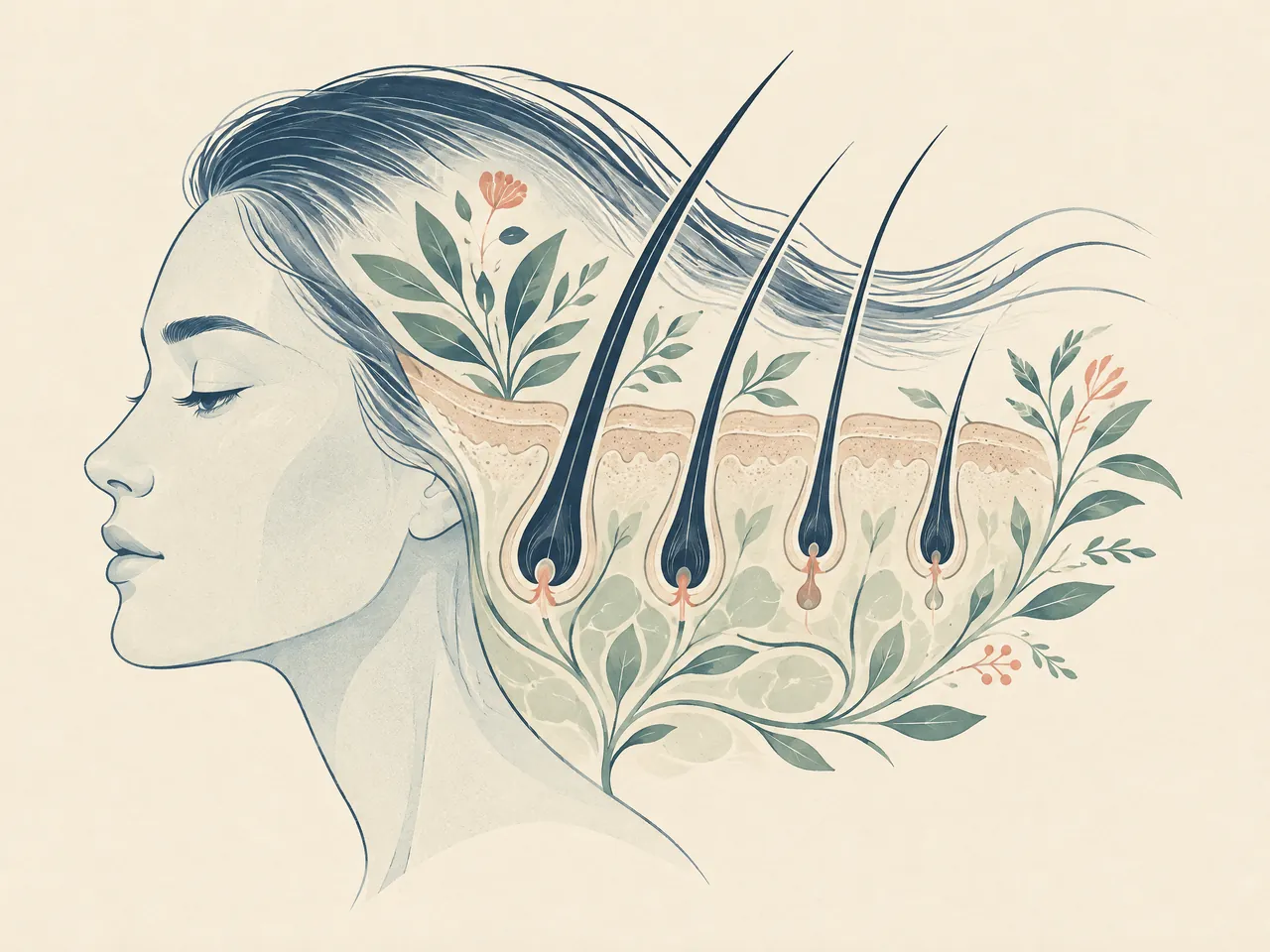
Hair loss from stress can be one possible part of the picture, especially when diffuse shedding follows a stressful event or illness, but crown thinning may also reflect inherited pattern hair loss or another scalp or health issue. A TCM view of hair loss uses traditional pattern descriptions to guide a whole-person discussion; it does not confirm a follicle diagnosis. Timing, distribution, scalp findings, medicines, diet and family history all matter before deciding what to do next.
Transparent pricing
See the fees.
Choose your care.
Explore our complete official price list, including first-trial prices, regular prices, packages and branch-specific options.
Opening WhatsApp prepares an enquiry; it does not send a message, take payment or confirm an appointment. Suitability and individual arrangements are confirmed during consultation.
Hair and scalp
All prices in HKDScalp health and hair-loss management
Includes AI scalp analysis, deep scalp and follicle cleansing, and scalp oil-control care.
HK$380 (first trial)
Regular price: HK$680
- 6 sessions: HK$3,480 (HK$580 per session)
- 12 sessions: HK$5,760 (HK$480 per session)
- 20 sessions: HK$8,600 (HK$430 per session)
- 30 sessions: HK$11,400 (HK$380 per session)
Hair acupuncture and Chinese herbal medicine package
Includes scalp acupuncture and 3 days of Chinese herbal medicine that does not require decoction.
HK$580 (single session)
Registered Chinese Medicine Practitioner consultation
- 6 sessions: HK$3,180 (HK$530 per session)
- 12 sessions: HK$5,760 (HK$480 per session)
- 20 sessions: HK$8,600 (HK$430 per session)
- 30 sessions: HK$11,400 (HK$380 per session)
Combined hair and scalp treatment
Combines acupuncture and Chinese herbal medicine with salon-level scalp and follicle care. Packages include complimentary hair-care shampoo and serum.
HK$1,260 (single session)
Combined treatment
- 8 sessions: HK$8,640 (HK$1,080 per session)
- 16 sessions: HK$15,680 (HK$980 per session)
- 20 sessions: HK$18,600 (HK$930 per session)
- 30 sessions: HK$26,400 (HK$880 per session)
Weight management
All prices in HKDFull-body acupoint embedding for weight management
Includes full-body acupoint embedding. Packages include complimentary Chinese herbal medicine for weight management, with the number of included days scaled to the package. Embedding material and the individual treatment arrangement are confirmed during consultation; this is not a cosmetic thread lift.
HK$980 (single session)
No trial session
- 10 sessions: HK$7,800 (HK$780 per session)
- 20 sessions: HK$14,600 (HK$730 per session)
- 30 sessions: HK$20,400 (HK$680 per session)
Facial acupuncture
All prices in HKDFacial acupuncture (basic)
Includes facial acupuncture and meridian-based facial care, including care for facial puffiness.
HK$480 (first trial)
Regular price: HK$680
- 10 sessions: HK$5,200 (HK$520 per session)
- 20 sessions: HK$9,600 (HK$480 per session)
- 30 sessions: HK$13,500 (HK$450 per session)
Facial acupuncture (advanced)
Includes enhanced facial acupuncture with a specially formulated moisturising mask and serum.
HK$780 (first trial)
Regular price: HK$1,180
- 10 sessions: HK$9,000 (HK$900 per session)
- 20 sessions: HK$16,600 (HK$830 per session)
- 30 sessions: HK$23,400 (HK$780 per session)
Pain care
All prices in HKDExtracorporeal shockwave treatment
Shockwave treatment for deep-tissue and fascial care. The Kwun Tong clinic offers the multi-area options shown below.
Priced by branch
Branch-specific pricing
Prince Edward: HK$250 per area
Kwun Tong: HK$250 for 1 area / HK$450 for 2 areas / HK$600 for 3 areas
Pain care (manual therapy)
Includes Chinese medicine musculoskeletal assessment, manual joint techniques and tui na.
HK$580 (single session)
Chinese medicine musculoskeletal assessment
Pain care (acupuncture and manual therapy)
Combines acupuncture and manual therapy.
HK$680 (single session)
Combined care
Chinese medicine
All prices in HKDAcupuncture and Chinese herbal medicine package
Includes a Chinese medicine consultation with pulse assessment, body acupuncture and 3 days of Chinese herbal granules that do not require decoction.
HK$580 (single session)
Chinese medicine consultation with pulse assessment
Hair Loss from Stress, TCM View of Hair Loss, and Hair Thinning at the Crown: What They Mean
Hair loss is a broad description, not one diagnosis. Some people notice more hairs in the shower or on a pillow; others first notice that light shows through the crown, their part looks wider, or the front corners are receding. These changes can feel alike day to day but follow different patterns. A useful first distinction is between shedding from across the scalp, hairs breaking along the shaft, and a gradual change in the density or calibre of hairs in a particular area. That distinction shapes the questions worth asking.
A stressful deadline, poor sleep, bereavement, acute illness or a restrictive diet may be memorable because the hair change is noticed afterwards. The NHS lists stress, illness, weight loss and iron deficiency among possible causes of temporary hair loss, while pattern baldness often runs in families [2]. This is why it is more accurate to say that stress may be relevant than to assume it is the sole cause. A person can have a family tendency to pattern thinning and also experience a spell of increased shedding after a demanding period.
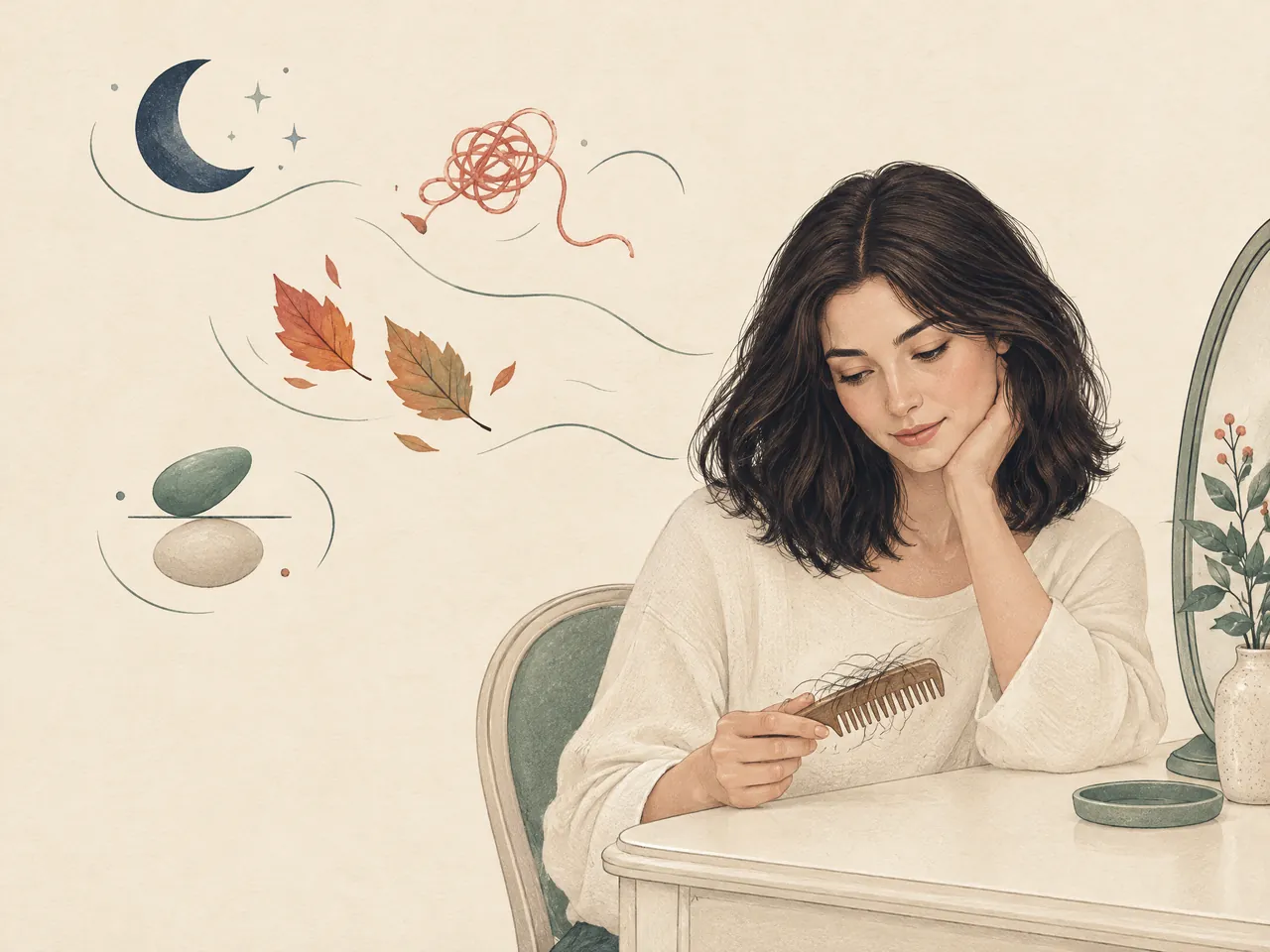
The phrase TCM view of hair loss refers to a traditional way of organising a consultation. It may use terms such as liver-kidney insufficiency, qi and blood deficiency, or damp-heat to describe a collection of symptoms and observations. Those terms are not established follicle mechanisms, and they should not be translated as a finding that follicles are blocked, damaged by stress, or permanently lost. Their practical role is to help a registered Chinese medicine practitioner ask broader questions, not to replace a diagnosis based on history and scalp examination.
Hair Loss from Stress, TCM View of Hair Loss, and Hair Thinning at the Crown
Hair thinning at the crown deserves particular care because pattern and pace both matter. Hong Kong’s Centre for Health Protection notes that male-pattern baldness commonly begins at the temples and crown, and the British Association of Dermatologists describes thinning and shortening of hairs on the top of the head in male-pattern hair loss [1] [3]. That familiar distribution does not diagnose every person. It does, however, make a family history, the age at which the change began and the appearance of the scalp relevant parts of the discussion.
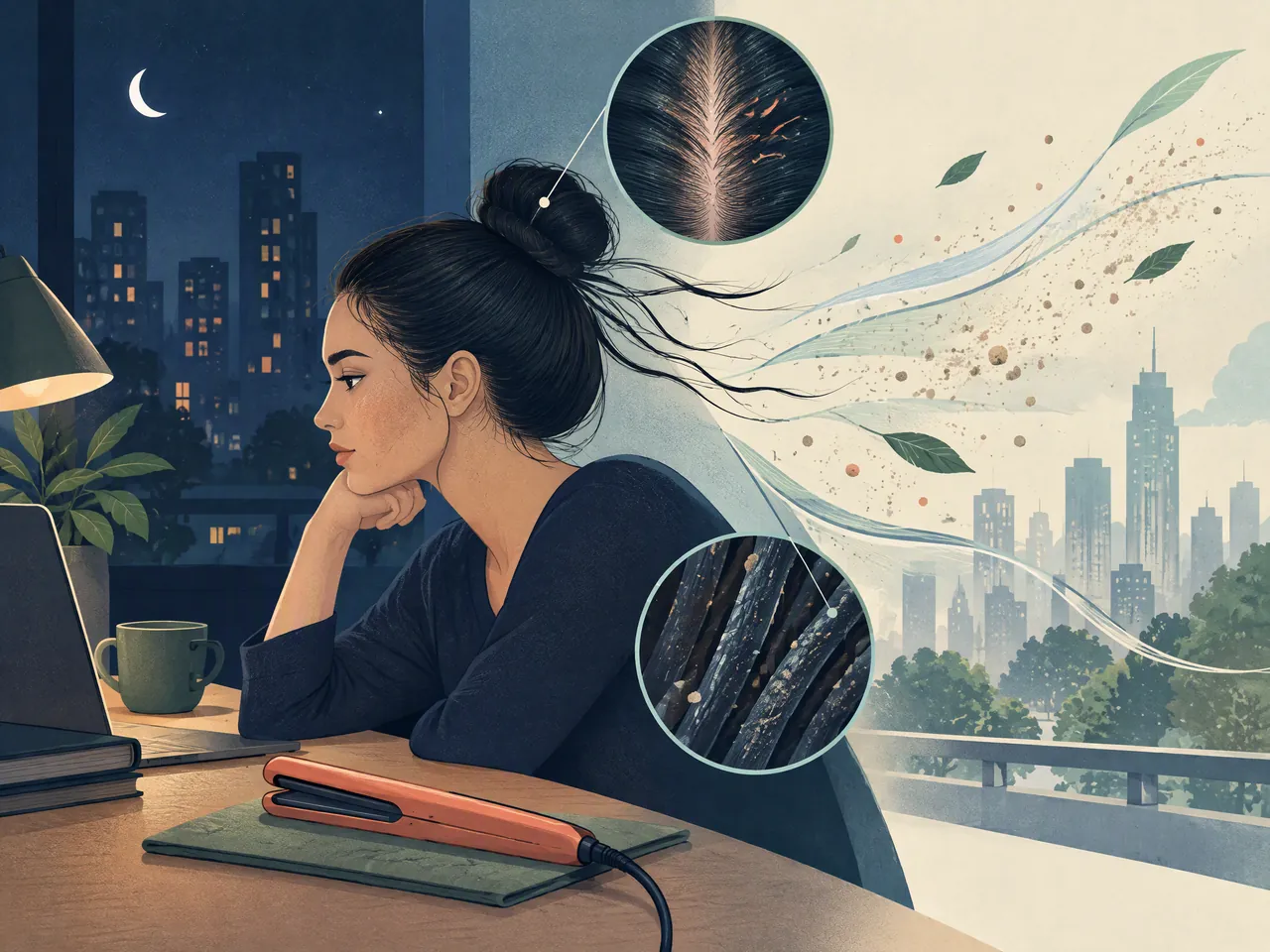
A close look can also separate a hair-density concern from a scalp concern. Itch, scaling, redness, tenderness, pustules, a sharply defined bald patch, or hairs breaking close to the scalp should not be filed under stress without assessment. The same is true when hair loss follows a new medicine, a major illness, a dietary restriction or a period of rapid weight change. The aim is not to alarm someone who sees a few extra hairs; it is to avoid missing useful clues while making a calm, evidence-informed choice about the next step.
Hair Thinning at the Crown, Hair Loss from Stress, and the TCM View of Hair Loss: Pattern Changes to Notice
Track a pattern over weeks rather than judging one wash day. Take comparable photographs only for your own record: similar dry hair, parting, lighting and angle can make gradual change easier to describe. Note whether the concern is a wider central part, more visible scalp at the vertex, a receding hairline, an overall reduction in volume, or a round patch. The related guide to male pattern hair loss causes explains why a crown pattern and a diffuse shed should not automatically be treated as the same problem.
It is also helpful to separate what you observe from the explanation you suspect. For example, “the crown has looked less dense for six months and I have relatives with similar thinning” gives a practitioner more usable information than “stress has damaged my hair.” Likewise, “shedding began after fever and I feel otherwise well” points to a different conversation from “my scalp burns and there are patches.” For a focused explanation of the early visible pattern, see How does male pattern baldness start?.
Compare your options
| What you notice | Useful details to record | Why the distinction matters |
|---|---|---|
| More hair shedding across the scalp | When it began; recent illness, major stress, diet or weight change; whether it is settling | Diffuse shedding can have temporary triggers, but the timeline helps determine whether further assessment is sensible. |
| Gradual thinning at the crown or top | Family history; change in hair calibre; hairline changes; speed of progression | A crown-focused pattern can be consistent with inherited pattern hair loss and merits a pattern-based discussion. |
| Patchy loss or unusual scalp skin | Round areas, redness, scale, tenderness, pustules, itch or broken hairs | Visible scalp changes or patches should be medically assessed rather than attributed to stress. |
| Interest in Chinese medicine | Sleep, appetite, digestion, mood, medicines, supplements and medical findings | These details support a whole-person TCM conversation while keeping traditional patterns separate from medical diagnosis. |
On smaller screens, scroll the table sideways to compare all columns.
Assessing Hair Loss from Stress with a TCM View of Hair Loss and Hair Thinning at the Crown
Assessment is not simply a search for one trigger. It is a timeline. Think back to when the change was first noticed, whether it came on quickly or gradually, and what else was happening around that time. Record recent fever or surgery, childbirth, dietary changes, stress, sleep disruption, new medicines or supplements, and any known thyroid, skin or nutritional issue. A family history can be relevant when thinning concentrates at the front or crown. This short record can make a consultation more precise without asking you to self-diagnose.
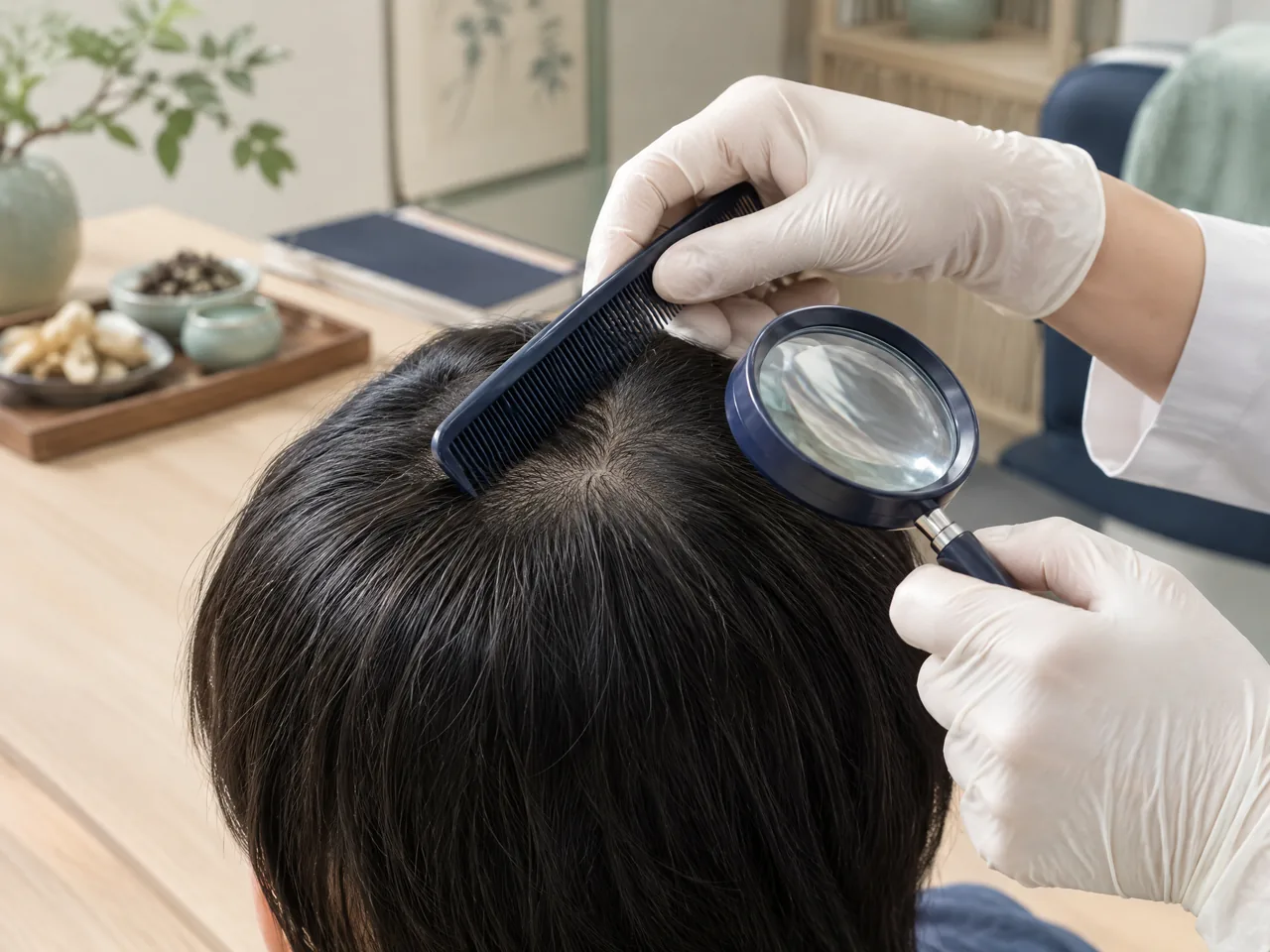
Medical assessment commonly begins with questions and a close scalp examination. The American Academy of Dermatology explains that clinicians consider the duration and speed of hair loss, inspect the scalp and other hair-bearing areas, and may use tests such as blood tests or a scalp biopsy when a disease, deficiency, hormone issue or infection is suspected [4]. The Hong Kong Centre for Health Protection similarly advises medical or dermatology advice to identify underlying causes before treatment [1]. This is a sensible first route for significant, unexplained or troubling change.
Hair Loss from Stress, TCM View of Hair Loss, and Hair Thinning at the Crown: Lifestyle Context
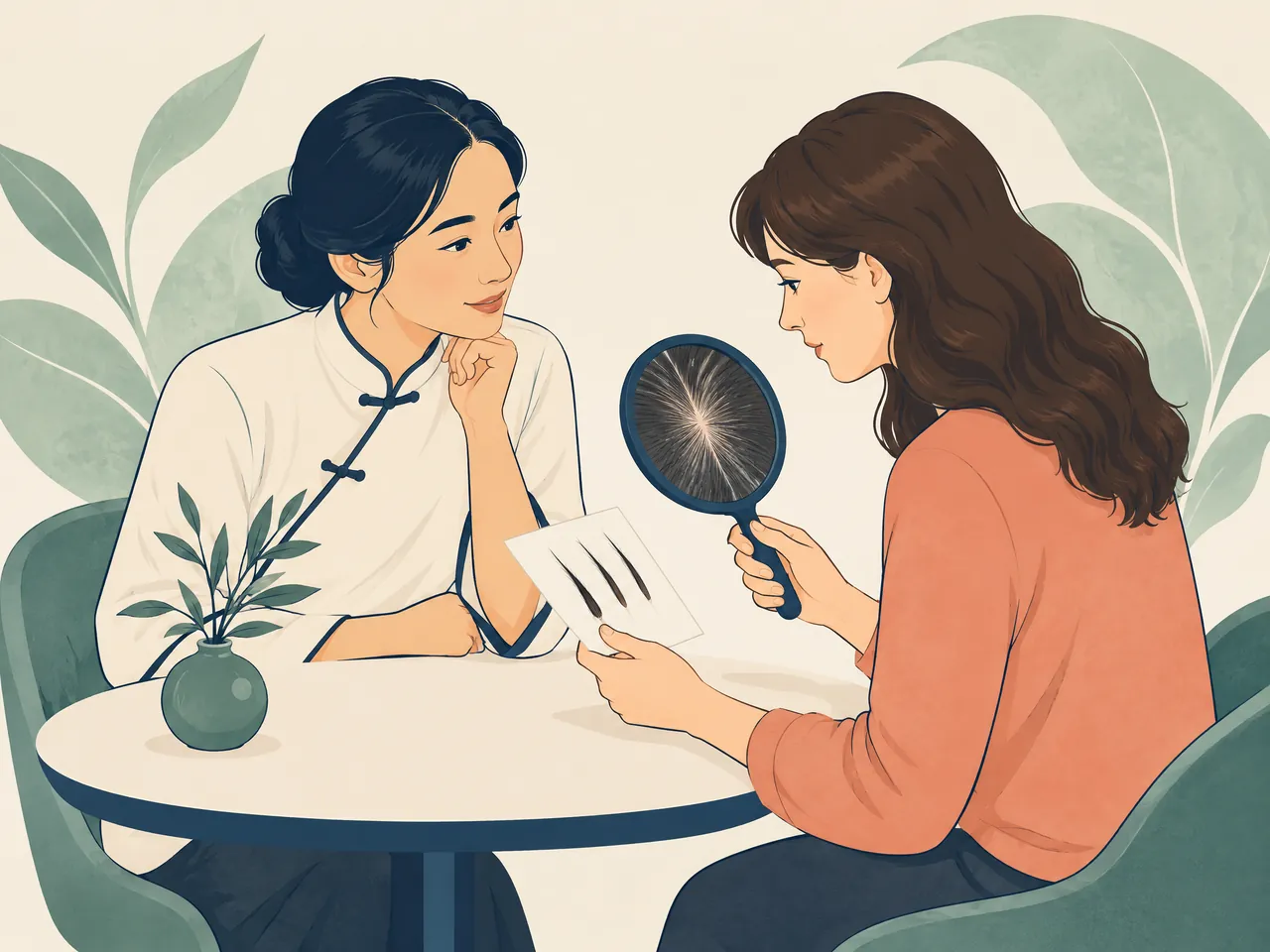
Lifestyle questions have value when they produce clear, workable information. Rather than labelling every late night as the cause, look for sustained changes: irregular meals, insufficient protein because eating has changed, aggressive dieting, frequent tight hairstyles, scalp product irritation, or a workload that has reduced sleep and recovery. Bring this context to a medical or Chinese medicine consultation. It may reveal a modifiable burden, but it should not be used as proof that a traditional pattern or a particular biological cause is present.
For someone seeking a TCM discussion, the practitioner may ask about energy, appetite, bowel habits, temperature sensations, mood, sleep and menstrual or postpartum context where relevant. This is the whole-person element of the consultation. A Chinese medicine perspective on hair loss can be useful for understanding these traditional questions, provided it is kept distinct from a dermatological diagnosis. It is reasonable to tell the practitioner about any prescribed medicines, supplements and medical tests so that decisions are made with the full picture in view.
TCM View of Hair Loss, Hair Thinning at the Crown, and Hair Loss from Stress: Why Assessment Matters
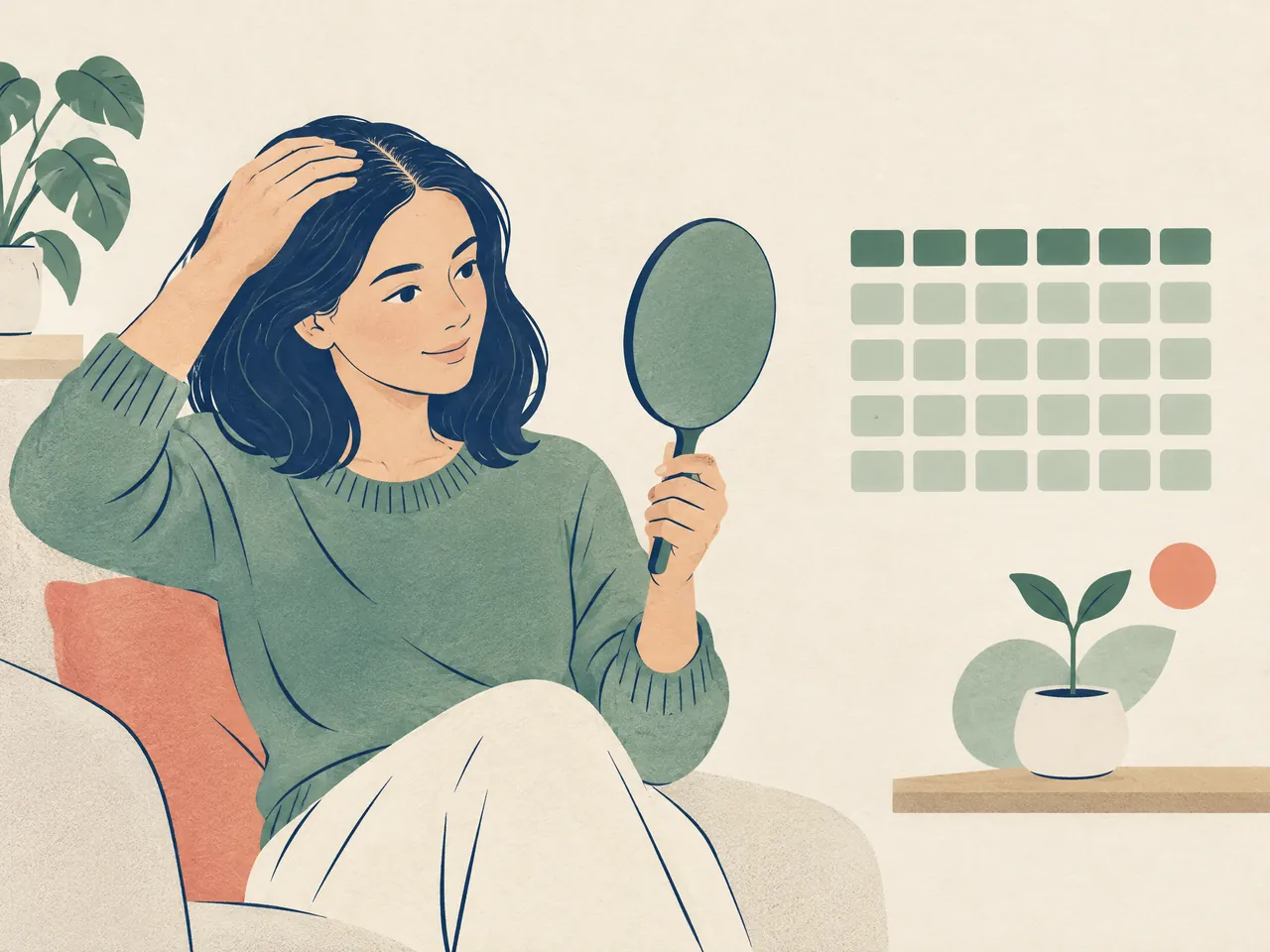
A comparison can help set priorities without turning a page of symptoms into a diagnosis. Gradual crown thinning with an otherwise normal-looking scalp and a family pattern may warrant a discussion of pattern hair loss. A sudden overall shed after a stressor or illness calls for a timeline and consideration of temporary causes. Patchy loss or an inflamed, painful or abnormal-looking scalp needs prompt medical attention. In each situation, the value of an assessment is that it can identify more than one contributor and match advice to the actual concern.
Do not delay evaluation if the loss is rapid, the scalp skin is visibly abnormal, there are round patches, or the hair change comes with unexplained fatigue, other bodily symptoms or distress. There is also no need to wait until a person feels certain of the cause: being worried about hair loss is itself a reasonable reason to seek advice [2]. If the main visible change is at the front, reviewing receding hairline causes can help you describe the pattern, but it is not a substitute for an examination.
Discussing Hair Loss from Stress, TCM View of Hair Loss, and Hair Thinning at the Crown
Once the likely pattern and any red flags have been considered, decide what you want from the next conversation. Some people want an explanation of a new shed. Others want to know whether a gradual crown change is likely to progress, how to care for the scalp, or whether they should discuss established medical options with a doctor. A Chinese medicine appointment can also be used to discuss symptoms, routines and an individualised traditional approach, but it should not promise that acupuncture or herbal medicine will reverse every type of loss.
There is a useful difference between supportive self-care and a treatment claim. Gentle hair handling, avoiding styles that pull, using scalp products that do not irritate you, eating a varied diet and making sleep more regular can support general hair and scalp care. They do not prove that stress was the cause, replace testing for a suspected deficiency, or guarantee regrowth. Likewise, do not start concentrated supplements or Chinese herbs simply because they are marketed for hair. Discuss personal risks, medicines and relevant medical conditions with an appropriate professional first.
Hair Loss from Stress, TCM View of Hair Loss, and Hair Thinning at the Crown: Care Options
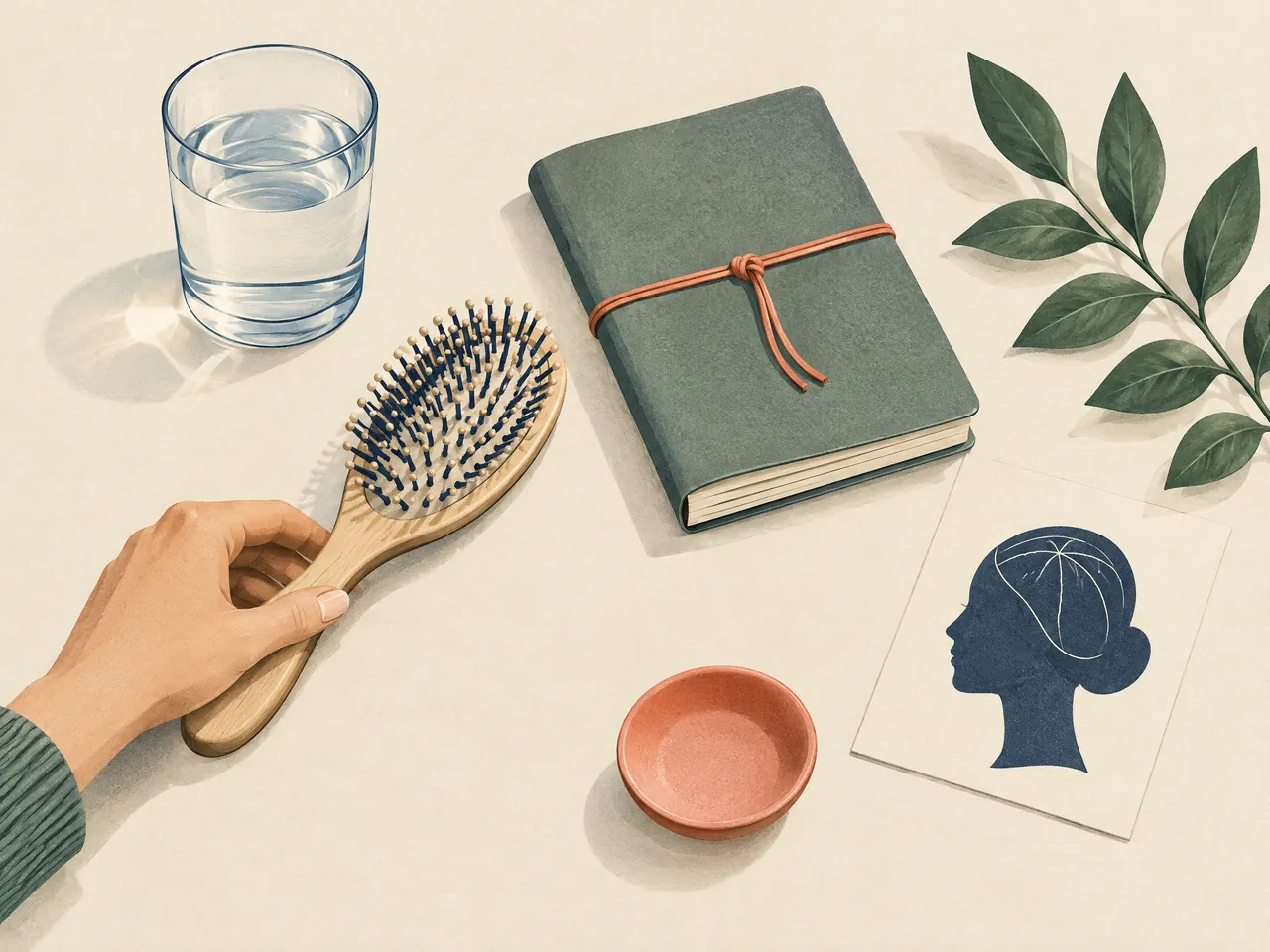
The table below is a preparation tool, not a diagnostic chart. It shows why two people who both search for hair loss from stress may need different next steps. A clear record of onset, distribution and scalp symptoms helps a doctor or registered Chinese medicine practitioner understand what you mean by “hair loss.” For an evidence-limited overview of the traditional procedure question, Can acupuncture help with hair loss? explains why individual assessment matters before any treatment is considered.
If you choose to discuss Chinese herbal medicine or acupuncture, ask what the proposed aim is, how it fits with the working assessment, and what information would change the plan. Ask about interactions if you use prescribed medicine, are pregnant or trying to conceive, or have a long-term condition. This is more useful than asking for a universal hair-growth formula. Evidence for Chinese medicine approaches to hair loss is limited, and treatment choices should remain individual rather than being based only on an online pattern label.

A TCM View of Hair Loss, Hair Loss from Stress, and Hair Thinning at the Crown: Next Steps
Bring a brief note rather than trying to remember everything under pressure: when the change started, photographs if helpful, family history, recent illnesses, diet or weight changes, scalp symptoms, and all medicines and supplements. State what matters most to you—slowing a visible change, understanding a sudden shed, easing scalp discomfort, or deciding whether medical assessment is needed. This gives the consultation a concrete purpose and prevents a traditional label from becoming the whole explanation.
At TCM Lab, an enquiry can be used to ask about an appointment for a hair and scalp consultation. A registered Chinese medicine practitioner can discuss your history and whether a TCM assessment is appropriate; medical assessment remains important for rapid, patchy, painful or unexplained loss. You may enquire about either the Kwun Tong Chinese medicine clinic or the Chinese medicine clinic Prince Edward. Share any language needs by WhatsApp so arrangements can be confirmed, rather than assumed.
Care and health guide
Hair and scalp care information
This directory brings together services, reading, and visit information related to hair and scalp care, to help you prepare questions for a consultation.
For questions about hair or scalp care, noting the everyday concerns and service questions you want to discuss can help prepare a consultation; Chinese medicine for hair loss is a relevant service or reading entry point.
People may have different priorities, and acupuncture Hong Kong offers related information to help you understand options and prepare questions.

Your questions, answered
Frequently asked questions
How does a TCM view of hair loss explain hair loss from stress and hair thinning at the crown?
Traditional Chinese medicine may describe hair and general symptoms through patterns such as liver-kidney insufficiency, qi and blood deficiency, or damp-heat. These are traditional assessment concepts, not confirmed causes of follicle change. Stress-related shedding and crown thinning still need a history and scalp assessment to distinguish possible contributors such as inherited pattern loss, illness, nutrition, medicines or scalp disease.
Does hair loss from stress always explain hair thinning at the crown?
No. Stress may be relevant to temporary shedding, but crown thinning can also be associated with an inherited pattern, especially when it develops gradually or there is a family history. More than one factor can be present. Track onset and distribution, and seek medical advice if the change is persistent, rapid, patchy, or associated with an abnormal scalp.
What happens in an assessment for hair thinning at the crown?
The discussion usually covers the timing and speed of change, family history, illness, diet, medicines, supplements and scalp symptoms. A clinician may examine the scalp and decide whether further testing is appropriate. In a TCM consultation, broader questions about sleep, appetite, digestion and daily stress may also be used to inform a traditional assessment; they do not replace medical diagnosis.
Can acupuncture or Chinese herbs be used for hair loss from stress?
They may be discussed as individual options after consultation with a registered Chinese medicine practitioner, but they should not be presented as guaranteed hair-growth treatments. Evidence for these approaches in hair loss is limited. Do not self-prescribe herbs, particularly if you take prescribed medicine, have a long-term condition, are pregnant, or are trying to conceive.
Sources and further information
- [1] Hong Kong Centre for Health Protection — Men's Health Line: Alopecia
Referenced for: Supports Hong Kong guidance on possible causes, crown and temple pattern, abnormal scalp signs, and seeking medical advice before treatment.
- [2] NHS — Hair loss
Referenced for: Supports the distinction between temporary causes such as stress or illness and inherited pattern baldness, and advice to seek assessment when concerned.
- [3] British Association of Dermatologists — Hair loss male pattern androgenetic alopecia
Referenced for: Supports the description of male-pattern hair loss, including genetic and hormonal factors, receding hairline and thinning on the top of the head.
- [4] American Academy of Dermatology — Hair loss: Diagnosis and treatment
Referenced for: Supports the role of history, scalp examination and selected tests in clarifying causes of hair loss.