
TCM Lab · Health reading
Ankle Sprain Recovery Time, Ankle Sprain Healing Time and Ankle Sprain Grades and Recovery Explained
Published Updated
An ankle sprain can feel deceptively simple: you step off a kerb, roll the foot during sport, or turn quickly on an uneven pavement, and the ankle swells before you know whether it is safe to walk home. Ankle sprain recovery time is not a single promise. It depends on how much a ligament has been stretched or torn, whether another injury is present, how well you can bear weight, and how steadily you rebuild movement and confidence. Many mild sprains feel better after around two weeks, while severe sprains can take months to return to normal. [2] Early protection, sensible swelling control, gradual rehabilitation and timely assessment when symptoms are concerning give the injury the best chance to settle safely.
Appointments are confirmed through WhatsApp. If you have language requirements, please mention them in your enquiry.
The short answer
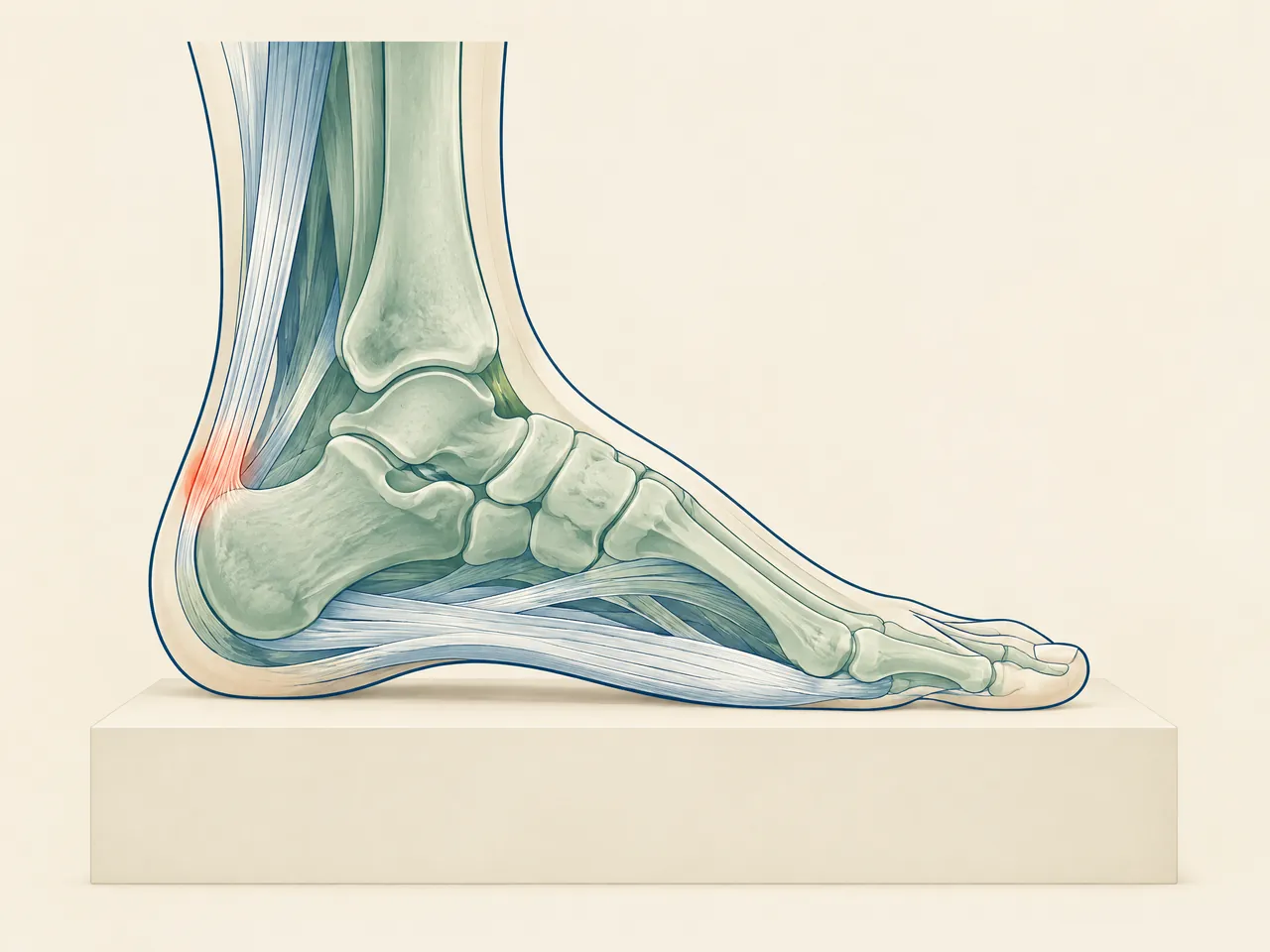
Ankle sprain healing time varies with injury severity. A mild ligament stretch may begin to improve within about two weeks, whereas a partial or complete tear, instability, or an associated fracture can mean weeks to months of recovery. [2] Protect the ankle and use wrapped ice, compression and elevation during the first 2–3 days. Seek urgent assessment for a deformity, a crack, numbness, blue or cold skin, or inability to bear weight.
Transparent pricing
See the fees.
Choose your care.
Explore our complete official price list, including first-trial prices, regular prices, packages and branch-specific options.
Opening WhatsApp prepares an enquiry; it does not send a message, take payment or confirm an appointment. Suitability and individual arrangements are confirmed during consultation.
Pain care
All prices in HKDExtracorporeal shockwave treatment
Shockwave treatment for deep-tissue and fascial care. The Kwun Tong clinic offers the multi-area options shown below.
Priced by branch
Branch-specific pricing
Prince Edward: HK$250 per area
Kwun Tong: HK$250 for 1 area / HK$450 for 2 areas / HK$600 for 3 areas
Pain care (manual therapy)
Includes Chinese medicine musculoskeletal assessment, manual joint techniques and tui na.
HK$580 (single session)
Chinese medicine musculoskeletal assessment
Pain care (acupuncture and manual therapy)
Combines acupuncture and manual therapy.
HK$680 (single session)
Combined care
Hair and scalp
All prices in HKDScalp health and hair-loss management
Includes AI scalp analysis, deep scalp and follicle cleansing, and scalp oil-control care.
HK$380 (first trial)
Regular price: HK$680
- 6 sessions: HK$3,480 (HK$580 per session)
- 12 sessions: HK$5,760 (HK$480 per session)
- 20 sessions: HK$8,600 (HK$430 per session)
- 30 sessions: HK$11,400 (HK$380 per session)
Hair acupuncture and Chinese herbal medicine package
Includes scalp acupuncture and 3 days of Chinese herbal medicine that does not require decoction.
HK$580 (single session)
Registered Chinese Medicine Practitioner consultation
- 6 sessions: HK$3,180 (HK$530 per session)
- 12 sessions: HK$5,760 (HK$480 per session)
- 20 sessions: HK$8,600 (HK$430 per session)
- 30 sessions: HK$11,400 (HK$380 per session)
Combined hair and scalp treatment
Combines acupuncture and Chinese herbal medicine with salon-level scalp and follicle care. Packages include complimentary hair-care shampoo and serum.
HK$1,260 (single session)
Combined treatment
- 8 sessions: HK$8,640 (HK$1,080 per session)
- 16 sessions: HK$15,680 (HK$980 per session)
- 20 sessions: HK$18,600 (HK$930 per session)
- 30 sessions: HK$26,400 (HK$880 per session)
Weight management
All prices in HKDFull-body acupoint embedding for weight management
Includes full-body acupoint embedding. Packages include complimentary Chinese herbal medicine for weight management, with the number of included days scaled to the package. Embedding material and the individual treatment arrangement are confirmed during consultation; this is not a cosmetic thread lift.
HK$980 (single session)
No trial session
- 10 sessions: HK$7,800 (HK$780 per session)
- 20 sessions: HK$14,600 (HK$730 per session)
- 30 sessions: HK$20,400 (HK$680 per session)
Facial acupuncture
All prices in HKDFacial acupuncture (basic)
Includes facial acupuncture and meridian-based facial care, including care for facial puffiness.
HK$480 (first trial)
Regular price: HK$680
- 10 sessions: HK$5,200 (HK$520 per session)
- 20 sessions: HK$9,600 (HK$480 per session)
- 30 sessions: HK$13,500 (HK$450 per session)
Facial acupuncture (advanced)
Includes enhanced facial acupuncture with a specially formulated moisturising mask and serum.
HK$780 (first trial)
Regular price: HK$1,180
- 10 sessions: HK$9,000 (HK$900 per session)
- 20 sessions: HK$16,600 (HK$830 per session)
- 30 sessions: HK$23,400 (HK$780 per session)
Chinese medicine
All prices in HKDAcupuncture and Chinese herbal medicine package
Includes a Chinese medicine consultation with pulse assessment, body acupuncture and 3 days of Chinese herbal granules that do not require decoction.
HK$580 (single session)
Chinese medicine consultation with pulse assessment
Ankle Sprain Recovery Time, Ankle Sprain Healing Time and Ankle Sprain Grades and Recovery: What Changes the Timeline?
An ankle sprain injures one or more ligaments around the joint. These bands connect bone to bone and limit excessive side-to-side movement, so a twist can bring pain, swelling, bruising, stiffness and difficulty walking. [1] The useful first question is not simply “how many days?” but what happened at injury and how the ankle behaves now. A foot rolling inward during a landing, a direct knock, or a twist while carrying a bag can stress different structures. Pain location, swelling progression and the ability to take a few steps help a clinician decide whether a straightforward sprain is likely or whether assessment, perhaps including imaging, is needed. An online timeline cannot make that distinction for an individual ankle.
Daily demands also shape recovery. Reducing load is easier for someone working seated than for a person who climbs stairs, stands for long shifts or cares for children. An ankle may feel unstable after a previous sprain even if pain is modest. [1] Do not repeatedly test it by jogging, pivoting or forcing a deep stretch. Instead, use everyday function: can you put the foot down, move through a comfortable range, walk with control, and do a little more without a sharp later flare? For safe walking choices after a twist, see Can I walk on a sprained ankle?.

Ankle Sprain Recovery Time, Ankle Sprain Healing Time and Ankle Sprain Grades and Recovery by Injury Severity
Grades are a clinical shorthand, not a do-it-yourself diagnosis. Grade I generally means mild ligament stretching without instability. Grade II describes a partial tear, where instability may be present. Grade III describes complete rupture with joint instability. [3] This helps explain why two people who have both “rolled an ankle” can have different ankle sprain healing time. A mild injury may still allow walking with soreness. More swelling, bruising, painful weight bearing or a giving-way feeling makes a quick return to running or court sport less likely. Pain above the joint, an eversion injury, tendon injury or fracture can follow a different course and needs professional evaluation rather than a grade assigned from a symptom checklist.
Ankle Sprain Recovery Time, Ankle Sprain Healing Time and Ankle Sprain Grades and Recovery: Symptoms to Track
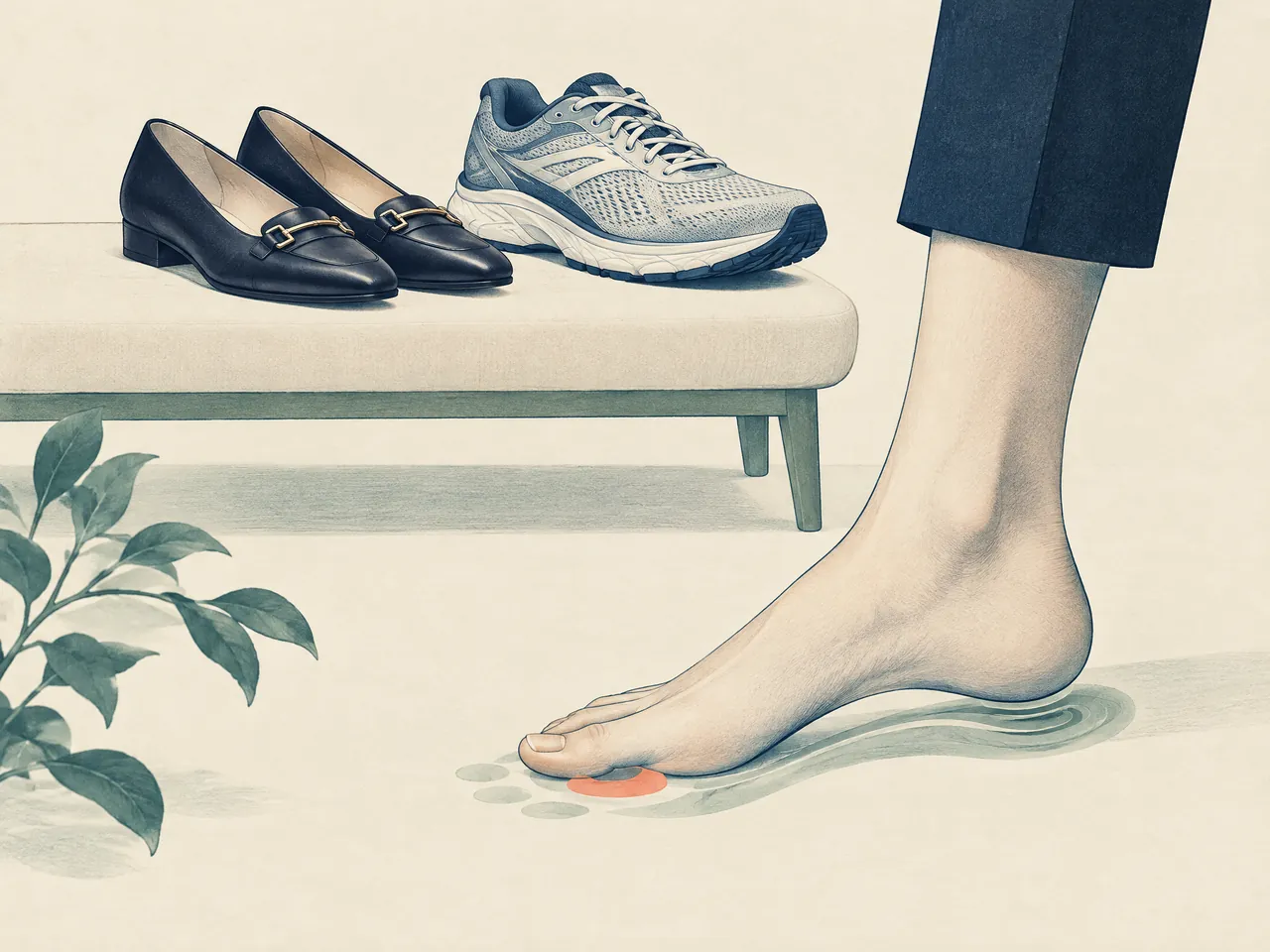
Track patterns, not a perfect pain score. Note whether swelling is settling or spreading, whether bruising appears, whether you can take more controlled steps, and where pain is concentrated: over bone, along an inner or outer ligament, above the ankle, or through the mid-foot. Persistent pins and needles, numbness, a cold foot or a sense that the joint gives way do not fit a simple improving pattern. NHS inform also lists reduced movement or strength and difficulty on stairs among possible symptoms. [4] These details help a clinician; they do not confirm a diagnosis. Movement and swelling should generally improve in the first 0–2 weeks. [4] If first steps after rest hurt under the heel rather than the ankle, see first-step pain separately.
Compare your options
| Typical clinical description | What you may notice | Practical next step |
|---|---|---|
| Possible mild ligament stretch (often called Grade I) | Soreness and mild swelling; walking may still be possible | Protect the ankle, use early self-care, and judge progress by steadily easier movement and walking. |
| Possible partial ligament tear (often called Grade II) | More swelling or bruising, painful weight bearing, and possible instability | Arrange clinical assessment rather than assuming a short return-to-sport timeline. |
| Possible complete rupture or associated injury (often called Grade III) | Marked instability, major difficulty walking, or severe symptoms | Seek timely medical assessment; management may need support, imaging or a structured rehabilitation plan. |
| Red-flag presentation at any apparent grade | Deformity, crack, numbness, blue or cold skin, or inability to bear weight | Obtain urgent medical help rather than continuing home treatment. [2] |
On smaller screens, scroll the table sideways to compare all columns.
Ankle Sprain Recovery Time, Ankle Sprain Healing Time and Ankle Sprain Grades and Recovery: First 2–3 Days
The first 48 to 72 hours are for protecting a newly injured ankle, not proving toughness. Stop the activity that caused the twist, use stable footwear or a support if it prevents another roll, and limit unnecessary walking. NHS PRICE guidance for the first two to three days is protection, rest, ice, compression and elevation. [2] Rest means pausing sport and high-load tasks, not necessarily avoiding all toe or ankle movement. Raise the foot when practical, especially if it throbs after being down. Ask a clinician or pharmacist for individual advice instead of copying a generic routine if you have diabetes, circulation concerns, reduced sensation, an open wound, or uncertainty about a wrap or cold pack.
Make the next day easier: keep essentials on one floor, use a rail on stairs, allow extra time for short trips and ask for help with heavy shopping. A compression wrap should feel supportive, not cause numbness, tingling, colour change or a cold foot. Use a cloth barrier between ice and skin. The NHS advises a wrapped pack for up to 20 minutes every two to three hours during the first few days. [2] Rapidly increasing pain or swelling despite rest is a reason for medical advice, not more intensive self-treatment. The aim is comfort and protection while the injury is assessed, not masking symptoms before a twisting or impact activity.
Ankle Sprain Recovery Time, Ankle Sprain Healing Time and Ankle Sprain Grades and Recovery: Protection and Ice
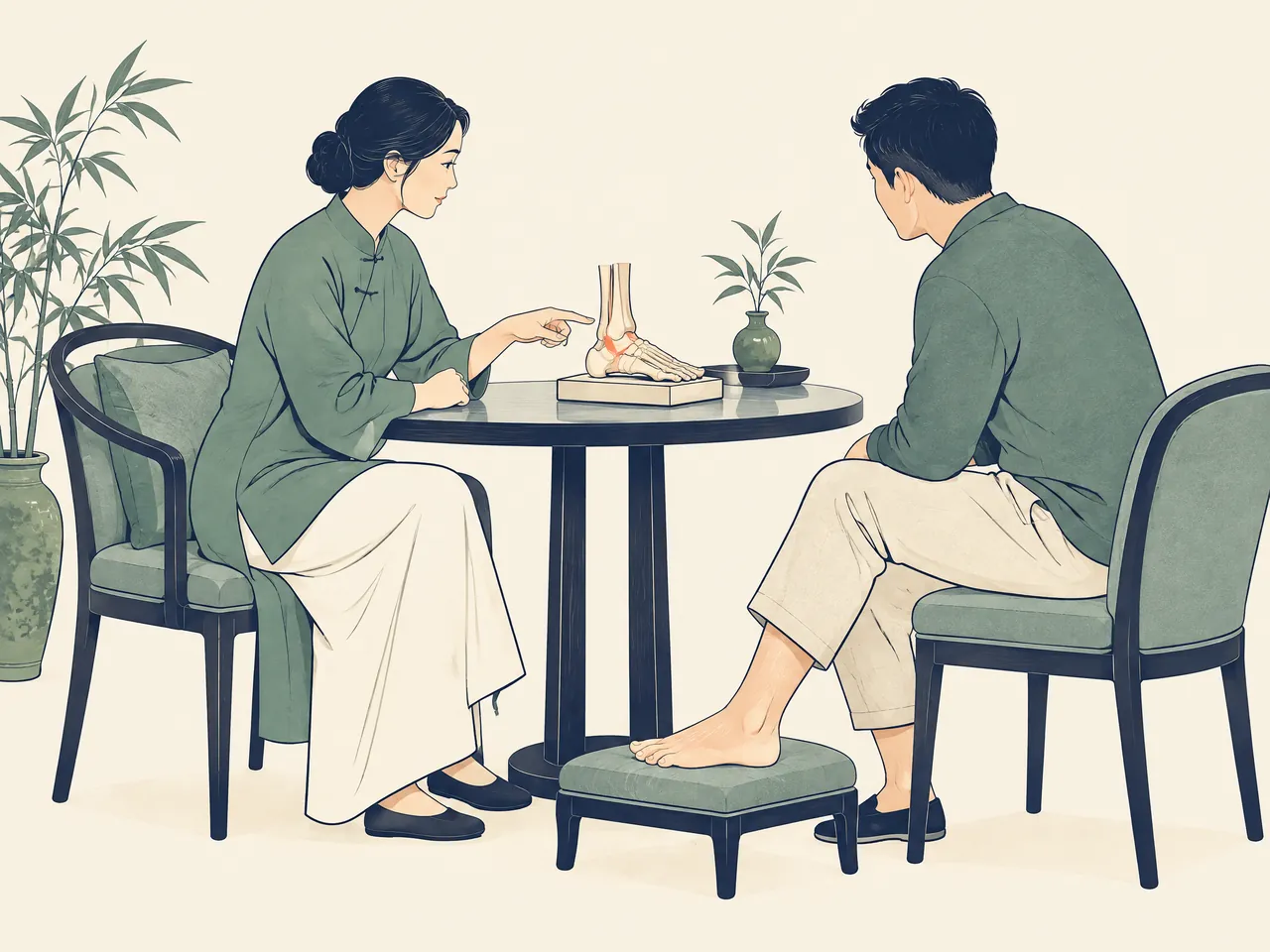
Reduce the chance of a second twist by wearing a secure shoe, clearing wet or cluttered routes and avoiding loads that stop you using a rail. If a clinician recommends crutches, a brace, a stabilising device or reduced weight bearing, follow that individual plan. The Hong Kong College of Orthopaedic Surgeons notes that a specialist may recommend stabilisation and introduce exercises earlier in less severe cases. [1] Do not borrow another person’s brace plan or immobilise for a fixed online-prescribed number of days. Cold treatment may ease symptoms and swelling but does not guarantee faster ligament repair. NHS guidance advises avoiding heat, alcohol and massage in the first couple of days because they can promote swelling. [2] Seek assessment for increasing pain, a distorted shape, or an ankle that cannot safely take weight.
Ankle Sprain Recovery Time, Ankle Sprain Healing Time and Ankle Sprain Grades and Recovery: Returning to Movement
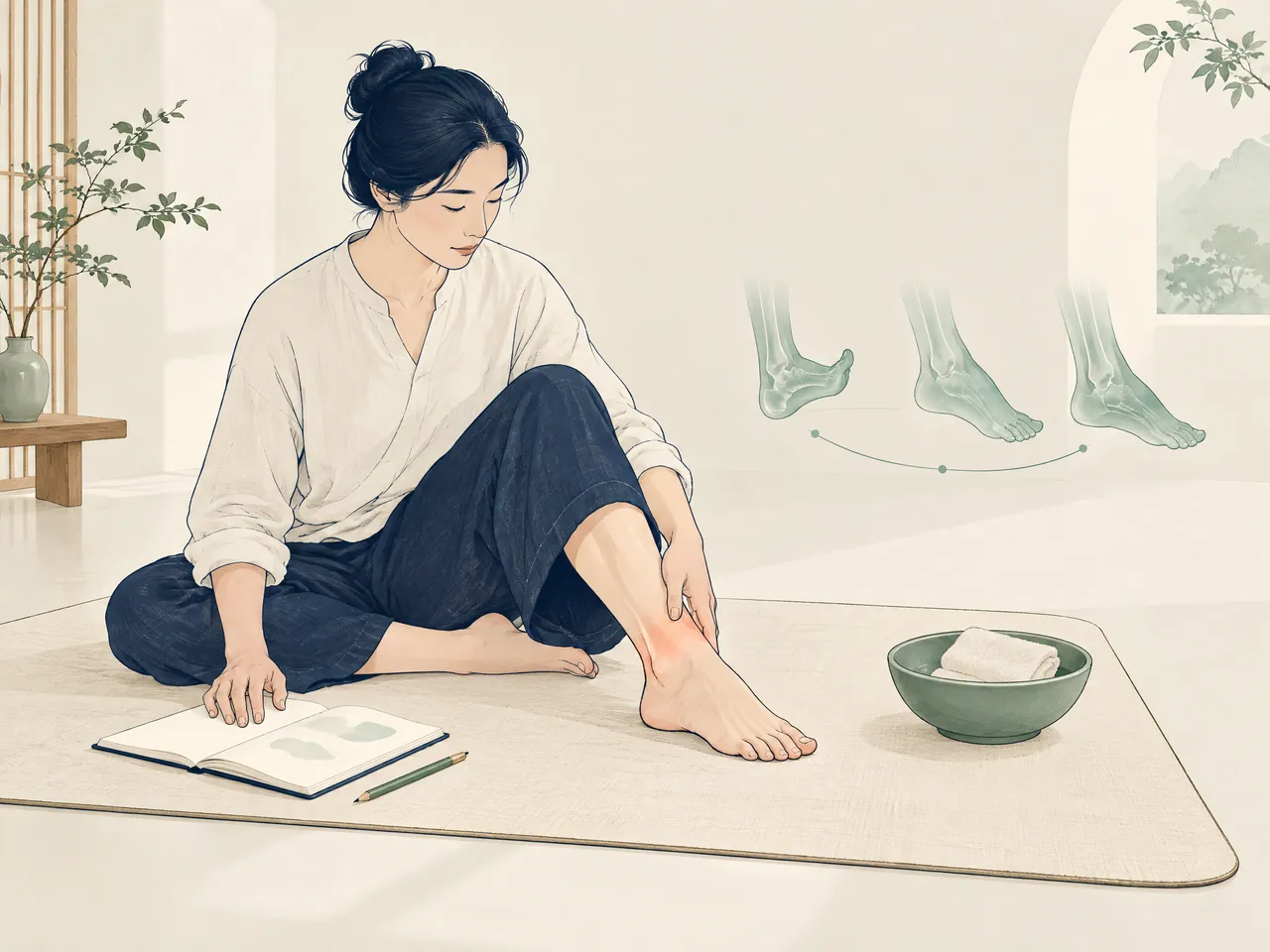
Return to movement in layers. When severe pain no longer stops movement, begin with a comfortable ankle range rather than jumping from rest to a long walk. NHS advice is to keep the area moving once pain does not prevent it, to limit stiffness. [2] A clinician or physiotherapist can progress from motion to calf and ankle strength, balance and control, then turning, hopping or sport tasks. Local orthopaedic guidance similarly moves from swelling control to range of motion, strength, flexibility, stamina and proprioception—the body’s sense of joint position. [1] Use the response to load as feedback: a limp, sharp pain, increased swelling or next-day aching means reduce the task. Avoid running, jumping and rapid direction changes before you regain appropriate function. [2] For sole or arch symptoms, read pain in the arch of the foot.
Ankle Sprain Recovery Time, Ankle Sprain Healing Time and Ankle Sprain Grades and Recovery: Assessment and Support
Assessment matters when the mechanism or symptoms suggest more than a mild sprain. A clinician may examine the ankle and use X-ray, MRI or CT when necessary to establish severity. [1] The purpose is not just naming a grade. It may include tenderness, swelling, weight-bearing ability, range of motion, stability, circulation and sensation, and whether a fracture, tendon injury or high ankle sprain should be excluded. Bring a clear history: what you were doing, whether you heard a sound, when swelling began, whether you fell, and what movements or footwear worsen symptoms. Mention previous ankle injuries, medicines and health conditions that could affect care.
Care can be coordinated. Medical assessment may exclude fracture or serious injury, while physiotherapy can guide structured rehabilitation. Other approaches should not delay either. For another overview of stages and common concerns, see How long does an ankle sprain take to recover?. If you arrange a Chinese medicine consultation after appropriate assessment, share imaging reports, current medicines, brace instructions and rehabilitation advice. A reduction in pain does not by itself show that a ligament and joint are ready for unrestricted activity.
Ankle Sprain Recovery Time, Ankle Sprain Healing Time and Ankle Sprain Grades and Recovery: When to Seek Medical Care
Seek urgent medical help if you heard a crack, the body part has changed shape or points at an odd angle, it is numb or tingling, or the skin is blue, grey or cold to touch. These NHS emergency signs may indicate a broken bone and need X-ray assessment. [2] Obtain prompt advice too if pain is severe or worsening, swelling or bruising is large or worsening, you cannot put weight on the foot or walk more than a few steps, the joint is very stiff, or self-care is not helping. [2] Do not wait for a predicted ankle sprain recovery time when these features occur. Arrange a non-emergency review if progress stalls, the ankle repeatedly gives way, or symptoms worsen after an initial improvement. NHS inform advises professional advice when symptoms are not better by 8–12 weeks or are getting worse. [4]

Ankle Sprain Recovery Time, Ankle Sprain Healing Time and Ankle Sprain Grades and Recovery: Discussing Chinese Medicine
After urgent problems are assessed, Chinese medicine may be discussed as a complementary face-to-face option. A Registered Chinese Medicine Practitioner may ask about the injury event, pain and swelling, walking ability, sleep, work demands, previous sprains, medical history and medicines. Traditional Chinese medicine terms such as qi stagnation and blood stasis are part of its pattern-based approach; they are not a modern structural diagnosis and do not replace imaging or orthopaedic examination when indicated. Acupuncture or other approaches should not replace early assessment, support or rehabilitation, and cannot promise a fixed healing date, guaranteed result or set number of visits. To enquire after appropriate assessment, contact the Kwun Tong Chinese medicine clinic or Chinese medicine clinic Prince Edward. For fees, see the Chinese medicine clinic price list Hong Kong.
Care and health guide
Health service information
This directory brings together services, reading, and visit information related to health services, to help you prepare questions for a consultation.
If you are organising health questions, Chinese medicine clinic Hong Kong is a starting point for learning about related services and preparing for a consultation.
People have different needs; acupuncture Hong Kong provides further reading to help you understand options in your own context.


Your questions, answered
Frequently asked questions
How long does an ankle sprain usually take to improve?
Many sprains and strains feel better after around two weeks, but severe sprains can take months to return to normal. [2] The individual timeline depends on ligament damage, stability, weight-bearing ability, associated injury and rehabilitation. Worsening symptoms or failure to improve should be assessed rather than self-diagnosed.
What are the main ankle sprain grades and recovery differences?
Grade I generally means ligament stretching without joint instability; Grade II can involve a partial tear and possible instability; Grade III is a complete rupture with instability. [3] The grade needs clinical assessment, and it does not by itself predict every person’s recovery timeline.
What should I do during the first days of an ankle sprain?
For the first two to three days, protect the ankle, rest from aggravating activity, use a wrapped ice pack, apply comfortable compression and elevate it. [2] Avoid early heat, alcohol and massage. Do not put ice directly on the skin, and seek advice if you have circulation or sensation concerns.
Can Chinese medicine or acupuncture guarantee ankle sprain recovery?
No. Chinese medicine or acupuncture may be discussed as complementary options after appropriate assessment, but they do not replace urgent care, imaging when needed, or a rehabilitation plan. No responsible provider can promise a fixed recovery date, a guaranteed result or a set number of treatments for an ankle sprain.
Sources and further information
- [1] [1] The Hong Kong College of Orthopaedic Surgeons — Ankle Sprain
Referenced for: Ankle ligament injury, symptoms, assessment, RICE first aid, rehabilitation stages and variable recovery time.
- [2] [2] NHS — Sprains and strains
Referenced for: First 2–3 day PRICE care, broad recovery time, activity advice and urgent warning signs.
- [3] [3] Canossa Hospital (Caritas) — Sprained Ankle
Referenced for: Grade I–III descriptions, severity-related healing, RICE and rehabilitation goals.
- [4] [4] NHS inform — Ankle sprain
Referenced for: Symptoms, gradual return to movement, broad rehabilitation stages and when to seek professional support.