
TCM Lab · Health reading
When to See a Doctor for Hair Loss: When Should I See a Doctor for Hair Loss, and Should I See a Doctor for Patchy Hair Loss?
Published Updated
Hair loss is worth a medical conversation when the change is new, persistent, noticeably faster than your usual shedding, patchy, or paired with an uncomfortable or abnormal-looking scalp. You do not have to prove a precise number of hairs lost before asking for help. The more useful question is what has changed: a widening part, a receding hairline, a handful of loose hairs after an illness, a smooth round area, or skin that is sore, red, scaly, crusted, or oozing. A clinician can use that pattern, your history, and an examination to decide whether observation, investigation, or treatment discussion is appropriate. [1] [3]
Appointments are confirmed through WhatsApp. If you have language requirements, please mention them in your enquiry.
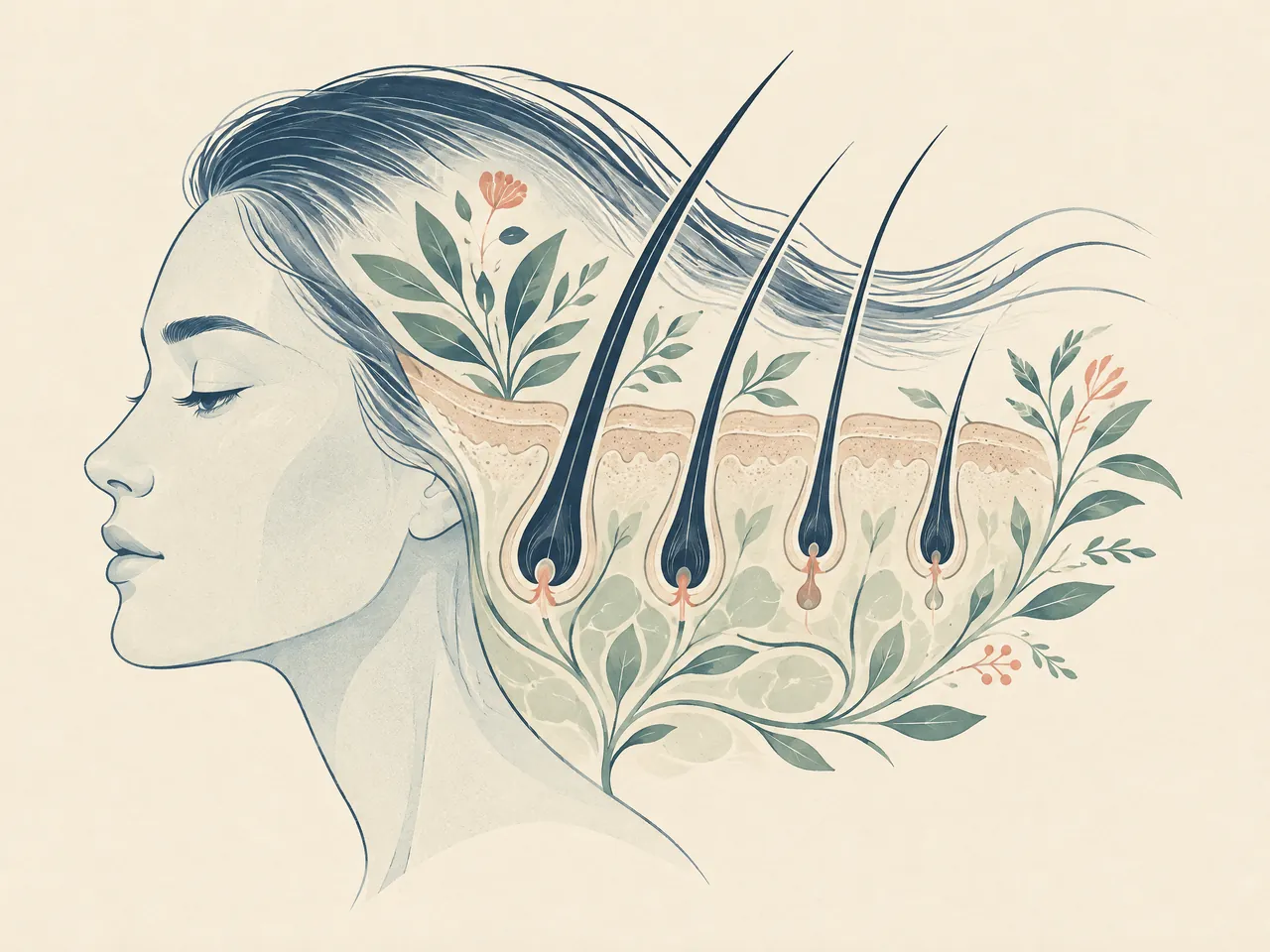
The short answer
See a doctor for hair loss if shedding is sudden, keeps progressing, forms a new patch, or comes with redness, pain, itch, scaling, crusting, broken hairs, discharge, or a shiny scar-like area. Gradual thinning is usually less urgent, but it still deserves an appointment when it persists, differs from your normal pattern, affects your wellbeing, or you want to understand possible causes before trying treatment. [1] [2] [4]
Transparent pricing
See the fees.
Choose your care.
Explore our complete official price list, including first-trial prices, regular prices, packages and branch-specific options.
Opening WhatsApp prepares an enquiry; it does not send a message, take payment or confirm an appointment. Suitability and individual arrangements are confirmed during consultation.
Hair and scalp
All prices in HKDScalp health and hair-loss management
Includes AI scalp analysis, deep scalp and follicle cleansing, and scalp oil-control care.
HK$380 (first trial)
Regular price: HK$680
- 6 sessions: HK$3,480 (HK$580 per session)
- 12 sessions: HK$5,760 (HK$480 per session)
- 20 sessions: HK$8,600 (HK$430 per session)
- 30 sessions: HK$11,400 (HK$380 per session)
Hair acupuncture and Chinese herbal medicine package
Includes scalp acupuncture and 3 days of Chinese herbal medicine that does not require decoction.
HK$580 (single session)
Registered Chinese Medicine Practitioner consultation
- 6 sessions: HK$3,180 (HK$530 per session)
- 12 sessions: HK$5,760 (HK$480 per session)
- 20 sessions: HK$8,600 (HK$430 per session)
- 30 sessions: HK$11,400 (HK$380 per session)
Combined hair and scalp treatment
Combines acupuncture and Chinese herbal medicine with salon-level scalp and follicle care. Packages include complimentary hair-care shampoo and serum.
HK$1,260 (single session)
Combined treatment
- 8 sessions: HK$8,640 (HK$1,080 per session)
- 16 sessions: HK$15,680 (HK$980 per session)
- 20 sessions: HK$18,600 (HK$930 per session)
- 30 sessions: HK$26,400 (HK$880 per session)
Weight management
All prices in HKDFull-body acupoint embedding for weight management
Includes full-body acupoint embedding. Packages include complimentary Chinese herbal medicine for weight management, with the number of included days scaled to the package. Embedding material and the individual treatment arrangement are confirmed during consultation; this is not a cosmetic thread lift.
HK$980 (single session)
No trial session
- 10 sessions: HK$7,800 (HK$780 per session)
- 20 sessions: HK$14,600 (HK$730 per session)
- 30 sessions: HK$20,400 (HK$680 per session)
Facial acupuncture
All prices in HKDFacial acupuncture (basic)
Includes facial acupuncture and meridian-based facial care, including care for facial puffiness.
HK$480 (first trial)
Regular price: HK$680
- 10 sessions: HK$5,200 (HK$520 per session)
- 20 sessions: HK$9,600 (HK$480 per session)
- 30 sessions: HK$13,500 (HK$450 per session)
Facial acupuncture (advanced)
Includes enhanced facial acupuncture with a specially formulated moisturising mask and serum.
HK$780 (first trial)
Regular price: HK$1,180
- 10 sessions: HK$9,000 (HK$900 per session)
- 20 sessions: HK$16,600 (HK$830 per session)
- 30 sessions: HK$23,400 (HK$780 per session)
Pain care
All prices in HKDExtracorporeal shockwave treatment
Shockwave treatment for deep-tissue and fascial care. The Kwun Tong clinic offers the multi-area options shown below.
Priced by branch
Branch-specific pricing
Prince Edward: HK$250 per area
Kwun Tong: HK$250 for 1 area / HK$450 for 2 areas / HK$600 for 3 areas
Pain care (manual therapy)
Includes Chinese medicine musculoskeletal assessment, manual joint techniques and tui na.
HK$580 (single session)
Chinese medicine musculoskeletal assessment
Pain care (acupuncture and manual therapy)
Combines acupuncture and manual therapy.
HK$680 (single session)
Combined care
Chinese medicine
All prices in HKDAcupuncture and Chinese herbal medicine package
Includes a Chinese medicine consultation with pulse assessment, body acupuncture and 3 days of Chinese herbal granules that do not require decoction.
HK$580 (single session)
Chinese medicine consultation with pulse assessment
When to See a Doctor for Hair Loss: When Should I See a Doctor for Hair Loss, and Should I See a Doctor for Patchy Hair Loss? Start with the Pattern
Start by describing the pattern rather than trying to diagnose the cause yourself. Hair can become less dense slowly along the part or crown, recede at the temples, shed more evenly from all over the scalp, or disappear from one defined area. These are different observations, and they lead to different questions at an appointment. A gradual change that has been present for months is not automatically harmless, but it is often handled differently from a sudden change over days or weeks. The Hong Kong Centre for Health Protection notes that continual loss or abnormal skin beneath the affected area should prompt a doctor’s consultation, while the NHS advises speaking with a GP if hair loss is worrying you. [1] [2]
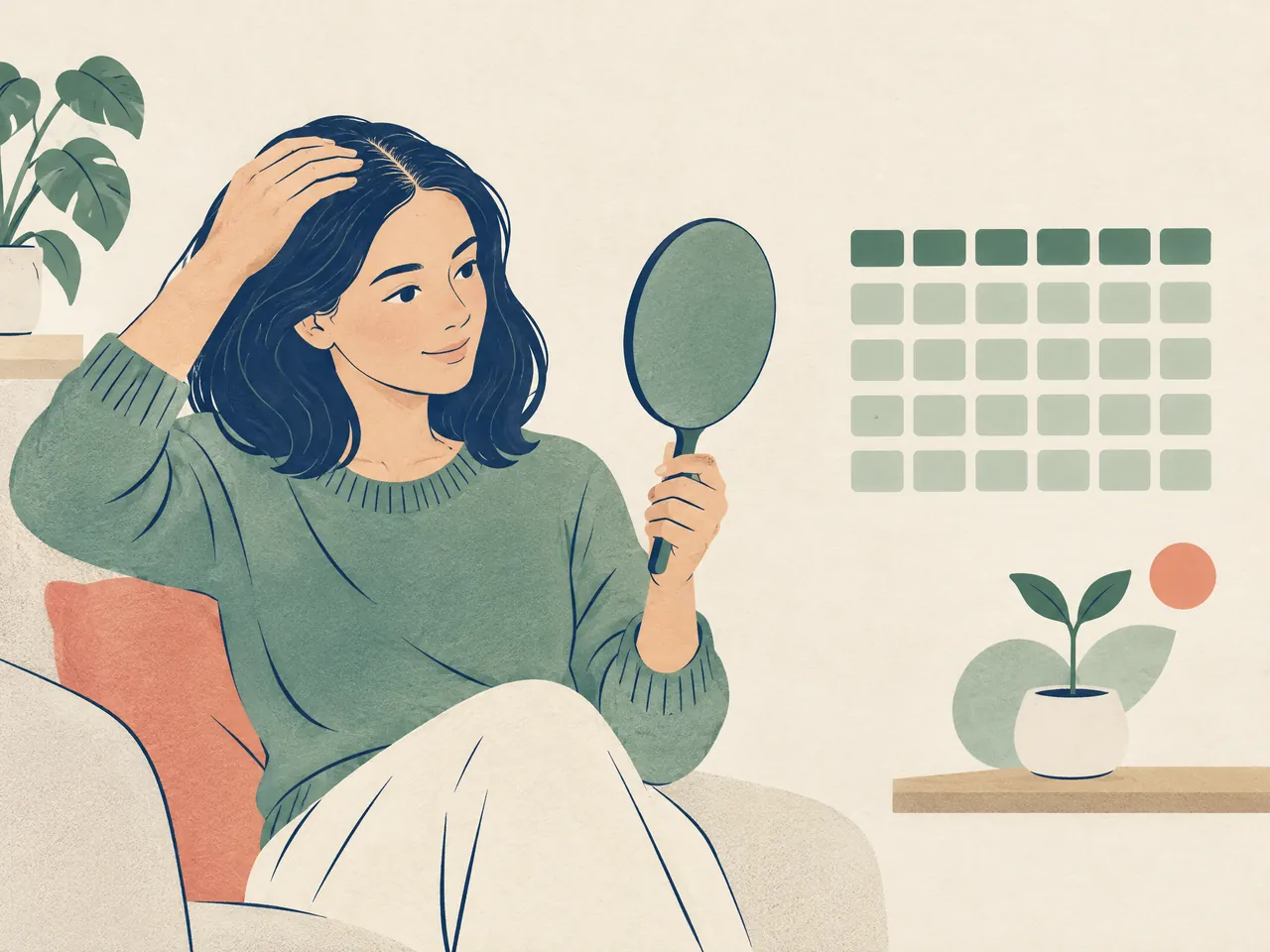
Counting hairs in the shower rarely settles the issue. Daily shedding occurs as part of the hair-growth cycle, and visible change depends on where the hair is coming from, how thick the remaining hairs are, and whether new growth is keeping pace. Instead, compare like with like: take a photo of the parting or hairline in similar lighting, note whether hair is falling from the root or snapping along the shaft, and record when the change began. This gives a clinician a clearer starting point than a single stressful wash day. For practical context about ongoing thinning after the medical cause is being considered, read hair thinning treatment; it is not a substitute for identifying a new or sudden pattern first.

When to See a Doctor for Hair Loss: When Should I See a Doctor for Hair Loss, and Should I See a Doctor for Patchy Hair Loss? Gradual Thinning
A widening part, gradually less coverage on the top of the scalp, or a slowly receding hairline can fit several patterns. Family history may be relevant, but it does not make an assessment pointless: gradual thinning can coexist with another trigger, and the appearance alone does not confirm why it is happening. Book a non-urgent appointment if the change continues, is clearly different from your baseline, causes distress, or makes you want to pursue treatment. Bring the question that matters to you—whether the goal is to clarify a cause, discuss care options, or understand what should be monitored. The NHS specifically recommends finding out what is causing hair loss before turning to a commercial hair clinic. [2] A regular comparison photo is useful; an isolated mirror check is much less informative.
When to See a Doctor for Hair Loss: When Should I See a Doctor for Hair Loss, and Should I See a Doctor for Patchy Hair Loss? Sudden Shedding
Sudden diffuse shedding can feel alarming because it may be most obvious while washing, brushing, or running fingers through the hair. Do not assume that a recent stressful period explains it, even though illness, major physical or emotional stress, weight change, some medicines, and other circumstances can be relevant. Note the approximate start date, whether the loss is spread across the scalp, and what occurred in the preceding months. The American Academy of Dermatology says that timing and whether loss came on quickly are central questions in diagnosis. [3] Mayo Clinic also advises talking with a doctor about sudden loss or noticeably more hair than usual during combing or washing. [4] An appointment can help distinguish a temporary shedding pattern from a problem that needs another route of investigation.
Compare your options
| What you notice | Why the detail matters | A sensible next step |
|---|---|---|
| Slow widening of a part, crown thinning, or a receding hairline | Shows a gradual pattern and whether it is continuing or affecting wellbeing | Arrange a non-urgent appointment; bring comparison photos and family history. |
| A sudden overall increase in hair coming out during washing or brushing | The timing may guide questions about recent illness, stressors, weight change, medicines, or other health events | Book a medical assessment and make a timeline of changes in the months before it began. |
| A new round, oval, or expanding patch | Patch location, surface changes, and hair breakage can help separate different possibilities | Seek medical advice rather than treating it as a cosmetic issue or waiting for another patch. |
| Redness, pain, burning, swelling, spreading scale, crusting, or fluid | Scalp symptoms can indicate an active skin or infection-related problem that needs examination | Seek prompt medical advice; avoid irritating products while waiting to be assessed. |
On smaller screens, scroll the table sideways to compare all columns.
When to See a Doctor for Hair Loss: When Should I See a Doctor for Hair Loss, and Should I See a Doctor for Patchy Hair Loss? Notice Scalp Warning Signs
The scalp can provide important clues, so look beyond the amount of hair on the brush. A smooth, sharply defined patch is different from a broad thinning area with visible hairs throughout. Broken hairs may look like stubble or uneven short strands, whereas hair that has shed from the root is often a full-length strand. Neither observation supplies a diagnosis at home, but both are worth mentioning. An educational guide to scalp health and hair loss management can help you describe what you see, while an examination remains the way to assess an active change.

Changes in the skin deserve equal attention. Persistent itch, tenderness, burning, redness, swelling, flakes that spread beyond a small dry spot, crusts, blisters, or fluid are not details to leave out because they can change how promptly a clinician wants to see you. Mayo Clinic lists spreading patches of scale with broken hair, redness, swelling, and sometimes oozing among patterns that can occur with a scalp infection. [4] The presence of a scalp symptom does not tell you which condition is responsible, but it is a reason not to keep rotating shampoos or supplements in the hope of guessing correctly. Make a note of where the skin change started and whether it is expanding.

When to See a Doctor for Hair Loss: When Should I See a Doctor for Hair Loss, and Should I See a Doctor for Patchy Hair Loss? Patches and Broken Hairs
Should you see a doctor for patchy hair loss? Yes—especially when a patch is new, enlarging, recurring, or joined by loss from the eyebrows, beard, eyelashes, or another body area. Small round patches can occur with alopecia areata, according to Hong Kong’s Centre for Health Protection, but that observation is not a diagnosis. [1] A patch can also look different when there are broken hairs, scale, or inflammation within it. Avoid trying to judge the cause from its shape alone or from an online image. Photograph the area only to show progression, not to replace care, and arrange medical advice sooner if the patch is spreading or the scalp is painful. This makes the consultation about a clear sequence of changes instead of a vague impression that hair seems thinner.
When to See a Doctor for Hair Loss: When Should I See a Doctor for Hair Loss, and Should I See a Doctor for Patchy Hair Loss? Redness, Pain, or Scaling
Hair loss with a painful, hot, swollen, weeping, or crusted scalp warrants prompt medical advice. The same applies when there is extensive scaling, a tender patch, or skin that looks unusually shiny, indented, or unlike the surrounding scalp. These features can accompany inflammation, infection, or conditions that need timely assessment; they are not a reason to experiment with harsh exfoliants, tight styles, or repeated chemical treatments. For a focused discussion of this combination of symptoms, see is an itchy flaky scalp with hair loss serious. If you also feel generally unwell or the area is rapidly worsening, seek medical care without waiting to see whether the next hair wash improves it. [4]
When to See a Doctor for Hair Loss: When Should I See a Doctor for Hair Loss, and Should I See a Doctor for Patchy Hair Loss? Prepare for an Assessment
A short record can make a hair-loss appointment far more useful. Write down when you first noticed the change, whether it was abrupt or gradual, and which areas are affected. Add relevant events such as a recent fever or other illness, surgery, childbirth, substantial weight change, changes in diet, a demanding period, or a new medicine or supplement. These facts do not prove a cause, but they help the clinician decide what questions to ask next. The American Academy of Dermatology describes diagnosis as beginning with questions about duration and speed of onset, followed by a close look at the scalp, nails, and other areas with hair loss. [3]
Also write down what you have already tried, including scalp products, colouring or straightening, extensions, tight hairstyles, over-the-counter products, and supplements. Include changes in menstrual pattern, fatigue, temperature sensitivity, skin changes, or other symptoms if they are present; they are context rather than a self-diagnosis. If a clinician considers tests, the decision should follow the history and examination, not a one-size-fits-all checklist. The detail in does hair loss need a blood test explains why testing may be considered in some situations. Once you have medical guidance, you can also compare non-urgent appointment options and fees through the Chinese medicine clinic price list Hong Kong.

When to See a Doctor for Hair Loss: When Should I See a Doctor for Hair Loss, and Should I See a Doctor for Patchy Hair Loss? Health History and Recent Changes
Bring a simple timeline rather than trying to remember every detail on the spot. Include the first day you noticed the issue, the first time it seemed to accelerate, whether there has been a recent illness or hospital treatment, and whether the pattern is stable, improving, or extending. List prescription medicines, non-prescription products, and supplements by name if possible. Mention family members with a similar pattern, but also say what makes your experience different. Hair practices matter too: frequent pulling, extensions, braids, heat, bleaching, or chemical processing can be relevant details. The aim is not to assign blame or select your own diagnosis. It is to give the clinician a reliable account of exposures and timing so that the examination can be directed sensibly.

When to See a Doctor for Hair Loss: When Should I See a Doctor for Hair Loss, and Should I See a Doctor for Patchy Hair Loss? What Examination May Involve
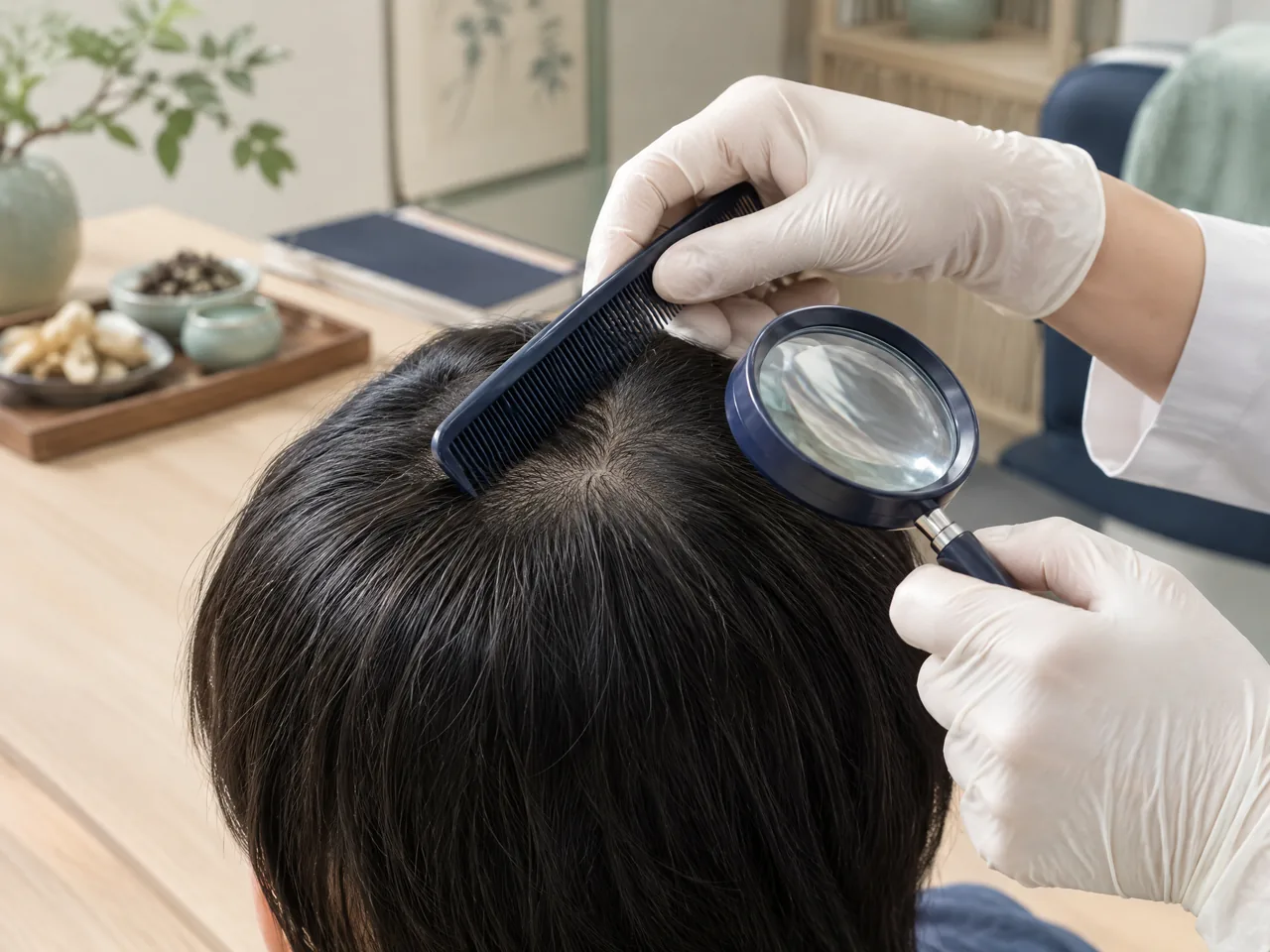
An assessment commonly starts with questions and a close inspection, not an automatic battery of investigations. A clinician may examine the scalp and hair distribution, look at nails or other hair-bearing areas, and gently assess how easily hairs come away. Depending on the suspected cause, blood testing, examination of a hair sample, or a scalp biopsy may be considered; both the AAD and Hong Kong’s Centre for Health Protection make clear that further tests are chosen to help identify the type or cause, not required for every person. [1] [3] Ask what each proposed test is intended to clarify and what the next step would be with each result. For non-urgent enquiries after appropriate medical assessment, TCM Lab can be contacted on WhatsApp at +852 6940 5663; you may ask about a Kwun Tong Chinese medicine clinic or Chinese medicine clinic Prince Edward appointment and explain your language needs.
Care and health guide
Hair and scalp care information
This directory brings together services, reading, and visit information related to hair and scalp care, to help you prepare questions for a consultation.
For questions about hair or scalp care, noting the everyday concerns and service questions you want to discuss can help prepare a consultation; Chinese medicine for hair loss is a relevant service or reading entry point.
People may have different priorities, and acupuncture Hong Kong offers related information to help you understand options and prepare questions.

Your questions, answered
Frequently asked questions
When should I see a doctor for hair loss if it is only gradual?
Gradual loss usually does not require emergency care, but arrange a consultation if it continues, is new for you, changes your hairline or parting, affects your wellbeing, or makes you want to discuss causes and options. A clinician can consider the scalp, history, family pattern, and other symptoms instead of relying on a daily hair count. [2] [3]
Should I see a doctor for patchy hair loss even if the patch does not hurt?
Does an itchy, flaky scalp with hair loss mean I only need a different shampoo?
Not necessarily. Itch and flakes may be minor, but hair loss with redness, pain, swelling, broken hair, spreading scale, crusting, or fluid should be assessed promptly. Describe the skin changes and avoid delaying care by repeatedly switching products. [4]
Will a doctor automatically order blood tests or a scalp biopsy?
Sources and further information
- [1] Hong Kong Centre for Health Protection — Men’s Health Line: Alopecia
Referenced for: Supports Hong Kong public-health guidance on continual loss, patchy loss, abnormal scalp skin, and clinician-directed investigation.
- [2] NHS — Hair loss
Referenced for: Supports the general advice to seek a GP assessment when hair loss is worrying and to clarify the cause before pursuing a commercial clinic.
- [3] American Academy of Dermatology — Hair loss: Diagnosis and treatment
Referenced for: Supports the history, examination, hair-pull assessment, and selective testing information.
- [4] Mayo Clinic — Hair loss: Symptoms and causes
Referenced for: Supports descriptions of gradual, sudden, patchy, and scale- or inflammation-associated warning patterns.