
TCM Lab · Health reading
Heartburn and acid reflux: acid reflux diet and eating habits and acid reflux lifestyle changes
Published Updated
Heartburn and acid reflux can feel like burning behind the breastbone, a sour taste rising into the mouth, or food and fluid coming back up after a meal. For many people, the pattern is more informative than any single food: symptoms may appear after a rushed dinner, when bending to pick something up, or after lying down for sleep. Smaller meals, a realistic symptom diary and changes to evening routines can make discussions with a clinician more focused. This guide explains practical acid reflux diet and eating habits, acid reflux lifestyle changes, conventional care and the limited, complementary role that Chinese medicine may have after appropriate assessment.
Appointments are confirmed through WhatsApp. If you have language requirements, please mention them in your enquiry.
The short answer
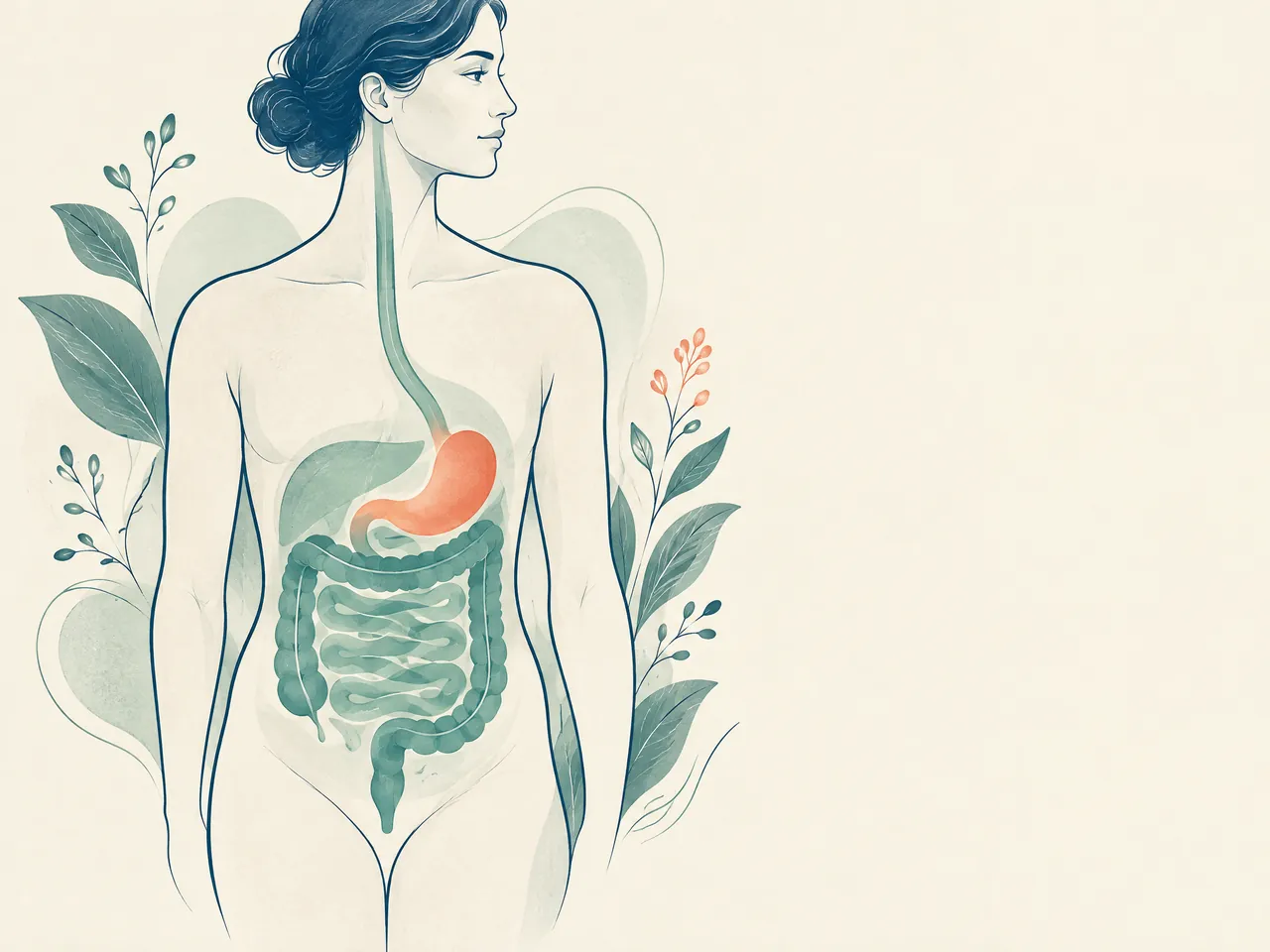
Heartburn and acid reflux often become more noticeable after eating, lying down or bending over. Start by recording the meal, portion, timing, drinks, posture and symptoms, then test practical changes such as smaller meals and leaving time before bed. Avoiding every commonly mentioned food is not necessary; personal patterns matter. Frequent symptoms, symptoms that disrupt sleep or daily life, and any alarm signs need medical assessment rather than self-management alone.
Transparent pricing
See the fees.
Choose your care.
Explore our complete official price list, including first-trial prices, regular prices, packages and branch-specific options.
Opening WhatsApp prepares an enquiry; it does not send a message, take payment or confirm an appointment. Suitability and individual arrangements are confirmed during consultation.
Chinese medicine
All prices in HKDAcupuncture and Chinese herbal medicine package
Includes a Chinese medicine consultation with pulse assessment, body acupuncture and 3 days of Chinese herbal granules that do not require decoction.
HK$580 (single session)
Chinese medicine consultation with pulse assessment
Hair and scalp
All prices in HKDScalp health and hair-loss management
Includes AI scalp analysis, deep scalp and follicle cleansing, and scalp oil-control care.
HK$380 (first trial)
Regular price: HK$680
- 6 sessions: HK$3,480 (HK$580 per session)
- 12 sessions: HK$5,760 (HK$480 per session)
- 20 sessions: HK$8,600 (HK$430 per session)
- 30 sessions: HK$11,400 (HK$380 per session)
Hair acupuncture and Chinese herbal medicine package
Includes scalp acupuncture and 3 days of Chinese herbal medicine that does not require decoction.
HK$580 (single session)
Registered Chinese Medicine Practitioner consultation
- 6 sessions: HK$3,180 (HK$530 per session)
- 12 sessions: HK$5,760 (HK$480 per session)
- 20 sessions: HK$8,600 (HK$430 per session)
- 30 sessions: HK$11,400 (HK$380 per session)
Combined hair and scalp treatment
Combines acupuncture and Chinese herbal medicine with salon-level scalp and follicle care. Packages include complimentary hair-care shampoo and serum.
HK$1,260 (single session)
Combined treatment
- 8 sessions: HK$8,640 (HK$1,080 per session)
- 16 sessions: HK$15,680 (HK$980 per session)
- 20 sessions: HK$18,600 (HK$930 per session)
- 30 sessions: HK$26,400 (HK$880 per session)
Weight management
All prices in HKDFull-body acupoint embedding for weight management
Includes full-body acupoint embedding. Packages include complimentary Chinese herbal medicine for weight management, with the number of included days scaled to the package. Embedding material and the individual treatment arrangement are confirmed during consultation; this is not a cosmetic thread lift.
HK$980 (single session)
No trial session
- 10 sessions: HK$7,800 (HK$780 per session)
- 20 sessions: HK$14,600 (HK$730 per session)
- 30 sessions: HK$20,400 (HK$680 per session)
Facial acupuncture
All prices in HKDFacial acupuncture (basic)
Includes facial acupuncture and meridian-based facial care, including care for facial puffiness.
HK$480 (first trial)
Regular price: HK$680
- 10 sessions: HK$5,200 (HK$520 per session)
- 20 sessions: HK$9,600 (HK$480 per session)
- 30 sessions: HK$13,500 (HK$450 per session)
Facial acupuncture (advanced)
Includes enhanced facial acupuncture with a specially formulated moisturising mask and serum.
HK$780 (first trial)
Regular price: HK$1,180
- 10 sessions: HK$9,000 (HK$900 per session)
- 20 sessions: HK$16,600 (HK$830 per session)
- 30 sessions: HK$23,400 (HK$780 per session)
Pain care
All prices in HKDExtracorporeal shockwave treatment
Shockwave treatment for deep-tissue and fascial care. The Kwun Tong clinic offers the multi-area options shown below.
Priced by branch
Branch-specific pricing
Prince Edward: HK$250 per area
Kwun Tong: HK$250 for 1 area / HK$450 for 2 areas / HK$600 for 3 areas
Pain care (manual therapy)
Includes Chinese medicine musculoskeletal assessment, manual joint techniques and tui na.
HK$580 (single session)
Chinese medicine musculoskeletal assessment
Pain care (acupuncture and manual therapy)
Combines acupuncture and manual therapy.
HK$680 (single session)
Combined care
Heartburn and acid reflux: acid reflux diet and eating habits for recognising patterns; acid reflux lifestyle changes
Heartburn is a burning sensation in the middle of the chest caused by stomach contents travelling upward; acid reflux may also leave an unpleasant sour taste in the mouth. Cough, repeated hiccups, hoarseness, nausea, bloating or bad breath can occur alongside the more familiar symptoms. A symptom does not prove its cause, however. Chest discomfort has several possible explanations, and reflux can overlap with indigestion or other digestive concerns. The useful starting point is to notice the whole episode: what happened before it, how it felt, how long it lasted and whether it changed sleep, work, exercise or appetite. NHS guidance notes that reflux symptoms are often worse after eating, lying down and bending over [1].
Patterns are more helpful than blame. A late restaurant meal, milk tea during a deadline, a high-fat takeaway, alcohol, smoking, stress or a tighter waistband may all be relevant in a particular week, yet none should be assumed to be the sole cause without a pattern. People who have both reflux and recurring abdominal discomfort may also want to compare symptoms with Chinese medicine for IBS, but persistent reflux still deserves its own medical discussion. If you are unsure whether the problem sounds like reflux or needs a doctor first, the practical question is not whether you can tolerate another episode; it is whether the symptoms are becoming frequent, changing or interfering with ordinary life.
Heartburn and acid reflux: acid reflux diet and eating habits linked to symptoms; acid reflux diet and eating habits; acid reflux lifestyle changes
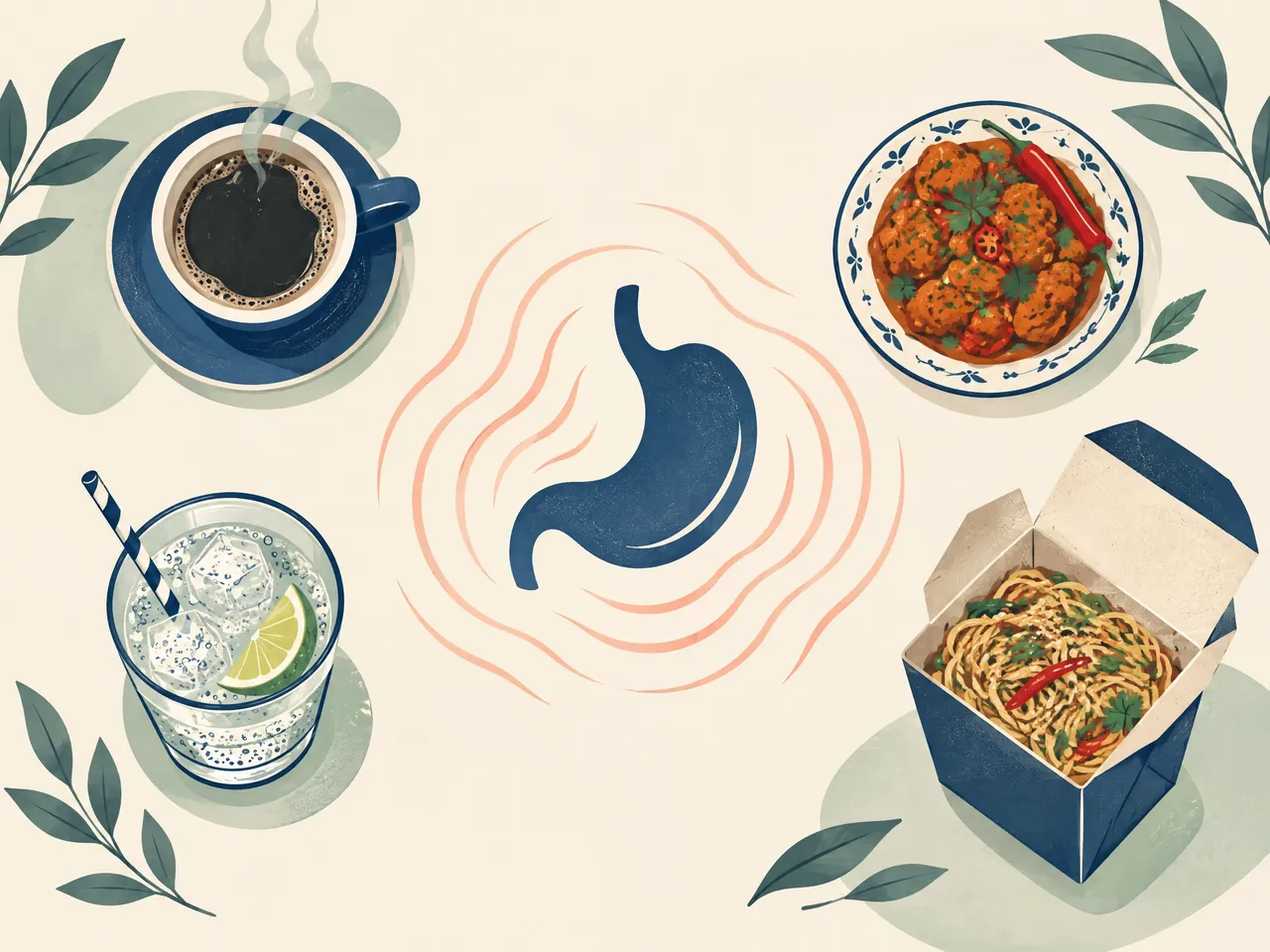
An acid reflux diet is best understood as an observation process, not a fixed forbidden-food list. Coffee, tomatoes, alcohol, chocolate, fatty foods and spicy foods are recognised as possible triggers, but the same item may not affect every person [1]. Begin with the meals that regularly precede symptoms. Note portion size, whether the meal was eaten quickly, sauces and fried foods, caffeine or alcohol, and whether you had eaten very little earlier in the day before a large evening meal. Smaller, more frequent meals may be worth trying when large portions reliably bring symptoms on. Eat at a pace that lets you notice fullness. If you change your eating pattern, keep it manageable enough to repeat during workdays, family meals and weekends rather than relying on a strict plan for only a few days.

Heartburn and acid reflux: acid reflux lifestyle changes and a practical symptom diary; acid reflux diet and eating habits; acid reflux lifestyle changes
A brief diary can turn a vague complaint into useful information. Write down the date and time, food and drink, approximate portion, symptoms, posture, medicines taken and whether you woke at night. Add context such as a long commute, an unusually late meal, exercise, smoking or alcohol if it might matter. There is no need to measure symptoms perfectly; a simple description such as mild burning after lunch or sour fluid when lying down is enough. Keep the record for a representative stretch of normal life and bring it to an appointment. It can also prevent over-restriction: if a suspected food is repeatedly uneventful, you may not need to keep avoiding it. For a broader discussion of traditional approaches, see Chinese medicine for acid reflux.
Compare your options
| Part of the episode | What to record | How it can guide the next conversation |
|---|---|---|
| Meal and drinks | Time, approximate portion, pace of eating, coffee or tea, alcohol, and foods you suspect may be relevant | Shows whether a personal food, a large meal or late timing repeatedly comes before symptoms |
| Symptoms | Burning, sour taste, regurgitation, cough, hoarseness, nausea, and how long the episode lasted | Separates the main complaint from accompanying symptoms and shows whether the pattern is changing |
| Position and sleep | Whether you bent over, lay down, exercised, wore tight clothing or woke during the night | Helps identify whether posture and the interval before bed are practical lifestyle targets |
| Medicines and safety | Prescribed medicines, pharmacy products, supplements or herbs taken, plus any swallowing problem, bleeding or weight loss | Helps avoid unsafe overlap and makes it easier to recognise when medical assessment is more urgent |
On smaller screens, scroll the table sideways to compare all columns.
Heartburn and acid reflux: acid reflux diet and eating habits alongside acid reflux lifestyle changes
Lifestyle steps are supportive, but they are not a test you have to pass before asking for help. When symptoms occur most days, continue despite food and routine changes, or keep disturbing sleep, seek medical advice. A clinician will consider the symptom history, current medicines and relevant medical history, then decide whether a trial of treatment or tests are appropriate. NIDDK explains that doctors diagnose reflux by reviewing symptoms and medical history, and that testing may be needed when symptoms do not improve with lifestyle changes and medicines [2]. This matters because recurrent burning is not the only possible explanation for upper-body or digestive symptoms.
Make the evening routine as easy on your body as possible. NHS advice includes avoiding food or drink that triggers symptoms, not eating within three or four hours of bed, avoiding tight clothing around the waist and not smoking [1]. It also describes raising the head of the bed so that the chest and head are above the waist, rather than adding extra pillows that can increase pressure on the belly. These are options to discuss and test safely in your own routine, not guarantees. Weight management may be relevant for some people, but it should be approached as a sustained health conversation rather than a crash diet prompted by one bad week of reflux.

Heartburn and acid reflux: acid reflux lifestyle changes and conventional treatment; acid reflux diet and eating habits; acid reflux lifestyle changes
Conventional management can include lifestyle adjustment, over-the-counter options, prescribed medicines and, in selected situations, specialist assessment or procedures. Pharmacists may advise on antacids or alginates for short-term symptom relief; a doctor may prescribe a proton pump inhibitor (PPI), which reduces stomach acid production [1]. Hong Kong Adventist Hospital also lists medical treatment and lifestyle changes as part of reflux care, and describes endoscopy and pH monitoring among tests that may be used in assessment [3]. The choice depends on the clinical picture, not on a diary alone. Ask what each recommendation is intended to address, how it should be taken and what follow-up is appropriate if the symptoms return or do not settle.

Heartburn and acid reflux: acid reflux diet and eating habits, medicines and safety; acid reflux diet and eating habits; acid reflux lifestyle changes
Do not stop a prescribed medicine or alter its dose just because meals improve for a few days. Bring a complete list of prescribed medicines, pharmacy products, supplements and herbs to a doctor or registered Chinese medicine practitioner, especially if you are considering more than one kind of care. Some medicines can contribute to stomach irritation or symptoms, and any change needs individual advice. It is also sensible to say whether you are pregnant, have a known hiatus hernia, smoke, or use anti-inflammatory painkillers, because these details can affect the conversation [1]. If the deciding issue is whether assessment should happen promptly, read When should I see a doctor for acid reflux? rather than relying on a dietary experiment.
Heartburn and acid reflux: acid reflux diet and eating habits, acid reflux lifestyle changes and Chinese medicine
Some people seek Chinese medicine because reflux sits alongside bloating, appetite changes, bowel changes, sleep disruption or stress. A Chinese medicine consultation can be a place to discuss those experiences in detail, but it does not replace medical investigation when that is indicated. In Hong Kong, a CUHK Chinese medicine programme lists acid reflux and heartburn among digestive symptoms for which people may consult a registered practitioner, with treatment plans discussed according to individual clinical judgement [4]. That service wording does not establish that a particular treatment will work for reflux, and it should not be read as a substitute for diagnosis or prescribed care.
Use complementary care in a coordinated way. A practitioner needs to know whether you have already been assessed, the result of any tests you have had, the medicines you take and the specific pattern you have recorded. This helps keep the discussion grounded in what has actually happened rather than in a label alone. If reflux comes with ongoing constipation, diarrhoea or abdominal pain, those symptoms should be described separately; IBS treatment options Hong Kong may help you frame questions about that different symptom group. The priority remains clear communication between the people involved in your care, particularly before adding herbs or changing medication.

Heartburn and acid reflux: acid reflux lifestyle changes discussed in a Chinese medicine assessment; acid reflux diet and eating habits; acid reflux lifestyle changes
A Chinese medicine assessment commonly asks about the timing and quality of burning or regurgitation, appetite, bowel habits, sleep, emotional strain and reactions to particular meals. The practitioner may use observation, listening and questioning, and may discuss traditional pattern concepts. Those concepts are part of a traditional diagnostic language; they are not the same as a modern medical diagnosis such as oesophagitis, an ulcer or GERD. Acupuncture or Chinese herbal medicine may be discussed as individual complementary options after assessment, but this page cannot determine suitability, prescribe a formula or promise a result. Take photographs or a written list of all products you use, and ask directly about possible interactions and when conventional review should take priority.

Heartburn and acid reflux: acid reflux diet and eating habits, support options and warning signs; acid reflux diet and eating habits; acid reflux lifestyle changes
Seek prompt medical assessment for food getting stuck in the throat, difficulty or pain when swallowing, frequent uncontrolled vomiting, unexplained weight loss, vomiting blood or black stools. Sudden or severe chest pain, especially with breathlessness, should be treated as an emergency rather than assumed to be reflux. These warning signs need conventional medical evaluation first. The NHS also advises seeing a GP when lifestyle changes and pharmacy medicines do not help, or when heartburn happens most days [1]. For a focused safety checklist, see acid reflux red flags. A careful plan has room for dietary changes and complementary discussion, but it never delays urgent care or asks you to discontinue prescribed treatment without the prescribing clinician's advice.
Care and health guide
Health service information
This directory brings together services, reading, and visit information related to health services, to help you prepare questions for a consultation.
If you are organising health questions, Chinese medicine clinic Hong Kong is a starting point for learning about related services and preparing for a consultation.
People have different needs; acupuncture Hong Kong provides further reading to help you understand options in your own context.


Your questions, answered
Frequently asked questions
What symptoms commonly occur with heartburn and acid reflux?
The typical symptoms are burning in the chest and a sour taste in the mouth. Reflux can also occur with cough, hiccups, hoarseness, bad breath, bloating or nausea. Symptoms are often worse after eating, lying down or bending over [1]. New, severe or changing symptoms should be assessed rather than self-diagnosed.
Which acid reflux diet and eating habits are most useful to try first?
Start with a manageable record and focus on patterns. Smaller, more frequent meals, slowing down at meals and avoiding food or drink that you personally identify as a trigger may help. Leave time between eating and lying down. Commonly mentioned triggers include coffee, alcohol, tomatoes, chocolate and fatty or spicy foods, but not everyone reacts to them [1].
Can Chinese medicine replace a doctor or PPI medicine for acid reflux?
No. Chinese medicine may be discussed as a complementary, individualised option after assessment, but it does not replace necessary medical diagnosis, tests or prescribed treatment. Do not stop or change PPI or other prescribed medicines without the prescribing clinician's advice, and tell every practitioner about all medicines, supplements and herbs you use.
When is heartburn or acid reflux urgent?
Seek prompt medical assessment for difficulty or pain when swallowing, frequent uncontrollable vomiting, unexplained weight loss, vomiting blood or black stools. Sudden or severe chest pain, particularly with breathlessness, is an emergency concern and should not be managed as reflux at home. Symptoms that happen most days or persist despite lifestyle and pharmacy measures also need medical review [1].
Sources and further information
- [1] [1] NHS — Heartburn and acid reflux
Referenced for: Symptoms, self-care measures, medicines, and reasons to seek medical review.
- [2] [2] National Institute of Diabetes and Digestive and Kidney Diseases — Acid Reflux (GER & GERD) in Adults
Referenced for: Definition, medical assessment, treatment approaches, and diet and timing guidance.
- [3] [3] Hong Kong Adventist Hospital — Acid Reflux
Referenced for: Hong Kong clinical information on reflux symptoms, diagnostic options, and treatment context.
- [4] [4] The Chinese University of Hong Kong — Chinese Medicine Treatment Program for Digestive Diseases
Referenced for: Hong Kong Chinese medicine service context for digestive symptoms; not evidence of efficacy.