
TCM Lab · Health reading
When Should I See a Doctor About Hair Loss? A Practical Guide
Published Updated
A few hairs on a brush or shower drain can be ordinary shedding, but a clear change in the amount, pattern or speed of loss is worth taking seriously. See a doctor or another qualified healthcare professional if the loss is sudden, patchy, rapidly worsening, linked with an uncomfortable scalp, or simply worrying you. The aim is not to guess from one photograph; it is to identify the pattern, consider possible causes and decide what assessment may be needed. A TCM consultation can discuss your wider health history and daily habits, but it should not replace medical assessment when a new or concerning change needs explanation.
Appointments are confirmed through WhatsApp. If you have language requirements, please mention them in your enquiry.
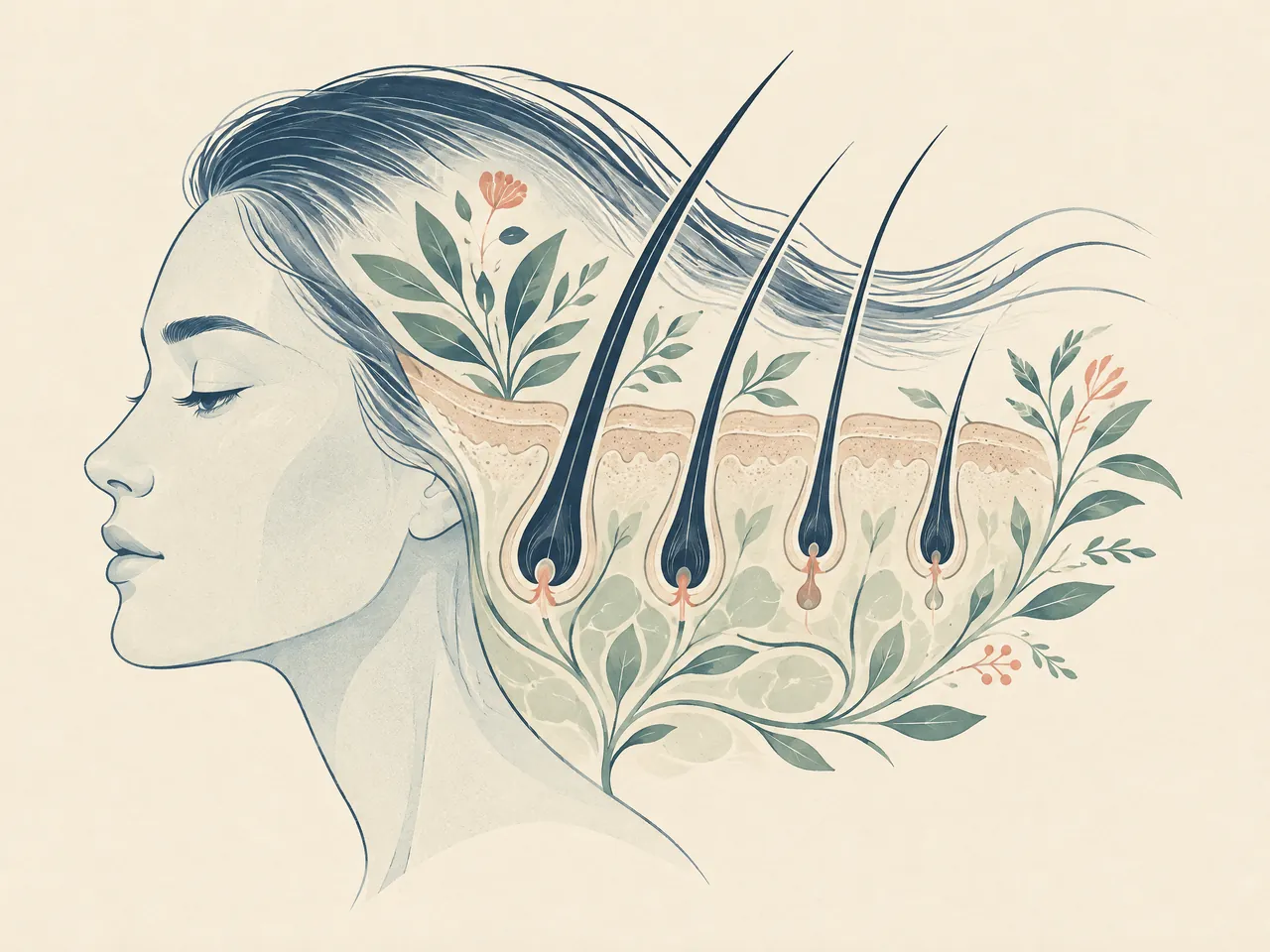
The short answer
See a doctor or qualified healthcare professional about hair loss when it is sudden, patchy, noticeably worsening, accompanied by scalp symptoms, or causing concern or distress. Bring a timeline, medicine list, relevant health changes and photographs if available. Assessment can help distinguish a gradual pattern from shedding after illness or another possible cause. A TCM consultation may be considered after an individual discussion, but it cannot promise regrowth or replace medical care for concerning symptoms.
Transparent pricing
See the fees.
Choose your care.
Explore our complete official price list, including first-trial prices, regular prices, packages and branch-specific options.
Opening WhatsApp prepares an enquiry; it does not send a message, take payment or confirm an appointment. Suitability and individual arrangements are confirmed during consultation.
Hair and scalp
All prices in HKDScalp health and hair-loss management
Includes AI scalp analysis, deep scalp and follicle cleansing, and scalp oil-control care.
HK$380 (first trial)
Regular price: HK$680
- 6 sessions: HK$3,480 (HK$580 per session)
- 12 sessions: HK$5,760 (HK$480 per session)
- 20 sessions: HK$8,600 (HK$430 per session)
- 30 sessions: HK$11,400 (HK$380 per session)
Hair acupuncture and Chinese herbal medicine package
Includes scalp acupuncture and 3 days of Chinese herbal medicine that does not require decoction.
HK$580 (single session)
Registered Chinese Medicine Practitioner consultation
- 6 sessions: HK$3,180 (HK$530 per session)
- 12 sessions: HK$5,760 (HK$480 per session)
- 20 sessions: HK$8,600 (HK$430 per session)
- 30 sessions: HK$11,400 (HK$380 per session)
Combined hair and scalp treatment
Combines acupuncture and Chinese herbal medicine with salon-level scalp and follicle care. Packages include complimentary hair-care shampoo and serum.
HK$1,260 (single session)
Combined treatment
- 8 sessions: HK$8,640 (HK$1,080 per session)
- 16 sessions: HK$15,680 (HK$980 per session)
- 20 sessions: HK$18,600 (HK$930 per session)
- 30 sessions: HK$26,400 (HK$880 per session)
Weight management
All prices in HKDFull-body acupoint embedding for weight management
Includes full-body acupoint embedding. Packages include complimentary Chinese herbal medicine for weight management, with the number of included days scaled to the package. Embedding material and the individual treatment arrangement are confirmed during consultation; this is not a cosmetic thread lift.
HK$980 (single session)
No trial session
- 10 sessions: HK$7,800 (HK$780 per session)
- 20 sessions: HK$14,600 (HK$730 per session)
- 30 sessions: HK$20,400 (HK$680 per session)
Facial acupuncture
All prices in HKDFacial acupuncture (basic)
Includes facial acupuncture and meridian-based facial care, including care for facial puffiness.
HK$480 (first trial)
Regular price: HK$680
- 10 sessions: HK$5,200 (HK$520 per session)
- 20 sessions: HK$9,600 (HK$480 per session)
- 30 sessions: HK$13,500 (HK$450 per session)
Facial acupuncture (advanced)
Includes enhanced facial acupuncture with a specially formulated moisturising mask and serum.
HK$780 (first trial)
Regular price: HK$1,180
- 10 sessions: HK$9,000 (HK$900 per session)
- 20 sessions: HK$16,600 (HK$830 per session)
- 30 sessions: HK$23,400 (HK$780 per session)
Pain care
All prices in HKDExtracorporeal shockwave treatment
Shockwave treatment for deep-tissue and fascial care. The Kwun Tong clinic offers the multi-area options shown below.
Priced by branch
Branch-specific pricing
Prince Edward: HK$250 per area
Kwun Tong: HK$250 for 1 area / HK$450 for 2 areas / HK$600 for 3 areas
Pain care (manual therapy)
Includes Chinese medicine musculoskeletal assessment, manual joint techniques and tui na.
HK$580 (single session)
Chinese medicine musculoskeletal assessment
Pain care (acupuncture and manual therapy)
Combines acupuncture and manual therapy.
HK$680 (single session)
Combined care
Chinese medicine
All prices in HKDAcupuncture and Chinese herbal medicine package
Includes a Chinese medicine consultation with pulse assessment, body acupuncture and 3 days of Chinese herbal granules that do not require decoction.
HK$580 (single session)
Chinese medicine consultation with pulse assessment
When Should I See a Doctor About Hair Loss? Recognising Changes
The short answer is: make an appointment when hair loss is new to you, changes quickly, has a recognisable pattern, affects your confidence or wellbeing, or comes with other symptoms. NHS guidance says to see a GP if you are worried about hair loss and advises finding out the cause before considering a commercial hair clinic [1]. That is a practical threshold, not an instruction to wait until you can prove something is wrong. You may have noticed more hair on the pillow, a wider parting, a receding hairline, a thinning crown, hair breaking after styling, or a bare area that another person spotted. Write down what changed and when. The appearance alone rarely tells the whole story, but the pattern helps direct the conversation.
Avoid using a single bad hair day as the only measure. Look for a consistent change over several washes, styling sessions or weeks, and separate shedding from breakage if you can. Shedding means hairs are coming away from the scalp; breakage may leave shorter snapped strands. Both deserve attention if they are new or substantial. The American Academy of Dermatology notes that hair loss can be gradual or abrupt and that causes range from inherited pattern loss to illness, stressors, scalp conditions, medicines, tight hairstyles and nutritional shortfalls [2]. Rather than self-diagnosing from that list, use it to recall relevant changes. The overview of what causes hair loss can help you organise questions before an appointment.

When Should I See a Doctor About Hair Loss? Sudden or Noticeable Shedding
Arrange a medical assessment promptly when you see an abrupt increase in hairs coming out, a distinct round or oval bare patch, several patches, loss of eyebrows or lashes, or a striking new change after an illness, operation, childbirth, major weight change or stressful period. These details do not identify the cause by themselves. They do, however, tell the clinician that this is not simply a long-standing styling concern. Some shedding can be temporary, while other patterns need a different response. For example, the National Institute of Arthritis and Musculoskeletal and Skin Diseases describes alopecia areata as an immune-related condition that often begins with sudden round or oval patches; its course varies from person to person [3]. A patch is a reason to seek a professional opinion, not a reason to assume the diagnosis.
Noticeable does not have to mean total loss. A wider central part, more visible scalp under the same lighting, a new recession at the temples or slower density loss over months can all be worth discussing, particularly when the change is continuing. Family pattern can be relevant, but it is not enough to explain every new symptom. Think back to timing: did the change follow a fever, hospital treatment, a dietary restriction, a new training routine, a medication change, a period of poor sleep, or repeated tight braids or ponytails? Bring that timeline without trying to rank causes yourself. If a medicine is on your mind, contact its prescriber rather than stopping it; the AAD specifically cautions against stopping prescribed medication before speaking to the doctor [2].
When Should I See a Doctor About Hair Loss? Scalp and General Symptoms
The scalp may provide important context. Make an appointment when hair loss occurs with persistent itch, tenderness, burning, marked scaling, redness, sores, crusting or a visibly inflamed area. Mention whether the discomfort began before or after the loss, whether it is spreading, and which shampoos, dyes, oils, hairpieces or styling products you have used. Scalp infection can produce scaly or inflamed areas and hair loss, while inflammation can also be relevant in other conditions; a clinician needs to examine the area rather than relying on a product recommendation [2]. Also mention wider changes such as a recent illness, appetite or weight change, unusual tiredness, rash, nail change, altered diet or new supplements. Hair loss can affect wellbeing, so say if it is changing how you socialise, work or feel [1]. If you are severely unwell or have an acute symptom that feels urgent, seek urgent medical care rather than waiting for a routine hair consultation.
Compare your options
| What you notice | Why an assessment can help | What to bring or ask |
|---|---|---|
| Gradual thinning, a wider parting or receding hairline | A clinician can assess the pattern, timing, family history and other possible contributors rather than assuming one cause. | Bring comparable photographs and ask what pattern is seen and whether monitoring or further assessment is appropriate. |
| Sudden heavier shedding or hair coming out in clumps | Recent illness, stressors, weight change, medicines and other health factors may be relevant; the timing needs review. | Make a timeline of recent health events, diet changes, medicines and supplements. |
| One or more new bare patches, eyebrow or eyelash loss | A distinct pattern needs a professional examination; it should not be assumed to be ordinary shedding. | Note when each area appeared, whether it is changing, and any tingling, itch or nail changes. |
| Hair loss with persistent itch, pain, redness, scaling or sores | Scalp symptoms may need examination and should not be managed only by changing shampoo or buying a cosmetic product. | List scalp and hair products, chemical treatments, tight styles and when the discomfort began. |
| Interest in Chinese medicine support after or alongside assessment | A TCM practitioner can discuss your wider history and whether support is appropriate, without guaranteeing a result. | Bring your medical timeline, current medicines, supplements, test results and questions about coordination of care. |
On smaller screens, scroll the table sideways to compare all columns.
When Should I See a Doctor About Hair Loss? Preparing for Assessment
A well-prepared assessment is not about arriving with the perfect explanation. It is about giving a doctor enough reliable detail to see the sequence of events. Before the visit, make a short note of when you first noticed the change, how quickly it developed, where it began and whether the loss is shedding, thinning, patches or breakage. If you can, take a few photographs under similar lighting and from the same angle over time. They may make a gradual change easier to show, but they do not replace an examination. A clinician may be able to identify a cause by looking at the hair and scalp, according to NHS guidance, while other situations may call for a broader history or tests [1].

Bring a current list of prescribed medicines, over-the-counter products and supplements, including recent starts, stops or dose changes. Include prior diagnoses, recent blood tests or referral letters if you have them, but do not delay an appointment just because you cannot gather every document. It is useful to record hair practices too: bleaching, chemical straightening, extensions, wigs, heat tools, tight styles, frequent scratching or a new scalp product. This helps distinguish a scalp complaint or breakage from hair shedding and avoids a consultation that overlooks everyday exposure. If you have been comparing options online, the hair loss assessment guide is a useful prompt for what to note, not a substitute for individual care.
When Should I See a Doctor About Hair Loss? Your Timeline and Medical History
Start your story with a simple before-and-after: “My hair seemed usual until late May; since June I have seen more shedding in the shower and a thinner ponytail.” Then add events in the preceding months, such as infection, surgery, pregnancy and childbirth, a bereavement, a major deadline, dietary change, rapid weight change or a new medicine. Explain whether the amount is stable, improving or increasing. Family history can be useful too: say whether close relatives have had gradual pattern thinning, patches or an unexplained scalp condition. Ask what pattern the clinician sees, what possible causes are being considered and whether the scalp looks healthy. If testing is suggested, ask what question it is intended to answer and how the result will affect next steps. Accurate diagnosis matters because treatment without it may be ineffective [2].
When Should I See a Doctor About Hair Loss? Questions About Possible Causes
Be cautious with comparisons that make all thinning sound alike. A person noticing a slowly widening part may want a different discussion from someone whose hair came out in clumps after illness, or someone with a tender, scaly patch. Likewise, a treatment discussed for one diagnosis is not automatically appropriate for another. Review hair thinning treatment information only after you understand the question being treated. NHS notes that no hair-loss treatment is 100% effective [1]. A clear explanation of uncertainty is more valuable than a promise based on before-and-after marketing.
When Should I See a Doctor About Hair Loss? Considering TCM Support
Some people want to ask whether Chinese medicine has a place alongside their hair-loss care. Begin with the same principle: identify concerning changes and seek medical evaluation where it is needed. A TCM consultation should be an individual discussion rather than a guaranteed hair-growth plan. At TCM Lab, a Registered Chinese Medicine Practitioner can ask about the timeline, scalp symptoms, sleep, stress, eating pattern, relevant health history and treatments already being used. You can explore Chinese medicine for hair loss as a consultation topic, but no approach should be presented as a substitute for diagnosis of a sudden patch, active scalp problem or other unexplained change.
Be direct about your goal. You may want help understanding a persistent scalp concern, support while you are also receiving medical care, or a professional conversation about whether Chinese herbal medicine or acupuncture is appropriate to discuss. Take medication and supplement details with you so that the practitioner knows what you are already using. Do not presume that an option will be recommended, that it will suit every pattern of loss, or that a fixed number of visits will produce a fixed result. A practitioner may instead advise medical review, monitoring, or a different next step. That is a useful outcome when the cause has not yet been clarified.
When Should I See a Doctor About Hair Loss? What a TCM Consultation Covers
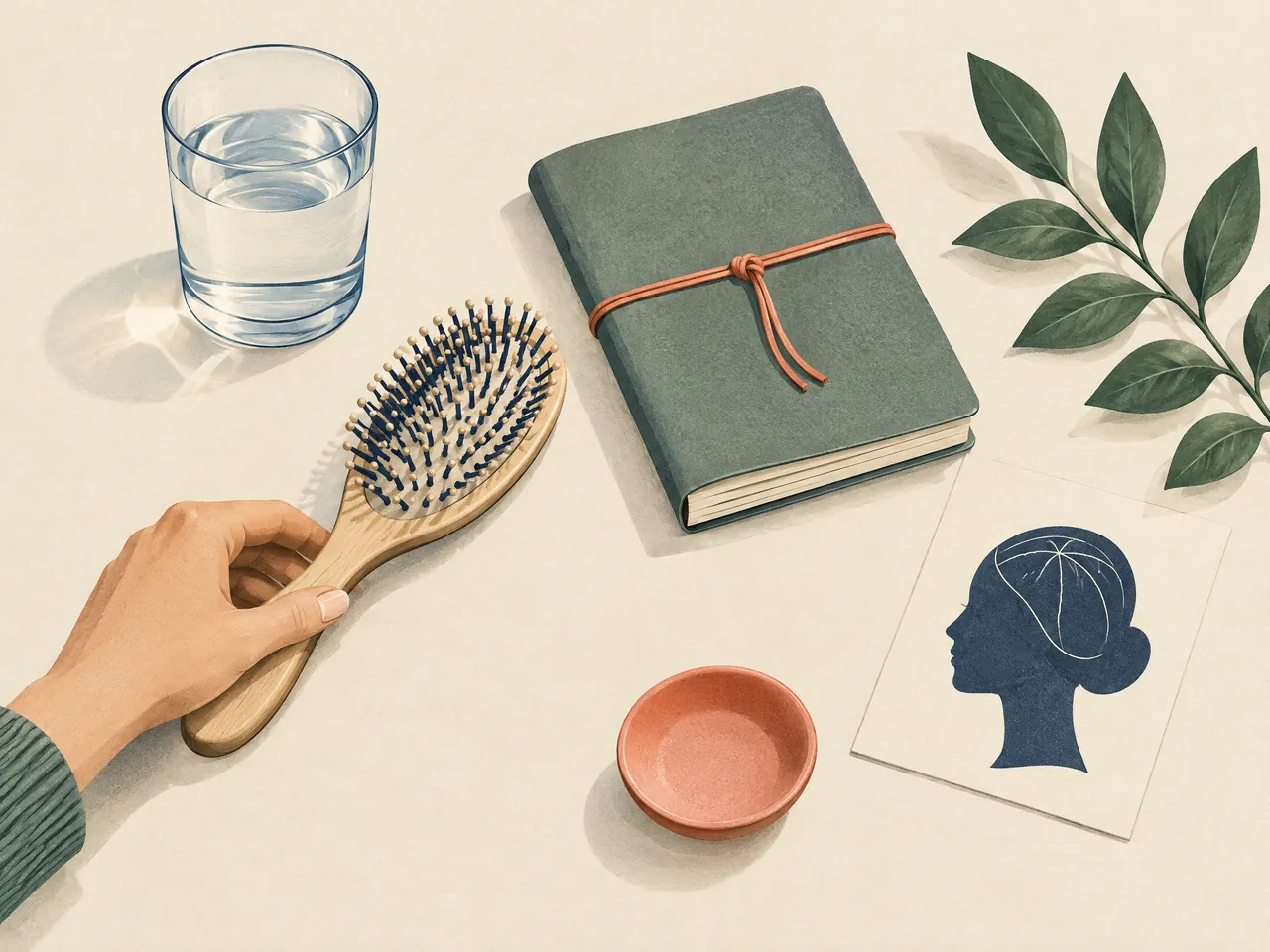
The consultation starts with your own account, not with a promise based on hair type or a single image. Expect questions about when the problem began, where it is most visible, whether there is itch or soreness, recent health events, diet and sleep, stress, hair-care routine, family history and current medicines. A Registered Chinese Medicine Practitioner may use traditional Chinese medicine assessment methods and discuss whether any Chinese medicine support is appropriate in your individual circumstances. If you bring laboratory reports or a doctor’s diagnosis, say when they were issued and whether the symptoms have changed since. This keeps the discussion connected to current care rather than treating every shedding episode as the same problem.
Ask practical safety and coordination questions. Tell the practitioner if you are pregnant or breastfeeding, have a medical condition, are under specialist care, have a known allergy, or use prescription medicines or multiple supplements. Ask what information should be shared with your doctor and what changes would mean you should return to medical care. These conversations matter because “natural” does not mean automatically suitable for everyone. A responsible consultation also leaves room to say no to an option, to seek a second medical opinion, or to wait for test results. It should not require you to choose a treatment before you understand why it is being considered.

When Should I See a Doctor About Hair Loss? Reviewing Care Over Time
Follow-up should be based on observable changes and your experience, not on a promise of rapid regrowth. Keep the same simple record: location and appearance of thinning or patches, amount of shedding you notice, scalp comfort, new symptoms, important medical events and any adverse reaction to a product or treatment. Photographs taken in comparable light can be useful to discuss a pattern, but do not let photo checking become a source of daily distress. Ask when review is sensible and what would trigger earlier medical reassessment, such as new patches, escalating shedding, spreading scalp inflammation or a change in general health.
For a consultation enquiry in Hong Kong, TCM Lab can discuss arrangements at its two locations. Choose a convenient setting for an in-person discussion by reviewing the Kwun Tong Chinese medicine clinic or Chinese medicine clinic Prince Edward information. You can also review the Chinese medicine clinic price list Hong Kong before asking practical questions. WhatsApp +852 6940 5663 with your main concern and preferred location. The team can explain the enquiry process and appointment arrangements; a message is not an automatic diagnosis, treatment recommendation or booking confirmation.
Care and health guide
Hair and scalp care information
This directory brings together services, reading, and visit information related to hair and scalp care, to help you prepare questions for a consultation.
For questions about hair or scalp care, noting the everyday concerns and service questions you want to discuss can help prepare a consultation; Chinese medicine for hair loss is a relevant service or reading entry point.
People may have different priorities, and acupuncture Hong Kong offers related information to help you understand options and prepare questions.

Your questions, answered
Frequently asked questions
When should I see a doctor about hair loss if it seems to run in my family?
Family pattern can be useful context, but it does not explain every new change. Arrange an assessment if thinning is newly noticeable, progressing, distressing, unusually rapid, patchy or accompanied by scalp symptoms. Mention which relatives were affected and the pattern you observed, then let the clinician assess whether other factors also need attention.
What should I bring to a hair-loss appointment?
Bring a short timeline, current medicines and supplements, relevant diagnoses or test results, and notes on recent illness, stress, diet or hair-care changes. Photographs in similar lighting can help illustrate change over time. Also note scalp symptoms such as itch, soreness, scaling or redness, and any family history of thinning or patches.
Can stress cause hair loss, or should I still see a doctor?
A stressful period can be one possible contributor to increased shedding, but it is not wise to assume that it explains everything. If the change is sudden, persistent, patchy, worsening or worrying you, seek professional assessment. A clinician can consider the timing alongside your health history and scalp examination.
Can TCM guarantee that hair will grow back?
No. Hair-loss patterns and outcomes vary, and Chinese medicine support should be considered only after an individual consultation. A Registered Chinese Medicine Practitioner may discuss relevant options, monitoring and when medical review is needed, but cannot guarantee regrowth, a fixed course length or a particular outcome.
Sources and further information
- [1] NHS — Hair loss
Referenced for: Official NHS guidance on common hair-loss causes, seeing a GP when worried, appointment discussion and limits of treatment.
- [2] American Academy of Dermatology — Hair loss: Who gets and causes
Referenced for: Dermatology organisation guidance on patterns, possible causes, scalp-related conditions, medication caution and the value of accurate diagnosis.
- [3] NIAMS — Alopecia Areata
Referenced for: U.S. National Institutes of Health information on alopecia areata, patchy presentation and its variable course.