
TCM Lab · Health reading
Tennis elbow causes explained: what causes tennis elbow and What causes tennis elbow if I do not play tennis?
Published Updated
You do not need to play tennis to develop tennis elbow. The name usually describes pain around the outer elbow that is linked with repeated loading of the forearm muscles and the tendons that attach near that area. Gripping, extending the wrist, twisting the forearm, or holding a tool or mouse in one position can be enough to make a previously tolerable task painful. The pattern often builds gradually rather than following one dramatic incident. Knowing which movement, grip and duration bring it on is more useful than blaming one activity. This page explains the common tennis elbow causes, how a familiar pattern differs from pain that needs assessment, and how to reduce strain while you decide on the next step. [1] [2]
Appointments are confirmed through WhatsApp. If you have language requirements, please mention them in your enquiry.
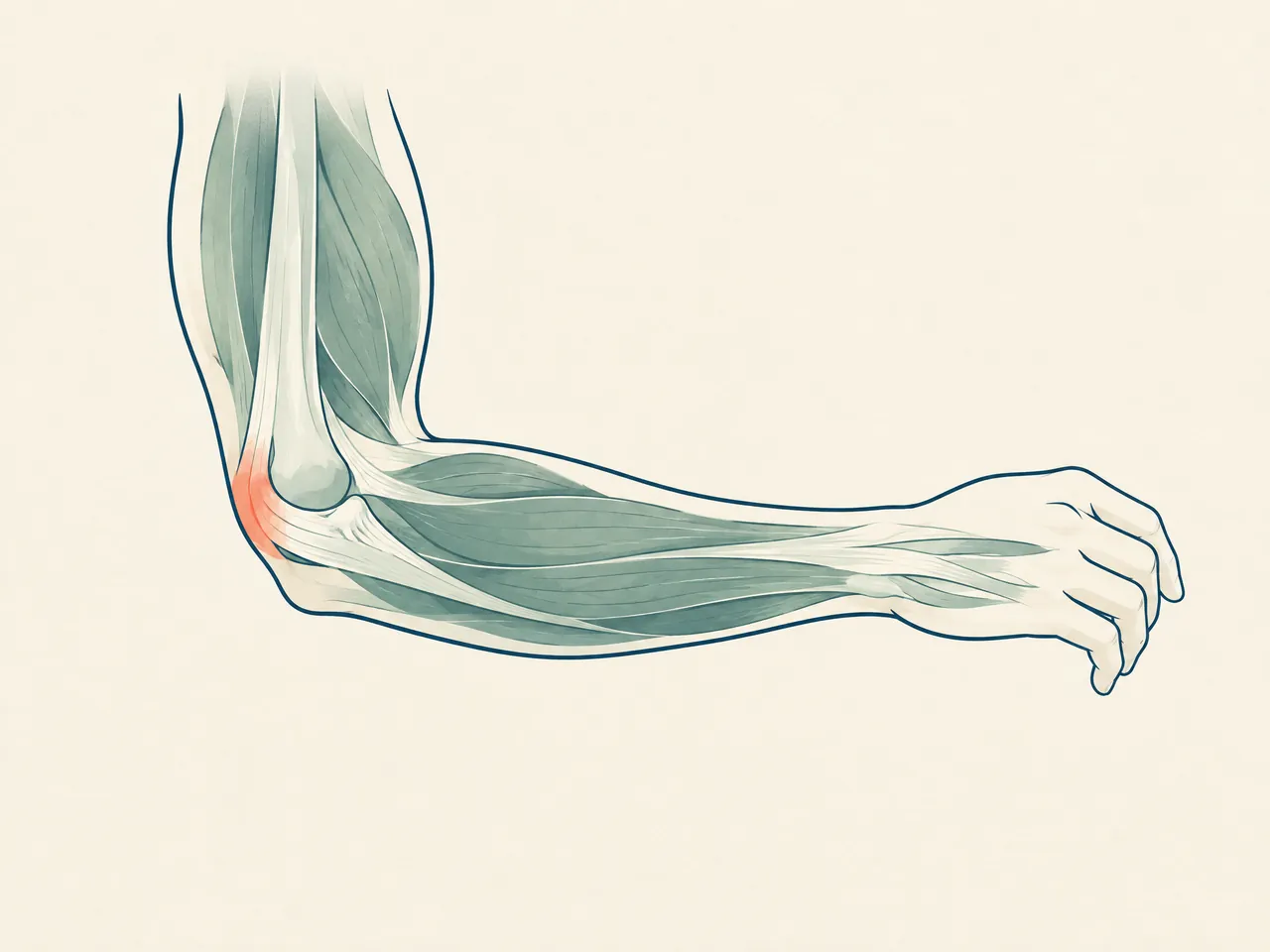
The short answer
Tennis elbow is commonly associated with repeated use of the forearm muscles and tendons, especially gripping, wrist extension and forearm twisting. It can arise from computer mouse use, tools, cooking, lifting, sewing, gardening or racquet sports, so tennis is not required. Outer-elbow pain that is tender and worse with gripping fits the usual pattern, but numbness, marked weakness, injury or persistent pain should be assessed rather than assumed to be tennis elbow. [1] [2]
Transparent pricing
See the fees.
Choose your care.
Explore our complete official price list, including first-trial prices, regular prices, packages and branch-specific options.
Opening WhatsApp prepares an enquiry; it does not send a message, take payment or confirm an appointment. Suitability and individual arrangements are confirmed during consultation.
Pain care
All prices in HKDExtracorporeal shockwave treatment
Shockwave treatment for deep-tissue and fascial care. The Kwun Tong clinic offers the multi-area options shown below.
Priced by branch
Branch-specific pricing
Prince Edward: HK$250 per area
Kwun Tong: HK$250 for 1 area / HK$450 for 2 areas / HK$600 for 3 areas
Pain care (manual therapy)
Includes Chinese medicine musculoskeletal assessment, manual joint techniques and tui na.
HK$580 (single session)
Chinese medicine musculoskeletal assessment
Pain care (acupuncture and manual therapy)
Combines acupuncture and manual therapy.
HK$680 (single session)
Combined care
Hair and scalp
All prices in HKDScalp health and hair-loss management
Includes AI scalp analysis, deep scalp and follicle cleansing, and scalp oil-control care.
HK$380 (first trial)
Regular price: HK$680
- 6 sessions: HK$3,480 (HK$580 per session)
- 12 sessions: HK$5,760 (HK$480 per session)
- 20 sessions: HK$8,600 (HK$430 per session)
- 30 sessions: HK$11,400 (HK$380 per session)
Hair acupuncture and Chinese herbal medicine package
Includes scalp acupuncture and 3 days of Chinese herbal medicine that does not require decoction.
HK$580 (single session)
Registered Chinese Medicine Practitioner consultation
- 6 sessions: HK$3,180 (HK$530 per session)
- 12 sessions: HK$5,760 (HK$480 per session)
- 20 sessions: HK$8,600 (HK$430 per session)
- 30 sessions: HK$11,400 (HK$380 per session)
Combined hair and scalp treatment
Combines acupuncture and Chinese herbal medicine with salon-level scalp and follicle care. Packages include complimentary hair-care shampoo and serum.
HK$1,260 (single session)
Combined treatment
- 8 sessions: HK$8,640 (HK$1,080 per session)
- 16 sessions: HK$15,680 (HK$980 per session)
- 20 sessions: HK$18,600 (HK$930 per session)
- 30 sessions: HK$26,400 (HK$880 per session)
Weight management
All prices in HKDFull-body acupoint embedding for weight management
Includes full-body acupoint embedding. Packages include complimentary Chinese herbal medicine for weight management, with the number of included days scaled to the package. Embedding material and the individual treatment arrangement are confirmed during consultation; this is not a cosmetic thread lift.
HK$980 (single session)
No trial session
- 10 sessions: HK$7,800 (HK$780 per session)
- 20 sessions: HK$14,600 (HK$730 per session)
- 30 sessions: HK$20,400 (HK$680 per session)
Facial acupuncture
All prices in HKDFacial acupuncture (basic)
Includes facial acupuncture and meridian-based facial care, including care for facial puffiness.
HK$480 (first trial)
Regular price: HK$680
- 10 sessions: HK$5,200 (HK$520 per session)
- 20 sessions: HK$9,600 (HK$480 per session)
- 30 sessions: HK$13,500 (HK$450 per session)
Facial acupuncture (advanced)
Includes enhanced facial acupuncture with a specially formulated moisturising mask and serum.
HK$780 (first trial)
Regular price: HK$1,180
- 10 sessions: HK$9,000 (HK$900 per session)
- 20 sessions: HK$16,600 (HK$830 per session)
- 30 sessions: HK$23,400 (HK$780 per session)
Chinese medicine
All prices in HKDAcupuncture and Chinese herbal medicine package
Includes a Chinese medicine consultation with pulse assessment, body acupuncture and 3 days of Chinese herbal granules that do not require decoction.
HK$580 (single session)
Chinese medicine consultation with pulse assessment
Daily-life tennis elbow causes: what causes tennis elbow and What causes tennis elbow if I do not play tennis?
Tennis elbow is also called lateral epicondylitis or lateral elbow tendinopathy. The terms point to the outside of the elbow, where forearm tendons meet bone. The muscles involved help extend the wrist and fingers and help steady the wrist during hand use. Repeating a movement can overload that system, particularly when force, repetition and recovery time are poorly matched. That does not mean every episode reflects a visible tear, and a clinician still needs to assess the person rather than diagnose from a task list. But it does explain why a job, hobby or domestic task can be more relevant than a tennis court. The American Academy of Orthopaedic Surgeons describes overuse of these forearm tendons as central to the condition. [3]
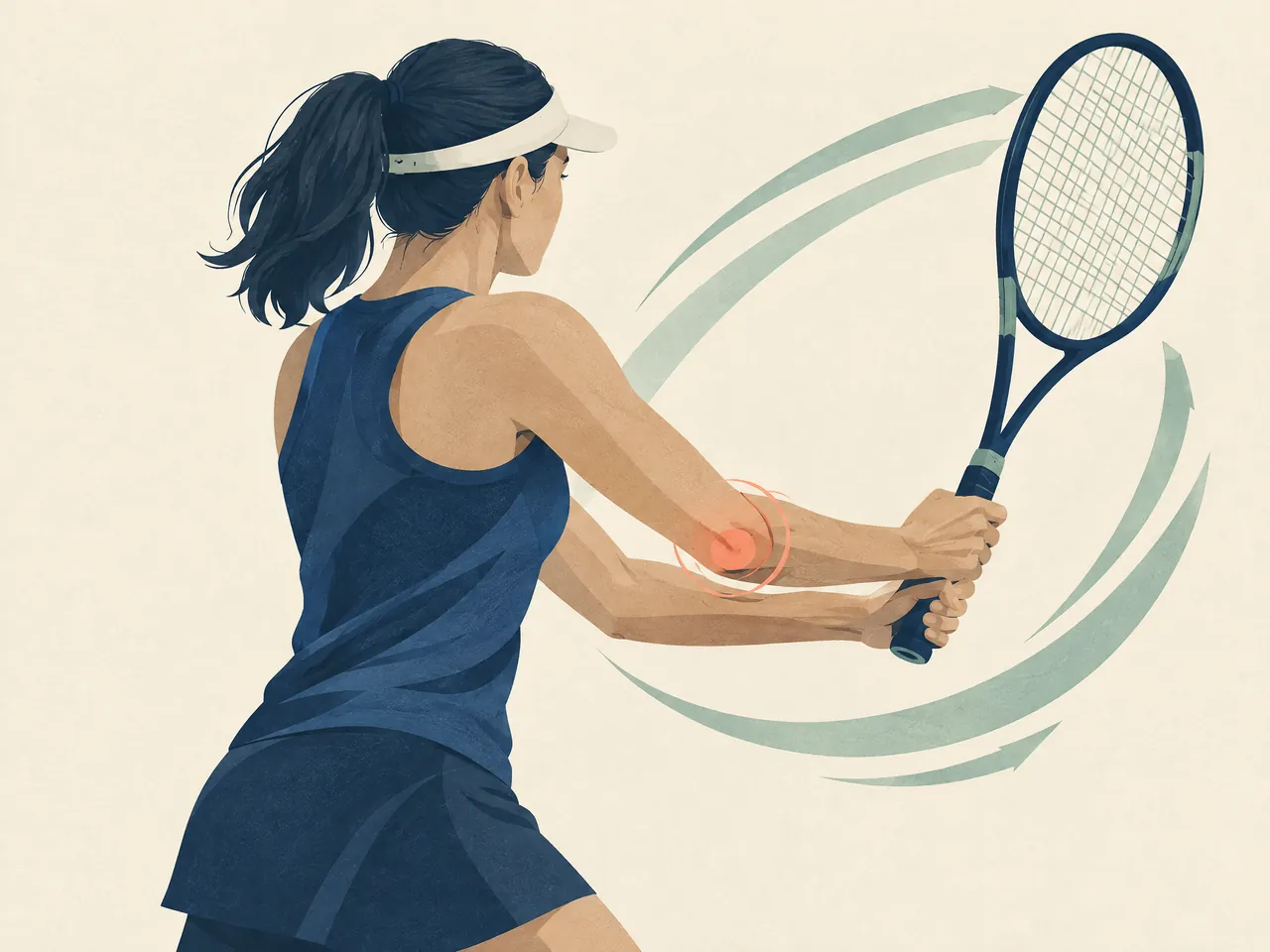
Forearm overuse and grip strain—tennis elbow causes, what causes tennis elbow and What causes tennis elbow if I do not play tennis?
Grip does more than close the fingers around an object. A firm grip asks the forearm to stabilise the wrist, especially when a hand is also lifting, twisting or resisting movement. Carrying a heavy pan with the wrist held back, wringing a wet cloth, opening a tight jar or holding a shopping bag can therefore provoke the outer elbow in a susceptible person. The same applies when someone uses a screwdriver, wrench or pruning tool repeatedly. If pain appears mainly during a forceful grasp or when the wrist is moved, that is consistent with a common tennis-elbow pattern, although it is not proof of the diagnosis. The NHS lists gripping and repeated twisting of the wrist and forearm among activities that can cause it. [1]
Wrist extension is another useful idea. It means lifting the back of the hand toward the forearm, as when a person keeps the wrist steady while pouring, typing, using a hand tool or returning a racquet. A short task is not automatically harmful; the strain changes with the weight, the lever length, the speed, the grip force and how often it is repeated. One session of unfamiliar home repair after a long break can matter as much as a daily job. Readers considering whether a particular task is relevant can also compare their situation with Can tennis elbow be caused by lifting or twisting the wrist?.
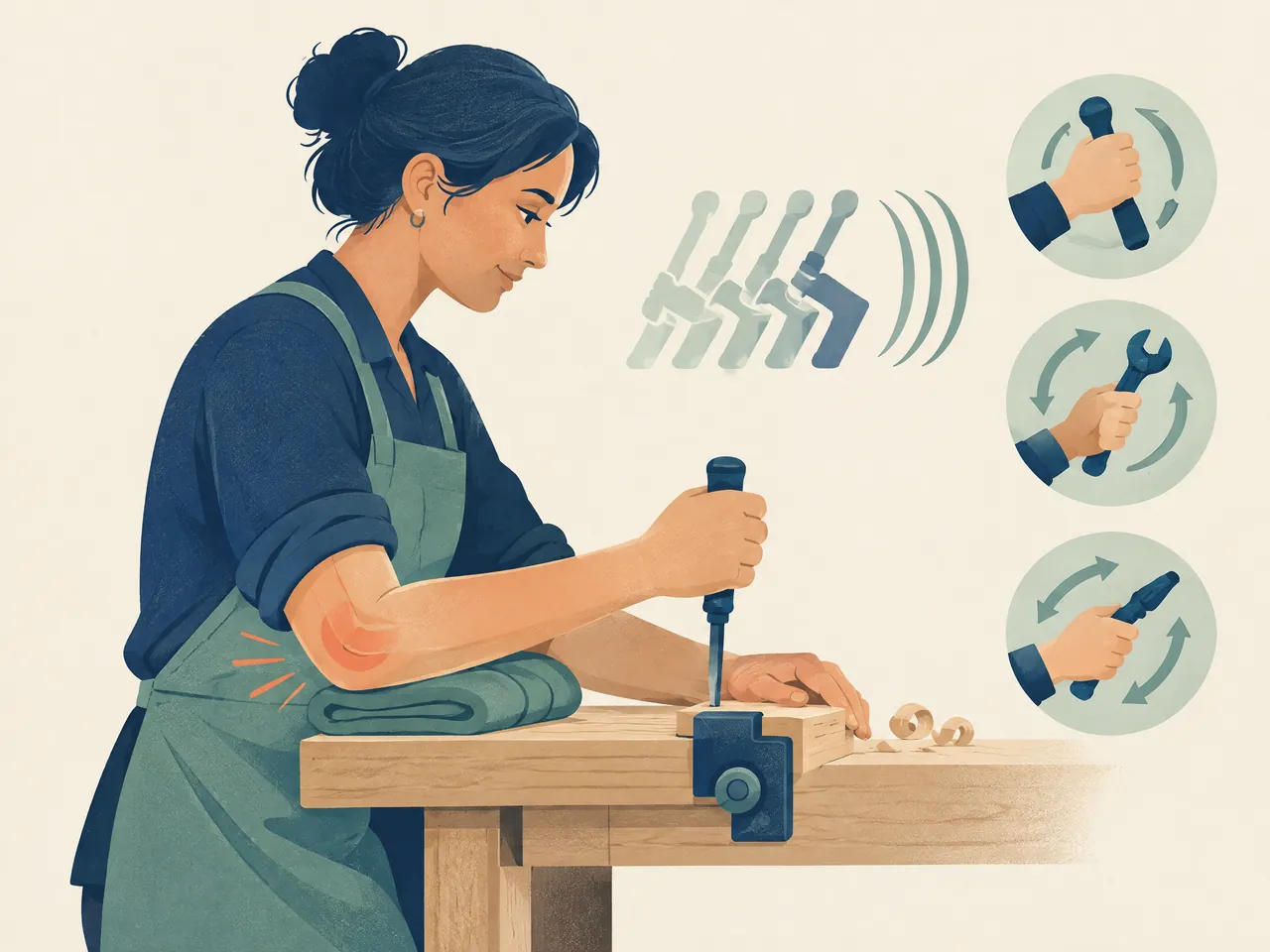
Repetition at work or home—tennis elbow causes, what causes tennis elbow and What causes tennis elbow if I do not play tennis?
The question “What causes tennis elbow if I do not play tennis?” often has an ordinary answer: a repeated task has gradually become more demanding than the arm can currently tolerate. Computer work is one example, particularly when long mouse use, a tense hand position and few movement breaks occur together. Other examples include painting, food preparation, sewing, gardening, cleaning, hair styling, instrument practice and manual trades. Mayo Clinic notes that repeated wrist and arm motion is commonly linked with tennis elbow and includes mouse use, painting and driving screws among possible triggers. [2] A person may notice pain only after work because many small exposures have added up during the day.
It helps to separate the activity from the label. Tennis is one possible load; it is not the definition of the condition. In racquet sports, a poor stroke pattern, an abrupt increase in play, or equipment that does not suit the player may be relevant. In non-sport settings, a new project, overtime, a move of house, or a change in workstation may be the useful clue. Sometimes no clear repeating trigger can be identified, which is another reason not to self-diagnose with certainty. For a fuller plain-language explanation of the tendon-related mechanism, see lateral epicondylitis causes.
Compare your options
| Everyday situation | Likely forearm demand | A practical strain-reduction starting point | What to note for an assessment |
|---|---|---|---|
| Long mouse or keyboard session | Sustained hand position, repeated clicking and wrist control | Bring the mouse closer, relax the grip and add short movement breaks | Which device action triggers pain and whether symptoms build through the day |
| Screwdriving, painting or repairs | Repeated turning with gripping and wrist extension | Use a comfortable handle, vary the task and avoid long uninterrupted blocks | The direction of twist, tool weight and whether one hand is affected |
| Gardening or household cleaning | Pruning, wringing, scrubbing, carrying and forceful grasping | Divide heavy jobs, use two hands for loads where safe and change tasks | Whether lifting, wringing or gripping is the clearest trigger |
| Cooking or food preparation | Repetitive chopping, lifting pans and opening containers | Reduce batch size, share heavy lifting and pause before pain escalates | Whether the pain appears during grip, wrist movement or afterward |
| Racquet sport or instrument practice | Repeated forearm use and wrist stabilisation | Reduce the session load and seek technique or equipment advice when appropriate | Recent change in duration, technique, equipment or training frequency |
On smaller screens, scroll the table sideways to compare all columns.
Symptoms and differentiation—tennis elbow causes, what causes tennis elbow and What causes tennis elbow if I do not play tennis?
The usual location is on or close to the bony outside of the elbow. Pain can travel into the upper forearm or toward the wrist, and it may begin as a mild ache that becomes more noticeable with use. Holding a cup, shaking hands, turning a doorknob or lifting with the palm facing down can expose it because those actions combine grip with forearm effort. Some people report a weaker grip because pain makes it harder to use force. The AAOS notes that symptoms often develop gradually and may worsen with activities such as turning a wrench or shaking hands. [3] Location and provoking movement are useful clues, not a substitute for examination.
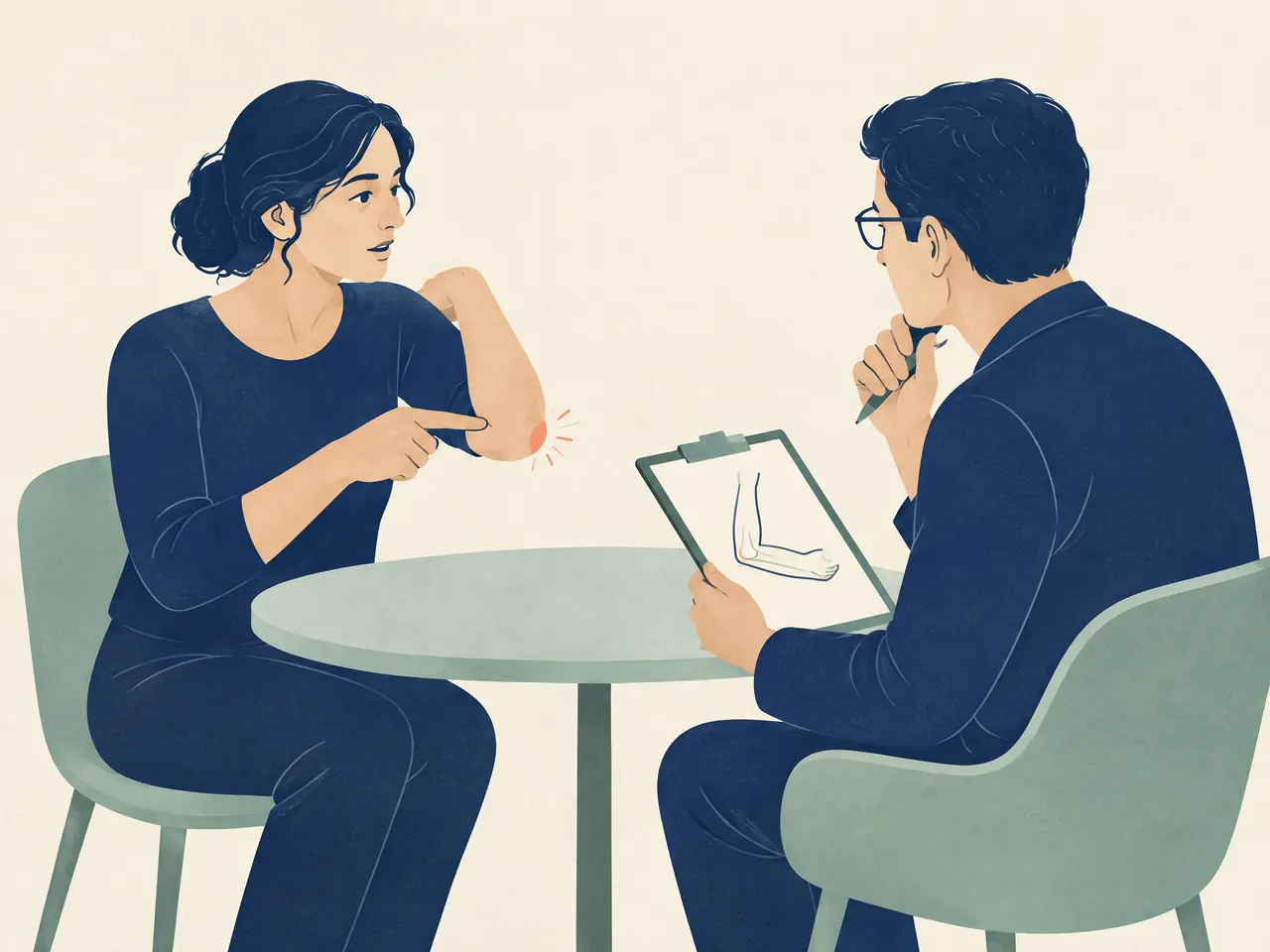
Typical outer-elbow patterns—tennis elbow causes, what causes tennis elbow and What causes tennis elbow if I do not play tennis?
A typical history is local tenderness on the outer elbow with pain during gripping, wrist movement, lifting or forearm rotation. It may be more obvious after repetitive activity than at rest. The NHS also lists forearm pain, tenderness or swelling, and difficulty fully straightening the arm among possible features. [1] These details give a clinician a starting point, but they do not establish the cause on their own. Tracking whether pain occurs at the outside of the elbow, lower in the forearm, in the neck, or at the wrist can make a consultation more focused. Our related guide on tennis elbow pain discusses the day-to-day experience of this symptom pattern.
Pay attention to what the pain does after the task. A tolerable ache that settles after a reduced activity may call for a different approach from pain that is increasingly constant, interrupts sleep, or makes ordinary handling unsafe. Visible swelling or tenderness does not by itself identify the cause; the context matters. If the outer elbow looks or feels different, the page on tennis elbow tenderness and swelling may help readers describe what they observe. Avoid repeatedly testing a painful movement simply to check whether it still hurts, because that can add load without giving a clearer answer.
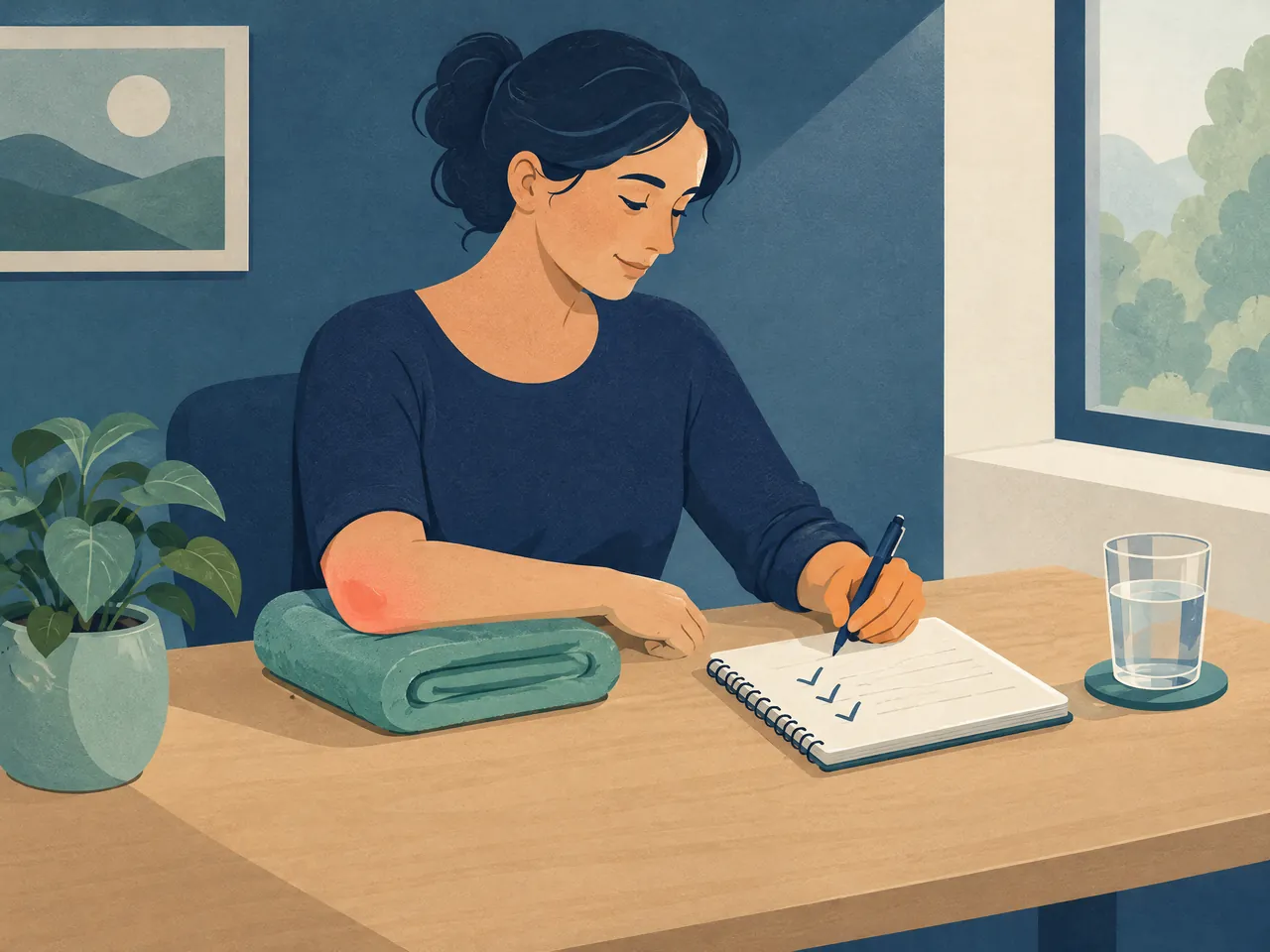
When pain patterns suggest other sources—tennis elbow causes, what causes tennis elbow and What causes tennis elbow if I do not play tennis?
Not every outer-elbow pain is tennis elbow. Neck conditions can refer pain down the arm, while nerve compression around the elbow or forearm can create symptoms that overlap with a tendon problem. Joint arthritis, a ligament injury, a fracture after trauma, and other local conditions may also need consideration. During assessment, the history matters: how the pain began, exactly where it sits, whether there was a fall or impact, and whether there are changes in sensation or strength. AAOS notes that clinicians may consider tests to rule out arthritis, neck-related causes and nerve compression when the presentation calls for it. [3]
Seek prompt medical attention after a significant injury, obvious deformity, a hot red and swollen joint, a rapidly enlarging lump, or new substantial numbness or weakness. These are not features to manage by simply altering a mouse or buying a strap. For pain without those warning signs, professional assessment is sensible when self-care and reducing the aggravating activity have not helped. The NHS advises seeing a GP if elbow pain remains after resting the elbow and trying self-care for at least two weeks. [1] Bring a short list of affected tasks and any previous elbow, neck or nerve symptoms; it can be more useful than trying to name the condition yourself.
Practical strain reduction—tennis elbow causes, what causes tennis elbow and What causes tennis elbow if I do not play tennis?
Reducing strain does not always mean stopping every hand activity. The practical aim is to lower the movements or positions that reliably provoke pain, then reintroduce demand in a measured way as appropriate to the person and their assessment. Start by identifying the highest-load part of a task: it may be the weight of the object, a tight pinch grip, repeated twisting, an awkward wrist angle, or a long uninterrupted block. Change one factor at a time where possible, so you can tell what actually makes a difference. This approach is often more workable than resting completely for a day and then returning to the same workload all at once.
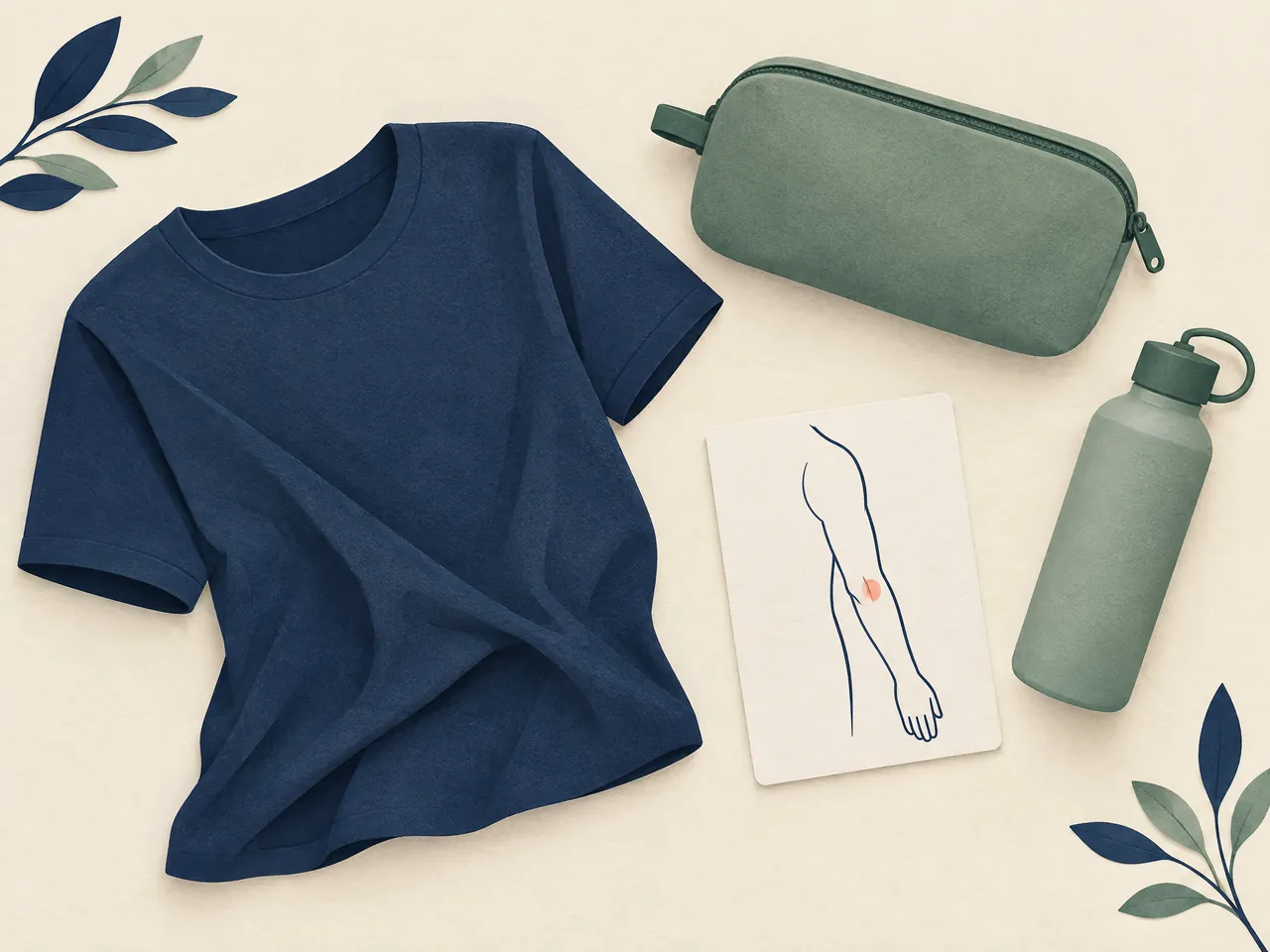
Load management and pacing—tennis elbow causes, what causes tennis elbow and What causes tennis elbow if I do not play tennis?
Pacing means planning the task before symptoms become intense. A person cleaning, preparing food or doing DIY work may alternate a gripping job with an activity that gives the hand and forearm a break. A worker may divide repetitive jobs, switch hands only when safe and practical, or discuss temporary task variation with a supervisor. Reduce the force and the total repetitions before deciding that an activity must be abandoned completely. If lifting is unavoidable, hold the object close to the body and avoid combining a firm grip with a bent-back wrist where possible. The appropriate amount of activity differs between people, particularly after injury or when symptoms are severe.
Exercises can be part of a rehabilitation plan, but they should not be used as a test of willpower through sharp or escalating pain. The NHS describes simple exercises and notes that physiotherapy may include stretching and strengthening for the wrist and forearm when symptoms do not improve. [1] A physiotherapist or other qualified clinician can advise on the starting level and progression for an individual. Heat or cold packs may feel comforting for some people; the NHS advises wrapping a pack in a towel and using it for up to 20 minutes at a time. [1] Stop any comfort measure that aggravates symptoms or irritates the skin.
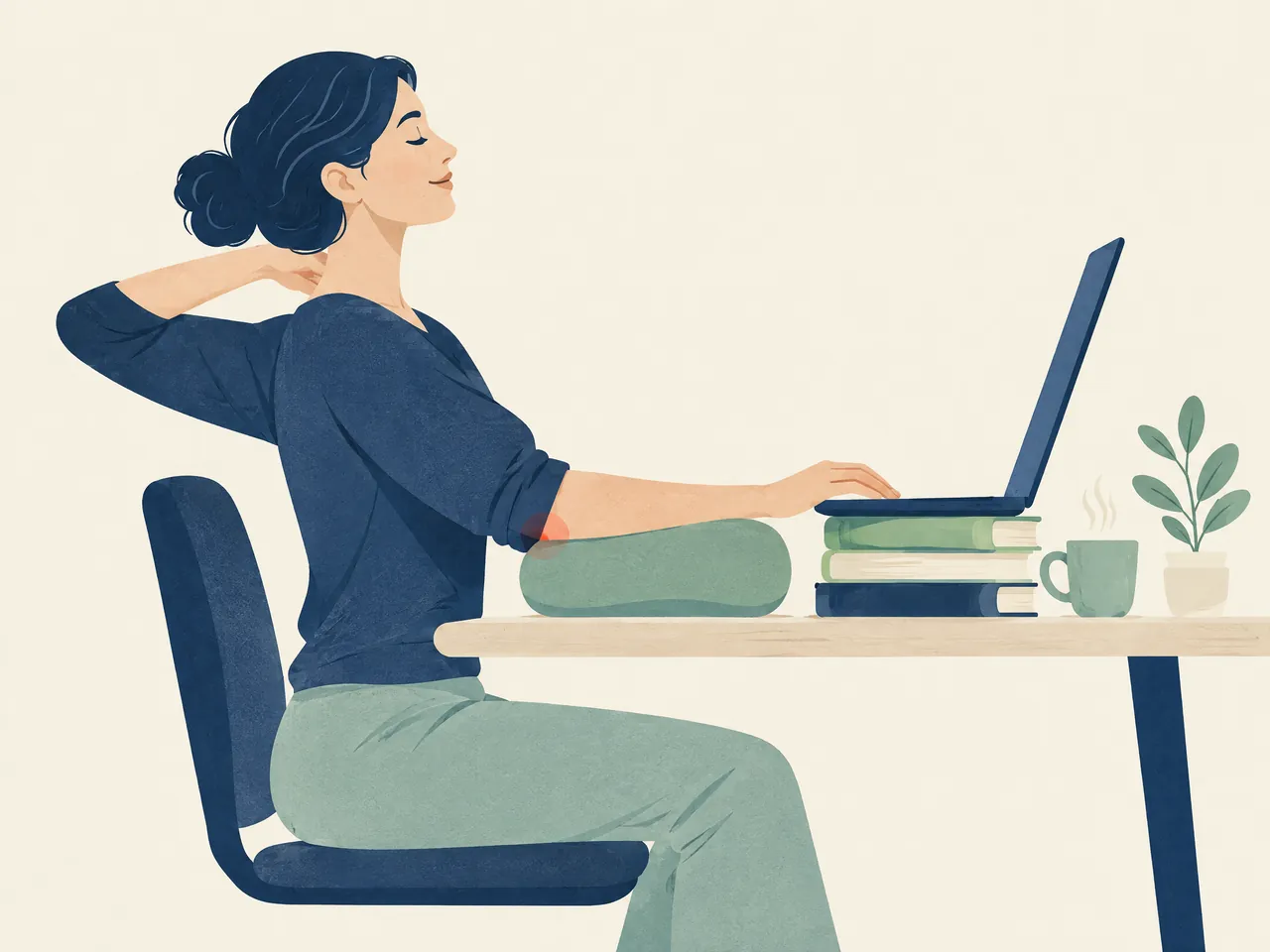
Everyday adjustments for tools and typing—tennis elbow causes, what causes tennis elbow and What causes tennis elbow if I do not play tennis?
For tool use, choose a handle and grip that allow the wrist to stay as neutral as the task permits. A larger or more comfortable handle can sometimes reduce the need to squeeze tightly, but it cannot compensate for a job that is still too long or too forceful. Set up materials so that twisting and reaching are not repeated at arm’s length. For gardening, consider splitting pruning, digging and carrying across different days rather than doing every demanding job in one session. For kitchen work, use two hands for a heavy pot when safe, and take care with repetitive chopping, peeling or jar opening if these reproduce pain.
For desk work, bring the mouse close enough that the arm does not reach out repeatedly, support the forearm where practical, and vary position rather than holding one posture for hours. Keyboard shortcuts, a lighter mouse grip and brief movement breaks may reduce repeated clicks and tension. Equipment changes are aids, not a diagnosis or a guarantee. A forearm strap or brace may be discussed with a clinician, but should not be used to continue a task that has clearly become unmanageable. If you would like to ask about an in-person consultation, location details are available for the Kwun Tong Chinese medicine clinic and the Chinese medicine clinic Prince Edward. For administrative questions before contacting us, see the Chinese medicine clinic price list Hong Kong.
Care and health guide
Health service information
This directory brings together services, reading, and visit information related to health services, to help you prepare questions for a consultation.
If you are organising health questions, Chinese medicine clinic Hong Kong is a starting point for learning about related services and preparing for a consultation.
People have different needs; acupuncture Hong Kong provides further reading to help you understand options in your own context.


Your questions, answered
Frequently asked questions
What causes tennis elbow if I do not play tennis?
Many non-tennis activities can repeatedly load the forearm. Common examples include using a mouse, typing, painting, driving screws, sewing, gardening, cooking, lifting and work that involves gripping or twisting. The useful question is which action, force and duration make your outer elbow hurt, rather than whether you play a racquet sport.
Can one weekend of DIY or gardening cause tennis elbow?
A new or unusually demanding burst of gripping, twisting or lifting can provoke outer-elbow symptoms, particularly if the arm is not used to that load. It is still worth considering other explanations, especially if there was a fall, impact, visible swelling, numbness or marked weakness.
Is pain on the outside of the elbow always tennis elbow?
No. Tendon-related overuse is one possibility, but nerve compression, pain referred from the neck, arthritis, injuries and other problems can produce overlapping symptoms. An assessment is important when the pattern is unusual, follows trauma, includes altered sensation or strength, or does not improve after reducing aggravating activity.
Should I stop using my arm completely?
Usually the more practical first step is to reduce or modify the movements that clearly worsen pain, rather than to stop every daily activity. Pacing, shorter task blocks and improved tool or desk setup may help. A qualified clinician can advise on appropriate rehabilitation and return to heavier tasks.
Sources and further information
- [1] NHS — Tennis elbow
Referenced for: Official UK health guidance for common symptoms, activities, self-care and when to seek assessment.
- [2] Mayo Clinic — Tennis elbow: symptoms and causes
Referenced for: Clinical overview for overuse, everyday and occupational activity examples, symptoms and care-seeking.
- [3] American Academy of Orthopaedic Surgeons — Tennis Elbow (Lateral Epicondylitis)
Referenced for: Orthopaedic organization guidance for tendon mechanism, activity-related symptoms and possible assessment considerations.