
TCM Lab · Health reading
Acne Care Guide: Period-Related Acne and Acne Treatment Options
Published Updated
A breakout that returns in the days before a period can feel predictable, yet it still deserves a closer look. Period-related acne is a timing pattern, not a diagnosis on its own: the same face may also have clogged pores, inflamed spots, lingering flat marks, or established scars. This acne care guide helps you sort those concerns, make sense of the skincare and medicines already in use, and decide what to raise at an assessment. Start with a short record of location, tenderness, products, medicines, and cycle timing. The aim is not to chase every spot with another active product. It is to identify the main current problem, protect a routine that is tolerable, and seek medical assessment promptly when deep pain, spreading inflammation, or scarring changes the picture.
Appointments are confirmed through WhatsApp. If you have language requirements, please mention them in your enquiry.
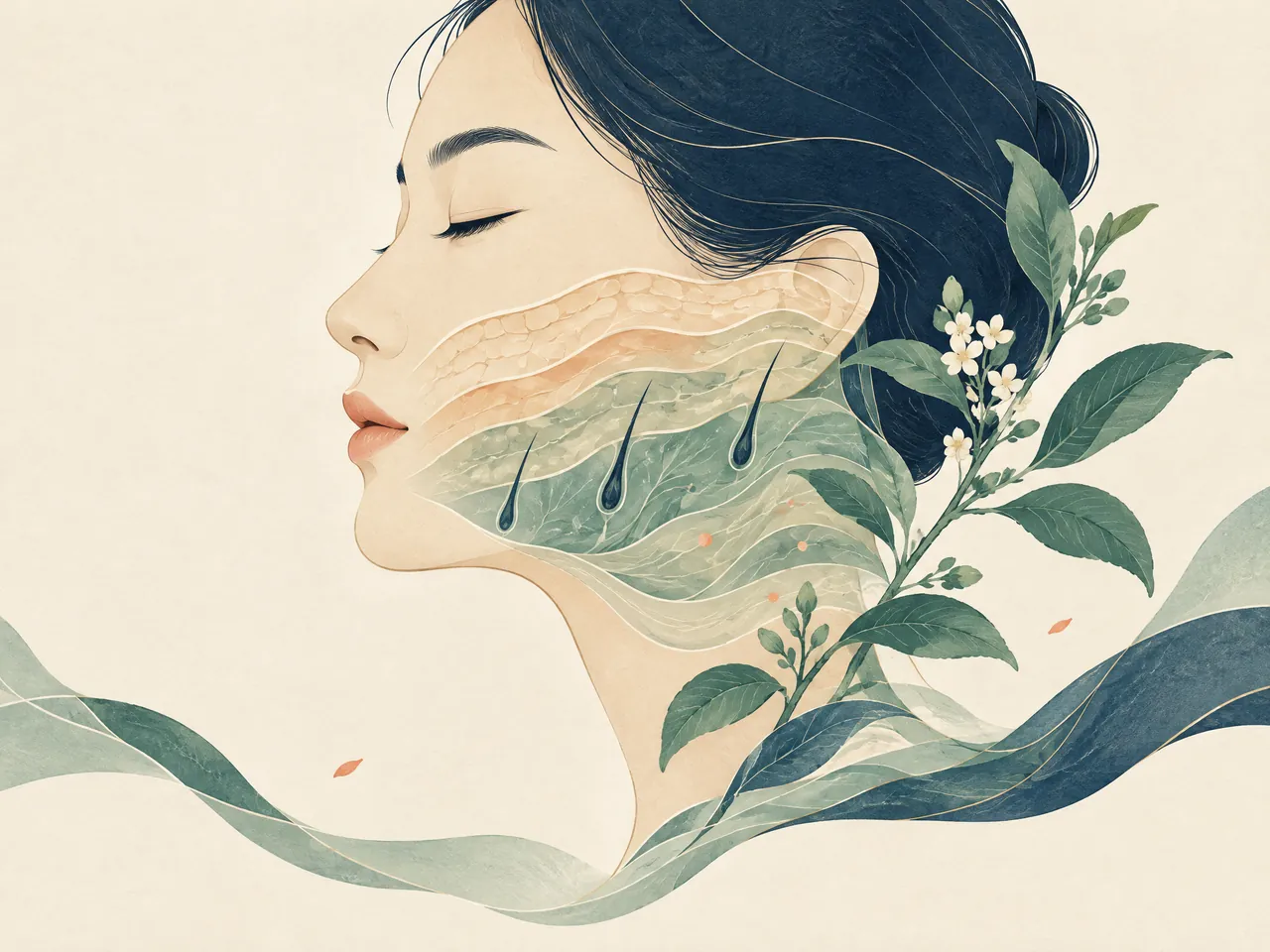
The short answer
Track period-related acne alongside the type of spots you have, your skincare routine, and any prescribed treatment. Active blackheads, inflamed papules or pustules, flat red or brown marks, and textured scars have different priorities. Keep a brief cycle-and-skin record rather than changing several products at once. Deep painful lumps, rapid worsening, broken or infected-looking skin, repeated scarring, or major distress warrant medical or dermatology assessment.
Transparent pricing
See the fees.
Choose your care.
Explore our complete official price list, including first-trial prices, regular prices, packages and branch-specific options.
Opening WhatsApp prepares an enquiry; it does not send a message, take payment or confirm an appointment. Suitability and individual arrangements are confirmed during consultation.
Chinese medicine
All prices in HKDAcupuncture and Chinese herbal medicine package
Includes a Chinese medicine consultation with pulse assessment, body acupuncture and 3 days of Chinese herbal granules that do not require decoction.
HK$580 (single session)
Chinese medicine consultation with pulse assessment
Hair and scalp
All prices in HKDScalp health and hair-loss management
Includes AI scalp analysis, deep scalp and follicle cleansing, and scalp oil-control care.
HK$380 (first trial)
Regular price: HK$680
- 6 sessions: HK$3,480 (HK$580 per session)
- 12 sessions: HK$5,760 (HK$480 per session)
- 20 sessions: HK$8,600 (HK$430 per session)
- 30 sessions: HK$11,400 (HK$380 per session)
Hair acupuncture and Chinese herbal medicine package
Includes scalp acupuncture and 3 days of Chinese herbal medicine that does not require decoction.
HK$580 (single session)
Registered Chinese Medicine Practitioner consultation
- 6 sessions: HK$3,180 (HK$530 per session)
- 12 sessions: HK$5,760 (HK$480 per session)
- 20 sessions: HK$8,600 (HK$430 per session)
- 30 sessions: HK$11,400 (HK$380 per session)
Combined hair and scalp treatment
Combines acupuncture and Chinese herbal medicine with salon-level scalp and follicle care. Packages include complimentary hair-care shampoo and serum.
HK$1,260 (single session)
Combined treatment
- 8 sessions: HK$8,640 (HK$1,080 per session)
- 16 sessions: HK$15,680 (HK$980 per session)
- 20 sessions: HK$18,600 (HK$930 per session)
- 30 sessions: HK$26,400 (HK$880 per session)
Weight management
All prices in HKDFull-body acupoint embedding for weight management
Includes full-body acupoint embedding. Packages include complimentary Chinese herbal medicine for weight management, with the number of included days scaled to the package. Embedding material and the individual treatment arrangement are confirmed during consultation; this is not a cosmetic thread lift.
HK$980 (single session)
No trial session
- 10 sessions: HK$7,800 (HK$780 per session)
- 20 sessions: HK$14,600 (HK$730 per session)
- 30 sessions: HK$20,400 (HK$680 per session)
Facial acupuncture
All prices in HKDFacial acupuncture (basic)
Includes facial acupuncture and meridian-based facial care, including care for facial puffiness.
HK$480 (first trial)
Regular price: HK$680
- 10 sessions: HK$5,200 (HK$520 per session)
- 20 sessions: HK$9,600 (HK$480 per session)
- 30 sessions: HK$13,500 (HK$450 per session)
Facial acupuncture (advanced)
Includes enhanced facial acupuncture with a specially formulated moisturising mask and serum.
HK$780 (first trial)
Regular price: HK$1,180
- 10 sessions: HK$9,000 (HK$900 per session)
- 20 sessions: HK$16,600 (HK$830 per session)
- 30 sessions: HK$23,400 (HK$780 per session)
Pain care
All prices in HKDExtracorporeal shockwave treatment
Shockwave treatment for deep-tissue and fascial care. The Kwun Tong clinic offers the multi-area options shown below.
Priced by branch
Branch-specific pricing
Prince Edward: HK$250 per area
Kwun Tong: HK$250 for 1 area / HK$450 for 2 areas / HK$600 for 3 areas
Pain care (manual therapy)
Includes Chinese medicine musculoskeletal assessment, manual joint techniques and tui na.
HK$580 (single session)
Chinese medicine musculoskeletal assessment
Pain care (acupuncture and manual therapy)
Combines acupuncture and manual therapy.
HK$680 (single session)
Combined care
Acne Care Guide: Period-Related Acne and Acne Treatment Options by Skin Concern
The first useful question is not simply, ‘What removes acne?’ It is, ‘What is on my skin now?’ Blackheads and whiteheads are blocked pores, while papules are red, tender bumps and pustules have a visible pus-filled centre. Nodules and cysts are deeper lesions that may be painful. NHS inform distinguishes these types and notes that nodules and cysts can lead to scarring [1]. Looking in daylight and noting whether a lesion is flat, raised, sore, draining, or healing can make the difference between a focused consultation and a vague request for a quick fix. For an overview of recurring acne breakouts, use that language as a prompt for your own record rather than trying to diagnose a photograph online.
A monthly pattern matters because it can change the questions asked, especially if lower-face spots consistently worsen around a period. It does not mean every flare has one cause or that the rest of the routine no longer matters. Note the first day of bleeding, the days when lesions become tender, the areas affected, and whether the flare settles afterwards. Include changes that can confuse the pattern, such as a new make-up product, an occlusive hair product on the jawline, masks or helmet straps, stress, or a change in prescribed medicine. A record across more than one cycle is more useful than remembering one difficult week. It gives a practitioner useful context without turning timing into a self-diagnosis.

Flat colour after a spot and a change in skin texture are not interchangeable. A red or brown area that is flat may be a post-inflammatory mark, whereas an indented or raised area is a scar. The management goal therefore changes: active acne care seeks to limit new inflammation; marks may fade gradually but need protection from further irritation; textured scars need their own clinical discussion. The American Academy of Dermatology, or AAD, similarly emphasises identifying the blemish type before selecting treatment and notes that acne of many types can scar [2]. This distinction helps prevent harsh product use on skin that is no longer actively breaking out.
Acne Care Guide for Period-Related Acne and Acne Treatment Options for Active Breakouts
For active breakouts, map both severity and behaviour. Are there a few surface whiteheads, clusters of inflamed spots, or a deep painful lump that persists beneath the skin? Do lesions appear on the chin and jawline before a period, or also across the forehead, cheeks, chest, or back? This guides the assessment needed. AAD advises that deep, painful acne needs dermatology help because treatment may need to address clogged pores, inflammation, bacteria, and excess oil together [2]. Do not pick, squeeze, or attempt to drain a deep lesion at home; NHS inform notes that squeezing can worsen acne and contribute to permanent scarring [1]. If deeper lesions are a feature, the page on acne nodules and cysts can help you frame more specific questions for a medical appointment.

Acne Care Guide for Period-Related Acne and Acne Treatment Options for Marks and Scars
Once a spot flattens, pause before treating every remaining trace as active acne. Redness or brown discolouration may be more visible after inflammation but is not the same as a new pustule; a pit, rolling depression, thickened raised area, or lasting change in texture is more consistent with scarring. Take a weekly photo in similar light if it helps you see whether new lesions are still appearing, but do not let close-up checking lead to touching or squeezing. A useful assessment question is: ‘Am I mainly trying to prevent fresh lesions, manage flat marks, or discuss scar texture?’ The answer may include more than one concern, yet it gives each acne treatment option a realistic purpose. If new painful lesions are still frequent, addressing inflammation before pursuing aggressive mark-focused steps is usually the clearer sequence.
Compare your options
| What you notice | How to describe it at an assessment | Immediate priority | Useful question |
|---|---|---|---|
| Blackheads or whiteheads, with little tenderness | Clogged pores or comedones; note the areas and whether they recur around the cycle | Review a gentle, non-irritating routine and avoid piling on new actives | Could products, make-up, or a current treatment be contributing to blockage or irritation? |
| Red, sore papules or pustules | Inflamed active acne; note frequency, pain, and whether lesions are being picked | Limit irritation and discuss treatment intended for active inflammation | Is the current plan appropriate for inflammatory acne, and when should it be reviewed? |
| Deep, painful lump or repeated nodules | Deep lesion, duration, rapid change, and any scarring history | Arrange medical or dermatology assessment rather than home extraction | Does this need prompt dermatology review or a different treatment plan? |
| Flat red or brown trace, or indented or raised texture | Flat post-inflammatory mark versus a textured scar; note whether new acne is still forming | Prevent further inflammation before expecting scar or mark work to solve active acne | Am I treating active acne, a flat mark, a scar, or more than one concern? |
On smaller screens, scroll the table sideways to compare all columns.
Acne Care Guide: Period-Related Acne and Acne Treatment Options with Your Current Routine
A calm routine is not an admission that you are doing too little. It is a way to see what your skin can tolerate while a treatment plan is being considered. List every cleanser, exfoliant, spot gel, moisturiser, sunscreen, make-up product, supplement, and prescription that touches the issue. Include how often it is used and whether burning, peeling, tightness, or a sudden worsening followed its introduction. AAD recommends gentle skincare and oil-free or non-comedogenic products for people prone to acne, warning that irritation can bring more breakouts [2]. That does not make one label a cure; it is a practical filter when reviewing a crowded shelf. Avoid starting several new active products in the same week, because a reaction becomes hard to trace.
Bring the medicine list into the conversation, even if the medicine came from another clinician. Topical retinoids, benzoyl peroxide, antibiotics, azelaic acid, hormonal options, and oral treatments can each have different purposes and precautions; selection depends on the type and severity of acne and the individual situation [3]. AAD also notes that applying more topical medication than directed does not clear acne faster and can increase irritation [3]. Complementary discussions should not replace a prescriber’s plan. If a product seems to sting or a prescribed regimen is difficult to follow, ask the prescriber or pharmacist how to use it safely rather than quietly stopping and substituting several untested alternatives.
Acne Care Guide for Period-Related Acne and Acne Treatment Options alongside Skincare
Keep the record simple enough for a busy Hong Kong workweek. In the morning and evening, write the products used, whether make-up or sunscreen was worn, and any immediate irritation. Add a brief note only when a lesion is new, painful, or clearly changing. At week’s end, look for broad patterns rather than judging one red spot: did a new leave-on acid coincide with dryness, did jawline acne arrive before the period, or are marks being mistaken for new acne? Wash gently rather than repeatedly scrubbing away oil, and choose products that feel tolerable. NHS inform advises using a mild cleanser with lukewarm water and avoiding washing affected skin more than twice a day, which can irritate it [1]. If you are exploring complementary care, read Can Chinese medicine help with acne? with the same questions in mind: what is the goal, what is already being used, and what needs medical review first?
Acne Care Guide for Period-Related Acne and Acne Treatment Options alongside Prescribed Medicine
Prescribed acne medicine should be treated as part of the full picture, not as a detail to leave out of a consultation. Take clear photos of labels or write down the generic name, dose or strength, frequency, start date, and any reaction. Mention plans for pregnancy, pregnancy, breastfeeding, or other relevant health changes directly to the prescribing clinician, because medication choices can require individual review. AAD notes that treatment plans may combine topical and oral medicines and that different acne types often need different treatment [3]. Results also need patience: AAD says people commonly need six to eight weeks using the same treatment before they see improvement, while NHS inform says improvement can take several months [1] [2]. Do not interpret a short setback as proof that every element has failed, and do not independently stop a prescribed medicine because you want to try acupuncture or herbal care.
Acne Care Guide: Period-Related Acne and Acne Treatment Options for Safer Next Steps
Use this comparison to turn an anxious search for acne treatment options into a more useful next conversation. It is not a diagnostic tool. A person may fit more than one row, particularly when active acne and old marks coexist. The table is meant to help you describe what you see, protect skin from unnecessary irritation, and identify when the concern is no longer suitable for trial and error at home. A clinician who can examine the skin can determine whether it is acne or another condition that looks similar; AAD notes that some acne-like eruptions have different diagnoses and treatments [3].
Complementary care can be discussed as part of an overall plan, but it should not be presented as a promise to clear period-related acne, erase marks, or replace dermatology diagnosis. A TCM consultation may use the record of your cycle, symptoms, skincare, and current medicines to discuss a supportive approach and its limits. Broken skin, pus, marked redness, or significant tenderness deserve particular caution before any procedure that could add irritation to an unstable area. An itch-dominant rash, persistent scaling, or a problem that seems unlike your usual acne also deserves a fresh assessment; it may help to compare information on can Chinese medicine help eczema, but do not assume that every facial rash is eczema or acne.

The decision to seek help is also valid when acne is affecting confidence, social life, sleep, or mood. NHS inform recognises that acne can affect mental health and wellbeing [1]. Saying this clearly at an appointment is useful clinical information, not a cosmetic afterthought. Bring your cycle notes, the routine list, medicine details, and a few representative photos if they show a pattern more accurately than your skin does that day. This gives the appointment a starting point: confirm the concern, prioritise safety, and agree on meaningful progress.
Acne Care Guide for Period-Related Acne and Acne Treatment Options when Inflammation Persists
Repeated inflammation is a reason to reassess the plan, not to intensify exfoliation without guidance. Ask whether the current concern is mainly clogged pores, inflammatory papules and pustules, deeper nodules, treatment irritation, or a mixed picture. Severe acne, a large number of inflamed lesions, or painful nodules may need referral to a dermatologist; NHS inform specifically identifies severe acne and painful nodules as reasons a GP may refer to a skin specialist [1]. Seek timely medical advice if redness is rapidly spreading, the area is hot and increasingly painful, there is significant pus or concern about infection, or you are seeing fresh scars. These are situations in which a direct examination is more useful than changing cosmetics or relying on online images.

Acne Care Guide for Period-Related Acne and Acne Treatment Options when Symptoms Need Review
Before an enquiry, prepare four things: your main concern in one sentence, a short timeline of cycle-related change, a full product and medicine list, and the safety question you need answered. For example: ‘I develop tender chin spots before my period, use a prescribed topical medicine, and want to know which parts of my routine could be irritating.’ This is more actionable than asking for the strongest possible treatment. TCM Lab can be contacted to ask about an assessment and to explain existing treatment; it cannot confirm suitability without evaluating the person and skin concern. If you prefer a local enquiry, the Kwun Tong Chinese medicine clinic and Chinese medicine clinic Prince Edward pages provide location context. For broader topic navigation, see acne Chinese medicine.
Care and health guide
Health service information
This directory brings together services, reading, and visit information related to health services, to help you prepare questions for a consultation.
If you are organising health questions, acupuncture Hong Kong is a starting point for learning about related services and preparing for a consultation.
People have different needs; Chinese medicine pain management Hong Kong provides further reading to help you understand options in your own context.


Your questions, answered
Frequently asked questions
How should I use this acne care guide for period-related acne and acne treatment options?
Use it to organise an assessment, not to self-prescribe. Record where breakouts occur, when they worsen relative to your period, whether lesions are tender or deep, and every skincare product and medicine in use. Then separate active spots from flat marks or scars. This makes it easier to discuss suitable acne treatment options and to recognise when a medical review should come first.
Are period-related acne, active spots, marks, and scars the same problem?
No. Period-related acne describes a pattern of timing. Active acne can include blocked pores and inflamed spots; flat red or brown areas can remain after inflammation; indented or raised texture can be scarring. These concerns may overlap on the same face, but they have different goals and should not all be treated as if they were fresh spots.
Can I change my prescribed acne medicine when I want to try complementary care?
Do not stop or alter prescribed medicine on your own. Take the name, strength, frequency, start date, and any side effects to the prescriber and disclose it when discussing complementary care. This reduces the chance of duplicated active ingredients, avoidable irritation, or an unclear treatment history. Complementary discussions should not replace a diagnosis for severe or changing acne.
When should I seek medical or dermatology assessment for acne?
Seek assessment for deep painful nodules, rapidly worsening redness or swelling, significant pus or possible infection, recurrent scarring, or acne that is causing substantial distress. An assessment is also sensible when a treatment is not tolerable or when the eruption may not be acne. NHS inform advises escalation for severe acne and painful nodules [1].
Sources and further information
- [1] [1] NHS inform — Acne
Referenced for: Acne lesion descriptions, period-related flare context, self-care advice, scarring, mental wellbeing, and referral context.
- [2] [2] American Academy of Dermatology — Acne: Overview
Referenced for: Blemish types, gentle skin care, non-comedogenic product terminology, early treatment, and scarring context.
- [3] [3] American Academy of Dermatology — Acne: Diagnosis and treatment
Referenced for: Diagnostic assessment, broad treatment categories, topical-treatment precautions, and expected treatment timing.