
TCM Lab · Health reading
Can Chinese herbal medicine help hair regrowth? When should I see a Chinese medicine practitioner for hair loss?
Published Updated
Hair loss can feel personal, but it is not one single condition and it does not have one single answer. Chinese herbal medicine may be discussed within a traditional Chinese medicine consultation, where the practitioner considers your whole symptom picture rather than promising to restart growth. The evidence for Chinese herbal products in hair concerns is limited, so it is sensible to seek medical assessment for sudden, persistent or worsening shedding as well as to discuss any complementary care you are considering. A Chinese medicine practitioner can be a useful person to consult when you want a careful, individual conversation about the traditional approach, your daily routine and the safe use of prescribed herbs.
Appointments are confirmed through WhatsApp. If you have language requirements, please mention them in your enquiry.
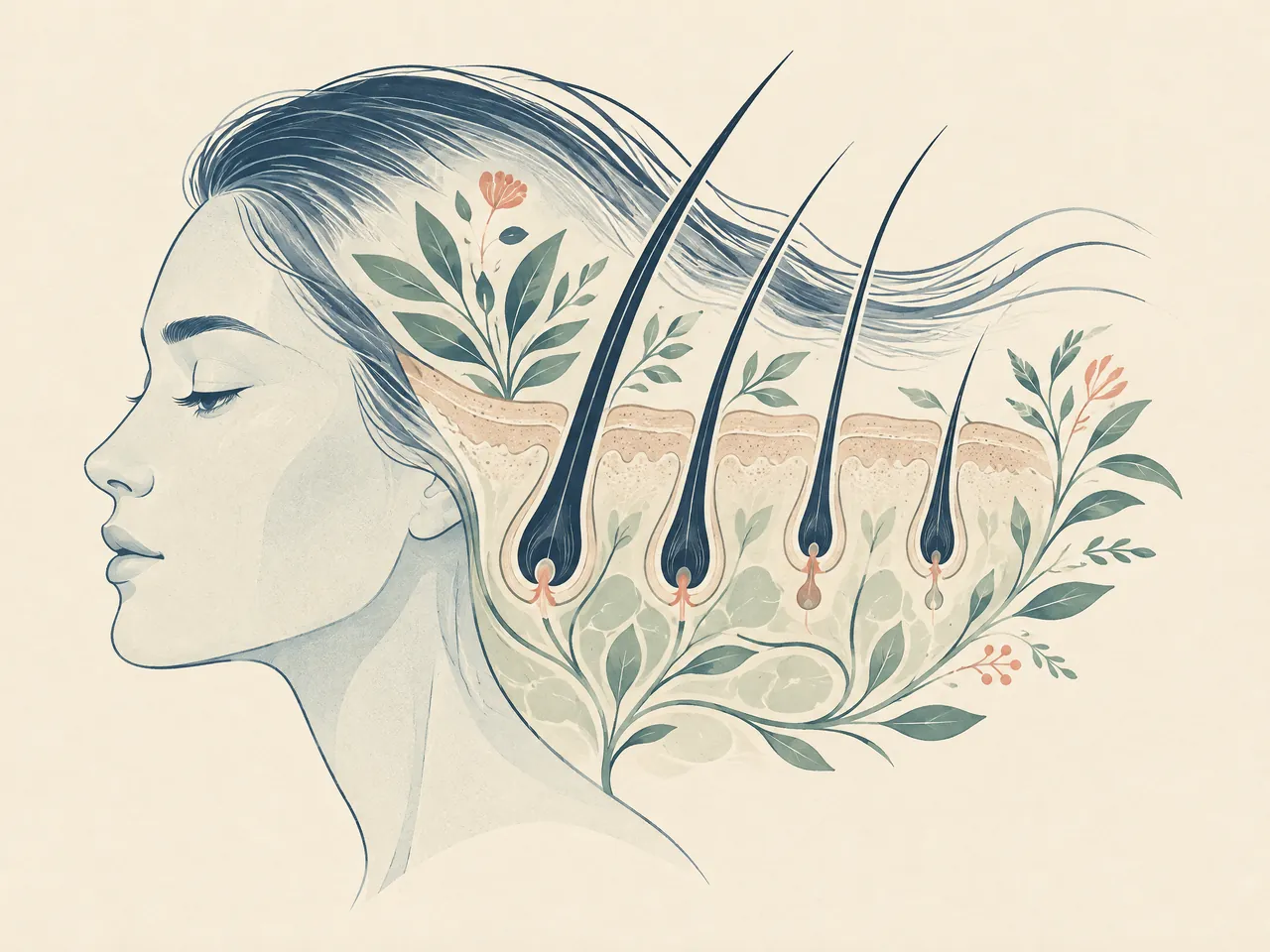
The short answer
Chinese herbal medicine is sometimes discussed for hair loss through traditional Chinese medicine pattern differentiation, but it has not been proven to guarantee hair regrowth. Consider a Chinese medicine consultation when you want individual advice and are prepared to share your health history and medicines. Sudden, patchy, persistent or worsening loss should be medically assessed first or alongside complementary care, so that possible causes are not missed.
Transparent pricing
See the fees.
Choose your care.
Explore our complete official price list, including first-trial prices, regular prices, packages and branch-specific options.
Opening WhatsApp prepares an enquiry; it does not send a message, take payment or confirm an appointment. Suitability and individual arrangements are confirmed during consultation.
Hair and scalp
All prices in HKDScalp health and hair-loss management
Includes AI scalp analysis, deep scalp and follicle cleansing, and scalp oil-control care.
HK$380 (first trial)
Regular price: HK$680
- 6 sessions: HK$3,480 (HK$580 per session)
- 12 sessions: HK$5,760 (HK$480 per session)
- 20 sessions: HK$8,600 (HK$430 per session)
- 30 sessions: HK$11,400 (HK$380 per session)
Hair acupuncture and Chinese herbal medicine package
Includes scalp acupuncture and 3 days of Chinese herbal medicine that does not require decoction.
HK$580 (single session)
Registered Chinese Medicine Practitioner consultation
- 6 sessions: HK$3,180 (HK$530 per session)
- 12 sessions: HK$5,760 (HK$480 per session)
- 20 sessions: HK$8,600 (HK$430 per session)
- 30 sessions: HK$11,400 (HK$380 per session)
Combined hair and scalp treatment
Combines acupuncture and Chinese herbal medicine with salon-level scalp and follicle care. Packages include complimentary hair-care shampoo and serum.
HK$1,260 (single session)
Combined treatment
- 8 sessions: HK$8,640 (HK$1,080 per session)
- 16 sessions: HK$15,680 (HK$980 per session)
- 20 sessions: HK$18,600 (HK$930 per session)
- 30 sessions: HK$26,400 (HK$880 per session)
Weight management
All prices in HKDFull-body acupoint embedding for weight management
Includes full-body acupoint embedding. Packages include complimentary Chinese herbal medicine for weight management, with the number of included days scaled to the package. Embedding material and the individual treatment arrangement are confirmed during consultation; this is not a cosmetic thread lift.
HK$980 (single session)
No trial session
- 10 sessions: HK$7,800 (HK$780 per session)
- 20 sessions: HK$14,600 (HK$730 per session)
- 30 sessions: HK$20,400 (HK$680 per session)
Facial acupuncture
All prices in HKDFacial acupuncture (basic)
Includes facial acupuncture and meridian-based facial care, including care for facial puffiness.
HK$480 (first trial)
Regular price: HK$680
- 10 sessions: HK$5,200 (HK$520 per session)
- 20 sessions: HK$9,600 (HK$480 per session)
- 30 sessions: HK$13,500 (HK$450 per session)
Facial acupuncture (advanced)
Includes enhanced facial acupuncture with a specially formulated moisturising mask and serum.
HK$780 (first trial)
Regular price: HK$1,180
- 10 sessions: HK$9,000 (HK$900 per session)
- 20 sessions: HK$16,600 (HK$830 per session)
- 30 sessions: HK$23,400 (HK$780 per session)
Pain care
All prices in HKDExtracorporeal shockwave treatment
Shockwave treatment for deep-tissue and fascial care. The Kwun Tong clinic offers the multi-area options shown below.
Priced by branch
Branch-specific pricing
Prince Edward: HK$250 per area
Kwun Tong: HK$250 for 1 area / HK$450 for 2 areas / HK$600 for 3 areas
Pain care (manual therapy)
Includes Chinese medicine musculoskeletal assessment, manual joint techniques and tui na.
HK$580 (single session)
Chinese medicine musculoskeletal assessment
Pain care (acupuncture and manual therapy)
Combines acupuncture and manual therapy.
HK$680 (single session)
Combined care
Chinese medicine
All prices in HKDAcupuncture and Chinese herbal medicine package
Includes a Chinese medicine consultation with pulse assessment, body acupuncture and 3 days of Chinese herbal granules that do not require decoction.
HK$580 (single session)
Chinese medicine consultation with pulse assessment
Can Chinese herbal medicine help hair regrowth? A traditional Chinese medicine perspective — When should I see a Chinese medicine practitioner for hair loss?
The short answer is that Chinese herbal medicine may be part of a traditional Chinese medicine discussion about hair concerns, but it should not be presented as a proven way to regrow hair. Hair may shed or thin for many reasons. The NHS notes that family pattern, illness, stress, weight loss and iron deficiency can all be relevant, while some forms are temporary and others are not [1]. A medical assessment can therefore be an important first step, especially before committing money or time to a commercial solution. If you are also curious about a traditional perspective, start with this broader Chinese medicine perspective on hair loss and keep the two conversations connected rather than treating them as rivals.
Traditional Chinese medicine uses its own language to describe hair and general wellbeing. It may relate the appearance of the hair to the liver, kidney, spleen, qi and blood, and may ask whether dryness, tiredness, digestive discomfort, scalp oiliness, poor sleep or emotional strain are present. These are traditional clinical ideas, not established biological explanations for a follicle. The value of the consultation is in slowing down to hear the pattern of change and the person’s circumstances. It is not a shortcut to diagnosing a hormone problem, nutrient deficiency, autoimmune condition or infection. The American Academy of Dermatology explains that a hair-loss assessment may involve the history, close examination and, where indicated, tests for possible underlying causes [2].
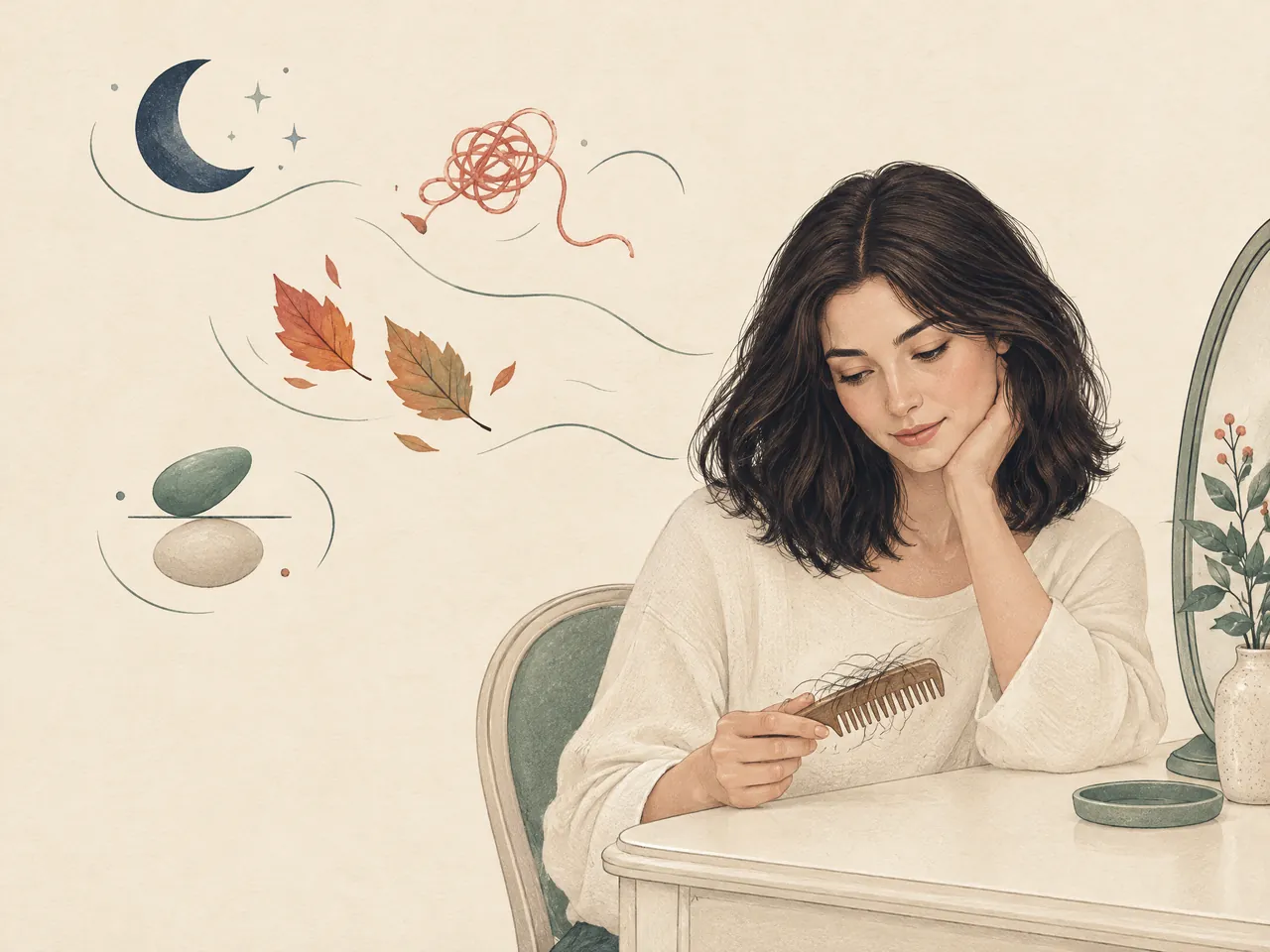
Can Chinese herbal medicine help hair regrowth? Understanding the liver, kidney, spleen and qi-blood framework — When should I see a Chinese medicine practitioner for hair loss?
In traditional terms, a practitioner may speak of the kidney and liver in relation to nourishment of the hair, or of the spleen and stomach in relation to transforming food into nourishment. Qi and blood are also traditional concepts used to organise symptoms such as fatigue, pallor, dry hair or a change after a demanding period. This language can help explain why two people who both say “my hair is falling out” might be asked different questions. It does not show that a named herb changes hormones, repairs follicles or corrects a laboratory result. If your main concern is gradual diffuse thinning, the related guide to hair thinning and TCM may help you prepare questions for a consultation without assuming the answer in advance.
Can Chinese herbal medicine help hair regrowth? Why pattern differentiation matters — When should I see a Chinese medicine practitioner for hair loss?
Pattern differentiation means that the practitioner does not select a formula solely because the label says “hair growth”. They may ask when shedding began, whether it followed illness, a major change in eating, disrupted sleep, childbirth, new medicine or a stressful period, and what you notice on the scalp. They may also ask about energy, digestion and other symptoms that matter within their traditional assessment. This is a reason to see a registered Chinese medicine practitioner rather than buying a product online or copying someone else’s prescription. A tailored conversation is still not a guarantee of a particular result, and it should include a clear plan for when medical review is needed.
Compare your options
| What you notice | What to bring or record | A sensible next conversation |
|---|---|---|
| Gradual thinning or a wider parting | When you first noticed it, family pattern, daily hair practices and medicines or supplements | Arrange medical assessment and discuss whether a Chinese medicine consultation would add useful individual support |
| Shedding after illness, major stress, weight change or childbirth | A brief timeline of the event, current symptoms and any tests or advice already received | Ask a clinician about possible causes; then discuss traditional care without assuming a fixed formula |
| An oily, itchy, flaky or uncomfortable scalp | Scalp products used, timing, skin changes and any irritation or pain | Seek clinical advice for a scalp condition; ask a practitioner whether any proposed approach is appropriate for the skin |
| Sudden defined bald patches or quickly worsening loss | Photos dated over time if helpful, onset, other symptoms and current treatment | Medical assessment comes first or in parallel; do not self-prescribe herbs or scalp procedures |
On smaller screens, scroll the table sideways to compare all columns.
Can Chinese herbal medicine help hair regrowth? What an assessment may explore — When should I see a Chinese medicine practitioner for hair loss?
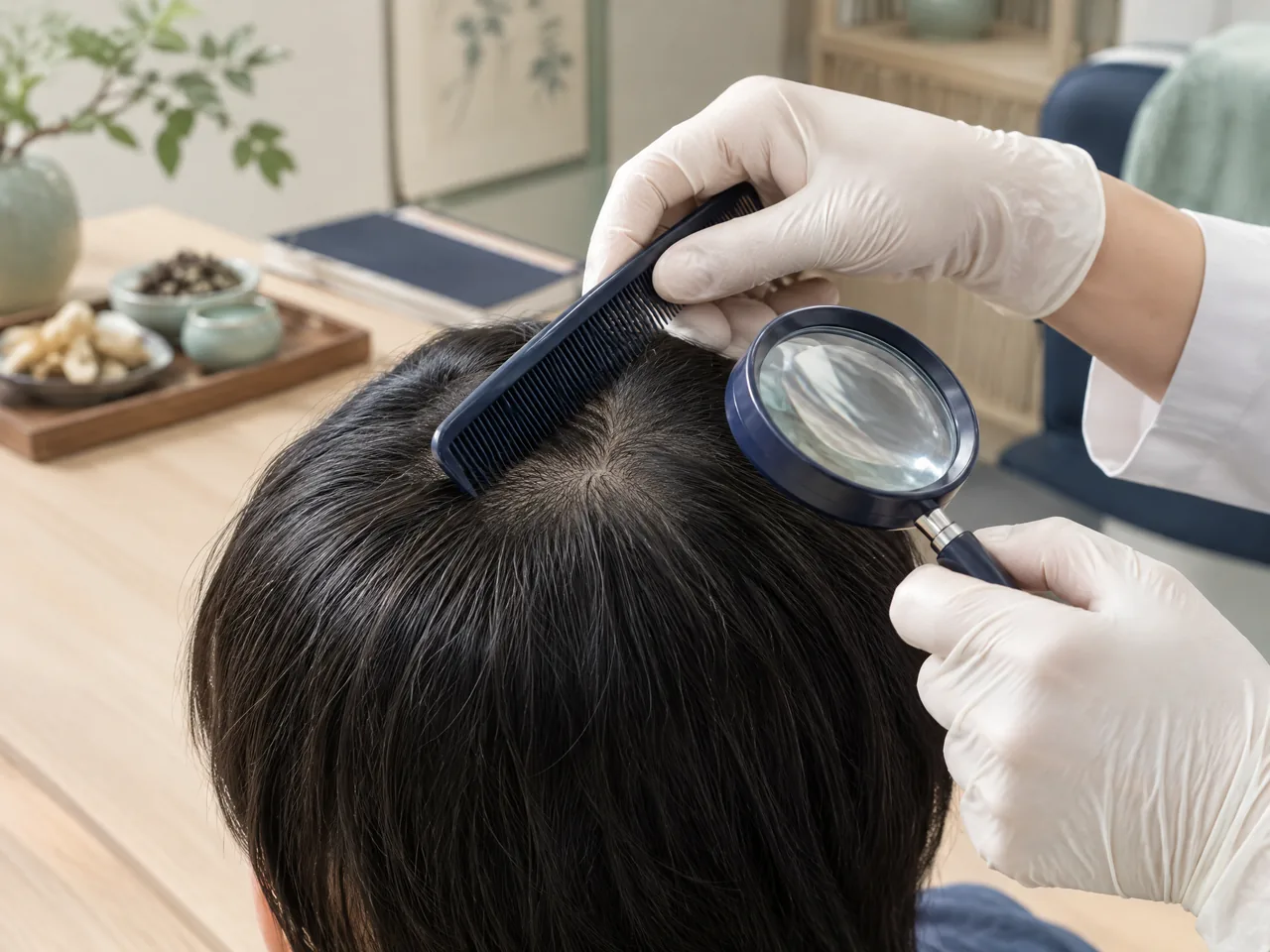
A productive first visit begins with a simple timeline. Note whether you are seeing more hair on a pillow, brush or shower floor, whether the parting appears wider, whether there are defined patches, and whether the scalp is itchy, sore, flaky or oily. Bring a list of prescribed medicines, over-the-counter products, supplements and herbs, even if they seem unrelated. Mention allergies, pregnancy or breastfeeding, important diagnoses, recent illness and any medical tests already arranged. These details allow the discussion to be individual rather than based on a photograph or a generic before-and-after claim. They also make it easier to decide whether an appointment is appropriate now or whether medical investigation needs priority.

You can see a Chinese medicine practitioner for hair loss when you want to understand the traditional approach, discuss a personally prescribed plan, or review whether your routines are creating an avoidable burden. It is also reasonable to seek care in parallel: medical assessment addresses possible causes, while the Chinese medicine consultation can address the traditional symptom pattern and safety of any proposed herbs. Ask what the practitioner is trying to understand, what they would need you to monitor, and what would lead them to advise another type of care. For a local enquiry, the Kwun Tong Chinese medicine clinic is one possible location to ask about an appointment arrangement; availability should be confirmed directly.
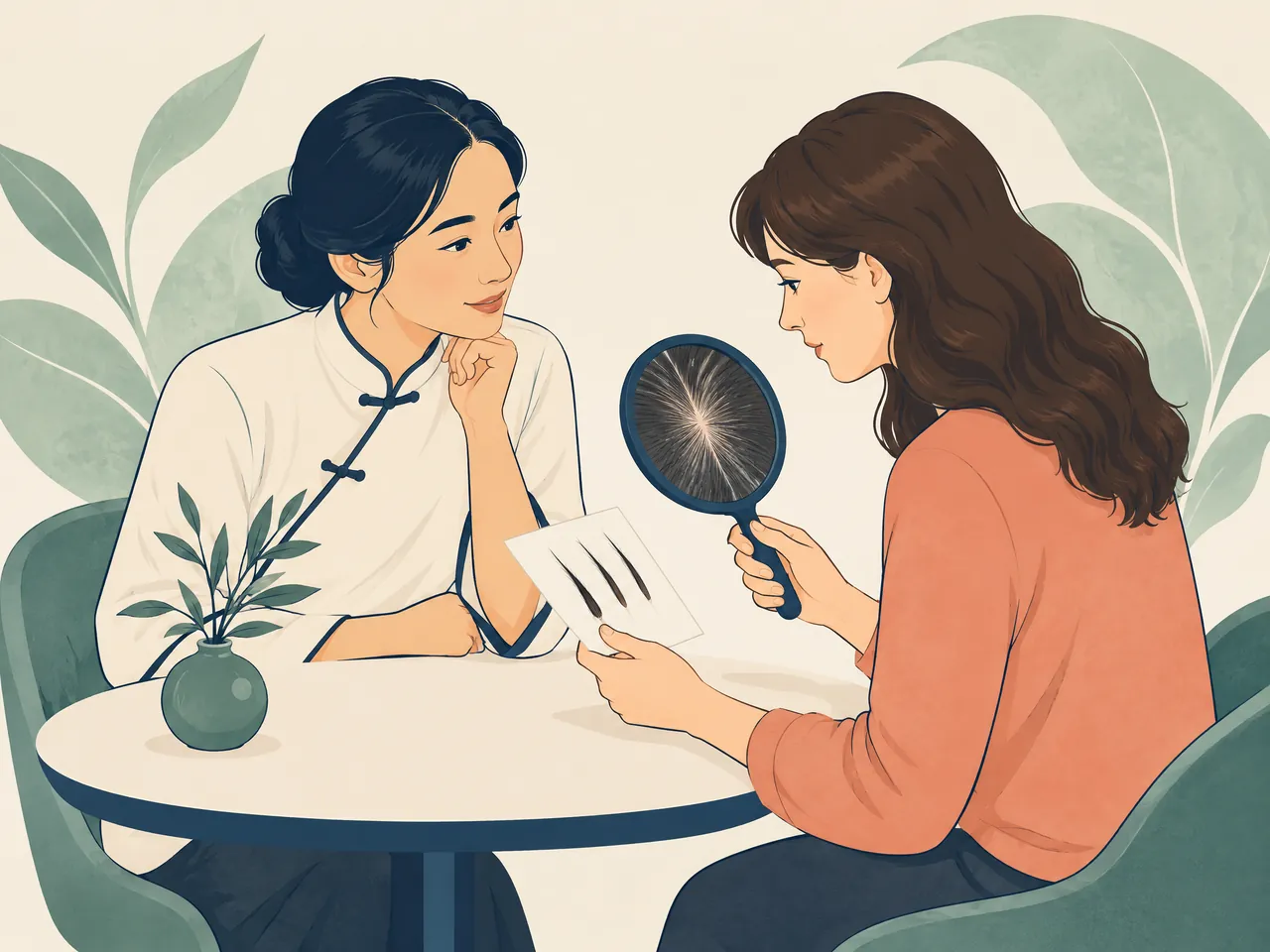
Can Chinese herbal medicine help hair regrowth? Discussing herbal prescriptions safely — When should I see a Chinese medicine practitioner for hair loss?
A safe herbal conversation includes more than the name of a formula. Ask why a prescription is being considered in your case, how it fits the traditional assessment, what information the practitioner needs before prescribing, and how changes or concerns should be reported. Do not start, stop or combine Chinese herbs with medicines without disclosing everything you take to the relevant practitioners and clinicians. NCCIH says studies of Chinese herbal products have had mixed results and notes safety issues that can include contamination, adulteration and incorrect herbs; it also advises people not to use traditional Chinese medicine to replace or delay conventional care [3]. This is particularly important if you have a health condition, take regular medicines, or are pregnant or breastfeeding.
Can Chinese herbal medicine help hair regrowth? The place of acupuncture and scalp-based approaches — When should I see a Chinese medicine practitioner for hair loss?
Some people ask whether acupuncture, scalp needling or a plum blossom needle should accompany herbs. In traditional practice, these may be discussed as separate approaches after assessment, but they are not interchangeable with finding the cause of hair loss and they do not offer a guaranteed regrowth outcome. Ask about the purpose, possible discomfort, hygiene and whether your scalp condition makes an approach unsuitable. The article Can acupuncture help with hair loss? explains the cautious role of acupuncture in this topic, while plum blossom needle for hair loss gives context for that specific traditional technique. Do not use either as a reason to postpone a clinical examination of a changing scalp or new bald patch.
Can Chinese herbal medicine help hair regrowth? Setting realistic expectations — When should I see a Chinese medicine practitioner for hair loss?
Realistic expectations protect you from false urgency. Hair changes are often noticed only after weeks or months, and the appearance of a hairline, parting or shedding can change for more than one reason. A consultation should not promise that a particular herb will reactivate follicles or that an exact number of visits will solve the problem. Instead, agree on what you will observe, such as the stability of shedding, scalp comfort, tolerance of a prescribed product or results of medical investigations. If a practitioner suggests a next step, you should understand its purpose and have space to ask whether it is optional. No one approach works for every cause of hair loss [2].
Everyday care can support general wellbeing without becoming another source of pressure. Aim for meals that provide adequate energy and protein, avoid extreme dieting, maintain a sleep pattern that is workable for you, and choose hair practices that do not repeatedly pull, burn or irritate the scalp. A gentle fingertip scalp massage may feel relaxing if the skin is intact, but it is not a treatment for the cause of hair loss. It is better to make sustainable changes than to buy many oils, supplements and devices at once. When you want practical care alongside a consultation, the Chinese medicine clinic Prince Edward is another location where you can ask about an assessment.
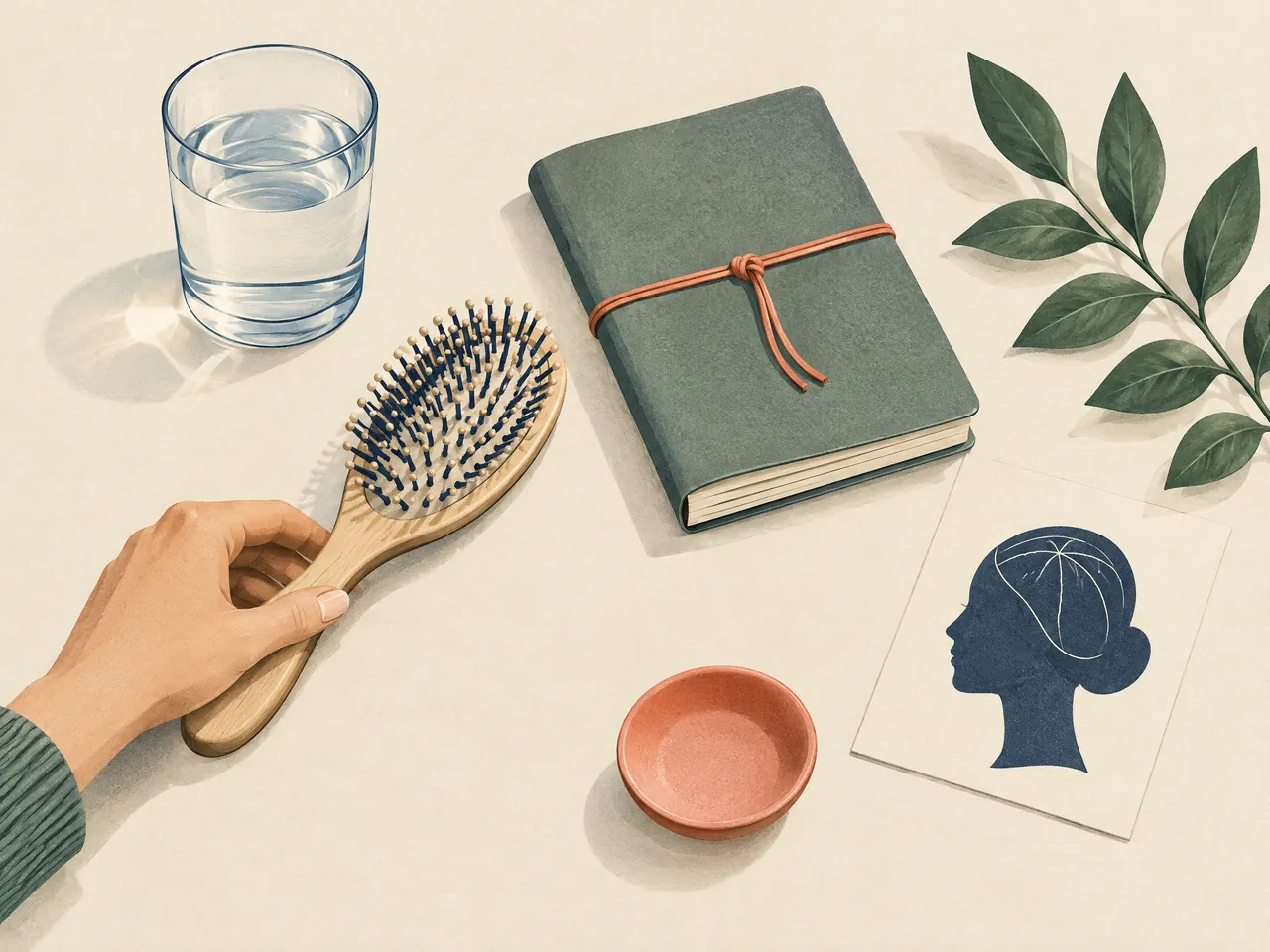
Can Chinese herbal medicine help hair regrowth? Everyday care that may support wellbeing — When should I see a Chinese medicine practitioner for hair loss?
Think of daily care as information as well as support. A short note of onset, major life events, food changes, sleep disruption, new products and any symptoms elsewhere in the body gives both medical and Chinese medicine practitioners a better starting point. Avoid repeatedly checking individual hairs or changing every product after a few days; this can make it harder to tell what is happening and can increase anxiety. If you are considering a supplement because of hair loss, ask whether a medical test is needed before taking it. The AAD notes that supplements such as iron or zinc should be taken when a blood test shows a deficiency, rather than simply because a hair product markets them [2].

Can Chinese herbal medicine help hair regrowth? Recognising when medical assessment comes first — When should I see a Chinese medicine practitioner for hair loss?
Arrange medical assessment promptly if hair loss is sudden, forms distinct round or oval patches, is rapidly worsening, or comes with concerning scalp changes or other symptoms. A clinician can look for causes and decide whether examination, blood tests or other investigations are appropriate. Alopecia areata, for example, is an immune-mediated condition that often presents with small round patches, although the pattern and course can vary [4]. You should also seek medical advice whenever hair loss worries you or affects your wellbeing; the NHS specifically advises obtaining an idea of the cause before going to a commercial hair clinic [1]. A Chinese medicine consultation can still be discussed afterwards or alongside care, but it should not replace needed diagnosis.
Care and health guide
Hair and scalp care information
This directory brings together services, reading, and visit information related to hair and scalp care, to help you prepare questions for a consultation.
For questions about hair or scalp care, noting the everyday concerns and service questions you want to discuss can help prepare a consultation; Chinese medicine for hair loss is a relevant service or reading entry point.
People may have different priorities, and acupuncture Hong Kong offers related information to help you understand options and prepare questions.

Your questions, answered
Frequently asked questions
When should I see a Chinese medicine practitioner for hair loss?
See a registered Chinese medicine practitioner when you want an individual discussion of the traditional approach, possible prescribed herbs and supportive routines. Take a clear history of your shedding, health conditions and all medicines. Sudden, patchy, persistent or worsening loss should also be medically assessed, not managed by self-treatment alone.
Can I buy a Chinese herbal formula for hair regrowth online?
It is better not to self-prescribe. A formula used for one person’s traditional pattern may not suit another person, and online products may not account for medicines, allergies or health conditions. Discuss any herbal product with a registered practitioner and your healthcare providers, particularly if you take regular medication or are pregnant or breastfeeding.
Will acupuncture or a plum blossom needle regrow hair?
They cannot promise hair regrowth. A practitioner may discuss acupuncture or a scalp-based traditional technique after assessment, but the evidence for a guaranteed hair-growth effect is limited. Scalp symptoms, sudden patches and rapid change still need appropriate medical assessment.
How should I prepare for a hair-loss consultation?
Bring a short timeline, a list of medicines, supplements and herbs, relevant test results or clinician advice, and notes on scalp symptoms and recent health or lifestyle changes. Ask what the practitioner is assessing, why an approach is suggested, how safety will be considered and when to seek other care.
Sources and further information
- [1] NHS — Hair loss
Referenced for: Official guidance on common hair-loss causes, medical assessment before a commercial hair clinic, and the limits of treatment outcomes.
- [2] American Academy of Dermatology — Hair loss: Diagnosis and treatment
Referenced for: Dermatology guidance on assessing hair loss, possible investigations, variable causes, self-care and supplements.
- [3] NCCIH — Traditional Chinese Medicine: What You Need To Know
Referenced for: NIH information on evidence limitations and safety considerations for Chinese herbal products and traditional Chinese medicine.
- [4] NIAMS — Alopecia Areata
Referenced for: NIH information on alopecia areata as immune-mediated hair loss that commonly forms small round patches.