
TCM Lab · Explore a health topic
Hip Pain, Outer Hip Pain and Hip Pain Acupuncture: What to Know
Published Updated
Hip pain is not one single pattern. It may be felt deep in the groin, at the outer hip, in the buttock, or along the upper thigh, and the place you point to can help organise the next question. Start by noting when it began, whether there was a fall, twist or change in training, and what happens when you walk, use stairs, sit down, turn in bed or put on socks. This page explains how to record those details, how to keep hip pain acupuncture in proportion to assessment and rehabilitation, and when symptoms need medical attention rather than self-care.
Appointments are confirmed through WhatsApp. If you have language requirements, please mention them in your enquiry.
The short answer
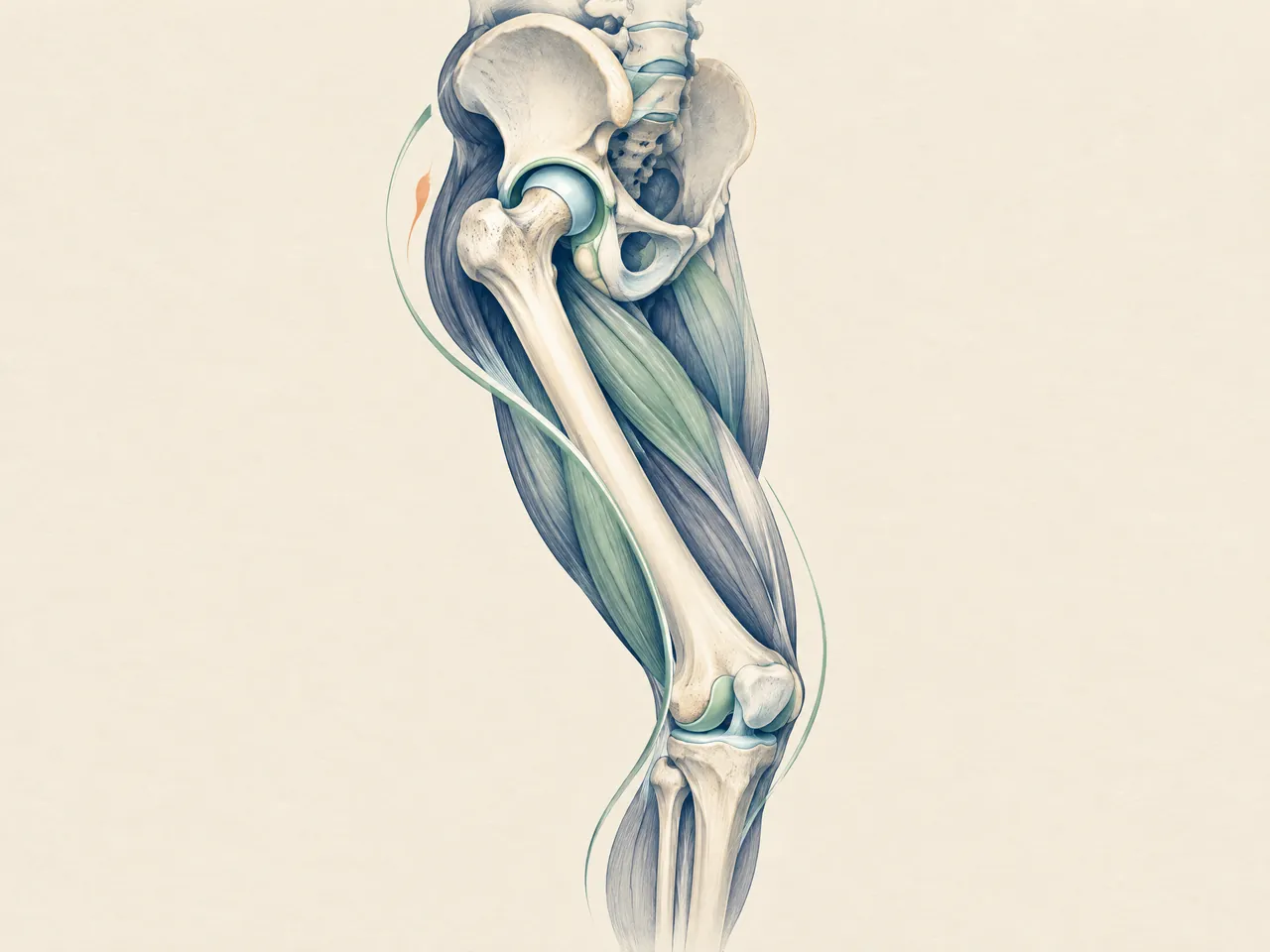
Hip pain can arise from the hip joint, surrounding soft tissues, an injury, or pain referred from elsewhere such as the lower back. Groin, outer-hip and buttock pain give different clues but cannot diagnose the cause alone. Record the trigger and your ability to bear weight. After a fall, inability to walk, deformity, altered sensation, or a hot swollen hip with fever needs prompt medical assessment. Acupuncture may be discussed as complementary care after assessment, not as a replacement for diagnosis or rehabilitation.
Transparent pricing
See the fees.
Choose your care.
Explore our complete official price list, including first-trial prices, regular prices, packages and branch-specific options.
Opening WhatsApp prepares an enquiry; it does not send a message, take payment or confirm an appointment. Suitability and individual arrangements are confirmed during consultation.
Pain care
All prices in HKDExtracorporeal shockwave treatment
Shockwave treatment for deep-tissue and fascial care. The Kwun Tong clinic offers the multi-area options shown below.
Priced by branch
Branch-specific pricing
Prince Edward: HK$250 per area
Kwun Tong: HK$250 for 1 area / HK$450 for 2 areas / HK$600 for 3 areas
Pain care (manual therapy)
Includes Chinese medicine musculoskeletal assessment, manual joint techniques and tui na.
HK$580 (single session)
Chinese medicine musculoskeletal assessment
Pain care (acupuncture and manual therapy)
Combines acupuncture and manual therapy.
HK$680 (single session)
Combined care
Hair and scalp
All prices in HKDScalp health and hair-loss management
Includes AI scalp analysis, deep scalp and follicle cleansing, and scalp oil-control care.
HK$380 (first trial)
Regular price: HK$680
- 6 sessions: HK$3,480 (HK$580 per session)
- 12 sessions: HK$5,760 (HK$480 per session)
- 20 sessions: HK$8,600 (HK$430 per session)
- 30 sessions: HK$11,400 (HK$380 per session)
Hair acupuncture and Chinese herbal medicine package
Includes scalp acupuncture and 3 days of Chinese herbal medicine that does not require decoction.
HK$580 (single session)
Registered Chinese Medicine Practitioner consultation
- 6 sessions: HK$3,180 (HK$530 per session)
- 12 sessions: HK$5,760 (HK$480 per session)
- 20 sessions: HK$8,600 (HK$430 per session)
- 30 sessions: HK$11,400 (HK$380 per session)
Combined hair and scalp treatment
Combines acupuncture and Chinese herbal medicine with salon-level scalp and follicle care. Packages include complimentary hair-care shampoo and serum.
HK$1,260 (single session)
Combined treatment
- 8 sessions: HK$8,640 (HK$1,080 per session)
- 16 sessions: HK$15,680 (HK$980 per session)
- 20 sessions: HK$18,600 (HK$930 per session)
- 30 sessions: HK$26,400 (HK$880 per session)
Weight management
All prices in HKDFull-body acupoint embedding for weight management
Includes full-body acupoint embedding. Packages include complimentary Chinese herbal medicine for weight management, with the number of included days scaled to the package. Embedding material and the individual treatment arrangement are confirmed during consultation; this is not a cosmetic thread lift.
HK$980 (single session)
No trial session
- 10 sessions: HK$7,800 (HK$780 per session)
- 20 sessions: HK$14,600 (HK$730 per session)
- 30 sessions: HK$20,400 (HK$680 per session)
Facial acupuncture
All prices in HKDFacial acupuncture (basic)
Includes facial acupuncture and meridian-based facial care, including care for facial puffiness.
HK$480 (first trial)
Regular price: HK$680
- 10 sessions: HK$5,200 (HK$520 per session)
- 20 sessions: HK$9,600 (HK$480 per session)
- 30 sessions: HK$13,500 (HK$450 per session)
Facial acupuncture (advanced)
Includes enhanced facial acupuncture with a specially formulated moisturising mask and serum.
HK$780 (first trial)
Regular price: HK$1,180
- 10 sessions: HK$9,000 (HK$900 per session)
- 20 sessions: HK$16,600 (HK$830 per session)
- 30 sessions: HK$23,400 (HK$780 per session)
Chinese medicine
All prices in HKDAcupuncture and Chinese herbal medicine package
Includes a Chinese medicine consultation with pulse assessment, body acupuncture and 3 days of Chinese herbal granules that do not require decoction.
HK$580 (single session)
Chinese medicine consultation with pulse assessment
Explore this topic
Hip Pain, Outer Hip Pain and Hip Pain Acupuncture: Start with Location and Function
A useful hip-pain description is a short story rather than a single pain score. Mark the most painful spot with one finger: deep at the front of the hip or groin, on the bony outer side, in the buttock, or travelling down the thigh. Then add the starting point. Did it follow a fall, a quick turn, a longer walk, a return to sport, or arrive gradually? Note whether the pain is present at rest, appears only with weight-bearing, or wakes you at night. This record does not name the cause, but it gives a clinician a clearer starting point and makes changes over time easier to notice.
Separate the place where pain is felt from the activity that exposes it. A person may be comfortable on a flat, short walk but feel a sharp outer-hip ache when climbing a slope, carrying shopping, stepping out of a taxi or lying on that side. Someone else may mainly notice a deep front-of-hip ache when standing after a long meeting or putting on shoes. Write these as plain observations, without deciding that a particular tendon, bursa or joint structure must be responsible. Also note whether a limp appears, whether you change the way you sit, and whether the other leg or lower back has begun to ache because you are compensating. That practical record can guide safer decisions while you arrange assessment.

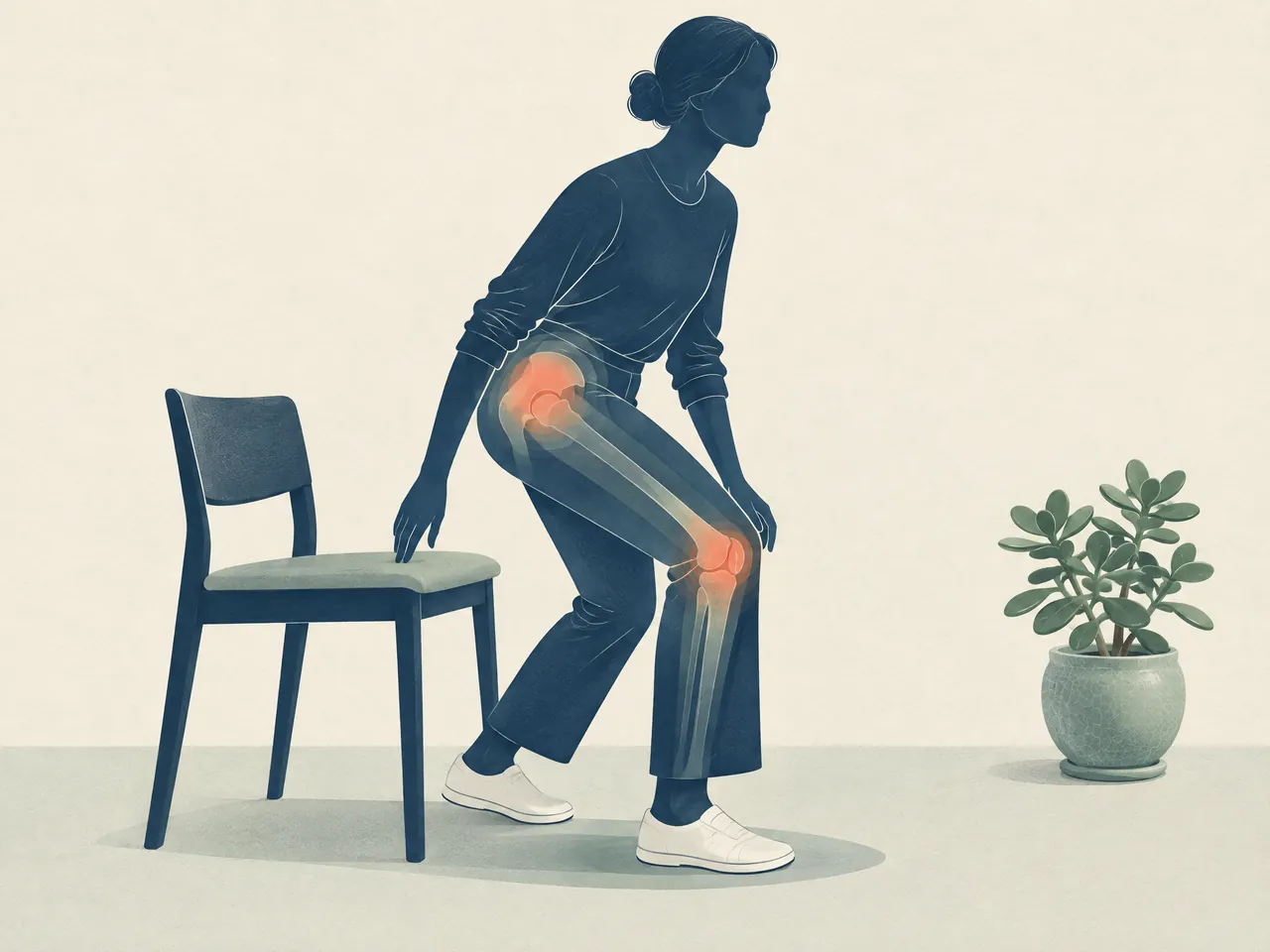
Compare like with like when monitoring progress. Choose one ordinary task that is currently tolerable, such as a short level walk or rising from a standard-height chair, and observe whether the response is similar over several days. Constantly retesting the most painful movement may aggravate symptoms without providing useful information. If a planned activity causes a clear and sustained flare, reduce the provoking load rather than adding a new treatment at the same time; otherwise it becomes difficult to understand what changed.
Hip Pain, Outer Hip Pain and Hip Pain Acupuncture: What the Pain Location May Suggest
Location offers clues, not a verdict. Pain inside the hip or in the groin more often points attention toward the joint area, while pain over the outer hip, upper thigh or outer buttock can relate to muscles, tendons, ligaments or bursae around it. Pain can also be referred from another area, including the lower back. [2] This is why a tender spot, an online diagram or one movement test cannot settle the question. If your main symptom is in the rear of the pelvis or buttock, compare its pattern with this guide to hip pain in the buttock before assuming that every buttock ache is coming from the hip joint.
Hip Pain, Outer Hip Pain and Hip Pain Acupuncture: Record Walking and Daily Activities
Function helps show how much the problem is affecting daily life. For several days, record the first few steps after sitting, the distance or time you can walk before symptoms change, and whether stairs, getting out of a car, standing from a chair, dressing, or lying on one side are difficult. Describe what happens afterwards as well: does the discomfort settle, stay the same, or become clearly worse later that day? Bring the list of medicines, previous injuries, recent exercise changes and any old scan reports to an assessment. It gives a more useful picture than trying to select a diagnosis from a list of causes.
Compare your options
| What to notice | Examples to record | Why it helps the discussion |
|---|---|---|
| Pain location | Groin, outer hip, buttock, upper thigh, or more than one area | Location can guide questions about the joint, nearby tissues or referred pain. |
| How it began | Fall, twist, gradual onset, new route, longer walk or training change | The timeline helps separate an acute event from a developing pattern. |
| Weight-bearing and walking | Able to walk, limping, stair tolerance, distance or time before symptoms change | Function shows the practical impact and helps identify urgent inability to bear weight. |
| Other symptoms | Night pain, stiffness, numbness, weakness, swelling, heat, fever or feeling unwell | Associated symptoms help determine whether routine, prompt or urgent medical assessment is appropriate. |
On smaller screens, scroll the table sideways to compare all columns.
Hip Pain, Outer Hip Pain and Hip Pain Acupuncture: Possible Sources and Support
The hip region includes the joint and many nearby structures, so the phrase “hip pain” covers several possibilities. A sudden injury, a strain after a workload change, joint conditions such as osteoarthritis, and inflammation around the region can all produce pain. NHS guidance also lists pain and swelling after intense or repetitive exercise, and notes that a pattern of pain worse with walking and stiffness after moving may occur with osteoarthritis. [1] These are patterns for assessment, not labels to apply to yourself. The same activity can be uncomfortable for different reasons, and the appropriate next step depends on the history, examination and any needed medical investigation.
For a non-urgent new symptom, think in terms of load rather than complete avoidance. The load may be a sudden increase in hill walking, a new gym routine, repeated squatting at work, a long period seated in a low chair, or simply a busy day with much more standing than usual. It can be helpful to pause the specific activity that reliably provokes a strong flare, then ask what level of walking, movement or exercise remains manageable. NHS suggests avoiding excessive strain while keeping moving if possible. [1] A rehabilitation professional can turn that broad principle into a suitable plan; an online page cannot prescribe the right exercise, range or pace for an individual hip.
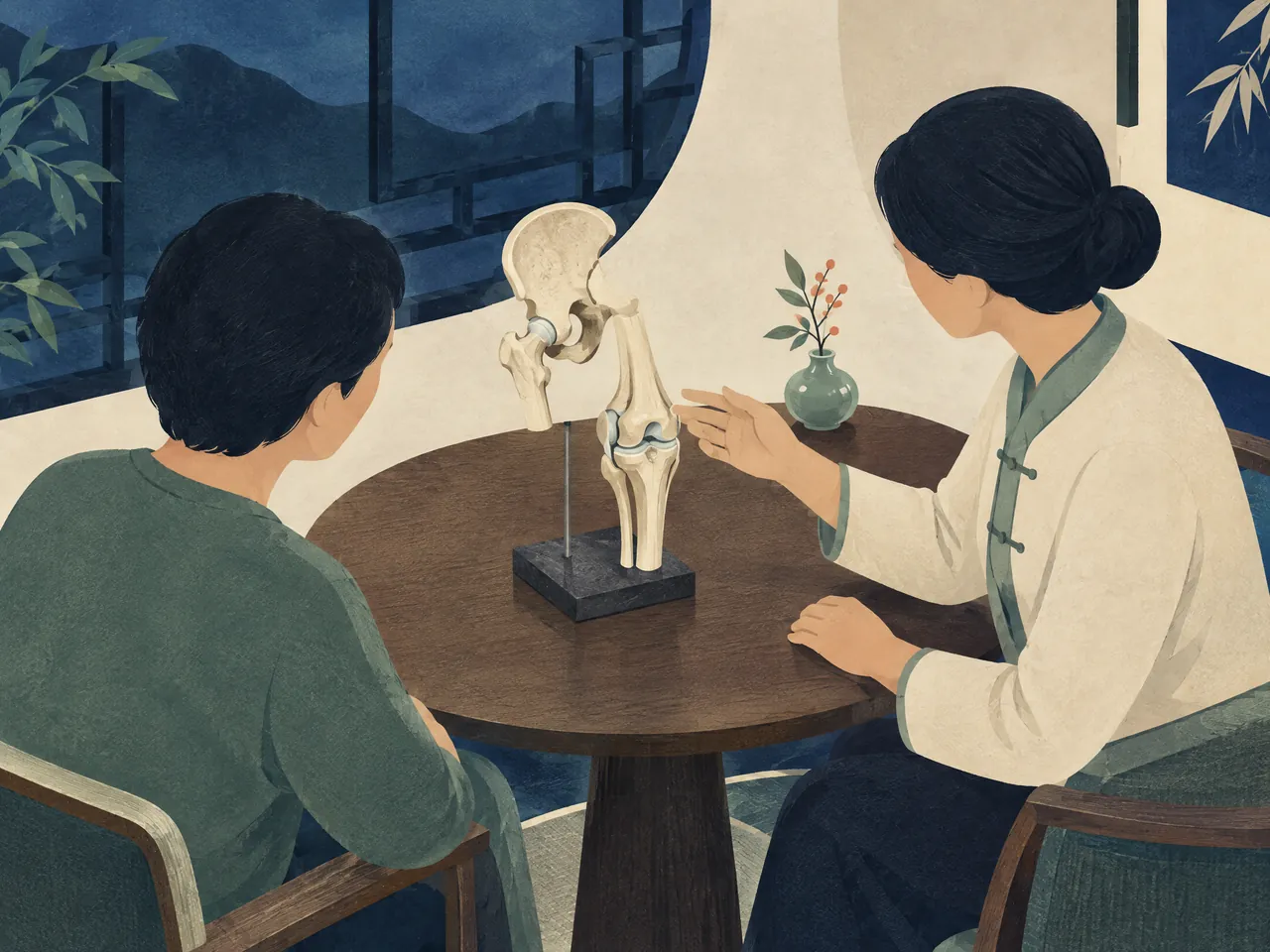
Comfort measures should not hide a worsening pattern. A wrapped cold pack may be used for a limited period for some people, while warmth and gentle movement may feel more comfortable for others, but neither tells you the diagnosis. If you use an over-the-counter pain medicine, follow its label and check suitability with a pharmacist or clinician, especially if you have other conditions or take regular medicines. Do not use a temporary reduction in pain as a reason to return immediately to a demanding activity.
Hip Pain, Outer Hip Pain and Hip Pain Acupuncture: Why the Hip Area Is Not Always the Joint
It is reasonable to ask whether pain felt beside the hip is “really the hip,” but the answer may not be simple. A deep groin symptom, outer hip tenderness and a buttock symptom can call attention to different structures; lower-back problems may also be felt as hip-region pain. [2] Pain can spread to the upper thigh without telling you exactly where it began. Rather than pressing repeatedly on a painful point or forcing a stretch to test it, notice the movement and load that bring it on. New numbness, weakness, a marked loss of motion or a rapidly changing walking pattern deserves clinical assessment instead of a do-it-yourself conclusion.
Hip Pain, Outer Hip Pain and Hip Pain Acupuncture: Keeping Complementary Care in Context
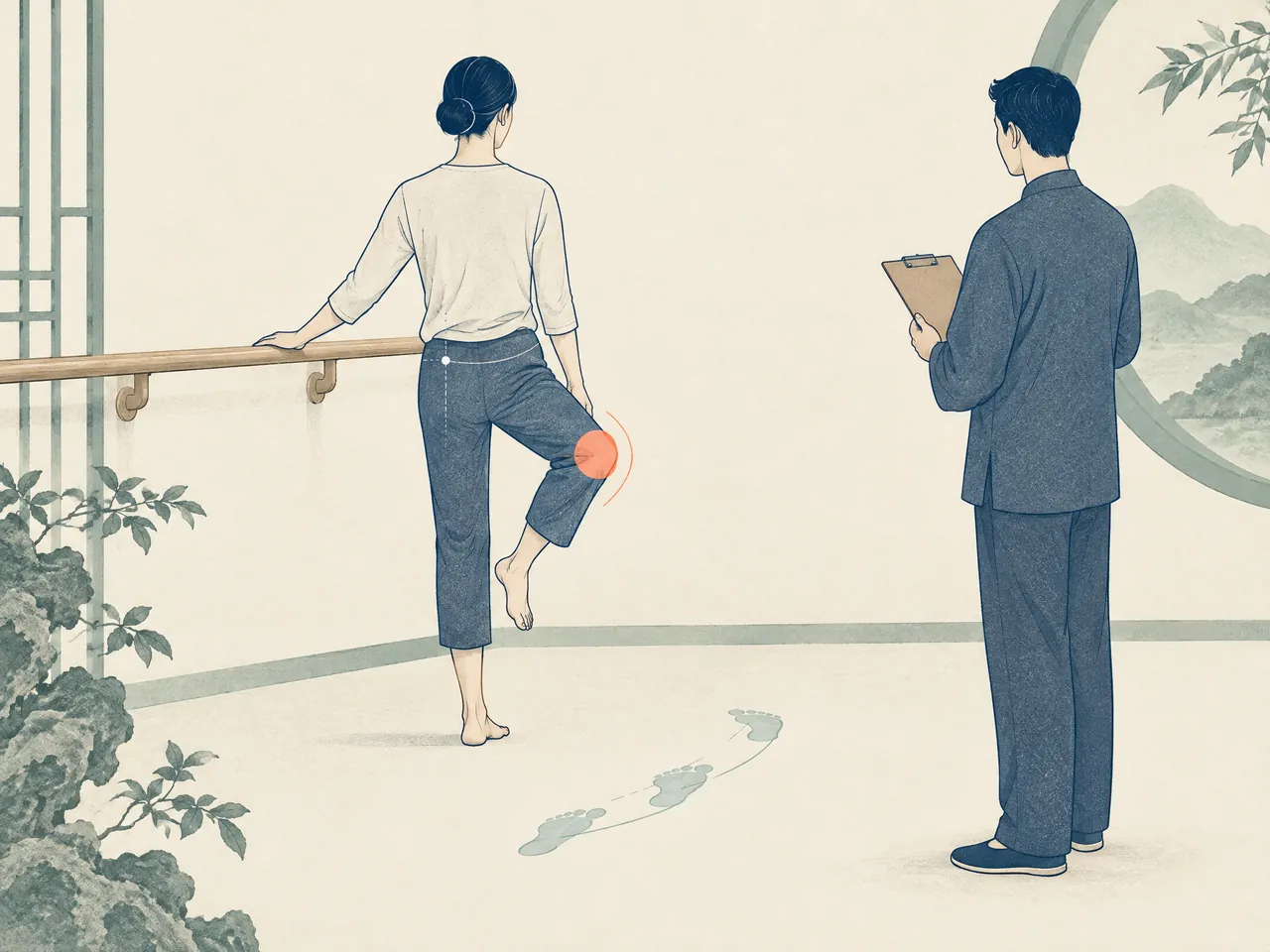
Hip pain acupuncture should be considered as a conversation about support, not a promise or a substitute for medical care. Research discussed by Cochrane for hip osteoarthritis found little or no difference in pain or function between acupuncture and sham acupuncture in the two sham-controlled trials; other comparisons were uncertain or limited by study design. [3] NCCIH likewise notes that hip-specific evidence is limited and that the largest body of osteoarthritis research is for the knee. [4] When there are no urgent warning signs, a TCM consultation can discuss your symptom pattern, current care and whether acupuncture is a reasonable complementary option alongside activity modification or rehabilitation. Tell the practitioner about medicines, bleeding concerns, pregnancy, implanted devices and any diagnosed condition. Sterile, single-use needles and properly delivered treatment matter for safety. [4]
Hip Pain, Outer Hip Pain and Hip Pain Acupuncture: When to Seek Medical Care
The practical dividing line is not how long you have tolerated the pain; it is whether the symptom could signal an injury or illness that needs prompt care. Seek medical advice if hip pain is stopping normal activities, affecting sleep, getting worse, recurring, or not improving with home measures. [1] For mild symptoms without warning signs, avoid abruptly escalating the activity that clearly aggravates them, but do not assume that complete bed rest is the answer. NHS advice is to keep moving if you can without overdoing it, and to avoid putting too much strain on the hip. [1] A gradual return to tolerable movement should be individualised when pain has persisted or function is restricted.
Make the decision based on the whole picture, not on a single good or bad morning. For example, a mild ache that settles and does not alter walking may be monitored while you adjust the load and arrange routine advice if it persists. Pain that repeatedly interrupts sleep, reduces normal work or home activities, or keeps returning is a reason to seek an assessment even if you can still walk. A sudden change in ability to move the leg, increasing swelling, or a sense of illness moves the situation out of the self-care category. These distinctions are intended to help you act promptly; they do not replace an examination when you are uncertain.
Hip Pain, Outer Hip Pain and Hip Pain Acupuncture: Injury and Weight-Bearing Warning Signs
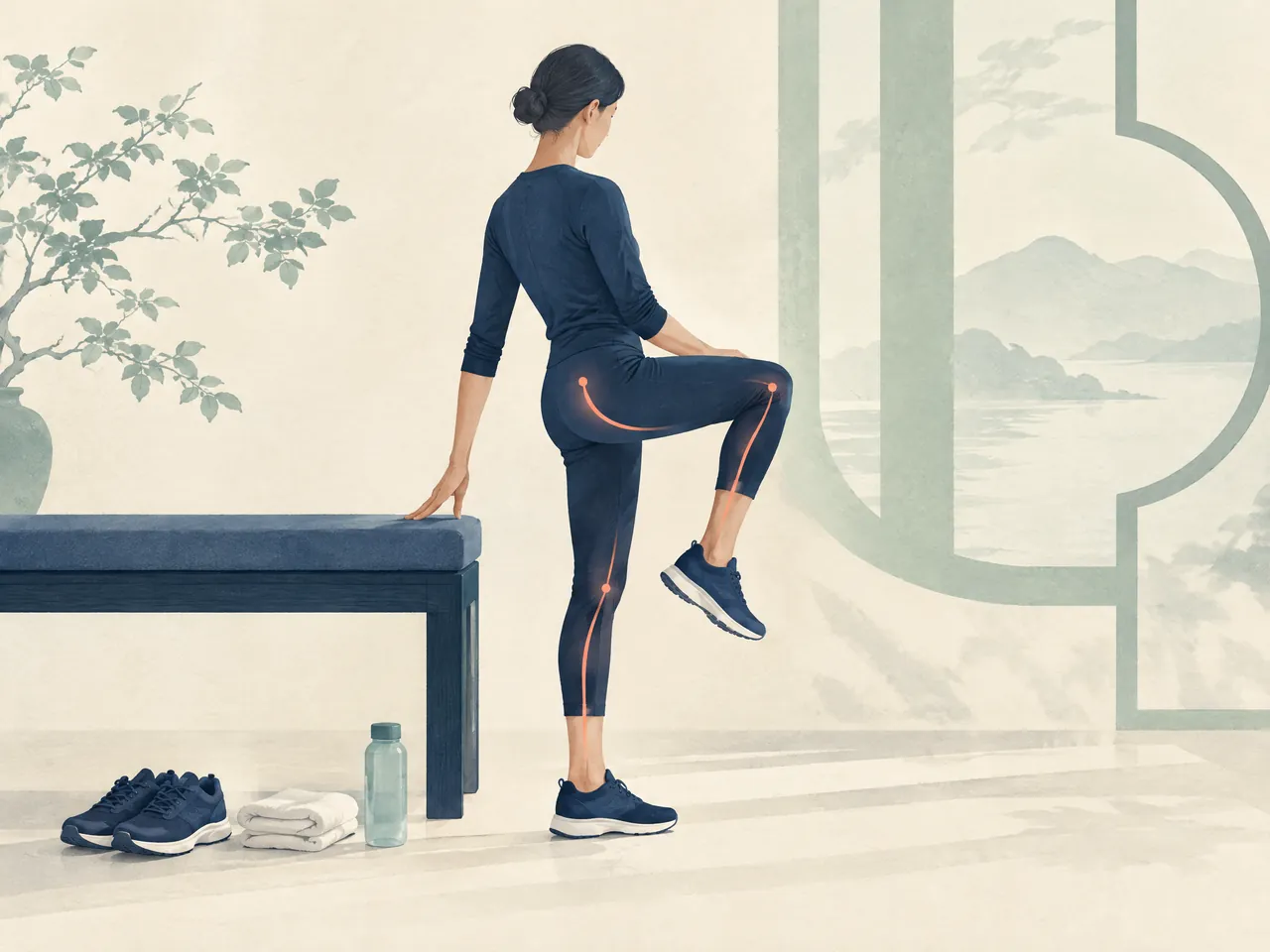
After a fall or other injury, severe pain, an inability to walk or put weight through the leg, a hip or leg that looks misshapen, or tingling or loss of feeling needs urgent medical attention. [1] [2] Do not try to “walk it off,” deep-massage the area, force a stretch, or rely on heat, needles or an online exercise in that situation. A severe hip pain that starts suddenly without a fall, or a hip that is hot, swollen or associated with fever, feeling unwell, chills or skin-colour change, also calls for urgent medical advice. [1] In Hong Kong, use the appropriate local urgent or emergency service for the severity of the situation.

Hip Pain, Outer Hip Pain and Hip Pain Acupuncture: Questions to Bring to an Assessment
Before an assessment, write a short timeline: the first day of pain, any fall or increase in walking or exercise, the exact location, what you cannot do, and what has helped or aggravated it. Ask what findings may need medical review, which activities to pause or continue, and how progress should be judged. For simple symptom-care questions, read should I use heat or ice for hip pain rather than treating either option as universal. If you choose to ask TCM Lab about complementary care, you may also review the Chinese medicine clinic price list Hong Kong and enquire at the Kwun Tong Chinese medicine clinic or Chinese medicine clinic Prince Edward. A message can describe symptoms and language needs, but it does not replace an in-person assessment or urgent medical care.
Care and health guide
Pain-care information
This directory brings together services, reading, and visit information related to pain care, to help you prepare questions for a consultation.
When pain care affects your day, noting when it occurs, its relation to activity, and what you have already tried can help prepare a consultation; Chinese medicine pain management Hong Kong is a relevant service or reading entry point.
Individual circumstances differ, and acupuncture Hong Kong offers related information to help you understand options and prepare questions.


Your questions, answered
Frequently asked questions
Are groin pain, outer hip pain and buttock pain all hip-joint problems?
No. Groin pain more often directs attention toward the hip joint area, while outer hip or outer buttock pain can relate to surrounding soft tissues. Pain can also be referred from the lower back. These locations are clues, not a diagnosis, so persistent, recurrent or function-limiting symptoms need an assessment. [2]
Should I stay in bed when I have hip pain?
Not usually for prolonged periods when there are no urgent warning signs. NHS guidance advises keeping moving if you can while avoiding too much strain. Reduce the load that clearly aggravates symptoms and seek advice if walking is difficult, symptoms worsen, or you cannot bear weight. [1]
Can acupuncture guarantee improvement for hip pain?
No. Hip-specific acupuncture research has mainly examined osteoarthritis. A Cochrane review found little or no difference from sham acupuncture in two sham-controlled trials, while other comparisons were uncertain or had limitations. It may be discussed as complementary care after assessment, not as a guaranteed result or a replacement for rehabilitation and medical care. [3]
When is hip pain urgent after an injury?
Sources and further information
- [1] [1] NHS — Hip pain in adults
Referenced for: Adult hip-pain causes, function-based advice, self-care and routine, urgent and emergency escalation signs.
- [2] [2] Mayo Clinic — Hip pain
Referenced for: How groin, outer hip and buttock locations can provide clues; referred pain and urgent injury signs.
- [3] [3] Cochrane — Acupuncture for hip osteoarthritis
Referenced for: Systematic-review findings and limitations for acupuncture in hip osteoarthritis.
- [4] [4] NCCIH — Acupuncture: Effectiveness and Safety
Referenced for: Context on acupuncture evidence for osteoarthritis and treatment safety considerations.