
TCM Lab · Health reading
When should I stop exercising with tennis elbow? A practical safety guide
Published Updated
With tennis elbow, do not treat exercise as a test of toughness. Stop the particular movement when pain becomes sharp, new, clearly intensifies as you continue, or leaves the elbow noticeably worse later or the next morning. A gentle pulling sensation during a carefully controlled stretch can be different from pain that makes you brace, change your grip or lose control. The useful middle ground is usually to reduce the load, range, speed or repetition rather than abandoning every movement. This guide helps you notice the difference, adapt everyday tasks in Hong Kong, and recognise when an assessment is more appropriate than another self-directed session.
Appointments are confirmed through WhatsApp. If you have language requirements, please mention them in your enquiry.
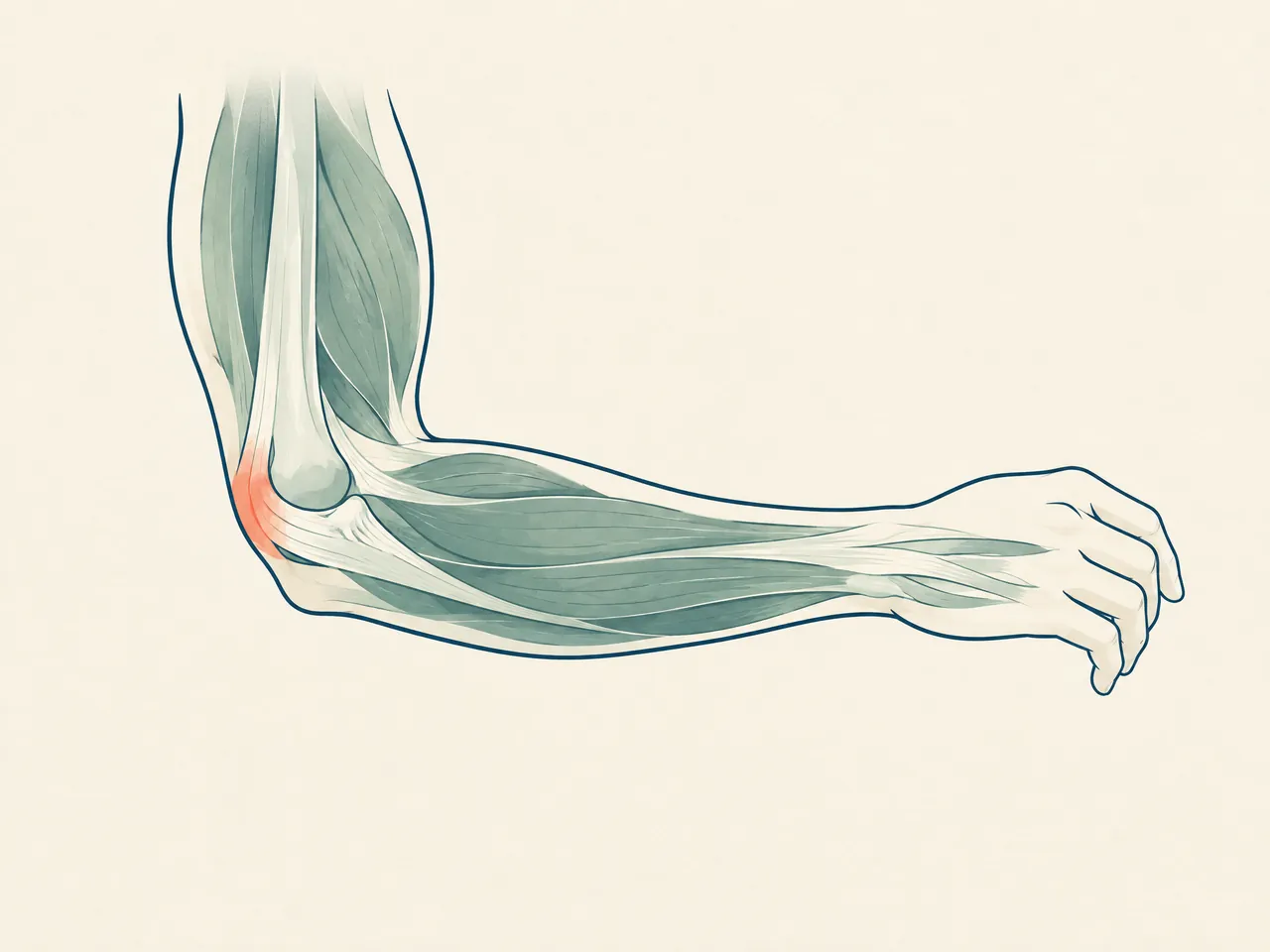
The short answer
Stop exercising with tennis elbow when a movement causes sharp or new pain, steadily escalating symptoms, altered sensation, weakness, or a clear flare that does not settle after the session. Do not force a stretch or add resistance to prove progress. Instead, reduce the task that provokes pain and return gradually only when it is tolerated without an overall worsening. Seek assessment promptly after trauma or for marked swelling, redness, heat, numbness, tingling or loss of strength.
Transparent pricing
See the fees.
Choose your care.
Explore our complete official price list, including first-trial prices, regular prices, packages and branch-specific options.
Opening WhatsApp prepares an enquiry; it does not send a message, take payment or confirm an appointment. Suitability and individual arrangements are confirmed during consultation.
Pain care
All prices in HKDExtracorporeal shockwave treatment
Shockwave treatment for deep-tissue and fascial care. The Kwun Tong clinic offers the multi-area options shown below.
Priced by branch
Branch-specific pricing
Prince Edward: HK$250 per area
Kwun Tong: HK$250 for 1 area / HK$450 for 2 areas / HK$600 for 3 areas
Pain care (manual therapy)
Includes Chinese medicine musculoskeletal assessment, manual joint techniques and tui na.
HK$580 (single session)
Chinese medicine musculoskeletal assessment
Pain care (acupuncture and manual therapy)
Combines acupuncture and manual therapy.
HK$680 (single session)
Combined care
Hair and scalp
All prices in HKDScalp health and hair-loss management
Includes AI scalp analysis, deep scalp and follicle cleansing, and scalp oil-control care.
HK$380 (first trial)
Regular price: HK$680
- 6 sessions: HK$3,480 (HK$580 per session)
- 12 sessions: HK$5,760 (HK$480 per session)
- 20 sessions: HK$8,600 (HK$430 per session)
- 30 sessions: HK$11,400 (HK$380 per session)
Hair acupuncture and Chinese herbal medicine package
Includes scalp acupuncture and 3 days of Chinese herbal medicine that does not require decoction.
HK$580 (single session)
Registered Chinese Medicine Practitioner consultation
- 6 sessions: HK$3,180 (HK$530 per session)
- 12 sessions: HK$5,760 (HK$480 per session)
- 20 sessions: HK$8,600 (HK$430 per session)
- 30 sessions: HK$11,400 (HK$380 per session)
Combined hair and scalp treatment
Combines acupuncture and Chinese herbal medicine with salon-level scalp and follicle care. Packages include complimentary hair-care shampoo and serum.
HK$1,260 (single session)
Combined treatment
- 8 sessions: HK$8,640 (HK$1,080 per session)
- 16 sessions: HK$15,680 (HK$980 per session)
- 20 sessions: HK$18,600 (HK$930 per session)
- 30 sessions: HK$26,400 (HK$880 per session)
Weight management
All prices in HKDFull-body acupoint embedding for weight management
Includes full-body acupoint embedding. Packages include complimentary Chinese herbal medicine for weight management, with the number of included days scaled to the package. Embedding material and the individual treatment arrangement are confirmed during consultation; this is not a cosmetic thread lift.
HK$980 (single session)
No trial session
- 10 sessions: HK$7,800 (HK$780 per session)
- 20 sessions: HK$14,600 (HK$730 per session)
- 30 sessions: HK$20,400 (HK$680 per session)
Facial acupuncture
All prices in HKDFacial acupuncture (basic)
Includes facial acupuncture and meridian-based facial care, including care for facial puffiness.
HK$480 (first trial)
Regular price: HK$680
- 10 sessions: HK$5,200 (HK$520 per session)
- 20 sessions: HK$9,600 (HK$480 per session)
- 30 sessions: HK$13,500 (HK$450 per session)
Facial acupuncture (advanced)
Includes enhanced facial acupuncture with a specially formulated moisturising mask and serum.
HK$780 (first trial)
Regular price: HK$1,180
- 10 sessions: HK$9,000 (HK$900 per session)
- 20 sessions: HK$16,600 (HK$830 per session)
- 30 sessions: HK$23,400 (HK$780 per session)
Chinese medicine
All prices in HKDAcupuncture and Chinese herbal medicine package
Includes a Chinese medicine consultation with pulse assessment, body acupuncture and 3 days of Chinese herbal granules that do not require decoction.
HK$580 (single session)
Chinese medicine consultation with pulse assessment
When should I stop exercising with tennis elbow? Recognising pain signals
Tennis elbow is a common name for pain around the outside of the elbow, often linked with repeated use of the muscles that lift the wrist and fingers. The label can be misleading: you do not need to play tennis to notice it. Carrying shopping with the palm down, lifting a kettle, using a screwdriver, wringing a cloth, long mouse use, or gripping a racquet can all make the outer elbow sore. The Hong Kong College of Orthopaedic Surgeons describes discomfort with gripping, lifting heavy objects and wringing a towel, and notes that activity or work changes may precede symptoms [1]. Knowing the task that triggers your pain is more useful than blaming every ache on exercise.
Before deciding whether to stop, look for a pattern. Ask where the feeling is, what movement brings it on, how quickly it starts, and what happens once the task ends. Local tenderness and a familiar ache when you grip are different from pain that shoots into the hand, arrives at rest without an obvious trigger, or spreads from the neck or shoulder. An exercise plan cannot confirm the cause of elbow pain. Recording a few details—such as whether a laptop day, badminton session or luggage lifting was followed by a flare—gives a clinician a clearer starting point if you need help.
A useful rule is to respond to the direction of symptoms rather than one isolated sensation. If a gentle movement stays comfortable or only mildly uncomfortable and the elbow is no worse afterwards, it may be a reasonable level to discuss or repeat. If every repetition is more painful than the last, you are tightening your grip to get through it, or ordinary actions are more difficult afterwards, stop that exercise. The aim is not to find the highest pain you can tolerate; it is to find a manageable dose of movement that does not produce an overall setback.
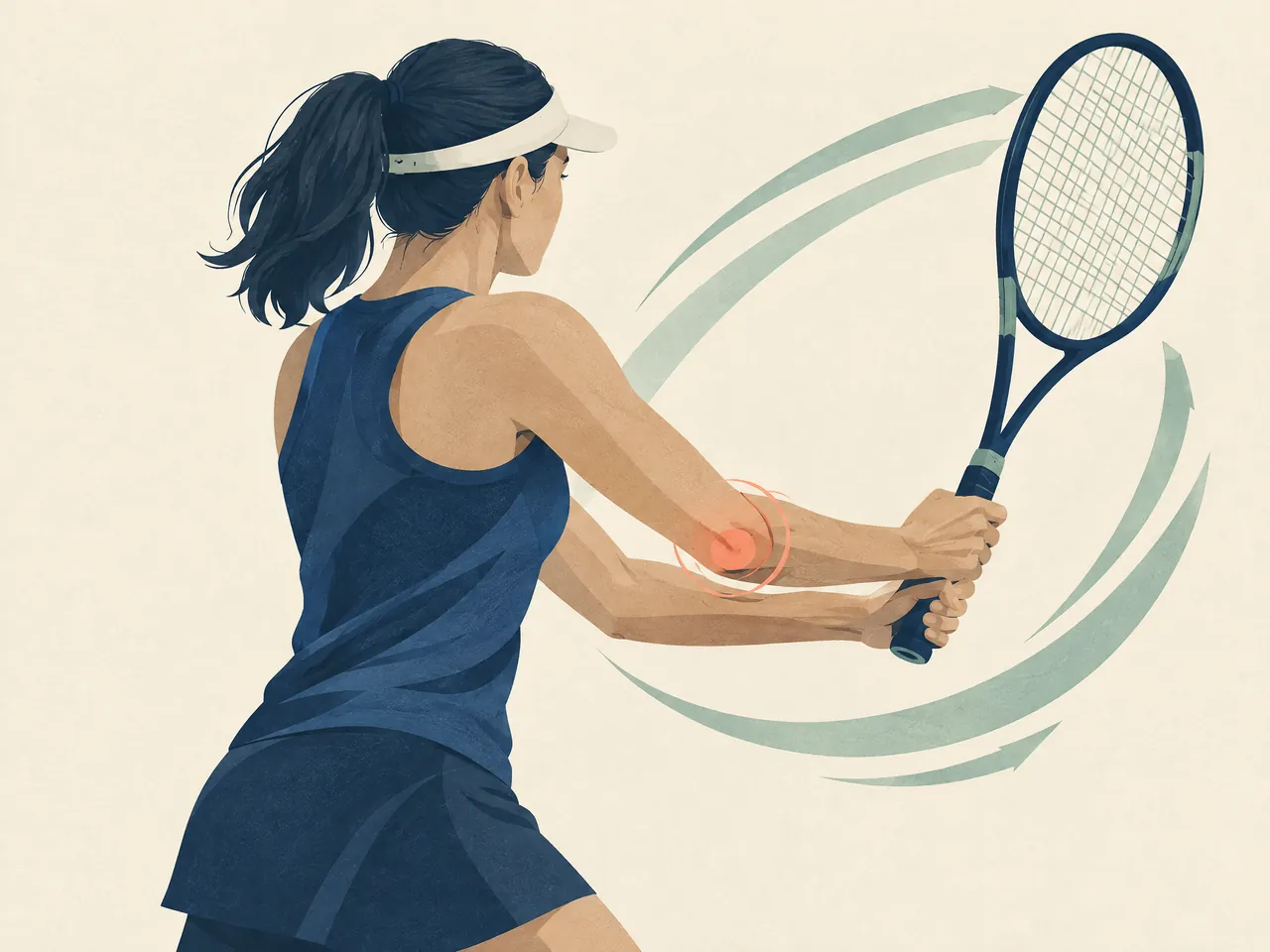
When should I stop exercising with tennis elbow? Distinguishing a gentle stretch from pain
A stretch should feel like a mild pull through the forearm, not a sharp jab at the outer elbow. Keep the arm supported and move slowly enough that you can relax your hand and breathe normally. If you press the wrist farther just to reach a deeper sensation, the stretch has stopped being a check-in and become a strain. Alberta Health’s tennis-elbow handout similarly advises people to start exercises slowly and ease off if pain begins [2]. That is a practical cue, not an invitation to ignore a painful session because the exercise appeared on a list. For a clearer overview of comfortable positions, see our tennis elbow stretches guide.
When should I stop exercising with tennis elbow? Understanding worsening symptoms
Worsening means more than discomfort during the last repetition. It can mean that the pain starts earlier in a task than before, lasts longer after it, wakes you, or makes a familiar job such as holding a cup, turning a key or using chopsticks feel harder. It can also mean that a previously comfortable exercise now provokes symptoms at a lower load. NHS inform advises stopping if exercises make symptoms worse or cause new pain, and says pain should not be worse overall the morning after exercise [3]. That next-morning check can be more informative than judging the elbow only while you are warmed up.
Compare your options
| What you notice | Practical response | What to monitor next |
|---|---|---|
| A mild, controlled pull in the forearm during a slow stretch | Keep the range easy; do not force deeper movement | The elbow should not be worse overall later or the next morning |
| Pain becomes sharp, catches, or rises with each repetition | Stop that movement and reduce range, resistance, speed or repetitions next time | Whether symptoms settle once the provoking task ends |
| A familiar task such as gripping, lifting or wringing triggers a flare | Modify the task, split it into shorter blocks, or temporarily avoid the aggravating version | Which part of the task creates the pain and whether daily function improves |
| New tingling, numbness, obvious weakness, deformity, heat, redness or marked swelling | Do not continue a home strengthening test; seek timely professional assessment | When it began, any injury, and changes in sensation, strength or appearance |
On smaller screens, scroll the table sideways to compare all columns.
When should I stop exercising with tennis elbow? Adjusting stretches and strengthening
Stopping one aggravating exercise does not necessarily mean stopping all activity. The key change is to lower the demand placed on the forearm while you monitor the response. That may mean carrying lighter shopping bags in two hands, holding a mug closer to the body, taking a break from repetitive tool use, or using keyboard and mouse breaks instead of continuing through a long work session. The Hong Kong College of Orthopaedic Surgeons advises refraining from repetitive or overuse activities that aggravate symptoms and describes stretching and physiotherapy among non-surgical approaches [1]. In daily life, a smaller, calmer dose often makes more sense than alternating between complete inactivity and an ambitious workout.
Change one variable at a time so you can tell what helped. Reduce the resistance, shorten the lever by bending the elbow, decrease the range, slow the movement, or do fewer repetitions with more rest. Avoid increasing weight, range and frequency all at once. A resistance band or light object is not automatically safe simply because it looks light; the grip, wrist position, total repetitions and what you did earlier that day all affect the load. The goal is controlled practice, not a fixed number borrowed from another person’s routine.
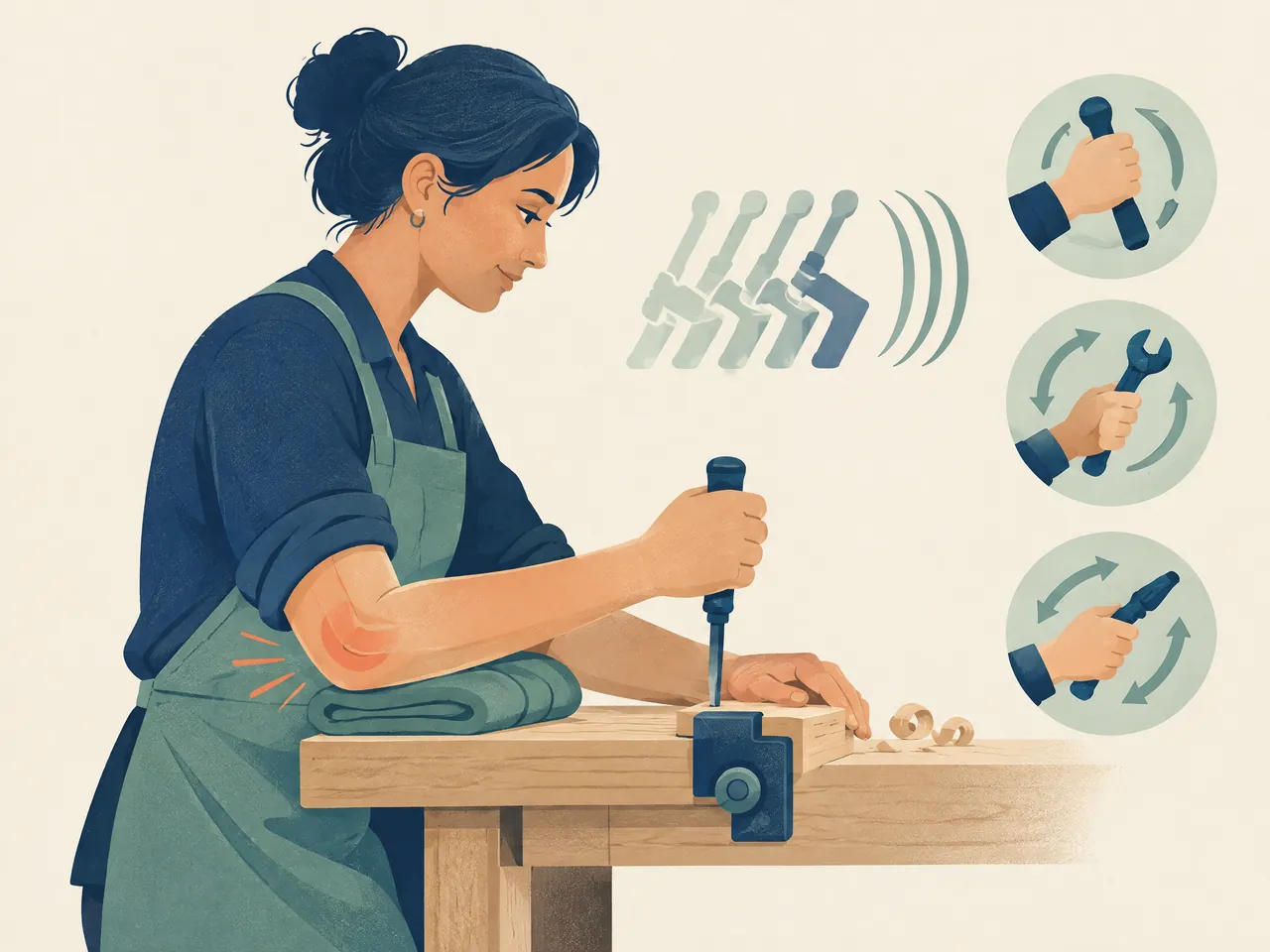
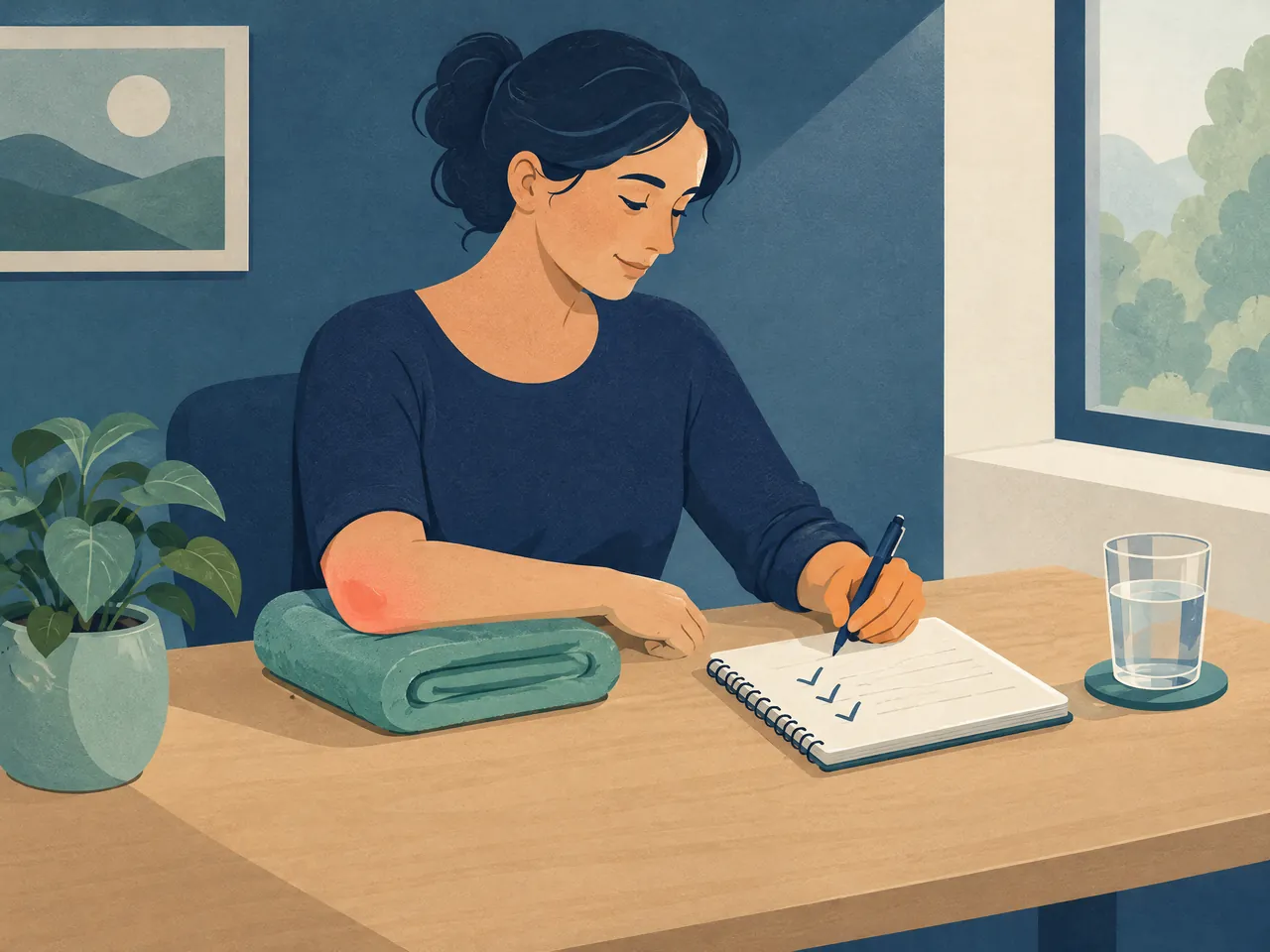
Use a simple response log for two or three sessions: note the exercise, the effort, the elbow response during it, and the response later that evening and next morning. This is especially helpful when the same arm also works at a computer, cooks, performs manual work or plays sport. It separates the effect of the exercise from the accumulated load of the whole day. Our tennis elbow pain relief exercises page can help you compare gentle movement ideas, but stop any option that creates the warning signs described above.
When should I stop exercising with tennis elbow? Safer ways to reduce exercise load
Think of load reduction as making a task easier to control, not as giving up. For a wrist exercise, support the forearm on a table before trying it with the arm straight. For a stretch, use only the range where the forearm feels a gentle pull. For a gym movement, temporarily choose an option that does not require a firm, prolonged grip. If a gardening, racquet-sport or household task is the trigger, split it into shorter blocks and take breaks before the elbow is already sore. These adjustments can preserve normal participation while taking pressure off the specific pattern that is provoking symptoms. A clinician or physiotherapist can tailor the choice when work demands cannot be avoided.
When should I stop exercising with tennis elbow? Returning to activity gradually
Return to activity in stages. Begin with the version of a movement that you can perform with good control and without a meaningful overall flare. Then keep that level long enough to see how the elbow responds across ordinary days, rather than testing it only once after rest. NHS inform recommends adding exercise gradually and altering repetitions, speed or rest if pain exceeds the acceptable level [3]. An American Academy of Orthopaedic Surgeons programme likewise presents strengthening in stages and asks people to speak with a clinician if exercise is painful [4]. These examples show why steady progression matters more than racing back to the previous weight or racquet session.
When should I stop exercising with tennis elbow? Knowing when to seek assessment
Seek assessment when the problem is not following a sensible recovery path. That includes pain that persists despite reducing aggravating activity, repeated flares when you reintroduce small amounts of exercise, or symptoms that interfere with work, sleep or ordinary self-care. NHS inform suggests talking to a healthcare professional if elbow pain has not improved within six weeks of following its advice [3]. You do not need to wait for an arbitrary deadline if function is declining or you are worried about the cause. An assessment can check the location and pattern of pain, grip and movement, and whether another condition needs consideration.
Be more cautious if there has been a fall, direct blow or sudden force followed by deformity, severe swelling, inability to use the arm, or a rapidly changing appearance. New numbness, pins and needles, or a distinct loss of strength also changes the conversation from simple load management to timely evaluation. The Hong Kong orthopaedic guidance notes that assessment begins with history and examination and that imaging may be used to exclude other causes such as fracture or osteoarthritis when appropriate [1]. Online guidance cannot perform that distinction for you.
An in-person conversation can also be useful when the practical challenge is not diagnosis but implementation. For example, a chef may need a way to modify chopping, a desk worker may need a plan for mouse and keyboard breaks, and a racquet-sport player may need help pacing practice. You can read about TCM for elbow pain as a discussion option, while keeping expectations realistic: traditional Chinese medicine assessment and any supportive care should not be presented as a guaranteed cure or a substitute for evaluation of red-flag symptoms.
When should I stop exercising with tennis elbow? Symptoms that need timely attention
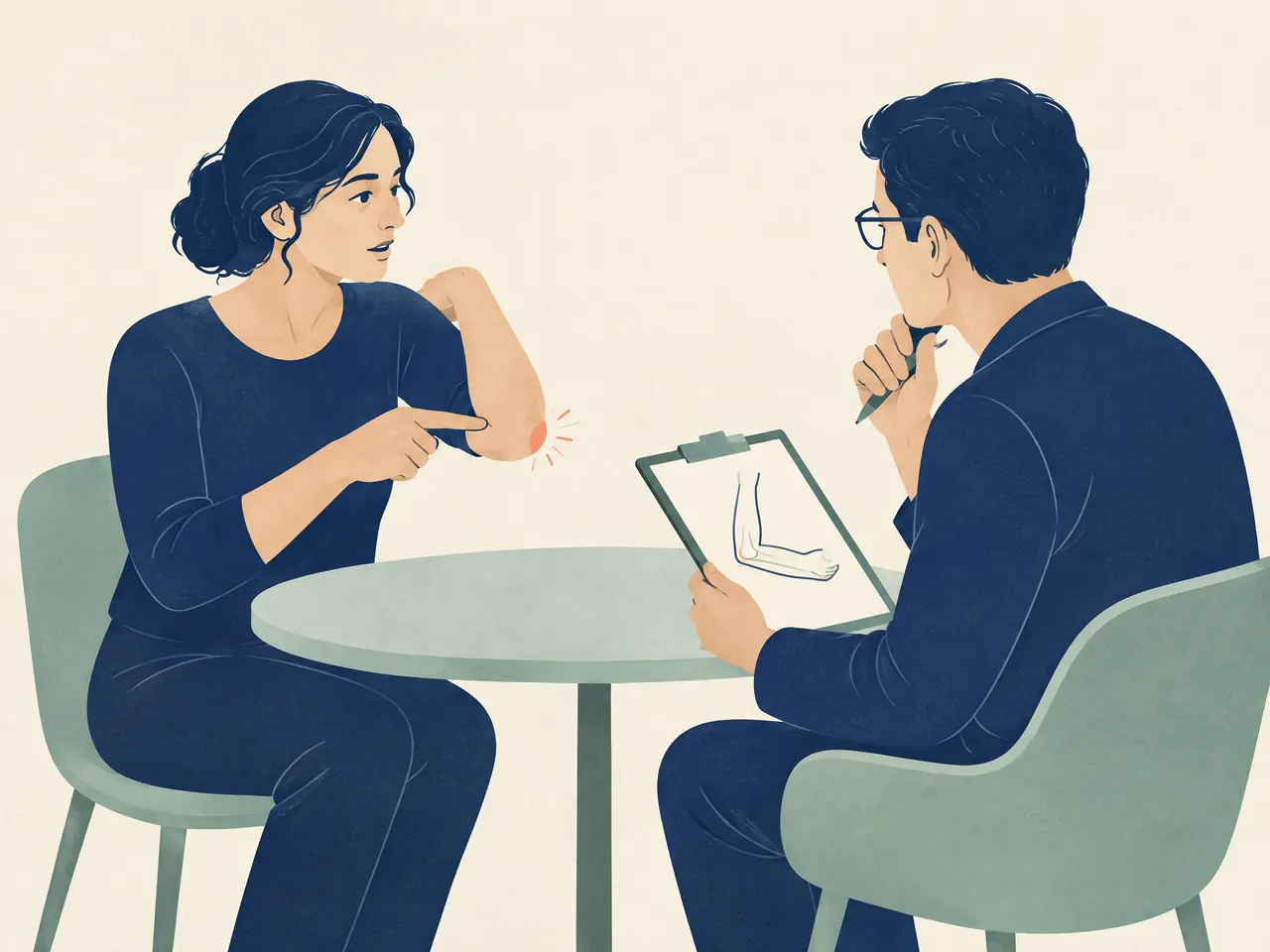
Stop the provoking activity and arrange timely professional advice for pain that becomes progressively worse, meaningful grip weakness, persistent tingling or numbness, or symptoms that extend beyond the familiar outer-elbow pattern. A sudden injury, visible change in shape, rapidly increasing swelling, redness or heat deserves more urgent attention. These signs do not confirm one diagnosis, but they are not good situations for repeatedly retesting stretches or weights at home. Bring a brief timeline: when symptoms began, what changed in work or sport, the motions that hurt, what you have stopped, and whether symptoms settle overnight. That information is often more helpful than trying to name the condition yourself.

When should I stop exercising with tennis elbow? Discussing support in Hong Kong
For non-urgent concerns, TCM Lab can be contacted to enquire about an appointment and discuss whether a consultation is suitable for your elbow symptoms and activity questions. A Registered Chinese Medicine Practitioner can take a history of the pain, aggravating tasks and general health in a face-to-face consultation. Traditional Chinese medicine uses its own pattern-based approach; this is not the same as a modern medical diagnosis. Where symptoms suggest injury, nerve involvement or another cause needing conventional assessment, that evaluation should not be delayed. Do not begin acupuncture or other treatment because an online article implies it will suit everyone.
Care and health guide
Health service information
This directory brings together services, reading, and visit information related to health services, to help you prepare questions for a consultation.
If you are organising health questions, Chinese medicine clinic Hong Kong is a starting point for learning about related services and preparing for a consultation.
People have different needs; acupuncture Hong Kong provides further reading to help you understand options in your own context.


Your questions, answered
Frequently asked questions
When should I stop exercising with tennis elbow if I only feel pain after exercise?
Treat a clear after-exercise flare as useful feedback. Stop the activity that triggered it for now, reduce the next session’s load, and see whether the elbow settles by the following morning. If the pattern repeats even after sensible adjustments, or ordinary tasks are becoming harder, arrange an assessment instead of continuing to test the same routine.
Should I stretch through tennis elbow pain?
No. A stretch should stay gentle and controlled. Stop if it produces sharp, catching, burning or worsening pain, or if you need to brace or change your posture to continue. Start with less range and slower movement. If even a very gentle stretch is painful, seek individual advice before trying to progress it.
Can I keep going to the gym with tennis elbow?
You may be able to continue movements that do not aggravate the elbow, but pause or modify exercises that require painful gripping, wrist extension, lifting or twisting. Reduce one factor at a time, such as resistance or repetitions, and monitor the response later that day and the next morning. A clinician or physiotherapist can help adapt a programme to your training goals.
When should I seek medical attention for tennis elbow symptoms?
Seek timely assessment after an injury with deformity, pronounced swelling, redness or heat, or when you have numbness, tingling or clear weakness. Also arrange advice if pain is worsening, prevents normal activity, or has not improved after several weeks of adjusted activity. These features may need assessment beyond a home exercise plan.
Sources and further information
- [1] Hong Kong College of Orthopaedic Surgeons — Tennis Elbow
Referenced for: Supports the description of tennis-elbow symptoms and aggravating activities, assessment context, non-surgical activity modification, and rehabilitation language.
- [2] MyHealth.Alberta.ca — Tennis Elbow: Exercises
Referenced for: Supports starting exercises slowly and easing off when pain begins; used as general patient education rather than an individual exercise prescription.
- [3] NHS inform — Exercises for tennis elbow
Referenced for: Supports gradual return, modifying repetitions, speed or rest when pain is excessive, stopping for worsening or new pain, and seeking advice when symptoms do not improve.
- [4] American Academy of Orthopaedic Surgeons — Therapeutic Exercise Program for Epicondylitis
Referenced for: Supports the explanation that stretching and strengthening programmes are staged and should not be pushed through painful exercise; not a substitute for clinician-supervised individual care.