
TCM Lab · Health reading
Acupuncture for Arch Pain, Acupuncture for Heel Pain and Foot Pain Acupuncture Treatment: What to Know
Published Updated
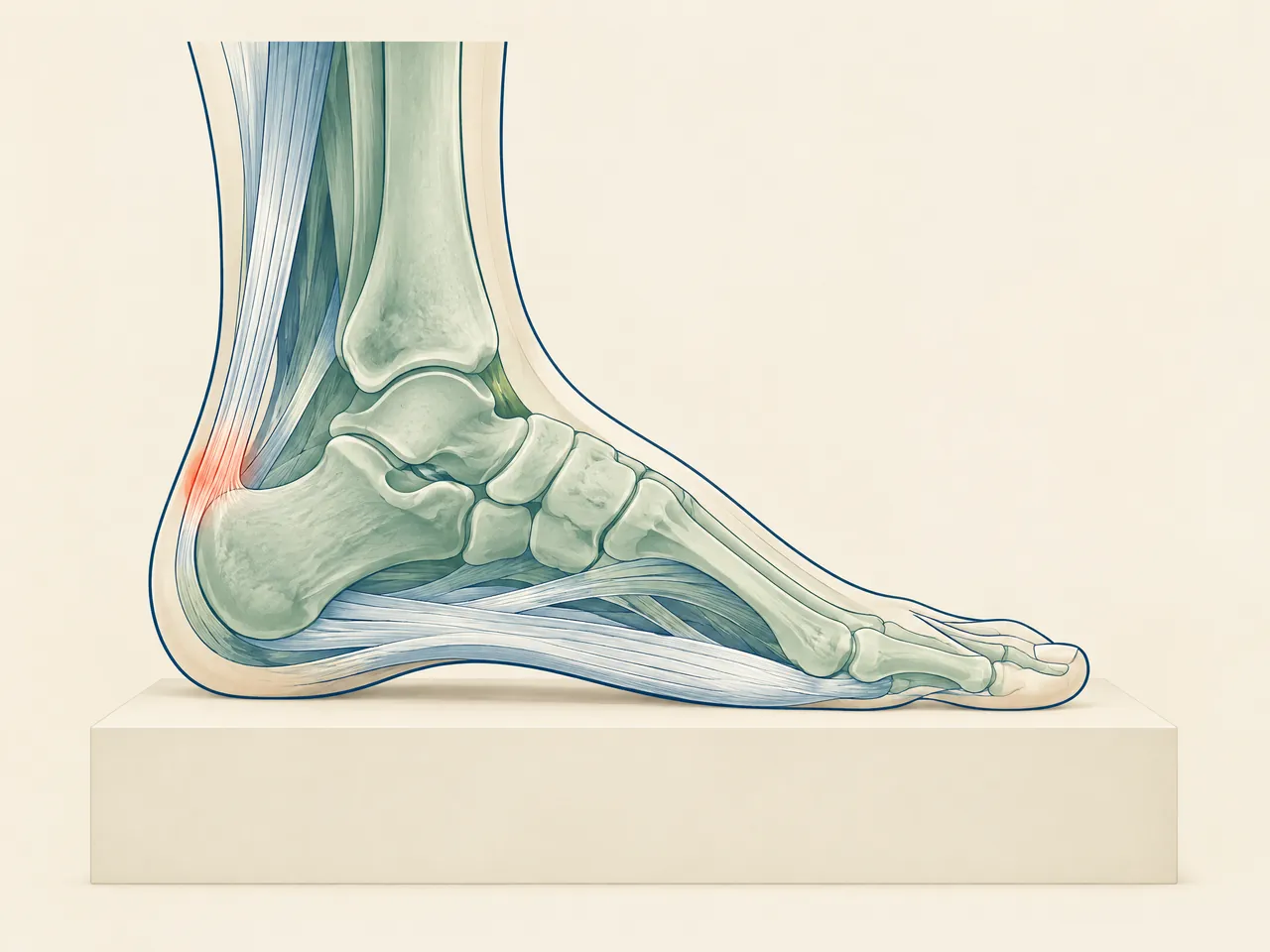
Pain under the foot is easy to describe but not always easy to explain. It may start at the inner heel on the first steps of the day, pull through the arch after a long MTR commute, or feel sore beneath the heel after hours on hard flooring. Acupuncture for arch pain, acupuncture for heel pain and foot pain acupuncture treatment are best considered after the pattern has been understood. This page sets out what to notice, how acupuncture may fit alongside practical care, and when a medical assessment should come first.
Appointments are confirmed through WhatsApp. If you have language requirements, please mention them in your enquiry.
The short answer
Acupuncture may be considered as an adjunct for arch or heel pain after an individual assessment, but it is not a diagnosis, a guaranteed cure, or a substitute for investigating persistent symptoms. Research in plantar fasciitis is limited and mixed. Gentle stretching, changes to aggravating load, and supportive footwear remain useful practical measures. Seek medical assessment promptly if pain is severe, worsening, associated with numbness or swelling, prevents weight-bearing, or occurs with diabetes-related foot concerns. [1] [2]
Transparent pricing
See the fees.
Choose your care.
Explore our complete official price list, including first-trial prices, regular prices, packages and branch-specific options.
Opening WhatsApp prepares an enquiry; it does not send a message, take payment or confirm an appointment. Suitability and individual arrangements are confirmed during consultation.
Pain care
All prices in HKDExtracorporeal shockwave treatment
Shockwave treatment for deep-tissue and fascial care. The Kwun Tong clinic offers the multi-area options shown below.
Priced by branch
Branch-specific pricing
Prince Edward: HK$250 per area
Kwun Tong: HK$250 for 1 area / HK$450 for 2 areas / HK$600 for 3 areas
Pain care (manual therapy)
Includes Chinese medicine musculoskeletal assessment, manual joint techniques and tui na.
HK$580 (single session)
Chinese medicine musculoskeletal assessment
Pain care (acupuncture and manual therapy)
Combines acupuncture and manual therapy.
HK$680 (single session)
Combined care
Hair and scalp
All prices in HKDScalp health and hair-loss management
Includes AI scalp analysis, deep scalp and follicle cleansing, and scalp oil-control care.
HK$380 (first trial)
Regular price: HK$680
- 6 sessions: HK$3,480 (HK$580 per session)
- 12 sessions: HK$5,760 (HK$480 per session)
- 20 sessions: HK$8,600 (HK$430 per session)
- 30 sessions: HK$11,400 (HK$380 per session)
Hair acupuncture and Chinese herbal medicine package
Includes scalp acupuncture and 3 days of Chinese herbal medicine that does not require decoction.
HK$580 (single session)
Registered Chinese Medicine Practitioner consultation
- 6 sessions: HK$3,180 (HK$530 per session)
- 12 sessions: HK$5,760 (HK$480 per session)
- 20 sessions: HK$8,600 (HK$430 per session)
- 30 sessions: HK$11,400 (HK$380 per session)
Combined hair and scalp treatment
Combines acupuncture and Chinese herbal medicine with salon-level scalp and follicle care. Packages include complimentary hair-care shampoo and serum.
HK$1,260 (single session)
Combined treatment
- 8 sessions: HK$8,640 (HK$1,080 per session)
- 16 sessions: HK$15,680 (HK$980 per session)
- 20 sessions: HK$18,600 (HK$930 per session)
- 30 sessions: HK$26,400 (HK$880 per session)
Weight management
All prices in HKDFull-body acupoint embedding for weight management
Includes full-body acupoint embedding. Packages include complimentary Chinese herbal medicine for weight management, with the number of included days scaled to the package. Embedding material and the individual treatment arrangement are confirmed during consultation; this is not a cosmetic thread lift.
HK$980 (single session)
No trial session
- 10 sessions: HK$7,800 (HK$780 per session)
- 20 sessions: HK$14,600 (HK$730 per session)
- 30 sessions: HK$20,400 (HK$680 per session)
Facial acupuncture
All prices in HKDFacial acupuncture (basic)
Includes facial acupuncture and meridian-based facial care, including care for facial puffiness.
HK$480 (first trial)
Regular price: HK$680
- 10 sessions: HK$5,200 (HK$520 per session)
- 20 sessions: HK$9,600 (HK$480 per session)
- 30 sessions: HK$13,500 (HK$450 per session)
Facial acupuncture (advanced)
Includes enhanced facial acupuncture with a specially formulated moisturising mask and serum.
HK$780 (first trial)
Regular price: HK$1,180
- 10 sessions: HK$9,000 (HK$900 per session)
- 20 sessions: HK$16,600 (HK$830 per session)
- 30 sessions: HK$23,400 (HK$780 per session)
Chinese medicine
All prices in HKDAcupuncture and Chinese herbal medicine package
Includes a Chinese medicine consultation with pulse assessment, body acupuncture and 3 days of Chinese herbal granules that do not require decoction.
HK$580 (single session)
Chinese medicine consultation with pulse assessment
Acupuncture for Arch Pain, Acupuncture for Heel Pain and Foot Pain Acupuncture Treatment: Reading Your Symptoms
The phrase “foot pain” covers several different experiences. A person may point to the inside edge of the heel, the middle of the arch, the ball of the foot, or the pad directly under the heel. Note whether discomfort is sharp, dull, burning, tingling or bruised-feeling. Also note whether it arrives on rising, during a run, after standing at work, or only when walking barefoot on a hard surface. Those details do not diagnose the problem, but they give a clinician a better starting point than a single label.
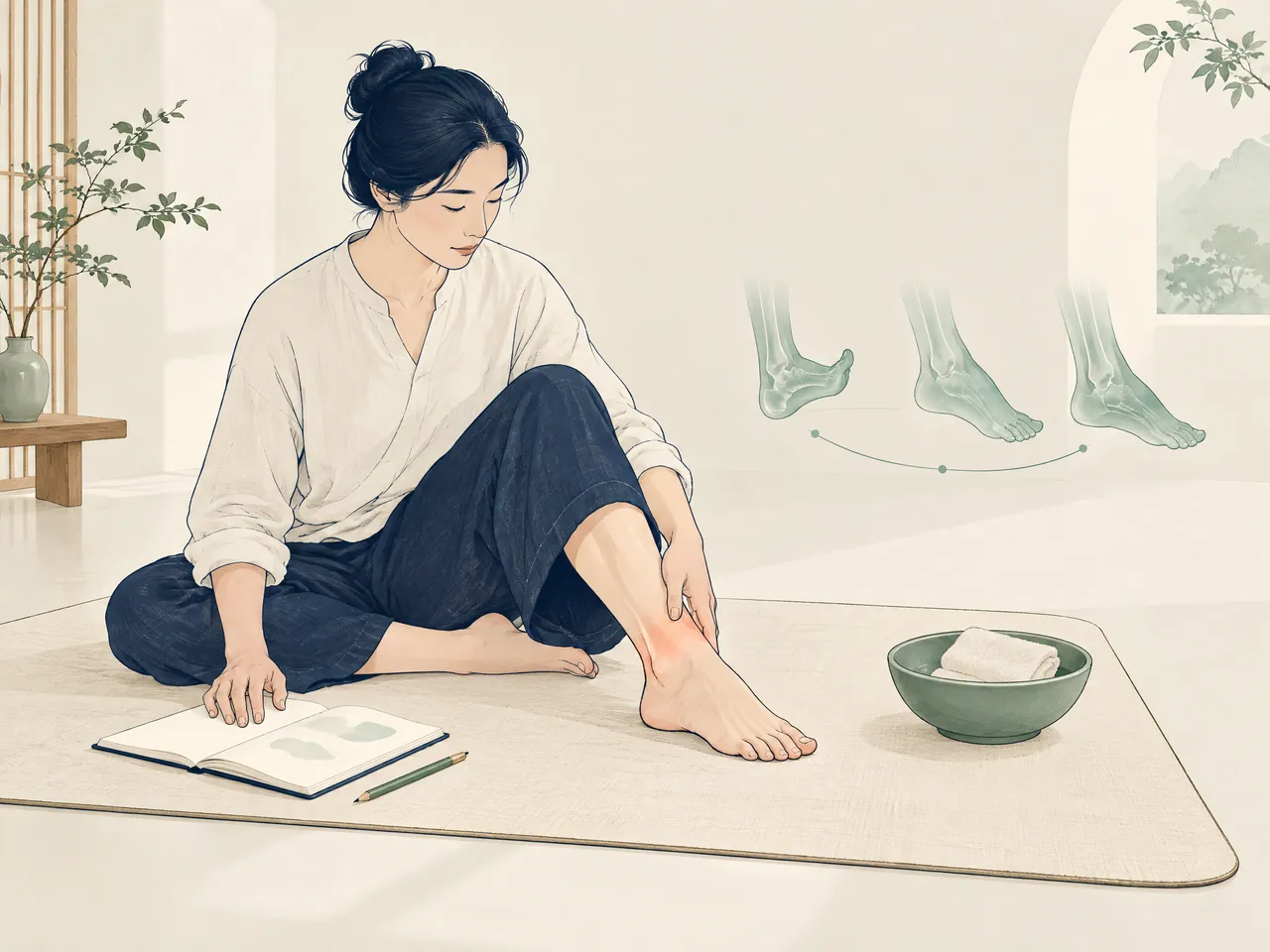
A simple one-week note can be more useful than trying to remember everything in the room. Record the exact area with a sketch or phone photo of the sole, a morning and evening severity description, recent changes in walking or exercise, and which shoes were on your feet. Include what makes it ease or flare. If you are looking broadly at acupuncture for foot pain, this record helps separate a general pain-management conversation from assumptions about a named condition.

Acupuncture for Arch Pain, Acupuncture for Heel Pain and Foot Pain Acupuncture Treatment: Why Location and First Steps Matter
Pain around the heel and arch that is particularly marked when walking after sleep or rest, eases somewhat as the person moves, then worsens after prolonged standing, walking or running is a pattern often described with plantar fasciitis. The NHS also lists pain when stretching the sole, such as raising the toes, as a feature that can occur. [1] A pattern is only a clue, however. It is not confirmation that every painful arch has the same cause or should receive the same treatment.
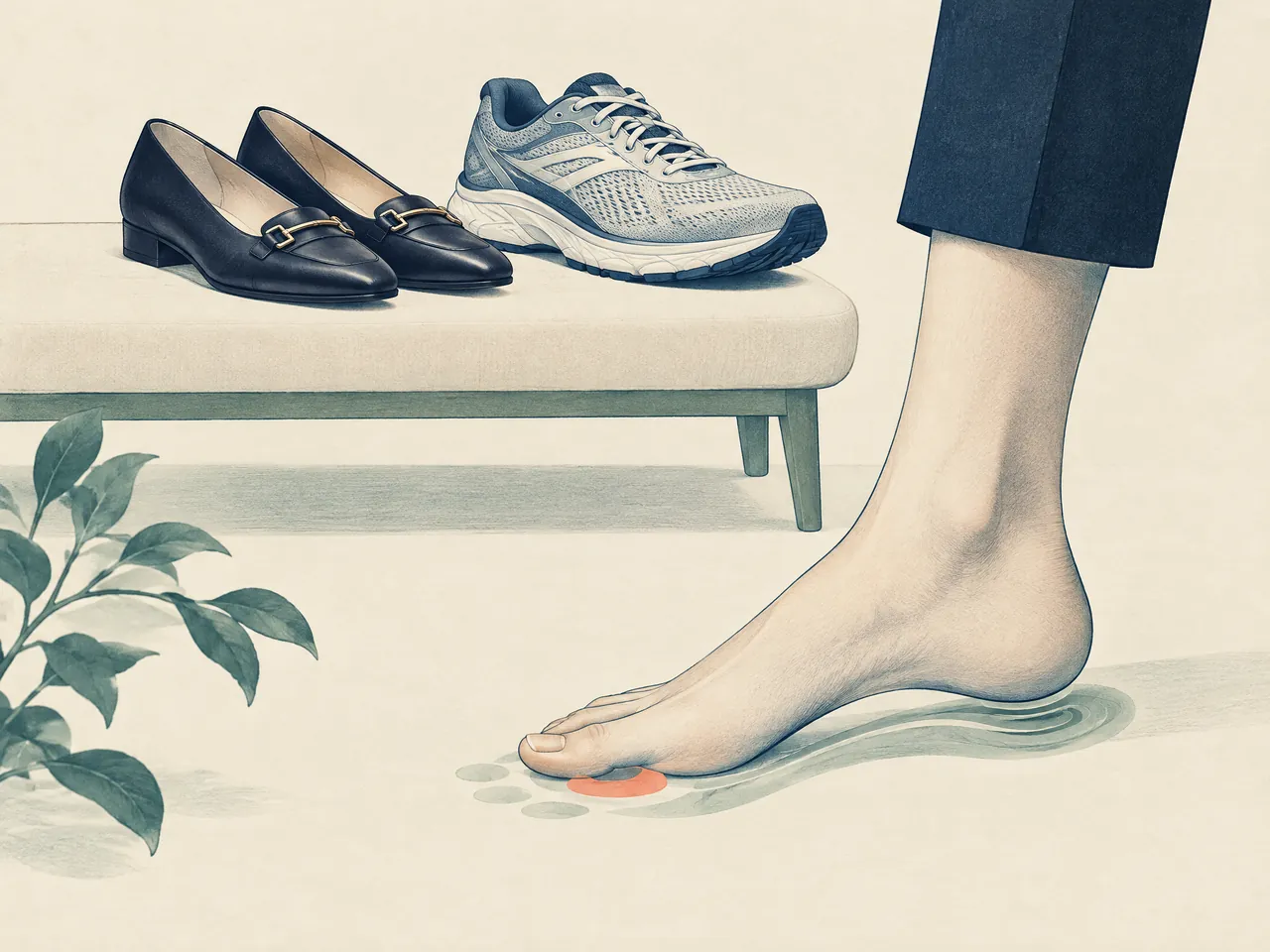
The first steps of the day are worth mentioning because they can shape daily choices. Someone who anticipates pain may rush out in unsupportive slippers, skip a warm-up, then spend the day compensating through the opposite leg. A more useful response is to pause, use a gradual start, and observe what changes the discomfort. The question is acupuncture effective for heel pain has no one-size-fits-all answer; the location, timing, load history and examination findings matter before any adjunct is considered.
Acupuncture for Arch Pain, Acupuncture for Heel Pain and Foot Pain Acupuncture Treatment: Signs That Need Assessment
Do not treat every sole-of-foot symptom as a routine overuse issue. Prompt medical or urgent assessment is important when you cannot bear weight, pain is severe or getting worse, there is marked swelling, a new deformity, redness with feeling unwell, or numbness or loss of sensation. Diabetes together with foot pain also deserves timely medical attention because foot problems can be more serious in that setting. [1] These are reasons to seek assessment, not problems to test with repeated self-treatment.
A more ordinary but still important reason to arrange a review is pain that keeps returning, interrupts normal work or exercise, or has not improved with sensible self-care. Tenderness focused in one small area after a jump in training may need a different work-up from diffuse tiredness after a busy week. Burning, electric or numb sensations can suggest a nerve-related question rather than a straightforward plantar-fascia pattern. If an ankle twist preceded the problem, the related ankle sprain should be assessed in its own right rather than folded into a generic arch-pain plan.
Compare your options
| What you notice | Why it is worth recording | Appropriate next step |
|---|---|---|
| Heel-to-arch discomfort on the first steps after rest, then worse after prolonged standing or walking | This resembles a pattern commonly reported with plantar fasciitis, but is not a diagnosis. [1] | Discuss gentle stretching, activity changes and footwear support; seek review if it persists or affects normal activity. |
| Soreness after a sudden increase in walking, running, stairs or standing | A recent load change may be a useful clue for assessment and for planning a gradual adjustment. | Reduce the provoking load temporarily, use comfortable alternatives, and avoid abrupt return to the previous level. |
| Burning, tingling, numbness or altered sensation in the sole | Sensory symptoms may point beyond a simple overuse pattern. | Arrange medical assessment rather than relying on self-treatment or an acupuncture course. [1] |
| Severe pain, inability to bear weight, major swelling, worsening symptoms or diabetes-related foot concern | These features can need prompt evaluation and should not be explained away as routine heel pain. | Seek timely medical or urgent assessment; defer adjunctive treatment decisions until the cause is clearer. [1] |
On smaller screens, scroll the table sideways to compare all columns.
Acupuncture for Arch Pain, Acupuncture for Heel Pain and Foot Pain Acupuncture Treatment: Assessment and Evidence
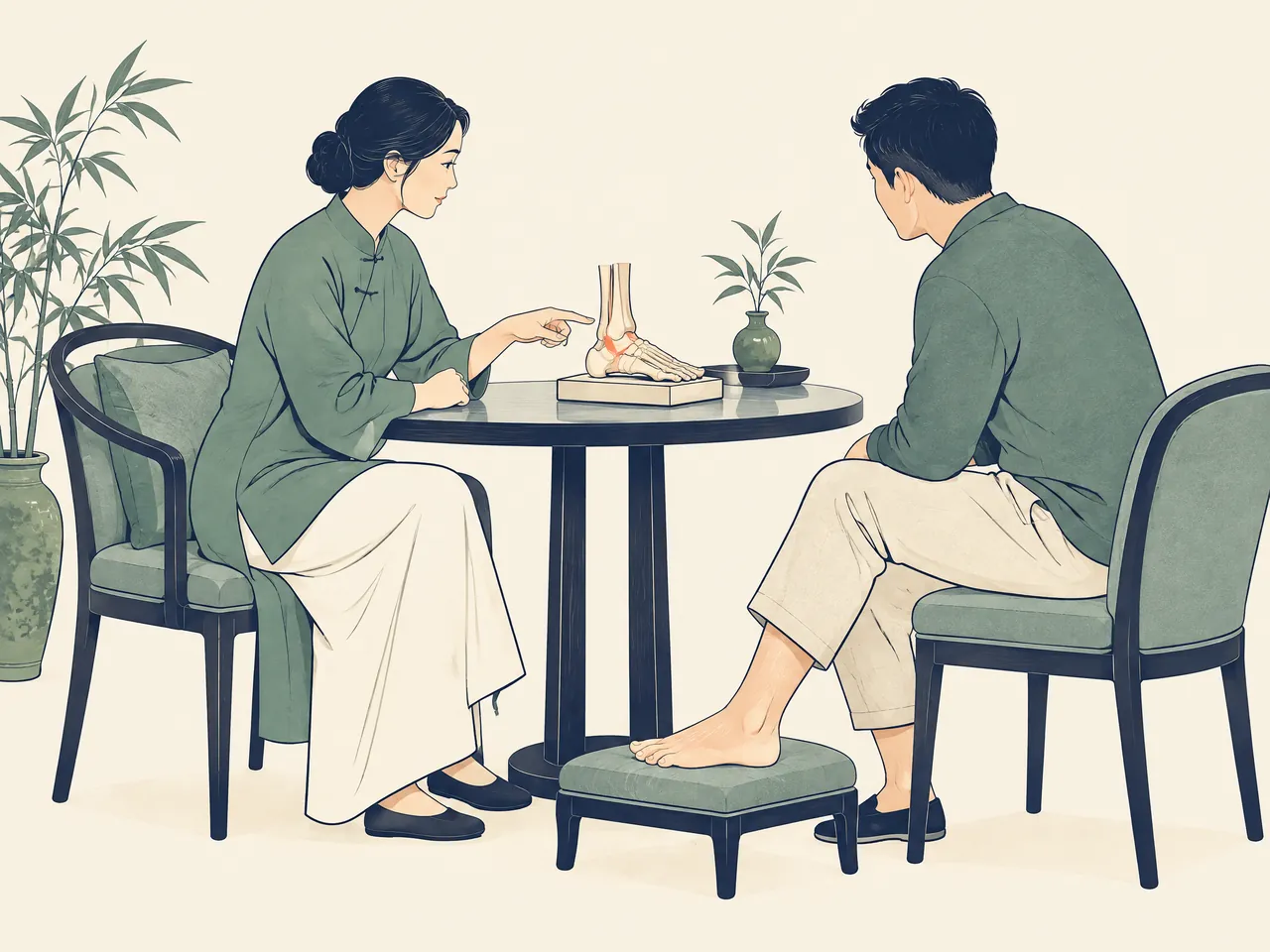
A useful consultation begins with questions rather than a promise. Expect discussion of the exact site and quality of pain, when it began, changes in activity or work demands, morning symptoms, footwear, previous injury, and relevant health conditions. A practitioner may also ask about current medication and care from a doctor, physiotherapist or podiatrist. This allows a plan to complement—not quietly compete with—other care. It also creates an opportunity to decide whether the symptoms need biomedical assessment before acupuncture is discussed.
Physical examination and, when appropriate, referral are part of making the next step proportionate. The NHS advises evaluation when bottom-of-foot pain is severe, recurrent, worsening, limiting usual activities, accompanied by sensory change, or has not improved after two weeks of self-care. [1] There is no value in forcing a Traditional Chinese Medicine explanation onto a problem that may require imaging, rehabilitation, medication review, or urgent attention. In the same way, a previous diagnosis of plantar fasciitis does not mean a new pain flare is automatically identical to the old one.
Acupuncture for Arch Pain, Acupuncture for Heel Pain and Foot Pain Acupuncture Treatment: Traditional Chinese Medicine Assessment
In a Traditional Chinese Medicine consultation, the practitioner may use observation, listening and questioning, palpation, and discussion of the wider health picture to form a traditional pattern. Questions can include whether the area feels better with warmth, whether pressure is soothing or aggravating, sleep, appetite and stress. These ideas belong to a traditional clinical approach; they are not the same as a modern medical diagnosis of plantar fasciitis, nerve entrapment or fracture. Keeping that distinction clear helps the patient give informed consent and maintain realistic expectations.
If acupuncture is appropriate to discuss, the plan should remain individual rather than follow a fixed number of visits. Tell the practitioner about pregnancy, bleeding concerns, implanted devices, skin infection at a proposed area, medicines and every treatment already under way. Acupuncture needles should be sterile and single-use; complications are uncommon but improper or nonsterile treatment can cause serious harm. [3] It is also sensible to keep your other health professionals informed, especially if a physiotherapy programme or medical investigation is in progress.
Acupuncture for Arch Pain, Acupuncture for Heel Pain and Foot Pain Acupuncture Treatment: What Research Limits Mean
The evidence should guide expectations, not be oversold. A review of four studies on acupuncture for plantar fasciitis found short-term pain improvement in the included studies, but the studies differed in acupuncture methods, comparison groups and treatment duration, so their results could not be pooled. Participant groups were small, ranging from 23 to 53 people, and longer-term benefit over standard therapy was not shown in the study with follow-up to six months. [2] This does not prove that no individual may find acupuncture helpful; it means the research does not justify a promise of reliable or lasting benefit for everyone.
For someone considering plantar fasciitis acupuncture, the practical question is whether it is a reasonable adjunct within a broader plan. Agree on what you will monitor: first-step discomfort, standing tolerance, walking route, or whether an exercise plan is becoming easier to follow. Do not treat a temporary good day as proof of a cure, and do not keep escalating a modality while warning signs are ignored. A review point also makes it easier to move toward medical, physiotherapy or podiatry assessment if progress is absent.
Acupuncture for Arch Pain, Acupuncture for Heel Pain and Foot Pain Acupuncture Treatment: Practical Support
Practical support is not an afterthought; it is often the part of the plan repeated between appointments. The aim is to reduce avoidable irritation while preserving comfortable movement. That can mean breaking a long standing shift into shorter blocks, selecting a lower-impact activity temporarily, and avoiding the sudden jump from little exercise to several long walks. It is not necessarily complete rest. The appropriate balance depends on pain severity, function and the suspected cause, which is why persistent symptoms still need assessment.
Think in terms of a load budget. A busy Hong Kong day may include a brisk walk to transport, stairs, standing in queues and an evening workout. Any one activity may be tolerable, but the total can exceed what a sore foot currently handles. List the predictable demands, make one modest change, and reassess rather than changing everything at once. If you are wondering does acupuncture help foot pain, pair that discussion with this practical review so the decision is about your whole routine rather than needles alone.
Acupuncture for Arch Pain, Acupuncture for Heel Pain and Foot Pain Acupuncture Treatment: Stretching and Load Changes
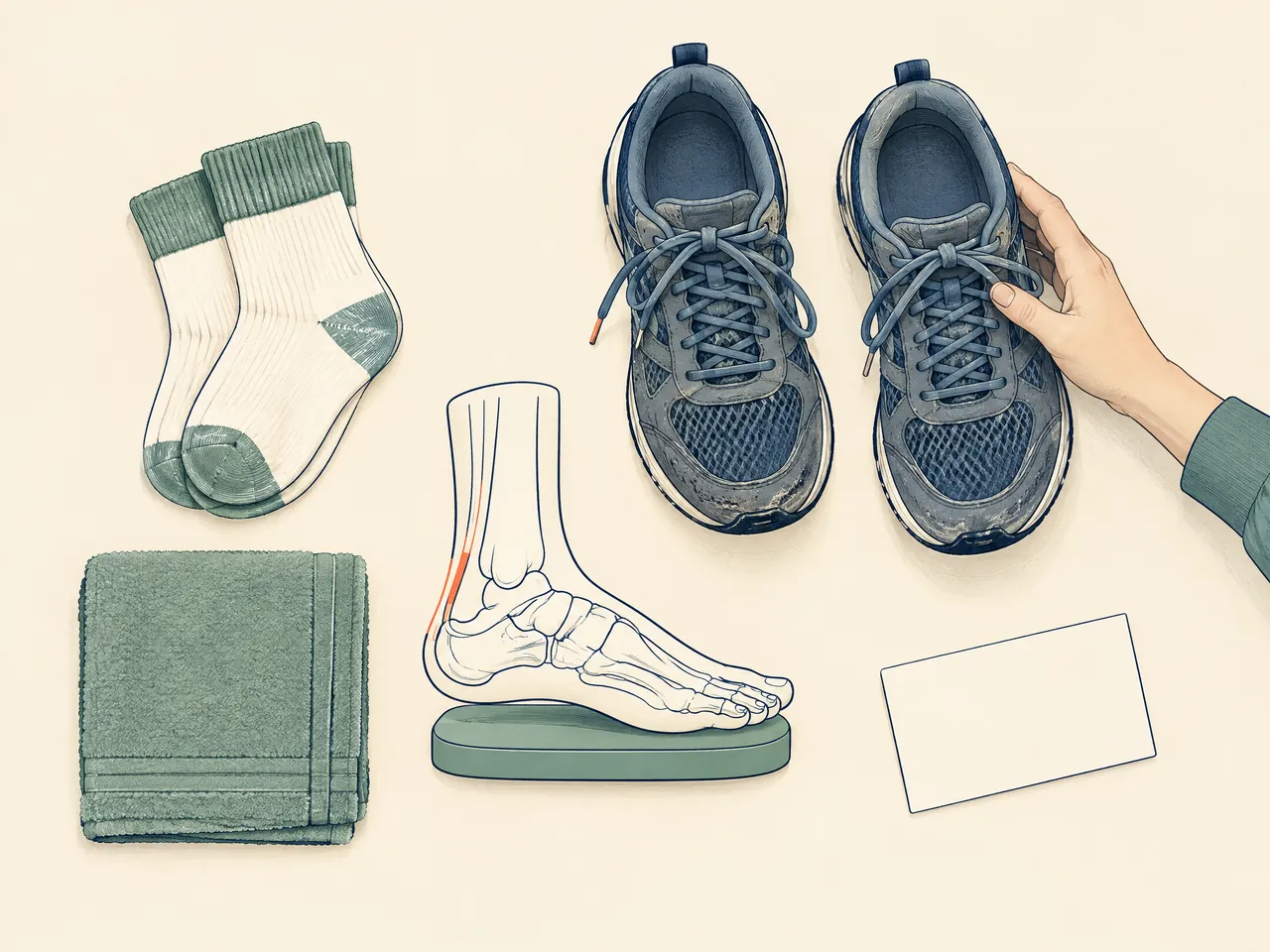
For a plantar-fascia-type pattern, regular gentle exercises that stretch the sole and heel can be part of self-care. [1] Many people find it easier to make this consistent by attaching a short, comfortable routine to an existing moment, such as before getting out of bed or after returning home. Calf flexibility may also be considered in a clinician-guided programme. Stretching should feel controlled, not like forcing through sharp pain. Stop and seek advice if it clearly aggravates symptoms, particularly if there is swelling, focal bone pain or an inability to bear weight.
Load changes work best when they are specific. Instead of deciding never to walk, reduce the one journey, class or standing period that reliably triggers symptoms, then observe the effect for several days. Trade a high-impact session for an activity that does not put pressure on the painful foot if that is comfortable; the NHS gives swimming as an example. [1] Return to greater load gradually and avoid using pain relief or a brief symptom lull as permission for an abrupt increase. A physiotherapist can help tailor exercise when basic measures do not settle the pattern.

Acupuncture for Arch Pain, Acupuncture for Heel Pain and Foot Pain Acupuncture Treatment: Shoes and Next Steps
Shoes change the environment under the sole all day. The NHS advises cushioned heels and good arch support for plantar fasciitis, and suggests avoiding prolonged barefoot walking on hard surfaces, flip-flops and backless slippers. [1] This is not an instruction to buy one universal shoe or to assume an insole fixes every pain. It is a prompt to look at fit, wear, cushioning, work requirements and the situations where symptoms are reliably worse. A podiatrist or other relevant clinician can advise when more individual footwear guidance is needed.
When you are ready to ask about an assessment at TCM Lab, WhatsApp can be used to describe the location, duration and any red flags, and to mention language needs. You may ask about a Kwun Tong Chinese medicine clinic or a Chinese medicine clinic Prince Edward appointment; availability is arranged by appointment. Bring your symptom note and be open about other care. That makes the conversation about foot pain acupuncture treatment safer, more focused and easier to coordinate with the practical measures that matter at home and work.
Care and health guide
Foot discomfort: care information
This directory brings together services, reading, and visit information related to foot discomfort, to help you prepare questions for a consultation.
When foot discomfort affects your day, noting when it occurs, its relation to activity, and what you have already tried can help prepare a consultation; acupuncture for foot pain is a relevant service or reading entry point.
Individual circumstances differ, and acupuncture Hong Kong offers related information to help you understand options and prepare questions.


Your questions, answered
Frequently asked questions
Is acupuncture for arch pain or acupuncture for heel pain guaranteed to work?
No. Acupuncture may be discussed as an adjunct after assessment, but it is not guaranteed to relieve pain or cure the cause. The available plantar-fasciitis studies are small and varied, so they cannot establish a reliable result for every person. [2] A plan should still include practical support and review when symptoms are not improving.
What happens during foot pain acupuncture treatment at TCM Lab Hong Kong?
The discussion should cover the pain’s exact location, timing, activity pattern, footwear, health history and other care already in progress. A Traditional Chinese Medicine assessment may then be used to discuss whether acupuncture is an appropriate adjunct. It does not replace medical assessment when symptoms suggest an injury, nerve problem or another condition needing investigation.
Can I have acupuncture while seeing a physiotherapist or doctor?
Often complementary care can be coordinated, but tell every practitioner about treatments, medicines, exercises and planned investigations. Continue with medical or physiotherapy advice unless the relevant clinician changes it. Shared information reduces the chance that important symptoms are missed or that advice conflicts.
When should I seek medical assessment instead of relying on foot pain acupuncture treatment?
Seek prompt assessment if you cannot bear weight, pain is severe or worsening, there is significant swelling, numbness or loss of feeling, or you have diabetes and foot pain. Also arrange review when pain keeps returning, limits normal activity, or has not improved with self-care. [1]
Sources and further information
- [1] [1] NHS — Plantar fasciitis
Referenced for: Symptoms around the heel and arch, first-step pattern, self-care, footwear, stretching and assessment triggers.
- [2] [2] Singapore Medical Journal — How effective is acupuncture for reducing pain due to plantar fasciitis?
Referenced for: Review of four studies; study heterogeneity, small samples and limited long-term evidence for acupuncture in plantar fasciitis.
- [3] [3] National Center for Complementary and Integrative Health — Acupuncture: What You Need To Know
Referenced for: Safety considerations, sterile single-use needles and discussing complementary approaches with health care providers.