
TCM Lab · Health reading
Lateral Epicondylitis Exercises: Tennis Elbow Stretching Exercises and Tennis Elbow Strengthening Exercises
Published Updated
Outer elbow pain can turn small tasks—lifting a kettle, using a mouse, opening a jar or carrying shopping—into a repeated irritant. Lateral epicondylitis exercises are usually most useful when they are matched to the movement that provokes symptoms, started within a comfortable range, and progressed more slowly than the urge to “push through” pain. This guide explains where tennis elbow stretching exercises and tennis elbow strengthening exercises may fit, how to modify the load around them, and when an assessment is a wiser next step. For a broader introduction, see tennis elbow stretches.
Appointments are confirmed through WhatsApp. If you have language requirements, please mention them in your enquiry.
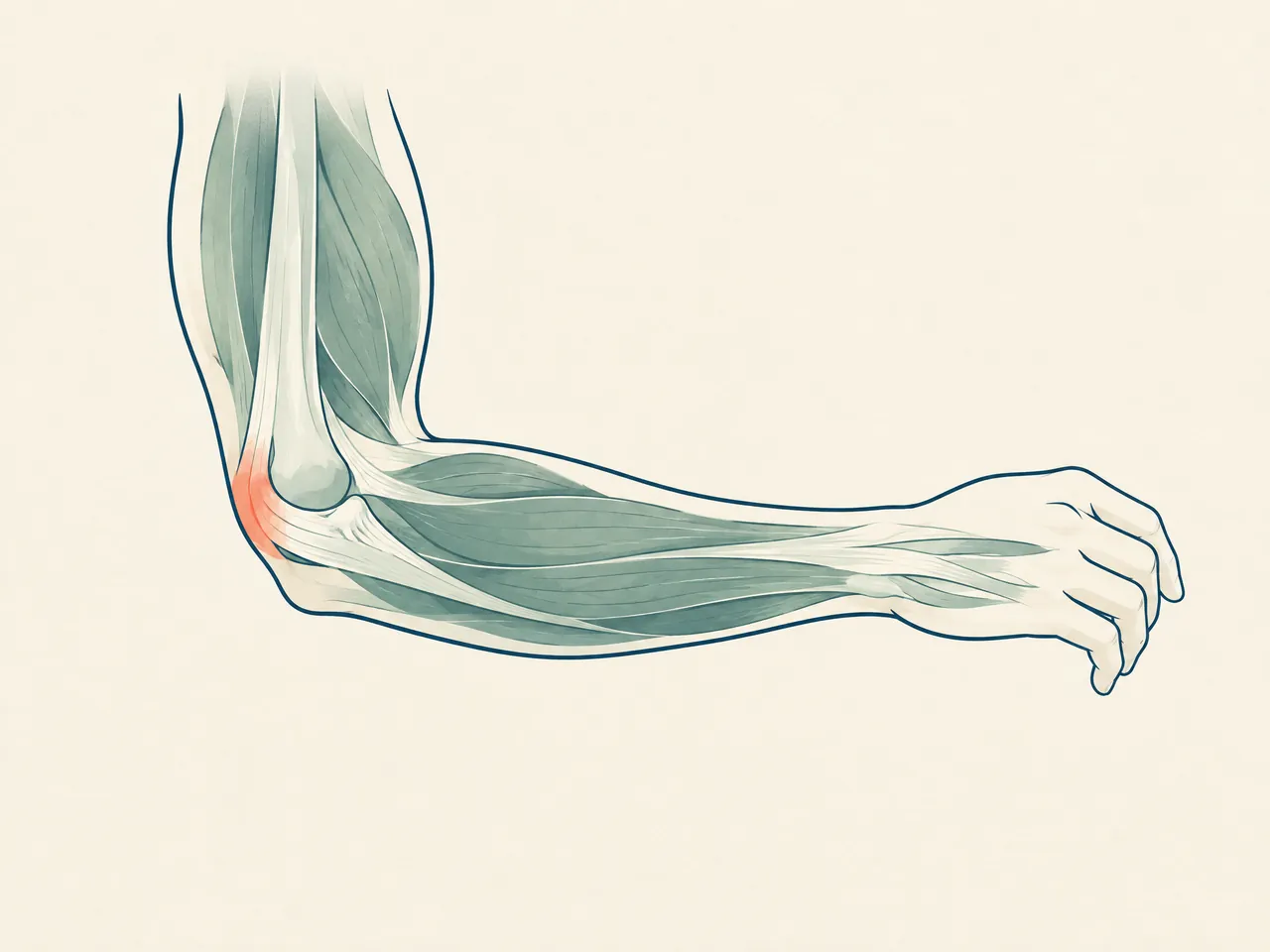
The short answer
Lateral epicondylitis exercises commonly begin with gentle wrist and forearm movement, then progress to light, controlled strengthening when that movement is tolerated. The useful dose is not a fixed routine: symptoms during and after activity should guide it. Reduce the grip, lifting or wrist work that repeatedly provokes outer-elbow pain, and arrange assessment for severe, persistent, traumatic or neurologically unusual symptoms.
Transparent pricing
See the fees.
Choose your care.
Explore our complete official price list, including first-trial prices, regular prices, packages and branch-specific options.
Opening WhatsApp prepares an enquiry; it does not send a message, take payment or confirm an appointment. Suitability and individual arrangements are confirmed during consultation.
Pain care
All prices in HKDExtracorporeal shockwave treatment
Shockwave treatment for deep-tissue and fascial care. The Kwun Tong clinic offers the multi-area options shown below.
Priced by branch
Branch-specific pricing
Prince Edward: HK$250 per area
Kwun Tong: HK$250 for 1 area / HK$450 for 2 areas / HK$600 for 3 areas
Pain care (manual therapy)
Includes Chinese medicine musculoskeletal assessment, manual joint techniques and tui na.
HK$580 (single session)
Chinese medicine musculoskeletal assessment
Pain care (acupuncture and manual therapy)
Combines acupuncture and manual therapy.
HK$680 (single session)
Combined care
Hair and scalp
All prices in HKDScalp health and hair-loss management
Includes AI scalp analysis, deep scalp and follicle cleansing, and scalp oil-control care.
HK$380 (first trial)
Regular price: HK$680
- 6 sessions: HK$3,480 (HK$580 per session)
- 12 sessions: HK$5,760 (HK$480 per session)
- 20 sessions: HK$8,600 (HK$430 per session)
- 30 sessions: HK$11,400 (HK$380 per session)
Hair acupuncture and Chinese herbal medicine package
Includes scalp acupuncture and 3 days of Chinese herbal medicine that does not require decoction.
HK$580 (single session)
Registered Chinese Medicine Practitioner consultation
- 6 sessions: HK$3,180 (HK$530 per session)
- 12 sessions: HK$5,760 (HK$480 per session)
- 20 sessions: HK$8,600 (HK$430 per session)
- 30 sessions: HK$11,400 (HK$380 per session)
Combined hair and scalp treatment
Combines acupuncture and Chinese herbal medicine with salon-level scalp and follicle care. Packages include complimentary hair-care shampoo and serum.
HK$1,260 (single session)
Combined treatment
- 8 sessions: HK$8,640 (HK$1,080 per session)
- 16 sessions: HK$15,680 (HK$980 per session)
- 20 sessions: HK$18,600 (HK$930 per session)
- 30 sessions: HK$26,400 (HK$880 per session)
Weight management
All prices in HKDFull-body acupoint embedding for weight management
Includes full-body acupoint embedding. Packages include complimentary Chinese herbal medicine for weight management, with the number of included days scaled to the package. Embedding material and the individual treatment arrangement are confirmed during consultation; this is not a cosmetic thread lift.
HK$980 (single session)
No trial session
- 10 sessions: HK$7,800 (HK$780 per session)
- 20 sessions: HK$14,600 (HK$730 per session)
- 30 sessions: HK$20,400 (HK$680 per session)
Facial acupuncture
All prices in HKDFacial acupuncture (basic)
Includes facial acupuncture and meridian-based facial care, including care for facial puffiness.
HK$480 (first trial)
Regular price: HK$680
- 10 sessions: HK$5,200 (HK$520 per session)
- 20 sessions: HK$9,600 (HK$480 per session)
- 30 sessions: HK$13,500 (HK$450 per session)
Facial acupuncture (advanced)
Includes enhanced facial acupuncture with a specially formulated moisturising mask and serum.
HK$780 (first trial)
Regular price: HK$1,180
- 10 sessions: HK$9,000 (HK$900 per session)
- 20 sessions: HK$16,600 (HK$830 per session)
- 30 sessions: HK$23,400 (HK$780 per session)
Chinese medicine
All prices in HKDAcupuncture and Chinese herbal medicine package
Includes a Chinese medicine consultation with pulse assessment, body acupuncture and 3 days of Chinese herbal granules that do not require decoction.
HK$580 (single session)
Chinese medicine consultation with pulse assessment
Lateral Epicondylitis Exercises, Tennis Elbow Stretching Exercises and Tennis Elbow Strengthening Exercises: Start with the Symptoms
“Tennis elbow” is a common name for lateral epicondylitis, but playing tennis is not required. The relevant area is usually the bony outer side of the elbow and the upper forearm. Pain may appear when the wrist and fingers work hard to grip, lift or twist: think of wringing a cloth, picking up a pan with the elbow straight, shaking hands, turning a key or holding a tool. The Hong Kong College of Orthopaedic Surgeons describes these sorts of gripping, lifting and wringing tasks as typical symptom triggers [1]. That pattern is useful information, not a diagnosis to make alone.
Before selecting an exercise, make a short, practical inventory. Note the exact task, the hand position, the amount of force, when the discomfort begins, and whether it settles after the task. A laptop user may notice mouse gripping late in the day; a cook may notice a heavy wok; a racquet-sport player may notice backhand practice. This record helps separate a manageable load issue from pain that is spreading, changing or unrelated to the expected task. It also gives a clinician or physiotherapist a clearer starting point if guidance is needed.
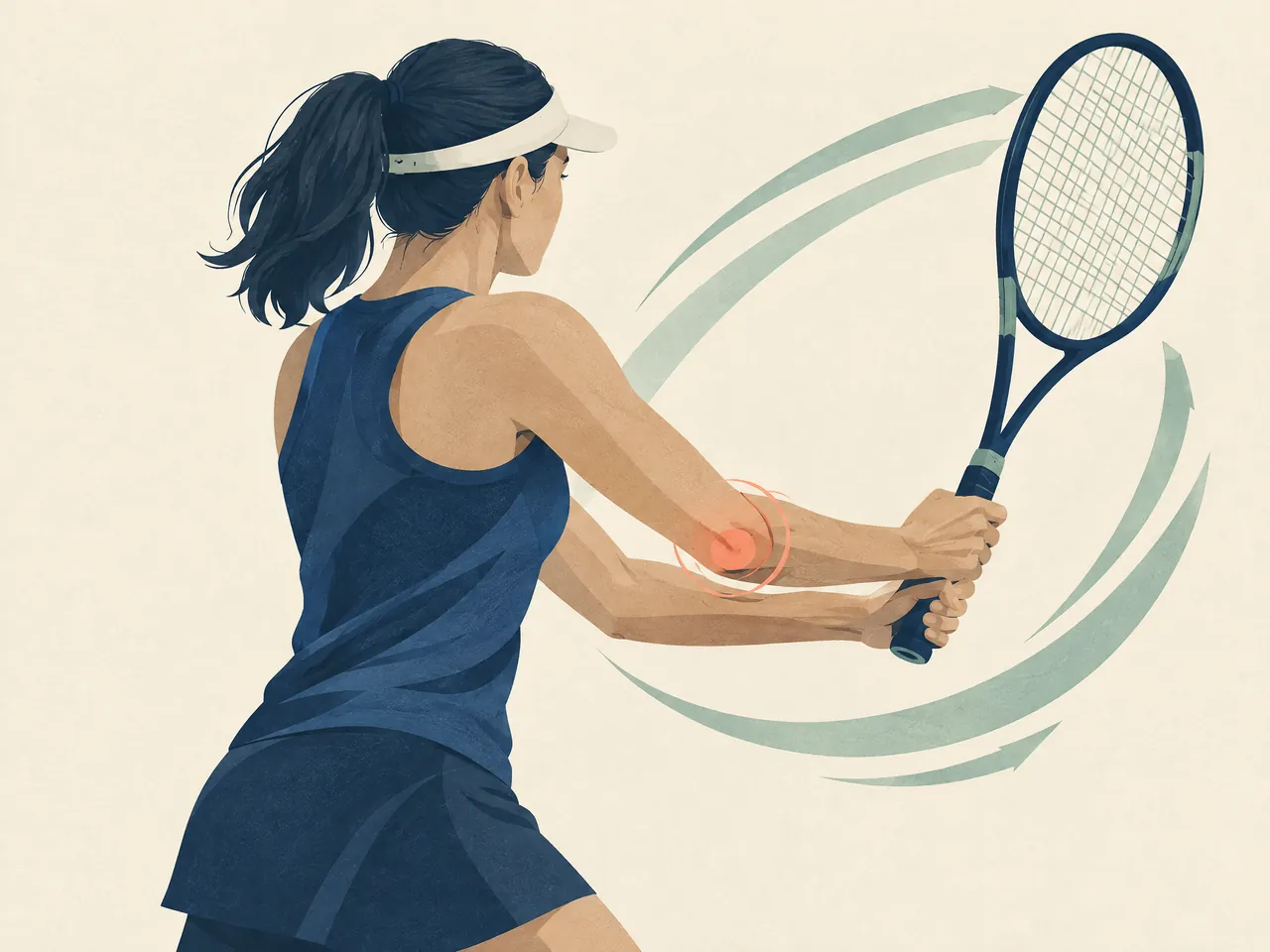
How Lateral Epicondylitis Exercises Relate to Outer Elbow Pain, Tennis Elbow Stretching Exercises and Tennis Elbow Strengthening Exercises
The wrist and finger extensor muscles attach near the outside of the elbow. When they repeatedly stabilise a grip or lift the wrist, that area can become painful. Tennis elbow stretching exercises aim to introduce a mild pulling feeling through the forearm; they should not reproduce a sharp jab at the elbow. One familiar option is an elbow-straight wrist-extensor position: the arm is held forward, the fingers point toward the floor, and the other hand gives only gentle assistance. Alberta’s public exercise guide includes wrist flexor and extensor stretches and advises people to start slowly and ease off if pain begins [2]. A focused wrist flexor stretch for tennis elbow can help readers understand the contrasting palm-up position, but neither variation needs to be forced.
Stretching is not a test of flexibility and it is not a substitute for changing the task that overloaded the area. If reaching the wrist position causes marked pain, begin with the elbow more bent, use less pressure, or simply move the wrist gently without the added pull. Observe the response later that day and the next morning. A small, temporary awareness of the forearm may be tolerable for some people; worsening pain that lingers or makes ordinary gripping harder suggests the range, force or total daily workload was too much.
When Lateral Epicondylitis Exercises, Tennis Elbow Stretching Exercises and Tennis Elbow Strengthening Exercises May Need Assessment
Not every outer-elbow symptom is lateral epicondylitis. Pain after a fall, a visible change in shape, major swelling, marked warmth or redness, or a rapidly enlarging lump warrants timely medical assessment rather than an exercise experiment. Numbness, tingling, pain travelling from the neck or forearm, or clear weakness may point to a different problem and also deserves review. History and physical examination are central to assessment; the Hong Kong College notes that imaging may be used when clinicians need to exclude other causes such as fracture or osteoarthritis [1].
Arrange a non-urgent assessment as well when the problem keeps limiting work, sleep, self-care or sport after several weeks of sensible activity adjustment. Bring the activity record and describe what was tried, including any brace, heat or cold used for comfort. A clinician can assess the elbow, wrist, shoulder and neck as appropriate, check whether a movement is suitable, and help choose a progression. The goal is not to chase a label online; it is to understand what is provoking the pain and what level of movement is currently safe to practise.
Compare your options
| Current situation | A lower-load option | What to watch before progressing |
|---|---|---|
| Wrist movement is stiff or guarded, but light daily use is possible | Use a gentle supported wrist movement or a mild forearm stretch without forcing the end position | Stop if the movement produces sharp pain or symptoms are clearly worse later or next morning |
| Gentle movement is comfortable, but gripping remains sensitive | Practise a light, controlled squeeze or supported wrist motion with minimal resistance | Keep the grip relaxed; do not add heavier resistance and more demanding chores at the same time |
| A light resistance drill is tolerated | Increase only one element: control, range, repetitions, resistance or task duration | Check whether normal work, sport or household activities remain manageable over the next day |
| Pain is spreading, severe, traumatic, swollen, numb or weak | Pause self-directed progression and arrange medical assessment | Do not use exercise to test through a possible injury, nerve symptom or other cause of elbow pain |
On smaller screens, scroll the table sideways to compare all columns.
Lateral Epicondylitis Exercises, Tennis Elbow Stretching Exercises and Tennis Elbow Strengthening Exercises: A Gentle Progression
A useful progression moves from tolerating ordinary movement to tolerating a little resistance, then to the real-life task that matters to you. It does not require pain to be eliminated before every movement, but it does require an honest response to symptoms. Start with one or two movements that you can perform slowly and with control. Keep the forearm supported on a table when that reduces strain. Alberta’s exercise guide includes examples such as a gentle squeeze, wrist deviation and supported resisted wrist movements; these are examples of movement categories, not a one-size-fits-all home prescription [2].
Change one variable at a time. For example, keep the same light object while improving control before choosing a heavier one, or add a small number of repetitions without also increasing the resistance and daily gripping work. Slower lowering can be demanding even with a light object, so tempo is part of the load. Record the exercise, the work or sport done that day, symptoms during the session, and the response by the following morning. That record prevents an apparently gentle programme from becoming a large hidden load once chores, keyboard work and training are counted together.
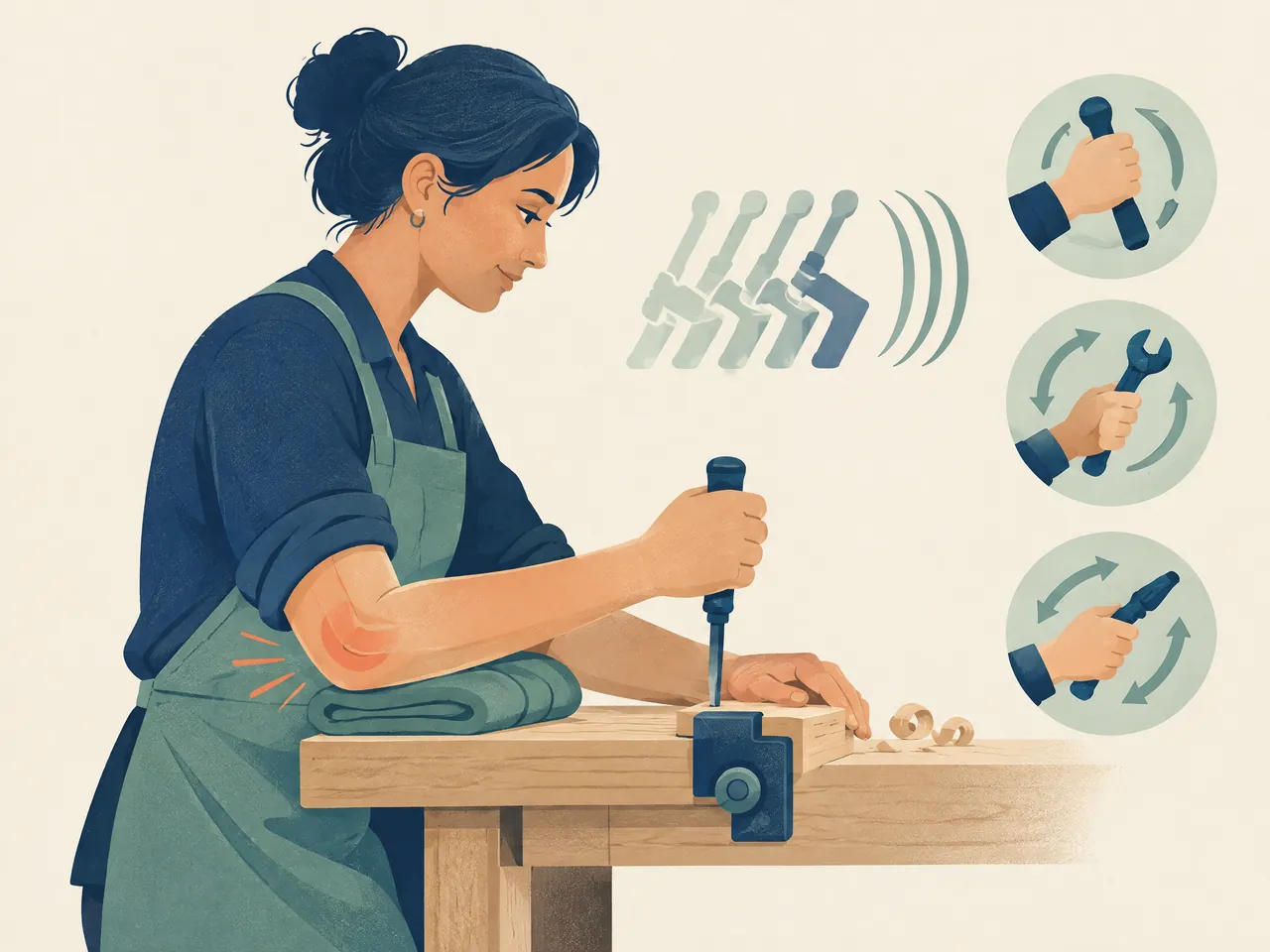
A Comfortable Range for Lateral Epicondylitis Exercises, Tennis Elbow Stretching Exercises and Tennis Elbow Strengthening Exercises
For a stretch, aim for a mild forearm pull rather than a hard end-range push. Keep the shoulder relaxed and avoid twisting the trunk just to obtain more range. For an early strengthening drill, support the forearm and let the hand move from the wrist rather than recruiting the whole shoulder. If holding an object causes pain before the movement begins, use less resistance or begin with an unloaded motion. The purpose is to practise a controlled, repeatable action, not to prove that the elbow can tolerate the original aggravating task today.
Pain guidance is more useful when it includes timing. Ask: did symptoms rise sharply during the exercise; did they settle soon after; and is the next morning distinctly worse? A response that is stronger, longer or more widespread than usual is a practical signal to reduce range, resistance, repetition, frequency or the competing daily load. Conversely, comfortable, repeatable movement can justify a cautious next step. Readers looking for related activity ideas can compare this approach with tennis elbow pain relief exercises, while remembering that a named exercise is only useful if its current dose is tolerated.
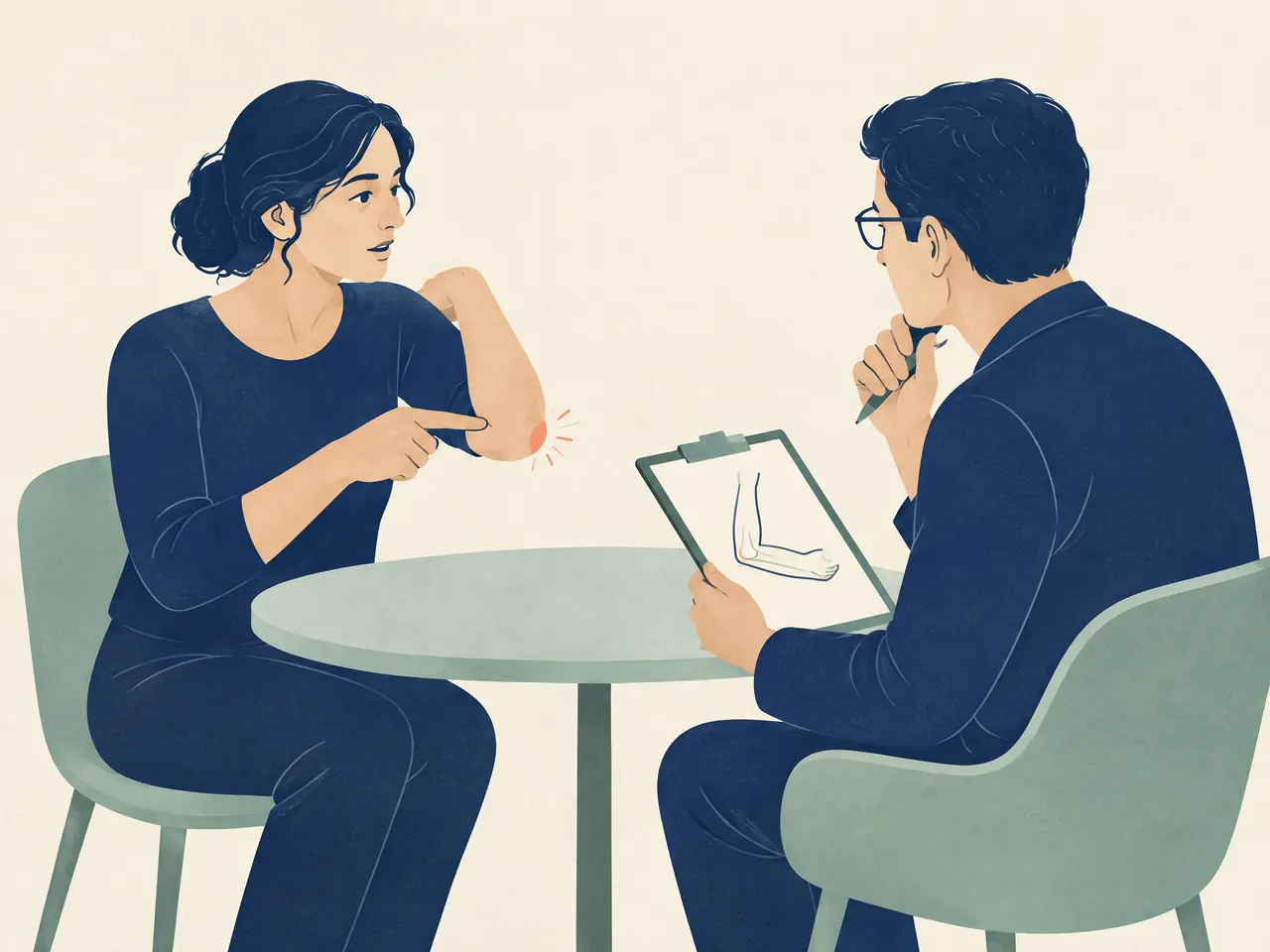
Building Load with Tennis Elbow Strengthening Exercises after Lateral Epicondylitis Exercises and Tennis Elbow Stretching Exercises
Tennis elbow strengthening exercises commonly focus on controlled wrist extension, flexion, grip and forearm rotation because those actions are part of everyday handling tasks. A light dumbbell, a food can, a water bottle or an elastic band can all create resistance, but the object matters less than the response. Keep the forearm stable, avoid rushing, and stop before form collapses into shoulder shrugging or a clenched jaw. If one direction is comfortable and another is painful, do not assume they should be trained identically. A clinician can decide whether that difference needs examination or simply a different starting point.
Progress becomes more specific as ordinary life becomes easier. Someone returning to computer work may practise brief mouse and keyboard intervals with relaxed grip and regular changes of position. A parent may rehearse lifting a light object close to the body before carrying heavier shopping. A player may first rebuild wrist control, then simple racket handling, before resuming longer hitting sessions. This sequence respects the task that created the demand. It also avoids the common trap of becoming stronger in one table-based drill while immediately returning to an unchanged, high-volume work or sport exposure.
Lateral Epicondylitis Exercises, Tennis Elbow Stretching Exercises and Tennis Elbow Strengthening Exercises: Manage Daily Load
Exercise is only one part of the load on the outer elbow. A good plan looks at how long, how often and how forcefully the hand works across the entire day. Repeated tight gripping can come from pruning, cleaning, using a screwdriver, lifting trays, gaming, manual work or holding a phone with the wrist bent. The Hong Kong College of Orthopaedic Surgeons advises avoiding repetitive or overuse activity that aggravates symptoms and notes that activity or sport technique may need modification [1]. In practice, that usually means reducing the provoking dose for now, not abandoning all arm movement.

Make the task easier before making the arm tougher. Use two hands for awkward items, bring a load nearer the body, take short breaks before fatigue builds, alternate hands where practical, and avoid a sustained tight grasp when a larger-handled tool or different setup is available. Adjust a workstation so the wrist is not held at an extreme angle while using the mouse or typing. Some people find a wrapped cool or warm pack comfortable around activity; stop if the skin or symptoms react badly. Comfort measures do not replace a load plan or an assessment when warning signs are present.

How Activity Changes Support Lateral Epicondylitis Exercises, Tennis Elbow Stretching Exercises and Tennis Elbow Strengthening Exercises
Link each exercise to a real activity change. If twisting a wet cloth triggers pain, use a gentler method temporarily and practise wrist movement separately within tolerance. If lifting a kettle is difficult, reduce the fill level or use both hands while building control with a lighter object. If racquet practice causes symptoms, reduce the duration and seek coaching on technique rather than adding exercises on top of the same session volume. This creates room for recovery and makes the strengthening work more meaningful than an isolated routine.
Plan the week as well as the individual session. A difficult workday, a long cleaning session and a new strengthening drill may each be reasonable alone but excessive together. Spread demanding grip tasks out when possible, and retain activities that do not aggravate symptoms, such as lower-body exercise or walking. If you want a clinician-led discussion of symptoms and options, enquiries can be directed to the Kwun Tong Chinese medicine clinic or the Chinese medicine clinic Prince Edward; describe your symptom pattern and preferred language when arranging an appointment.

When to Pause Lateral Epicondylitis Exercises, Tennis Elbow Stretching Exercises and Tennis Elbow Strengthening Exercises
Pause an exercise that causes sharp pain, a clear step-up in symptoms that does not settle, new tingling or numbness, sudden weakness, or loss of confidence controlling the hand. Do not try to compensate with a firmer grip or faster repetitions. Return to the last comfortable version only after symptoms have settled, or ask for assessment when they do not. The question When should I stop exercising with tennis elbow? is especially relevant when the symptoms are changing rather than gradually becoming more manageable.
A pause is information, not failure. It may mean that range, resistance, technique, frequency, sleep, work demand or a separate diagnosis needs attention. Seek prompt care after a significant injury or with deformity, major swelling, redness and heat, a fast-growing lump, or neurological symptoms. Seek routine assessment when pain remains disruptive despite several weeks of thoughtful load reduction and gentle progression. Clear advice based on an examination is safer than repeatedly testing a painful elbow with an online routine.
Care and health guide
Health service information
This directory brings together services, reading, and visit information related to health services, to help you prepare questions for a consultation.
If you are organising health questions, Chinese medicine clinic Hong Kong is a starting point for learning about related services and preparing for a consultation.
People have different needs; acupuncture Hong Kong provides further reading to help you understand options in your own context.


Your questions, answered
Frequently asked questions
How often should I do tennis elbow stretching exercises?
There is no single frequency that suits every painful elbow. Begin with a small, comfortable amount that does not make ordinary tasks harder later that day or the next morning. If the response is worse, reduce the range, force or frequency and review the competing grip and lifting load. A clinician can tailor frequency when symptoms are persistent or the activity demands are high.
When can I begin tennis elbow strengthening exercises?
Consider light, controlled strengthening once gentle movement is tolerated and you can maintain a relaxed, supported position. Start below the level that provokes a strong response. Progress one variable at a time, such as repetitions or resistance, while monitoring the following day. If resistance immediately causes sharp outer-elbow pain or altered sensation, pause and seek individual advice.
Can I keep working or playing sport while doing lateral epicondylitis exercises?
Often, some activity can continue if the provoking dose is modified. Reduce repetitive tight gripping, heavy lifting, prolonged wrist positions or session duration, and build back gradually. The better question is not simply whether to stop, but which task, hand position or volume causes the flare. Persistent loss of function or a worsening pattern should be assessed.
When should I seek help instead of exercising at home?
Seek prompt assessment after a deforming injury or with significant swelling, redness, heat, a rapidly enlarging lump, numbness, tingling or obvious weakness. Also arrange assessment when symptoms continue to interfere with work, sleep, self-care or sport after several weeks of cautious load changes and gentle exercise. These features can require a diagnosis or plan beyond a general online routine.
Sources and further information
- [1] [1] The Hong Kong College of Orthopaedic Surgeons — Tennis Elbow
Referenced for: Supports common symptom triggers, clinical assessment context, general rehabilitation language and activity modification for tennis elbow.
- [2] [2] MyHealth.Alberta.ca — Tennis Elbow: Exercises
Referenced for: Supports the examples of gentle wrist flexor and extensor stretching, supported wrist and grip movements, and the advice to begin slowly and ease off if pain starts.