
TCM Lab · Health reading
Tennis Elbow Symptoms: How long do tennis elbow symptoms last? Tennis elbow self care
Published Updated
Pain on the outer side of the elbow that flares when you grip a bag, turn a key or lift a kettle can fit tennis elbow symptoms, even if you have never played tennis. Symptoms often settle over weeks with load changes and a gradual return to exercise, although the course varies and can be longer. This guide explains practical tennis elbow self care, the clues that call for assessment, and how a TCM consultation may sit alongside appropriate medical or rehabilitation care.
Appointments are confirmed through WhatsApp. If you have language requirements, please mention them in your enquiry.
The short answer
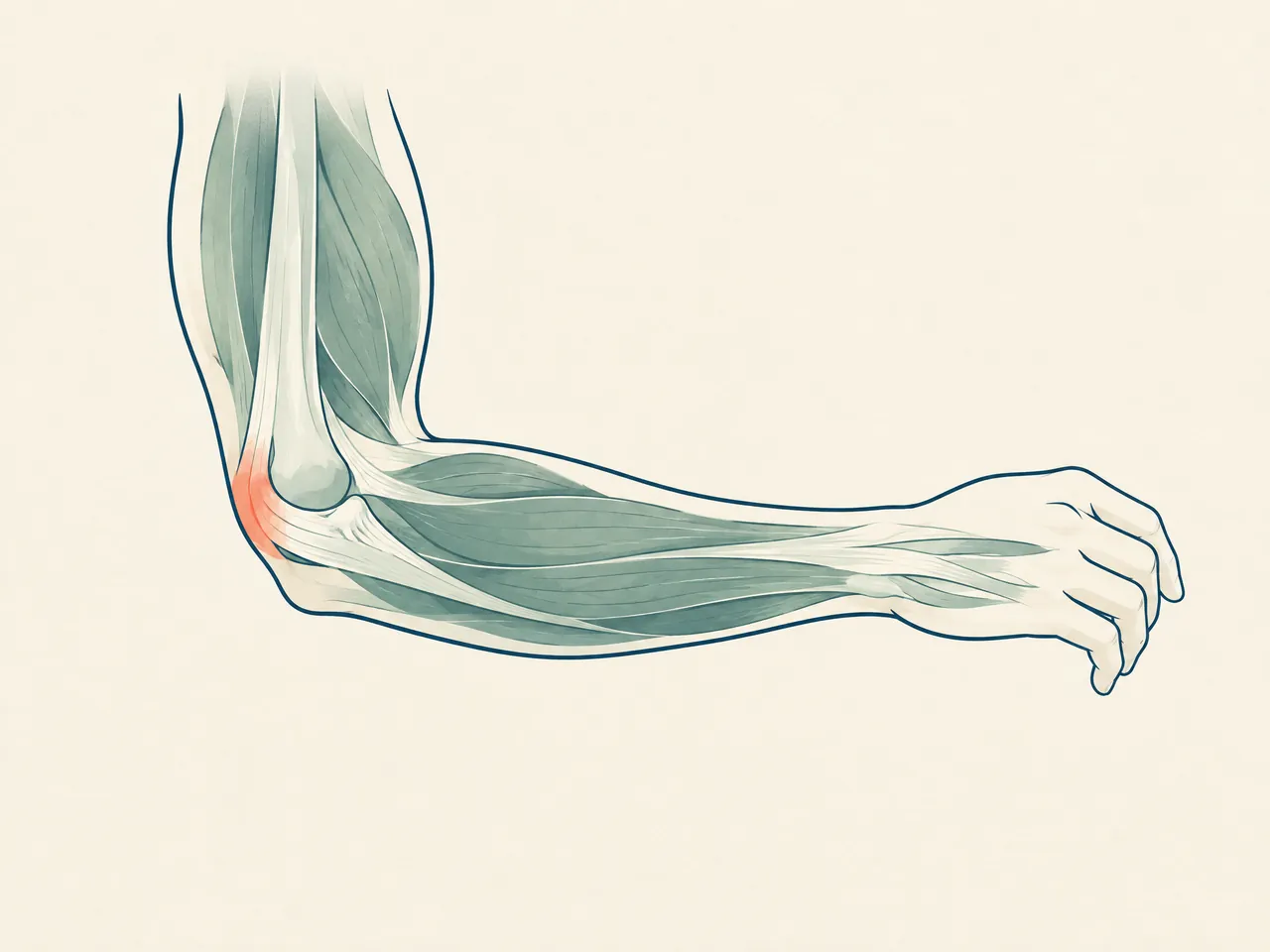
Tennis elbow symptoms usually centre on tenderness or pain at the outside of the elbow, often spreading into the forearm and worsening with gripping, lifting or wrist movement. How long do tennis elbow symptoms last? Many improve over weeks, but some persist for months or longer. Tennis elbow self care starts with reducing the movements that provoke pain, using heat or cold for comfort, and building activity back gradually. Seek assessment when pain persists, changes, or limits ordinary tasks.
Transparent pricing
See the fees.
Choose your care.
Explore our complete official price list, including first-trial prices, regular prices, packages and branch-specific options.
Opening WhatsApp prepares an enquiry; it does not send a message, take payment or confirm an appointment. Suitability and individual arrangements are confirmed during consultation.
Pain care
All prices in HKDExtracorporeal shockwave treatment
Shockwave treatment for deep-tissue and fascial care. The Kwun Tong clinic offers the multi-area options shown below.
Priced by branch
Branch-specific pricing
Prince Edward: HK$250 per area
Kwun Tong: HK$250 for 1 area / HK$450 for 2 areas / HK$600 for 3 areas
Pain care (manual therapy)
Includes Chinese medicine musculoskeletal assessment, manual joint techniques and tui na.
HK$580 (single session)
Chinese medicine musculoskeletal assessment
Pain care (acupuncture and manual therapy)
Combines acupuncture and manual therapy.
HK$680 (single session)
Combined care
Hair and scalp
All prices in HKDScalp health and hair-loss management
Includes AI scalp analysis, deep scalp and follicle cleansing, and scalp oil-control care.
HK$380 (first trial)
Regular price: HK$680
- 6 sessions: HK$3,480 (HK$580 per session)
- 12 sessions: HK$5,760 (HK$480 per session)
- 20 sessions: HK$8,600 (HK$430 per session)
- 30 sessions: HK$11,400 (HK$380 per session)
Hair acupuncture and Chinese herbal medicine package
Includes scalp acupuncture and 3 days of Chinese herbal medicine that does not require decoction.
HK$580 (single session)
Registered Chinese Medicine Practitioner consultation
- 6 sessions: HK$3,180 (HK$530 per session)
- 12 sessions: HK$5,760 (HK$480 per session)
- 20 sessions: HK$8,600 (HK$430 per session)
- 30 sessions: HK$11,400 (HK$380 per session)
Combined hair and scalp treatment
Combines acupuncture and Chinese herbal medicine with salon-level scalp and follicle care. Packages include complimentary hair-care shampoo and serum.
HK$1,260 (single session)
Combined treatment
- 8 sessions: HK$8,640 (HK$1,080 per session)
- 16 sessions: HK$15,680 (HK$980 per session)
- 20 sessions: HK$18,600 (HK$930 per session)
- 30 sessions: HK$26,400 (HK$880 per session)
Weight management
All prices in HKDFull-body acupoint embedding for weight management
Includes full-body acupoint embedding. Packages include complimentary Chinese herbal medicine for weight management, with the number of included days scaled to the package. Embedding material and the individual treatment arrangement are confirmed during consultation; this is not a cosmetic thread lift.
HK$980 (single session)
No trial session
- 10 sessions: HK$7,800 (HK$780 per session)
- 20 sessions: HK$14,600 (HK$730 per session)
- 30 sessions: HK$20,400 (HK$680 per session)
Facial acupuncture
All prices in HKDFacial acupuncture (basic)
Includes facial acupuncture and meridian-based facial care, including care for facial puffiness.
HK$480 (first trial)
Regular price: HK$680
- 10 sessions: HK$5,200 (HK$520 per session)
- 20 sessions: HK$9,600 (HK$480 per session)
- 30 sessions: HK$13,500 (HK$450 per session)
Facial acupuncture (advanced)
Includes enhanced facial acupuncture with a specially formulated moisturising mask and serum.
HK$780 (first trial)
Regular price: HK$1,180
- 10 sessions: HK$9,000 (HK$900 per session)
- 20 sessions: HK$16,600 (HK$830 per session)
- 30 sessions: HK$23,400 (HK$780 per session)
Chinese medicine
All prices in HKDAcupuncture and Chinese herbal medicine package
Includes a Chinese medicine consultation with pulse assessment, body acupuncture and 3 days of Chinese herbal granules that do not require decoction.
HK$580 (single session)
Chinese medicine consultation with pulse assessment
Tennis elbow symptoms — How long do tennis elbow symptoms last? Tennis elbow self care for daily triggers
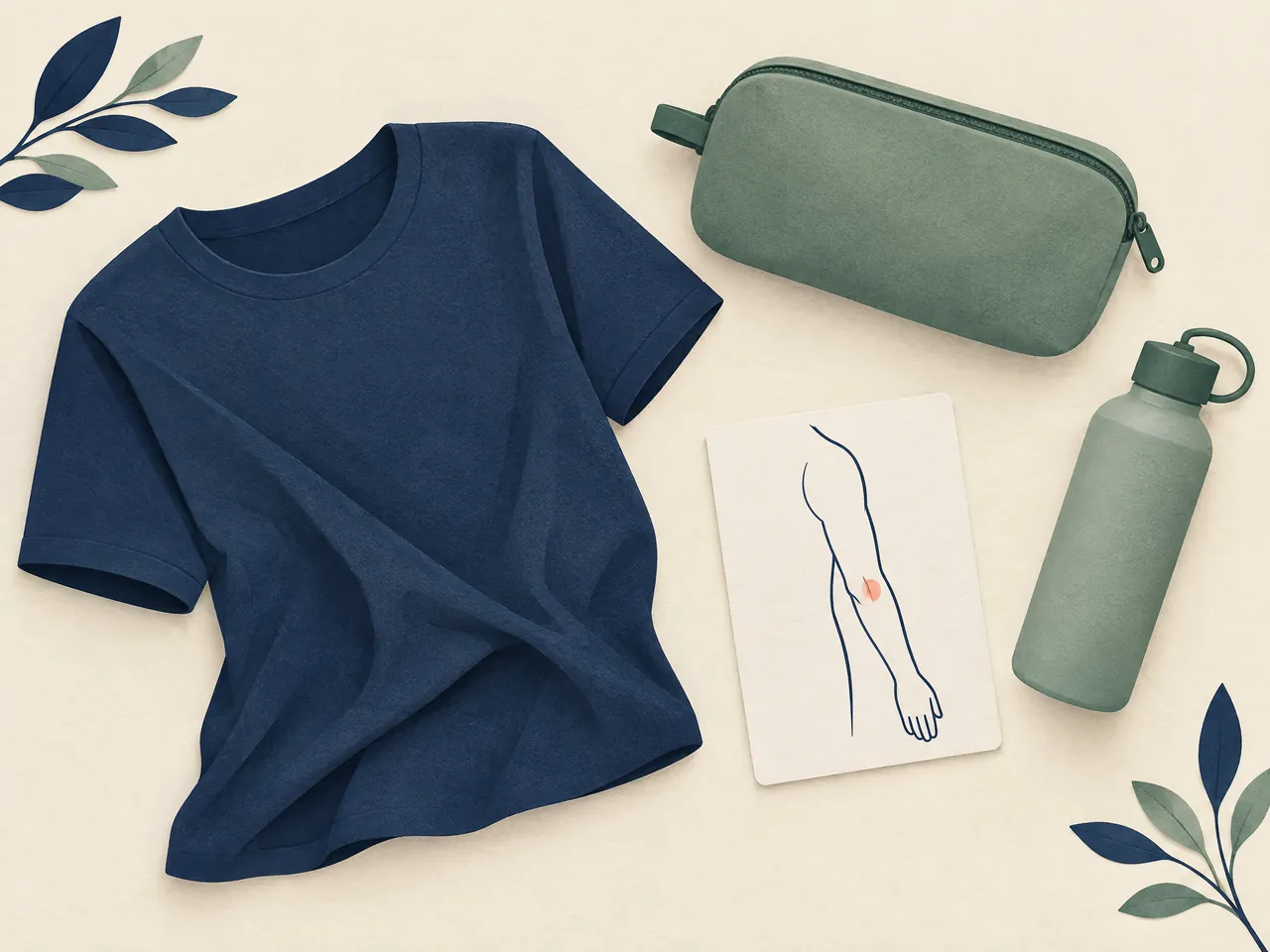
Tennis elbow is also called lateral epicondylitis. It describes a pattern of pain at the bony outside of the elbow where forearm tendons attach. The discomfort may be mild at first and become more obvious with repeated use. It can travel down the forearm towards the wrist, and some people notice that their grip feels less reliable. [2] Reading about lateral epicondylitis can help put the name and location in context, but an online description cannot confirm the cause of an individual’s pain.
The label is slightly misleading: a tennis stroke is only one possible trigger. A long day at a laptop, repeated mouse use, painting, carrying supplies, food preparation, sewing, tool work or frequent lifting can all ask the wrist and forearm to do the same job repeatedly. Symptoms are more informative when matched to a specific movement. For example, note whether pain begins when you lift with the palm down, twist a jar lid, extend the wrist or hold a phone for a long time. [1] [3]
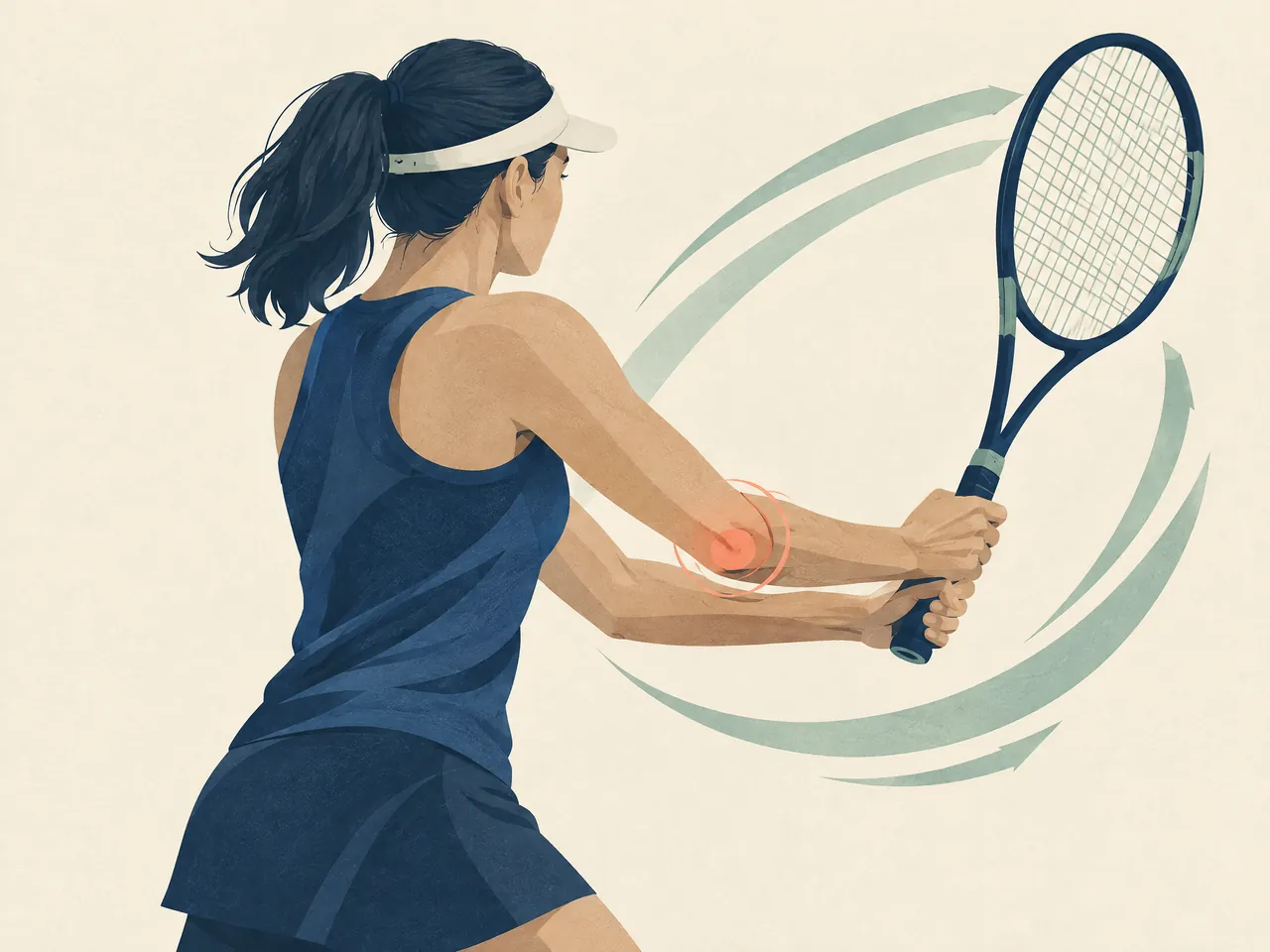
How long do tennis elbow symptoms last? There is no dependable fixed timetable. The NHS notes that the condition often improves after resting the arm for a few weeks, but it can sometimes last over a year. A useful focus is not simply waiting for a date on the calendar, but checking whether everyday tolerance is gradually improving: can you make a drink, use a keyboard, open a door or carry a light bag with less provocation than before? [1]
Recognising tennis elbow symptoms — How long do tennis elbow symptoms last? Tennis elbow self care after gripping and lifting
The classic spot is the outer elbow rather than the point at the back of the elbow or the inner side. Pressing that area may feel tender. Pain may sharpen or burn during a forceful grip, wrist extension or forearm rotation, while other people describe a persistent ache after the task has finished. A weak or painful grip can make small things surprisingly awkward: shaking hands, holding a coffee cup, squeezing a cloth, carrying shopping or turning a key. [2] [3]
Self care does not have to mean doing nothing with the arm. Start by trimming the most provocative part of a task. Use two hands for a heavy pan, keep a load nearer the body, take a brief pause before the forearm is fatigued, or switch hands for a non-essential action. The goal is to reduce repeated irritation while keeping normal movement as comfortable as possible, not to test the elbow through escalating pain.
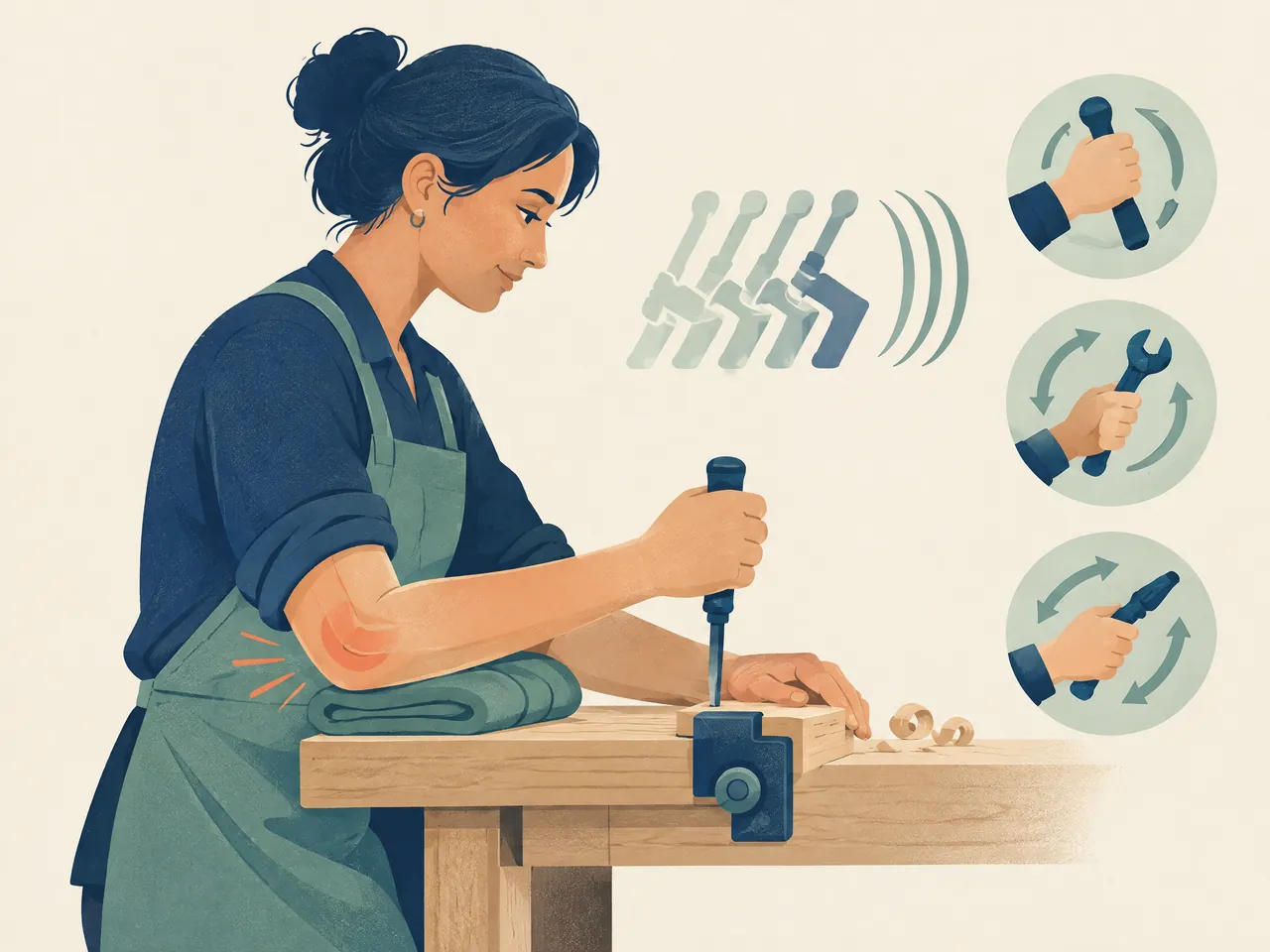
Outer-elbow pain and movement triggers — Tennis elbow symptoms, How long do tennis elbow symptoms last?, and tennis elbow self care
Look at the mechanics of a daily trigger before blaming one item of equipment. A mouse may matter because the wrist is held extended for hours; a suitcase may matter because fingers grip hard while the forearm is rotated; a racquet may matter because volume, technique and recovery have changed together. Alter one practical factor at a time, such as the load, the grip, the height of the work surface or the length of a session, so you can tell what actually helps.
Heat and cold are comfort tools rather than a cure. A wrapped hot or cold pack may be tried if it feels soothing; the NHS advises using a pack wrapped in a towel and gives a limit of up to 20 minutes every two to three hours. Protect the skin and stop if the area becomes more uncomfortable. Do not use the temporary easing from a pack as a signal to immediately return to the same painful load. [1]
Compare your options
| What you notice | A tennis-elbow-like pattern may include | A sensible next step |
|---|---|---|
| Pain location | Tenderness or pain on the outside of the elbow, sometimes extending into the forearm or wrist | Note the exact spot and whether it is tender to touch; discuss a different or spreading pattern with a clinician. |
| Grip and wrist tasks | Pain with a firm grip, lifting, turning a handle, using a mouse or rotating the forearm | Reduce or adapt the repeat trigger, then return gradually as tolerated. |
| Time course | A gradual onset over weeks or months, with symptoms changing according to use | Track task tolerance rather than expecting a fixed recovery date; seek advice if the trend is not improving. |
| Features outside the usual pattern | Major trauma, deformity, marked numbness, a hot swollen joint, or pain linked to the neck | Obtain timely medical assessment rather than relying on self care alone. |
On smaller screens, scroll the table sideways to compare all columns.
Tennis elbow symptoms — How long do tennis elbow symptoms last? Tennis elbow self care versus other elbow pain
Outer-elbow pain is not automatically tennis elbow. The side of the pain, the action that reproduces it, how it began and any symptoms beyond the elbow all matter. Pain more concentrated on the inner elbow may follow a different tendon pattern. Pain with marked joint stiffness or swelling, a sudden injury, or symptoms that run from the neck into the arm may need a different explanation. The American Academy of Orthopaedic Surgeons notes that clinicians may consider other causes, including arthritis, neck-related arm pain and nerve compression. [2]
For that reason, avoid deciding solely from a picture or a single tenderness test. A clinician may ask about the start of symptoms, work and sport demands, a prior injury, pain location and the movement that causes trouble. Examination can include gentle pressure and resisted wrist or finger movements; further tests are considered only when the history and examination make them useful. [2] A fuller symptom overview is available in lateral epicondylitis symptoms.
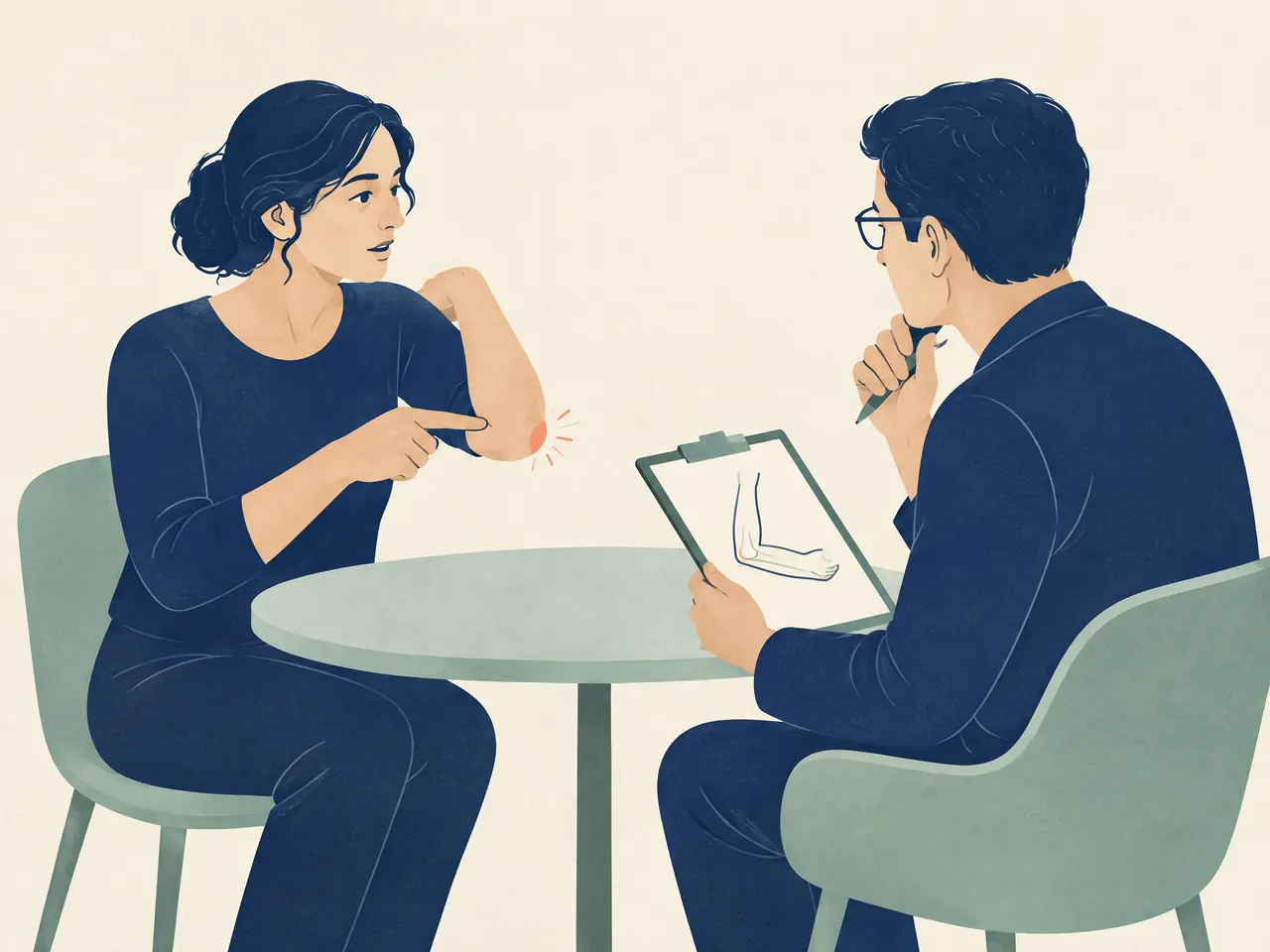
When tennis elbow symptoms may need assessment — How long do tennis elbow symptoms last? Tennis elbow self care and warning signs
Arrange a qualified assessment if rest and adjusted activity are not helping, if pain is getting in the way of sleeping or ordinary work, or if grip strength is clearly reduced. The NHS advises seeing a GP when elbow pain remains after at least two weeks of rest and self-care measures. Mayo Clinic likewise advises speaking with a healthcare professional when self-care such as rest and ice does not ease elbow pain and tenderness. [1] [3]
Seek urgent medical attention after a significant injury if the elbow looks deformed, cannot be used normally, or rapidly becomes very swollen, hot or red. Prompt assessment is also sensible for new marked numbness, tingling, loss of strength or pain that seems to come from the neck and travels down the arm. These features do not establish a particular diagnosis, but they are not the usual simple pattern to manage by repeatedly testing a painful grip.
Bring a concise timeline to an assessment: when the pain began, the hand involved, any change in workload or sport, previous treatment, and whether symptoms occur at rest or at night. List current medicines and relevant health conditions too. This information helps the professional decide whether activity advice, rehabilitation, imaging or another route is appropriate, and helps avoid treating every elbow complaint as the same condition.

Comparing pain patterns — Tennis elbow symptoms, How long do tennis elbow symptoms last?, and tennis elbow self care choices
A typical tennis-elbow-like pattern is outer-elbow pain linked with gripping, wrist movement, lifting or forearm rotation. It often develops gradually rather than after a memorable impact. By contrast, pain centred on the inner elbow, tingling into the hand, a locked joint, or pain strongly tied to neck movement adds information that should be assessed in context. The comparison is useful because it prompts better questions, not because it turns a website into an examination room.
For readers searching specifically for tennis elbow pain, it can help to separate symptom relief from recovery planning. Relief may mean changing a handle, resting between tasks or using a pack for comfort. Recovery planning looks further ahead: how will the forearm tolerate the same demand later, and what adjustment or guided exercise may make the return safer? That distinction can prevent a brief improvement from becoming a cycle of repeated flare-ups.
Tennis elbow symptoms — How long do tennis elbow symptoms last? Tennis elbow self care and TCM assessment
If you choose a TCM consultation for ongoing elbow discomfort, start with the same practical information that matters in any assessment: the exact pain site, what triggers it, how long it has been present, previous injury, work and sport demands, sleep disruption, current medicines and prior care. A Registered Chinese Medicine Practitioner may also ask about general health and accompanying symptoms within a traditional assessment. This traditional pattern discussion is not the same as a modern medical diagnosis and should not replace one when it is needed.
A useful consultation is collaborative. Explain whether you are already seeing a doctor or physiotherapist, using a brace, taking medicines or adapting work. This allows the discussion to complement rather than compete with other care. Acupuncture may be discussed as a supportive option after individual assessment, but it should not be presented as a guaranteed cure, an immediate solution, or a substitute for evaluation and progressive rehabilitation where those are indicated.
TCM Lab can be contacted to ask about an assessment for persistent tennis elbow symptoms at a Kwun Tong Chinese medicine clinic or a Chinese medicine clinic Prince Edward. Describe the language support you need and your symptoms when you message, so appointment arrangements can be confirmed. An enquiry is an opportunity to clarify suitability; it is not a diagnosis or a promise of a particular treatment result.
Heat, cold, stretching and strengthening — Tennis elbow symptoms, How long do tennis elbow symptoms last?, and tennis elbow self care
Choose heat or cold according to comfort, not a rigid rule about the stage of an injury. A cool wrapped pack may feel preferable after an activity that has stirred up pain; gentle warmth may feel more comfortable before a light mobility session. Either way, avoid placing extreme temperatures directly on the skin, do not fall asleep with a pack in place, and stop if it makes symptoms worse. The practical aim is comfort while the underlying load is being adjusted. [1]
Stretching is not a competition to reach the largest range. Start with an easy movement that does not cause a sharp pain, then reassess how the arm feels later that day and the next morning. Strength work is usually introduced progressively rather than all at once. The AAOS describes specific forearm exercise as part of non-surgical care, and notes that therapy can guide strengthening. A clinician can help you match the exercise dose to your current tolerance. [2]
Think in terms of load budgeting. If an exercise, household job and sport session all challenge the same forearm on one day, their combined effect matters. Spread demanding tasks out where possible, make a small change, and watch the response before adding more. This approach is slower than a dramatic one-off test, but it gives you better information about what the elbow can currently handle.

Discussing supportive options — Tennis elbow symptoms, How long do tennis elbow symptoms last?, and tennis elbow self care with a practitioner
Before any appointment, prepare two or three specific goals. You might want to lift a child without pain, complete a shift at a computer, return to cooking, or resume a sport. Be clear about the task and the amount of discomfort it causes. Goals framed around real activities give the practitioner a clearer picture than a pain score alone and make it easier to discuss what progress would look like in everyday life.
Ask what findings support the working explanation and what would suggest another assessment is needed. You can also ask how a suggested plan fits with medical care, physiotherapy or a brace you already use. If acupuncture or another traditional modality is mentioned, ask about its intended supportive role, expected practical commitments and when to report a lack of improvement or a change in symptoms. Informed decisions are especially important when pain has lasted longer than expected.
For a non-urgent enquiry, WhatsApp TCM Lab on +852 6940 5663 with a short description of the elbow problem and your preferred location. The team can confirm appointment availability rather than assuming a fixed schedule. If you want to review clinic charges before deciding, see the Chinese medicine clinic price list Hong Kong. For urgent warning signs or serious injury, seek appropriate medical care instead of waiting for a clinic enquiry.
Care and health guide
Health service information
This directory brings together services, reading, and visit information related to health services, to help you prepare questions for a consultation.
If you are organising health questions, Chinese medicine clinic Hong Kong is a starting point for learning about related services and preparing for a consultation.
People have different needs; acupuncture Hong Kong provides further reading to help you understand options in your own context.


Your questions, answered
Frequently asked questions
How long do tennis elbow symptoms last?
The duration varies. Many people improve over weeks with rest from aggravating activity and gradual rehabilitation, but symptoms can last months and sometimes longer than a year. [1] If the trend is not improving, the pain limits work or sleep, or the pattern changes, arrange an assessment instead of waiting for a fixed deadline.
Can tennis elbow self care rely only on heat or cold?
No. A wrapped heat or cold pack may be useful for comfort, but it does not identify the cause or replace a plan for modifying aggravating load and progressing activity. Stop if it worsens symptoms and protect the skin. Persistent pain needs professional advice. [1]
Is outer-elbow pain always tennis elbow?
No. Other joint, tendon, nerve or neck-related problems can produce elbow or forearm symptoms. Location, onset, movement triggers, numbness, weakness, stiffness and injury history all influence assessment. A clinician may consider further examination or tests when another cause is possible. [2]
Can a TCM consultation cure tennis elbow?
A TCM consultation can discuss symptoms, activity triggers and supportive options within a traditional assessment. It cannot promise a cure or replace medical assessment, rehabilitation or urgent care when these are appropriate. Share any medicines and other treatment you are receiving so care can be coordinated.
Sources and further information
- [1] NHS — Tennis elbow
Referenced for: Symptoms, self-care measures, typical course, and advice to seek assessment when pain persists after rest and self-care.
- [2] American Academy of Orthopaedic Surgeons — Tennis Elbow (Lateral Epicondylitis)
Referenced for: Symptom pattern, examination considerations, differential assessment, activity modification, and guided strengthening.
- [3] Mayo Clinic — Tennis elbow: Symptoms and causes
Referenced for: Overuse context, pain with common gripping tasks, and advice to seek care when self-care does not ease pain and tenderness.