
Prince Edward & Kwun Tong clinics · Home-visit enquiries elsewhere

TCM Lab

TCM Lab · Beauty & lifestyle / Materials and construction

Remy human hair wigs: understand the label without buying a promise

Content updated

A Remy label can start a useful conversation about how hair was handled. Turn that conversation into a comparison of two actual wigs, with the colour, cap and care routine you intend to live with.

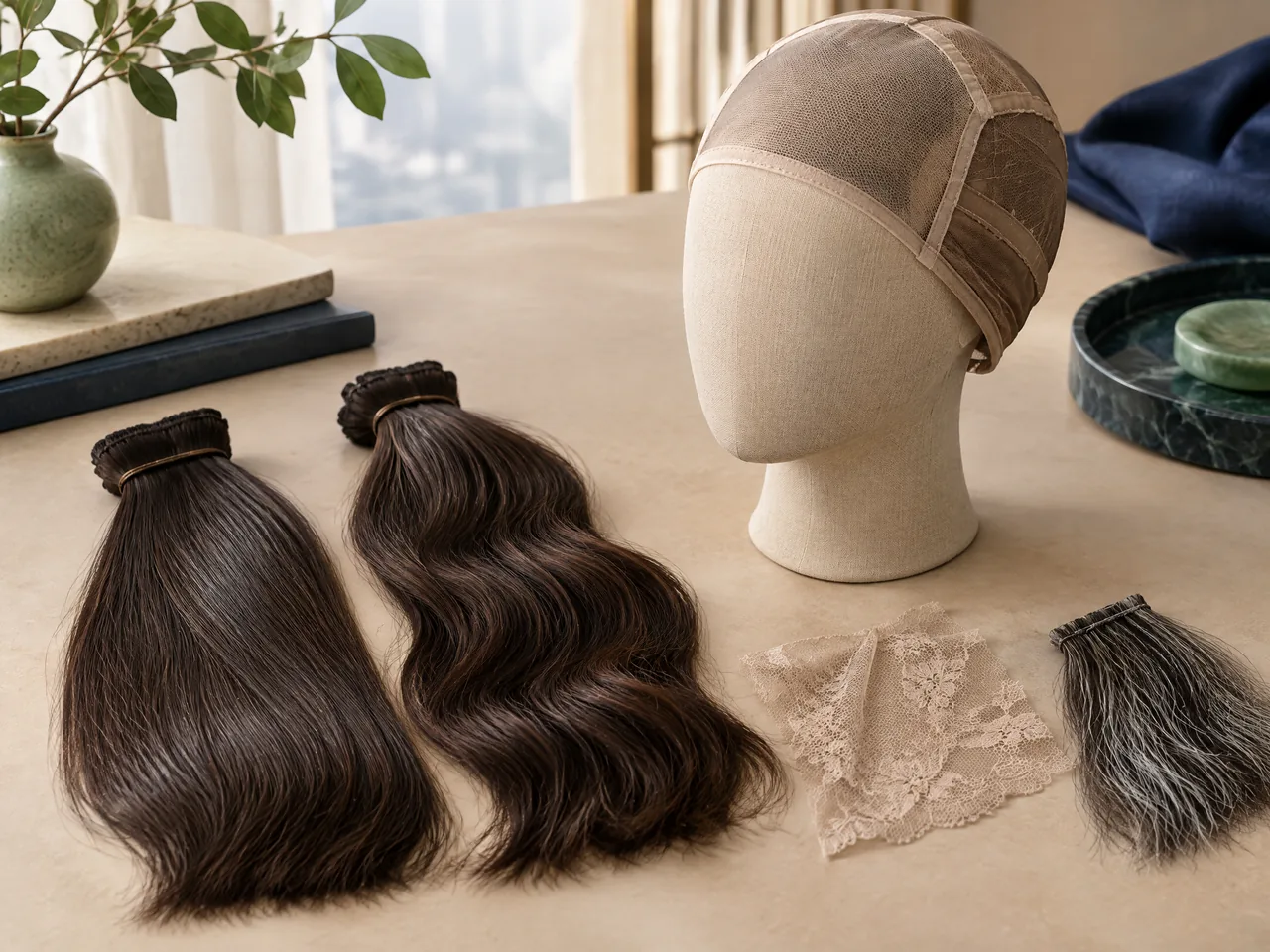
Illustrative hair materials, cap construction and grey colour swatches
Illustrative wig-lifestyle concept; not an OWNSTRAND product photograph or a client record.

The short answer

Remy usually describes human hair kept with its cuticles aligned from root to tip. It is not, by itself, an overall quality grade or permission to bleach, colour or heat-style a wig. Ask the supplier to define the term for the exact model, then compare disclosed processing, construction, fit and written care instructions. Choose the piece whose confirmed features suit your routine, rather than the strongest-sounding label.

OWNSTRAND is an external wig and hairpiece website under the same ownership as TCM Lab. These appearance and everyday wearing guides are separate from Chinese medicine care, not diagnosis, treatment or a promise of hair growth.

Read Remy as a description, not a verdict

When two similar-looking wigs carry different material descriptions, start by saving their model names and colour codes. Then ask what each maker means by Remy. Jon Renau describes hair sorted so that its root-to-tip direction remains aligned, and says the term does not establish quality, origin or length. Ellen Wille describes cuticles that remain mostly intact and face the same direction through production. The cuticle is the hair's outer layer; alignment describes how strands are arranged, not the whole finished wig. These explanations overlap, but their detail matters when you ask a supplier to describe a particular piece. [1] [2]

Use the OWNSTRAND guide to Remy human hair wigs as a starting point for that enquiry, not as a rating of every listed style. [4] A useful reply names the model and explains the hair description in plain language. A less useful reply simply repeats 'premium Remy'. You can ask, 'What information does the maker provide about cuticle handling for this colour and style?' Keep the answer beside the model name. If the reply stays vague, leave that detail marked unknown rather than upgrading it in your mind.

Ask about processing before planning a colour change

Do not add 'single donor' or 'untreated' to a description that only says Remy. Jon Renau's explanation explicitly includes hair collected from multiple sources. Ellen Wille's FAQ describes Remy collections that contain textile dyes. Together, these examples show why cuticle alignment cannot stand in for donor history or colour-processing information. [1] [2] If origin or previous treatment affects your decision, ask a separate question about it. Request the maker's description where available; a photograph of glossy hair cannot answer what processing has occurred. There is no need to guess a manufacturing history from a sales adjective.

Colour permissions offer a concrete test of the specification. Ellen Wille says its Pure Power human-hair collection is not intended for chemical recolouring because it contains textile dyes, while its Pure Europe guidance allows colour work by an experienced alternative-hair specialist. [2] This is a distinction within that maker's range, not a promise about another brand. If you want a lighter shade later, ask about that plan before buying. 'Can I darken this particular colour?' and 'Can I bleach it?' are different questions. Get a clear answer rather than treating 'real hair' as permission for either process.

Compare the same features on two samples

A showroom comparison is easier to interpret when the pieces have similar lengths and silhouettes. Otherwise, you may prefer the cut rather than the material. Ask whether each sample has been salon-styled and whether the displayed colour is the one you could order. With permission, examine how the ends sit, how much hair falls around your face and whether the density feels right to you. Describe what you see without turning it into a quality score: 'The ends look fuller on this sample' is more useful than 'This must be better hair'.

Look at the colour near a window as well as under indoor lighting; the American Cancer Society recommends natural-light comparison when matching a wig to a hair swatch. [3] Bring a hairstyle photograph if you want a familiar look, and include a side view rather than only a front-facing portrait. Ask to see the intended parting and the back before deciding. Softness or shine may help you choose a finish you enjoy, but neither observation verifies cuticle direction or future performance. Treat a sample as evidence of its present appearance, not a demonstration of how every order will age.

Give the cap a separate fitting appointment

The hair label does not tell you where the cap can be parted or how its front edge will look. The American Cancer Society describes lace fronts, monofilament areas and hand-tied construction as different wig features, and distinguishes a full wig from a topper that adds coverage at the crown. [3] Confirm which category you are comparing before looking closely at the base. Ask the fitter to show the actual parting area and permitted styling positions. A strand description is not a substitute for seeing whether the construction supports the hairstyle you want.

When browsing human hair wigs, shortlist by your preferred coverage and silhouette, then request the cap and sizing details for each candidate. OWNSTRAND's category page is a route to product enquiries; a listing does not confirm supply. [5] TCM Lab and OWNSTRAND are under common ownership, so these links are provided openly as related commercial information. At a fitting, try your glasses again after positioning the wig, turn your head and notice pressure around the ears or nape. Check the maker's size chart rather than assuming a familiar size label will fit across brands. [3]

Plan the hairstyle you can maintain on an ordinary morning

A polished product photo can leave the work behind the style invisible. Ask to see the supplied texture and find out what is needed to recreate the display finish after washing. Would the shape need a blow-dry, a specialist appointment or only a small adjustment? Describe a real weekday: perhaps you put on the wig before an early train and have little time to restyle it. Also describe how you want to wear it on a weekend. The useful choice is one whose permitted styling and care you can manage, not one chosen for hypothetical possibilities.

Obtain the current care instructions for the exact item before using tools. Ellen Wille gives its own dry-hair heat-styling guidance and describes gentle downward washing and towel blotting for its human-hair styles. [2] Those instructions illustrate why the maker's method matters; they should not become a universal temperature or wash timetable for every Remy wig. Ask which products are approved, how the base should be handled and where the piece should dry. If the instructions and a seller's verbal advice conflict, resolve the difference before experimenting. Keep the guidance accessible so another stylist can read it too.

Leave with a specification, not an assumed guarantee

Before paying, assemble a short purchase record: the exact model and colour, confirmed hair description, cap construction, size and any agreed fitting work. Put the care instructions with it. Ask for a quotation that makes clear which services or accessories are included and which are separate. Check the return or exchange policy before any cutting or alteration; the American Cancer Society also advises checking a retailer's return terms before purchase. [3] For an order rather than a sample purchase, clarify how the colour and size will be confirmed and what happens if the supplied specification differs.

Finish by asking yourself whether the confirmed benefits are worth the quoted cost for your use. You might prefer one piece because its density suits your face or another because its care routine is clearer. Neither decision requires declaring all non-Remy hair inferior: both manufacturers distinguish the label from overall quality. [1] [2] Avoid budgeting around an assumed lifespan or tangle-free promise that the individual specification does not establish. A wig is an appearance choice, not a treatment for hair loss or a way to stimulate growth. If symptoms need attention, keep that health discussion separate from the material purchase.

Take it into everyday life

A practical checklist

  • Save the model name, colour code and exact fibre wording for each shortlisted wig.
  • Ask the maker or supplier what Remy means for that item and record any unanswered details.
  • Request separate information about processing or origin only where it matters to your decision; do not infer it from the label.
  • Confirm whether your intended heat styling, darkening or lightening is allowed for the exact colour and model.
  • Compare samples of similar length, and ask whether their displayed finish required salon styling.
  • Check colour near a window and bring a hairstyle reference if you want a familiar look.
  • Try the cap with your glasses, assess the actual parting area and use the brand's sizing guidance.
  • Obtain care instructions, a detailed quotation, supply confirmation and return terms before paying or authorising alterations.

Questions & answers

Does Remy mean virgin hair or hair from a single donor?

Not on its own. Jon Renau's Remy explanation includes hair collected from multiple sources, and Ellen Wille describes Remy collections containing textile dyes. The word therefore does not establish a single donor or an untreated colour history. Ask separately for any sourcing or processing information important to you. [1] [2]

Can I bleach a Remy wig after buying it?

Do not assume so. The manufacturer's permissions for the exact model and colour come first. Ellen Wille gives different colouring guidance for Pure Power and Pure Europe, showing that even human-hair collections from one maker can have different restrictions. Explain whether you want lightening or darkening and seek written guidance before arranging colour work. [2]

Can I identify Remy hair by feeling a sample?

A sample lets you assess whether you enjoy its texture and current appearance, but touch does not provide a production record. Ask for the maker's material description and supplier explanation rather than using softness as proof of aligned cuticles. Record the feel as a personal preference, separately from what is confirmed about the hair.

Does a higher-priced Remy wig necessarily suit me better?

No label settles fit, density or maintenance preferences. Jon Renau and Ellen Wille distinguish Remy status from overall quality. Compare what the quotation includes and try the relevant cap and hairstyle where possible. A more expensive option is not automatically the one you will find easiest to wear. [1] [2]

What should I ask if buying online without trying the wig?

Request the precise model, colour reference, cap construction, brand sizing method and care instructions. Ask whether images show the supplied finish or a styled sample, and confirm availability and return terms before ordering. If an essential detail remains unclear, pause the purchase rather than assuming the Remy label fills the gap. [3] [5]

Sources & further context

Numbered references follow the source order below. Product and service websites provide appearance-related context, not medical evidence.

  1. [1] Jon Renau — REMY VS NON-REMY hair
  2. [2] Ellen Wille — Human Hair FAQ
  3. [3] American Cancer Society — Wigs for Hair Loss
  4. [4] OWNSTRAND — Remy human hair wigs vs non-Remy human hair wigs
  5. [5] OWNSTRAND — human hair wigs

Keep appearance notes separate from material evidence

Make your comparison note distinguish observation from supplier information. For example, 'Sample A has fuller shoulder-length ends' belongs under appearance; 'the maker describes aligned cuticles' belongs under material information. Put the sample's model and colour beside both statements so a different display piece cannot silently become the reference. If one candidate is longer, ask whether a comparable-length sample is available before judging the ends. The separate tresses in the illustrations represent comparison aids only: neither magnification nor a length reference authenticates Remy status. An unanswered processing question should remain visible in your notes, even when you prefer the sample's appearance. [1] [2]
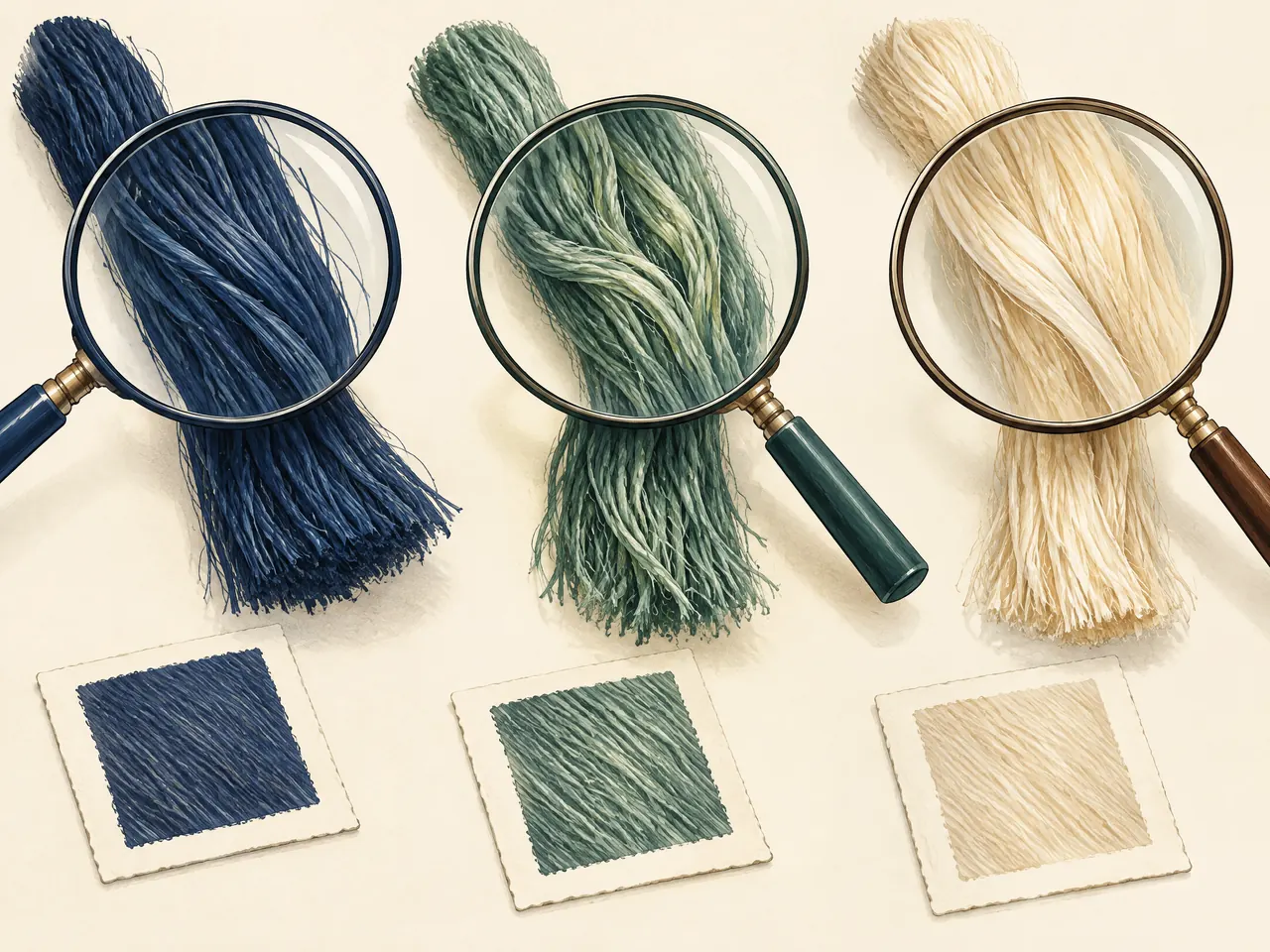
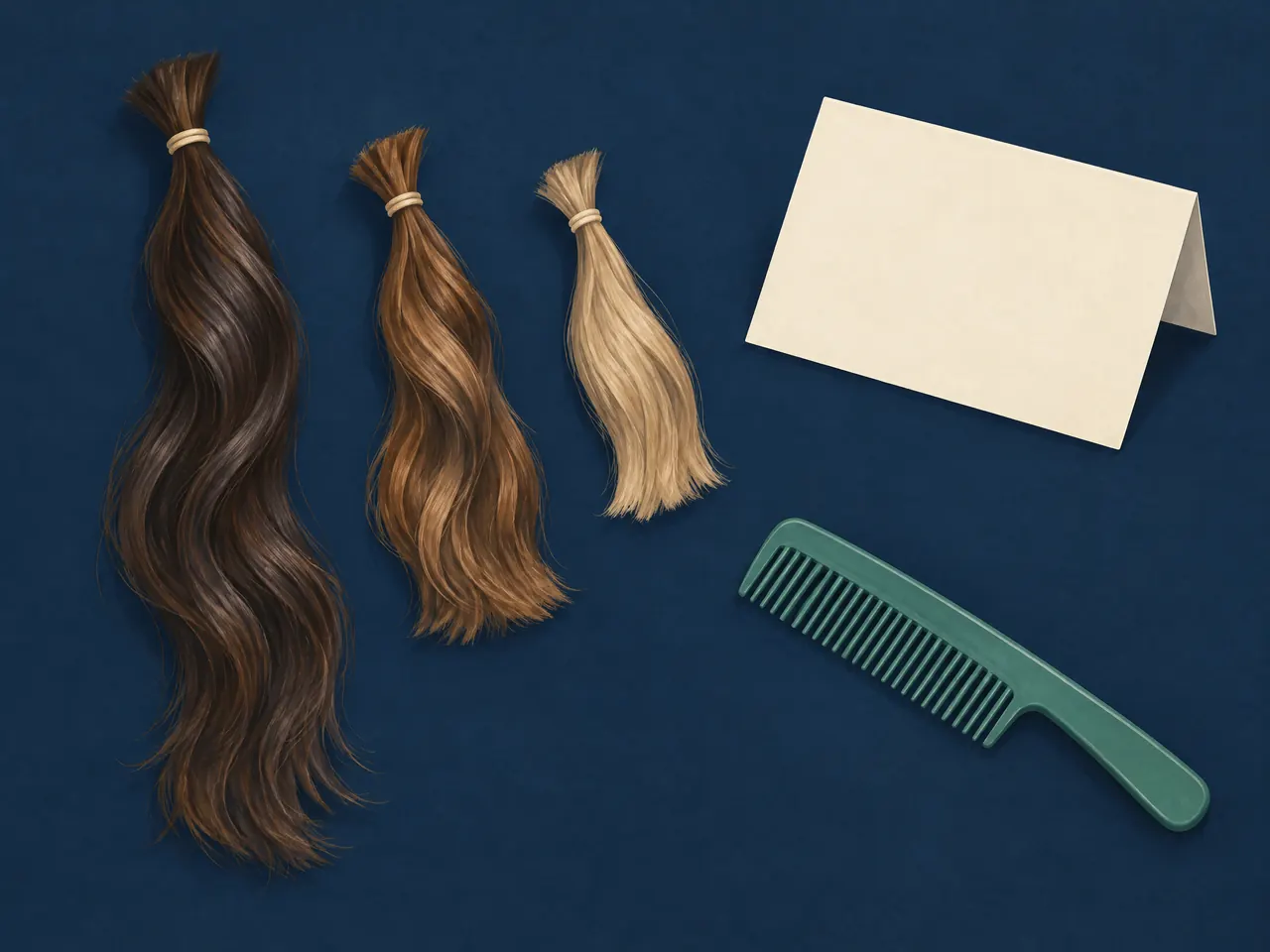
Illustration of three separate hair-like fibre bundles beneath a magnifying lens beside unlabelled sample cards
Illustrative material-comparison aids; the fibres and lens do not verify a wig's cuticle alignment or production history.Generated illustrative image
Illustration of three separate practice hair tresses of different lengths beside a blank folded card and comb
Illustrative length references for describing samples; not photographs of products or evidence of hair quality.Generated illustrative image

Recheck the ordered piece before agreeing to alterations

At collection, compare the supplied model and colour code with your saved record before discussing any trim. Ask the fitter to repeat the brand's measurements rather than copying a size from the display wig. Record the size actually ordered separately from any adjustment made during the fitting. For colour, use the same reference and similar lighting as the earlier comparison; a photograph taken under a different lamp is not a dependable substitute for viewing the hair again. The measuring-tape illustration shows a question to confirm with the fitter, not a universal sizing method. A changed size or shade should prompt clarification before you approve an alteration. [3]
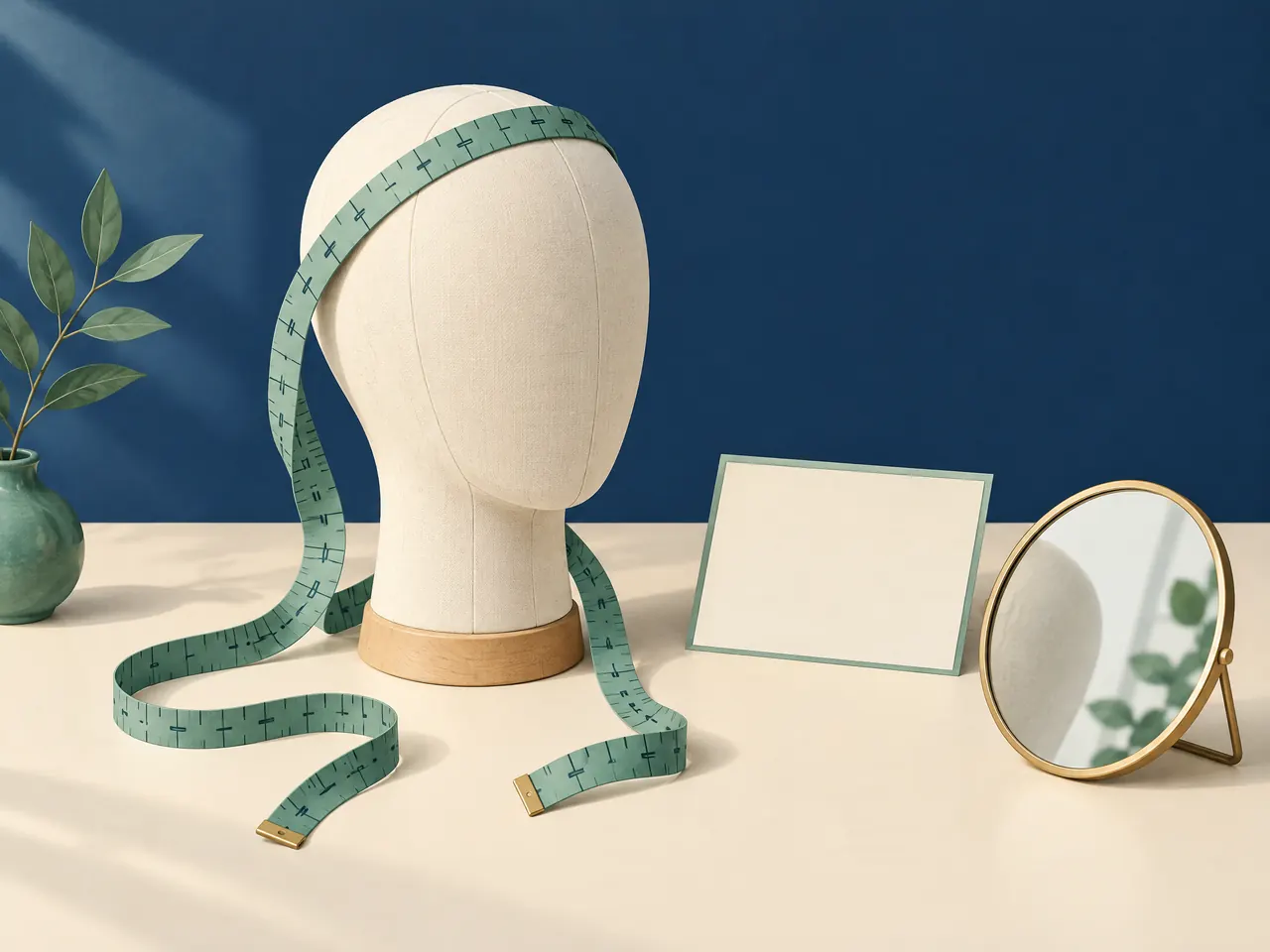
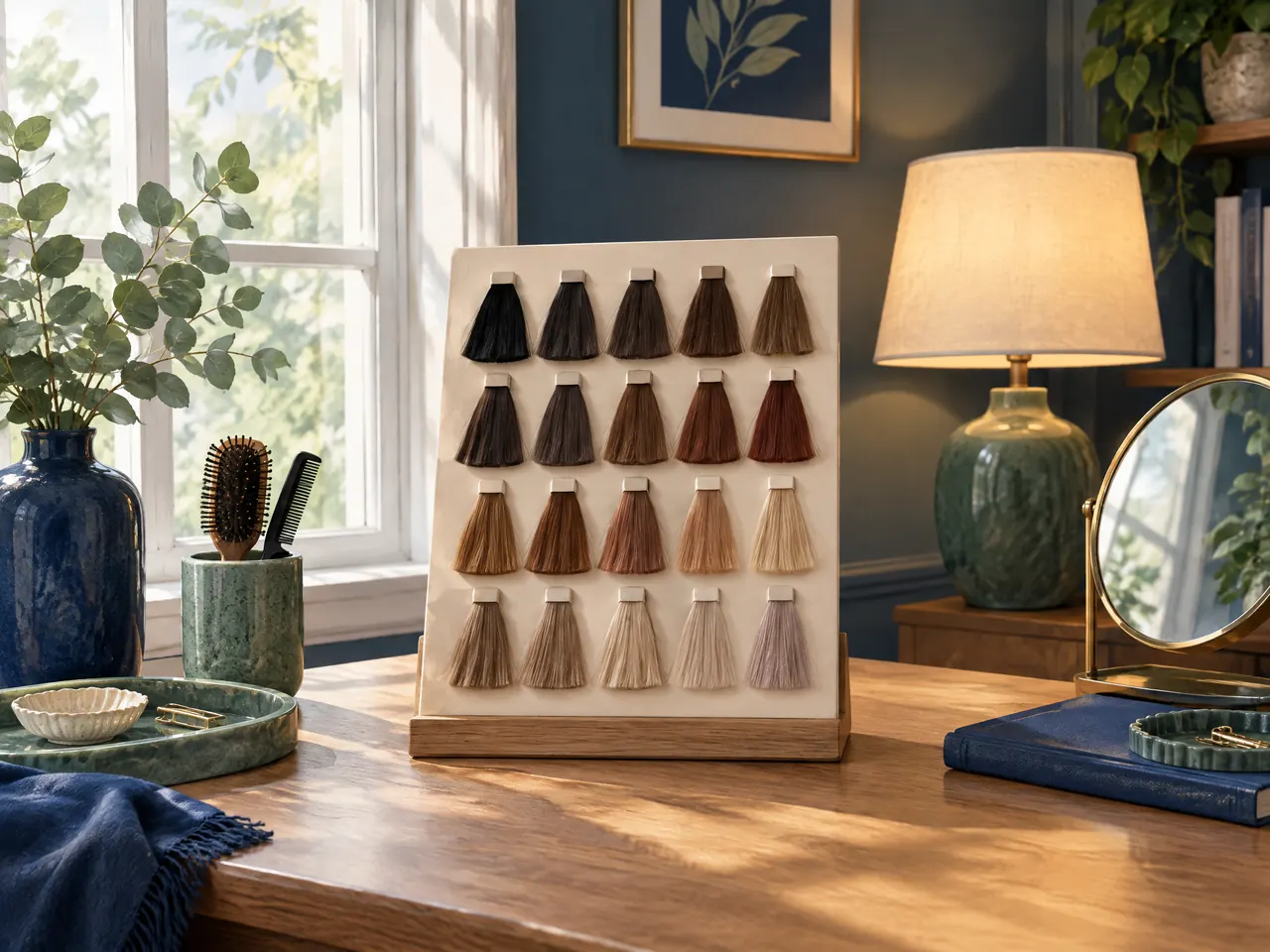
Illustration of a fabric measuring tape loosely around a blank mannequin dome beside an empty fit-note card and mirror
Illustrative fitting objects; confirm the actual wig brand's measurement method and ordered size with the fitter.Generated illustrative image
Illustration of one hair sample board between soft window daylight and a shaded indoor lamp beside a mirror
Illustrative lighting comparison; assess the actual ordered colour with your reference rather than treating this scene as a shade guide.Generated illustrative image

Ask what happens between washing and the finished hairstyle

Ask for a demonstration of the transition from washing to the style you intend to wear, not just a list of tools. Have the supplier identify which steps are drying, which are shaping and which must wait until the hair is dry. Ellen Wille's guidance separates towel blotting and stand drying from dry-condition heat styling, with a dryer and round brush used for a smooth finish; these are examples for its own human-hair styles. [2] For your shortlisted item, confirm whether that finish is supplied or needs recreating, and which stand or support the maker recommends. Illustrations of a dryer and a drying stand do not mean both are suitable for every wig. Take the item-specific instructions to a stylist if you need help estimating the work between washes.
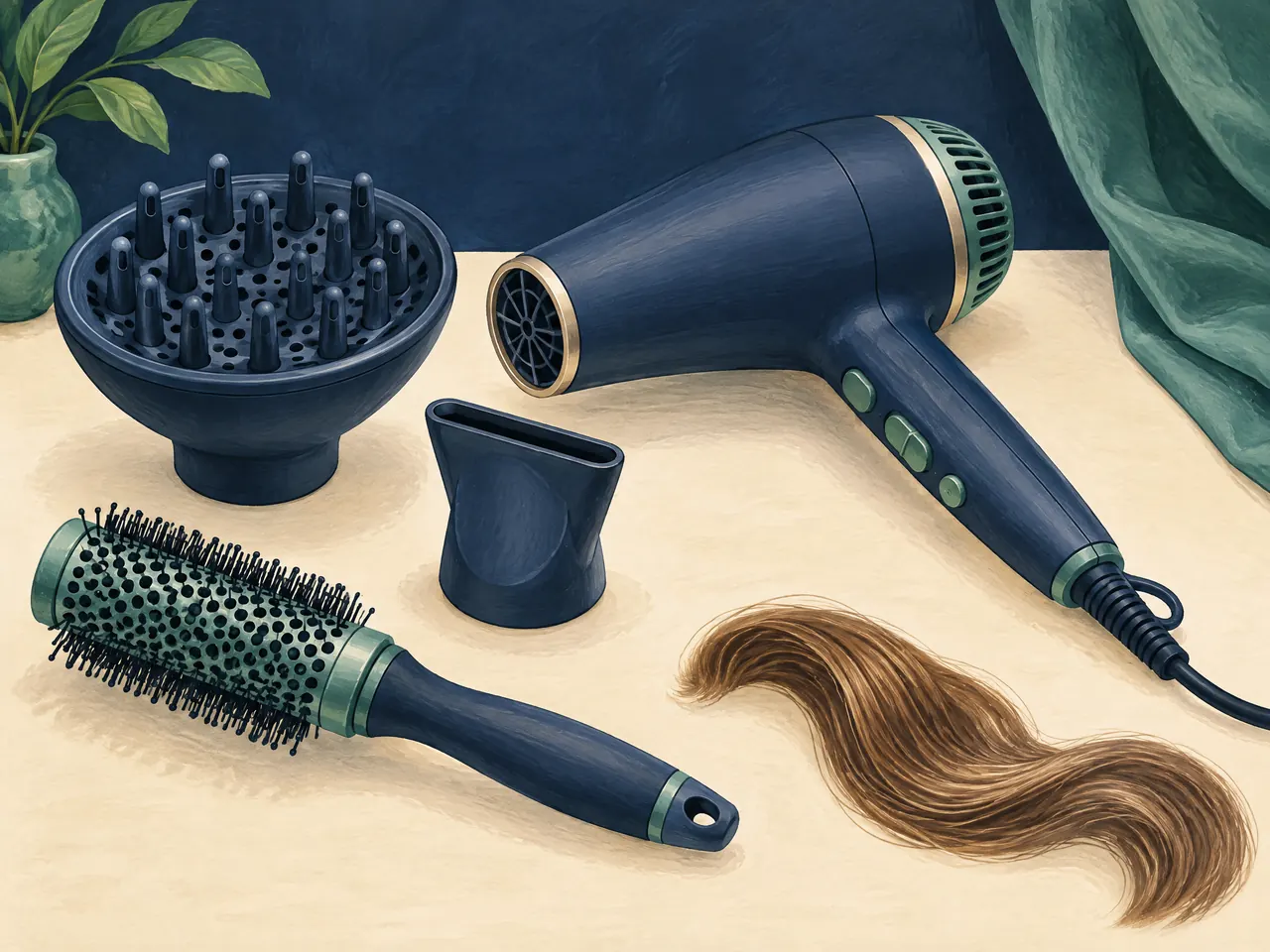
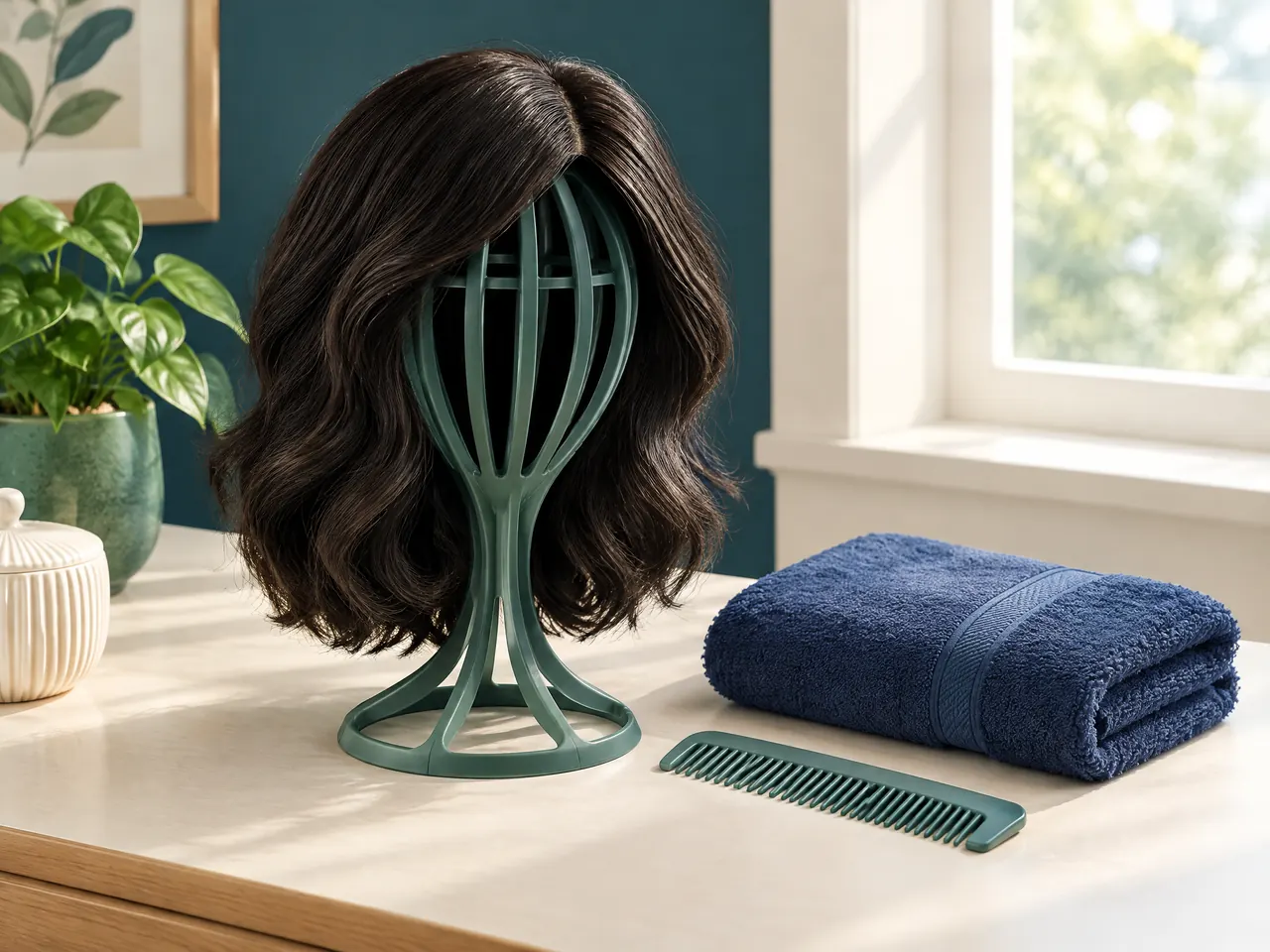
Illustration of an unplugged unbranded hair dryer with a diffuser and nozzle beside a round brush and loose practice tress
Illustrative styling equipment; follow the exact wig's permitted tools and method, not assumptions based on its Remy label.Generated illustrative image
Illustration of an anonymous wig on an open ventilated stand beside a folded towel and comb near indirect daylight
Illustrative drying support; confirm the maker's drying instructions rather than inferring a method from the pictured stand.Generated illustrative image

Clinic enquiries

Contact and appointment arrangements

Clinics
Prince Edward and Kwun Tong
Opening hours
11:00–21:00
WhatsApp and telephone
+852 6940 5663

Appointments, practitioner availability and service arrangements are confirmed via WhatsApp.

Please mention any consultation language needs in your WhatsApp enquiry so that arrangements can be confirmed.

Enquire via WhatsApp
Food, gifts and floral lifeWhatsApp enquiry