
TCM Lab · Health reading
Hair Loss Acupuncture Risks: Acupuncture for Hair Loss Side Effects and Can Acupuncture for Hair Loss Cause Infection?
Published Updated
A thinning hairline or a widening part can make almost any proposed treatment feel urgent. Before booking scalp acupuncture or a related TCM technique, it is sensible to ask what the skin may do afterwards and what would be a warning sign. Most discussion begins with short-lived local effects such as warmth, redness, tenderness, a pinpoint spot of blood or a small bruise. Infection is less common, but it is a real risk whenever a treatment breaks the skin and hygiene or aftercare is inadequate. The safest next step is not to treat every kind of shedding as the same problem: clarify the hair-loss pattern, scalp condition, medicines and health history first. That conversation helps distinguish an appropriate, carefully delivered session from a situation that should be medically assessed or postponed.
Appointments are confirmed through WhatsApp. If you have language requirements, please mention them in your enquiry.
The short answer
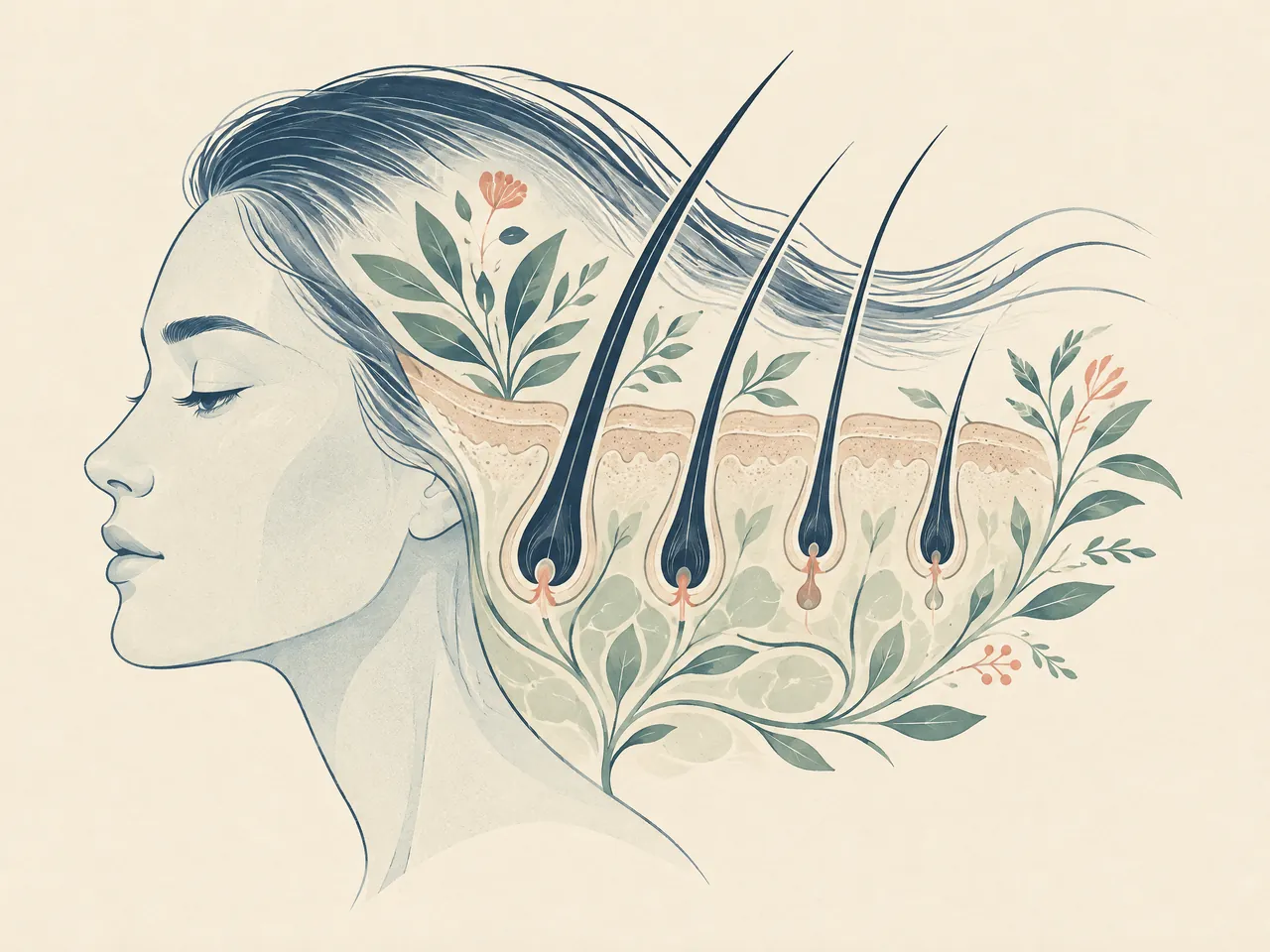
Acupuncture for hair loss can leave temporary redness, warmth, mild soreness, pinpoint bleeding or a small bruise where the scalp was stimulated. Infection can occur if skin-puncturing treatment is delivered with poor hygiene or the treated skin is exposed to contamination. Do not treat over broken or actively inflamed scalp skin. Tell the practitioner about anticoagulants, bleeding problems, pregnancy and relevant health conditions, and seek prompt medical advice for worsening pain, heat, swelling, discharge, fever or feeling unwell.
Transparent pricing
See the fees.
Choose your care.
Explore our complete official price list, including first-trial prices, regular prices, packages and branch-specific options.
Opening WhatsApp prepares an enquiry; it does not send a message, take payment or confirm an appointment. Suitability and individual arrangements are confirmed during consultation.
Hair and scalp
All prices in HKDScalp health and hair-loss management
Includes AI scalp analysis, deep scalp and follicle cleansing, and scalp oil-control care.
HK$380 (first trial)
Regular price: HK$680
- 6 sessions: HK$3,480 (HK$580 per session)
- 12 sessions: HK$5,760 (HK$480 per session)
- 20 sessions: HK$8,600 (HK$430 per session)
- 30 sessions: HK$11,400 (HK$380 per session)
Hair acupuncture and Chinese herbal medicine package
Includes scalp acupuncture and 3 days of Chinese herbal medicine that does not require decoction.
HK$580 (single session)
Registered Chinese Medicine Practitioner consultation
- 6 sessions: HK$3,180 (HK$530 per session)
- 12 sessions: HK$5,760 (HK$480 per session)
- 20 sessions: HK$8,600 (HK$430 per session)
- 30 sessions: HK$11,400 (HK$380 per session)
Combined hair and scalp treatment
Combines acupuncture and Chinese herbal medicine with salon-level scalp and follicle care. Packages include complimentary hair-care shampoo and serum.
HK$1,260 (single session)
Combined treatment
- 8 sessions: HK$8,640 (HK$1,080 per session)
- 16 sessions: HK$15,680 (HK$980 per session)
- 20 sessions: HK$18,600 (HK$930 per session)
- 30 sessions: HK$26,400 (HK$880 per session)
Weight management
All prices in HKDFull-body acupoint embedding for weight management
Includes full-body acupoint embedding. Packages include complimentary Chinese herbal medicine for weight management, with the number of included days scaled to the package. Embedding material and the individual treatment arrangement are confirmed during consultation; this is not a cosmetic thread lift.
HK$980 (single session)
No trial session
- 10 sessions: HK$7,800 (HK$780 per session)
- 20 sessions: HK$14,600 (HK$730 per session)
- 30 sessions: HK$20,400 (HK$680 per session)
Facial acupuncture
All prices in HKDFacial acupuncture (basic)
Includes facial acupuncture and meridian-based facial care, including care for facial puffiness.
HK$480 (first trial)
Regular price: HK$680
- 10 sessions: HK$5,200 (HK$520 per session)
- 20 sessions: HK$9,600 (HK$480 per session)
- 30 sessions: HK$13,500 (HK$450 per session)
Facial acupuncture (advanced)
Includes enhanced facial acupuncture with a specially formulated moisturising mask and serum.
HK$780 (first trial)
Regular price: HK$1,180
- 10 sessions: HK$9,000 (HK$900 per session)
- 20 sessions: HK$16,600 (HK$830 per session)
- 30 sessions: HK$23,400 (HK$780 per session)
Pain care
All prices in HKDExtracorporeal shockwave treatment
Shockwave treatment for deep-tissue and fascial care. The Kwun Tong clinic offers the multi-area options shown below.
Priced by branch
Branch-specific pricing
Prince Edward: HK$250 per area
Kwun Tong: HK$250 for 1 area / HK$450 for 2 areas / HK$600 for 3 areas
Pain care (manual therapy)
Includes Chinese medicine musculoskeletal assessment, manual joint techniques and tui na.
HK$580 (single session)
Chinese medicine musculoskeletal assessment
Pain care (acupuncture and manual therapy)
Combines acupuncture and manual therapy.
HK$680 (single session)
Combined care
Chinese medicine
All prices in HKDAcupuncture and Chinese herbal medicine package
Includes a Chinese medicine consultation with pulse assessment, body acupuncture and 3 days of Chinese herbal granules that do not require decoction.
HK$580 (single session)
Chinese medicine consultation with pulse assessment
Hair Loss Acupuncture Risks: Acupuncture for Hair Loss Side Effects and Can Acupuncture for Hair Loss Cause Infection? — A quick safety answer
For a person asking about hair loss acupuncture risks, the direct answer is that short-lived local reactions and more consequential complications should not be treated as the same thing. The scalp has a rich blood supply and is frequently touched, brushed and covered with hair products. After a carefully performed session, a small area may look pink, feel warm or be tender when pressed. A needle or multi-point tapping tool can also leave tiny spots of bleeding or a light bruise. These are descriptions of possible reactions, not a promise that they will occur or a measure of whether the treatment is working.
The infection question matters because the risk is linked to skin penetration, not to whether the aim is hair loss, pain or another concern. The National Center for Complementary and Integrative Health notes that complications have resulted from nonsterile needles and improper delivery, and that acupuncture needles regulated in the United States must be sterile and labelled for single use. [1] A prospective patient can use that principle practically: ask who will perform the treatment, whether needles are opened for single use, how the working area is prepared, and what aftercare is advised for their own scalp.

Safety also begins before the first needle. Sudden shedding, round bald patches, scaling, severe itch, crusting or tenderness may call for diagnosis rather than immediate scalp stimulation. The NHS lists several possible contributors to hair loss and advises people who are worried about it to seek medical advice before going to a commercial hair clinic. [2] If the change is abrupt or patchy, read about sudden patchy hair loss and arrange appropriate assessment instead of assuming a single treatment fits every pattern.
Hair Loss Acupuncture Risks: Acupuncture for Hair Loss Side Effects and Can Acupuncture for Hair Loss Cause Infection? — What reactions may occur
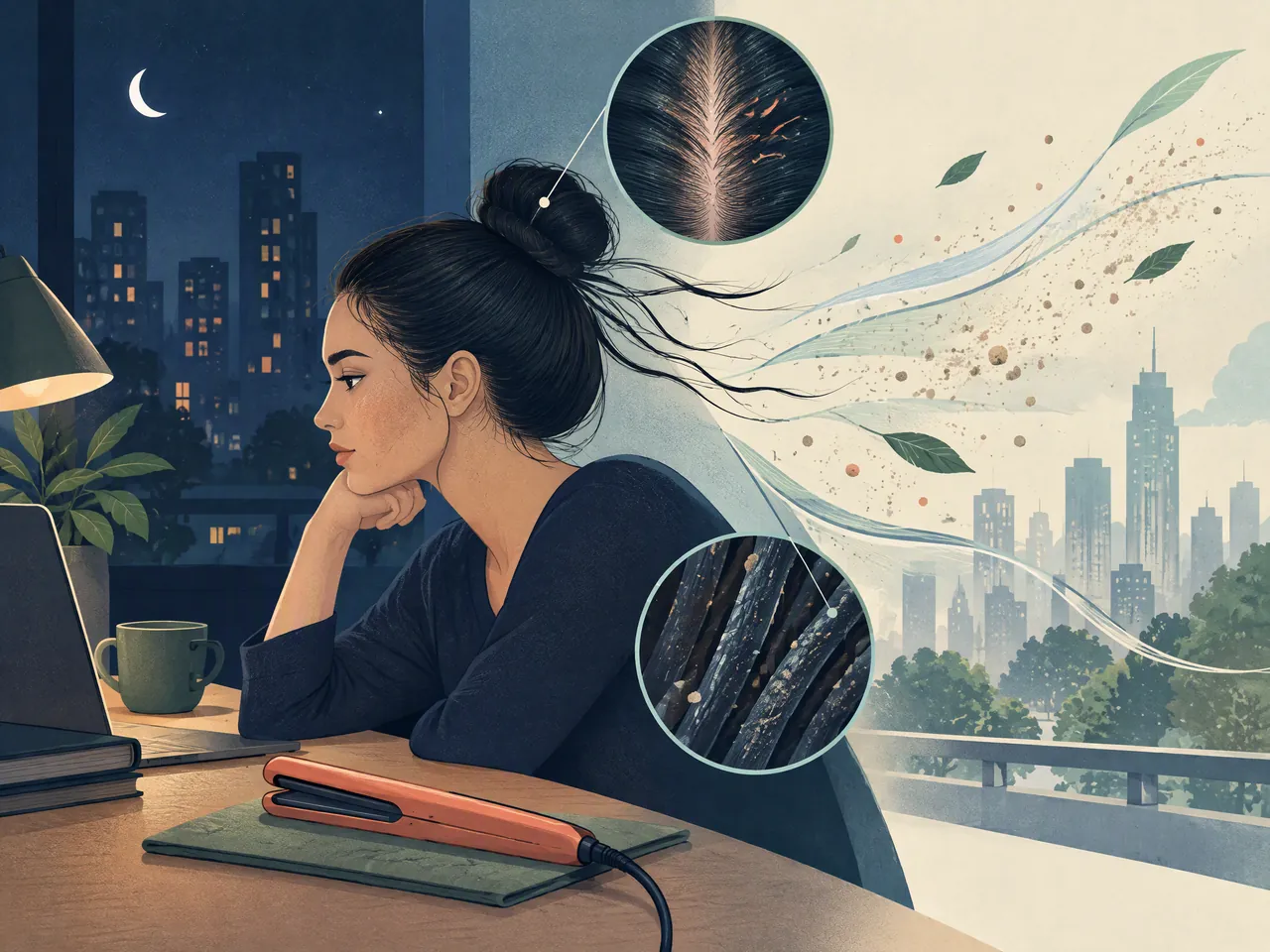
It helps to notice both the intensity and direction of a reaction. Mild redness, transient warmth, brief stinging, a pinpoint blood spot and a small bruise may remain local and settle. A different pattern is pain that is getting stronger, redness that is spreading, increasing heat or swelling, discharge, or a person feeling feverish or generally unwell. Those features should not be explained away as a normal response to hair-loss acupuncture. Official NHS guidance on bacterial skin infection identifies painful, hot and swollen skin as a reason to seek urgent advice; it also notes that broken skin can allow bacteria into deeper layers. [3] This does not mean every red mark is an infection, but it does make timely assessment the safer choice when symptoms escalate.
Hair Loss Acupuncture Risks: Acupuncture for Hair Loss Side Effects and Can Acupuncture for Hair Loss Cause Infection? — Why individual assessment matters
A meaningful pre-treatment discussion is more than a form. Mention active scalp eczema, folliculitis, sores, a recent procedure, a tendency to bruise, a bleeding or clotting disorder, and medicines that may affect bleeding. Pregnancy and significant illness also deserve individual discussion before needling. Someone with a tender, weeping, infected or open area should pause scalp-puncturing treatment until the underlying problem has been assessed. The same applies when a new topical product has already caused a rash: adding multiple new exposures on the same day makes it harder to tell what is irritating the skin. For a wider comparison of technique-specific concerns, see plum blossom needle side effects.
Compare your options
| What you notice | Why it may need attention | Practical next step |
|---|---|---|
| Mild local redness or brief tenderness that is settling | A temporary local response can occur after scalp stimulation | Monitor it and follow the specific aftercare instructions given for the technique. |
| A tiny blood spot or light bruise | Skin contact or puncture can affect superficial vessels | Avoid picking or rubbing; disclose bleeding medicines or disorders before future treatment. |
| Itch or rash after a newly used topical product | This may be irritation or sensitivity rather than a needling effect | Stop the new product and seek advice if symptoms persist, spread or are severe. |
| Increasing pain, heat, swelling, spreading redness, discharge, fever or feeling unwell | These are not symptoms to dismiss as routine and may require prompt assessment | Seek timely medical advice; urgent care is appropriate if symptoms are severe or you are very unwell. |
| Sudden patchy loss, marked scaling or an unexplained scalp change | The underlying hair or skin condition may need diagnosis | Arrange medical assessment before pursuing another scalp-stimulation session. |
On smaller screens, scroll the table sideways to compare all columns.
Hair Loss Acupuncture Risks: Acupuncture for Hair Loss Side Effects and Can Acupuncture for Hair Loss Cause Infection? — Understanding scalp stimulation
“Acupuncture for hair loss” can describe more than one experience. Conventional body acupuncture may involve fine needles at selected points, while some practitioners may discuss local scalp needling. A plum blossom needle, also called a dermal hammer in some English-language settings, uses several short needles arranged in a small head and is tapped against the skin. The amount of contact with the scalp, whether the surface is punctured, and the chance of pinpoint bleeding are therefore not identical from one approach to another. Ask for the proposed method in plain terms before consenting, rather than relying on a broad label such as scalp stimulation.
The practical question is not which tool sounds strongest or most natural; it is whether the plan is appropriate for the person in front of the practitioner. Someone who has just coloured their hair, used a harsh exfoliating scalp product, has sunburn, or is scratching an itchy eruption already has a compromised surface to consider. The conservative option may be to wait until the scalp is calm. Arriving with clean, product-light hair can also make it easier to inspect the area and follow hygiene measures, but it does not replace individual instructions from the practitioner.
TCM may frame hair concerns in terms of the person’s broader pattern and may combine consultation, acupuncture or herbal approaches. That language does not remove the need to check common medical contributors or to state what is uncertain. Current public guidance on hair loss shows why: shedding can occur for different reasons, and no treatment is 100% effective. [2] A careful consultation can hold both ideas at once—respecting an individual’s interest in TCM while avoiding claims that scalp stimulation has a guaranteed hair-regrowth outcome.
Hair Loss Acupuncture Risks: Acupuncture for Hair Loss Side Effects and Can Acupuncture for Hair Loss Cause Infection? — Acupuncture and related TCM approaches
Comparison is useful because aftercare depends on what was actually done. Fine-needle acupuncture may leave no visible mark or a tiny spot, whereas tapping methods may create multiple superficial points of contact. A topical wash or herbal preparation does not puncture the skin, but it can still irritate or trigger contact sensitivity in some people. Do not assume “external” means risk-free, and do not layer a new topical product onto recently irritated skin without advice. If a dermal hammer has been suggested, this overview of dermal hammer side effects can help you prepare specific questions about the tool, cleanliness and what to report after treatment.
Hair Loss Acupuncture Risks: Acupuncture for Hair Loss Side Effects and Can Acupuncture for Hair Loss Cause Infection? — What current evidence can and cannot show
A safety conversation should not be converted into a hair-growth promise. The authoritative acupuncture guidance cited here addresses general treatment safety, including sterility, rather than proving that acupuncture regrows hair. [1] Similarly, a personal impression after one session cannot establish why shedding has changed; hair growth and shedding follow longer cycles and may be influenced by many factors. It is reasonable to ask what outcome is being monitored, how long an approach is intended to be reviewed, and what would prompt referral. It is not reasonable to assume that more stimulation, bleeding or discomfort indicates better results. Keep the focus on safe delivery, a clear diagnosis where needed, and realistic review.
Hair Loss Acupuncture Risks: Acupuncture for Hair Loss Side Effects and Can Acupuncture for Hair Loss Cause Infection? — Precautions and aftercare
Before an appointment, make a short list that includes the onset and pattern of loss, recent illness or weight change, scalp symptoms, current medicines and any prior reaction to needling, adhesive, antiseptic or hair products. Take that list to the consultation rather than trying to remember it while anxious. A photograph of a changing patch can be useful for your clinician, but privacy-conscious storage is sensible. The practitioner can then decide whether an area should be left untouched, whether scalp treatment should wait, or whether another medical assessment is more important first.
After a skin-puncturing treatment, follow the individual aftercare plan given on the day. In general, avoid scratching, squeezing or aggressively massaging the treated area. Do not share combs or headwear while there is a questionable skin problem, and take care around visibly dirty water or activities that may rub a fresh, irritated area. Keep observing rather than repeatedly touching the site. If you are uncertain about washing, swimming, exercise, styling products or hair colouring, ask the practitioner for timing that matches the exact technique used rather than applying generic advice from a different procedure.
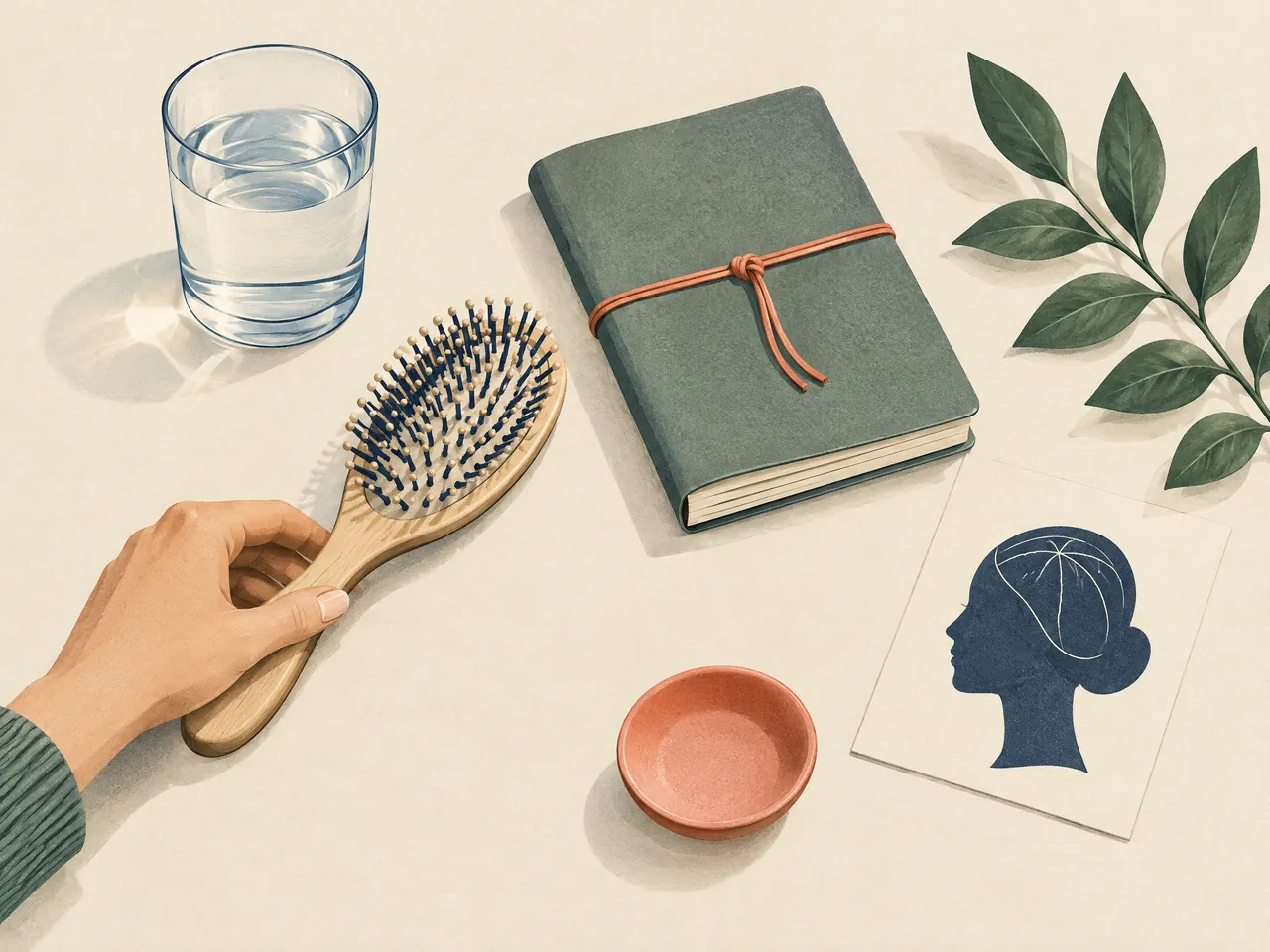
If there is a concern about infection, early action matters more than trying to conceal it beneath hair fibres, oil or heavy product. New or worsening pain, heat, swelling, spreading redness, pus-like discharge, fever or feeling unwell should be assessed promptly. NHS guidance explains that bacterial skin infection can become serious if not treated quickly. [3] In an emergency or if a person is severely unwell, seek urgent local medical help. More detail on prevention questions is available in our guide to scalp acupuncture infection risk; it complements, rather than replaces, medical evaluation for symptoms.
Hair Loss Acupuncture Risks: Acupuncture for Hair Loss Side Effects and Can Acupuncture for Hair Loss Cause Infection? — Who should pause and seek advice
Pause and discuss the plan if the scalp has an open cut, active infection, marked inflammation, severe eczema flare, unexplained crusting or recent injury. Extra care is also needed for people with bleeding concerns, those taking anticoagulant medicines, people who may be pregnant, and those whose immune system or general health may change how skin problems are managed. These are not labels to self-diagnose or a substitute for personalised clinical advice. They are reasons to disclose the information clearly before treatment. For a broader overview of questions to raise about complementary approaches, visit Chinese medicine hair loss treatment safety.

Hair Loss Acupuncture Risks: Acupuncture for Hair Loss Side Effects and Can Acupuncture for Hair Loss Cause Infection? — Keeping the scalp clean after treatment
Clean aftercare means protecting the area without over-treating it. Use only the cleansing and product instructions that match the session, and wash hands before touching the scalp if contact is necessary. Avoid picking at tiny scabs or rubbing an irritated spot with a towel, brush or fingernails. Do not borrow someone else’s treatment plan or assume that a home antiseptic, essential oil or leftover medicine is suitable. A simple record of when symptoms began, what treatment was performed and what products were used can make a later clinical assessment clearer. If the site is improving, continue to monitor it; if it is worsening, contact an appropriate health professional rather than booking another scalp session to “treat through” the reaction.
Care and health guide
Hair and scalp care information
This directory brings together services, reading, and visit information related to hair and scalp care, to help you prepare questions for a consultation.
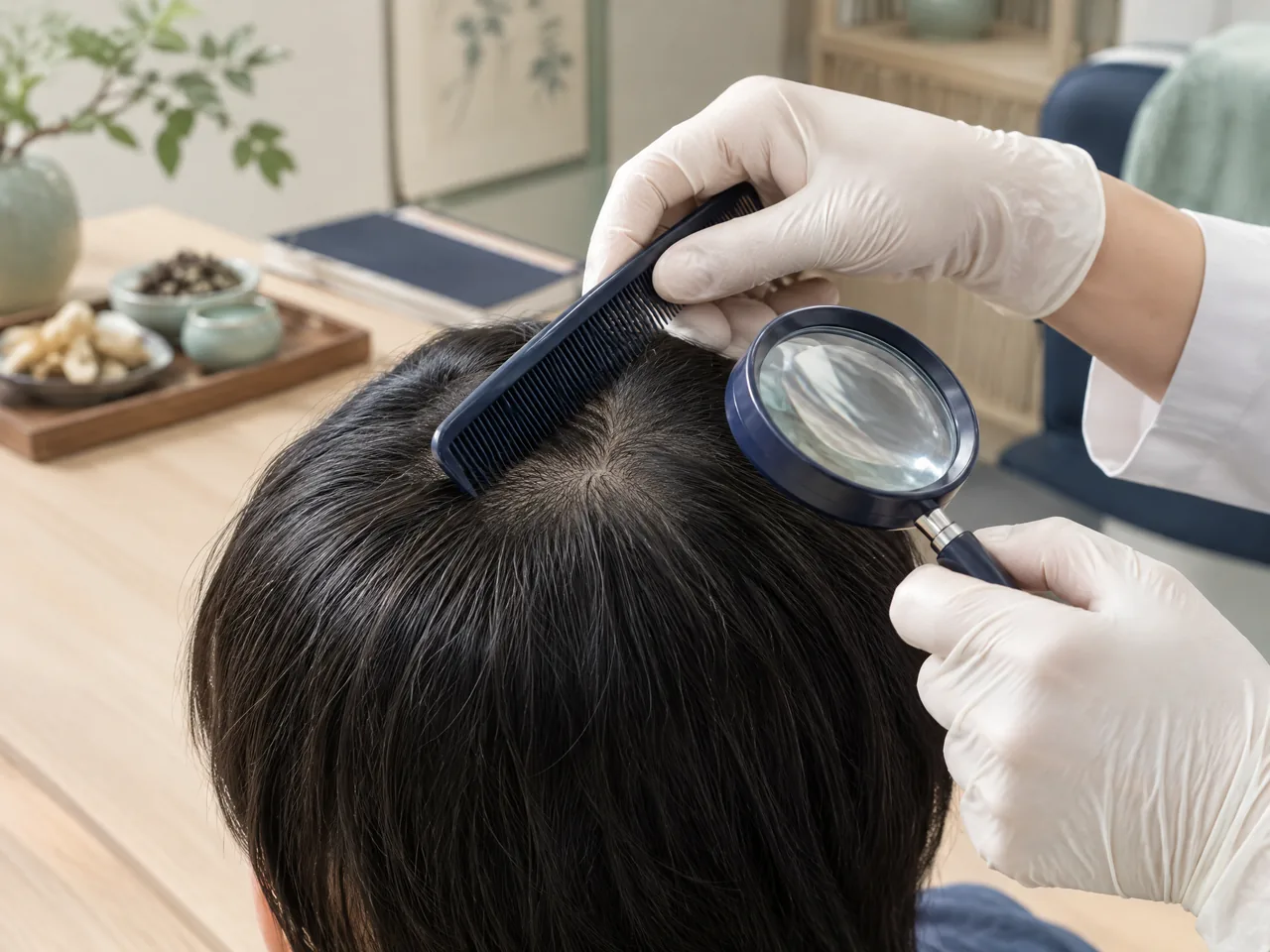
For questions about hair or scalp care, noting the everyday concerns and service questions you want to discuss can help prepare a consultation; Chinese medicine for hair loss is a relevant service or reading entry point.
People may have different priorities, and acupuncture Hong Kong offers related information to help you understand options and prepare questions.

Your questions, answered
Frequently asked questions
What are common acupuncture for hair loss side effects?
Possible local reactions include transient redness or warmth, mild soreness, brief stinging, a pinpoint blood spot and light bruising. The response varies with the technique, the scalp and the individual. These signs should trend towards settling, not become increasingly painful, hot, swollen or oozy.
Can acupuncture for hair loss cause infection?
Yes. Infection is possible whenever a treatment punctures skin, particularly if needles are not sterile, delivery is poor or aftercare exposes irritated skin to contamination. NCCIH reports that nonsterile needles and improper delivery have caused complications, including infections. [1] Choose a qualified practitioner and seek medical assessment for worsening symptoms.
Who should be cautious about hair loss acupuncture risks?
Discuss treatment before proceeding if you have open scalp skin, active infection, substantial inflammation, a severe eczema flare, a bleeding or clotting concern, use anticoagulants, may be pregnant, or have a health condition that affects wound or infection management. The decision should be individual rather than based on a generic online checklist.
How should I look after my scalp after treatment?
Follow the practitioner’s instructions for the exact technique used. Avoid scratching, picking, forceful massage and unadvised new products on a freshly treated area. Ask before swimming, colouring hair or using scalp actives. Promptly seek advice if redness spreads or pain, warmth, swelling, discharge, fever or illness develops.
Sources and further information
- [1] [1] National Center for Complementary and Integrative Health — Acupuncture: What You Need To Know
Referenced for: General acupuncture safety, sterile single-use needle requirements, and the potential for serious complications including infection when treatment is improperly delivered.
- [2] [2] NHS — Hair loss
Referenced for: General hair-loss causes, advice to seek assessment when concerned, and the statement that no treatment is 100% effective.
- [3] [3] NHS — Cellulitis
Referenced for: General signs that may need urgent medical advice for bacterial skin infection and the relevance of broken skin as an entry point for bacteria.