
TCM Lab · Health reading
non-allergic rhinitis, Chinese herbal medicine for allergic rhinitis and acupuncture for nasal allergies: A Practical Guide
Published Updated
A blocked or dripping nose does not automatically mean an allergy. Repeated sneezing with an itchy nose and watery eyes may point towards allergic rhinitis, while a sudden change in temperature, perfume, smoke or a medicine can irritate the nose without an allergy. A cold can overlap with both. Working out the pattern first helps you choose sensible next steps. Chinese herbal medicine for allergic rhinitis and acupuncture for nasal allergies can be discussed as supportive options after assessment, alongside—not instead of—appropriate conventional care.
Appointments are confirmed through WhatsApp. If you have language requirements, please mention them in your enquiry.
The short answer
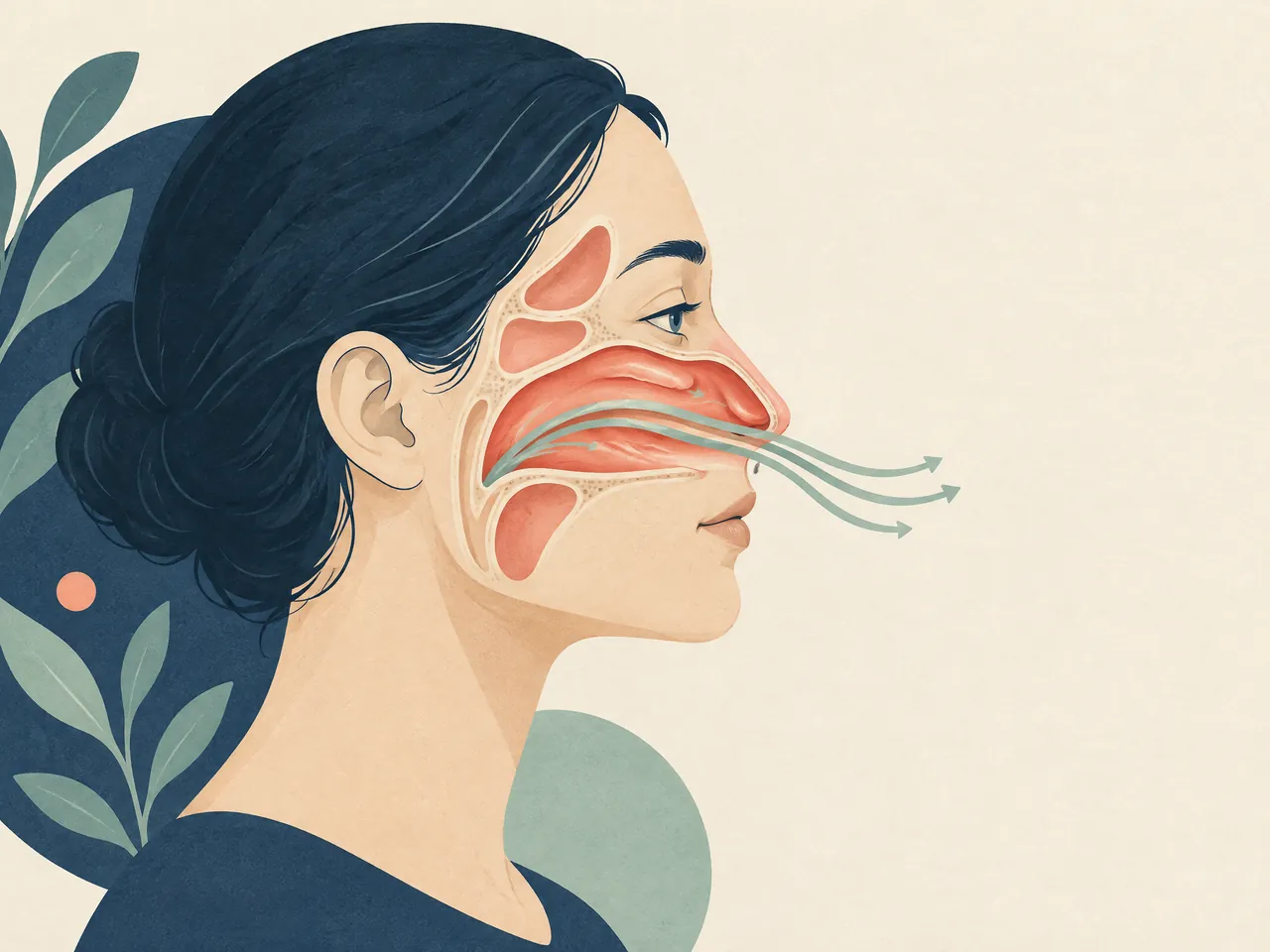
non-allergic rhinitis commonly causes congestion or a runny nose without a clear allergen, and may be triggered by weather, odours, smoke or some medicines. Allergic rhinitis more often includes itching and can follow allergen exposure. Keep a symptom record and seek medical assessment when the cause is unclear or symptoms disrupt life. Chinese herbal medicine for allergic rhinitis and acupuncture for nasal allergies need an individual, safety-focused discussion; they should not replace prescribed treatment or urgent review.
Transparent pricing
See the fees.
Choose your care.
Explore our complete official price list, including first-trial prices, regular prices, packages and branch-specific options.
Opening WhatsApp prepares an enquiry; it does not send a message, take payment or confirm an appointment. Suitability and individual arrangements are confirmed during consultation.
Chinese medicine
All prices in HKDAcupuncture and Chinese herbal medicine package
Includes a Chinese medicine consultation with pulse assessment, body acupuncture and 3 days of Chinese herbal granules that do not require decoction.
HK$580 (single session)
Chinese medicine consultation with pulse assessment
Hair and scalp
All prices in HKDScalp health and hair-loss management
Includes AI scalp analysis, deep scalp and follicle cleansing, and scalp oil-control care.
HK$380 (first trial)
Regular price: HK$680
- 6 sessions: HK$3,480 (HK$580 per session)
- 12 sessions: HK$5,760 (HK$480 per session)
- 20 sessions: HK$8,600 (HK$430 per session)
- 30 sessions: HK$11,400 (HK$380 per session)
Hair acupuncture and Chinese herbal medicine package
Includes scalp acupuncture and 3 days of Chinese herbal medicine that does not require decoction.
HK$580 (single session)
Registered Chinese Medicine Practitioner consultation
- 6 sessions: HK$3,180 (HK$530 per session)
- 12 sessions: HK$5,760 (HK$480 per session)
- 20 sessions: HK$8,600 (HK$430 per session)
- 30 sessions: HK$11,400 (HK$380 per session)
Combined hair and scalp treatment
Combines acupuncture and Chinese herbal medicine with salon-level scalp and follicle care. Packages include complimentary hair-care shampoo and serum.
HK$1,260 (single session)
Combined treatment
- 8 sessions: HK$8,640 (HK$1,080 per session)
- 16 sessions: HK$15,680 (HK$980 per session)
- 20 sessions: HK$18,600 (HK$930 per session)
- 30 sessions: HK$26,400 (HK$880 per session)
Weight management
All prices in HKDFull-body acupoint embedding for weight management
Includes full-body acupoint embedding. Packages include complimentary Chinese herbal medicine for weight management, with the number of included days scaled to the package. Embedding material and the individual treatment arrangement are confirmed during consultation; this is not a cosmetic thread lift.
HK$980 (single session)
No trial session
- 10 sessions: HK$7,800 (HK$780 per session)
- 20 sessions: HK$14,600 (HK$730 per session)
- 30 sessions: HK$20,400 (HK$680 per session)
Facial acupuncture
All prices in HKDFacial acupuncture (basic)
Includes facial acupuncture and meridian-based facial care, including care for facial puffiness.
HK$480 (first trial)
Regular price: HK$680
- 10 sessions: HK$5,200 (HK$520 per session)
- 20 sessions: HK$9,600 (HK$480 per session)
- 30 sessions: HK$13,500 (HK$450 per session)
Facial acupuncture (advanced)
Includes enhanced facial acupuncture with a specially formulated moisturising mask and serum.
HK$780 (first trial)
Regular price: HK$1,180
- 10 sessions: HK$9,000 (HK$900 per session)
- 20 sessions: HK$16,600 (HK$830 per session)
- 30 sessions: HK$23,400 (HK$780 per session)
Pain care
All prices in HKDExtracorporeal shockwave treatment
Shockwave treatment for deep-tissue and fascial care. The Kwun Tong clinic offers the multi-area options shown below.
Priced by branch
Branch-specific pricing
Prince Edward: HK$250 per area
Kwun Tong: HK$250 for 1 area / HK$450 for 2 areas / HK$600 for 3 areas
Pain care (manual therapy)
Includes Chinese medicine musculoskeletal assessment, manual joint techniques and tui na.
HK$580 (single session)
Chinese medicine musculoskeletal assessment
Pain care (acupuncture and manual therapy)
Combines acupuncture and manual therapy.
HK$680 (single session)
Combined care
non-allergic rhinitis, Chinese herbal medicine for allergic rhinitis and acupuncture for nasal allergies: How to tell symptoms apart
Nasal symptoms are frustrating precisely because the same blocked feeling can arise from different causes. Allergic rhinitis is an immune response to an allergen such as house dust mites, pollen, mould or animal dander. Itching is often a useful clue: the nose may itch, eyes may become red or watery, and sneezing can arrive soon after exposure. In contrast, non-allergic rhinitis means the inside of the nose is irritated without that allergy mechanism. It can still produce sneezing, discharge, congestion or post-nasal drip. The NHS describes it as a separate condition with a different set of common triggers. [1]
Start with the question “what happens around an episode?” rather than assuming every runny nose is nasal allergy. Does it start while cleaning a dusty room, after handling a pet, during a particular season, or after a sharp shift from humid outdoors to strong air-conditioning? Or does it appear around fragrance, traffic fumes, a hot meal or exercise? These observations do not replace testing or a clinician’s assessment, but they make the conversation more useful. For a fuller side-by-side discussion of symptoms, see allergic rhinitis vs common cold.

non-allergic rhinitis, Chinese herbal medicine for allergic rhinitis and acupuncture for nasal allergies: Allergy, cold or irritation?
Allergic rhinitis often clusters around an itchy nose, bouts of sneezing, a runny or blocked nose, and itchy, red or watery eyes. Those symptoms can begin within minutes of allergen contact. A cold also causes nasal symptoms, but a sore throat, feeling generally unwell, cough, fever or body aches may make infection more likely. Neither checklist can confirm the cause. If you are not sure whether an episode is allergy, a cold, sinus trouble, a reaction to an irritant or something else, describe the timing and associated symptoms to a doctor or pharmacist rather than treating it as a certainty. [2]
Non-allergic rhinitis deserves its own consideration because it can look like allergy while behaving differently. Its recognised triggers include changes in weather, temperature or humidity; smoke, perfume and paint fumes; alcohol or spicy food; and some medicines. Prolonged use of a decongestant nasal spray can also aggravate blockage after stopping. That does not mean each trigger affects every person, nor should you stop a prescribed medicine yourself. Bring the product names or photos of labels to a clinical review. The aim is to separate a pattern that can be reduced from a problem that needs further investigation.
non-allergic rhinitis, Chinese herbal medicine for allergic rhinitis and acupuncture for nasal allergies: Symptoms worth recording
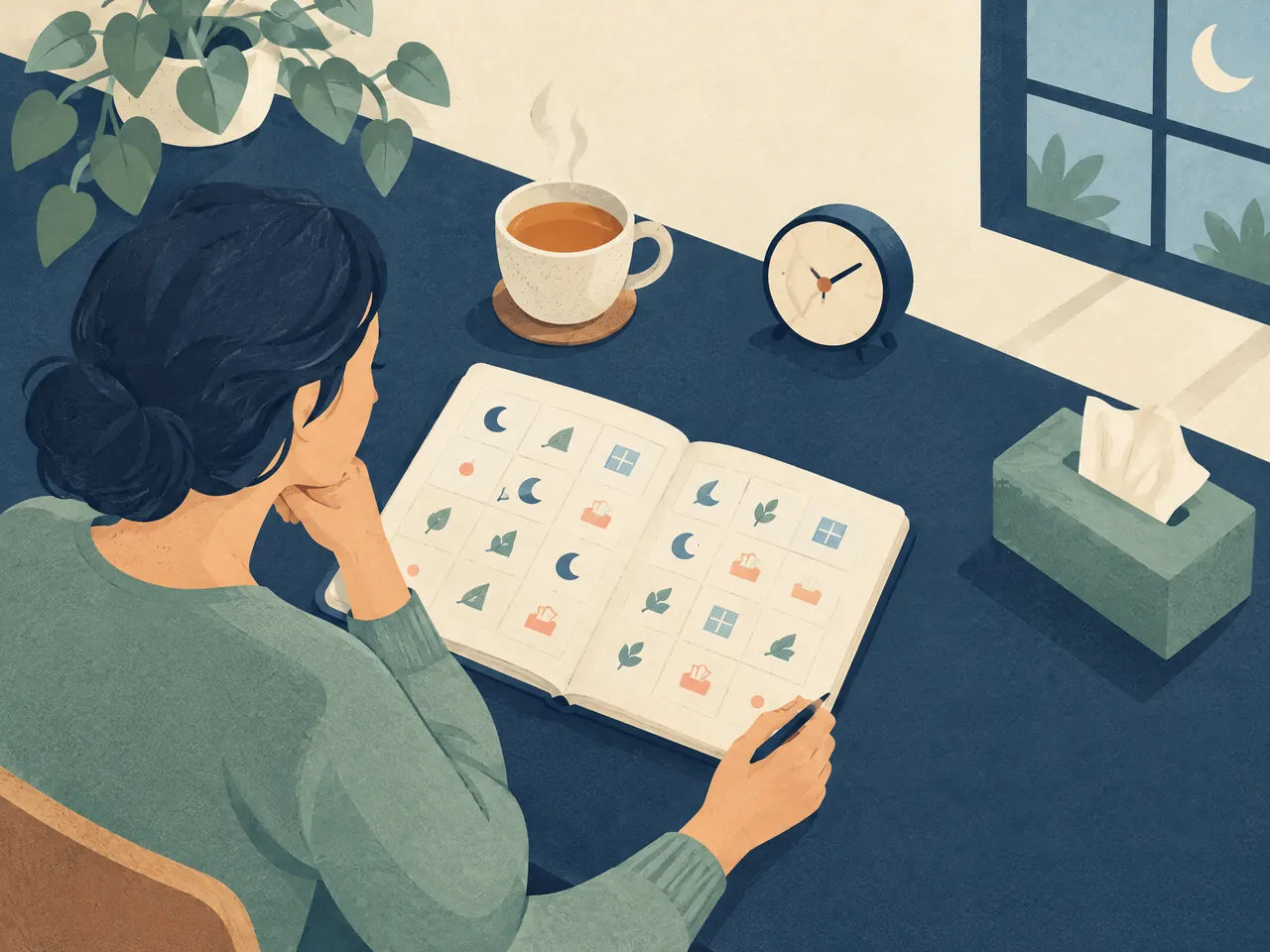
A brief diary turns a vague “my nose is always bad” into information a clinician can use. For two or three weeks, note the time symptoms begin, whether one or both sides feel blocked, the presence of itch, sneezing, eye symptoms, throat irritation or a drip at the back of the throat. Add where you were, recent cleaning, pets, strong smells, meal or exercise, indoor temperature and weather changes. Also write down what you took or sprayed and whether it helped, had no effect or caused an unwanted effect. Do not deliberately expose yourself to a suspected trigger merely to test it.
Record the impact as well as the nose symptoms. Waking at night, poor sleep, concentration difficulty, mouth breathing and having to avoid normal activities all matter when deciding whether self-care is enough. Hong Kong’s Department of Health notes that rhinitis can affect sleep, concentration, learning and daily function. [3] Seek prompt medical assessment for breathing difficulty or worsening asthma. Persistent one-sided blockage, blood-stained discharge, facial pain, severe symptoms, an uncertain cause or symptoms that are not responding to usual measures also warrant medical review; When should I see a doctor for allergic rhinitis? explains the practical decision points.
Compare your options
| Pattern to notice | What may point in that direction | Useful next step |
|---|---|---|
| Itching, repeated sneezing and watery eyes after likely exposure | May fit allergic rhinitis, especially around dust mites, pollen, mould or animal dander | Record the setting and discuss trigger avoidance and appropriate treatment with a pharmacist or doctor |
| Blocked or runny nose after perfume, smoke, temperature change or spicy food | May fit non-allergic irritation; a clear allergen may not be present | Reduce the repeat trigger where practical and bring the pattern to a medical review if it persists |
| Nasal symptoms with sore throat, fever, aches or feeling generally unwell | Could be a respiratory infection rather than allergy alone | Use appropriate infection advice and seek clinical guidance if symptoms are severe, prolonged or concerning |
| Symptoms disturb sleep, daily activity or asthma control | The impact, rather than one symptom, signals a need for review | Arrange medical assessment; do not rely only on self-treatment or complementary care |
On smaller screens, scroll the table sideways to compare all columns.
non-allergic rhinitis, Chinese herbal medicine for allergic rhinitis and acupuncture for nasal allergies: Everyday and conventional management
Management is more useful when it matches the likely pattern. If dust mites or mould are suspected, home measures may focus on reducing dust accumulation and dampness. If fragrance, smoke or cleaning fumes consistently precede symptoms, the practical step may be improving ventilation, choosing lower-odour products or stepping away from the exposure when possible. If air-conditioning is a trigger, plan for the temperature change rather than assuming the solution is another medicine. Avoidance is not always complete or realistic, so the goal is fewer avoidable triggers and a record of what actually changes symptoms.
For allergic rhinitis, official Hong Kong guidance lists allergen avoidance, antihistamines and steroid nasal spray as first-line approaches. It also advises people to consult a general practitioner or family doctor and follow medication instructions. [3] This is why a supportive Chinese medicine consultation should begin with what has already been tried, what was prescribed, and whether symptoms are stable—not with a promise to replace an established plan. This overview of Chinese medicine for allergic rhinitis can help you prepare questions for that conversation.
non-allergic rhinitis, Chinese herbal medicine for allergic rhinitis and acupuncture for nasal allergies: Triggers in Hong Kong homes and outdoors
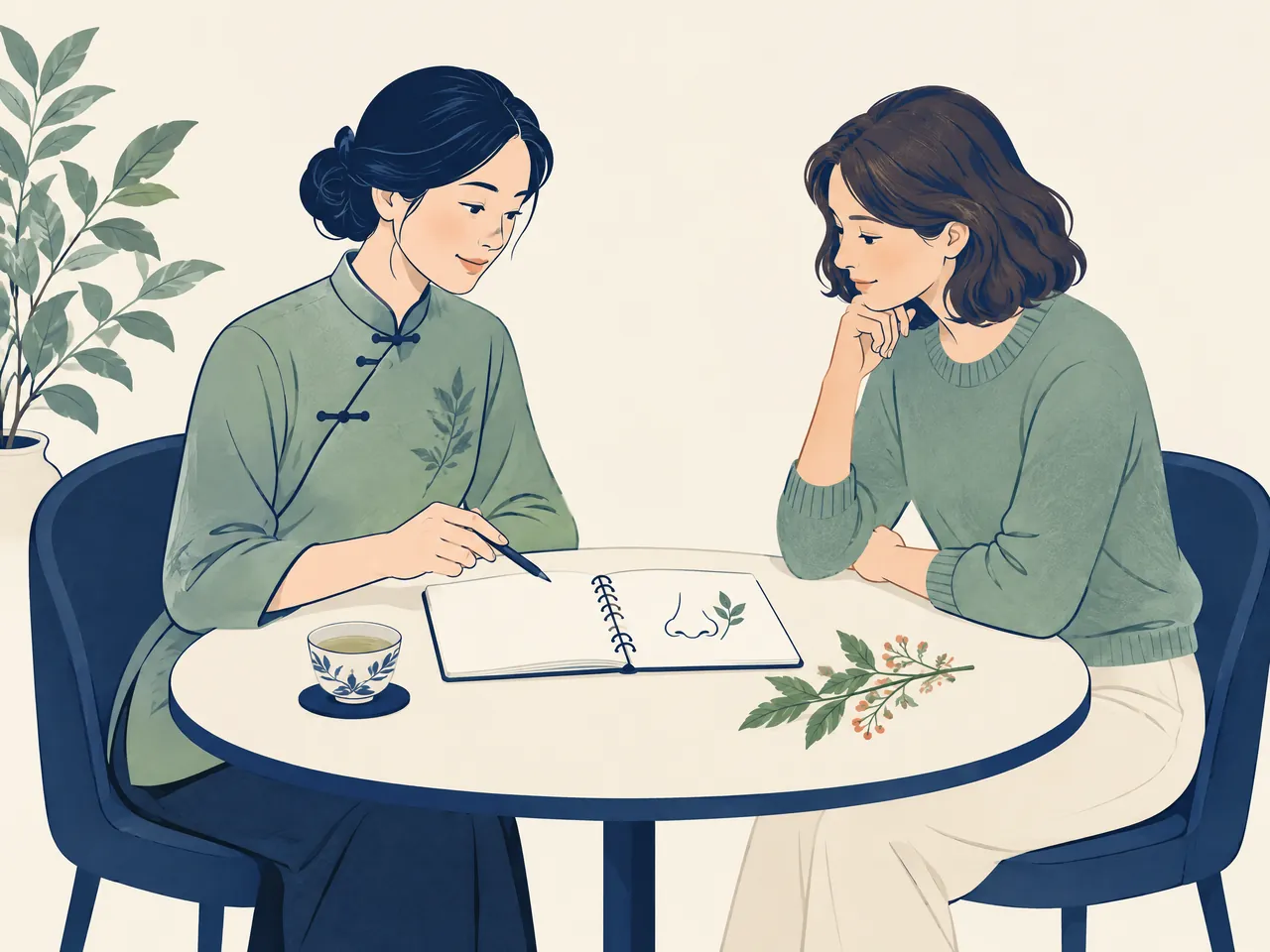
Hong Kong homes can present several overlapping exposures: dust in bedding or soft furnishings, humidity-related mould, pet dander, scented toiletries, incense or cleaning products, and sudden moves between hot streets and cool indoor spaces. The Department of Health also identifies dust mites, pollen, fungus, animal hair or fur, chemicals, air pollution and sudden weather change as factors that can induce or worsen symptoms. [3] The relevant question is not which item is “bad” for everyone. It is whether your diary repeatedly links a particular exposure with your own symptoms.
Use small, reversible changes so you can tell what is helpful. For example, keep damp corners dry and ventilated, clean an air-conditioner filter according to the appliance guidance, or move strongly scented products out of the bedroom. If outdoor pollution, pollen or traffic fumes seem relevant, note the setting and timing before making broad restrictions. Avoid smoking around anyone with nasal symptoms. A parent can record sleep, morning symptoms and school-day concentration for a child, but should seek professional advice rather than assuming a child’s congestion is simply allergy.
non-allergic rhinitis, Chinese herbal medicine for allergic rhinitis and acupuncture for nasal allergies: Where prescribed treatment fits
Medicines have different roles, so it is important to use the exact product as directed. Antihistamines may be used for symptoms such as sneezing, itching and runny nose, while steroid nasal sprays are used to address nasal inflammation. Saline sprays or rinses may be discussed with a pharmacist or clinician. Decongestant sprays are not a long-term workaround: the NHS warns that continuing them beyond the stated short period can worsen blockage and make improvement harder. [2] Ask before combining products, especially if you are pregnant, have other conditions or take regular medicines.
Do not stop, taper or substitute a prescribed nasal spray because symptoms have a good day or because you plan to explore acupuncture or herbs. Instead, take a current medication list to both practitioners and ask who is responsible for reviewing each treatment. A doctor may reassess the diagnosis, technique of a nasal spray, alternative medicines or the need for further tests when symptoms remain troublesome. This keeps conventional treatment visible while you consider complementary support, rather than leaving one clinician unaware of what the other is doing.
non-allergic rhinitis, Chinese herbal medicine for allergic rhinitis and acupuncture for nasal allergies: Discussing supportive Chinese medicine
People often look for Chinese medicine because recurring nasal symptoms disrupt sleep, work or school even after they have changed their environment. That is a reasonable topic to raise, but the starting point matters: Chinese medicine is a supportive option to discuss after an appropriate assessment, not a shortcut around an uncertain diagnosis. It cannot establish whether an obstruction, infection, asthma problem or medicine effect needs conventional investigation. Bring your symptom diary, previous test results if available, allergies, medical history and every current medicine or supplement. That shared information supports safer decisions.

A consultation may explore the symptoms in the language of traditional Chinese medicine as well as practical daily patterns. This traditional assessment does not equal a modern medical diagnosis of allergic rhinitis or non-allergic rhinitis. It may include questions about the nature of nasal discharge, sensation of blockage, sleep, appetite, bowel habits, energy, sensitivity to heat or cold and the circumstances surrounding flares. The purpose is to decide whether any supportive approach is appropriate for the individual, while preserving the care already needed for a diagnosed condition.

non-allergic rhinitis, Chinese herbal medicine for allergic rhinitis and acupuncture for nasal allergies: What a traditional assessment explores
A Registered Chinese Medicine Practitioner may use the traditional four examinations—observation, listening or smelling, questioning and pulse/palpation—to form a traditional pattern assessment. That discussion should be detailed rather than based on a generic “allergy remedy.” Tell the practitioner about asthma, pregnancy, other diagnosed conditions, any past reactions, current antihistamines or sprays, over-the-counter cold products and supplements. For Chinese herbal medicine for allergic rhinitis, an individual evaluation is essential; this page does not provide a fixed formula, dose, course length or promise of response. Never use a web article as a substitute for a personalised prescription.
It is also useful to state your goal in ordinary, measurable terms: fewer mornings woken by blockage, less disruption at work, better sleep or a clearer plan for a known trigger. A practitioner can then discuss whether acupuncture, herbs, lifestyle measures or referral back to a doctor is the sensible next step. If you would like to read the evidence-focused discussion before asking about needling, see acupuncture for allergic rhinitis. A responsible conversation includes uncertainty, practical burden and what would prompt reassessment, not a guaranteed timetable.

non-allergic rhinitis, Chinese herbal medicine for allergic rhinitis and acupuncture for nasal allergies: Evidence, safety and next steps
Acupuncture for nasal allergies is best framed carefully. A 2022 systematic review and meta-analysis reported possible improvements in nasal symptoms and quality of life for adults in some comparisons, but its trial sequential analysis did not confirm those findings. It found the effect in children and adolescents unclear because data were insufficient, and it identified important risks of performance and attrition bias in many included studies. [4] This evidence does not establish acupuncture as a replacement for prescribed care, nor does it predict an individual result or a fixed number of sessions.
For herbal treatment, safety depends on the person, the formula and the rest of their care. Do not conceal medicines or supplements because they seem unrelated to the nose. Ask how treatment will be reviewed, what symptoms should lead you to pause and seek medical advice, and how information will be shared with your prescribing clinician where appropriate. Children require especially cautious decisions: evidence for acupuncture in allergic rhinitis is uncertain, and persistent congestion needs a proper assessment. If you are considering an appointment, TCM Lab can discuss an assessment at its Chinese medicine clinic Prince Edward or Kwun Tong Chinese medicine clinic; appointment suitability and treatment decisions are confirmed individually.
Care and health guide
Health service information
This directory brings together services, reading, and visit information related to health services, to help you prepare questions for a consultation.
If you are organising health questions, Chinese medicine clinic Hong Kong is a starting point for learning about related services and preparing for a consultation.
People have different needs; acupuncture Hong Kong provides further reading to help you understand options in your own context.


Your questions, answered
Frequently asked questions
How can I tell allergic rhinitis from a cold or non-allergic rhinitis?
Allergic rhinitis often involves an itchy nose, sneezing, clear discharge and itchy or watery eyes after an allergen exposure. Non-allergic rhinitis may be linked to weather, smells, smoke, food, exercise or medicines and may not include itch. A cold can overlap with nasal symptoms and may involve sore throat, fever, aches or feeling unwell. A diary helps, but persistent or uncertain symptoms need clinical assessment.
Can Chinese herbal medicine for allergic rhinitis replace my prescribed nasal spray?
No. Chinese herbal medicine for allergic rhinitis can be discussed as individual supportive care, not as a replacement for a prescribed nasal spray or medical assessment. Give the Chinese medicine practitioner and prescribing clinician a complete list of medicines and supplements. Do not stop, reduce or change a prescription unless the clinician who manages it advises you to do so.
Is acupuncture for nasal allergies suitable for children?
It needs an individual discussion. The reviewed evidence for children and adolescents with allergic rhinitis is insufficient to make the effect clear, so it should not be presented as a proven solution. A child with ongoing congestion, disturbed sleep, suspected asthma or uncertain symptoms should first have appropriate medical assessment. Families should also discuss the child’s comfort and current treatment.
When should I see a doctor instead of trying home measures?
Seek medical advice when the cause is unclear, symptoms are worsening, sleep or daily life is affected, pharmacy treatments are not helping, or asthma is present or worsening. Urgent breathing difficulty requires urgent medical care. Persistent one-sided blockage, blood-stained discharge or facial pain are also reasons to arrange medical assessment rather than assuming the problem is simple allergy.
Sources and further information
- [1] [1] NHS — Non-allergic rhinitis
Referenced for: Definition, common symptoms, recognised triggers, short-term decongestant caution and review pathways for non-allergic rhinitis.
- [2] [2] NHS — Allergic rhinitis
Referenced for: Allergic-rhinitis symptom pattern, common allergens, standard treatment categories and advice to seek review.
- [3] [3] Hong Kong Department of Health Student Health Service — Allergic Rhinitis
Referenced for: Hong Kong-relevant environmental factors, daily impact and general management terminology.
- [4] [4] He et al. — Acupuncture for allergic rhinitis: a systematic review and meta-analysis
Referenced for: Cautious framing of adult acupuncture findings, trial limitations and insufficient paediatric evidence.