
TCM Lab · Health reading
plum blossom needle side effects, plum blossom needle risks and plum blossom needle aftercare: a practical safety guide
Published Updated
A plum blossom needle treatment involves light tapping of the scalp with a multi-needle instrument, so it is reasonable to ask about discomfort before booking. Temporary redness, warmth, tenderness, pinpoint bleeding or a small bruise can occur after a session. More importantly, a broken skin surface creates a reason to take hygiene and aftercare seriously. This guide separates expected short-lived reactions from warning signs, explains when to pause and ask for an individual assessment, and sets out practical aftercare without promising hair regrowth. Hair loss itself has many possible causes, so a changing or worrying pattern deserves appropriate medical assessment as well [2].
Appointments are confirmed through WhatsApp. If you have language requirements, please mention them in your enquiry.
The short answer
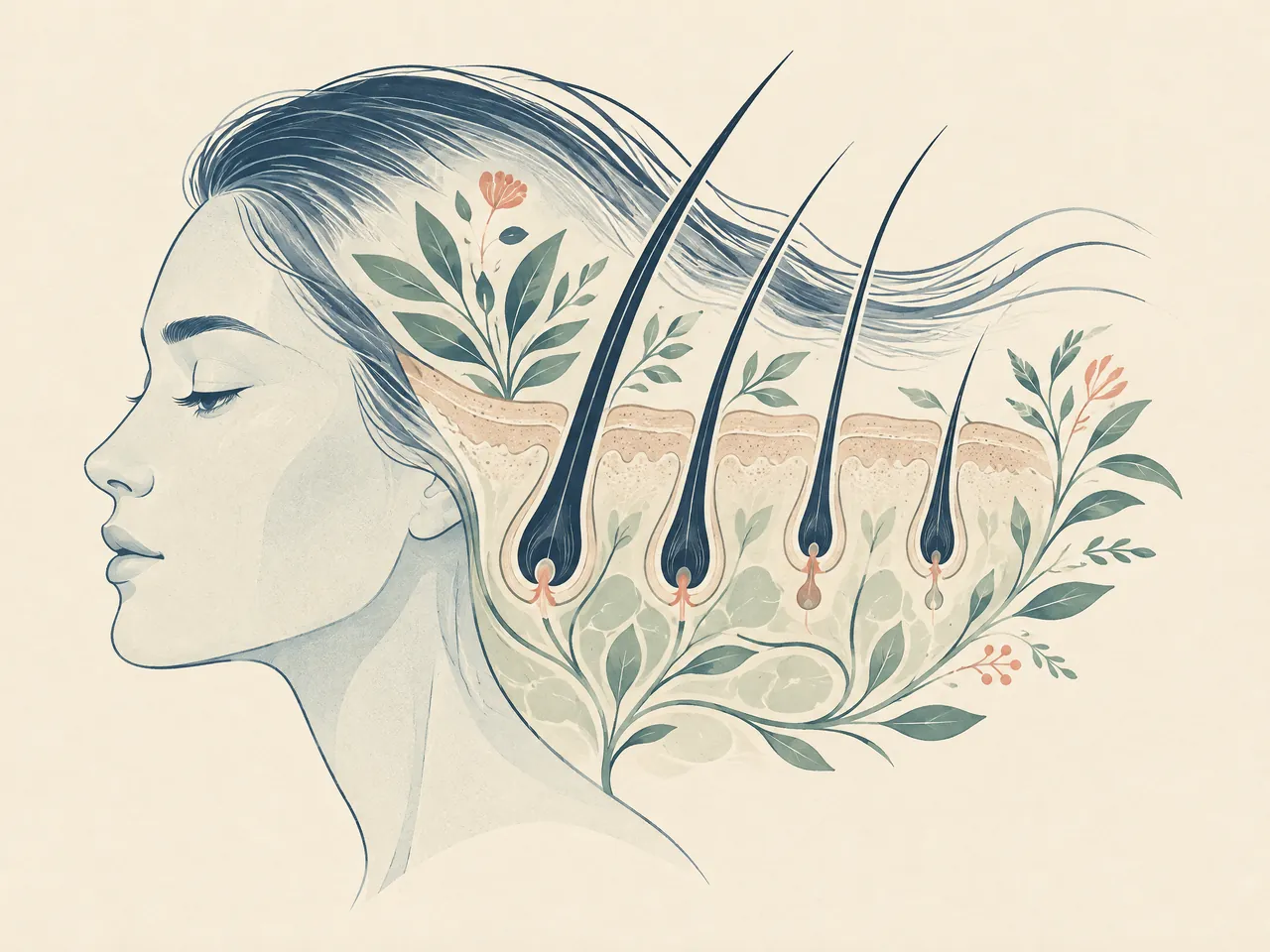
Plum blossom needle side effects can include brief scalp redness, warmth, tenderness, tiny blood spots or minor bruising after tapping. Infection is a more serious concern if hygiene is poor or healing skin is exposed to contamination. Keep the area clean, avoid scratching and follow the treating practitioner’s individual instructions. Postpone or seek advice first if the scalp is broken, infected or acutely inflamed, or if you have a bleeding concern, take medicines that affect bleeding, are pregnant, or have significant health conditions.
Transparent pricing
See the fees.
Choose your care.
Explore our complete official price list, including first-trial prices, regular prices, packages and branch-specific options.
Opening WhatsApp prepares an enquiry; it does not send a message, take payment or confirm an appointment. Suitability and individual arrangements are confirmed during consultation.
Hair and scalp
All prices in HKDScalp health and hair-loss management
Includes AI scalp analysis, deep scalp and follicle cleansing, and scalp oil-control care.
HK$380 (first trial)
Regular price: HK$680
- 6 sessions: HK$3,480 (HK$580 per session)
- 12 sessions: HK$5,760 (HK$480 per session)
- 20 sessions: HK$8,600 (HK$430 per session)
- 30 sessions: HK$11,400 (HK$380 per session)
Hair acupuncture and Chinese herbal medicine package
Includes scalp acupuncture and 3 days of Chinese herbal medicine that does not require decoction.
HK$580 (single session)
Registered Chinese Medicine Practitioner consultation
- 6 sessions: HK$3,180 (HK$530 per session)
- 12 sessions: HK$5,760 (HK$480 per session)
- 20 sessions: HK$8,600 (HK$430 per session)
- 30 sessions: HK$11,400 (HK$380 per session)
Combined hair and scalp treatment
Combines acupuncture and Chinese herbal medicine with salon-level scalp and follicle care. Packages include complimentary hair-care shampoo and serum.
HK$1,260 (single session)
Combined treatment
- 8 sessions: HK$8,640 (HK$1,080 per session)
- 16 sessions: HK$15,680 (HK$980 per session)
- 20 sessions: HK$18,600 (HK$930 per session)
- 30 sessions: HK$26,400 (HK$880 per session)
Weight management
All prices in HKDFull-body acupoint embedding for weight management
Includes full-body acupoint embedding. Packages include complimentary Chinese herbal medicine for weight management, with the number of included days scaled to the package. Embedding material and the individual treatment arrangement are confirmed during consultation; this is not a cosmetic thread lift.
HK$980 (single session)
No trial session
- 10 sessions: HK$7,800 (HK$780 per session)
- 20 sessions: HK$14,600 (HK$730 per session)
- 30 sessions: HK$20,400 (HK$680 per session)
Facial acupuncture
All prices in HKDFacial acupuncture (basic)
Includes facial acupuncture and meridian-based facial care, including care for facial puffiness.
HK$480 (first trial)
Regular price: HK$680
- 10 sessions: HK$5,200 (HK$520 per session)
- 20 sessions: HK$9,600 (HK$480 per session)
- 30 sessions: HK$13,500 (HK$450 per session)
Facial acupuncture (advanced)
Includes enhanced facial acupuncture with a specially formulated moisturising mask and serum.
HK$780 (first trial)
Regular price: HK$1,180
- 10 sessions: HK$9,000 (HK$900 per session)
- 20 sessions: HK$16,600 (HK$830 per session)
- 30 sessions: HK$23,400 (HK$780 per session)
Pain care
All prices in HKDExtracorporeal shockwave treatment
Shockwave treatment for deep-tissue and fascial care. The Kwun Tong clinic offers the multi-area options shown below.
Priced by branch
Branch-specific pricing
Prince Edward: HK$250 per area
Kwun Tong: HK$250 for 1 area / HK$450 for 2 areas / HK$600 for 3 areas
Pain care (manual therapy)
Includes Chinese medicine musculoskeletal assessment, manual joint techniques and tui na.
HK$580 (single session)
Chinese medicine musculoskeletal assessment
Pain care (acupuncture and manual therapy)
Combines acupuncture and manual therapy.
HK$680 (single session)
Combined care
Chinese medicine
All prices in HKDAcupuncture and Chinese herbal medicine package
Includes a Chinese medicine consultation with pulse assessment, body acupuncture and 3 days of Chinese herbal granules that do not require decoction.
HK$580 (single session)
Chinese medicine consultation with pulse assessment
plum blossom needle side effects, plum blossom needle risks and plum blossom needle aftercare: what to expect
A plum blossom needle is also called a dermal hammer in some English-language hair-loss discussions. It has several short fine needles at the end of a handle and is used to tap rather than leave a needle in place. The degree of contact, the condition of the scalp and a person’s tendency to bruise all affect what they notice afterwards. That is why a useful conversation starts with the actual procedure proposed, not an assumption that every tool or every scalp-tapping treatment is identical. For background on the treatment approach, read plum blossom needle for hair loss; its use for a hair concern does not remove the need to discuss safety first.
Most people asking about side effects are trying to judge whether a visible change is normal, whether it will be inconvenient at work, or whether the treatment could make a sensitive scalp worse. A mild, local and settling reaction is different from symptoms that spread, intensify or make a person feel unwell. The National Center for Complementary and Integrative Health notes that complications from acupuncture have been reported relatively infrequently, but nonsterile needles and improper delivery can cause serious adverse effects, including infection [1]. That general needle-safety principle is more useful than a promise that a scalp procedure is risk-free. See also our practical overview of Chinese medicine hair loss treatment safety when comparing options.

plum blossom needle side effects, plum blossom needle risks and plum blossom needle aftercare: common scalp reactions
Immediately after scalp tapping, temporary flushing or a warm feeling can be noticeable because the skin has been stimulated. Some people describe a light sting or tenderness when brushing their hair or touching the area later that day. Pinpoint blood spots may occur if the skin has been broken, and a small superficial bruise may be more likely in someone who bruises easily. These observations should be explained before treatment, but they are not a measure of effectiveness. They also should not be used to push through pain or to repeat a procedure too soon on an irritated area.
Look at the direction of change rather than trying to diagnose the scalp from a single photograph. A reaction that is becoming less noticeable and remains local is not the same as redness that expands, throbs, becomes increasingly painful or is accompanied by discharge. Do not pick at a tiny crust, squeeze a sore follicle or cover the area with an untested product in an attempt to speed recovery. If you are comparing names for the same style of tool, our page on dermal hammer side effects can help frame the questions to ask about the proposed technique and aftercare.

plum blossom needle side effects, plum blossom needle risks and plum blossom needle aftercare: why individual responses vary
A scalp is not a blank surface. Existing itch, dandruff, eczema, folliculitis, product irritation, sun exposure, scratching and recent colouring can change how comfortable it feels and how easily it becomes inflamed. The pressure and coverage used by a practitioner also matter. A person with no obvious skin problem may still find an area tender, while another may have almost no noticeable after-effect. For this reason, an individual response cannot be predicted from a friend’s experience, a social-media video or a before-and-after image.
Hair loss adds another layer of uncertainty. The NHS lists illness, stress, weight loss and iron deficiency among possible causes of temporary hair loss, while pattern baldness commonly runs in families [2]. Those causes are not diagnosed by a scalp-tapping response. Bring a short timeline of shedding, thinning, breakage or patches, plus information about scalp symptoms and current medicines, to an appropriate healthcare appointment. Readers looking at the wider question of hair thinning and TCM should treat a traditional consultation as a chance to discuss their circumstances, not as proof of a single cause.
Compare your options
| What you notice | A sensible immediate step | What to avoid | When to seek further advice |
|---|---|---|---|
| Local mild redness, warmth or tenderness that is settling | Follow the individual aftercare instructions and leave the area alone. | Scratching, vigorous massage, or applying untested products. | Ask the treating practitioner if you are unsure how long to wait before washing. |
| Tiny blood spots or a small bruise | Keep hands clean and do not pick at the area. | Repeating self-treatment over the same irritated spot. | Discuss it before another session, especially if you bruise or bleed easily. |
| Open wound, acute rash, painful follicle or suspected infection before treatment | Pause and arrange appropriate assessment of the scalp condition. | Tapping, home needling, or forceful scalp massage over affected skin. | Seek timely medical advice if symptoms are painful, spreading or accompanied by discharge. |
| Worsening redness, swelling, pain, pus, fever or feeling unwell after treatment | Seek medical advice promptly and state that a scalp procedure was performed. | Calling it a normal reaction or trying to squeeze or conceal the area. | Use urgent services if symptoms are severe or rapidly worsening. |
On smaller screens, scroll the table sideways to compare all columns.
plum blossom needle side effects, plum blossom needle risks and plum blossom needle aftercare: who should pause
Pausing is not a failure to tolerate treatment. It is a sensible safety decision when the scalp barrier is already compromised or relevant health information has not been considered. An open cut, weeping rash, active infection, marked inflammation or unexplained painful lesion needs attention before any tapping is contemplated. The priority is to identify and manage the skin problem, not to add repeated mechanical stimulation. A consultation should also include allergies, prior reactions to skin products, current medical diagnoses and all prescribed medicines, supplements and topical treatments.
Certain situations call for a specific professional discussion rather than a generic online rule. Tell the practitioner if you have a bleeding or clotting disorder, use an anticoagulant or antiplatelet medicine, have a history of fainting with needles, are pregnant, or are receiving care for a serious condition. Do not stop or alter a prescribed medicine in order to have a treatment. A registered Chinese medicine practitioner can assess whether to defer or modify an approach, while the clinician who prescribed a medicine can advise on the underlying medical issue. In Hong Kong, registration as a Chinese medicine practitioner requires passing the Chinese Medicine Council’s Licensing Examination [3].
plum blossom needle side effects, plum blossom needle risks and plum blossom needle aftercare: scalp conditions and bleeding concerns
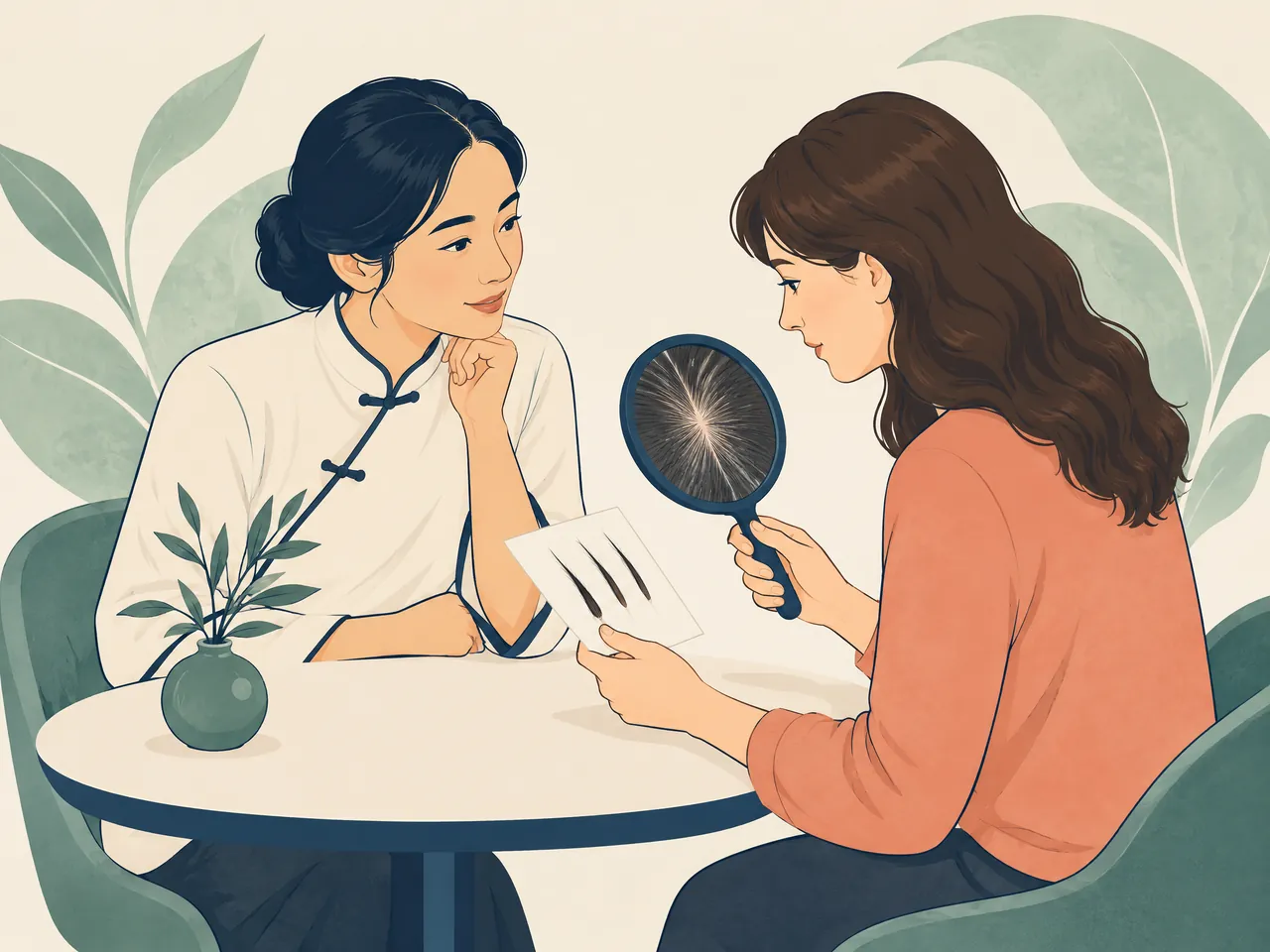
Scalp conditions are easy to underestimate because hair can conceal the extent of redness, scaling, broken skin or pustules. It is better to mention them early than to apply an instrument over an area that is sore or not intact. A practitioner may decide that treatment should wait while a rash, wound or suspected infection is assessed. This protects the person from extra irritation and avoids confusing a pre-existing problem with a reaction to the session. Seek timely medical care if there is spreading redness, marked swelling, pus, fever or worsening pain rather than waiting for the next appointment.
Bleeding concerns are equally important to state plainly. Small surface marks may be more troublesome if a person bruises easily or takes a medicine that changes clotting. Bring the medicine name or a photo of the label; terms such as ‘blood thinner’ can cover very different prescriptions and products. An accurate list also includes non-prescription pain medicines, herbal products and supplements. The aim is not to decide suitability by yourself, but to give the treating practitioner and, where relevant, your usual clinician the information needed for a safe decision.
plum blossom needle side effects, plum blossom needle risks and plum blossom needle aftercare: questions before treatment
Before agreeing to a session, ask what will touch the scalp, whether the tool is single-use or how it is managed, what sensation and skin changes are anticipated, and what you should do if discomfort persists. General acupuncture infection-control guidance emphasises sterile needles, hand hygiene, clean treatment areas and disposal of used sharps; it also warns against using an opened sterile needle pack on more than one patient [4]. These standards describe why hygiene questions are reasonable. They do not by themselves establish that a particular treatment will improve hair density.
Ask how your hair-loss history will be considered alongside the procedure. A good preparation list includes when the change started, whether it is diffuse or patchy, whether there is itch or pain, recent illness or weight change, family history, and medications. You can also ask about fees before committing to care. The Chinese medicine clinic price list Hong Kong provides TCM Lab’s published fee information, while the clinical plan and suitability still need to be discussed individually. Clear questions reduce pressure to continue simply because a course has been suggested.
plum blossom needle side effects, plum blossom needle risks and plum blossom needle aftercare: safer recovery steps
Aftercare is mainly about protecting a recently treated scalp from friction and contamination while it settles. Follow the time-specific advice given by the practitioner because the approach, degree of skin contact and your scalp condition may differ. Until you are advised otherwise, avoid rubbing, vigorous massage, tight headwear that chafes, scratching and contact with potentially unclean water. Do not assume that a stronger shampoo, alcohol-based product, essential oil or home exfoliant will make the area recover faster. A gentle, uncomplicated routine makes it easier to identify a genuine problem if one develops.
Plan realistically for the rest of the day. If you expect sweat, swimming, a very dusty activity, helmet friction or a hair-colouring appointment, raise it before the procedure so that timing and aftercare can be discussed. If the scalp has been tapped, keep hands off it unless cleaning is specifically advised. Clean hands and a clean pillowcase are simple ways to avoid adding avoidable contact. The objective is comfort and safe healing, not to create a ritual that claims to increase hair growth. A persistent concern is a reason to contact an appropriate healthcare professional, not to keep applying more treatments.
plum blossom needle side effects, plum blossom needle risks and plum blossom needle aftercare: keeping the scalp clean
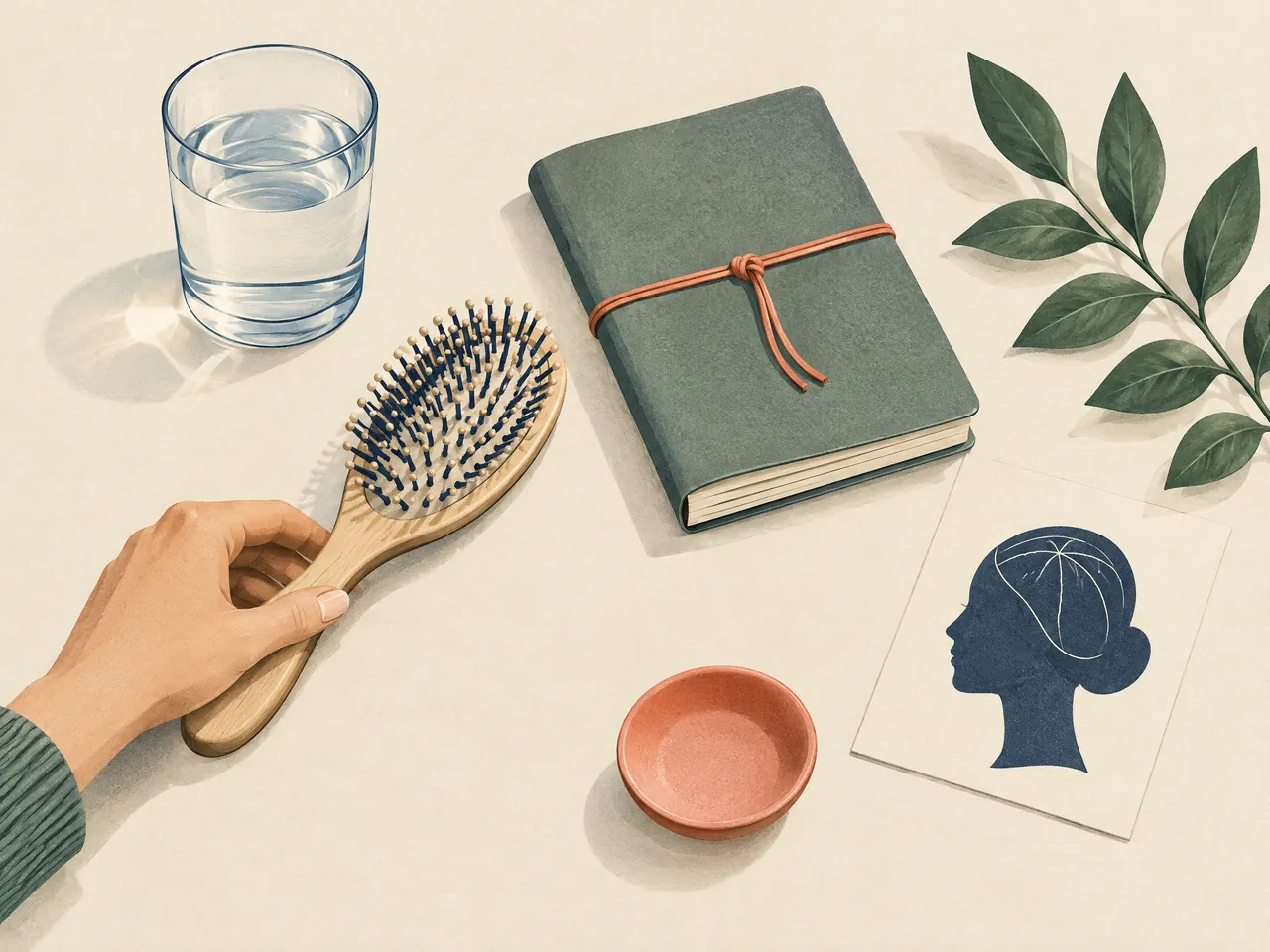
Ask exactly when and how you may wash your hair after the session; this may depend on whether the skin was visibly broken and on the practitioner’s assessment. Once washing is appropriate, use clean water and a routine that does not scrub or scratch the treated area. Pat rather than scour with a towel, and avoid sharing combs, brushes or hats that could rub the scalp. If a product stings, causes a new rash or leaves the scalp more irritated, stop using it and seek individual advice rather than assuming that discomfort is part of the process.
Hygiene is a shared responsibility. Professional infection-control guidance describes hand hygiene close to treatment areas, cleanable surfaces and safe sharps handling as core protections [4]. At home, the comparable practical steps are simpler: avoid touching a tender area with unwashed hands, keep hair tools clean and do not let another person inspect or pick at the site. There is no need to sterilise the home or to invent elaborate aftercare. What matters is following the individual instructions and noticing whether the scalp is settling rather than worsening.

plum blossom needle side effects, plum blossom needle risks and plum blossom needle aftercare: warning signs that need care
Get medical advice promptly for worsening or spreading redness, increasing warmth or swelling, escalating pain, pus or other discharge, fever, or a general sense of being unwell after a scalp procedure. These are not symptoms to explain away as detoxification or proof that the treatment is taking effect. If there is severe pain, rapid deterioration, a significant allergic-type reaction or another urgent concern, use the appropriate urgent medical service. For non-urgent but persistent discomfort, record when it began and what changed, then tell the treating practitioner as well as the clinician assessing the scalp.
If you are considering a first consultation after the scalp has settled, TCM Lab appointment enquiries can be made through the Kwun Tong Chinese medicine clinic or the Chinese medicine clinic Prince Edward location page. Bring your symptom timeline and medication list, and explain any previous reaction to needling or skin treatment. WhatsApp +852 6940 5663 can be used to ask about appointment availability and language needs; suitability and a treatment plan are confirmed directly, not by an online article.
Care and health guide
Health service information
This directory brings together services, reading, and visit information related to health services, to help you prepare questions for a consultation.
If you are organising health questions, Chinese medicine clinic Hong Kong is a starting point for learning about related services and preparing for a consultation.
People have different needs; acupuncture Hong Kong provides further reading to help you understand options in your own context.


Your questions, answered
Frequently asked questions
What are common plum blossom needle side effects?
Short-lived local redness, warmth, tenderness, tiny blood spots or a minor bruise may occur after scalp tapping. They are not proof of an effect on hair growth. If redness spreads, pain increases, swelling develops, pus appears, or you have fever or feel unwell, seek medical advice rather than treating the change as routine.
Does a plum blossom needle have an infection risk?
Any procedure that can break the skin requires careful infection control. NCCIH notes that nonsterile needles and improper delivery of acupuncture can lead to serious adverse effects including infection [1]. Ask how sterile single-use needles, clean handling and safe disposal are managed, then follow individual advice about keeping the treated scalp clean and avoiding contamination.
Who should postpone plum blossom needle treatment?
Postpone and seek an individual assessment if the scalp has an open wound, active infection, acute rash, marked inflammation or an unexplained painful area. Also disclose a bleeding or clotting disorder, medicines affecting bleeding, pregnancy, serious health conditions, allergies and past needle reactions before deciding whether treatment is suitable. Do not alter prescribed medication without the advice of the prescriber.
What does plum blossom needle aftercare involve?
Follow the treating practitioner’s time-specific directions. Generally, keep hands clean, avoid scratching or rubbing the site, and avoid potentially unclean water or friction until you have been advised otherwise. Ask when to wash your hair, and avoid applying unfamiliar oils, acids or other scalp products to tender skin. Worsening symptoms need medical advice.
Can plum blossom needle treatment guarantee hair regrowth?
No. A skin reaction after tapping does not show that hair will regrow, and hair loss can have many causes. The NHS advises seeking medical advice if you are worried about hair loss and clarifying the cause before going to a commercial hair clinic [2]. Discuss realistic goals and any complementary treatment alongside appropriate assessment.
Sources and further information
- [1] [1] National Center for Complementary and Integrative Health: Acupuncture: Effectiveness and Safety
Referenced for: General acupuncture safety, including the role of sterile single-use needles and risks from nonsterile needles or improper delivery.
- [2] [2] NHS: Hair loss
Referenced for: General causes and context of hair loss, advice to seek assessment when worried, and the need to understand the cause before commercial hair treatment.
- [3] [3] Hong Kong Chinese Medicine Regulatory Office: Regulation of Chinese Medicine Practitioner
Referenced for: Hong Kong registration and licensing-examination context for Chinese medicine practitioners.
- [4] [4] Chinese Medicine Board of Australia: Infection prevention and control for acupuncture practice
Referenced for: Professional infection-control principles for acupuncture, including sterile needles, hand hygiene, treatment-area hygiene and sharps handling.