
TCM Lab · Health reading
Bottom of Foot Pain Causes, Arch Pain Causes and Heel Pain Causes: A Practical Guide
Published Updated
Pain on the bottom of the foot is not automatically plantar fasciitis. The spot that hurts, the feeling of pain and its timing can point an assessment in different directions: a tender heel after resting, an aching arch after a long shift, a sore forefoot in narrow shoes, or burning with tingling do not describe the same pattern. Start by noting what happens on the first steps, during walking and after activity. That record helps distinguish possible bottom of foot pain causes, arch pain causes and heel pain causes without trying to diagnose yourself from one symptom.
Appointments are confirmed through WhatsApp. If you have language requirements, please mention them in your enquiry.
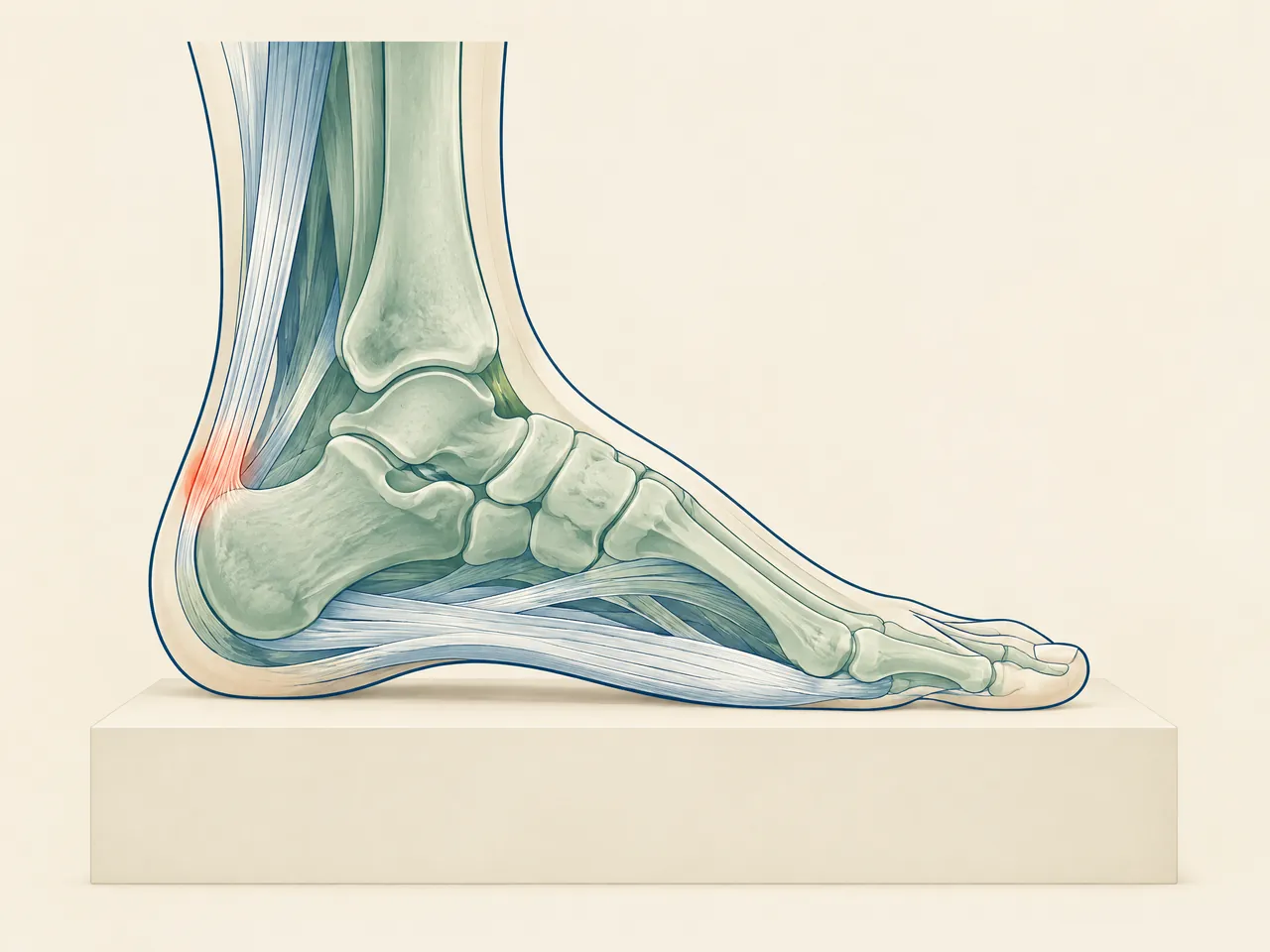
The short answer
Bottom of foot pain can involve the plantar fascia, heel cushioning, a strain, a nerve-related problem, an overuse injury or another foot condition. Pain under the heel or along the arch that is worse on first steps can fit a plantar-fascia pattern, but it is not conclusive on its own. Note the exact area, recent load, footwear, injury and any numbness. Severe pain after injury, marked swelling, fever, worsening numbness or difficulty walking needs medical assessment promptly.
Transparent pricing
See the fees.
Choose your care.
Explore our complete official price list, including first-trial prices, regular prices, packages and branch-specific options.
Opening WhatsApp prepares an enquiry; it does not send a message, take payment or confirm an appointment. Suitability and individual arrangements are confirmed during consultation.
Pain care
All prices in HKDExtracorporeal shockwave treatment
Shockwave treatment for deep-tissue and fascial care. The Kwun Tong clinic offers the multi-area options shown below.
Priced by branch
Branch-specific pricing
Prince Edward: HK$250 per area
Kwun Tong: HK$250 for 1 area / HK$450 for 2 areas / HK$600 for 3 areas
Pain care (manual therapy)
Includes Chinese medicine musculoskeletal assessment, manual joint techniques and tui na.
HK$580 (single session)
Chinese medicine musculoskeletal assessment
Pain care (acupuncture and manual therapy)
Combines acupuncture and manual therapy.
HK$680 (single session)
Combined care
Hair and scalp
All prices in HKDScalp health and hair-loss management
Includes AI scalp analysis, deep scalp and follicle cleansing, and scalp oil-control care.
HK$380 (first trial)
Regular price: HK$680
- 6 sessions: HK$3,480 (HK$580 per session)
- 12 sessions: HK$5,760 (HK$480 per session)
- 20 sessions: HK$8,600 (HK$430 per session)
- 30 sessions: HK$11,400 (HK$380 per session)
Hair acupuncture and Chinese herbal medicine package
Includes scalp acupuncture and 3 days of Chinese herbal medicine that does not require decoction.
HK$580 (single session)
Registered Chinese Medicine Practitioner consultation
- 6 sessions: HK$3,180 (HK$530 per session)
- 12 sessions: HK$5,760 (HK$480 per session)
- 20 sessions: HK$8,600 (HK$430 per session)
- 30 sessions: HK$11,400 (HK$380 per session)
Combined hair and scalp treatment
Combines acupuncture and Chinese herbal medicine with salon-level scalp and follicle care. Packages include complimentary hair-care shampoo and serum.
HK$1,260 (single session)
Combined treatment
- 8 sessions: HK$8,640 (HK$1,080 per session)
- 16 sessions: HK$15,680 (HK$980 per session)
- 20 sessions: HK$18,600 (HK$930 per session)
- 30 sessions: HK$26,400 (HK$880 per session)
Weight management
All prices in HKDFull-body acupoint embedding for weight management
Includes full-body acupoint embedding. Packages include complimentary Chinese herbal medicine for weight management, with the number of included days scaled to the package. Embedding material and the individual treatment arrangement are confirmed during consultation; this is not a cosmetic thread lift.
HK$980 (single session)
No trial session
- 10 sessions: HK$7,800 (HK$780 per session)
- 20 sessions: HK$14,600 (HK$730 per session)
- 30 sessions: HK$20,400 (HK$680 per session)
Facial acupuncture
All prices in HKDFacial acupuncture (basic)
Includes facial acupuncture and meridian-based facial care, including care for facial puffiness.
HK$480 (first trial)
Regular price: HK$680
- 10 sessions: HK$5,200 (HK$520 per session)
- 20 sessions: HK$9,600 (HK$480 per session)
- 30 sessions: HK$13,500 (HK$450 per session)
Facial acupuncture (advanced)
Includes enhanced facial acupuncture with a specially formulated moisturising mask and serum.
HK$780 (first trial)
Regular price: HK$1,180
- 10 sessions: HK$9,000 (HK$900 per session)
- 20 sessions: HK$16,600 (HK$830 per session)
- 30 sessions: HK$23,400 (HK$780 per session)
Chinese medicine
All prices in HKDAcupuncture and Chinese herbal medicine package
Includes a Chinese medicine consultation with pulse assessment, body acupuncture and 3 days of Chinese herbal granules that do not require decoction.
HK$580 (single session)
Chinese medicine consultation with pulse assessment
Understanding Bottom of Foot Pain Causes, Arch Pain Causes and Heel Pain Causes
The underside of the foot carries weight through the heel, arch and forefoot. It absorbs force when you walk, climb stairs, stand at work or exercise. For that reason, “bottom of foot pain” is a starting point, not an answer. Foot pain may involve the heel, arch or toes, and can arise with overuse, injury, unsuitable shoes or other health conditions. Start with a simple description: point with one finger to the worst place, say whether it feels sharp, bruised, tight, burning or numb, and explain when it occurs. [1]
The context around a flare is just as useful as the location. A sudden rise in running distance, return to long standing, busy week on concrete, or a worn-out pair of shoes can change the load on the sole. By contrast, pain that began immediately after a twist, fall or impact should not be treated as routine overuse. If an ankle problem is part of the story, ankle sprain home treatment explains why self-care does not replace checking an injury that cannot bear weight or keeps worsening.

How Bottom of Foot Pain Causes, Arch Pain Causes and Heel Pain Causes May Feel Different
The plantar fascia is a strong band of tissue that runs along the sole from the heel toward the toes. It is often discussed when discomfort is under the inner heel or through the arch, particularly after rest. A heel-and-arch pattern may be most noticeable when getting out of bed or standing after a long meeting. Some people find the first few steps uncomfortable, then notice a partial warm-up effect, with pain returning after a long walk. That pattern can fit plantar-fascia-related pain, but it is not proof. For a fuller description, see plantar fasciitis symptoms.
Other complaints need a different description. Pain directly under the centre of the heel on hard flooring may raise a question about the cushioning tissue there. Pain nearer the ball of the foot should be described by its exact position rather than called arch pain. Burning, pins and needles, electric-shock sensations or spreading numbness are also important because nerve pain can feel different from a local tissue strain. Mayo Clinic lists several chronic and injury-related causes of heel pain, including plantar fasciitis, nerve conditions, bruising and stress fractures. [2]
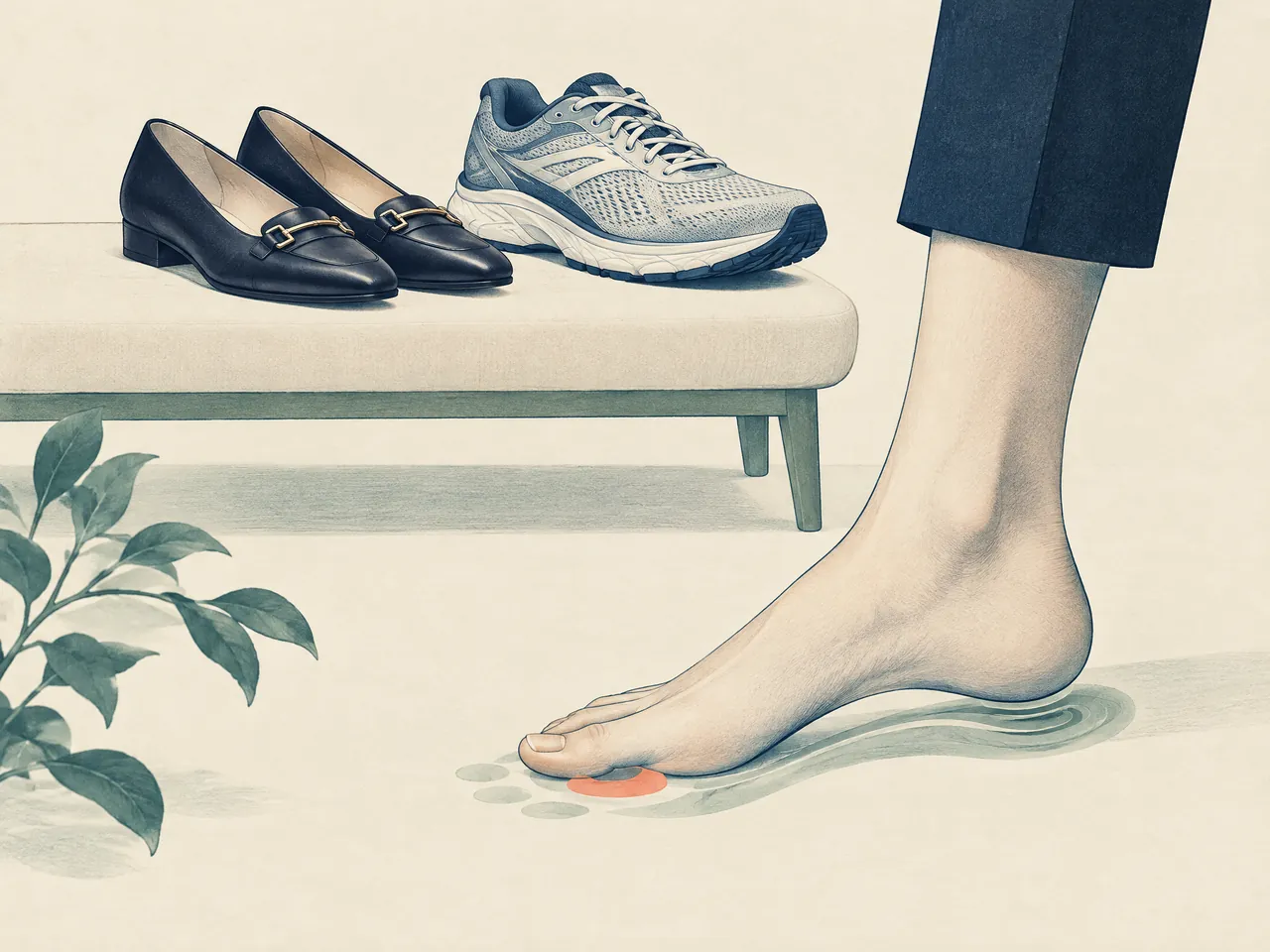
Why Activity, First Steps and Footwear Matter for Bottom of Foot Pain Causes, Arch Pain Causes and Heel Pain Causes
Record the first steps after waking or sitting, then compare them with symptoms after a commute, work shift or workout. Note whether pain improves briefly as you move, builds with standing, or continues while you are off your feet. Include the surface: hard tiled floors at home may feel quite different from a carpeted office. This timeline connects symptoms with the load that may provoke them and gives an assessor more useful detail than a pain score alone.
Footwear belongs in the same record. Check whether a shoe bends only where the toes bend, holds the heel securely, gives the toes room and has a sole that is not excessively worn. A shoe can fit in length yet still let the foot slide or concentrate pressure in one spot. Properly fitting shoes and the specific support a person needs are measures clinicians may consider for foot pain; they do not guarantee that one shoe will solve every cause. [1] Change one variable at a time where possible so that you can observe what actually changes the pattern.
Compare your options
| What you notice | Useful details to record | Why the detail matters |
|---|---|---|
| Heel pain on first steps | Whether it eases after moving and returns after standing or walking | Helps describe a possible plantar-fascia-related pattern without confirming it |
| Pain directly under the heel | Hard-floor sensitivity, a direct impact, swelling and exact tender point | Distinguishes a central heel complaint from arch-line pain and prompts injury screening |
| Arch discomfort | Pulling, tightness or ache; footwear; shift length; recent walking or training change | Connects symptoms with load and shoe context for an individual assessment |
| Burning, tingling or numbness | Where sensation travels, whether it is worsening, and any weakness or colour change | May need medical assessment rather than self-treatment for a local strain |
| Pain after a twist, fall or sudden training increase | Ability to bear weight, immediate swelling, bruising and change over the next day | Helps identify when an acute injury or stress-related problem should be considered |
On smaller screens, scroll the table sideways to compare all columns.
Assessing Bottom of Foot Pain Causes, Arch Pain Causes and Heel Pain Causes
An assessment should begin with the story, not an assumption that every painful sole is plantar fasciitis. A practitioner may ask when pain began, whether there was a specific incident, which single area is worst, what happens on first steps, and how standing, running, stairs or rest change it. They may ask about previous episodes, shoes, work demands, diabetes, circulation concerns, medicines and symptoms elsewhere. Cleveland Clinic similarly describes location, duration, timing, activity effects and previous management as practical evaluation questions. [1]
Examination may include watching walking and standing, comparing both feet, checking the tender area, looking for swelling or skin changes, and considering ankle and toe movement. Depending on the presentation, an appropriate medical professional may decide that imaging, podiatry or another referral is needed. Hong Kong Hospital Authority podiatry information lists plantar fasciitis and other biomechanical foot disorders among conditions addressed with education, footwear advice, exercise therapy and orthoses chosen for the individual condition. [3] No single pathway suits every sole-pain complaint.
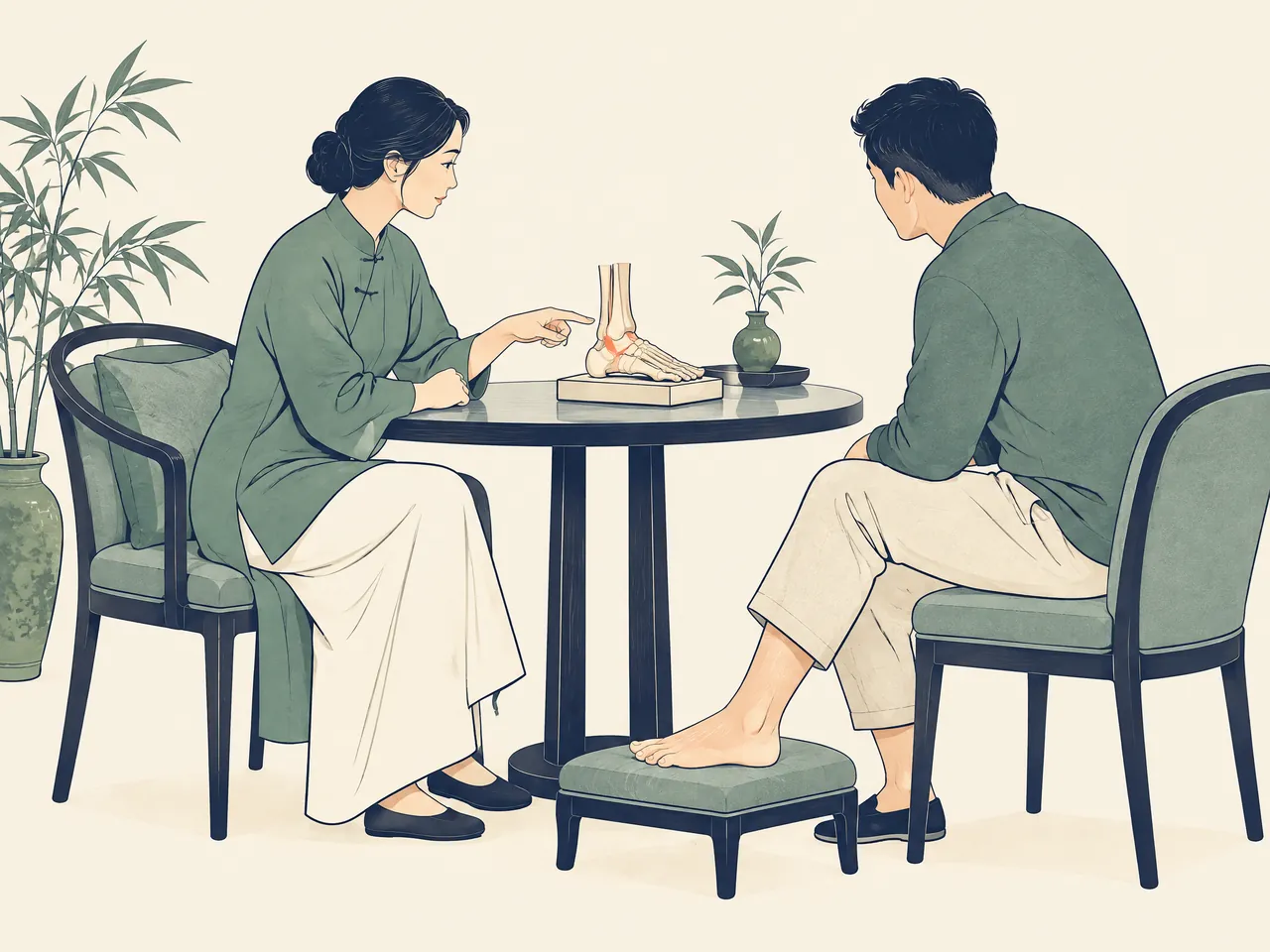
What a Practitioner Reviews When Exploring Bottom of Foot Pain Causes, Arch Pain Causes and Heel Pain Causes
Prepare a compact symptom diary for several typical days. Record the date, exact site, whether one or both feet are affected, the feeling, morning first-step experience, activity before a flare, and the shoes worn. Include changes that might otherwise seem unrelated, such as a job with more standing, new training terrain, a footwear change or recovery from a sprain. Mention what you have already tried and whether it helped, did nothing or made symptoms worse. This turns a vague complaint into a clearer discussion.
An assessment also separates local pain from signs that might suggest nerve involvement or injury. Burning, tingling and electric sensations may be described with nerve pain. A focal deep ache that rises with weight-bearing after a large increase in training needs a different conversation from routine first-step discomfort. Do not forcefully test painful tissue at home to prove a theory. A registered Chinese Medicine Practitioner can discuss traditional Chinese medicine assessment and complementary options, but that approach is not the same as a modern medical diagnosis.

When Bottom of Foot Pain Causes, Arch Pain Causes and Heel Pain Causes Need Medical Assessment
Arrange timely medical assessment for sudden or severe foot pain, pain after an injury, increasing redness or swelling, fever, or pain that does not improve. Get urgent help if you cannot walk as usual, cannot rise onto the toes or bend the foot downward, or have serious heel pain and swelling following injury. Mayo Clinic also lists heel pain with fever, numbness or tingling as a reason for immediate medical attention. [2] These signs are not something to stretch through or mask while awaiting a complementary consultation.
Do not delay assessment for new or worsening numbness, weakness, colour change, an open wound, or an unusually hot or swollen foot. People with diabetes or a condition that affects blood flow should be particularly cautious about new foot symptoms. [1] If pain and altered sensation occur together, When should I see a doctor for foot pain and numbness? provides a focused starting point. Persistent pain that changes your gait, makes work difficult or repeatedly returns despite basic adjustments also warrants assessment.
Self-Care Bottom of Foot Pain Causes, Arch Pain Causes and Heel Pain Causes
For non-urgent symptoms, self-care should be gentle and specific to the pattern rather than aggressive. Reduce or pause the activity that clearly provokes a flare, but do not turn rest into a permanent plan without advice. Choose one manageable change: shorten a walk, take seated breaks during a standing shift, or replace a high-impact session with lower-impact movement. The aim is to stop repeatedly exceeding the foot’s current tolerance while you arrange an assessment if symptoms persist.
A cold pack wrapped in cloth may be used briefly for pain or swelling if it is comfortable, and elevating the foot after a demanding day may help some people rest. Do not apply ice directly to skin. Over-the-counter pain medicine is not suitable for everyone, so check with a pharmacist or doctor in light of your health history and other medicines. Home measures may ease a symptom, but cannot rule out an injury, infection or nerve problem. For consultation and fee information, see the Chinese medicine clinic price list Hong Kong.
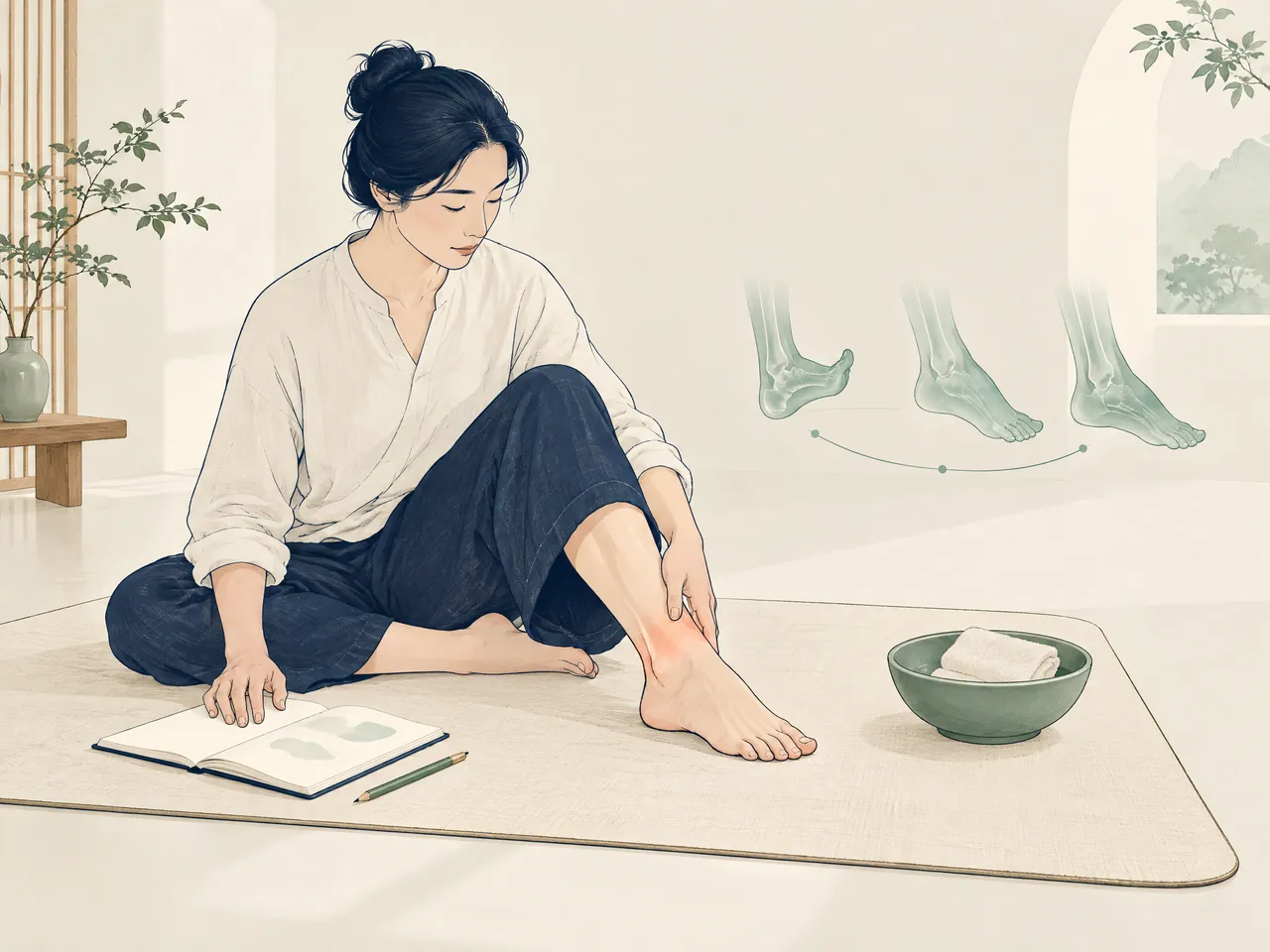
Gentle Stretching and Load Changes for Bottom of Foot Pain Causes, Arch Pain Causes and Heel Pain Causes
If stretching does not cause sharp pain, use a modest calf stretch and a gentle sole-of-foot stretch after rest rather than forcing range. Sit down, place the affected foot over the opposite knee, and lightly draw the toes back only to a tolerable pull along the sole. Release slowly and stop if it creates sharp pain, tingling, cramping or symptoms that remain worse afterward. The precise exercise, dose and progression should be tailored when pain persists or injury is possible.
Make a load change concrete. A runner might replace a few days of speed work with easier movement. Someone at a counter can schedule brief seated pauses, change position regularly and avoid an unusually long walk after work while symptoms are active. Record the next-day response, not only how the foot feels during activity. A delayed flare can mean that the current amount is still too much. If gentle changes do not create a manageable pattern, seek assessment instead of adding increasingly forceful home techniques.
Choosing Supportive Footwear for Bottom of Foot Pain Causes, Arch Pain Causes and Heel Pain Causes
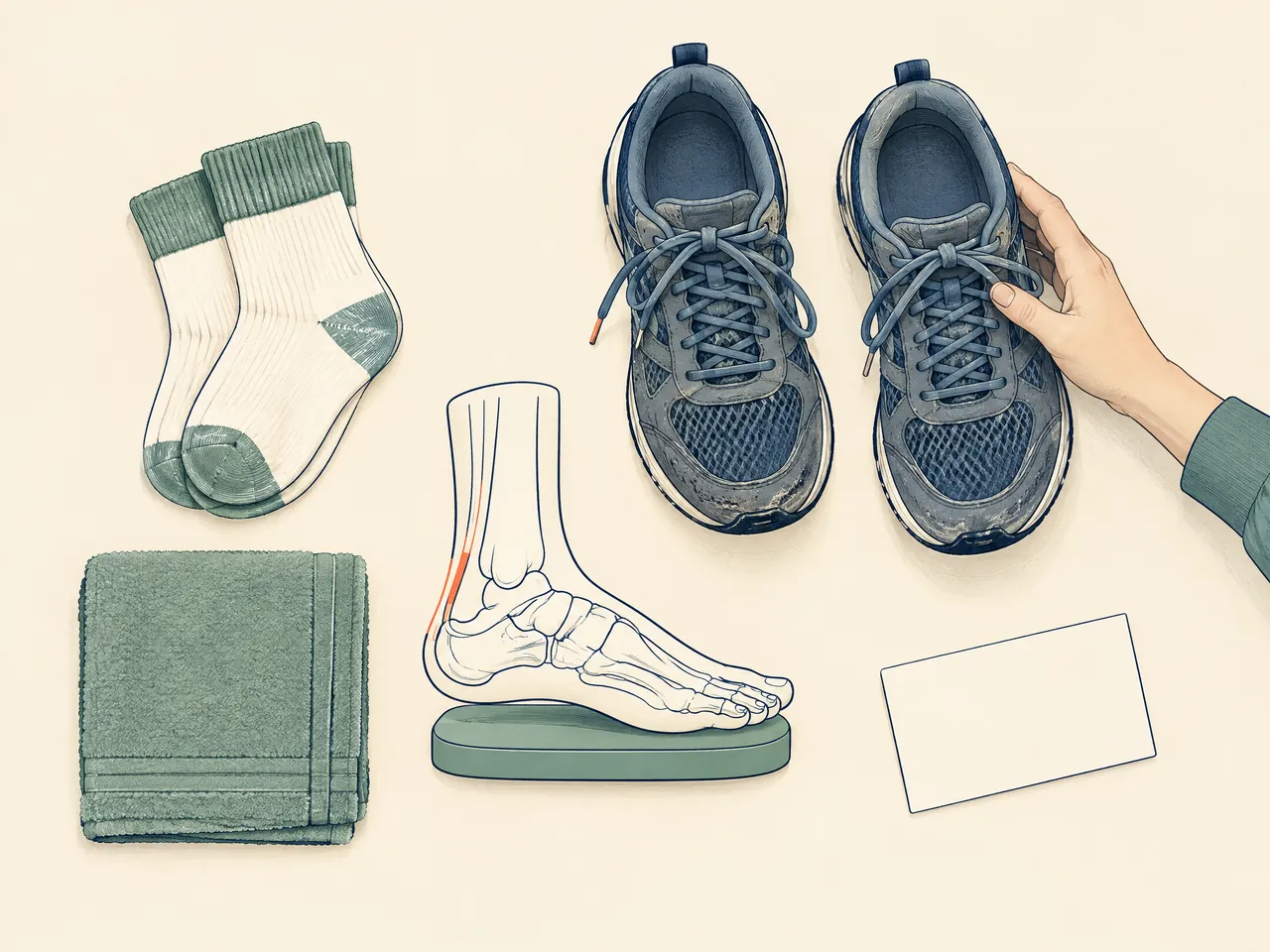
Choose footwear for the activity and the shape of your own foot, not a label such as “arch support.” For walking or standing, look for a stable heel area, enough width and depth around the toes, a useful sole and a secure fit that does not let the foot slide forward. A supportive indoor shoe may be more practical than bare feet on hard floors when that reliably triggers heel discomfort. Check both shoes for uneven wear, but treat it as a discussion point rather than a diagnosis.
An insole or arch support can be worth discussing if it improves comfort, but it should not cause pressure, numbness or rubbing. Avoid using a new shoe as a reason for an immediate increase in mileage or standing time. Hospital Authority podiatry information includes footwear advice, functional orthoses and foot exercise therapy among options selected according to the foot condition. [3] If you prefer to discuss Chinese medicine support after an appropriate medical check, WhatsApp TCM Lab at +852 6940 5663 and mention whether the issue is heel pain, arch pain, numbness or a recent injury.
Care and health guide
Foot discomfort: care information
This directory brings together services, reading, and visit information related to foot discomfort, to help you prepare questions for a consultation.
When foot discomfort affects your day, noting when it occurs, its relation to activity, and what you have already tried can help prepare a consultation; acupuncture for foot pain is a relevant service or reading entry point.
Individual circumstances differ, and acupuncture Hong Kong offers related information to help you understand options and prepare questions.


Your questions, answered
Frequently asked questions
Does pain on the first steps always mean plantar fasciitis?
No. First-step pain after rest can fit a plantar-fascia-related pattern, especially when the discomfort is under the heel or along the arch, but it does not confirm the cause. Describe the exact site, the response to walking, footwear, load changes and any injury or nerve symptoms. Persistent or limiting pain deserves an assessment rather than a self-diagnosis.
Can standing at work cause bottom of foot pain?
Long periods on your feet can be an important load factor, particularly when combined with hard surfaces, a sudden change in shift pattern or unsupportive shoes. It does not identify one diagnosis by itself. Break up standing where possible, check footwear, note the timing of symptoms and seek assessment if pain persists, worsens or changes how you walk.
What should I do if heel pain comes with numbness or tingling?
Do not assume it is ordinary plantar fasciitis. Numbness, tingling, burning or weakness can point to nerve-related symptoms and should be assessed, especially if they are new, worsening or associated with injury, colour change, fever, severe swelling or trouble walking. Mayo Clinic lists heel pain with numbness or tingling among reasons to seek immediate medical attention. [2]
Can acupuncture be discussed for persistent heel or arch pain?
It may be discussed as a complementary option after an appropriate assessment and safety screening. It should not replace medical assessment for red flags or an acute injury. Research reviewed in the Singapore Medical Journal suggested possible short-term pain findings for plantar fasciitis, while concluding that longer-term effectiveness was not established. [4] No outcome or number of sessions can be guaranteed.
Sources and further information
- [1] [1] Cleveland Clinic — Foot Pain
Referenced for: Reviewed overview of foot-pain locations, possible causes, assessment questions, footwear, home measures and when to contact a healthcare provider.
- [2] [2] Mayo Clinic — Heel pain
Referenced for: Causes of heel pain, urgent symptoms after injury, numbness or tingling, and general self-care context.
- [3] [3] Hong Kong Hospital Authority, Queen Mary Hospital — Podiatry
Referenced for: Hong Kong public-hospital information on podiatry, plantar fasciitis, foot health education, footwear advice, functional orthoses and exercise therapy.
- [4] [4] Singapore Medical Journal — How effective is acupuncture for reducing pain due to plantar fasciitis?
Referenced for: Systematic review reporting short-term findings and stating that evidence was insufficient for a definitive conclusion on longer-term effectiveness.