
TCM Lab · Health reading
Neck Pain Causes: Common Causes of Neck Pain and Stiffness
Published Updated
Neck pain and stiffness often follow an everyday trigger: hours with the head held forward over a phone, a fixed desk position, a tense journey, or an awkward sleeping position. In many cases the discomfort is local and movement is simply limited or sore. The pattern changes the next step, however. Pain that runs into an arm, pins and needles, numbness, loss of strength, symptoms after a significant injury, or a steadily worsening problem deserves medical assessment rather than guesswork. This guide explains the common patterns behind neck pain causes, what to record, and how to respond without forcing the neck.
Appointments are confirmed through WhatsApp. If you have language requirements, please mention them in your enquiry.
The short answer
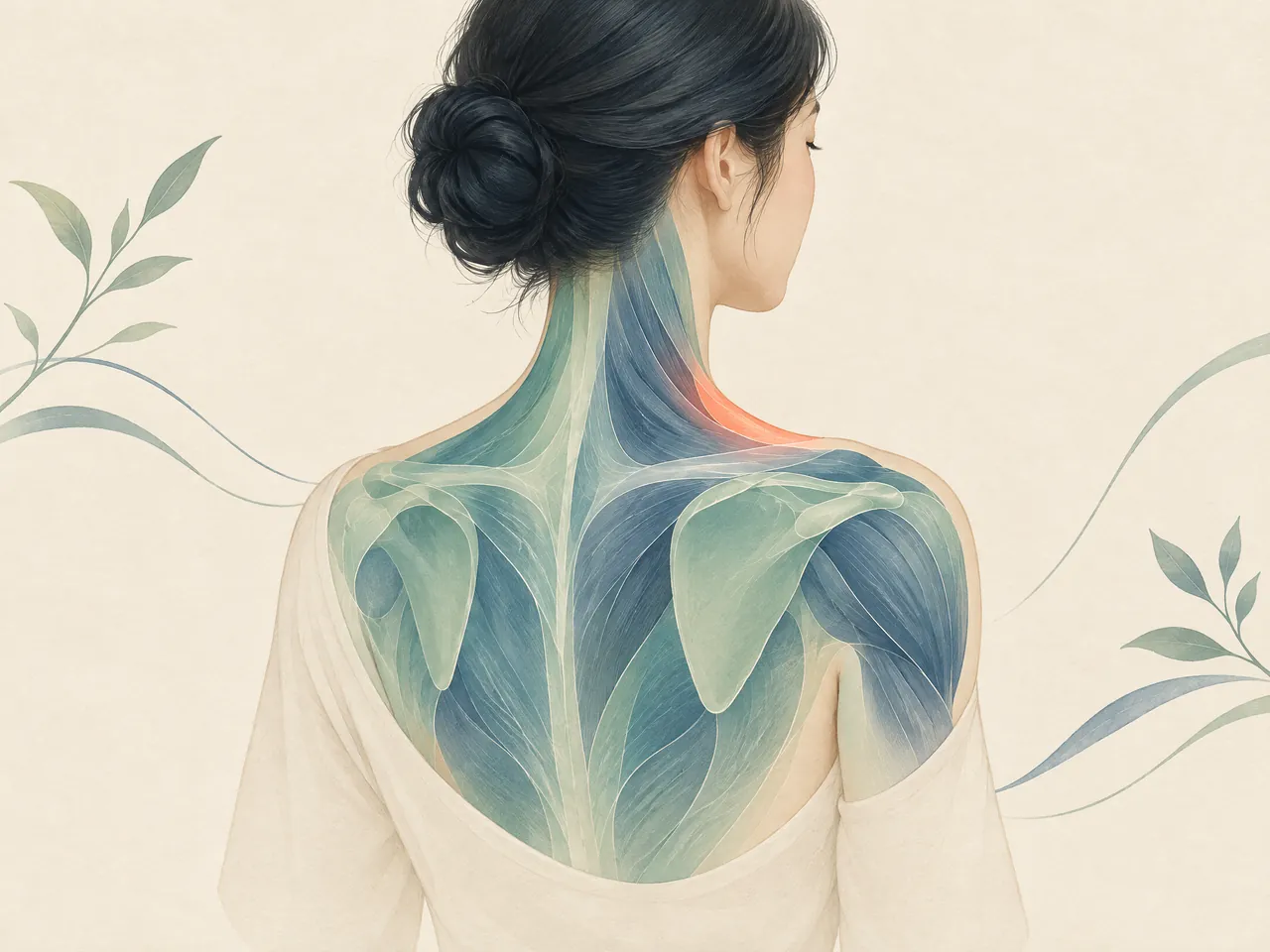
Common causes of neck pain and stiffness include prolonged fixed postures, an awkward sleeping position, muscle strain, and injury. A pinched or irritated nerve is more likely when pain travels into the shoulder or arm or comes with tingling, numbness, or weakness. For a mild local problem, gentle movement, posture changes, and a safely wrapped heat or cold pack may be reasonable. Seek prompt assessment after significant trauma or for progressive neurological symptoms.
Transparent pricing
See the fees.
Choose your care.
Explore our complete official price list, including first-trial prices, regular prices, packages and branch-specific options.
Opening WhatsApp prepares an enquiry; it does not send a message, take payment or confirm an appointment. Suitability and individual arrangements are confirmed during consultation.
Pain care
All prices in HKDExtracorporeal shockwave treatment
Shockwave treatment for deep-tissue and fascial care. The Kwun Tong clinic offers the multi-area options shown below.
Priced by branch
Branch-specific pricing
Prince Edward: HK$250 per area
Kwun Tong: HK$250 for 1 area / HK$450 for 2 areas / HK$600 for 3 areas
Pain care (manual therapy)
Includes Chinese medicine musculoskeletal assessment, manual joint techniques and tui na.
HK$580 (single session)
Chinese medicine musculoskeletal assessment
Pain care (acupuncture and manual therapy)
Combines acupuncture and manual therapy.
HK$680 (single session)
Combined care
Hair and scalp
All prices in HKDScalp health and hair-loss management
Includes AI scalp analysis, deep scalp and follicle cleansing, and scalp oil-control care.
HK$380 (first trial)
Regular price: HK$680
- 6 sessions: HK$3,480 (HK$580 per session)
- 12 sessions: HK$5,760 (HK$480 per session)
- 20 sessions: HK$8,600 (HK$430 per session)
- 30 sessions: HK$11,400 (HK$380 per session)
Hair acupuncture and Chinese herbal medicine package
Includes scalp acupuncture and 3 days of Chinese herbal medicine that does not require decoction.
HK$580 (single session)
Registered Chinese Medicine Practitioner consultation
- 6 sessions: HK$3,180 (HK$530 per session)
- 12 sessions: HK$5,760 (HK$480 per session)
- 20 sessions: HK$8,600 (HK$430 per session)
- 30 sessions: HK$11,400 (HK$380 per session)
Combined hair and scalp treatment
Combines acupuncture and Chinese herbal medicine with salon-level scalp and follicle care. Packages include complimentary hair-care shampoo and serum.
HK$1,260 (single session)
Combined treatment
- 8 sessions: HK$8,640 (HK$1,080 per session)
- 16 sessions: HK$15,680 (HK$980 per session)
- 20 sessions: HK$18,600 (HK$930 per session)
- 30 sessions: HK$26,400 (HK$880 per session)
Weight management
All prices in HKDFull-body acupoint embedding for weight management
Includes full-body acupoint embedding. Packages include complimentary Chinese herbal medicine for weight management, with the number of included days scaled to the package. Embedding material and the individual treatment arrangement are confirmed during consultation; this is not a cosmetic thread lift.
HK$980 (single session)
No trial session
- 10 sessions: HK$7,800 (HK$780 per session)
- 20 sessions: HK$14,600 (HK$730 per session)
- 30 sessions: HK$20,400 (HK$680 per session)
Facial acupuncture
All prices in HKDFacial acupuncture (basic)
Includes facial acupuncture and meridian-based facial care, including care for facial puffiness.
HK$480 (first trial)
Regular price: HK$680
- 10 sessions: HK$5,200 (HK$520 per session)
- 20 sessions: HK$9,600 (HK$480 per session)
- 30 sessions: HK$13,500 (HK$450 per session)
Facial acupuncture (advanced)
Includes enhanced facial acupuncture with a specially formulated moisturising mask and serum.
HK$780 (first trial)
Regular price: HK$1,180
- 10 sessions: HK$9,000 (HK$900 per session)
- 20 sessions: HK$16,600 (HK$830 per session)
- 30 sessions: HK$23,400 (HK$780 per session)
Chinese medicine
All prices in HKDAcupuncture and Chinese herbal medicine package
Includes a Chinese medicine consultation with pulse assessment, body acupuncture and 3 days of Chinese herbal granules that do not require decoction.
HK$580 (single session)
Chinese medicine consultation with pulse assessment
Neck Pain Causes: Common Causes of Neck Pain and Stiffness to Notice
When people search for neck pain causes, they are often trying to decide whether a stiff, sore neck is an ordinary overload problem or something that needs attention. Start with the timeline. Did the pain appear after waking, after a long day at a screen, after carrying or lifting, or after a fall or collision? Then describe the location in ordinary terms: one side of the neck, the base of the skull, across the upper shoulders, or a line that travels down an arm. The NHS lists awkward sleep position, prolonged desk posture, a pinched nerve, and injury such as whiplash among common causes. [1]
A local ache can feel surprisingly restrictive because neck muscles work constantly to hold and move the head. When they become tense or strained, turning to check traffic, looking down at a device, or lifting the chin can be uncomfortable. Note what eases the pain, what reliably brings it on, and whether the problem is changing from day to day. Someone with a recurring stiff neck may find it useful to compare sleep, desk, travel, and exercise habits around each episode.

Neck Pain Causes and Movement Patterns: Common Causes of Neck Pain and Stiffness
Movement patterns give practical clues. A neck that feels tight only at the end of turning, side-bending, looking down, or looking up may fit a local muscle or joint irritation, especially if there is no spreading sensation in the arm. The key is not to label the problem too quickly. Keep a brief note of which direction hurts, whether movement improves after a gentle walk or becomes worse later in the day, and whether the restriction is getting better, staying the same, or progressing. That record is far more useful at an appointment than a general description of being tired.
Consider the load around the movement as well. A phone held low, a laptop set too low, a headset used on one side, or a bag consistently carried on one shoulder can create long periods with little variation. Adjusting the screen or device, bringing reading material up instead of bringing the head down, and taking short changes of position can reduce sustained loading. For a closer look at a strain pattern and its usual triggers, see neck muscle strain. If a previously mild movement restriction suddenly becomes much more severe, reassessment is sensible rather than simply adding more stretches.
Neck Pain Causes with Arm Symptoms: Common Causes of Neck Pain and Stiffness
Pain that starts in the neck and reaches the shoulder, arm, hand, or fingers is different from a purely local sore neck. It may be an ache, burning sensation, electric-shock-like pain, pins and needles, numbness, or a sense that the arm is weaker or clumsier. The Hong Kong College of Orthopaedic Surgeons notes that persistent numbness, reduced sensation, or limb weakness warrants assessment to exclude neurological complications. [2] Do not assume that an arm symptom is ‘just tight muscle’ because the neck also feels tight.
Record where the sensation starts and ends, which fingers are involved if any, whether coughing or a particular neck position changes it, and whether objects feel harder to hold. Also record whether the symptoms are intermittent or continuous. It does help separate an occasional brief tingle from a persistent or worsening neurological change. A helpful next read for people trying to describe their experience is why does my neck hurt. Arrange prompt medical advice if numbness or weakness persists, becomes progressive, or follows trauma.
Compare your options
| Pattern to notice | What to record or change | When to seek assessment |
|---|---|---|
| Local stiffness after desk, phone, or sleep position | Note painful directions; vary position, screen height, and sleep posture; use gentle movement within comfort. | If it is not improving after a few weeks, keeps returning, or you are concerned. [1] |
| Pain reaches shoulder or arm, with pins and needles or numbness | Map where the sensation travels and whether a position changes it; avoid forceful neck movements. | Promptly, especially for persistent or worsening sensation or reduced strength. [2] |
| Pain after a fall, collision, or significant impact | Record the event and symptoms; do not test the neck repeatedly or seek forceful manipulation first. | Prompt assessment, particularly with severe pain, numbness, weakness, or restricted movement. |
| Progressive weakness, clumsy hands, walking difficulty, or bladder/bowel change | Do not rely on home treatment or wait to see if stretching helps. | Urgent medical evaluation is needed. [2] |
On smaller screens, scroll the table sideways to compare all columns.
Neck Pain Causes: Common Causes of Neck Pain and Stiffness to Distinguish
It is tempting to blame every neck problem on posture. Sleep position, a sudden awkward turn, exercise, a collision, a fall, and longer-term changes in the neck can all matter. The circumstances help distinguish them. A problem that began immediately after a traffic accident or fall needs a different level of caution from a familiar, local stiffness that developed gradually after desk work. Likewise, a pain pattern with arm symptoms, balance changes, or loss of coordination should not be managed as though it were simply a workstation issue.
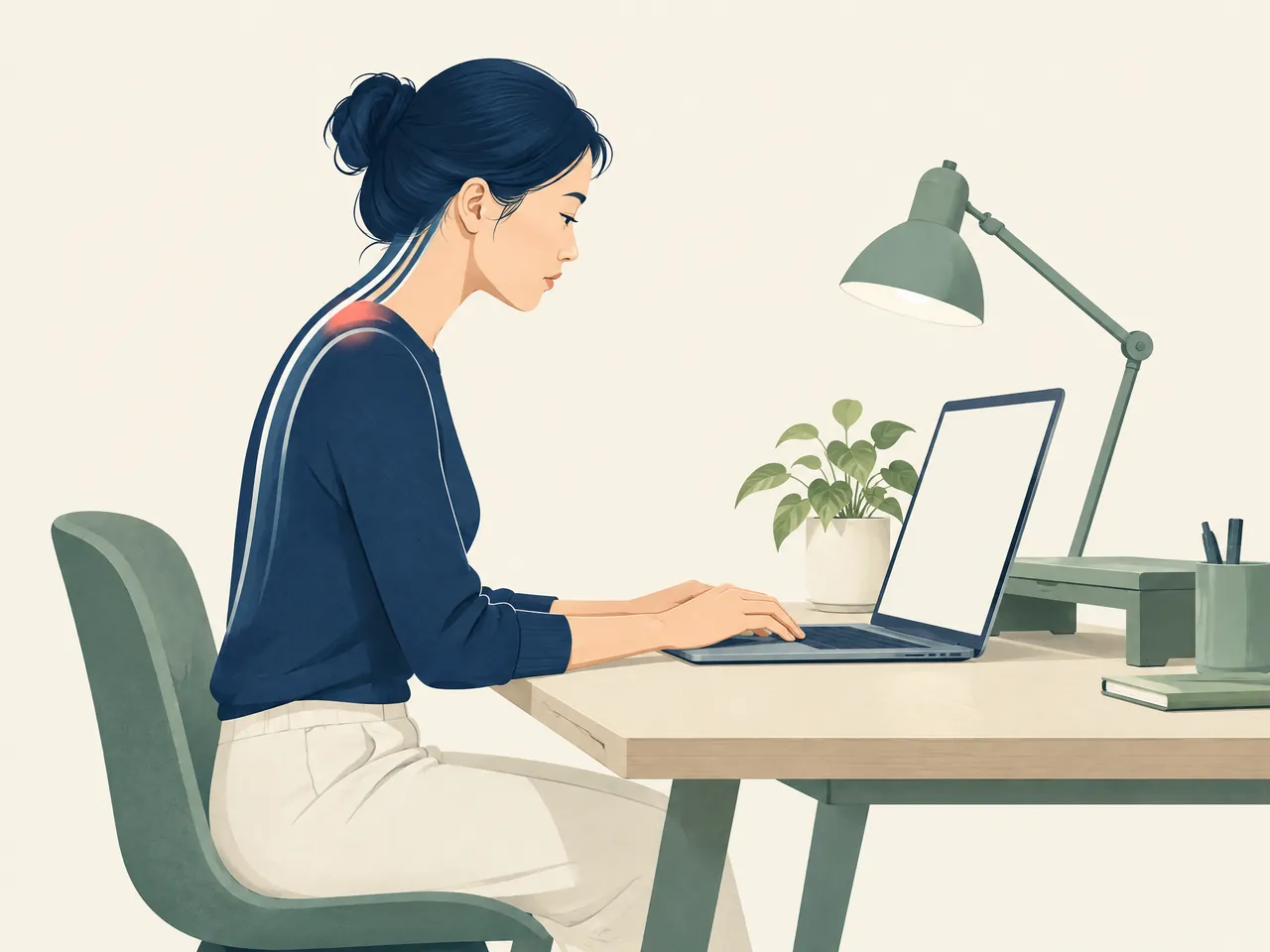
A brief symptom diary can make the distinction concrete. Write down onset, any injury, the activity that provokes symptoms, the direction of movement that is limited, arm symptoms, sleep disruption, and what you have already tried. This avoids a common trap: changing pillow, chair, exercises, massage, and heat all at once, then being unable to tell what helped or what aggravated the problem. If neck stiffness makes it unsafe to check surroundings, do not drive or cycle until movement is adequate; this is also NHS advice. [1]
Posture and Sleep in Neck Pain Causes: Common Causes of Neck Pain and Stiffness
Posture-related discomfort usually reflects how long the neck has been held in one position rather than a single ‘bad posture’ that must be corrected perfectly. Small, repeatable changes are often more realistic than trying to sit rigidly all day: raise the screen, support the arms when appropriate, vary the task, and stand or walk briefly between blocks of work. The aim is movement variety and a setup that does not ask the neck to remain turned, bent, or craned for hours.
Waking with pain can also point to an awkward sleeping position. The NHS advises keeping the head level with the body and using a low, firm pillow rather than sleeping on the front. [1] Notice whether the head falls sharply to one side, whether you spend long periods face down, or whether pain follows sleeping away from home. If pain after sleep is accompanied by fever, feeling generally unwell, marked arm symptoms, or it continues to intensify, do not treat it as an ordinary sleep problem. Seek a clinical assessment.
Nerve Pressure and Injury in Neck Pain Causes: Common Causes of Neck Pain and Stiffness
A nerve can be irritated where it leaves the cervical spine for several reasons. Degenerative changes or disc-related problems are examples that may be evaluated, but a painful neck alone does not prove either one. The Hong Kong College of Orthopaedic Surgeons describes how changes around joints or discs can narrow spaces and affect nearby nerve roots, with possible limb symptoms. [2] The practical message is to report pain radiating to an arm, altered sensation, or weakness, not to self-diagnose a disc condition from a scan or a search result.
Injury deserves a separate check. Pain after a collision, forceful impact, fall, or other significant trauma should be assessed promptly, particularly if the pain is severe or there are neurological symptoms. Seek urgent medical care for new or worsening limb weakness, increasing trouble walking, hand clumsiness, loss of bladder or bowel control, or neck pain with concerning systemic symptoms such as unexplained weight loss. These are not typical features of uncomplicated posture-related pain and need timely evaluation. Avoid forceful neck manipulation while an injury or progressive neurological problem is being assessed.
Neck Pain Causes: Common Causes of Neck Pain and Stiffness and Next Steps
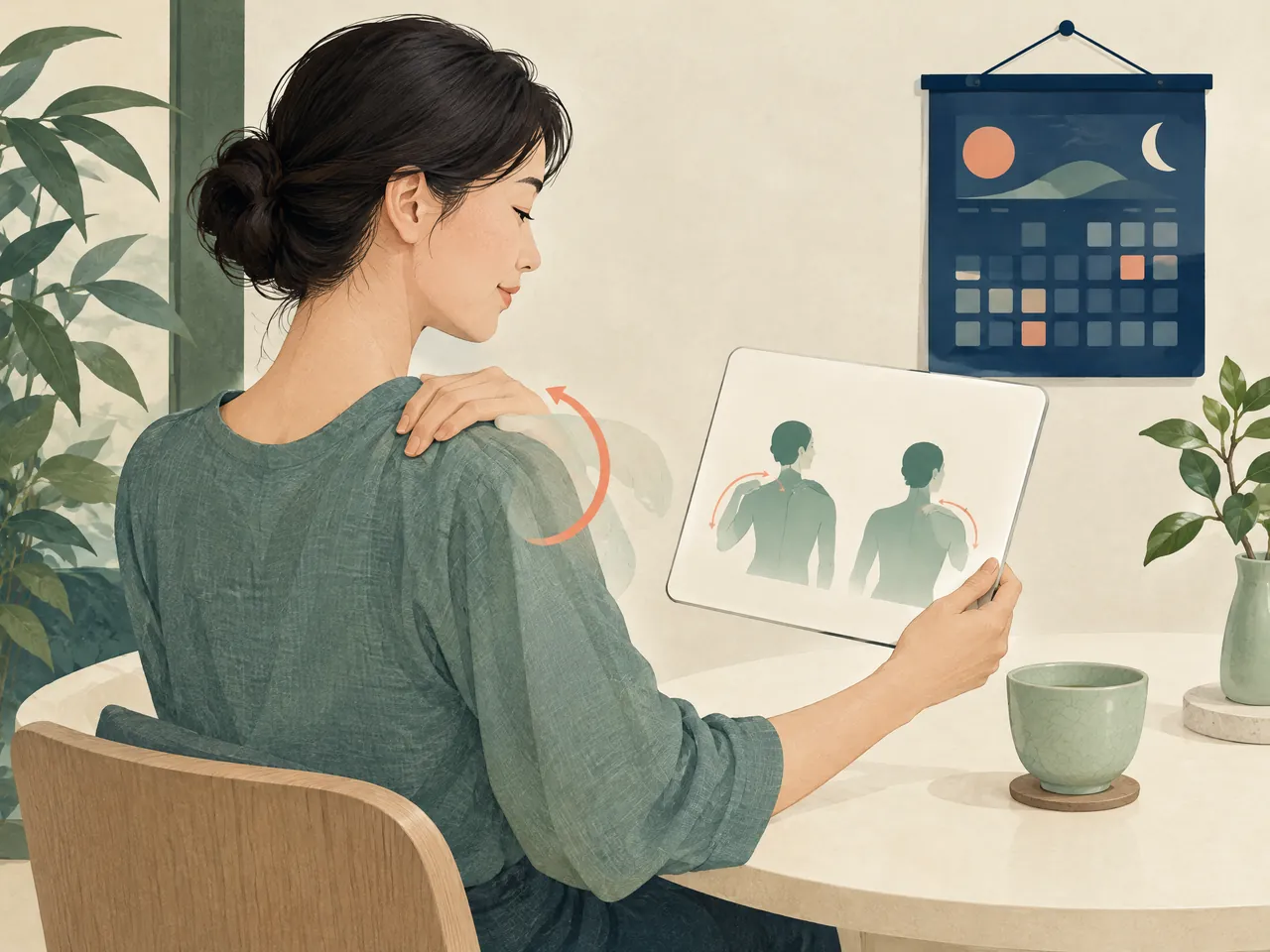
For mild, local neck pain and stiffness without warning symptoms, the next step is usually calm, measured self-care rather than total rest or an aggressive treatment plan. Heat or cold can be chosen by comfort; protect the skin by wrapping a pack rather than placing it directly on the neck. The NHS recommends heat or cold packs and neck flexibility exercises, while advising against a collar unless a doctor tells you to use one. [1] If a movement causes sharp pain, spreading symptoms, or a clear worsening afterwards, stop and seek advice rather than forcing progress.
Review the result honestly over the following days. Improvement may show up first as easier turning, fewer wake-ups, or less need to guard the neck, not complete absence of pain. If the pattern is not settling after a few weeks, pain relief measures have not helped, or you are worried about the symptoms, arrange an assessment. [1] This makes it easier to decide whether the issue can continue with conservative care or needs focused medical investigation. It also prevents a useful supportive option from delaying evaluation of a problem that has changed character.

Self-Care for Neck Pain Causes: Common Causes of Neck Pain and Stiffness
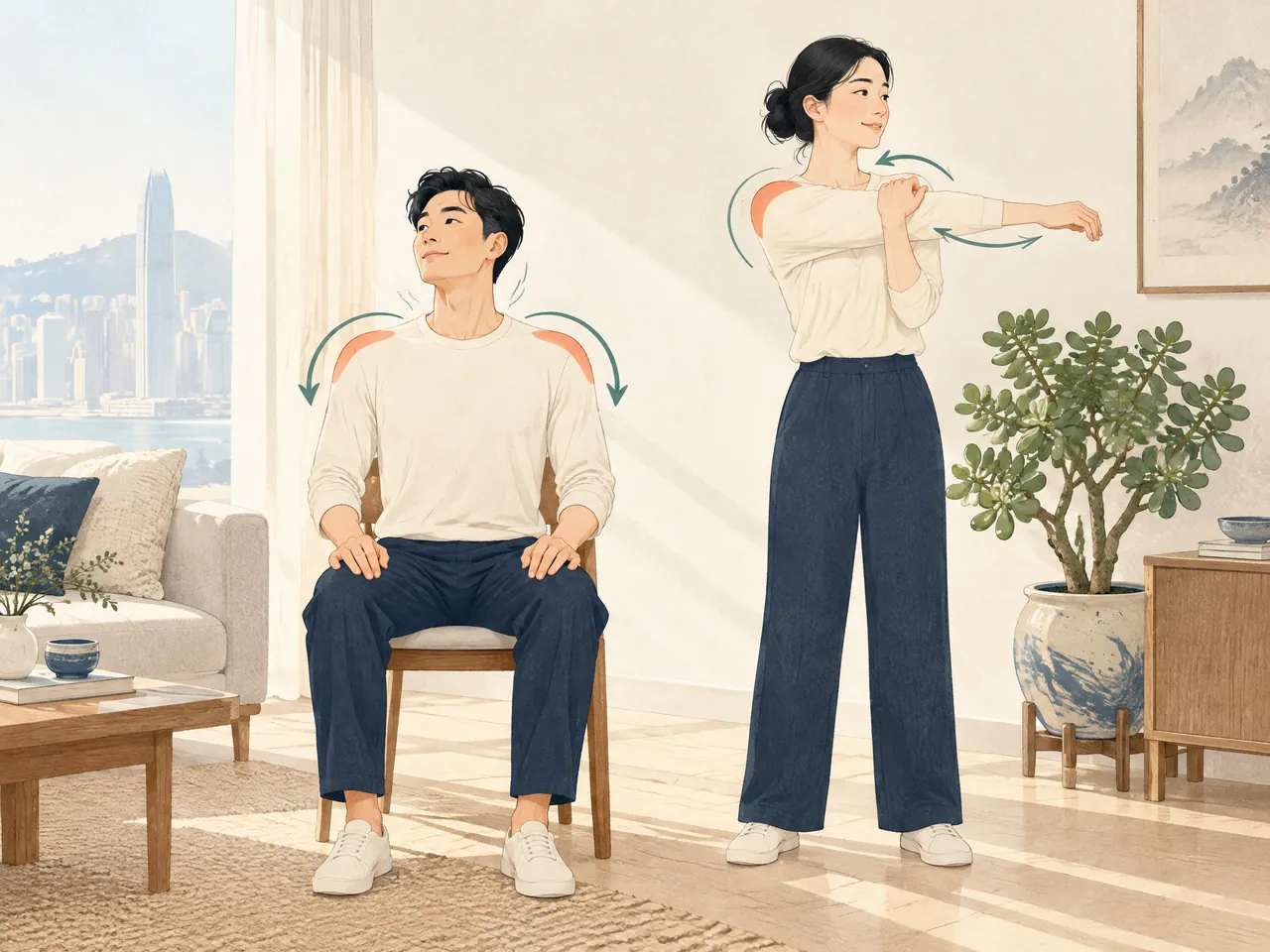
Use self-care as a way to support ordinary recovery, not as a test of endurance. Start with a comfortable amount of movement: slow turning, looking slightly up and down, or a short walk if these do not sharply worsen symptoms. Break up long desk or phone sessions and set the work at a height that lets the head stay closer to neutral. A wrapped warm or cold pack may feel soothing; use whichever is more comfortable and stop if the skin is irritated or symptoms feel worse.
Some people also ask about Chinese medicine for neck pain. A registered Chinese medicine practitioner can take a history and discuss traditional assessment alongside your medical history, but a traditional pattern is not the same as a modern medical diagnosis of nerve compression or injury. Acupuncture may be discussed as an adjunct after assessment, not as a promise to cure every cause of neck pain. NCCIH reports that acupuncture may help several pain conditions including neck pain, while stressing sterile and proper treatment. [3] Explore Chinese medicine for neck pain only after urgent causes have been considered.
Assessment for Neck Pain Causes: Common Causes of Neck Pain and Stiffness
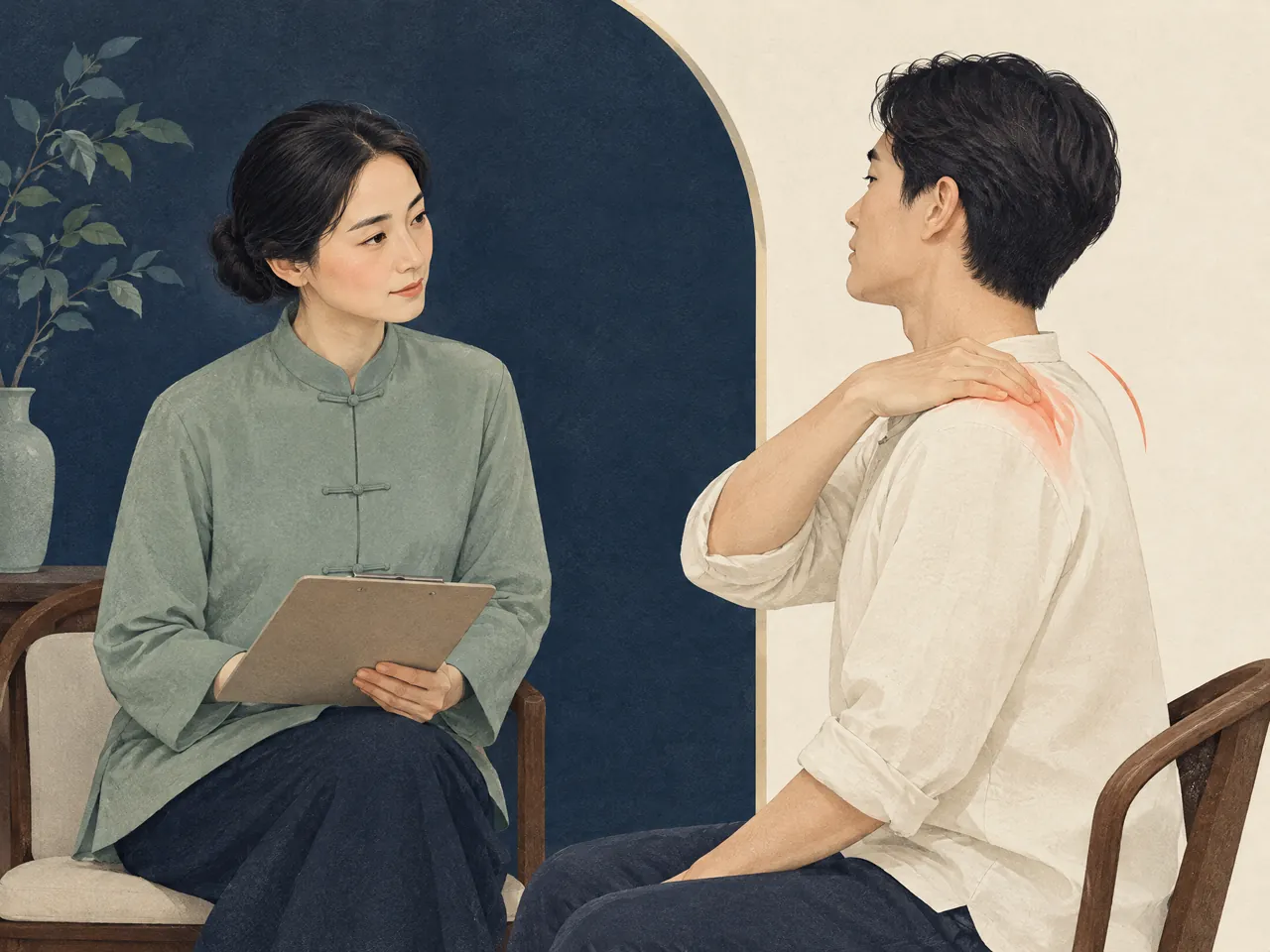
An assessment is useful when you need help distinguishing a simple overload pattern from a nerve, injury, or other concern. Expect questions about onset, recent trauma, night symptoms, headache or systemic symptoms, arm pain, numbness, weakness, balance, and the daily positions that affect the pain. An examination may look at neck movement, arm strength, sensation, reflexes, and related shoulder movement. Be especially clear about symptoms that are progressive, function-limiting, or different from your usual episodes. Accurate information lets the clinician choose an appropriate pathway rather than treating only the location of pain.
If you would like to discuss supportive Chinese medicine care after appropriate assessment, you can make an enquiry with the Kwun Tong Chinese medicine clinic or the Chinese medicine clinic Prince Edward. Explain whether your problem is local stiffness, pain spreading to an arm, or follows an injury, and mention any current medical treatment so arrangements can be considered safely. For non-urgent questions, WhatsApp +852 6940 5663 and state the symptoms, preferred location, and any language needs; appointment availability is confirmed directly rather than assumed.
Care and health guide
Neck discomfort: care information
This directory brings together services, reading, and visit information related to neck discomfort, to help you prepare questions for a consultation.
When neck discomfort affects your day, noting when it occurs, its relation to activity, and what you have already tried can help prepare a consultation; acupuncture for neck pain is a relevant service or reading entry point.
Individual circumstances differ, and acupuncture Hong Kong offers related information to help you understand options and prepare questions.


Your questions, answered
Frequently asked questions
What are the most common causes of neck pain and stiffness?
Common causes include an awkward sleeping position, prolonged desk or phone posture, muscle strain, a pinched nerve, and injury such as whiplash. Local stiffness without arm symptoms may fit a muscle or posture-related pattern, but symptoms need to be considered with the history and examination. [1]
Can bad posture cause neck pain?
When is neck pain with arm numbness or tingling serious?
Arm pain, pins and needles, numbness, or weakness can be associated with nerve irritation or pressure and should be assessed if persistent, progressive, or accompanied by reduced strength. Seek urgent care after significant trauma or for worsening weakness, trouble walking, hand clumsiness, or bladder or bowel changes. [2]
Is heat or cold better for neck pain and stiffness?
Either may be used according to comfort for a mild, local sore neck. Wrap the heat or cold pack to protect the skin, and stop if it aggravates symptoms. It is still important to avoid unsafe activities if you cannot turn your neck adequately, and to seek advice when symptoms persist or change. [1]
Sources and further information
- [1] [1] NHS — Neck pain
Referenced for: Supports common causes, gentle self-care, heat or cold packs, movement, persistence, and safety advice about driving or cycling with restricted neck movement.
- [2] [2] The Hong Kong College of Orthopaedic Surgeons — Neck Pain
Referenced for: Supports Hong Kong professional information on posture-related pain, radiation to the arm, persistent numbness or weakness, injury, and warning signals requiring specialist attention.
- [3] [3] NCCIH — Acupuncture: Effectiveness and Safety
Referenced for: Supports balanced wording about research on acupuncture for pain including neck pain and the importance of sterile, properly delivered treatment.