
TCM Lab · Health reading
A Practical Guide to the facial acupuncture treatment process and facial acupuncture for facial muscle tension
Published Updated
A facial acupuncture appointment is not simply a matter of placing needles where a line or tight spot is visible. The facial acupuncture treatment process should begin by hearing what feels tight, when it started, whether there is jaw clenching, headache, dental work, skin irritation, a recent procedure, or a change in facial movement. For facial acupuncture for facial muscle tension, a registered Chinese medicine practitioner may look at the face, jaw, neck and relevant body patterns before deciding whether acupuncture is suitable. Fine needles may be used at selected facial and body points, but the plan, sensations and response are individual rather than guaranteed.
Appointments are confirmed through WhatsApp. If you have language requirements, please mention them in your enquiry.

The short answer
The facial acupuncture treatment process normally starts with a consultation, then uses fine needles at selected facial and sometimes body points when appropriate. For facial acupuncture for facial muscle tension, the practitioner considers where tension is felt, daily triggers such as clenching or screen posture, skin condition and medical history. It is not a guaranteed way to alter facial contours or skin quality. A consultation is especially important when there is acute pain, infection, pregnancy or a bleeding concern.
Transparent pricing
See the fees.
Choose your care.
Explore our complete official price list, including first-trial prices, regular prices, packages and branch-specific options.
Opening WhatsApp prepares an enquiry; it does not send a message, take payment or confirm an appointment. Suitability and individual arrangements are confirmed during consultation.
Facial acupuncture
All prices in HKDFacial acupuncture (basic)
Includes facial acupuncture and meridian-based facial care, including care for facial puffiness.
HK$480 (first trial)
Regular price: HK$680
- 10 sessions: HK$5,200 (HK$520 per session)
- 20 sessions: HK$9,600 (HK$480 per session)
- 30 sessions: HK$13,500 (HK$450 per session)
Facial acupuncture (advanced)
Includes enhanced facial acupuncture with a specially formulated moisturising mask and serum.
HK$780 (first trial)
Regular price: HK$1,180
- 10 sessions: HK$9,000 (HK$900 per session)
- 20 sessions: HK$16,600 (HK$830 per session)
- 30 sessions: HK$23,400 (HK$780 per session)
Hair and scalp
All prices in HKDScalp health and hair-loss management
Includes AI scalp analysis, deep scalp and follicle cleansing, and scalp oil-control care.
HK$380 (first trial)
Regular price: HK$680
- 6 sessions: HK$3,480 (HK$580 per session)
- 12 sessions: HK$5,760 (HK$480 per session)
- 20 sessions: HK$8,600 (HK$430 per session)
- 30 sessions: HK$11,400 (HK$380 per session)
Hair acupuncture and Chinese herbal medicine package
Includes scalp acupuncture and 3 days of Chinese herbal medicine that does not require decoction.
HK$580 (single session)
Registered Chinese Medicine Practitioner consultation
- 6 sessions: HK$3,180 (HK$530 per session)
- 12 sessions: HK$5,760 (HK$480 per session)
- 20 sessions: HK$8,600 (HK$430 per session)
- 30 sessions: HK$11,400 (HK$380 per session)
Combined hair and scalp treatment
Combines acupuncture and Chinese herbal medicine with salon-level scalp and follicle care. Packages include complimentary hair-care shampoo and serum.
HK$1,260 (single session)
Combined treatment
- 8 sessions: HK$8,640 (HK$1,080 per session)
- 16 sessions: HK$15,680 (HK$980 per session)
- 20 sessions: HK$18,600 (HK$930 per session)
- 30 sessions: HK$26,400 (HK$880 per session)
Weight management
All prices in HKDFull-body acupoint embedding for weight management
Includes full-body acupoint embedding. Packages include complimentary Chinese herbal medicine for weight management, with the number of included days scaled to the package. Embedding material and the individual treatment arrangement are confirmed during consultation; this is not a cosmetic thread lift.
HK$980 (single session)
No trial session
- 10 sessions: HK$7,800 (HK$780 per session)
- 20 sessions: HK$14,600 (HK$730 per session)
- 30 sessions: HK$20,400 (HK$680 per session)
Pain care
All prices in HKDExtracorporeal shockwave treatment
Shockwave treatment for deep-tissue and fascial care. The Kwun Tong clinic offers the multi-area options shown below.
Priced by branch
Branch-specific pricing
Prince Edward: HK$250 per area
Kwun Tong: HK$250 for 1 area / HK$450 for 2 areas / HK$600 for 3 areas
Pain care (manual therapy)
Includes Chinese medicine musculoskeletal assessment, manual joint techniques and tui na.
HK$580 (single session)
Chinese medicine musculoskeletal assessment
Pain care (acupuncture and manual therapy)
Combines acupuncture and manual therapy.
HK$680 (single session)
Combined care
Chinese medicine
All prices in HKDAcupuncture and Chinese herbal medicine package
Includes a Chinese medicine consultation with pulse assessment, body acupuncture and 3 days of Chinese herbal granules that do not require decoction.
HK$580 (single session)
Chinese medicine consultation with pulse assessment
What to expect from the facial acupuncture treatment process and facial acupuncture for facial muscle tension
People often search for facial acupuncture after noticing a heavy jaw after work, a forehead that never seems to soften, a habitual frown in meetings, or tension that spreads from the temple into the neck. These experiences are worth describing in ordinary language rather than trying to diagnose yourself from a mirror. Is the feeling on one side or both? Does it appear after chewing, talking for long periods, studying, exercising, or waking? Is it accompanied by jaw clicking, tooth pain, headache, numbness or a visible change in movement? The answers shape a safer conversation. Facial acupuncture may be one option considered for muscle tension, but it should not replace assessment for symptoms that could have a dental, neurological or urgent medical cause.
A useful first visit sets expectations before a needle is opened. The practitioner may ask about sleep, workload, chewing gum, clenching, posture, recent facial treatments, medicines and previous responses to acupuncture. They may observe how you open and close the jaw, raise the eyebrows or hold the neck. This is not a promise to reshape a face; it is a way to identify concerns and possible aggravating habits. If you are comparing approaches, our overview of how does facial acupuncture work explains the broader idea, while the consultation keeps the discussion grounded in your own symptoms and priorities.

How the facial acupuncture treatment process considers facial acupuncture for facial muscle tension
In traditional Chinese medicine, a practitioner may discuss facial tension through patterns involving channels, qi and blood, and may consider the body more broadly than the point where tension is felt. In practical anatomical terms, they may also pay attention to the muscles used for chewing and expression, the temples, scalp, neck and the way these areas are loaded during the day. These are different explanatory approaches, not proof that needling will release fascia, rebuild tissue or change a particular facial feature. A plan should be specific about the concern being addressed: for example, a clenched jaw at night is a different starting point from a newly drooping mouth corner or a painful rash. The latter examples need appropriate medical assessment rather than cosmetic framing.

Facial acupuncture treatment process steps for facial acupuncture for facial muscle tension
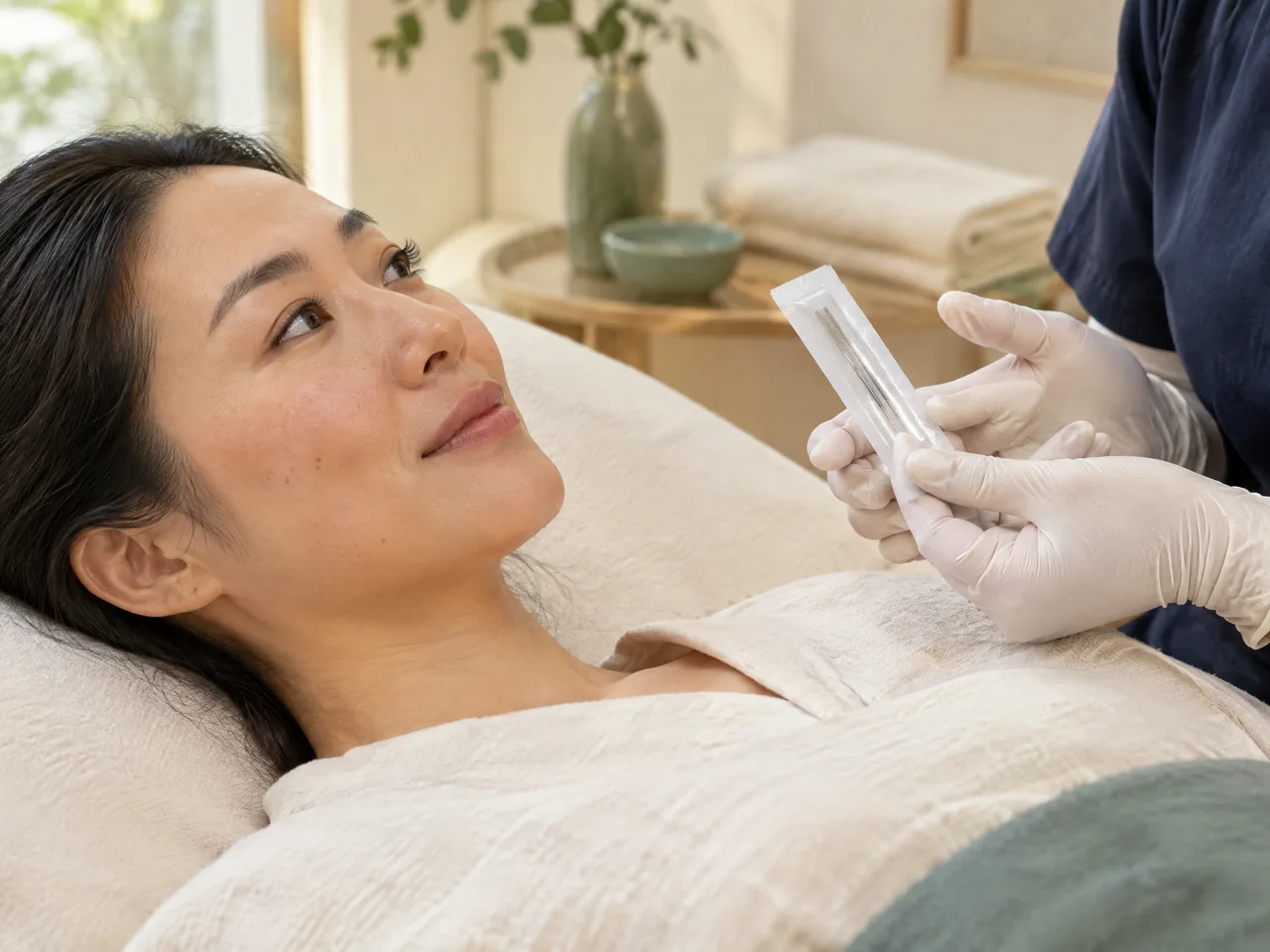
If acupuncture is appropriate, the practitioner explains the proposed areas and obtains consent before treatment. Fine, single-use sterile needles may be placed at selected facial points and, where relevant, related body points. Needles are generally left in place for a planned period while you rest, then removed and the skin is checked. There is no universal needle count, schedule or result because the reason for attendance, tissue sensitivity and health history differ. The published cosmetic-acupuncture pilot study used a standardised research protocol, not a personal prescription, and explicitly called for larger controlled trials [2]. Ask what the clinician is aiming to monitor between visits—such as comfort while chewing, a tension pattern, sleep or headache triggers—rather than expecting a fixed cosmetic timetable.
Compare your options
| What you notice | Why it matters in a consultation | A sensible next discussion |
|---|---|---|
| Jaw tightness after clenching, chewing or screen work | Daily loading, jaw habits and neck posture may be relevant to a tension pattern. | Describe timing and triggers; ask whether acupuncture is appropriate alongside dental or self-care advice. |
| New one-sided weakness, drooping, numbness or difficulty speaking | These can be signs of a problem that should not be treated as ordinary muscle tension. | Seek urgent medical assessment rather than arranging cosmetic or routine facial acupuncture. |
| Red, broken, infected or very irritated facial skin | Needle placement and infection risk need individual consideration. | Show the area during consultation; treatment may need to be postponed and medical or dermatology advice may be appropriate. |
| Easy bruising, a bleeding concern, pregnancy or a recent procedure | Health history may change the risk discussion and treatment plan. | Give full details of medicines, supplements and recent care before deciding whether to proceed. |
On smaller screens, scroll the table sideways to compare all columns.
Traditional Chinese medicine views on facial acupuncture treatment process and facial acupuncture for facial muscle tension
Traditional Chinese medicine uses its own language to describe balance and circulation, while a contemporary consultation may also discuss muscles, connective tissue and everyday loading. Both conversations can be useful when they help a person explain what they feel and choose sensible next steps. They should not be turned into claims that facial acupuncture has proven lifting, collagen-building or skin-renewing effects. Evidence for facial cosmetic acupuncture remains limited: the small open-label, single-arm pilot study often cited in this area found a signal worth studying, but its authors said that larger controlled trials with objective measures were needed [2]. That limitation matters if your main aim is a visible, lasting change rather than relief from a felt pattern of tightness.
For a tension-focused discussion, it can be more helpful to map the full day than to focus only on the face. Notice whether the teeth meet when you are not eating, whether shoulders rise while using a phone, whether a long commute makes the temples ache, or whether one side works harder after dental treatment. Those observations do not diagnose a condition, but they give a practitioner context for deciding whether facial and body points make sense. They can also reveal when a dentist, doctor, physiotherapist or other clinician should be part of the next step. Acupuncture is one clinical tool; it is not a substitute for investigating a new or progressive change in facial function.

Points and facial acupuncture treatment process in facial acupuncture for facial muscle tension
There is no responsible one-size-fits-all list of facial points for tension. A practitioner may select points near an area of concern, on the head or neck, or on the limbs, depending on the consultation. They should also adapt the decision when there is inflamed or broken skin, active infection, recent procedures, unusual sensitivity or a condition that needs medical review. The National Center for Complementary and Integrative Health notes that acupuncture involves fine needles and that safety depends on proper delivery and sterile, single-use needles; improperly delivered treatment can cause serious harm [1]. In Hong Kong, people can also check the regulatory role and public information of the Chinese Medicine Council of Hong Kong [3].

Muscle tone, circulation and facial acupuncture treatment process for facial acupuncture for facial muscle tension
It is reasonable to ask whether a treatment aimed at facial tension will feel relaxing, but it is less useful to equate a temporary sense of ease with a structural change. Needling can be accompanied by attention, rest and a pause from habitual jaw activity; experiences and causes of change can be hard to separate. Some people want to explore facial acupuncture benefits, while others want help thinking through a single tight area. In either case, keep the goal concrete and revisit it. If discomfort remains strongly linked to chewing, bite changes, persistent headache or jaw locking, a dental or medical evaluation may be more relevant than continuing to pursue a facial treatment.
Questions about facial acupuncture treatment process and facial acupuncture for facial muscle tension
A clear plan includes practical questions: What sensation is expected? What should prompt a call to the practitioner? Can you return to work afterward? How will you decide whether the approach is helping? Fine needles can produce a brief prick, pressure, dullness, warmth or an unfamiliar spreading sensation, while some people feel very little. A small amount of redness or bruising can occur. In the pilot study, mild bruising at a needle site was the most common adverse event [2]. That finding comes from one small study and does not predict any one person’s experience, but it is a useful reason to discuss your own tendency to bruise before treatment.
Bring an up-to-date account of medicines, supplements and recent health changes. In particular, ask for individual advice if you are pregnant, have a bleeding or clotting concern, take medicines that affect bleeding, have a weakened immune system, have an implanted electrical device, or have a facial infection or open skin. Do not minimise a recent procedure, fillers, surgery or dental work. The practitioner may defer treatment, adapt the plan or advise another assessment. These questions are not barriers to care; they are part of informed consent and safer decision-making. General information about how long does facial acupuncture last cannot replace that individual discussion, because there is no assured duration or cosmetic outcome.

Sensation and recovery during the facial acupuncture treatment process for facial acupuncture for facial muscle tension
Tell the practitioner immediately if a sensation is sharp, intense, frightening or different from what was explained. Afterward, follow the specific advice you were given and avoid treating a bruise or redness as evidence that the session was especially effective. If you develop signs of infection, severe or worsening pain, significant swelling, fainting, unusual weakness or another concerning reaction, seek appropriate medical attention. The NCCIH explains that serious complications are uncommon when acupuncture is delivered properly, while nonsterile needles and improper treatment can cause infections and other serious adverse effects [1]. Choosing a clinician who takes hygiene, history and communication seriously is more meaningful than choosing on promises of a pain-free or instant result.

Suitability and consultation for facial acupuncture treatment process and facial acupuncture for facial muscle tension
Suitability is about the whole presentation, not just a desired appearance. A person with gradual tension from clenching may have questions that are appropriate for a consultation; a person with sudden facial asymmetry, loss of movement, new numbness, severe headache, swelling, fever or difficulty swallowing should seek urgent medical assessment. For non-urgent enquiries, ask about what the consultation covers, your language needs, clinician availability and whether your goal is tension, comfort or a cosmetic concern. If you are considering a course, read How many facial acupuncture sessions are needed? as background, not as a schedule to copy. You may also wish to consider What happens when you stop facial acupuncture? before making any expectation about maintenance.
Care and health guide
Facial acupuncture information
This directory brings together services, reading, and visit information related to facial acupuncture, to help you prepare questions for a consultation.
When exploring facial acupuncture, noting the service-arrangement questions you want to discuss can help prepare a consultation; facial acupuncture Hong Kong is a relevant service or reading entry point.
People may have different priorities, and acupuncture Hong Kong offers related information to help you understand options and prepare questions.

Your questions, answered
Frequently asked questions
What happens during the facial acupuncture treatment process for facial muscle tension?
The process should start with a consultation about your symptoms, daily triggers, health history and suitability. If acupuncture is appropriate, a practitioner may use fine sterile needles at selected facial and possibly body points, then check how you feel afterward. The points and plan are individual; a routine treatment should not be used for new facial weakness, severe pain or signs of infection.
Does facial acupuncture for facial muscle tension hurt?
Experiences vary. A brief prick, pressure, dull ache, warmth or a spreading feeling can occur, and some people feel little. Tell the practitioner if a sensation is sharp or distressing. Mild redness or bruising is possible, so discuss any tendency to bruise, bleeding concerns, medicines or recent procedures before treatment.
How many sessions are needed for facial muscle tension?
There is no evidence-based universal number for facial muscle tension or a guaranteed cosmetic result. A practitioner should first clarify the goal and whether acupuncture is appropriate. If treatment goes ahead, review changes that matter to you—such as comfort, timing of tension or triggers—rather than committing to a fixed package based on another person’s experience.
Who should seek medical advice before facial acupuncture?
Seek prompt medical assessment for sudden facial weakness or asymmetry, new numbness, severe headache, fever, major swelling, trouble speaking, swallowing or closing an eye. For a routine consultation, disclose pregnancy, bleeding or clotting concerns, medicines that affect bleeding, facial infection, open skin, recent procedures and dental treatment so suitability can be considered carefully.
Sources and further information
- [1] National Center for Complementary and Integrative Health — Acupuncture: Effectiveness and Safety
Referenced for: Supports the general description of acupuncture, the importance of sterile single-use needles and properly delivered treatment, and the safety cautions cited as [1].
- [2] Yun et al. — Effect of Facial Cosmetic Acupuncture on Facial Elasticity: An Open-Label, Single-Arm Pilot Study
Referenced for: Supports the limited-evidence discussion, study design, mild bruising report and authors’ call for larger controlled trials cited as [2].
- [3] Chinese Medicine Council of Hong Kong — Main Page
Referenced for: Supports the statement that the statutory Council regulates Chinese medicine in Hong Kong and provides public regulatory information, cited as [3].