
TCM Lab · Health reading
Acupuncture for Muscle Strain in the Upper Back and Acupuncture for Pain Between the Shoulder Blades
Published Updated
Pain high in the back or between the shoulder blades is often described as a muscle strain, especially after laptop work, lifting, a long drive or an unfamiliar workout. That description can be useful, but it is not a diagnosis. Acupuncture for muscle strain in the upper back may be discussed after an assessment has considered the pain pattern, the thoracic spine, the shoulders and possible referred pain. It is a symptom-management option, not a way to repair a disc, a fracture or another structural problem. This page explains how to prepare for a consultation, what acupuncture for pain between the shoulder blades may involve, and when medical assessment should come first.
Appointments are confirmed through WhatsApp. If you have language requirements, please mention them in your enquiry.

The short answer
Acupuncture for muscle strain in the upper back may be considered as part of symptom management after a practitioner has assessed the location, trigger, duration and associated symptoms. It is not appropriate to assume every ache between the shoulder blades is a simple strain, and it cannot repair structural injury. Seek urgent medical care instead for upper-back pain with chest pain, trouble breathing, major weakness, new bowel or bladder changes, fever, unexplained weight loss or serious trauma.
Transparent pricing
See the fees.
Choose your care.
Explore our complete official price list, including first-trial prices, regular prices, packages and branch-specific options.
Opening WhatsApp prepares an enquiry; it does not send a message, take payment or confirm an appointment. Suitability and individual arrangements are confirmed during consultation.
Pain care
All prices in HKDExtracorporeal shockwave treatment
Shockwave treatment for deep-tissue and fascial care. The Kwun Tong clinic offers the multi-area options shown below.
Priced by branch
Branch-specific pricing
Prince Edward: HK$250 per area
Kwun Tong: HK$250 for 1 area / HK$450 for 2 areas / HK$600 for 3 areas
Pain care (manual therapy)
Includes Chinese medicine musculoskeletal assessment, manual joint techniques and tui na.
HK$580 (single session)
Chinese medicine musculoskeletal assessment
Pain care (acupuncture and manual therapy)
Combines acupuncture and manual therapy.
HK$680 (single session)
Combined care
Hair and scalp
All prices in HKDScalp health and hair-loss management
Includes AI scalp analysis, deep scalp and follicle cleansing, and scalp oil-control care.
HK$380 (first trial)
Regular price: HK$680
- 6 sessions: HK$3,480 (HK$580 per session)
- 12 sessions: HK$5,760 (HK$480 per session)
- 20 sessions: HK$8,600 (HK$430 per session)
- 30 sessions: HK$11,400 (HK$380 per session)
Hair acupuncture and Chinese herbal medicine package
Includes scalp acupuncture and 3 days of Chinese herbal medicine that does not require decoction.
HK$580 (single session)
Registered Chinese Medicine Practitioner consultation
- 6 sessions: HK$3,180 (HK$530 per session)
- 12 sessions: HK$5,760 (HK$480 per session)
- 20 sessions: HK$8,600 (HK$430 per session)
- 30 sessions: HK$11,400 (HK$380 per session)
Combined hair and scalp treatment
Combines acupuncture and Chinese herbal medicine with salon-level scalp and follicle care. Packages include complimentary hair-care shampoo and serum.
HK$1,260 (single session)
Combined treatment
- 8 sessions: HK$8,640 (HK$1,080 per session)
- 16 sessions: HK$15,680 (HK$980 per session)
- 20 sessions: HK$18,600 (HK$930 per session)
- 30 sessions: HK$26,400 (HK$880 per session)
Weight management
All prices in HKDFull-body acupoint embedding for weight management
Includes full-body acupoint embedding. Packages include complimentary Chinese herbal medicine for weight management, with the number of included days scaled to the package. Embedding material and the individual treatment arrangement are confirmed during consultation; this is not a cosmetic thread lift.
HK$980 (single session)
No trial session
- 10 sessions: HK$7,800 (HK$780 per session)
- 20 sessions: HK$14,600 (HK$730 per session)
- 30 sessions: HK$20,400 (HK$680 per session)
Facial acupuncture
All prices in HKDFacial acupuncture (basic)
Includes facial acupuncture and meridian-based facial care, including care for facial puffiness.
HK$480 (first trial)
Regular price: HK$680
- 10 sessions: HK$5,200 (HK$520 per session)
- 20 sessions: HK$9,600 (HK$480 per session)
- 30 sessions: HK$13,500 (HK$450 per session)
Facial acupuncture (advanced)
Includes enhanced facial acupuncture with a specially formulated moisturising mask and serum.
HK$780 (first trial)
Regular price: HK$1,180
- 10 sessions: HK$9,000 (HK$900 per session)
- 20 sessions: HK$16,600 (HK$830 per session)
- 30 sessions: HK$23,400 (HK$780 per session)
Chinese medicine
All prices in HKDAcupuncture and Chinese herbal medicine package
Includes a Chinese medicine consultation with pulse assessment, body acupuncture and 3 days of Chinese herbal granules that do not require decoction.
HK$580 (single session)
Chinese medicine consultation with pulse assessment
Acupuncture for Muscle Strain in the Upper Back and Acupuncture for Pain Between the Shoulder Blades: What May Cause the Pain
The upper back runs from the base of the neck to the bottom of the rib cage, an area also called the thoracic spine. An ache beside one shoulder blade after reaching, lifting, carrying a bag or sitting in one position may fit a soft-tissue overload pattern. It may feel tight, sore, dull or sharp when you turn, take a deep breath, reach overhead or look down at a screen. A work setup, a habit of cradling a phone, a new gym movement or a weekend of housework can be useful clues rather than proof of one cause. [1]
The location alone does not tell the whole story. Upper-back pain can relate to muscles, joints, ribs, the thoracic spine, shoulder-blade mechanics, nerve irritation or referred pain. Describe what you feel and what happened before it started rather than deciding at home that it must be a knot. Our broader guide to acupuncture for upper back pain gives consultation context, while this page focuses on a suspected strain between the shoulder blades.
A useful first distinction is between a familiar, movement-linked ache and pain that is new, severe, unexplained or paired with other symptoms. A familiar ache may still deserve review if it changes or fails to settle. Conversely, a person can have poor posture and also have a different problem that deserves medical attention. Do not use a temporary easing after rest, massage or an acupuncture session as evidence that every serious cause has been ruled out.

Acupuncture for Muscle Strain in the Upper Back and Acupuncture for Pain Between the Shoulder Blades: Muscle, Thoracic and Referred Causes
Muscle strain is a practical description for pain after tissue is loaded beyond its usual tolerance. It may follow a pull, twist or repeated work with the arms held forward. Tenderness around the spine or shoulder blade can be part of that presentation, but it is not a complete diagnosis. A clinician considers onset, distribution, movement, neurological symptoms and health history before deciding whether local treatment is sensible. A recent fall, direct blow, bone fragility, previous cancer, infection risk or long-term steroid use changes that conversation.
Thoracic and shoulder-related problems may be felt as a band, deep ache or focused point near the inner edge of a shoulder blade. Pain that travels, comes with pins and needles, or appears without a clear mechanical trigger needs careful discussion. Referred pain matters because pain felt in the upper back may originate elsewhere. Cleveland Clinic notes that chest pain or breathing trouble with upper-back pain needs immediate medical attention. [1] A consultation should begin with a clear symptom description and safety questions, not a promise to treat a muscle.
Acupuncture for Muscle Strain in the Upper Back and Acupuncture for Pain Between the Shoulder Blades: Why Assessment Matters
Assessment distinguishes a manageable, non-emergency symptom pattern from signs that call for medical assessment, imaging, physiotherapy or another service. For desk work, note whether discomfort rises during the afternoon and eases after changing position. For sport or manual work, note whether a particular stroke, lift or rotation reproduces the pain. These details help avoid treating a label instead of the person in front of the practitioner.
Evidence also needs to stay specific. The National Center for Complementary and Integrative Health reports that acupuncture may be helpful for several pain conditions, including back or neck pain, but this does not guarantee benefit for every upper-thoracic complaint. Differences in studies of back or neck pain were larger against no treatment than against sham acupuncture, so a session should not be overstated. [2] Broader back-pain research is not proof that acupuncture repairs a torn muscle fibre, disc change or fracture.
Compare your options
| What you notice | Why it changes the assessment | Useful next step |
|---|---|---|
| Pain began after a familiar lift, training change or long period at a desk | A repeated-load or soft-tissue pattern may be possible, but the exact movement and progression still matter. | Record the trigger, location and movements that reproduce or ease it; discuss whether acupuncture is appropriate alongside activity changes. |
| Pain is focused near a shoulder blade but travels to the arm, chest or elsewhere | Traveling pain can involve nerves or referred pain and should not be labelled a simple knot from location alone. | Describe the route of the pain and associated symptoms; seek medical advice promptly if chest symptoms or breathing difficulty occur. |
| New tingling, weakness, balance change or altered bladder or bowel control | Neurological symptoms can require urgent medical assessment rather than routine symptom treatment. | Seek urgent or emergency medical care, depending on severity; do not wait for acupuncture. |
| Fever, unexplained weight loss, significant trauma, or pain that is worsening or not improving | These features can change the level of concern and the need for medical investigation. | Contact a healthcare professional; emergency symptoms need emergency services. |
| You take medicines or have a condition that could affect a procedure | Medication, bleeding or bruising risk, pregnancy, skin infection and needle-related fainting can affect suitability or precautions. | Tell the practitioner before treatment and bring a current medicine list if possible. |
On smaller screens, scroll the table sideways to compare all columns.
Acupuncture for Muscle Strain in the Upper Back and Acupuncture for Pain Between the Shoulder Blades: How Assessment Works
An upper-back acupuncture consultation should cover both the immediate complaint and its context. A Registered Chinese Medicine Practitioner may ask when pain started, whether it followed trauma or repeated work, and whether it is changing. They may ask you to point to the main spot, describe the sensation, and explain whether coughing, deep breathing, neck movement, reaching or lying down affects it. Bring previous X-rays, MRI reports, diagnoses and treatment information; they help inform discussion but do not need to be interpreted by you beforehand.
Arrive with a short timeline rather than a long guess at the cause. Record when you first noticed the pain, what eases or aggravates it, and whether symptoms spread toward the neck, chest, arms or hands. Share current medicines, needle-related fainting, bleeding or bruising concerns, pregnancy, infection or skin problems near the area, and any implanted device if electrical stimulation might be considered. These facts can change whether acupuncture is deferred, modified or not chosen.

If the pattern seems non-urgent and acupuncture is considered appropriate, it may sit alongside other sensible measures rather than compete with them. Depending on the cause, a healthcare professional may discuss movement, activity modification, ergonomics, heat or cold, physical therapy or medication. [1] Readers comparing approaches can review upper back pain treatment options before deciding which questions to raise. The goal is a proportionate plan for the actual problem, not a contest between treatment names.
Acupuncture for Muscle Strain in the Upper Back and Acupuncture for Pain Between the Shoulder Blades: Questions and Physical Assessment
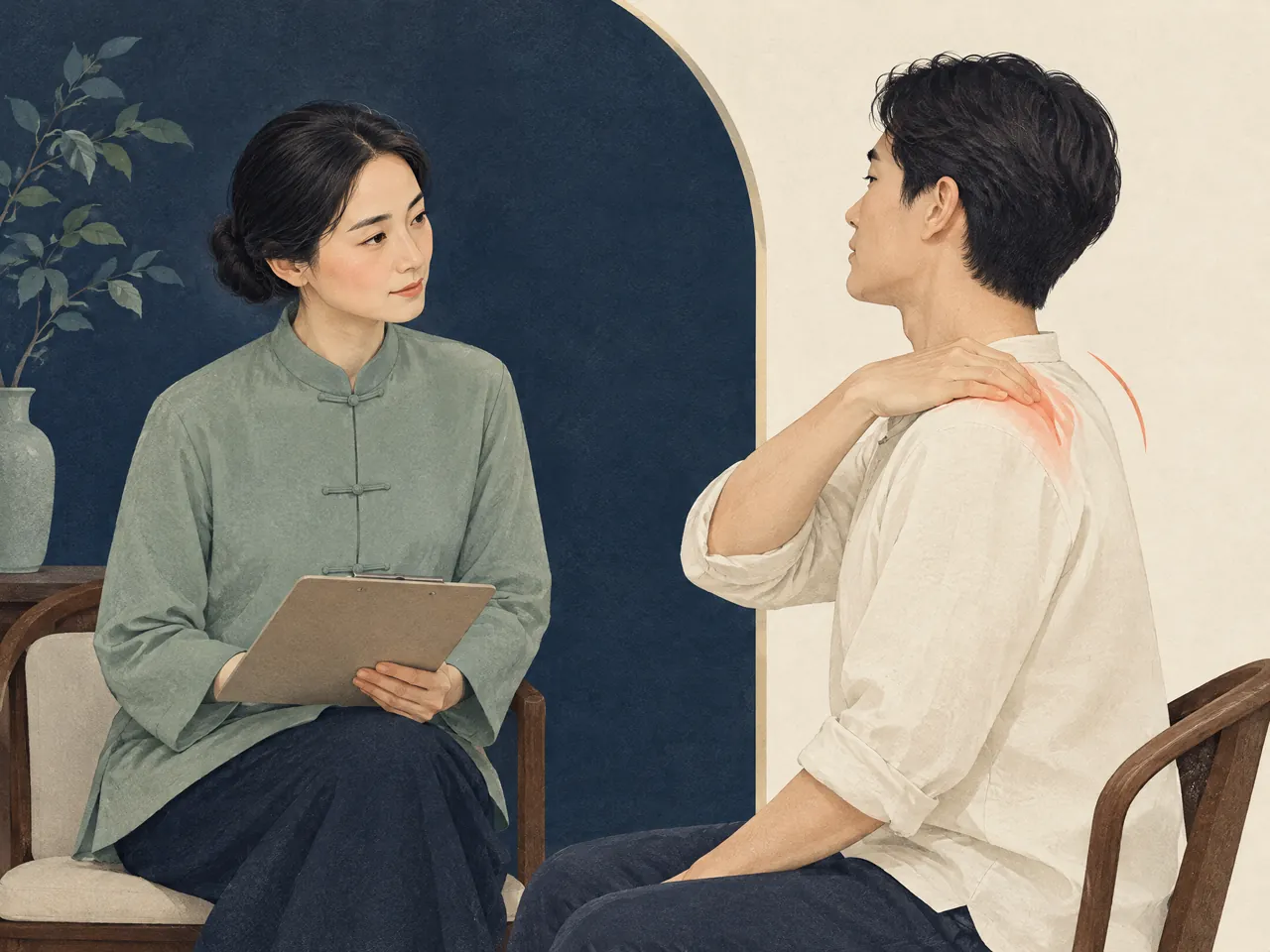
Physical assessment may include observing how you sit or move, asking about neck, shoulder and thoracic movement, and gently checking for tenderness or muscle guarding. In Chinese medicine, the consultation may also include questions about general health and an individual pattern assessment. These findings guide whether needles are considered and where, but do not replace urgent medical assessment or investigations when indicated. If the history raises concern for a nerve, spinal, bone, heart or lung issue, referral is a safety step.
Bring questions that help you make an informed choice: What is the working explanation for my symptoms? What signs would make you refer me? What is the aim of the proposed treatment—comfort, movement tolerance, or another limited symptom goal? What should I monitor afterwards? Asking these questions is more helpful than seeking a fixed number of visits, because response, diagnosis and priorities vary. If you are deciding whether review is needed before any complementary treatment, see when should I see a doctor for upper back pain.

Acupuncture for Muscle Strain in the Upper Back and Acupuncture for Pain Between the Shoulder Blades: What an Acupuncture Session May Involve
When acupuncture is suitable, the practitioner explains the planned area and positions you so the upper back can be accessed comfortably and respectfully. Very fine needles are inserted at selected points; the points may be near the painful region or elsewhere, depending on the assessment. People experience insertion differently. Some feel little at insertion, while others notice a brief prick, ache, heaviness or tingling. Tell the practitioner immediately about discomfort, dizziness, anxiety or an unexpected sensation instead of trying to tolerate it silently. Needles are removed at the end and the area is checked.
A careful session should not be framed as a guaranteed cure or a test of how much discomfort you can endure. Mayo Clinic describes soreness and minor bleeding or bruising as possible common effects, and notes that single-use disposable needles are the practice standard. [3] A practitioner should use sterile, single-use needles and discuss relevant health information beforehand. The session is also an opportunity to revisit practical aggravators: a bag carried on one side, an unbroken block of screen work, a change in training volume, or an awkward sleeping arrangement. Modifying a clear aggravator can be more meaningful than searching for a perfect posture.
Acupuncture for Muscle Strain in the Upper Back and Acupuncture for Pain Between the Shoulder Blades: Safety and Care Choices
Choosing care for upper-back pain starts with urgency, not a preferred therapy. In a non-emergency pattern, an assessment may support a trial of acupuncture as one part of symptom management. In another pattern, medical review, imaging, physiotherapy, medication or emergency evaluation may take priority. The right route matches the symptom pattern and does not overlook a more serious cause.
Acupuncture has limits that should remain visible. It cannot set a fracture, reverse spinal cord compression, diagnose an internal-organ cause or promise that a strain will recover by a particular date. Nor should a short-lived improvement become a reason to repeatedly push through pain-provoking work or sport. Keep observing the trend. If pain is worsening, spreading, persists despite sensible changes, or behaves differently from the original problem, update the clinician rather than simply repeating the same plan.

For some people, the safest next conversation will be with a medical clinician; for others, an acupuncture assessment can be a reasonable complementary option after the relevant questions are answered. If a posture or shoulder-position concern is part of the picture, our page on acupuncture for rounded shoulders separates that topic from a sudden painful episode. For a broader evidence-focused question, Can acupuncture help upper back pain? discusses why an individual assessment still matters.
Acupuncture for Muscle Strain in the Upper Back and Acupuncture for Pain Between the Shoulder Blades: Limits, Risks and Alternatives
Practical risks and benefits depend on the individual and on competent delivery. NCCIH states that relatively few acupuncture complications have been reported, but nonsterile needles or improper delivery have caused serious adverse effects, including infection, punctured organs and central nervous system injury. [2] Credentials, clean technique, sterile single-use needles and disclosure of relevant health information matter. Do not accept a procedure that has not been explained, and do not conceal medicines or medical conditions because they seem unrelated to the upper back.
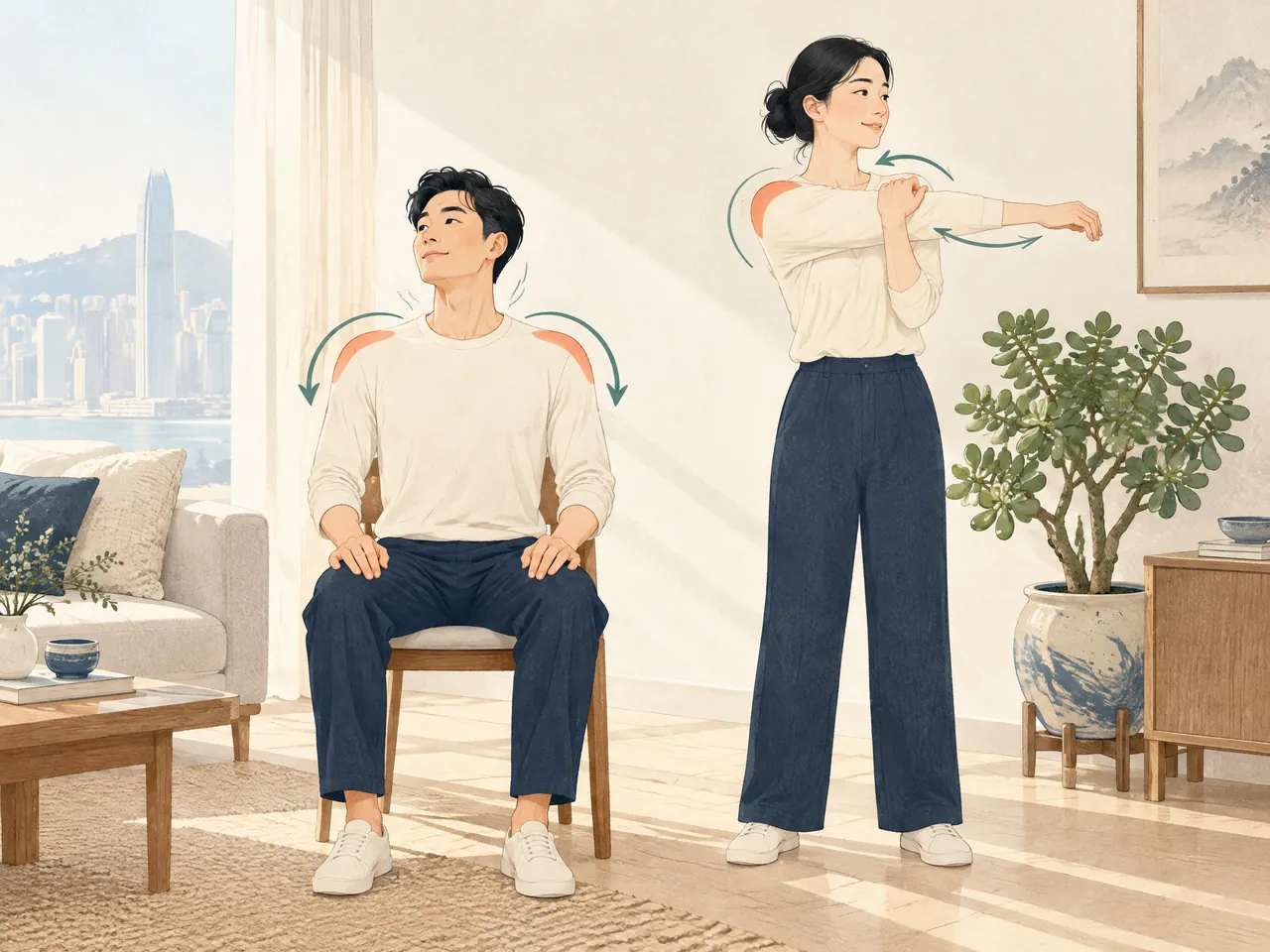
Alternatives are not a sign that you have failed acupuncture. A clinician may suggest rest from a provoking activity, gradual return to movement, ergonomics, cold or heat packs, physical therapy or medical treatment according to the cause and your health history. [1] A sensible plan may combine elements, but avoid forceful self-treatment or a new exercise programme when there has been trauma, marked pain or neurological symptoms until you have appropriate guidance. The table below can help you prepare for a discussion rather than self-select a diagnosis.
Acupuncture for Muscle Strain in the Upper Back and Acupuncture for Pain Between the Shoulder Blades: When to Seek Urgent Help
Seek emergency help now for upper-back pain accompanied by chest pain, trouble breathing, or symptoms that could indicate a heart or lung emergency. Seek urgent assessment for major or increasing weakness, paralysis, new loss of bladder or bowel control, inability to urinate, or serious trauma. Fever, unexplained weight loss, numbness or tingling, and pain that does not improve after a week also warrant professional medical care rather than an assumption that it is a routine strain. [1] Local emergency services are the right route for emergency symptoms; do not wait for a complementary-therapy appointment.
When symptoms are not urgent, be clear about where you want to be seen. TCM Lab enquiries can be made through the Kwun Tong Chinese medicine clinic or the Chinese medicine clinic Prince Edward location pages. In your message, state that the concern is upper-back or shoulder-blade pain, how long it has been present, and whether any red-flag symptoms or previous investigations apply. Appointment availability and suitability need to be confirmed; a message does not replace a clinical assessment.
Care and health guide
Shoulder discomfort: care information
This directory brings together services, reading, and visit information related to shoulder discomfort, to help you prepare questions for a consultation.
When shoulder discomfort affects your day, noting when it occurs, its relation to activity, and what you have already tried can help prepare a consultation; acupuncture for shoulder pain is a relevant service or reading entry point.
Individual circumstances differ, and acupuncture Hong Kong offers related information to help you understand options and prepare questions.


Your questions, answered
Frequently asked questions
Can acupuncture help a muscle strain in the upper back?
Acupuncture may be discussed as a symptom-management option after assessment, particularly when the presentation appears non-urgent. Research on broader back or neck pain does not guarantee benefit for every upper-back strain or pain between the shoulder blades, and acupuncture cannot repair a fracture, disc problem or other structural injury.
What should I tell a practitioner about pain between my shoulder blades?
Explain exactly where it hurts, when it began, whether an injury or repeated task came first, what movements or positions change it, and whether there is numbness, weakness, chest pain or breathing trouble. Share previous imaging, diagnoses, current medicines and relevant health conditions so suitability can be assessed safely.
Does acupuncture for upper-back pain hurt?
Experiences vary. Very fine needles may cause little discomfort, or you may notice a brief prick, ache, heaviness or tingling. Soreness, minor bleeding or bruising can occur. Tell the practitioner if you feel dizzy, anxious or unusually uncomfortable during the session.
When should I seek urgent care rather than acupuncture?
Seek emergency help for upper-back pain with chest pain or trouble breathing, or with severe neurological symptoms such as major weakness, paralysis, new bladder or bowel control changes, or inability to urinate. Serious trauma also needs medical assessment. Fever, unexplained weight loss, numbness or tingling, or pain that is not improving should be assessed by a healthcare professional.
Sources and further information
- [1] [1] Cleveland Clinic — Upper Back Pain
Referenced for: Supports the description of upper-back anatomy, possible musculoskeletal and referred causes, non-emergency care context, and medical or emergency warning signs.
- [2] [2] National Center for Complementary and Integrative Health — Acupuncture: Effectiveness and Safety
Referenced for: Supports limited evidence language for back or neck pain and sterile single-use needle and safety information; it does not establish efficacy for every upper-back complaint.
- [3] [3] Mayo Clinic — Acupuncture
Referenced for: Supports plain-language information about needle insertion, possible soreness or minor bleeding or bruising, and standard single-use disposable needles.