
TCM Lab · Health reading
Integrative overview: causes of thinning hair in men, Can stress cause hair loss in men?, and What does traditional Chinese medicine say about hair loss?
Published Updated
Hair thinning in men is not one diagnosis. A slowly receding hairline or crown thinning often points towards male-pattern hair loss, whereas sudden, diffuse shedding or a patch can have a different explanation. Consider the pattern, pace of change, recent health events, medicines, diet, scalp symptoms and family history. Can stress cause hair loss in men? It may contribute to temporary shedding, but should not be assumed to explain every change. Traditional Chinese medicine offers a pattern-based way of discussing wellbeing; it does not replace scalp examination or medical assessment.
Appointments are confirmed through WhatsApp. If you have language requirements, please mention them in your enquiry.
The short answer
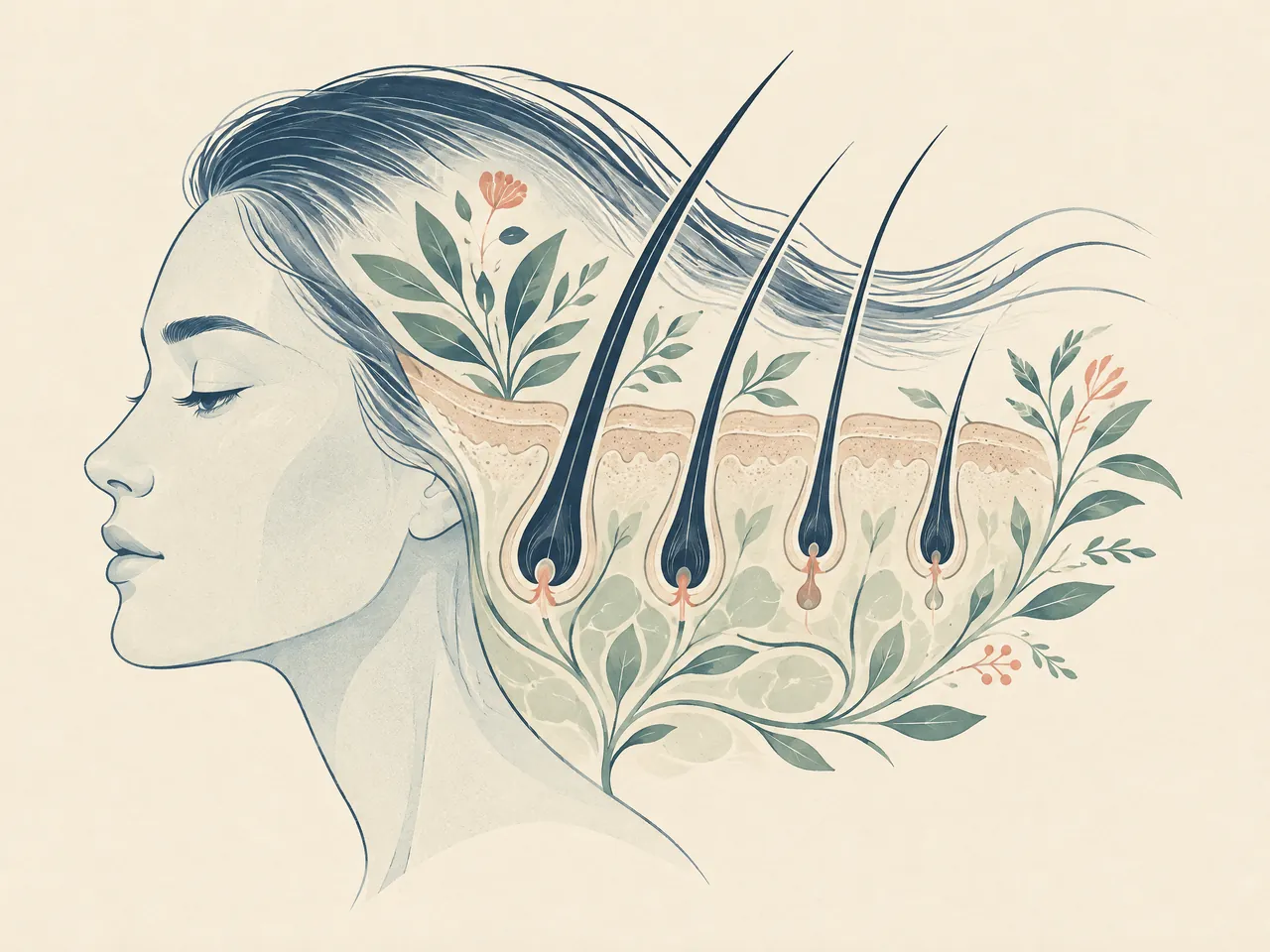
Common causes of thinning hair in men include inherited male-pattern hair loss, which often affects the frontal hairline and crown, as well as illness, nutritional deficiency, scalp conditions, medicines and stress-related shedding. Timing and distribution matter. Traditional Chinese medicine may describe hair loss with concepts such as liver-kidney deficiency or damp heat, but these are traditional pattern terms, not proven follicle mechanisms or a diagnosis. Sudden, patchy or persistent loss deserves professional assessment.
Transparent pricing
See the fees.
Choose your care.
Explore our complete official price list, including first-trial prices, regular prices, packages and branch-specific options.
Opening WhatsApp prepares an enquiry; it does not send a message, take payment or confirm an appointment. Suitability and individual arrangements are confirmed during consultation.
Hair and scalp
All prices in HKDScalp health and hair-loss management
Includes AI scalp analysis, deep scalp and follicle cleansing, and scalp oil-control care.
HK$380 (first trial)
Regular price: HK$680
- 6 sessions: HK$3,480 (HK$580 per session)
- 12 sessions: HK$5,760 (HK$480 per session)
- 20 sessions: HK$8,600 (HK$430 per session)
- 30 sessions: HK$11,400 (HK$380 per session)
Hair acupuncture and Chinese herbal medicine package
Includes scalp acupuncture and 3 days of Chinese herbal medicine that does not require decoction.
HK$580 (single session)
Registered Chinese Medicine Practitioner consultation
- 6 sessions: HK$3,180 (HK$530 per session)
- 12 sessions: HK$5,760 (HK$480 per session)
- 20 sessions: HK$8,600 (HK$430 per session)
- 30 sessions: HK$11,400 (HK$380 per session)
Combined hair and scalp treatment
Combines acupuncture and Chinese herbal medicine with salon-level scalp and follicle care. Packages include complimentary hair-care shampoo and serum.
HK$1,260 (single session)
Combined treatment
- 8 sessions: HK$8,640 (HK$1,080 per session)
- 16 sessions: HK$15,680 (HK$980 per session)
- 20 sessions: HK$18,600 (HK$930 per session)
- 30 sessions: HK$26,400 (HK$880 per session)
Weight management
All prices in HKDFull-body acupoint embedding for weight management
Includes full-body acupoint embedding. Packages include complimentary Chinese herbal medicine for weight management, with the number of included days scaled to the package. Embedding material and the individual treatment arrangement are confirmed during consultation; this is not a cosmetic thread lift.
HK$980 (single session)
No trial session
- 10 sessions: HK$7,800 (HK$780 per session)
- 20 sessions: HK$14,600 (HK$730 per session)
- 30 sessions: HK$20,400 (HK$680 per session)
Facial acupuncture
All prices in HKDFacial acupuncture (basic)
Includes facial acupuncture and meridian-based facial care, including care for facial puffiness.
HK$480 (first trial)
Regular price: HK$680
- 10 sessions: HK$5,200 (HK$520 per session)
- 20 sessions: HK$9,600 (HK$480 per session)
- 30 sessions: HK$13,500 (HK$450 per session)
Facial acupuncture (advanced)
Includes enhanced facial acupuncture with a specially formulated moisturising mask and serum.
HK$780 (first trial)
Regular price: HK$1,180
- 10 sessions: HK$9,000 (HK$900 per session)
- 20 sessions: HK$16,600 (HK$830 per session)
- 30 sessions: HK$23,400 (HK$780 per session)
Pain care
All prices in HKDExtracorporeal shockwave treatment
Shockwave treatment for deep-tissue and fascial care. The Kwun Tong clinic offers the multi-area options shown below.
Priced by branch
Branch-specific pricing
Prince Edward: HK$250 per area
Kwun Tong: HK$250 for 1 area / HK$450 for 2 areas / HK$600 for 3 areas
Pain care (manual therapy)
Includes Chinese medicine musculoskeletal assessment, manual joint techniques and tui na.
HK$580 (single session)
Chinese medicine musculoskeletal assessment
Pain care (acupuncture and manual therapy)
Combines acupuncture and manual therapy.
HK$680 (single session)
Combined care
Chinese medicine
All prices in HKDAcupuncture and Chinese herbal medicine package
Includes a Chinese medicine consultation with pulse assessment, body acupuncture and 3 days of Chinese herbal granules that do not require decoction.
HK$580 (single session)
Chinese medicine consultation with pulse assessment
Understanding assessment and pattern: causes of thinning hair in men, Can stress cause hair loss in men?, What does traditional Chinese medicine say about hair loss?
First separate a long-running change from a sudden one. Male-pattern hair loss, also called androgenetic alopecia, commonly appears as a receding frontal hairline or reduced density on top. Genetic and hormonal factors contribute, and affected hairs can gradually become finer. The British Association of Dermatologists describes this front-and-top pattern, with the sides and back often spared [2]. For a new temple change, our guide to receding hairline causes can help you describe the observation before consultation.
Not every man with visible scalp has the same cause. More general thinning can follow illness, major dietary or weight change, low iron, medication, scalp infection or another condition. Hong Kong's Centre for Health Protection includes family history, health conditions, scalp infection or skin damage, nutrition and stress as possible contributors [1]. A timeline helps avoid blaming a busy month at work for a pattern developing over years.
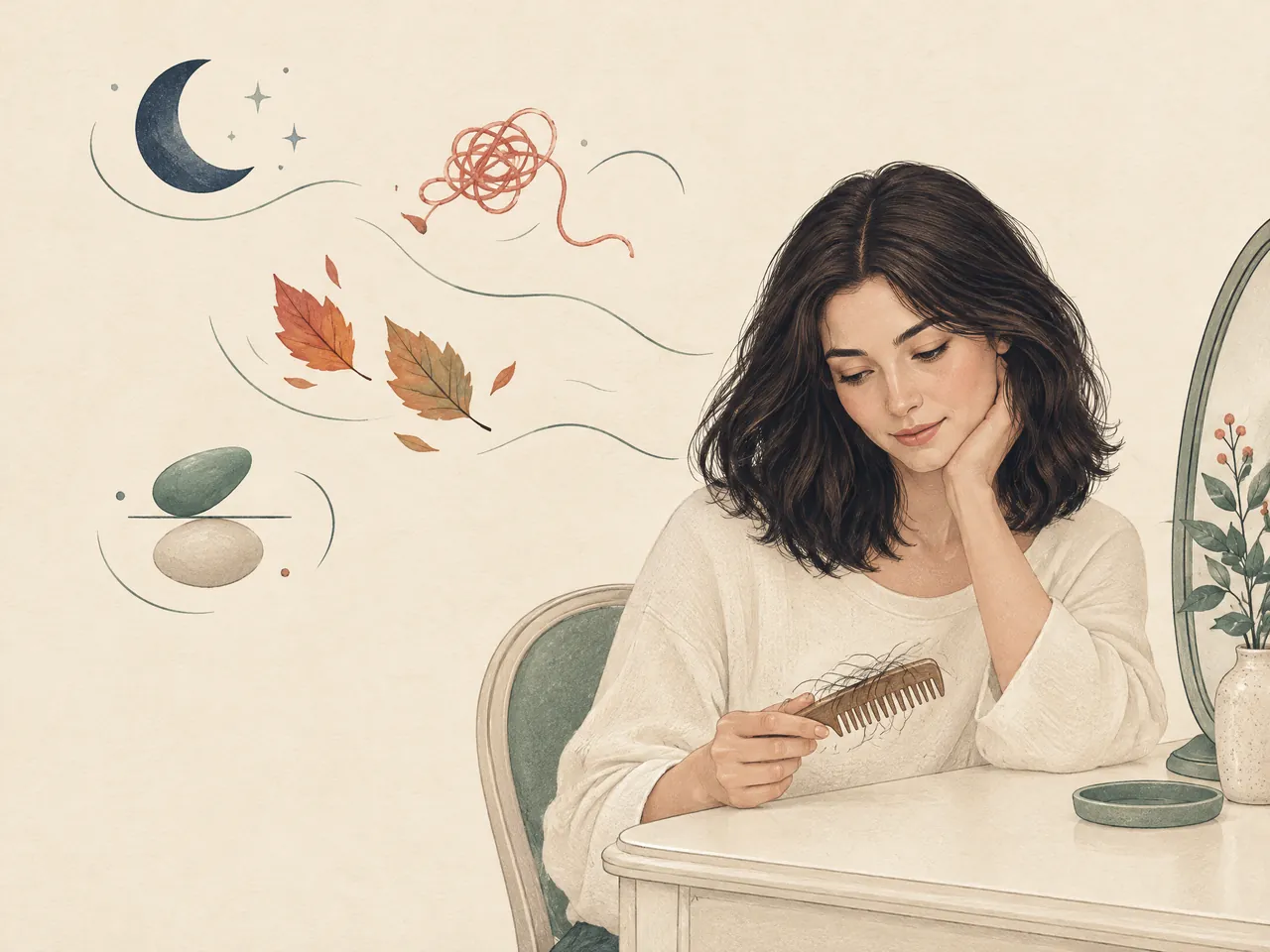
Look at the hair and scalp together, rather than only counting hairs in the shower. Note whether the loss is concentrated at the hairline, crown, beard or eyebrows; whether there are sharply defined round areas; and whether the scalp looks inflamed, scaly, painful or otherwise changed. Patchy loss and abnormal skin are reasons to arrange medical advice rather than experiment with products. A clinician may identify a likely pattern from the history and examination, while selected cases need further investigation [1] [3].
Mapping timing and pattern in the causes of thinning hair in men — Can stress cause hair loss in men? — What does traditional Chinese medicine say about hair loss?
A record over several weeks can clarify the conversation. Take photographs in the same light and direction, then note when change began, whether shedding is all over or localised, and any recent fever, surgery, restrictive eating, weight change, new medicine or scalp symptoms. This is observation, not diagnosis. It gives a practitioner more detail than simply saying your hair feels thinner and may help distinguish breakage from hair coming out at the root.
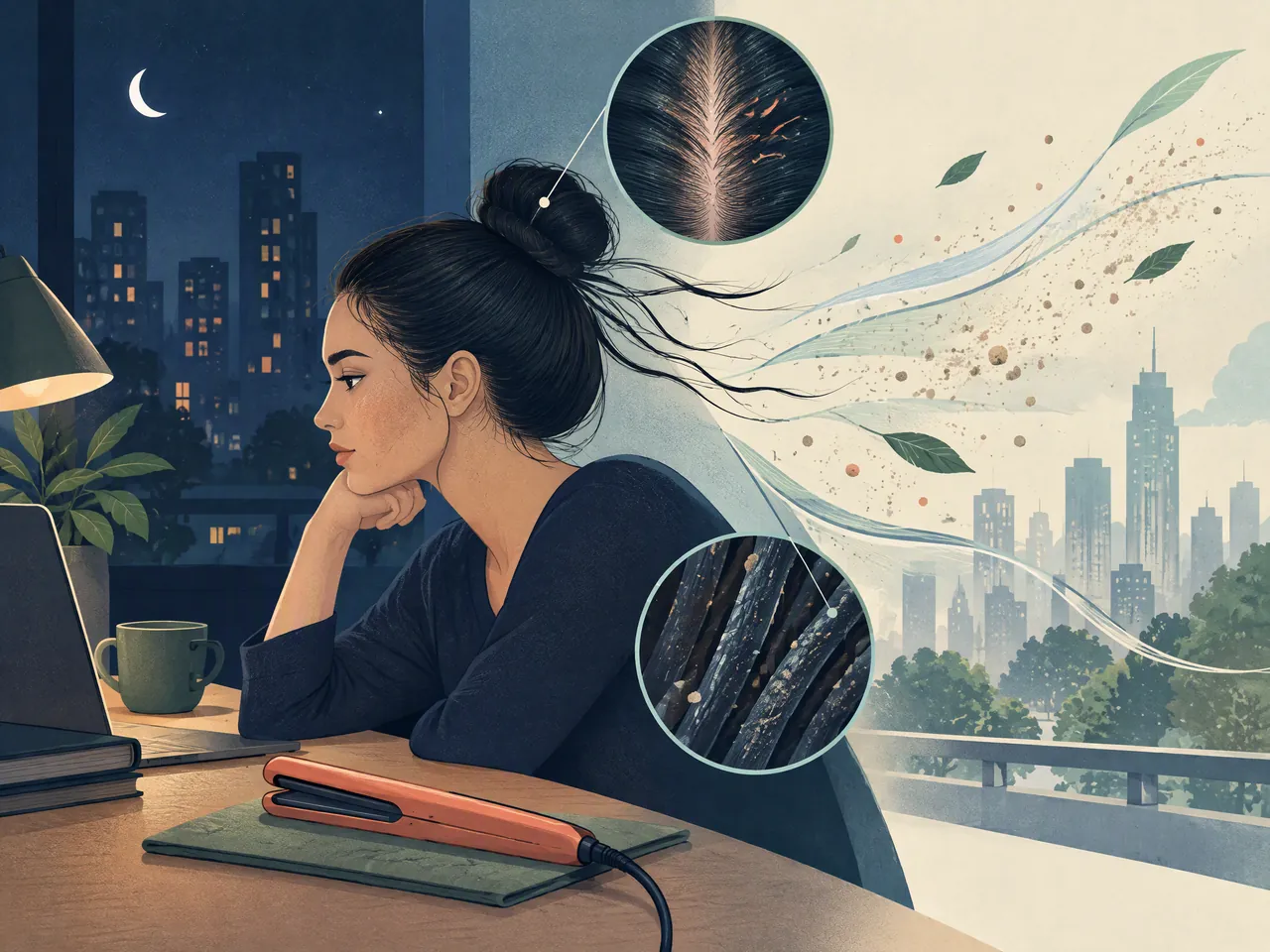
Stress is important to discuss because it can affect sleep, appetite, routines and wellbeing, as well as being associated with temporary hair loss. The NHS lists stress alongside illness, weight loss and iron deficiency among causes of temporary hair loss [4]. Yet stress does not explain a receding pattern simply because it was present. Ask: did the change start after the stressful period, is the shedding diffuse, and is there also a family pattern? This context is especially useful when reading about telogen effluvium, a term used for a diffuse shedding pattern rather than a catch-all label for every hair concern.
Balancing modern context for the causes of thinning hair in men with Can stress cause hair loss in men? and What does traditional Chinese medicine say about hair loss?
Modern assessment asks what process may be affecting the hair and scalp. It considers the course of loss, family history, visible distribution, scalp condition and other symptoms. Dermatology guidance explains that assessment commonly begins with questions about duration and speed of onset, followed by close examination of the scalp and other hair-bearing areas; blood tests or a scalp biopsy may be considered when a disease, deficiency, hormone imbalance or infection is suspected [3]. A test is not automatic, and the right next step depends on the findings.
What does traditional Chinese medicine say about hair loss? Traditional writing may relate hair to the liver and kidneys, blood and qi, using terms such as liver-kidney deficiency, qi and blood deficiency, damp heat, or blood heat and wind dryness. These labels organise discussion of reported state, diet, sleep and scalp features. They are not established explanations for DHT-related follicle miniaturisation, blocked follicles or a diagnosis. Traditional patterns can be discussed after consultation, while new or concerning loss still needs appropriate medical assessment.
Compare your options
| What you notice | Why the detail matters | Useful next action |
|---|---|---|
| Gradual temple recession or crown thinning | This distribution can fit a male-pattern presentation, especially with a family history. | Record photographs over time and discuss the pattern with an appropriate clinician. |
| More shedding across the whole scalp after a health or life change | Illness, stress, weight change, nutrition and medicines may be relevant context. | Make a timeline of possible triggers and arrange assessment if it persists or worries you. |
| Round patch, broken hairs, redness, pain, scaling or pustules | A focal area or scalp change may need evaluation beyond a general thinning discussion. | Seek medical advice rather than relying on cosmetic products alone. |
| Interest in a traditional Chinese medicine explanation | Traditional pattern terms describe a different approach and do not establish follicle pathology. | Discuss individual options with a registered practitioner while keeping medical assessment in view. |
On smaller screens, scroll the table sideways to compare all columns.
Comparing perspectives on the causes of thinning hair in men: Can stress cause hair loss in men?, What does traditional Chinese medicine say about hair loss?
A comparison matters when it changes your next step. Gradual M-shaped recession or crown thinning with family history fits a male-pattern presentation, but says little about rate of change or scalp health. Diffuse shedding means hairs are coming out across the scalp, sometimes after a trigger. A small, smooth round patch is another pattern. Bring the pattern, timeline and goals to an appropriate health professional rather than choose a remedy from an online label.
Scalp symptoms deserve their own line in the history. Flaking, redness, tenderness, pustules, tightness or intense itch can shift the priority from cosmetic thinning to skin evaluation. Note new dyes, bleaching, tightly pulled styles, hot tools or irritating products. Ordinary shampooing does not cause male-pattern hair loss; breakage, irritation and scalp disease should not be confused with the slow follicle changes discussed in male pattern hair loss causes.
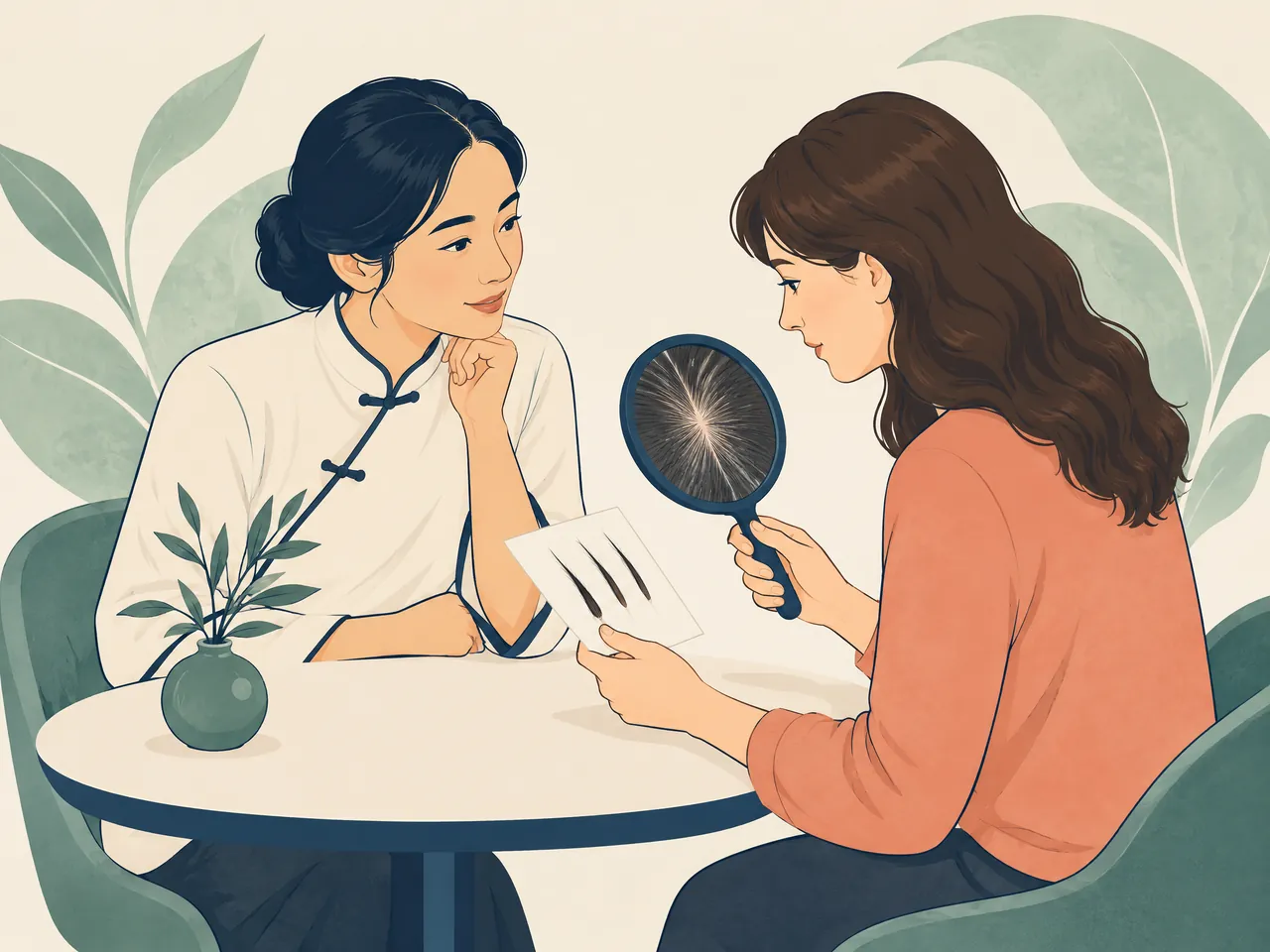
The table below is a way to prepare observations, not a diagnostic checklist. More than one factor can be present at once. For example, a person with a family tendency to pattern loss may also notice temporary shedding after illness. That is why an assessment should not stop after the first plausible explanation. The American Academy of Dermatology notes that some people have more than one cause of hair loss [3].
Practical questions about the causes of thinning hair in men — Can stress cause hair loss in men? — What does traditional Chinese medicine say about hair loss?
Before buying supplements or booking a commercial procedure, ask questions that are specific enough to be useful. Has the hairline moved gradually, or did shedding start quickly? Is the crown becoming more visible under the same lighting? Is there a family history? Have there been changes in energy, diet, weight, sleep, medication or the scalp itself? A professional does not need perfect answers, but clear observations can guide whether examination alone is sufficient or whether medical testing is relevant. The NHS similarly advises understanding the cause before considering a commercial hair clinic [4].
Traditional Chinese medicine consultation asks questions differently. A registered practitioner may ask about sleep, appetite, bowel habits, temperature sensations, stress, exercise and perceived scalp oiliness, then explain a traditional pattern. This can be meaningful but does not prove that a named pattern caused loss. An oily scalp is not evidence that “damp heat” blocked follicles, and a late bedtime alone does not establish male-pattern hair loss. The distinction prevents overconfidence and unnecessary self-treatment.
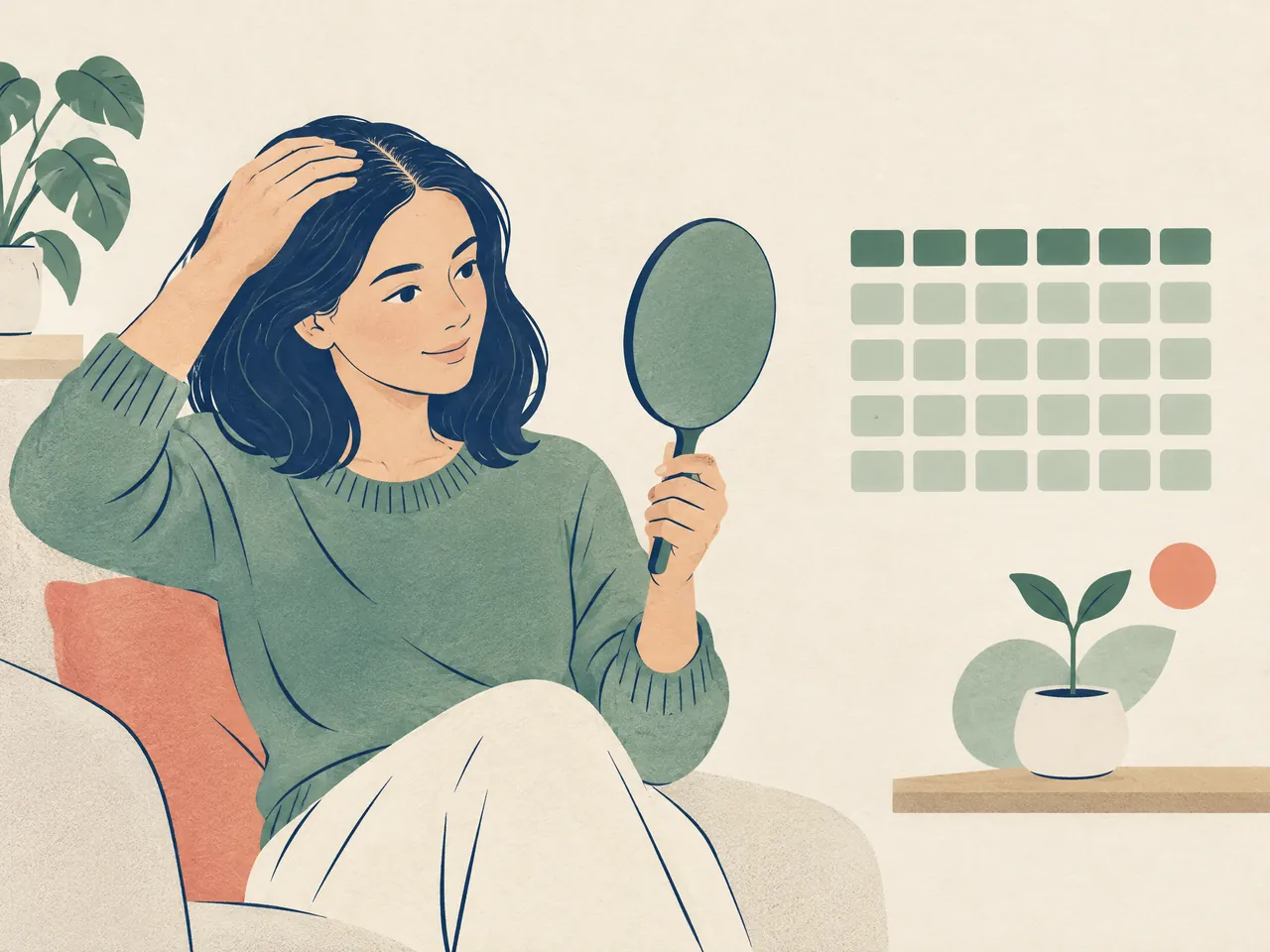
When sudden change occurs in the causes of thinning hair in men: Can stress cause hair loss in men? and What does traditional Chinese medicine say about hair loss?
Arrange medical advice promptly when shedding is sudden or severe, a bald patch appears, the scalp is painful or visibly abnormal, or hair loss comes with other unexplained symptoms. These features do not diagnose a serious condition on their own, but they are not well served by waiting for a generic hair tonic to work. The Hong Kong Centre for Health Protection advises consultation when continual loss is suspected, normal growth fails or the skin beneath an involved area is abnormal [1]. Tell the clinician about recent illness, medicines and family history, and mention any emotional impact too.
If stress is part of the picture, care for sleep, regular meals and its source while the hair question is assessed. This remains useful even when stress is not the principal cause. Do not assume that calming down will immediately restore density. Hair changes can be slow and causes have different courses. Document change, seek evaluation when indicated, and make choices only after the pattern and priorities are clearer.
Next steps for men: causes of thinning hair in men, Can stress cause hair loss in men?, What does traditional Chinese medicine say about hair loss?
The next step should fit the uncertainty. If a stable, gradual hairline or crown change is the only issue, consultation can confirm the pattern and discuss goals. If loss is rapid, patchy, accompanied by scalp change or affecting general health, seek medical assessment first. This order avoids overlooking conditions that need another approach. If you are unsure how the typical pattern begins, read How does male pattern baldness start? and compare it with your observations without treating the article as diagnosis.
Be cautious with products that promise a universal answer to thinning hair. Evidence, safety and suitability differ by diagnosis, and even established treatments may not suit everyone. Do not start medicines, concentrated herbal products or nutrient supplements merely because a social-media post links them to hair. The Centre for Health Protection warns against using drugs without a doctor’s prescription, and its page stresses identifying underlying causes before treatment [1]. If a deficiency or medical cause is suspected, testing and treatment decisions belong with the relevant clinician.
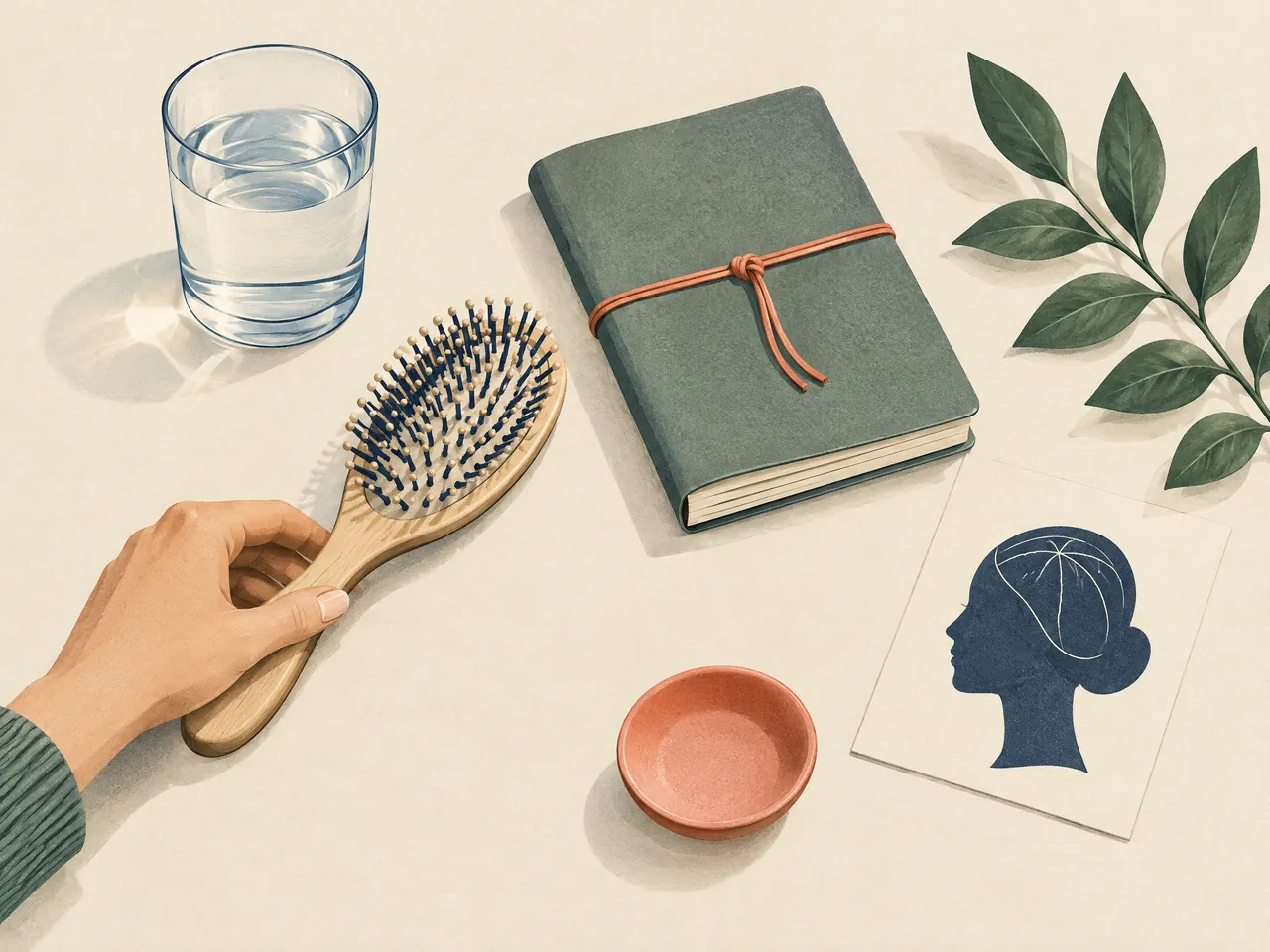
For an integrative discussion, be clear about what you want help with: understanding the pattern, scalp comfort, managing stress-related routines, or deciding whether to pursue conventional assessment. At TCM Lab, a registered Chinese medicine practitioner can discuss traditional pattern concepts and individual options after consultation; no herbal formula or acupuncture approach should be presented as a proven substitute for diagnosing hair loss. You can ask about availability at the Kwun Tong Chinese medicine clinic or the Chinese medicine clinic Prince Edward, and ask about language needs when contacting the clinic.
Discussing goals and options around the causes of thinning hair in men — Can stress cause hair loss in men? — What does traditional Chinese medicine say about hair loss?
A good consultation starts with a shared goal, not a promise. One person may mainly want to know whether a receding hairline is likely to continue. Another may be distressed by recent shedding and want a plan for medical evaluation. Someone else may wish to explore traditional Chinese medicine alongside conventional care. State what matters most, how long the issue has been present, what you have already tried and whether cost, time, medicines or scalp sensitivity affect your choices. If you want to compare clinic fees before enquiring, see the Chinese medicine clinic price list Hong Kong.
Bring a list of supplements, prescribed medicines and topical products, including anything you recently stopped. Mention a restrictive diet, substantial weight change, recent infection, major stressor or family pattern, even if it seems unrelated. Photographs taken over time can be useful when the change is gradual. This record does not need to be polished; it simply supports a more accurate history. It also makes it easier to revisit the plan if the pattern changes instead of repeatedly guessing from memory.

Questions to bring to a consultation on the causes of thinning hair in men, Can stress cause hair loss in men?, and What does traditional Chinese medicine say about hair loss?
Useful questions include: What pattern does my hair loss resemble, and what else needs to be ruled out? Do my scalp symptoms change the next step? Could any recent health event, medicine or nutritional issue be relevant? Is medical assessment or testing advisable before I try other options? If traditional Chinese medicine is being considered, which observations support the proposed traditional pattern, and what are the limits of that explanation? Asking direct questions helps keep treatment claims proportional to the available evidence.
Finally, make room for how hair loss affects confidence, work, relationships or mood. The visible nature of thinning can make a gradual change feel urgent, while a sudden change can be frightening. There is no need to minimise that impact. At the same time, avoid rushed decisions based on a single before-and-after image or a claim that one approach works for every cause. A careful history, scalp assessment and realistic goal-setting provide a steadier foundation for whatever next step you choose.
Care and health guide
Hair and scalp care information
This directory brings together services, reading, and visit information related to hair and scalp care, to help you prepare questions for a consultation.
For questions about hair or scalp care, noting the everyday concerns and service questions you want to discuss can help prepare a consultation; Chinese medicine for hair loss is a relevant service or reading entry point.
People may have different priorities, and acupuncture Hong Kong offers related information to help you understand options and prepare questions.
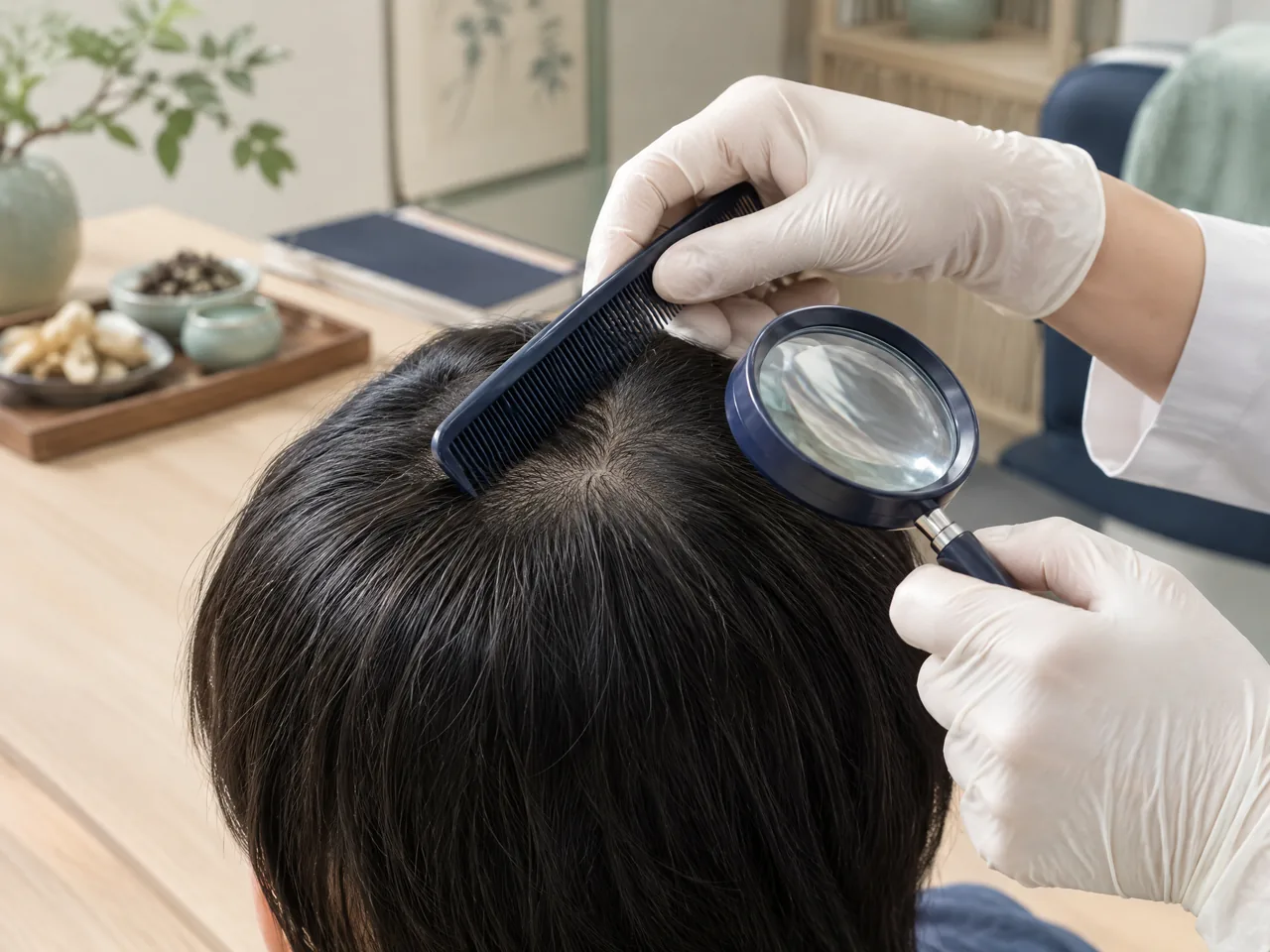

Your questions, answered
Frequently asked questions
What are the most common causes of thinning hair in men?
Male-pattern hair loss is a common cause and often affects the temples, frontal hairline and crown. Other possibilities include illness, stress, weight loss, poor nutrition, medicines and scalp disease. Pattern, timing, family history and scalp findings are needed to work out which explanation is most relevant.
Can stress cause hair loss in men even if I have a family history of baldness?
Stress may be associated with temporary diffuse shedding, while a family history can be relevant to male-pattern loss. Both can be present, so one does not rule out the other. Note when the change began, whether it is diffuse or patterned, and whether there was illness, weight change or a scalp problem before deciding on next steps.
What does traditional Chinese medicine say about hair loss?
Traditional Chinese medicine may use pattern concepts such as liver-kidney deficiency, qi and blood deficiency, damp heat, or blood heat and wind dryness. They are traditional ways of discussing overall symptoms and do not prove the biological cause of hair loss or diagnose androgenetic alopecia. Individual advice should follow consultation with a registered practitioner.
When should a man seek medical advice for hair thinning?
Seek medical advice if hair loss is sudden, persistent, patchy, severe, associated with scalp pain or abnormal skin, or accompanied by other unexplained symptoms. Assessment can include history and scalp examination, with tests considered when the findings suggest they are needed.
Sources and further information
- [1] [1] Hong Kong Centre for Health Protection — Men's Health Line: Alopecia
Referenced for: Possible causes, typical male-pattern distribution, advice to seek medical assessment, and investigation context.
- [2] [2] British Association of Dermatologists — Hair loss male pattern (androgenetic alopecia)
Referenced for: Genetic and hormonal context, typical male-pattern distribution, and diagnostic history.
- [3] [3] American Academy of Dermatology — Hair loss: Diagnosis and treatment
Referenced for: History, scalp examination, and circumstances in which testing may be considered.
- [4] [4] NHS — Hair loss
Referenced for: Temporary hair-loss context, causes including stress, and advice to clarify the cause before commercial hair-clinic care.