
TCM Lab · Health reading
Foot and Ankle Stretching Exercises: How Do You Stretch the Plantar Fascia Safely?
Published Updated
Foot and ankle stretching exercises can be a sensible part of care when a clinician has said that plantar fascia or calf stretching fits your symptoms. How do you stretch the plantar fascia safely? Start with a small, controlled movement that feels like a mild pull, not a test of how far you can go. A seated towel stretch and a supported calf stretch are two practical options. The more useful test is what happens afterwards: notice your walking later that day and your first steps after rest the next morning. If those symptoms clearly escalate, pause the stretch rather than pushing through it.
Appointments are confirmed through WhatsApp. If you have language requirements, please mention them in your enquiry.
The short answer
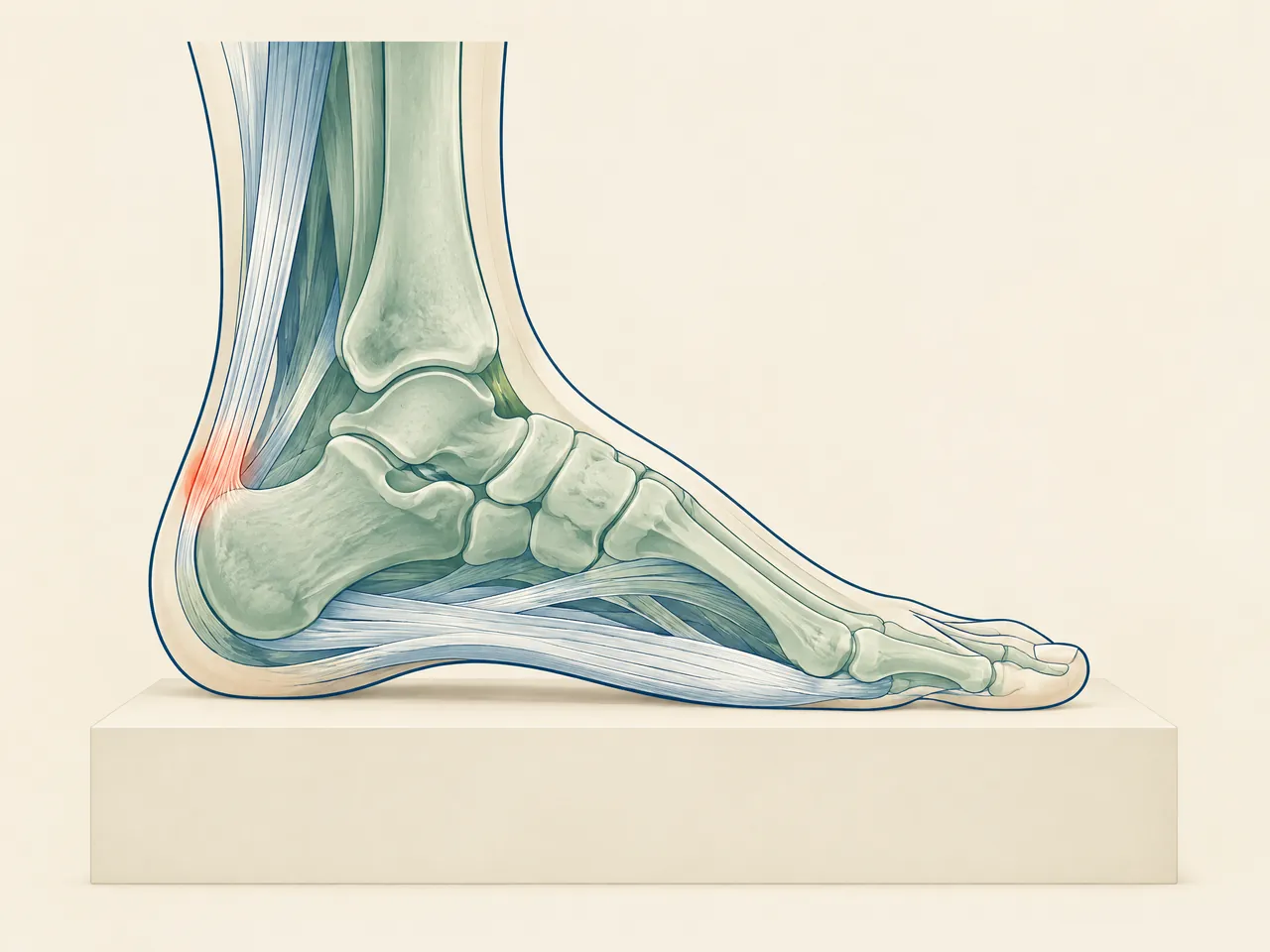
How do you stretch the plantar fascia safely? After an appropriate assessment, use a gentle seated towel stretch or a supported calf stretch: keep the heel grounded, move slowly, and stop at a mild pulling sensation rather than pain. Do not add a larger walking, running, or standing load at the same time. Monitor your symptoms later and on the next morning's first steps; a clear flare is a reason to stop and seek advice.
Transparent pricing
See the fees.
Choose your care.
Explore our complete official price list, including first-trial prices, regular prices, packages and branch-specific options.
Opening WhatsApp prepares an enquiry; it does not send a message, take payment or confirm an appointment. Suitability and individual arrangements are confirmed during consultation.
Pain care
All prices in HKDExtracorporeal shockwave treatment
Shockwave treatment for deep-tissue and fascial care. The Kwun Tong clinic offers the multi-area options shown below.
Priced by branch
Branch-specific pricing
Prince Edward: HK$250 per area
Kwun Tong: HK$250 for 1 area / HK$450 for 2 areas / HK$600 for 3 areas
Pain care (manual therapy)
Includes Chinese medicine musculoskeletal assessment, manual joint techniques and tui na.
HK$580 (single session)
Chinese medicine musculoskeletal assessment
Pain care (acupuncture and manual therapy)
Combines acupuncture and manual therapy.
HK$680 (single session)
Combined care
Hair and scalp
All prices in HKDScalp health and hair-loss management
Includes AI scalp analysis, deep scalp and follicle cleansing, and scalp oil-control care.
HK$380 (first trial)
Regular price: HK$680
- 6 sessions: HK$3,480 (HK$580 per session)
- 12 sessions: HK$5,760 (HK$480 per session)
- 20 sessions: HK$8,600 (HK$430 per session)
- 30 sessions: HK$11,400 (HK$380 per session)
Hair acupuncture and Chinese herbal medicine package
Includes scalp acupuncture and 3 days of Chinese herbal medicine that does not require decoction.
HK$580 (single session)
Registered Chinese Medicine Practitioner consultation
- 6 sessions: HK$3,180 (HK$530 per session)
- 12 sessions: HK$5,760 (HK$480 per session)
- 20 sessions: HK$8,600 (HK$430 per session)
- 30 sessions: HK$11,400 (HK$380 per session)
Combined hair and scalp treatment
Combines acupuncture and Chinese herbal medicine with salon-level scalp and follicle care. Packages include complimentary hair-care shampoo and serum.
HK$1,260 (single session)
Combined treatment
- 8 sessions: HK$8,640 (HK$1,080 per session)
- 16 sessions: HK$15,680 (HK$980 per session)
- 20 sessions: HK$18,600 (HK$930 per session)
- 30 sessions: HK$26,400 (HK$880 per session)
Weight management
All prices in HKDFull-body acupoint embedding for weight management
Includes full-body acupoint embedding. Packages include complimentary Chinese herbal medicine for weight management, with the number of included days scaled to the package. Embedding material and the individual treatment arrangement are confirmed during consultation; this is not a cosmetic thread lift.
HK$980 (single session)
No trial session
- 10 sessions: HK$7,800 (HK$780 per session)
- 20 sessions: HK$14,600 (HK$730 per session)
- 30 sessions: HK$20,400 (HK$680 per session)
Facial acupuncture
All prices in HKDFacial acupuncture (basic)
Includes facial acupuncture and meridian-based facial care, including care for facial puffiness.
HK$480 (first trial)
Regular price: HK$680
- 10 sessions: HK$5,200 (HK$520 per session)
- 20 sessions: HK$9,600 (HK$480 per session)
- 30 sessions: HK$13,500 (HK$450 per session)
Facial acupuncture (advanced)
Includes enhanced facial acupuncture with a specially formulated moisturising mask and serum.
HK$780 (first trial)
Regular price: HK$1,180
- 10 sessions: HK$9,000 (HK$900 per session)
- 20 sessions: HK$16,600 (HK$830 per session)
- 30 sessions: HK$23,400 (HK$780 per session)
Chinese medicine
All prices in HKDAcupuncture and Chinese herbal medicine package
Includes a Chinese medicine consultation with pulse assessment, body acupuncture and 3 days of Chinese herbal granules that do not require decoction.
HK$580 (single session)
Chinese medicine consultation with pulse assessment
Foot and Ankle Stretching Exercises: How Do You Stretch the Plantar Fascia Safely? Start with the Right Question
The first question is not simply which stretch to copy. It is whether stretching is appropriate for the pain you have today. The plantar fascia is a band of tissue running from heel to toes and helping support the arch. Plantar fasciitis commonly causes pain around the heel or arch on the bottom of the foot, but pain in that area can have other explanations. The NHS describes a familiar pattern in which pain is worse when walking begins after sleep or rest, eases somewhat with movement, and may worsen again after long standing, walking, or running [1]. That pattern can guide a conversation with a clinician; it cannot confirm a diagnosis by itself.
Consider the setting. A gradual heel-and-arch discomfort after a recent jump in walking, standing, running, or hard-surface exercise calls for a different response from sudden pain after a fall or twist. Before adding foot and ankle stretching exercises, write down when the pain begins, what makes it worse, and what changed over the past week.

Foot and Ankle Stretching Exercises: How Do You Stretch the Plantar Fascia Safely? Not Every Sole Pain Is the Same
Pain at the sole is a location, not a diagnosis. A heel-centred ache, arch tightness, discomfort that spreads across the sole, and symptoms with pins and needles may each need a different assessment. For example, numbness, burning, altered feeling, or symptoms travelling toward the ankle should not be treated as ordinary tightness. The related guide on tarsal tunnel syndrome foot pain explains why nerve-type symptoms deserve attention rather than a stronger stretch. Repeatedly pulling on a painful area may delay a useful review if the problem is not primarily a plantar fascia issue.
Pause self-directed stretching and arrange prompt assessment after a new injury with deformity, a crack or pop, or an inability to bear weight safely. Also seek assessment before using generic exercise guidance if there is tingling or loss of feeling, or if you have diabetes and foot pain. These are situations specifically highlighted on the NHS plantar fasciitis page [1]. Severe pain that interrupts normal activity, a worsening pattern, or pain that has not improved after two weeks of self-care also warrants a clinical conversation. The safest exercise plan begins after those higher-priority problems are considered.
Foot and Ankle Stretching Exercises: How Do You Stretch the Plantar Fascia Safely? Read the First-Step Pattern Carefully
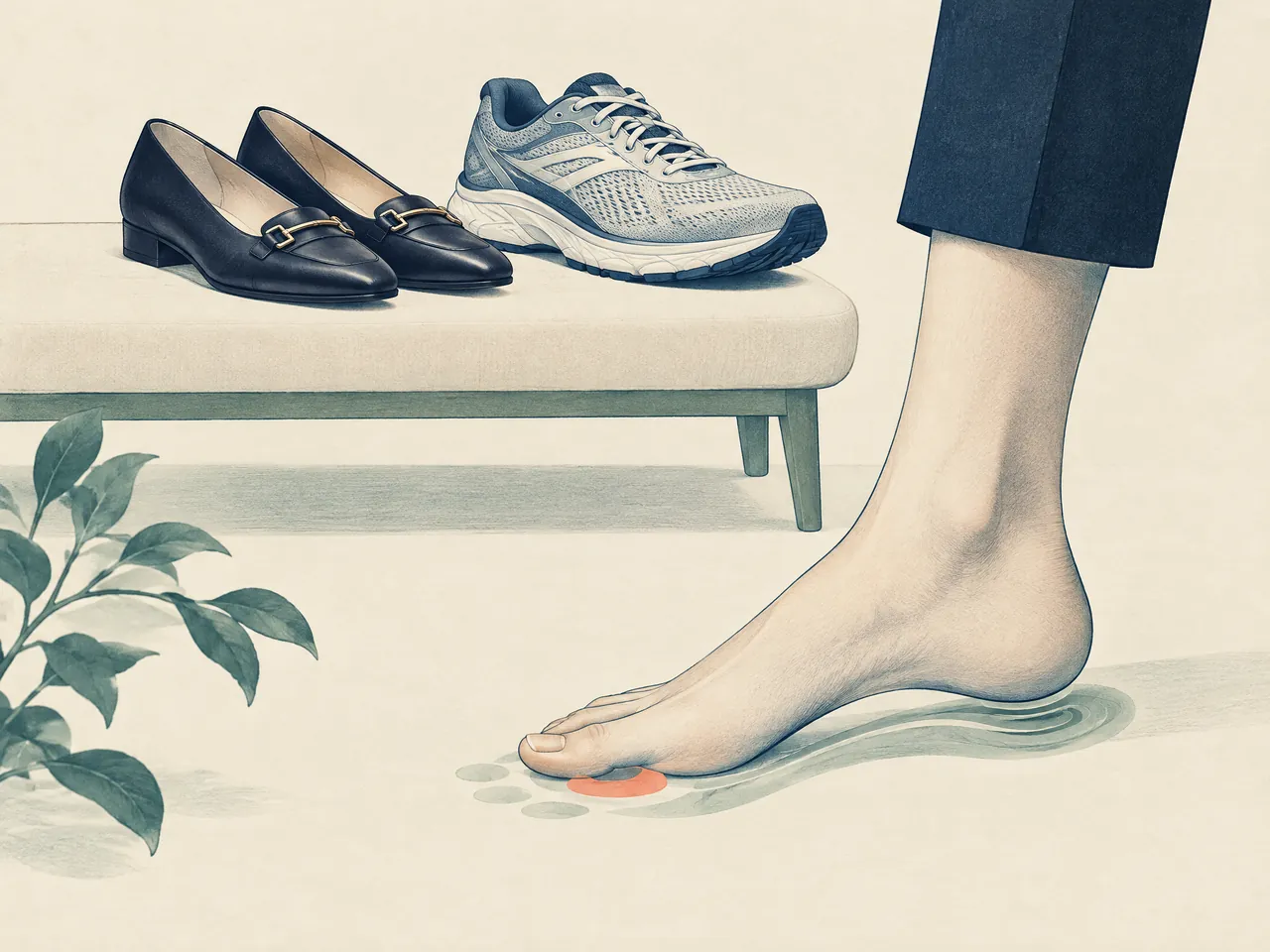
The first steps out of bed, or the steps after sitting through a meeting, can be useful observations. Note the location, intensity in ordinary words, and whether the discomfort settles after a few minutes or keeps building. Then notice what happens after a supermarket trip, a day on your feet, or a run. This is more informative than judging the foot only while you are doing a stretch. The NHS Ayrshire & Arran guidance similarly describes heel pain that may follow rest, improve with moderate activity, and worsen later after prolonged standing or walking [2].
Use that information to set a conservative baseline. If a brief, easy stretch leaves the first steps no worse than usual, it may be reasonable to keep the same amount for several days rather than advancing quickly. If the next morning is noticeably more painful or stiff, reduce or stop the new exercise and review the total load that day. Avoid the common trap of adding a stretch, a long walk, and a new class at the same time; you will not know which change the foot tolerated. For more positioning ideas, compare the separate foot pain stretches guide, but keep the same symptom-monitoring approach.
Compare your options
| Situation | Lower-demand option | What to monitor before progressing |
|---|---|---|
| You want to test movement after rest but standing is uncomfortable. | Use the seated towel stretch with the heel on the floor and a light pull. | The sole or calf should feel only mildly stretched; stop if pain clearly increases afterwards. |
| You can stand safely and want to explore calf tension. | Use a wall-supported calf stretch with hands on the wall and the back heel grounded. | Keep balance and foot alignment controlled; do not continue if the heel lifts or pain sharpens. |
| The next morning is worse after a new stretch. | Pause the new exercise and reduce the change in total foot load that day. | Compare the first steps with your usual baseline rather than adding range or force. |
| Pain is severe, recurring, numb, or makes normal activity difficult. | Seek professional assessment instead of trying a stronger stretch. | Report symptom location, timing, recent activity changes, injuries, and any medication or diabetes history. |
On smaller screens, scroll the table sideways to compare all columns.
Foot and Ankle Stretching Exercises: How Do You Stretch the Plantar Fascia Safely? Try Gentle Starting Options
A gentle stretch is deliberate rather than dramatic. Choose a stable time and place, wear footwear if it makes standing steadier, and use a wall or chair when balance is uncertain. The aim is to explore a light pulling sensation in the sole or back of the lower leg, then come out of the position smoothly. There is no prize for reaching the greatest angle or feeling the strongest pull. NHS guidance recommends regular gentle exercises for the sole and heel alongside shoes with cushioning and arch support, while advising against prolonged standing and barefoot walking on hard surfaces when these aggravate symptoms [1].
The two approaches below focus on different practical situations. A seated towel stretch is useful when standing itself is uncomfortable or you want to test the movement with more control. A wall-supported calf stretch makes sense only when you can stand and balance safely. Neither is a requirement for every person with heel pain. Begin with the option that feels calm and manageable, leave a rest interval before repeating it, and preserve ordinary, tolerable movement through the day. The table later on this page can help you choose the lower-demand starting option.
Foot and Ankle Stretching Exercises: How Do You Stretch the Plantar Fascia Safely? Use a Seated Towel Stretch
Sit on a firm, stable surface with the affected leg in front of you. Keep the heel in contact with the floor and the knee straight only if that position is comfortable. Loop a towel around the ball of the foot, not around the toes alone. Hold the ends and slowly draw the towel toward you until you notice a mild pull under the foot or into the back of the calf. Ease back to the starting position. Do not jerk the towel, bounce at the end range, curl the toes hard, or chase a painful sensation. NHS Ayrshire & Arran uses the same key setup points: towel at the ball of the foot, heel grounded, and no bending of the knee [2].
This seated option can be particularly useful after a period of rest because it lets you assess the response before taking full weight through the foot. Keep the first attempt brief and modest rather than copying someone else's duration or repetitions. If the sole feels more irritable during the movement, make the pull smaller; if it remains distinctly worse afterwards, stop that exercise and seek individual advice. A separate plantar fascia stretch page can help you compare the purpose of this movement with other foot positions, but it should not replace an assessment when the symptom pattern is unclear.
Foot and Ankle Stretching Exercises: How Do You Stretch the Plantar Fascia Safely? Add a Supported Calf Stretch
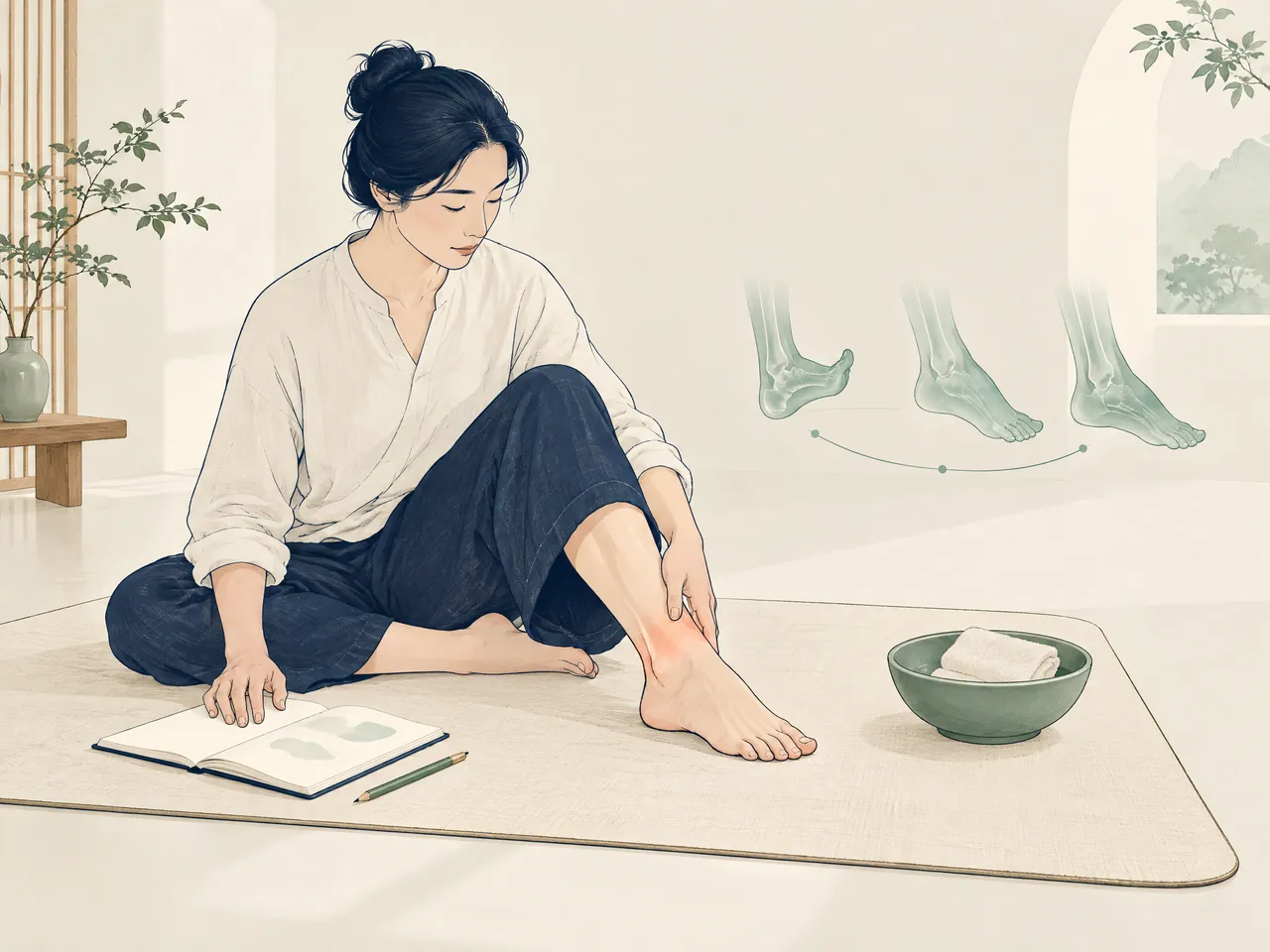
For a supported calf stretch, face a wall and place both hands on it. Put the more symptomatic foot behind you with its toes pointing toward the wall, then keep that heel on the ground as you bend the front knee and let the body move slightly forward. The back of the calf should feel a mild stretch. Keep the movement slow and the pelvis steady; turning the back foot outward or letting the heel lift changes the position and may make it less controlled. Stop if you cannot maintain balance, if the heel has to lift, or if the sensation becomes sharp.
A wall-supported position is not automatically better because it is weight-bearing. It is simply another way to explore calf tension when standing is safe. The NHS Ayrshire & Arran page describes wall and standing calf stretches as options and advises reducing movement, repetitions, speed, or load when exercise enters an unacceptable pain response [2]. If standing makes the foot angry, return to the seated option or pause stretching. Readers looking for another low-force overview can visit gentle stretches for heel pain; choose no more than one new variation at a time so the result is easier to read.
Foot and Ankle Stretching Exercises: How Do You Stretch the Plantar Fascia Safely? Set Limits and Monitor Change
Stretching is only one part of managing the load on a sore foot. A sensible plan may also mean breaking a long day of standing into shorter blocks, changing an aggravating route, choosing a lower-impact activity for a period, and wearing shoes that feel cushioned and supportive. None of these choices guarantees a result, but they reduce the chance that a new stretch has to compete with a sudden surge in demand. The NHS suggests modifying long standing, walking, or running when they worsen symptoms and considering activities that put less pressure on the feet, such as swimming [1].
Use a simple before-and-after check instead of a rigid schedule. Before stretching, ask how the foot feels at rest and during normal walking. Later, ask whether it returned to its usual level. The following morning, compare the initial steps with the preceding mornings. NHS Ayrshire & Arran advises that symptoms after exercise should return to the pre-exercise baseline within 30 minutes and that next-morning pain or stiffness should not remain increased for longer than an hour [2]. Those thresholds are guidance from that service, not a substitute for a personalised plan; a clear worsening response still means do not progress on your own.
Foot and Ankle Stretching Exercises: How Do You Stretch the Plantar Fascia Safely? Stop When Symptoms Escalate
Stop the exercise for the day if pain becomes sharp, there is a new burning or electrical sensation, the foot feels unstable, or you begin limping more. Also stop if the movement creates a clear flare that does not settle back toward your usual level. Stretching through escalating pain is not a sign of progress. Rather than substituting a tougher exercise, simplify the situation: reduce the movement, take pressure off the area, and consider whether footwear, a long shift, hills, running, or barefoot time changed at the same time. Keeping this record gives a practitioner something concrete to assess.
It is equally important not to interpret temporary ease as permission to make every activity bigger. Someone may feel better after a few steps yet still find that a long day standing leaves the heel worse later. Build changes slowly and separately: first see how the foot responds to the gentle stretch, then consider another adjustment only when the response is stable. There is no universal schedule because starting symptoms, work demands, balance, and other health considerations differ. Avoid high-load exercises copied from social media until a suitable clinician has helped you decide whether they fit your situation.

Foot and Ankle Stretching Exercises: How Do You Stretch the Plantar Fascia Safely? Know When to Seek Assessment
Arrange an assessment if pain is severe, limits normal activities, keeps returning, or has not started to improve after two weeks of self-care. Get advice sooner for tingling, loss of sensation, diabetes with foot pain, or an injury that makes walking unsafe [1]. A clinician can consider the location and pattern of symptoms, your footwear and activity demands, and whether a different explanation needs attention. This is more useful than trying to distinguish every possible cause at home from a list of exercises.
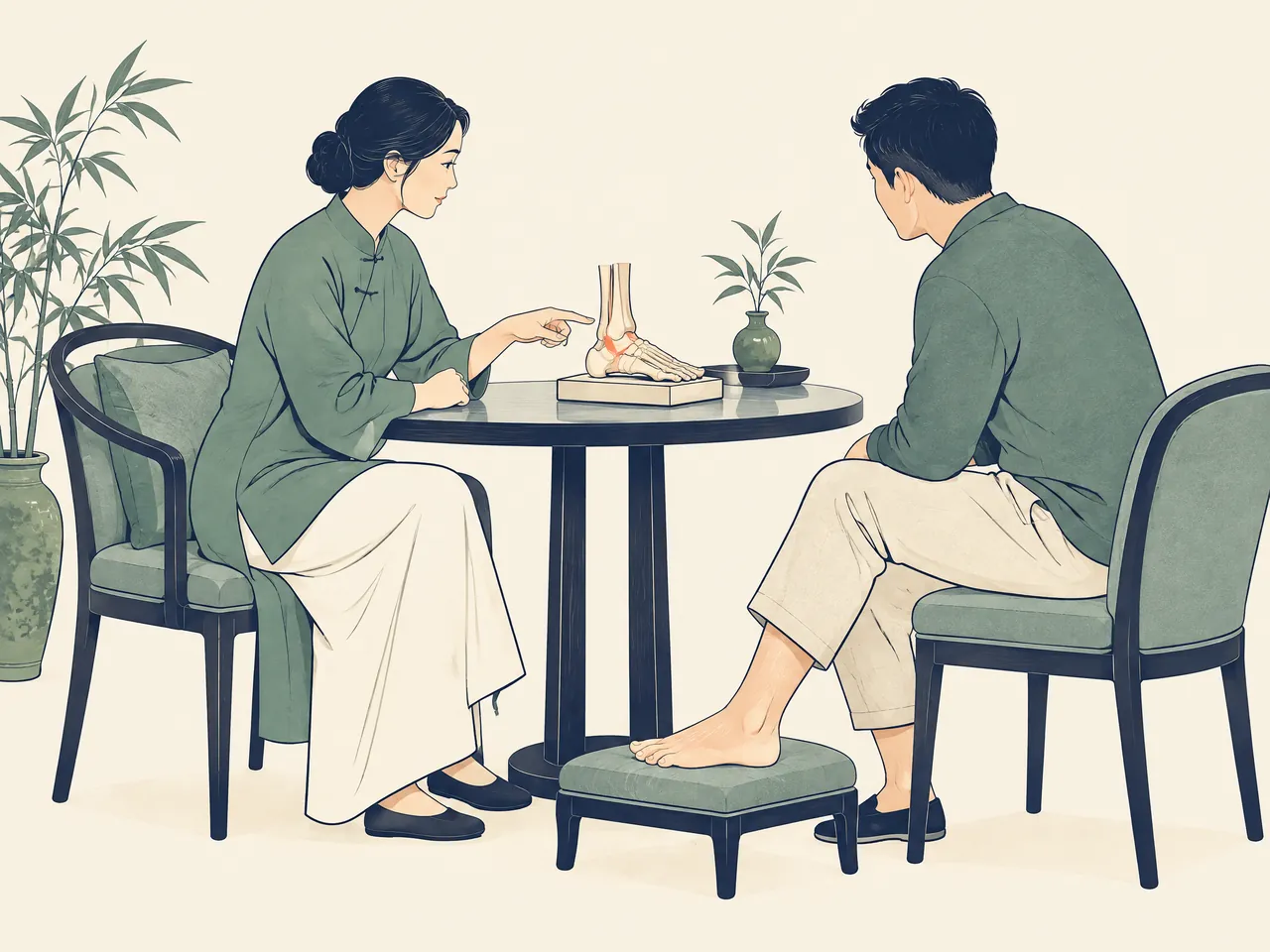
If you would like to discuss persistent foot discomfort with TCM Lab, make an enquiry rather than assuming an exercise is right for you. Appointments at the Kwun Tong Chinese medicine clinic or the Prince Edward clinic can be discussed by WhatsApp at +852 6940 5663; explain your symptoms, medicines, and language needs so a suitable arrangement can be confirmed. Chinese medicine may be discussed as an individualised supportive option, but it should not be presented as a guaranteed cure or replace evaluation of serious or persistent foot pain. Do not stop or alter prescribed medicines without the prescribing clinician's advice.
Care and health guide
Foot discomfort: care information
This directory brings together services, reading, and visit information related to foot discomfort, to help you prepare questions for a consultation.
When foot discomfort affects your day, noting when it occurs, its relation to activity, and what you have already tried can help prepare a consultation; acupuncture for foot pain is a relevant service or reading entry point.
Individual circumstances differ, and acupuncture Hong Kong offers related information to help you understand options and prepare questions.


Your questions, answered
Frequently asked questions
How should I begin a towel stretch after assessment?
Sit securely with the affected leg forward, the heel on the floor, and the towel around the ball of the foot. Draw the towel gently toward you until there is a mild pull in the sole or calf, then release. Avoid bouncing, forcing the toes, or using pain as the target. Start conservatively and judge the result later that day and on the next morning.
Can Chinese medicine cure my plantar fasciitis?
A cure cannot be promised. Chinese medicine can be discussed as an individualised supportive option after appropriate assessment, while plantar fasciitis and other causes of heel or sole pain may need conventional diagnosis and a combined management plan. Persistent, severe, or unusual symptoms should not be managed by self-care alone.
Can I see a Chinese medicine practitioner while taking prescribed pain medicine?
Tell the practitioner about every medicine you use, including prescribed pain relief and non-prescription products. Do not stop, restart, or change a prescribed medicine on your own. Any medication adjustment should be discussed with the clinician who prescribed it so care can be coordinated more safely.
Does acupuncture help every kind of foot pain?
No single approach is suitable for every type of foot pain, and individual response can differ. Acupuncture may be discussed after assessment as a supportive option, but it should not delay evaluation of a new injury, numbness, loss of sensation, diabetes-related foot pain, or symptoms that are severe or worsening.
Sources and further information
- [1] NHS: Plantar fasciitis
Referenced for: Supports the usual heel-and-arch symptom pattern, gentle exercise and footwear/activity guidance, and the listed reasons to seek assessment.
- [2] NHS Ayrshire & Arran: Plantar Fasciitis MSK Patient Portal
Referenced for: Supports the towel and wall/calf stretch setups and the service's exercise response-monitoring guidance.