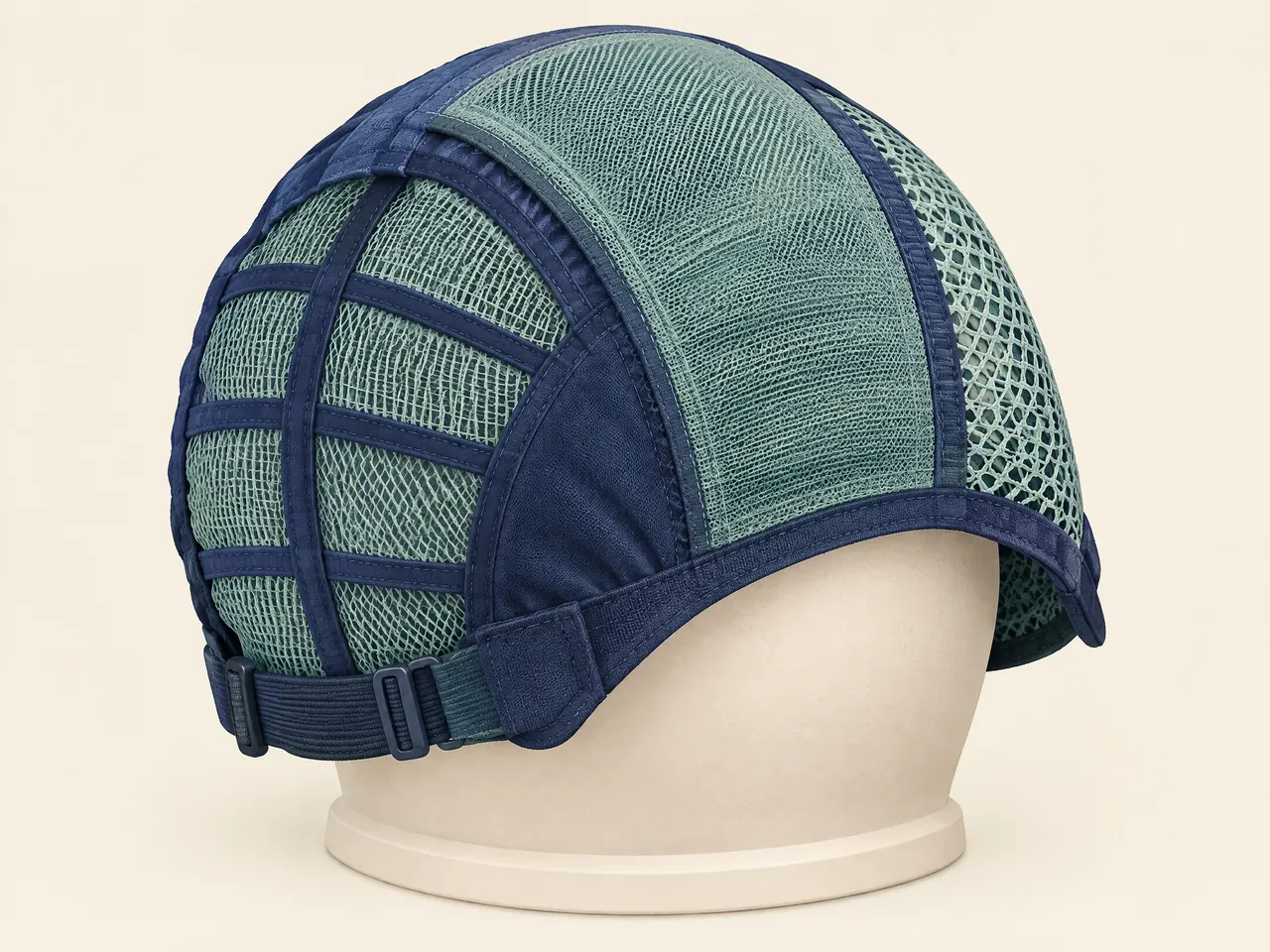
Compare the base and the fastening separately
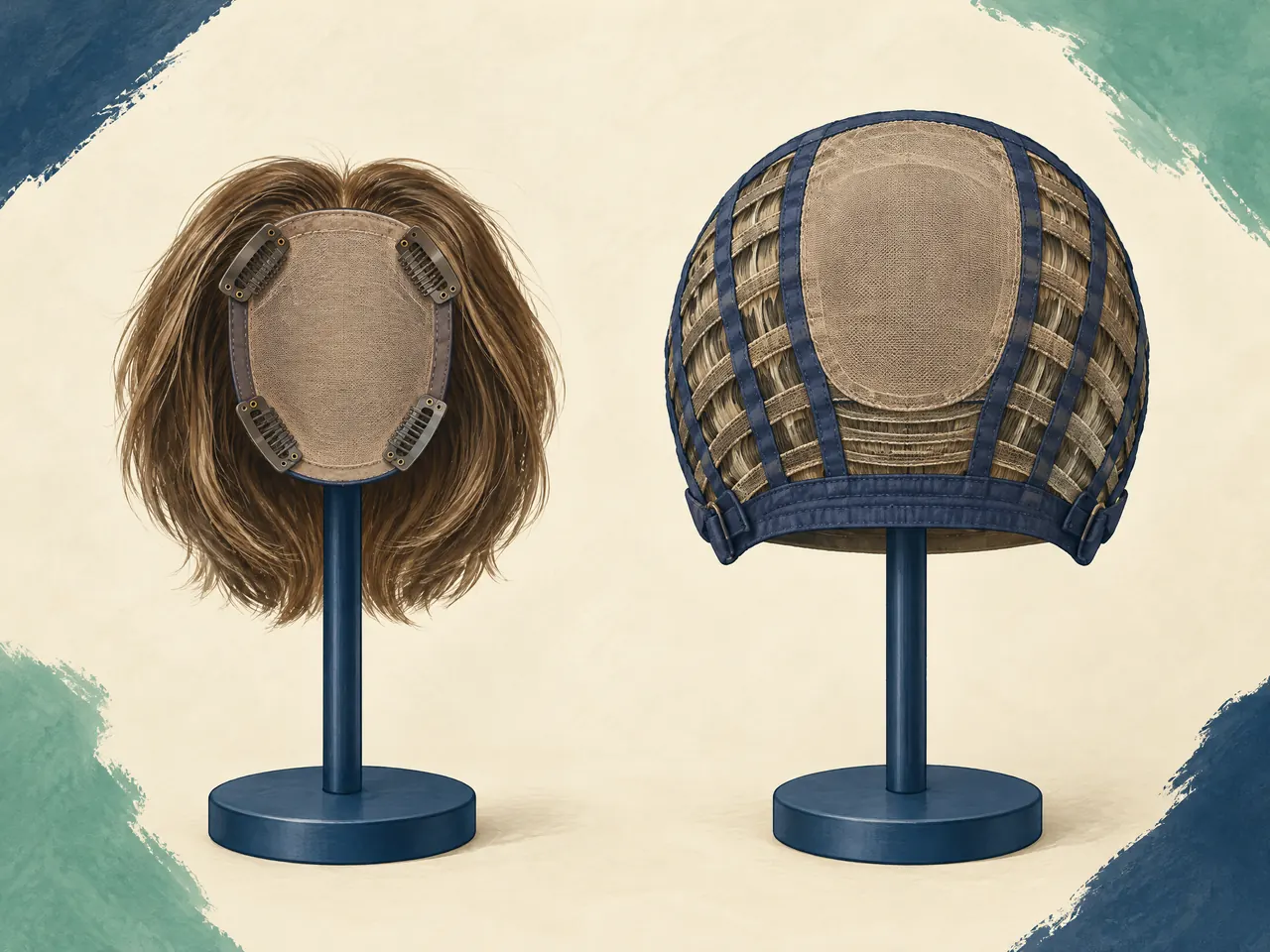
Use two separate questions when looking underneath a sample: which area does this base cover, and what holds it in place? A topper and a full wig answer different coverage needs. [1] The illustrations separate the objects so you can discuss them; they do not specify the construction or fastening of a piece offered for sale.
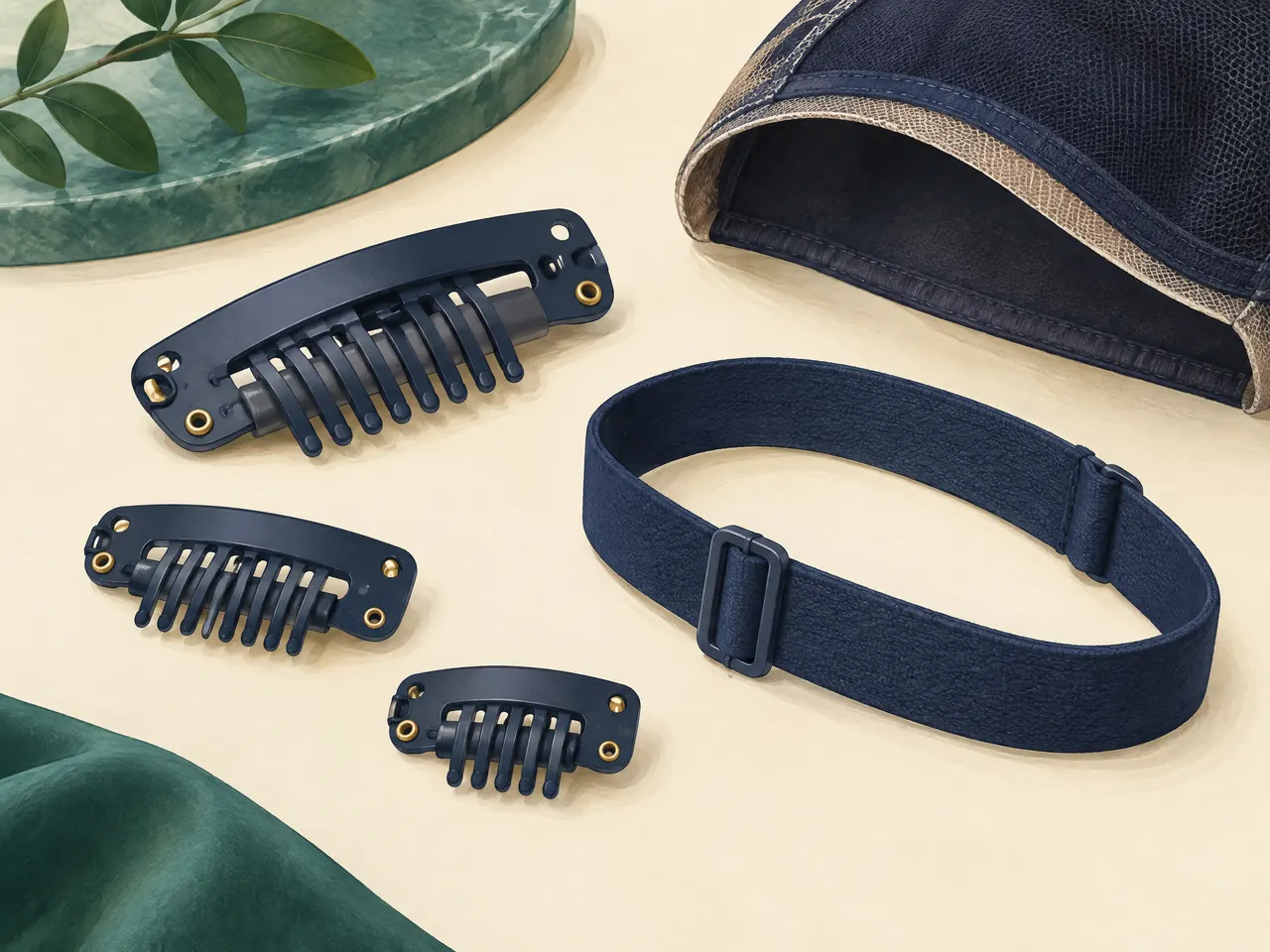
In your comparison note, finish the sentence 'I would remove this by…' after the fitter demonstrates the actual piece. Ask which fastening parts you would handle yourself and whether any separate accessory is needed. If you have only seen a sample, mark the method as demonstrated on the sample, not confirmed for your eventual item.
Record the setting, not just the size label
Ask the fitter to show the inside of the particular cap and identify any part they adjust. In your note, distinguish the size label from the setting used during your comparison. For example, write that an adjustment was made before you tried your glasses again, rather than simply recording 'comfortable'. The measuring illustration is a question prompt, not a sizing chart or self-fitting instruction.
If permitted, repeat putting on the piece after the demonstration and ask the fitter to check whether you have reproduced the position and setting. Note which step still needs help. That gives a follow-up fitting a specific starting point: a setting you could not repeat, rather than an unexplained impression that the wig felt different at home.

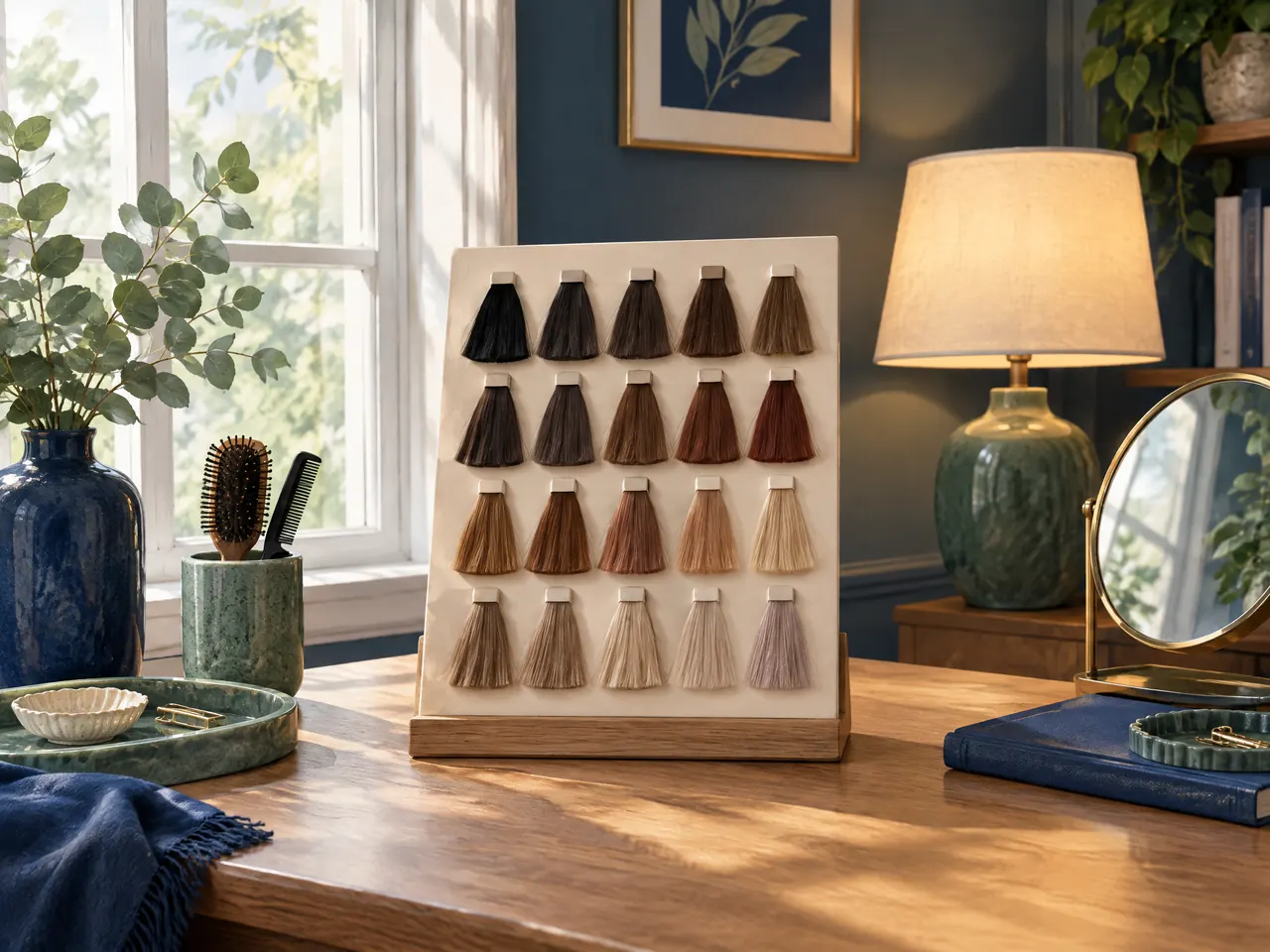
Keep a colour reference separate from a hairstyle photograph
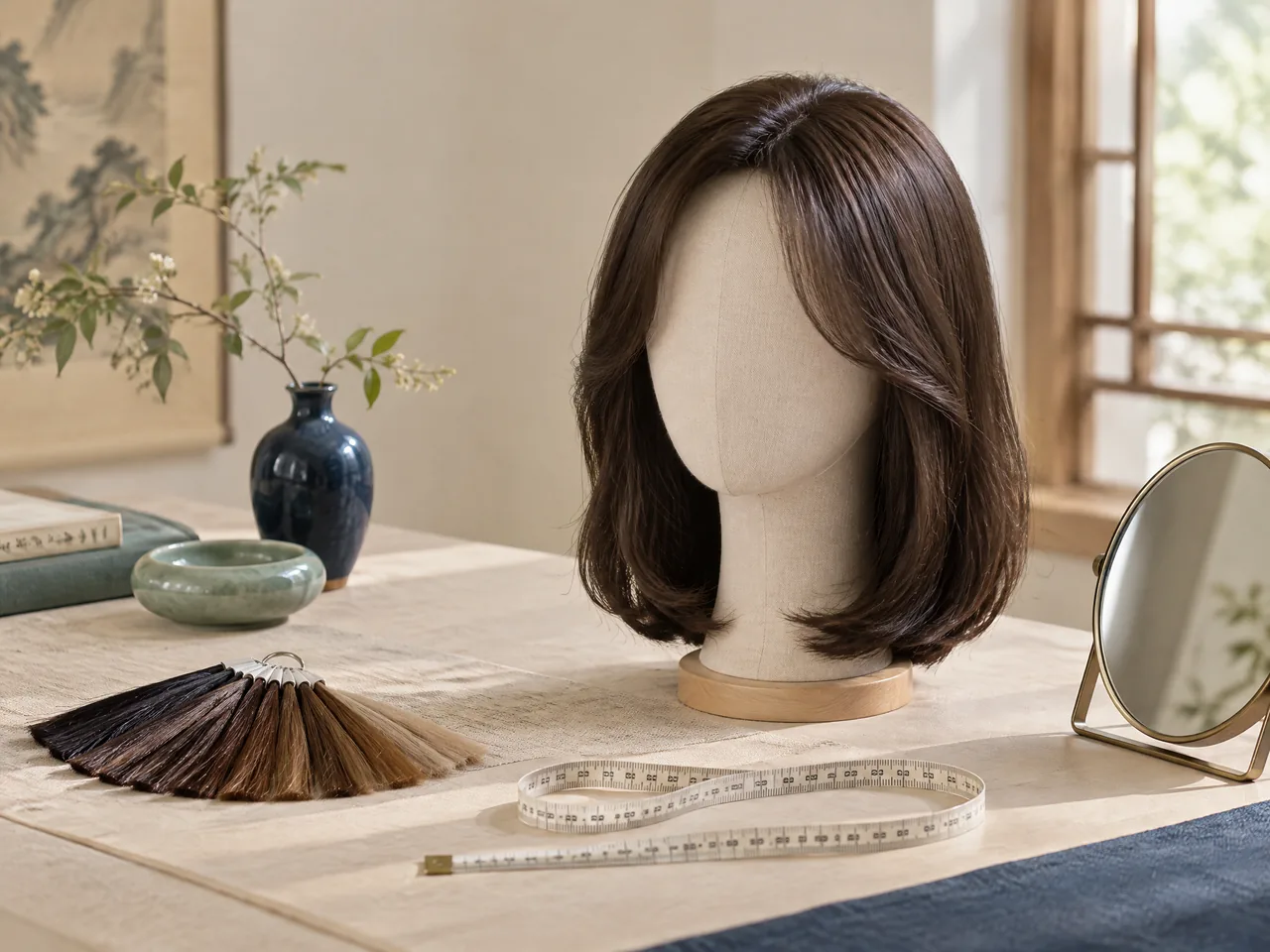
A useful colour note identifies what you compared: your reference, the sample's colour code and whether that sample represents the item under discussion. The American Cancer Society recommends natural light when checking a hair reference against a wig swatch. [1] Ask whether a comparison near a window is possible rather than relying only on a display photograph.
If you take an authorised picture, label it immediately with the sample code and the lighting used. Keep a separate note of which shade you preferred in person. Later, a photograph can remind you which comparison took place; it should not silently become a substitute for the colour reference or proof that another photographed style uses that shade.
Plan where the wig goes when you take it off
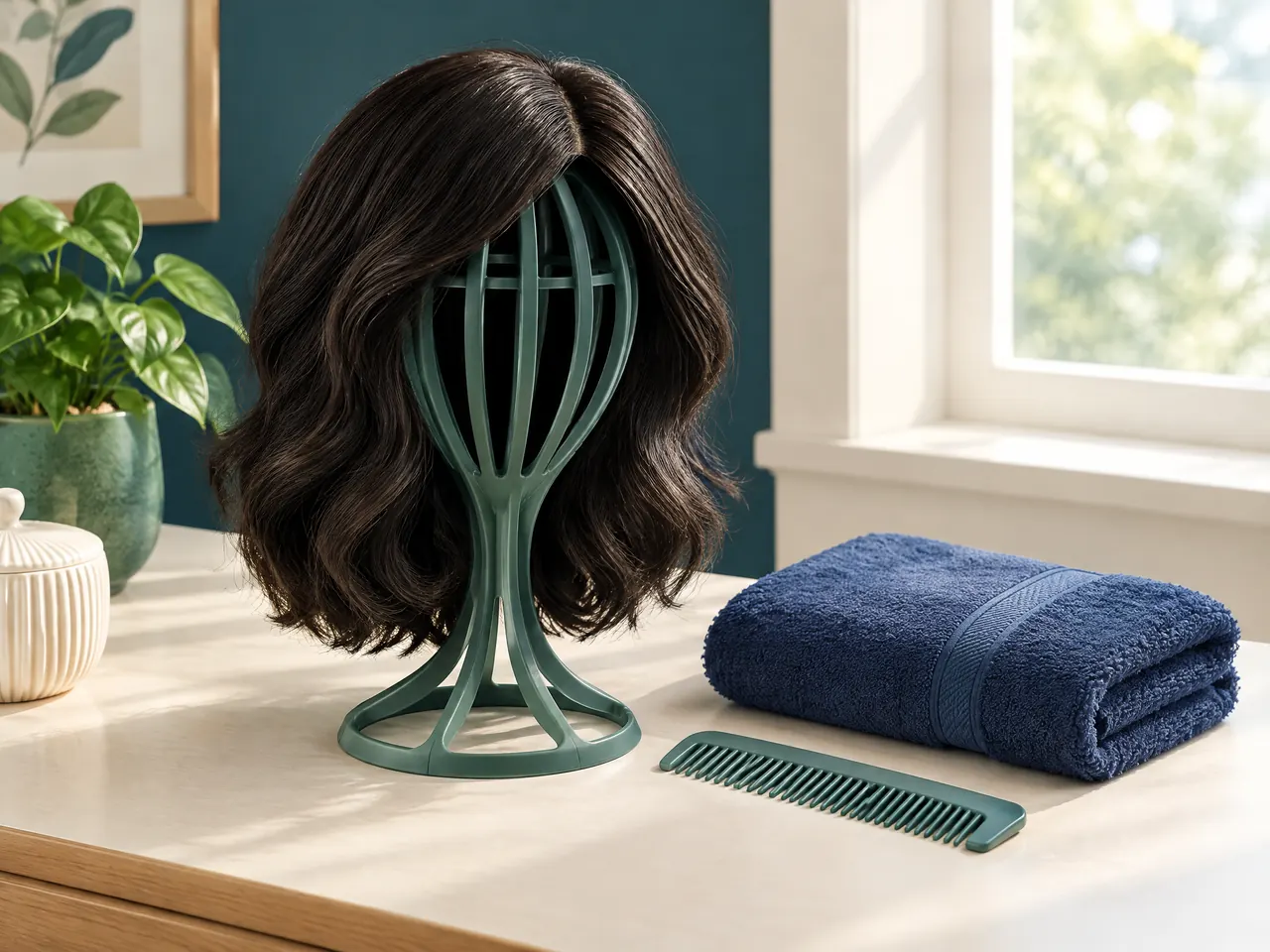
Extend your ordinary-day brief to the moment you get home. If you expect to remove the wig before cooking or resting, identify a suitable place for it and ask which stand or storage arrangement the supplier recommends for that exact item. The American Cancer Society discusses short-term storage on a wig stand; product-specific instructions still matter. [1]
Before agreeing to the care routine, ask where the piece should dry after washing and how you would know it is ready to put away. Keep those instructions with the product details, not with a general hairstyle photo. If your planned space cannot accommodate the recommended setup, raise that practical problem before buying rather than assuming a drawer or travel pouch will be suitable.