
TCM Lab · Health reading
Is acupuncture helpful for insomnia? What happens in a TCM assessment for insomnia? Can Chinese medicine help with insomnia?
Published Updated
Trouble sleeping can mean lying awake before sleep, waking repeatedly, waking too early, or getting enough time in bed yet feeling exhausted the next day. Acupuncture and Chinese medicine can be discussed as supportive options, but they are not a guaranteed answer and should sit alongside a careful look at possible causes. A useful appointment starts with the actual pattern: when it began, what a night looks like, daytime impact, stress, routines, health history and every medicine or supplement being used.
Appointments are confirmed through WhatsApp. If you have language requirements, please mention them in your enquiry.

The short answer
Acupuncture may be considered as a supportive option for insomnia after an individual assessment, but it cannot promise a result or replace medical care. A TCM assessment explores the sleep pattern, daily routine, general health, emotional load and current medicines, then discusses traditional pattern-based options and practical sleep habits. Persistent insomnia, marked daytime impairment, loud snoring, interrupted breathing or severe mood symptoms warrant medical review.
Transparent pricing
See the fees.
Choose your care.
Explore our complete official price list, including first-trial prices, regular prices, packages and branch-specific options.
Opening WhatsApp prepares an enquiry; it does not send a message, take payment or confirm an appointment. Suitability and individual arrangements are confirmed during consultation.
Chinese medicine
All prices in HKDAcupuncture and Chinese herbal medicine package
Includes a Chinese medicine consultation with pulse assessment, body acupuncture and 3 days of Chinese herbal granules that do not require decoction.
HK$580 (single session)
Chinese medicine consultation with pulse assessment
Hair and scalp
All prices in HKDScalp health and hair-loss management
Includes AI scalp analysis, deep scalp and follicle cleansing, and scalp oil-control care.
HK$380 (first trial)
Regular price: HK$680
- 6 sessions: HK$3,480 (HK$580 per session)
- 12 sessions: HK$5,760 (HK$480 per session)
- 20 sessions: HK$8,600 (HK$430 per session)
- 30 sessions: HK$11,400 (HK$380 per session)
Hair acupuncture and Chinese herbal medicine package
Includes scalp acupuncture and 3 days of Chinese herbal medicine that does not require decoction.
HK$580 (single session)
Registered Chinese Medicine Practitioner consultation
- 6 sessions: HK$3,180 (HK$530 per session)
- 12 sessions: HK$5,760 (HK$480 per session)
- 20 sessions: HK$8,600 (HK$430 per session)
- 30 sessions: HK$11,400 (HK$380 per session)
Combined hair and scalp treatment
Combines acupuncture and Chinese herbal medicine with salon-level scalp and follicle care. Packages include complimentary hair-care shampoo and serum.
HK$1,260 (single session)
Combined treatment
- 8 sessions: HK$8,640 (HK$1,080 per session)
- 16 sessions: HK$15,680 (HK$980 per session)
- 20 sessions: HK$18,600 (HK$930 per session)
- 30 sessions: HK$26,400 (HK$880 per session)
Weight management
All prices in HKDFull-body acupoint embedding for weight management
Includes full-body acupoint embedding. Packages include complimentary Chinese herbal medicine for weight management, with the number of included days scaled to the package. Embedding material and the individual treatment arrangement are confirmed during consultation; this is not a cosmetic thread lift.
HK$980 (single session)
No trial session
- 10 sessions: HK$7,800 (HK$780 per session)
- 20 sessions: HK$14,600 (HK$730 per session)
- 30 sessions: HK$20,400 (HK$680 per session)
Facial acupuncture
All prices in HKDFacial acupuncture (basic)
Includes facial acupuncture and meridian-based facial care, including care for facial puffiness.
HK$480 (first trial)
Regular price: HK$680
- 10 sessions: HK$5,200 (HK$520 per session)
- 20 sessions: HK$9,600 (HK$480 per session)
- 30 sessions: HK$13,500 (HK$450 per session)
Facial acupuncture (advanced)
Includes enhanced facial acupuncture with a specially formulated moisturising mask and serum.
HK$780 (first trial)
Regular price: HK$1,180
- 10 sessions: HK$9,000 (HK$900 per session)
- 20 sessions: HK$16,600 (HK$830 per session)
- 30 sessions: HK$23,400 (HK$780 per session)
Pain care
All prices in HKDExtracorporeal shockwave treatment
Shockwave treatment for deep-tissue and fascial care. The Kwun Tong clinic offers the multi-area options shown below.
Priced by branch
Branch-specific pricing
Prince Edward: HK$250 per area
Kwun Tong: HK$250 for 1 area / HK$450 for 2 areas / HK$600 for 3 areas
Pain care (manual therapy)
Includes Chinese medicine musculoskeletal assessment, manual joint techniques and tui na.
HK$580 (single session)
Chinese medicine musculoskeletal assessment
Pain care (acupuncture and manual therapy)
Combines acupuncture and manual therapy.
HK$680 (single session)
Combined care
Is acupuncture helpful for insomnia? What happens in a TCM assessment for insomnia? Can Chinese medicine help with insomnia? — Understanding the sleep concern
The question is rarely only ‘Can I get to sleep tonight?’ Insomnia affects people in different ways: one person lies awake for a long time, another wakes at 3 a.m. and cannot settle again, while another sleeps lightly and feels unable to function at work. The NHS lists difficulty falling asleep, repeated waking, early waking and daytime tiredness among common features. It also notes that insomnia lasting three months or longer is considered long-term insomnia. [1] Naming the pattern matters because it makes the next conversation more useful than simply counting hours in bed.
A realistic answer to ‘Is acupuncture helpful for insomnia?’ is that it may be one supportive option worth discussing after an individual review, not a promise that every type of sleeplessness will respond. Good sleep care does not force an either-or choice between a TCM conversation and medical assessment. It asks what may be maintaining the problem and which support is appropriate now. The Chinese Medicine Hospital of Hong Kong describes insomnia care in terms of Chinese medicine treatments together with relaxation techniques and lifestyle recommendations. It does not establish that the same approach works for every person. [3]

Is acupuncture helpful for insomnia? What happens in a TCM assessment for insomnia? Can Chinese medicine help with insomnia? — Recognising different sleep patterns
Start by describing the night without judging it. Is the main problem a busy mind before bed, waking after a few hours, waking with heat or discomfort, vivid dreams, or early waking followed by worry about the day ahead? Also notice whether days off differ from workdays, whether a nap changes the night, and whether a late meal, alcohol, nicotine, caffeine or scrolling in bed makes sleep less likely. A partner’s observations can be important too. Loud snoring, pauses in breathing, gasping, kicking, sleepwalking or acting out dreams are not details to dismiss as ordinary insomnia. A TCM visit can still be part of wider support, but those features should prompt a conversation with a doctor or sleep service rather than a self-diagnosis.
Daytime function is part of the pattern, not an afterthought. Ask whether tiredness is affecting concentration, mood, driving, study, parenting or safety-sensitive work. CUHK’s Sleep Assessment Unit describes insomnia in terms of difficulty initiating or maintaining sleep, early waking and clinically significant distress or impairment. [2] That is why a person who technically sleeps some hours may still need help if the daytime cost is high. This helps set a proportionate next step.
Is acupuncture helpful for insomnia? What happens in a TCM assessment for insomnia? Can Chinese medicine help with insomnia? — Keeping a useful sleep record
A brief sleep record turns a vague complaint into practical information. Each morning, write down when you went to bed, your estimate of how long it took to fall asleep, awakenings you remember, the final waking time and when you got up. Add a brief note on naps, caffeine or alcohol, exercise, screens late in the evening, unusual stress, menstrual or menopausal symptoms where relevant, and how alert you felt during the day. Do not chase perfect measurements or repeatedly check the clock overnight; the purpose is to notice a pattern, not create another task to worry about.
Bring the record to an insomnia sleep assessment or to a medical appointment. It gives a practitioner concrete material to ask about, such as a variable wake-up time, a long afternoon nap, pain that repeatedly wakes you, or a gap between time in bed and time asleep. If sleep is disrupted by shift work, record shifts and commute times as well. A record cannot diagnose sleep apnoea, depression, thyroid disease or another condition. It can, however, make it easier to decide what needs prompt assessment and what can be addressed through a more consistent routine.
Compare your options
| What to note or bring | Useful details | Why it matters in the discussion |
|---|---|---|
| Sleep record | Bedtime, estimated time to fall asleep, awakenings, final waking time and getting-up time | Shows whether the main difficulty is sleep onset, sleep maintenance, early waking or an irregular schedule |
| Daytime impact | Sleepiness, concentration, mood, naps, driving concerns and work or study effects | Helps judge how urgently broader support may be needed |
| Medicines and supplements | Names, doses and timing of prescriptions, sleep aids, pain medicines, vitamins and herbs | Supports a safer conversation and avoids unplanned medicine changes |
| Night-time observations | Snoring, gasping, pauses in breathing, pain, reflux, nightmares or unusual movements | Identifies features that may need family-doctor or sleep-service assessment |
On smaller screens, scroll the table sideways to compare all columns.
Is acupuncture helpful for insomnia? What happens in a TCM assessment for insomnia? Can Chinese medicine help with insomnia? — How an assessment is approached
A first TCM consultation for insomnia should be a conversation, not an assumption that the same treatment fits everyone who is tired. The practitioner may ask when the problem began, whether falling asleep or staying asleep is harder, what changes on weekends, and what happens in the hours before bed. They may also ask about appetite, digestion, bowel habits, pain, headaches, temperature sensitivity, energy, menstrual history where relevant and emotional strain. Be direct about diagnoses already made by a doctor, recent illness, pregnancy, allergies, and any previous reaction to acupuncture or herbal products.

Medication information is especially important. Bring the names, doses and timing of prescribed medicines, over-the-counter sleep aids, antihistamines, pain medicines, antidepressants, supplements and herbal products. Do not assume a natural product is automatically compatible with everything else. If you are considering care while taking medication, read Can I see a Chinese medicine practitioner while taking sleeping pills? and discuss the full list in person. Any change to prescribed sleeping medication belongs with the prescriber; stopping it suddenly or adjusting it independently can create avoidable risk.
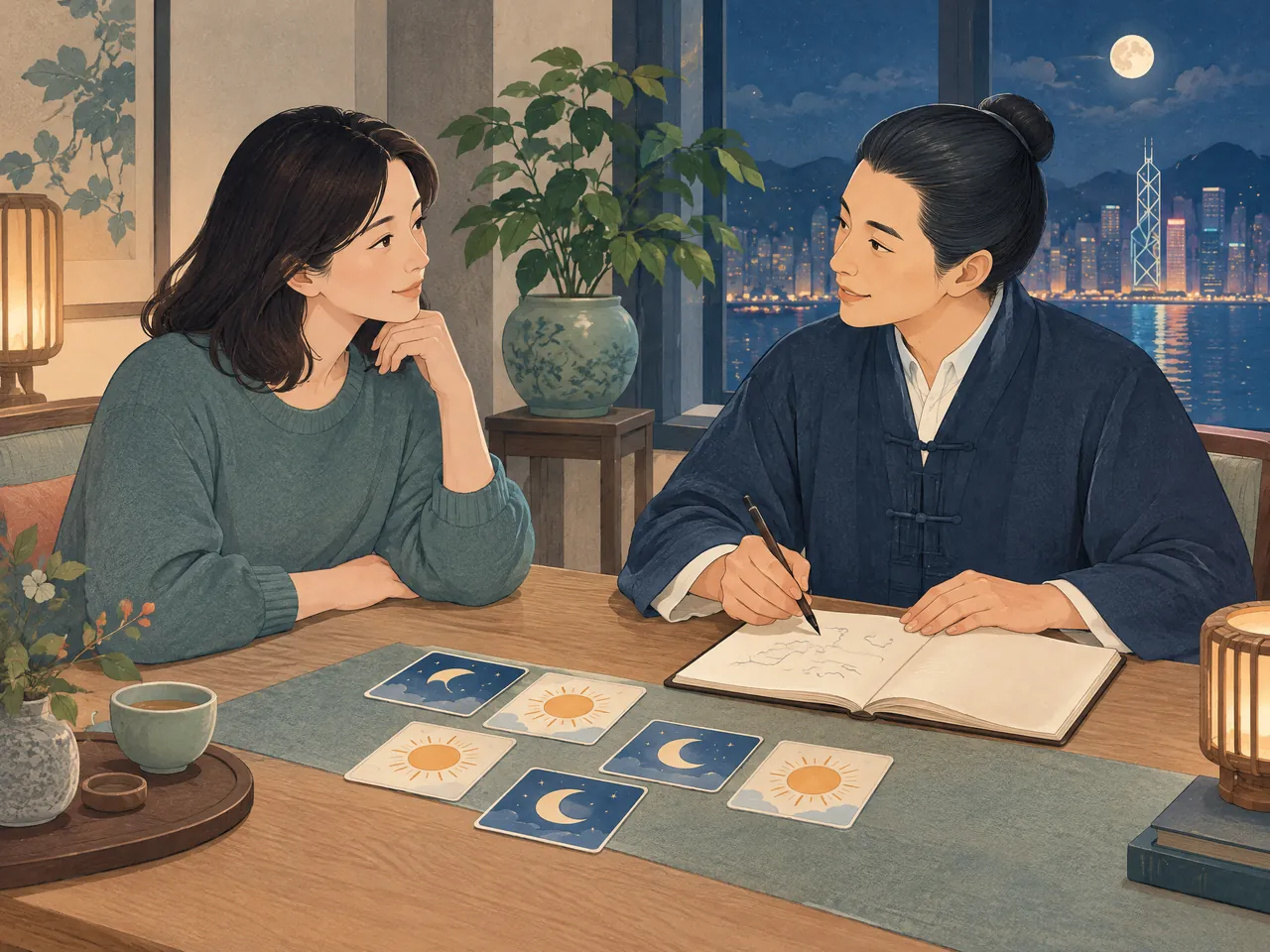
Is acupuncture helpful for insomnia? What happens in a TCM assessment for insomnia? Can Chinese medicine help with insomnia? — Questions about habits, health and medicines
The questions are designed to separate the sleep complaint from the factors around it. A person may be spending an hour answering work messages in bed, avoiding daylight after a poor night, or drinking coffee late to compensate for fatigue. Another person may be living with reflux, chronic pain, hot flushes, anxiety, low mood, a new medicine or an irregular shift pattern. Neither list establishes a diagnosis on its own, but it helps avoid treating sleeplessness as one simple problem. The NHS advises seeking medical help when changing sleeping habits has not helped, sleep difficulty has continued for months, or insomnia makes day-to-day coping hard. [1] Those are sensible thresholds to take seriously in Hong Kong too.
Clear answers also help coordinate care. Tell the practitioner if you have been referred for a sleep study, have a family doctor or mental-health clinician involved, or are receiving counselling. Cognitive behavioural therapy for insomnia, often called CBT-I, is a structured approach that addresses thoughts and behaviours which perpetuate sleep difficulty. Both NHS and CUHK information describe cognitive behavioural approaches as part of insomnia care. [1] [2] It may be more relevant than adding another remedy for someone caught in a cycle of clock-watching and extended time awake in bed. A TCM discussion can be complementary, but it should not delay appropriate assessment or evidence-based care.

Is acupuncture helpful for insomnia? What happens in a TCM assessment for insomnia? Can Chinese medicine help with insomnia? — Traditional pattern-based discussion
TCM assessment may include observation, listening and smelling, questions, and pulse and tongue examination. The practitioner then discusses the sleep story through a traditional pattern-based lens. Terms such as heart fire, liver constraint transforming into heat, or heart-spleen deficiency may be used to organise a TCM treatment discussion. They are traditional concepts, not modern medical diagnoses and not labels to apply to yourself from an online checklist. Their value in an appointment is that they connect sleep with the individual’s reported sensations, digestion, mood, energy and daily rhythm rather than treating every waking pattern as identical.
After this discussion, acupuncture, Chinese herbal medicine, sleep-habit changes or referral may be considered. Whether any option is suitable depends on the person, their symptoms, health history and concurrent care. An honest consultation also leaves room to say, ‘This needs a doctor or sleep specialist first.’ If you want a focused overview of the TCM side of the conversation, Chinese medicine for insomnia explains why an assessment comes before treatment choices. No online article can determine an individual formula, dose, needling plan or number of sessions safely.
Is acupuncture helpful for insomnia? What happens in a TCM assessment for insomnia? Can Chinese medicine help with insomnia? — Supportive choices and next steps
Supportive care works best when it is specific enough to use tonight. Choose a regular getting-up time, including after a disappointing night; reserve the bed for sleep rather than work or prolonged scrolling; and allow a quieter wind-down period before bed. Make the room dark, quiet and comfortable where possible. The NHS also advises avoiding alcohol, tea or coffee close to bedtime, limiting daytime naps and not sleeping in to make up for a poor night. [1] These are not instant fixes, but they reduce avoidable signals that keep sleep irregular.
Acupuncture may be discussed within this wider plan if it is clinically appropriate, with progress reviewed against the sleep record and daytime functioning rather than a guaranteed session count. Some people prefer to learn more about acupuncture for insomnia before booking a consultation. It is reasonable to ask what the proposed option is intended to support, how it fits with other care, what discomforts or precautions are relevant and when the plan should be reconsidered. A good decision includes the option of not proceeding, of trying practical changes first, or of arranging medical review alongside a TCM appointment.

Is acupuncture helpful for insomnia? What happens in a TCM assessment for insomnia? Can Chinese medicine help with insomnia? — Acupuncture, Chinese medicine and sleep habits
Think of an assessment as a way to make choices clearer. If your notes show late caffeine and an irregular wake time, sleep habits may be the immediate starting point. If worry about another sleepless night is becoming the main problem, ask a doctor or mental-health professional about CBT-I or other appropriate support. If you would like to explore Chinese medicine, ask how it will be coordinated with your existing care and how you will know whether the plan remains useful. This article on Can Chinese medicine help with insomnia? can help you prepare questions, but it does not replace individual assessment.
Avoid copying another person’s herbs, supplements or medication plan, even if their sleeplessness sounds similar. Pregnancy, allergies, liver or kidney concerns, medicines and the true cause of waking all change the safety conversation. Likewise, do not treat a few better nights as a reason to stop prescribed treatment without advice. The aim is steadier sleep and safer daytime function, supported by transparent communication between the people involved in your care. If you decide to discuss acupuncture or Chinese medicine, keep the sleep record going so the review is based on your own pattern rather than on a vague impression.

Is acupuncture helpful for insomnia? What happens in a TCM assessment for insomnia? Can Chinese medicine help with insomnia? — When to seek wider medical support
Arrange timely medical review if insomnia is lasting months, changes in routine have not helped, or fatigue is making ordinary life hard to manage. Seek assessment sooner if there is loud habitual snoring with pauses or gasping, marked sleepiness while driving, chest symptoms, severe pain, new neurological symptoms, escalating alcohol or sedative use, or serious anxiety, depression or thoughts of self-harm. CUHK notes that obstructive sleep apnoea involves repeated shallow or paused breathing during sleep and may be accompanied by loud snoring; it needs medical assessment rather than a self-selected sleep remedy. [2] In an urgent mental-health or safety situation, use emergency services rather than waiting for a routine appointment.
For a non-urgent TCM discussion, you may ask about an appointment at the Kwun Tong Chinese medicine clinic or Chinese medicine clinic Prince Edward. Bring your sleep record and medication list, and say if another clinician is already assessing you. The goal is not to make insomnia fit one explanation. It is to recognise the pattern, protect safety, and choose the right mix of support for the situation you are actually living with.
Care and health guide
Health service information
This directory brings together services, reading, and visit information related to health services, to help you prepare questions for a consultation.
If you are organising health questions, Chinese medicine clinic Hong Kong is a starting point for learning about related services and preparing for a consultation.
People have different needs; acupuncture Hong Kong provides further reading to help you understand options in your own context.


Your questions, answered
Frequently asked questions
How long does a TCM approach take to help insomnia?
There is no reliable fixed timeline. Sleep problems vary in duration, contributing factors, daily routines and co-existing health issues, so a practitioner should not promise a set number of sessions or a cure. Keep a sleep record and review whether the plan remains appropriate.
Can Chinese medicine cure long-term insomnia?
Chinese medicine should not be described as a guaranteed cure. Long-term insomnia may involve learned sleep habits, stress, pain, mental health, medicines or another sleep disorder. It may need practical routine changes, medical assessment, CBT-I or coordinated care as well as any TCM discussion.
Can I consider TCM while taking sleeping tablets or antidepressants?
You can discuss it, but disclose every medicine and supplement. Do not stop, reduce or change prescribed sleeping tablets, antidepressants or other treatment on your own. The prescribing clinician should guide medication changes, while the TCM practitioner can consider the information when discussing supportive options.
Does loud snoring mean acupuncture is the right next step?
Not necessarily. Loud snoring with pauses in breathing, gasping or major daytime sleepiness can point to a sleep-breathing problem that needs medical assessment. Do not use an insomnia remedy as a substitute for a doctor or sleep-service review when these features are present.
Sources and further information
- [1] [1] NHS — Insomnia
Referenced for: Symptoms, common contributing factors, sleep-habit advice, thresholds for seeking clinical help, CBT and referral context.
- [2] [2] The Chinese University of Hong Kong, Sleep Assessment Unit — Sleep Disorders
Referenced for: Hong Kong sleep-assessment terminology, insomnia features, CBT-I context and obstructive sleep apnoea warning signs.
- [3] [3] Chinese Medicine Hospital of Hong Kong — Insomnia
Referenced for: Local Chinese medicine service context mentioning regular sleep patterns, relaxation techniques and lifestyle recommendations; not evidence of individual treatment effectiveness.